
1. Search Result
Search Result
Results for "

dipeptidase

" in MedChemExpress (MCE) Product Catalog:

20

Inhibitors & Agonists

1

Biochemical Assay Reagents

7

Peptides

1

Inhibitory Antibodies

7

Natural
Products

13

Recombinant Proteins

1

Isotope-Labeled Compounds

9

Antibodies

Cat. No. Product Name Target Research Areas Chemical Structure
  • HY-13233A
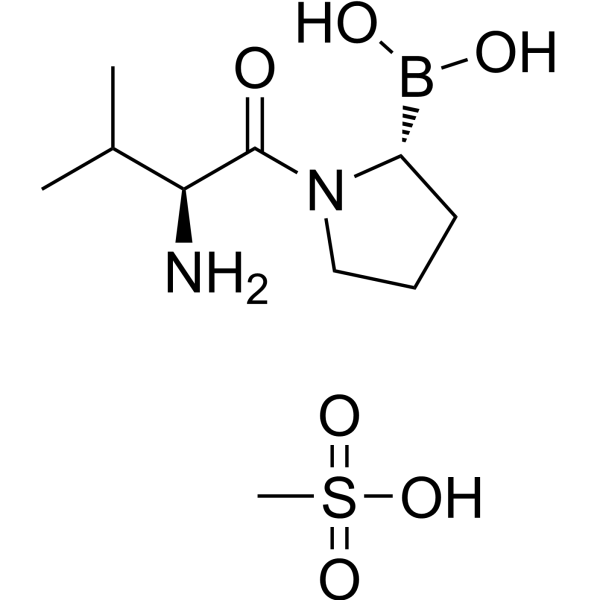
    Talabostat mesylate
    Maximum Cited Publications
    42 Publications Verification

    Val-boroPro mesylate; PT100 mesylate

    Dipeptidyl Peptidase Inflammation/Immunology Cancer
    Talabostat mesylate (Val-boroPro mesylate; PT100 mesylate) is an orally active and nonselective dipeptidyl peptidase IV (DPP-IV) inhibitor (IC50 < 4 nM; Ki = 0.18 nM) and the inhibitor of fibroblast activation protein (FAP) (IC50 = 560 nM), inhibits DPP8/9 (IC50 = 4/11 nM; Ki = 1.5/0.76 nM), quiescent cell proline dipeptidase (QPP) (IC50 = 310 nM), DPP2, and some other DASH family enzymes. Antineoplastic and hematopoiesis- stimulating activities .
    Talabostat mesylate
  • HY-13233

    Val-boroPro; PT100

    Dipeptidyl Peptidase Inflammation/Immunology Cancer
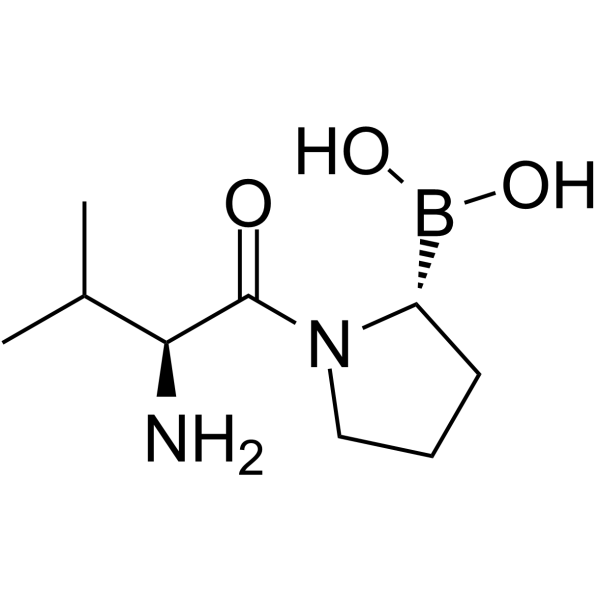
    Talabostat (Val-boroPro; PT100) is an orally active and nonselective dipeptidyl peptidase IV (DPP-IV) inhibitor (IC50 < 4 nM; Ki = 0.18 nM) and the first clinical inhibitor of fibroblast activation protein (FAP) (IC50 = 560 nM), inhibits DPP8/9 (IC50 = 4/11 nM; Ki = 1.5/0.76 nM), quiescent cell proline dipeptidase (QPP) (IC50 = 310 nM), DPP2, and some other DASH family enzymes. Antineoplastic and hematopoiesis- stimulating activities .
    Talabostat
  • HY-D0889
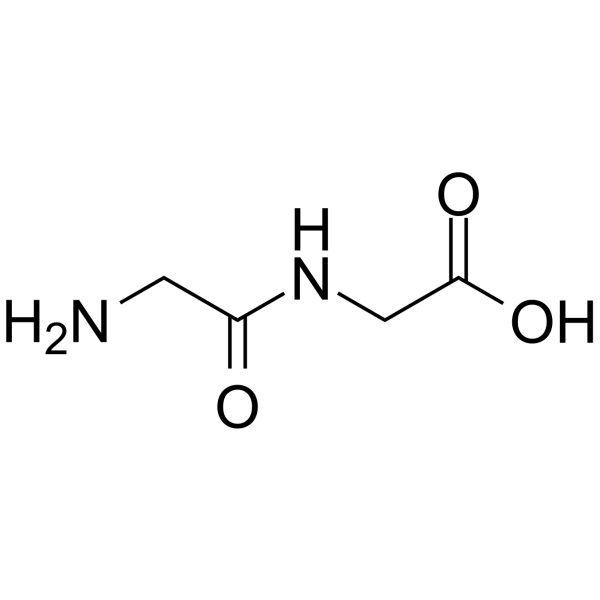
    Glycylglycine
    1 Publications Verification

    Gly-Gly; H-Gly-Gly-OH

    Endogenous Metabolite Metabolic Disease
    Glycylglycine is a non-selective glycylglycine dipeptidase substrate and iNOS inhibitor. Glycylglycine can cross the cell membrane by passive diffusion and is hydrolyzed to glycine in the cell, participating in energy metabolism and antioxidant processes. Glycylglycine promotes spermatogonial stem cells (SSCs) proliferation, inhibits astrocyte overactivation and reduces nitric oxide (NO) release, while upregulating the expression of neurotrophic factors (such as PDGFA, FGF2, CNTF) to support nerve myelin repair. Glycylglycine can be used to study male reproductive biology (such as SSCs proliferation regulation) and neurodegenerative diseases (such as neuroprotective mechanisms in multiple sclerosis) .
    Glycylglycine
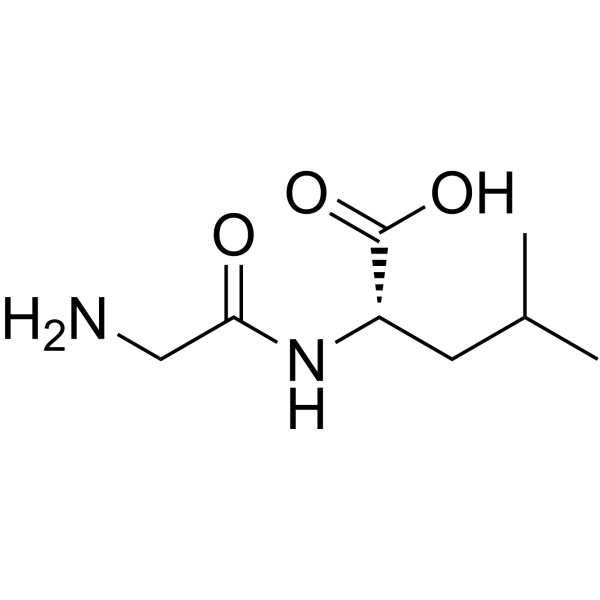
  • HY-W016077

    Endogenous Metabolite Others
    Glycyl-l-leucine is a dipeptide that can be a common substrate for glycyl-leucine dipeptidase.
    Glycyl-L-leucine
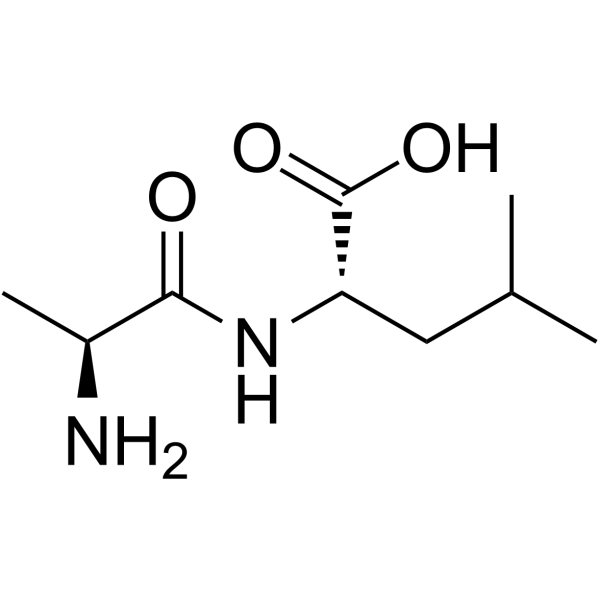
  • HY-W040088

    H-Ala-Leu-OH

    Aminopeptidase Metabolic Disease
    L-Alanyl-L-leucine is a competitive inhibitor of small intestinal glycyl-L-leucine hydrolase with Ki values of 0.53 mM (phosphate buffer) or 0.22 mM (Tris buffer). L-Alanyl-L-leucine can be used for research on Hartnup disease and cystinuria .
    L-Alanyl-L-leucine
  • HY-113465
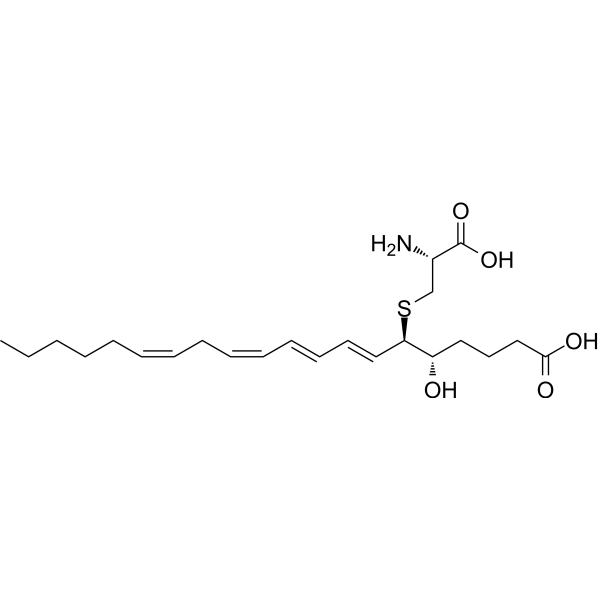
    Leukotriene E4
    1 Publications Verification

    LTE4

    Endogenous Metabolite Inflammation/Immunology
    Leukotriene E4 (LTE4) is produced by the action of dipeptidase on LTD4. Leukotriene E4 is one of the constituents of slow-reacting substance of anaphylaxis (SRS-A). Leukotriene E4 accumulates in both plasma and urine and urinary excretion of Leukotriene E4 is most often used as an indicator of asthma.
    Leukotriene E4
  • HY-P99506

    SC-003 mAb; SC-Mab003; SC34.28ss1

    ADC Antibody Cancer
    Tamrintamab (SC-003 mAb, SC-Mab003, SC34.28ss1) is an ADC Antibody targeting to dipeptidase 3 (DPEP3 or MBD3). DPEP3 is a glycosyl phosphatidylinositol anchored metallopeptidase that is overexpressed in ovarian tumors. Tamrintamab can specifically bind DPEP3-expressing cells to produce cytotoxicity. Tamrintamab can be used in ovarian cancer research .
    Tamrintamab
  • HY-D0889R

    Gly-Gly (Standard); H-Gly-Gly-OH (Standard)

    Reference Standards Endogenous Metabolite Metabolic Disease
    Glycylglycine (Standard) is the analytical standard of Glycylglycine (HY-D0889). This product is intended for research and analytical applications. Glycylglycine is a non-selective glycylglycine dipeptidase substrate and iNOS inhibitor. Glycylglycine can cross the cell membrane by passive diffusion and is hydrolyzed to glycine in the cell, participating in energy metabolism and antioxidant processes. Glycylglycine promotes spermatogonial stem cells (SSCs) proliferation, inhibits astrocyte overactivation and reduces nitric oxide (NO) release, while upregulating the expression of neurotrophic factors (such as PDGFA, FGF2, CNTF) to support nerve myelin repair. Glycylglycine can be used to study male reproductive biology (such as SSCs proliferation regulation) and neurodegenerative diseases (such as neuroprotective mechanisms in multiple sclerosis) .
    Glycylglycine (Standard)
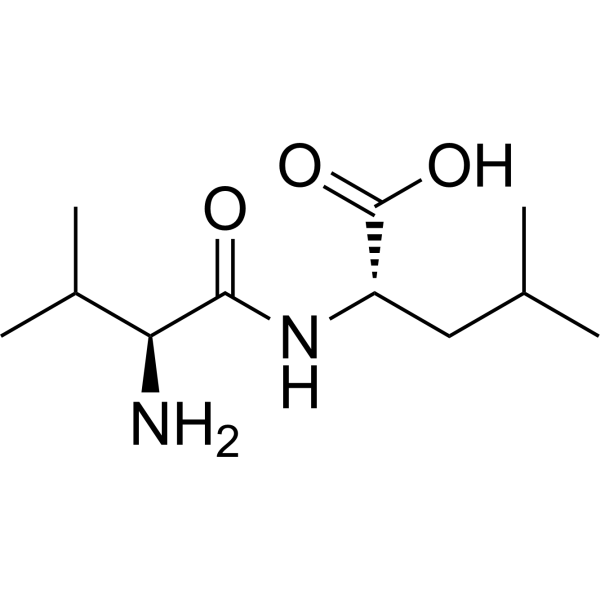
  • HY-P4668

    Val-Leu; H-Val-Leu-OH

    Bacterial Infection
    Valylleucine (Val-Leu; H-Val-Leu-OH) is a branched-chain dipeptide that can enter cells independently via bacterial dipeptide transport systems, and is hydrolyzed by dipeptidases to release Val and Leu. Valylleucine, as a model peptide, has its α-amino pK determined to be 7.90 by combining FDNB reaction kinetics with potentiometric titration .
    Valylleucine
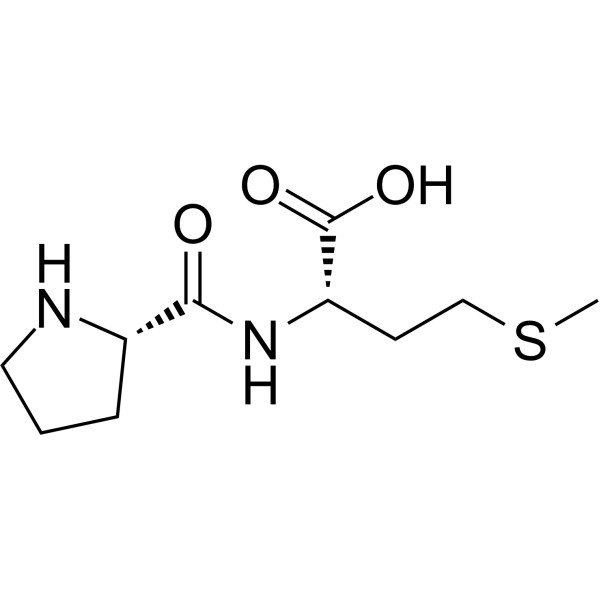
  • HY-P4559

    Dipeptidyl Peptidase Drug Intermediate Others
    H-Pro-Met-OH is a dipeptide containing proline and methionine. H-Pro-Met-OH also serves as a substrate for prolinase and prolyl dipeptidase .
    H-Pro-Met-OH
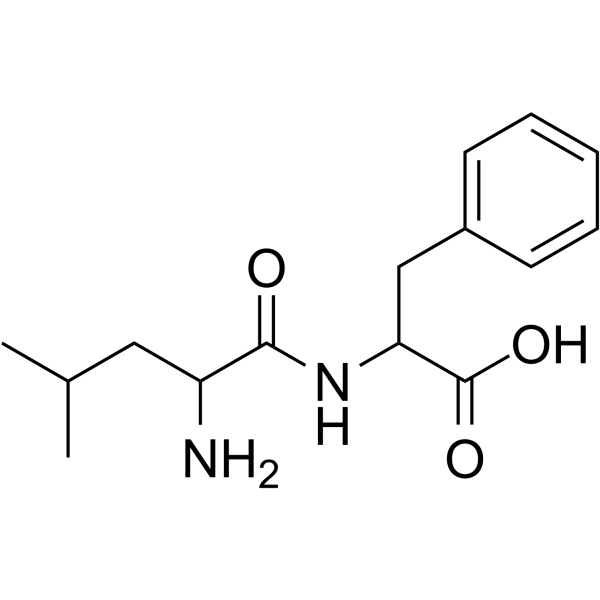
  • HY-139440

    Biochemical Assay Reagents Others
    DL-Leucyl-DL-phenylalanine is a dipeptide and can be used as a substrate to detecte two regions of dipeptidase staining on a gel in Drosophila simulans as well as in Drosophila melanogaster .
    DL-Leucyl-DL-phenylalanine
  • HY-P4668A

    Val-Leu TFA; H-Val-Leu-OH TFA

    Bacterial Infection
    Valylleucine (Val-Leu; H-Val-Leu-OH) TFA is a branched-chain dipeptide that can enter cells independently via bacterial dipeptide transport systems, and is hydrolyzed by dipeptidases to release Val and Leu. Valylleucine TFA, as a model peptide, has its α-amino pK determined to be 7.90 by combining FDNB reaction kinetics with potentiometric titration .
    Valylleucine TFA
  • HY-113465S

    LTE4-d5

    Endogenous Metabolite Inflammation/Immunology
    Leukotriene E4-d5 is the deuterium labeled Leukotriene E4. Leukotriene E4 (LTE4) is produced by the action of dipeptidase on LTD4. Leukotriene E4 is one of the constituents of slow-reacting substance of anaphylaxis (SRS-A). Leukotriene E4 accumulates in both plasma and urine and urinary excretion of Leukotriene E4 is most often used as an indicator of asthma.
    Leukotriene E4-d5
  • HY-W040088R

    H-Ala-Leu-OH (Standard)

    Reference Standards Aminopeptidase Metabolic Disease
    L-Alanyl-L-leucine is an endogenous metabolite. This product is used for research and analytical applications. L-Alanyl-L-leucine is a competitive inhibitor of small intestinal glycyl-L-leucine hydrolase with Ki values of 0.53 mM (phosphate buffer) or 0.22 mM (Tris buffer). L-Alanyl-L-leucine can be used for research on Hartnup disease and cystinuria .
    L-Alanyl-L-leucine (Standard)
  • HY-P4236

    Carboxypeptidase Others
    Gly-d-Phe is an affinity ligand for Thermolysin (HY-P1748) . Gly-d-Phe can be used as the substrate of membrane dipeptidase (MDP) .
    Gly-d-Phe
  • HY-155027

    Dipeptidyl Peptidase TNF Receptor Interleukin Related Inflammation/Immunology Cancer
    DPP-4-IN-8 (compound 27) is a potent and selective DPP4 (dipeptidyl peptidase 4) inhibitor, with a Ki of 0.96 μM. DPP-4-IN-8 blocks the dipeptidase activity of DPP4 in both Caco-2 and HepG-2 cells. DPP-4-IN-8 also dose-dependently suppresses the expression levels of the chemokines tumor necrosis factor-α (TNF-α), interleukin-6 (IL-6), and interleukin-1β (IL-1β) .
    DPP-4-IN-8
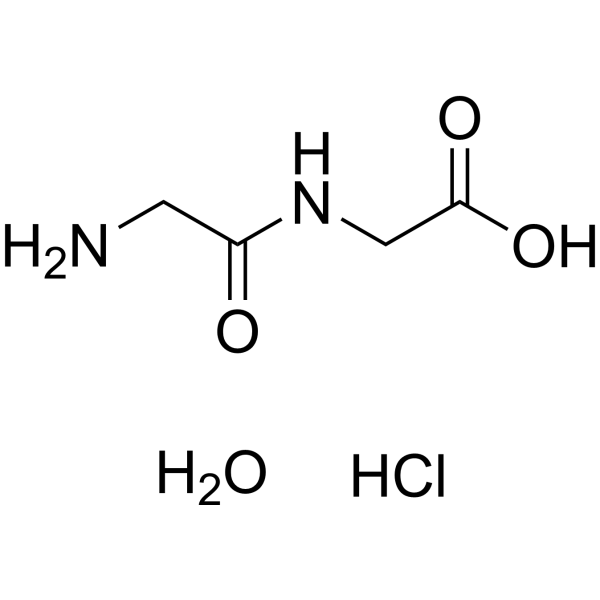
  • HY-W040074

    Diglycine hydrochloride hydrate; Gly-Gly (HCl H2O)

    Biochemical Assay Reagents Metabolic Disease
    Glycylglycine hydrochloride hydrate is a non-selective Glycylglycine hydrochloride hydrate dipeptidase substrate and iNOS inhibitor. Glycylglycine hydrochloride hydrate can cross the cell membrane by passive diffusion and is hydrolyzed to glycine in the cell, participating in energy metabolism and antioxidant processes. Glycylglycine hydrochloride hydrate promotes spermatogonial stem cells (SSCs) proliferation, inhibits astrocyte overactivation and reduces nitric oxide (NO) release, while upregulating the expression of neurotrophic factors (such as PDGFA, FGF2, CNTF) to support nerve myelin repair. Glycylglycine hydrochloride hydrate can be used to study male reproductive biology (such as SSCs proliferation regulation) and neurodegenerative diseases (such as neuroprotective mechanisms in multiple sclerosis) .
    Glycylglycine hydrochloride hydrate
  • HY-W968308

    Amino Acid Derivatives Metabolic Disease
    H-Gly-D-Ala-OH is a dipeptide containing D-amino acid. H-Gly-D-Ala-OH can be specifically hydrolyzed by renal dipeptidase, which acts on peptide segments with a D-amino acid at the carboxyl terminus. H-Gly-D-Ala-OH enables highly specific detection of renal dipeptidase activity without interference from other serum or urine aminopeptidases. When used in combination with low-dose Sodium nitrite (HY-N11218), H-Gly-D-Ala-OH inhibits the initial spore growth of Clostridium botulinum in pork homogenate, whereas it has no such effect on its own. H-Gly-D-Ala-OH can be used in research related to chronic renal failure, diabetes mellitus and botulism .
    H-Gly-D-Ala-OH
  • HY-W016077R

    Reference Standards Endogenous Metabolite Others
    Glycyl-L-leucine (Standard) is the analytical standard of Glycyl-L-leucine. This product is intended for research and analytical applications. Glycyl-l-leucine is a dipeptide that can be a common substrate for glycyl-leucine dipeptidase.
    Glycyl-L-leucine (Standard)
  • HY-171831

    Endogenous Metabolite Inflammation/Immunology
    Leukotriene E3 is a cysteinyl leukotriene metabolite derived from 5,8,11-eicosatrienoic acid (HY-108398A). Leukotriene E3 acts as a smooth-muscle-contracting mediator. Leukotriene E3 can be used for the research of allergic reactions and asthma .
    Leukotriene E3

Inquiry Online

Your information is safe with us. * Required Fields.

Salutation


Country or Region *

Applicant Name *


Organization Name *

Department *


Email Address *


Product Name *

Cat. No.


Requested quantity *

Phone Number *


Remarks

Inquiry Online

Inquiry Information

Product Name:
Cat. No.:
Quantity:
MCE Japan Authorized Agent:

