



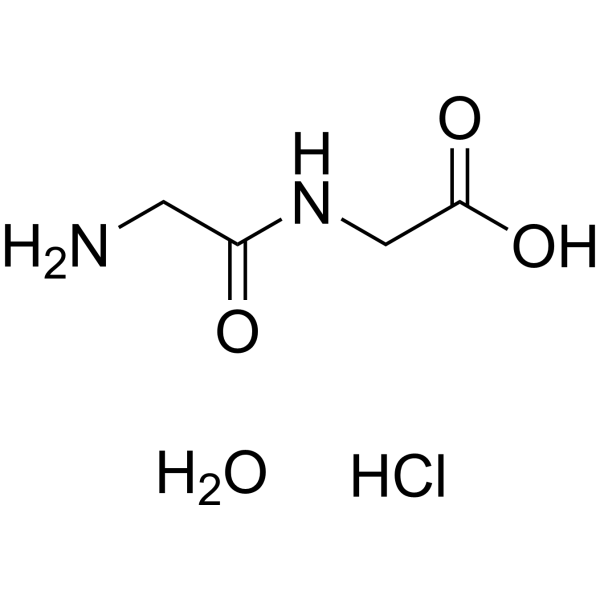
Glycylglycine hydrochloride hydrate
Based on 1 publication(s) in Google Scholar
Glycylglycine hydrochloride hydrate is a non-selective Glycylglycine hydrochloride hydrate dipeptidase substrate and iNOS inhibitor. Glycylglycine hydrochloride hydrate can cross the cell membrane by passive diffusion and is hydrolyzed to glycine in the cell, participating in energy metabolism and antioxidant processes. Glycylglycine hydrochloride hydrate promotes spermatogonial stem cells (SSCs) proliferation, inhibits astrocyte overactivation and reduces nitric oxide (NO) release, while upregulating the expression of neurotrophic factors (such as PDGFA, FGF2, CNTF) to support nerve myelin repair. Glycylglycine hydrochloride hydrate can be used to study male reproductive biology (such as SSCs proliferation regulation) and neurodegenerative diseases (such as neuroprotective mechanisms in multiple sclerosis).
For research use only. We do not sell to patients.
- CAS No.: 23273-91-8
- Formula: C4H11ClN2O4
- Molecular Weight:186.59
-
Storage:
Please store the product under the recommended conditions in the Certificate of Analysis.

To place orders, for customer services and technical support, please contact: MedChemExpress USA
Tel: 609-228-6898 E-mail: [email protected] [email protected]


-
 Biological Activity
-
Chemical Information
- Purity & Documentation
- References
-
 Help & FAQs


Publications Citing Use of MedChemExpress (MCE) Glycylglycine hydrochloride hydrate
More

Biological Activity
Description
In Vitro
Cell viability assay:
Glycylglycine hydrochloride hydrate (10 μM;5 d) significantly promotes cell proliferation in spermatogonial stem cells (SSCs) culture, increases cell viability by about 50%, without significant effect on cell apoptosis and cell cycle[1].
Glycylglycine hydrochloride hydrate (0.1-1 mM; 24 h) inhibits the growth of astrocyte U87 cells, and Glycylglycine hydrochloride hydrate (1 mM; 12-72 h) has no significant effect on DNA synthesis[2].
Inflammatory factor detection experiment:
Glycylglycine hydrochloride hydrate (0.5 mM; 24 h) significantly inhibits the release of nitric oxide (NO) and reduces the inflammatory response astrocyte U87 cells, while upregulating the expression of neurotrophic factors (such as PDGFA, FGF2, CNTF), promoting neuroprotection and repair[2].
MedChemExpress (MCE) has not independently confirmed the accuracy of these methods. They are for reference only.
-
Cell Line:Spermatogonial stem cells (SSCs)
-
Concentration:0 μM (control), 10 μM
-
Incubation Time:5 days
-
Result:Significantly increased cell viability compared to the control group.
There were no significant differences in apoptosis and cell cycle distribution among the groups as determined by flow cytometry
-
Cell Line:Astrocytes U87 cells
-
Concentration:0 mM (control), 0.1 mM, 0.5 mM, 1 mM
-
Incubation Time:24 h
-
Result:Significantly upregulated the expression of neurotrophic factors (PDGFA, FGF2, CNTF) and iNOS, compared to the control group at 0.5 mM.


Chemical Information
-
CAS No. 23273-91-8
-
Molecular Weight 186.59
-
Formula C4H11ClN2O4
-
Synonyms
Diglycine hydrochloride hydrate; Gly-Gly (HCl H2O)
-
Shipping
Room temperature in continental US; may vary elsewhere.
-
Storage
Please store the product under the recommended conditions in the Certificate of Analysis.


Publications (1)
-
Journal Impact Factor
-
Most Recent


Purity & Documentation
References
[1]. Xu B, et al. Glycylglycine plays critical roles in the proliferation of spermatogonial stem cells. Mol Med Rep. 2019 Oct;20(4):3802-3810. [Content Brief]
[2]. Zhao C, et al. Metabolomic analysis revealed glycylglycine accumulation in astrocytes after methionine enkephalin administration exhibiting neuron protective effects. J Pharm Biomed Anal. 2015 Nov 10;115:48-54. [Content Brief]

Calculators
Concentration (start) × Volume (start) = Concentration (final) × Volume (final)


Glycylglycine hydrochloride hydrate Related Classifications
HY-W040074 Related Classifications
 Powered by Bioz