



1. Search Result
Search Result
Results for "

envelope protein

" in MedChemExpress (MCE) Product Catalog:

36

Inhibitors & Agonists

9

Peptides

9

Inhibitory Antibodies

3

Natural
Products

59

Recombinant Proteins

1

Isotope-Labeled Compounds

4

Antibodies

1

Oligonucleotides

Cat. No. Product Name Target Research Areas Chemical Structure
  • HY-14805
    Tecovirimat
    1 Publications Verification

    ST-246

    Orthopoxvirus Arenavirus Infection
    Tecovirimat (ST-246) is an orally bioavailable and selective compound against orthopoxviruses including vaccinia, monkeypox, camelpox, cowpox, ectromelia (mousepox), smallpox and variola viruses. Tecovirimat is evaluated against vaccinia, cowpox virus, ectromelia virus with EC50 values of 0.01 μM, 0.48 μM and 0.05 μM, respectively. Tecovirimat targets the orthopoxvirus protein VP37 which is necessary for membrane envelopment of intracellular mature virus particles to form enveloped virus. Tecovirimat exerts antiviral activity on the target of the cowpox virus V061 gene, which is homologous to vaccinia virus F13L, encoding a major envelope protein (p37) required for production of extracellular virus .
    Tecovirimat
  • HY-B1268
    Docusate Sodium
    2 Publications Verification

    Dioctyl sulfosuccinate sodium salt

    Environmental Pollutants HSV Others
    Docusate Sodium (Dioctyl sulfosuccinate sodium salt) is one of the main components in stool softeners. Docusate Sodium is a sulfated surfactant and may inactivate viral pathogens by disrupting viral envelopes and/or denaturing/disassociating proteins. Docusate Sodium is effective in vitro against wild type and drug-resistant strains of HSV type 1 and 2. Docusate Sodium is an obesogen. Docusate Sodium with developmental exposure leads to increased adult adiposity, inflammation, metabolic disorder and dyslipidemia in offspring fed a standard diet in mice .
    Docusate Sodium
  • HY-P4193

    MHC Inflammation/Immunology Cancer
    AH1 is an immunodominant MHC class I-restricted nonamer peptide recognized by CD8 + cytotoxic T lymphocytes. AH1 derives from the envelope protein (gp70) of an endogenous ecotropic murine leukemia virus and is presented by the MHC class I L d molecule. AH1 can be used for the research of colorectal carcinoma .
    AH1
  • HY-P991069

    HIV Infection
    VRC-01 is a broadly neutralizing IgG1 monoclonal antibody that targets HIV-1 envelope glycoprotein gp120 Protein. VRC-01 blocks HIV-1 viral entry by mimicking CD4 receptor interaction with HIV-1 gp120 and neutralizes broad HIV-1 clades. VRC-01 can be used for the research of HIV-1 infection .
    VRC-01
  • HY-P3051

    Reverse Transcriptase Inflammation/Immunology
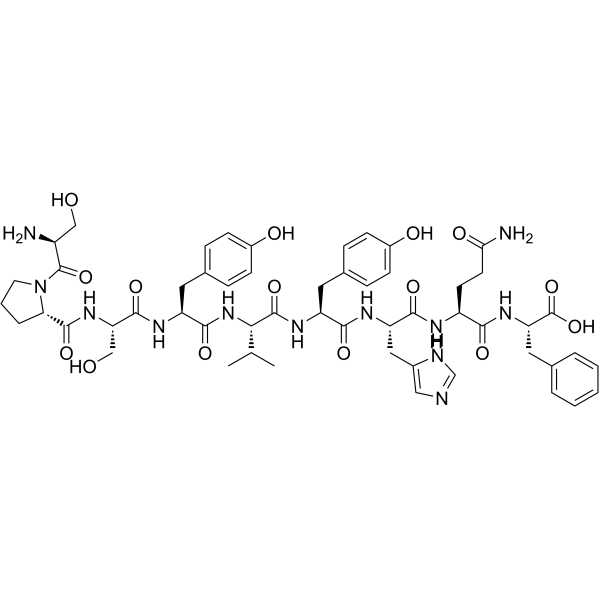
    CKS-17 is a synthetic retroviral envelope peptide. CKS-17 has the highly conserved amino acid sequences occurring within the transmembrane envelope protein of many animal and human retroviruses. CKS-17 acts as an immunomodulatory epitope and exhibits suppressive properties for numerous immune functions .
    CKS-17
  • HY-N3187

    Flavivirus Dengue Virus Fungal Bacterial Histamine Receptor Infection Neurological Disease Inflammation/Immunology Cancer
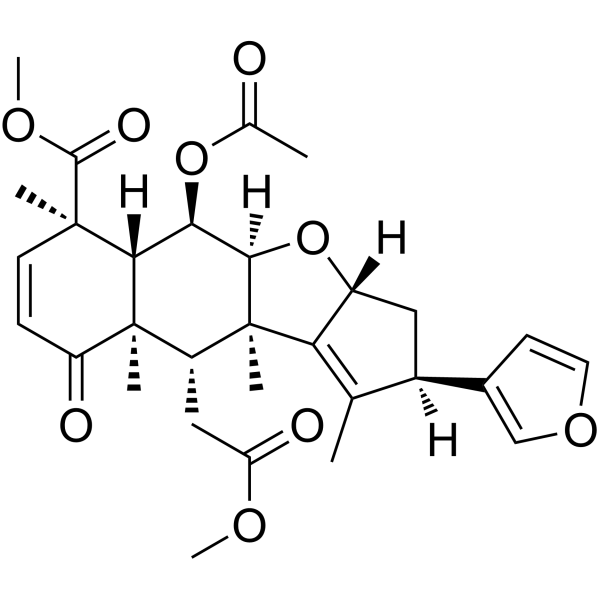
    Nimbin is an orally active intermediate limonoid found in Azadirachta. Nimbin prevents tau aggregation and increases cell viability. Nimbin is effective inhibits the envelope protein of dengue virus. Nimbin has anti-inflammatory, antipyretic, antifungal, antihistamine, antiseptic, antioxidant, anti-cancer and anti-viral properties. Nimbin is promising for research of neurodegenerative diseases and viral infections .
    Nimbin
  • HY-B1268R

    Dioctyl sulfosuccinate sodium salt (Standard)

    Reference Standards HSV Others
    Docusate (Sodium) (Standard) is the analytical standard of Docusate (Sodium). This product is intended for research and analytical applications. Docusate Sodium (Dioctyl sulfosuccinate sodium salt) is one of the main components in stool softeners. Docusate Sodium is a sulfated surfactant and may inactivate viral pathogens by disrupting viral envelopes and/or denaturing/disassociating proteins. Docusate Sodium is effective in vitro against wild type and drug-resistant strains of HSV type 1 and 2. Docusate Sodium is an obesogen. Docusate Sodium with developmental exposure leads to increased adult adiposity, inflammation, metabolic disorder and dyslipidemia in offspring fed a standard diet in mice .
    Docusate Sodium (Standard)
  • HY-14805A
    Tecovirimat monohydrate
    1 Publications Verification

    ST-246 monohydrate

    Orthopoxvirus Arenavirus Infection
    Tecovirimat (ST-246) monohydrate is the monohydrate form of Tecovirimat (HY-14805). Tecovirimat monohydrate is an orally bioavailable and selective compound against orthopoxviruses [including vaccinia, monkeypox, camelpox, cowpox, ectromelia (mousepox), smallpox and variola viruses]. Tecovirimat monohydrate is evaluated against vaccinia, cowpox virus, ectromelia virus with EC50 values of 0.01 μM, 0.48 μM and 0.05 μM, respectively. Tecovirimat monohydrate targets the orthopoxvirus protein VP37 which is necessary for membrane envelopment of intracellular mature virus particles to form enveloped virus. Tecovirimat monohydrate exerts antiviral activity on the target of the cowpox virus V061 gene, which is homologous to vaccinia virus F13L, encoding a major envelope protein (p37) required for production of extracellular virus. Tecovirimat monohydrate could be used in the study for orthopoxvirus-induced diseases .
    Tecovirimat monohydrate
  • HY-P4029

    HCV Infection
    HCV-1 e2 Protein (484-499) is a peptide consisting of 16 amino acids. HCV-1 e2 Protein (484-499) is derived from the envelope 2 protein of hepatitis C virus in the sera from individuals with antibodies to HCV .
    HCV-1 e2 Protein (484-499)
  • HY-141641

    HSL

    Bacterial Infection
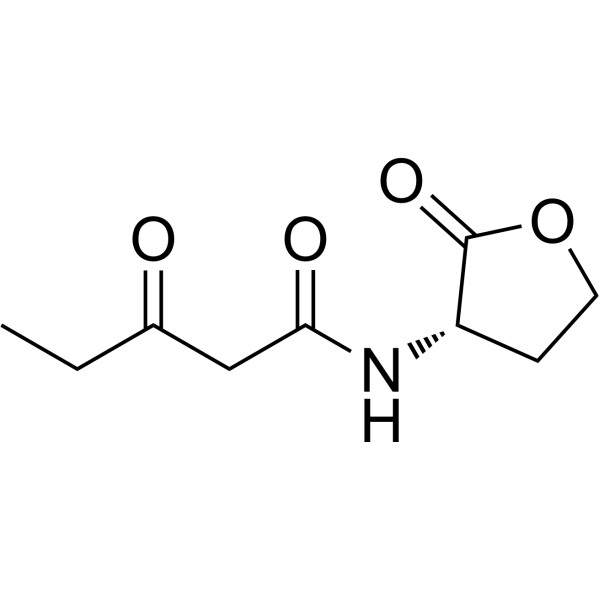
    N-(3-Oxopentanoyl)-L-homoserine lactone is an autoinducer, a kind of chemical signal molecule which passively diffuses across the bacterial envelope and accumulates intracellularly at high bacterial densities. It may bind to a protein related to the LuxR protein of V. fischeri and causes cell density-dependent gene expression. N-(3-Oxopentanoyl)-L-homoserine can be used for research of quorum sensing .
    N-(3-Oxopentanoyl)-L-homoserine lactone
  • HY-P990817

    Dengue Virus Flavivirus Infection
    Anti-West Nile/dengue virus E protein Antibody (E60) is mouse-derived IgG2a κ type antibody inhibitor, targeting to West Nile/dengue virus E protein. Anti-West Nile/dengue virus E protein Antibody (E60) can cross-neutralize West Nile virus (WNV) and dengue virus (DENV) envelope (E) protein. Anti-West Nile/dengue virus E protein Antibody (E60) can be used for the researches of WNV and DENV infection .
    Anti-West Nile/dengue virus E protein Antibody (E60)
  • HY-169847

    SARS-CoV Dengue Virus Infection
    ZK-806450 is a compound with antiviral activity. ZK-806450 has a high binding potential to the allosteric binding site of the SARS-CoV-2 3CL protease. ZK-806450 can also specifically and stably bind to the GAG site of the dengue virus envelope protein .
    ZK-806450
  • HY-E70653

    CDK Cancer
    CDK1 is a cyclin-dependent kinase that functions as a serine/threonine protein kinase, and is a key player in cell cycle regulation. CDK1/CycB1 Recombinant Human Active Protein Kinase is an ortholog of CDK1. CDK1/cyclin B1 complexes initiates mitotic entry by phosphorylating a multitude of proteins to condense chromosomes, disrupt the nuclear envelope, and enable microtubules polymerization to attach and to segregate the chromosomes .
    CDK1/CycB1 Recombinant Human Active Protein Kinase
  • HY-14805S

    ST-246-d4

    Isotope-Labeled Compounds Orthopoxvirus Arenavirus Infection
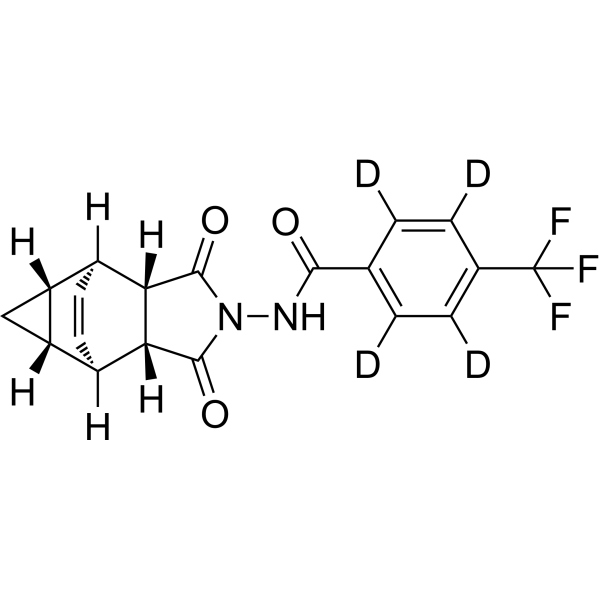
    Tecovirimat-d4 (ST-246-d4) is a deuterium-labelled Tecovirimat (HY-14805). Tecovirimat is an orally bioavailable and selective compound against orthopoxviruses [including vaccinia, monkeypox, camelpox, cowpox, ectromelia (mousepox), smallpox and variola viruses]. Tecovirimat is evaluated against vaccinia, cowpox virus, ectromelia virus with EC50 values of 0.01 μM, 0.48 μM and 0.05 μM, respectively. Tecovirimat targets the orthopoxvirus protein VP37 which is necessary for membrane envelopment of intracellular mature virus particles to form enveloped virus. Tecovirimat exerts antiviral activity on the target of the cowpox virus V061 gene, which is homologous to vaccinia virus F13L, encoding a major envelope protein (p37) required for production of extracellular virus. Tecovirimat could be used in the study for orthopoxvirus-induced diseases .
    Tecovirimat-d4
  • HY-P991479

    GS-8588

    HIV CD3 Infection
    Amtabafusp alfa (GS-8588) is an envelope-targeting bispecific T-cell engager for HIV treatment. Amtabafusp alfa redirects effector T cells by binding to CD3 via a humanized anti-CD3 Fab domain and to HIV envelope proteins via an engineered CD4 domain 1 variant. Amtabafusp alfa exhibits potent, broad-spectrum activity against a variety of HIV isolates and specifically kills HIV-infected cells. Amtabafusp alfa can be used for research on HIV infection .
    Amtabafusp alfa
  • HY-P991064

    3BNC-117

    HIV Infection
    Lafuvitug (3BNC-117) is a fully human IgG1 antibody that targets envelope glycoprotein gp120 protein. The isotype control for Lafuvitug can refer to Human IgG1 kappa, Isotype Control (HY-P99001) .
    Lafuvitug
  • HY-161804

    PROTACs Dengue Virus Infection
    GNF-2-deg is a PROTAC degrader for dengue virus envelope protein (DENV E protein) with DC50 of 0.83 μM. GNF-2-deg prevents viral entry by inhibiting E-mediated membrane fusion, prevents virion production by protein degradation, and thereby exhibits antiviral activity against DENV 2 with EC90 of 3.5 μM. GNF-2-deg exhibits antiviral activity against ZIKV, JEV, WNV and YFV with EC90 of 1.96-7.79 μM. (Pink: ligand for target protein (HY-161805); Black: linker (HY-42149); Blue: ligand for E3 ligase (HY-23095))
    GNF-2-deg
  • HY-P10829

    Dengue Virus Infection
    MLH40 is a peptide inhibitor with activity against Dengue virus (DENV) infection, which is found in the conserved ectodomain region of DENV membrane protein. MLH40 inhibits DENV through its N-terminal loop interaction with DENV envelope protein and altering the dimer conformation .
    MLH40
  • HY-P4045

    HBV Infection
    HBV Seq2 aa:208-216, a HBsAg derived CD8 epitope peptide, is studied as part of Large envelope protein from Hepatitis B virus .
    HBV Seq2 aa:208-216
  • HY-P4027

    HCV Infection
    HCV-1 e2 Protein (554-569) is one of the main antigenic regions of HCV envelope 2 (e2) protein. The HCV-1 e2 Protein (554-569) contains a putative n-glycosylation site, which was previously thought to influence the immune recognition of e2 .
    HCV-1 e2 Protein (554-569)
  • HY-N12340

    Flavivirus Infection
    Wulfenioidin H (Compound 5) is a diterpenoid, exhibits activity against Zika virus (ZIKV) with an EC50 value 8.50 μM. Wulfenioidin H interferes with the replication of the ZIKV by inhibiting the expression of the ZIKV envelope (E) protein .
    Wulfenioidin H
  • HY-P4027A

    HCV Infection
    HCV-1 e2 Protein (554-569) TFA is one of the main antigenic regions of HCV envelope 2 (e2) protein. The HCV-1 e2 Protein (554-569) TFA contains a putative N-glycosylation site, which was previously thought to influence the immune recognition of e2 .
    HCV-1 e2 Protein (554-569) TFA
  • HY-N12339

    Virus Protease Infection
    Wulfenioidin F is a diterpenoid, that can be isolated from the whole plant of Orthosiphon wulfenioides. Wulfenioidin F exhibits activity against Zika virus (ZIKV) with an EC50 of 8.07 μM. Wulfenioidin F interferes with the replication of the ZIKV by inhibiting the expression of the ZIKV envelope (E) protein .
    Wulfenioidin F
  • HY-107009

    VZV HSV VSV Infection
    CTC 96 is an antiviral agent, showing inhibitory effects particularly on herpes viruses and adenoviruses. CTC 96 directly blocks the fusion process between the viral envelope and the cell membrane, preventing the entry of viral nucleic acids and proteins into the cells. CTC 96 can completely block the penetration and intercellular transmission of HSV-1, preventing the synthesis of viral proteins and mRNA. CTC 96 exhibits significant anti-adenovirus activity in rabbit eye models. CTC 96 is also effective against varicella-zoster virus (VZV) and vesicular stomatitis virus (VSV). CTC 96 can be used for broad-spectrum antiviral research .
    CTC 96
  • HY-P3051A

    Drug Derivative Infection Inflammation/Immunology
    CKS-17 (dimer) is the dimer of CKS-17 (HY-P3051). CKS-17 (dimer) can be prepared by introducing a naturally occurring cysteine at the carboxyl terminus and dimerizing via a cysteine-disulfide bond. CKS-17 is a synthetic retroviral envelope peptide. CKS-17 has a highly conserved amino acid sequence present in the transmembrane envelope proteins of numerous animal and human retroviruses. As an immunomodulatory epitope, CKS-17 exhibits inhibitory properties on a variety of immune functions .
    CKS-17 (dimer)
  • HY-182588

    Bacterial HIV Dengue Virus Infection
    Circulin B is a macrocyclic plant cyclopeptide. Circulin B functions as a plant defense peptide and exhibits antibacterial and anti-HIV activities. Circulin B has high binding affinity for the envelope protein of dengue virus, showing potential anti-dengue virus activity. Circulin B can be used in studies related to dengue virus infection, human immunodeficiency virus infection and microbial infection .
    Circulin B
  • HY-P992081

    Orthopoxvirus Infection
    Anti-H3L Antibody (NAL_A185) is a neutralizing antibody targeting the H3L envelope protein of vaccinia virus (CV) belonging to the genus Orthopoxvirus. By binding to the H3L protein of intracellular mature virions, Anti-H3L Antibody (NAL_A185) blocks the binding of the virus to host cells, thereby neutralizing viral infectivity. Anti-H3L Antibody (NAL_A185) not only protects BALB/c mice from intranasal challenge with the lethal vaccinia virus WR strain, reducing weight loss and mortality, but also exhibits complement-dependent neutralizing activity against monkeypox virus. Among these properties, NAL_A185 is an immune target induced by the smallpox vaccine Dryvax; it elicits a robust recall antibody response and induces high-titer neutralizing antibodies in mice. Anti-H3L Antibody (NAL_A185) can be used for studies related to vaccinia virus infection, monkeypox and monkeypox disease .
    Anti-H3L Antibody (NAL_A185)
  • HY-P991771

    Flavivirus Infection
    Anti-WNV E protein DI-DII Antibody (E53) reacts with an epitope in domain I and II of the envelope (E) protein. Anti-WNV E protein DI-DII Antibody (E53) blocks Vero cell infection with WNV in vitro. Recommend Isotype Controls: Mouse IgG2a kappa, Isotype Control (HY-P99978) .
    Anti-WNV E protein DI-DII Antibody (E53)
  • HY-P991767

    Flavivirus Infection
    Anti-Powassan virus E protein Antibody (POWV-63) reacts with the envelope (E) protein of Powassan virus (POWV). Anti-Powassan virus E protein Antibody (POWV-63) shows significant protection against POWV-SPO, TBFVs, and Langat virus (LGTV) in vivo. Recommend Isotype Controls: Mouse IgG2c kappa, Isotype Control (HY-P99981) .
    Anti-Powassan virus E protein Antibody (POWV-63)
  • HY-P991770

    Flavivirus Infection
    Anti-Zika virus E protein DIII-LR Antibody (ZV-67) reacts with Zika virus envelope (E) protein at the lateral ridge of domain III (DIII-LR). Anti-Zika virus E protein DIII-LR Antibody (ZV-67) specifically detects the recombinant ZIKV E protein DIII and ZIKV E protein reporter virus particles (RVPs) in transfected cells. Recommend Isotype Controls: Mouse IgG2c kappa, Isotype Control (HY-P99981) .
    Anti-Zika virus E protein DIII-LR Antibody (ZV-67)
  • HY-P991772

    Flavivirus Infection
    Anti-WNV E protein DIII-LR Antibody (E16) reacts with the domain III lateral ridge (DIII-LR) of the envelope (E) protein of West Nile Virus (WNV). Anti-Mouse CD11b Antibody (5C6) protects mice from WNV infection. Recommend Isotype Controls: Mouse IgG2b kappa, Isotype Control (HY-P99982) .
    Anti-WNV E protein DIII-LR Antibody (E16)
  • HY-174517

    mRNA Inflammation/Immunology
    Human TNFRSF14 mRNA encodes the human TNF receptor superfamily member 14 (TNFRSF14) protein, a member of the TNF receptor superfamily. TNFRSF14 functions in signal transduction pathways that activate inflammatory and inhibitory T-cell immune response. It binds herpes simplex virus (HSV) viral envelope glycoprotein D (gD), mediating its entry into cells.
    Human TNFRSF14 mRNA
  • HY-183322

    HPV Infection
    Antiviral agent 83 is a boronic acid-modified Neocryptolepine (HY-E70250) derivative and is an anti-HPV agent. Antiviral agent 83 bind to the viral capsid protein and/or envelope protein, inducing conformational changes that effectively obstruct the interaction between the virus and host cell receptors. Antiviral agent 83 exhibits inhibitory activity against multiple high-risk HPV strains. Antiviral agent 83 inhibits HPV infection in vitro and in vaginal tract in vivo .
    Antiviral agent 83
  • HY-170515A

    E1/E2/E3 Enzyme SARS-CoV Infection Neurological Disease Cancer
    (E),(Z)-RNF5 agonist 1 (Compound Analog-1) is a RNF5 agonist that can enhance the ubiquitination and degradation of SARS-CoV-2 E protein by RNF5. (E),(Z)-RNF5 agonist 1 effectively inhibits the replication of SARS-CoV-2 and significantly alleviates pulmonary pathological damage and systemic inflammatory response in mouse infection models. (E),(Z)-RNF5 agonist 1 has a strong cytotoxic effect on neuroblastoma and melanoma. (E),(Z)-RNF5 agonist 1 can be used for research on anti-cancer and anti-viral purposes .
    (E),(Z)-RNF5 agonist 1
  • HY-P11733

    Bacterial Infection
    (KFF)3K-acpP is an antibacterial agent conjugating of cell penetrating peptide (KFF)3K (HY-P10556) and acpP
    peptide nucleic acid. (KFF)3K-acpP binds to the translation start site region of acpP mRNA, sterically blocking ribosome binding and inhibiting translation of the acyl carrier protein. (KFF)3K-acpP induces bacterial envelope stress response pathways, and triggers depletion of outer membrane protein F (ompF) transcript. (KFF)3K-acpP can be used for the research of infections .
    (KFF)3K-acpP
  • HY-183314

    Flavivirus Infection
    ZIKV-IN-9 is a ZIKV inhibitor that blocks the early binding of viral particles to the cell surface. ZIKV-IN-9 inhibits ZIKV in various cell models. ZIKV-IN-9 is applicable to research related to Zika virus infection .
    ZIKV-IN-9

Inquiry Online

Your information is safe with us. * Required Fields.

Salutation


Country or Region *

Applicant Name *


Organization Name *

Department *


Email Address *


Product Name *

Cat. No.


Requested quantity *

Phone Number *


Remarks

Inquiry Online

Inquiry Information

Product Name:
Cat. No.:
Quantity:
MCE Japan Authorized Agent:

