Search Result
Results for "
fluorescent phospholipid
" in MedChemExpress (MCE) Product Catalog:
8
Biochemical Assay Reagents
| Cat. No. |
Product Name |
Target |
Research Areas |
Chemical Structure |
-
- HY-D0080
-
Laurdan
Maximum Cited Publications
23 Publications Verification
|
Fluorescent Dye
|
Others
|
|
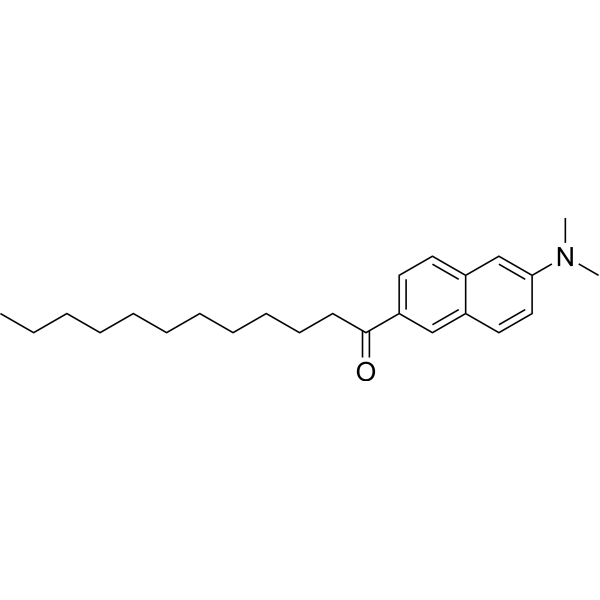
Laurdan is a membrane-permeable fluorescent probe that displays spectral sensitivity to the phospholipid phase of the cell membrane to which it is bound. Quantitation of generalized polarization (GP) of Laurdan can be used to identify phospholipid phase (Ex/Em = 370/440-490 nm).
|
-
-
- HY-D0986
-
|
|
Fluorescent Dye
|
Others
|
|
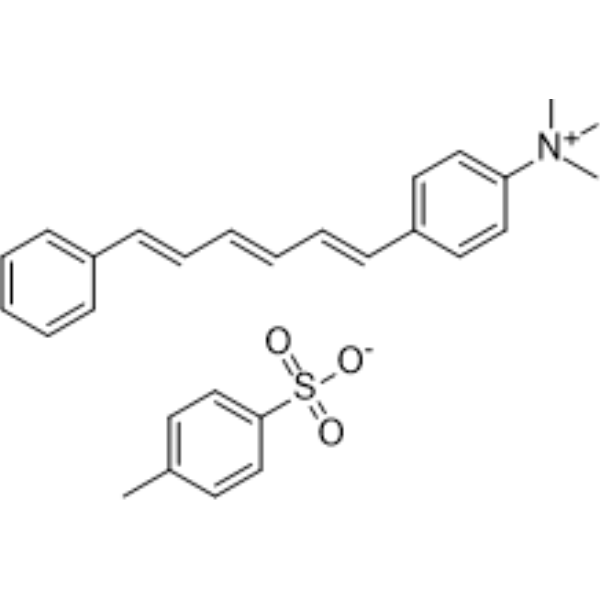
TMA-DPH is a hydrophobic fluorescent membrane probe (Ex=355 nm; Em=430 nm). TMA-DPH is able to anchor on the cell surface and localize to different regions of the phospholipid bilayer. By analyzing the fluorescence polarization values of TMA-DPH in the plasma membrane and membrane substructures, the fluidity of the cell membrane can be determined .
|
-
-
- HY-D1736
-
|
|
Fluorescent Dye
|
Others
|
|
BODIPY FL-C16 is a BODIPY-labeled analog of Palmitic acid (HY-N0830), which serves as a fluorescent lipid tracer. BODIPY FL-C16 also acts as a ligand for liver fatty acid-binding protein (L-FABP) and intestinal fatty acid-binding protein (I-FABP) , with Kd values of 270 nM and 330 nM, respectively. BODIPY FL-C16 is rapidly taken up by cells, and after metabolic conversion to phospholipids, it is incorporated into the membrane structures of intracellular organelles and extracellular vesicles .
|
-
-
- HY-125623
-
|
|
Fluorescent Dye
|
Others
|
|
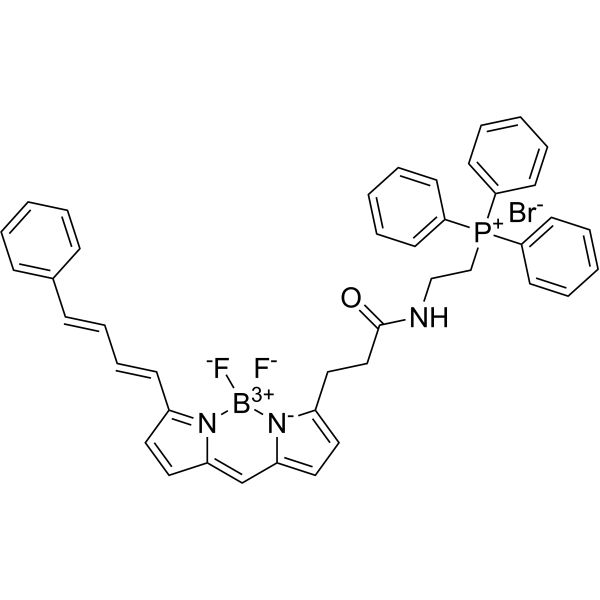
MitoPerOx is a mitochondrial-targeted, lipid peroxidation-indicating fluorescent probe with BODIPY581/591 fluorophores. The triphenylphosphine cation (TPP+) of MitoPerOx can be selectively enriched in mitochondria (depending on membrane potential) and can be used to detect lipid peroxidation in the inner mitochondrial membrane. Under the action of lipid peroxides, the BODIPY581/591 fluorophores of MitoPerOx shift their emission wavelength from 590 nm (reduced state) to 520 nm (oxidized state), and ratiometric detection can be performed at an excitation wavelength of 488 nm. MitoPerOx can specifically monitor the peroxidation of mitochondrial phospholipids (especially cardiolipin) and is used in the study of oxidative stress-related diseases (such as aging, neurodegenerative diseases, and mitochondrial dysfunction)[1][2].
|
-
-
- HY-162543
-
|
18:1 Lissamine rhodamine PE
|
Fluorescent Dye
|
Others
|
|
18:1 Liss Rhod (18:1 Lissamine rhodamine) PE is a fluorescent phospholipid and fluorescent probe.18:1 Liss Rhod PE admixes into phospholipid inks for large-scale monitoring of dip-pen nanolithography-generated lithographic structures via fluorescence microscopy.18:1 Liss Rhod PE undergoes phase separation or self-quenching under certain conditions in thin lipid membrane stacks .
|
-
-
- HY-D1425
-
|
9-(2,2-Dicyanovinyl)julolidine
|
Fluorescent Dye
|
Others
|
|
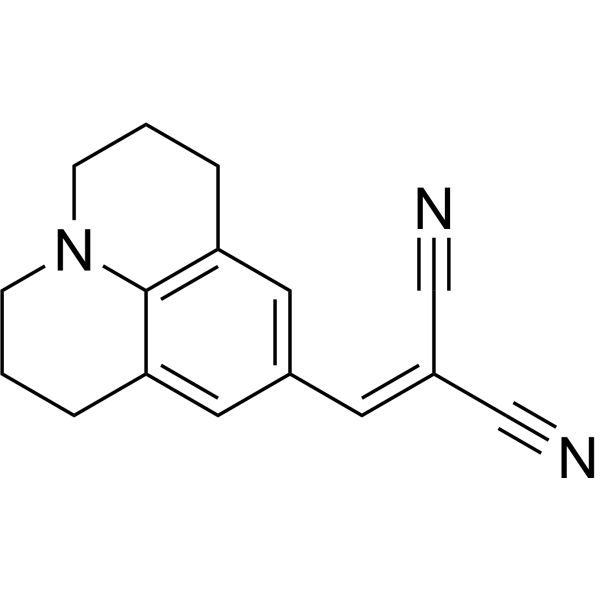
DCVJ (9-(2,2-Dicyanovinyl)julolidine), a molecular rotor and unique fluorescent dye, binds to tubulin and actin, and increases its fluorescence intensity drastically upon polymerization. DCVJ also binds to phospholipid bilayers and increases its fluorescence intensity. DCVJ can detect the kinetic process of degranulation of mast cells (Absorption/emission=489/505 nm) .
|
-
-
- HY-DY1057
-
|
|
Fluorescent Dye
|
Others
|
TMA-DPH (solution) is a hydrophobic fluorescent membrane probe (Ex=355 nm; Em=430 nm). TMA-DPH is able to anchor on the cell surface and localize to different regions of the phospholipid bilayer. By analyzing the fluorescence polarization values of TMA-DPH in the plasma membrane and membrane substructures, the fluidity of the cell membrane can be determined . Solvent and concentration: DMSO: 10 mM
|
-
-
- HY-D1610
-
|
|
Fluorescent Dye
|
Others
|
|
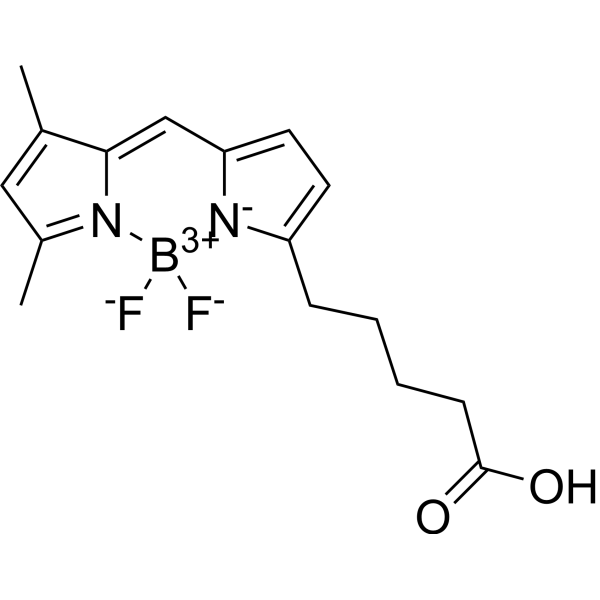
BODIPY FL C5 is a green fluorescent fatty acid. BODIPY FL C5 can be used as a precursor for the synthesis of various fluorescent phospholipids. BODIPY FL C5 is relatively insensitive to the environment and fluoresces in both water-soluble and lipid environments .
|
-
-
- HY-D1602
-
|
|
Fluorescent Dye
|
Others
|
|
BODIPY FL DHPE is a green-fluorescent phospholipid probe. BODIPY FL DHPE labels lipid 1,2-dihexadecanoyl-sn-glycero-phosphoethanolamine (DHPE), labeled liposomes can be internalized by membrane fusion. BODIPY FL DHPE can be used for investigations of membrane surface and membrane fusion. (λex=505 nm, λem=511 nm) .
|
-
-
- HY-DY1025
-
|
|
Fluorescent Dye
|
Others
|
Laurdan (solution) is a membrane-permeable fluorescent probe that displays spectral sensitivity to the phospholipid phase of the cell membrane to which it is bound. Quantitation of generalized polarization (GP) of Laurdan can be used to identify phospholipid phase. Solvent and concentration: DMSO: 5 mM
|
-
-
- HY-DY1073
-
|
|
Fluorescent Dye
|
Others
|
MitoPerOx (solution) is a mitochondrial-targeted, lipid peroxidation-indicating fluorescent probe with BODIPY581/591 fluorophores. The triphenylphosphine cation (TPP+) of MitoPerOx can be selectively enriched in mitochondria (depending on membrane potential) and can be used to detect lipid peroxidation in the inner mitochondrial membrane. Under the action of lipid peroxides, the BODIPY581/591 fluorophores of MitoPerOx shift their emission wavelength from 590 nm (reduced state) to 520 nm (oxidized state) , and ratiometric detection can be performed at an excitation wavelength of 488 nm. MitoPerOx can specifically monitor the peroxidation of mitochondrial phospholipids (especially cardiolipin) and is used in the study of oxidative stress-related diseases (such as aging, neurodegenerative diseases, and mitochondrial dysfunction) . Solvent and concentration: DMSO: 2 mM
|
-
-
- HY-D2100B
-
|
|
Fluorescent Dye
|
Others
|
|
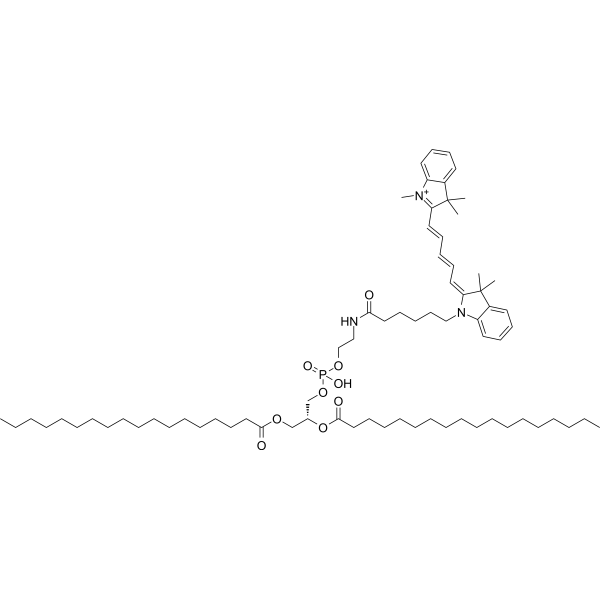
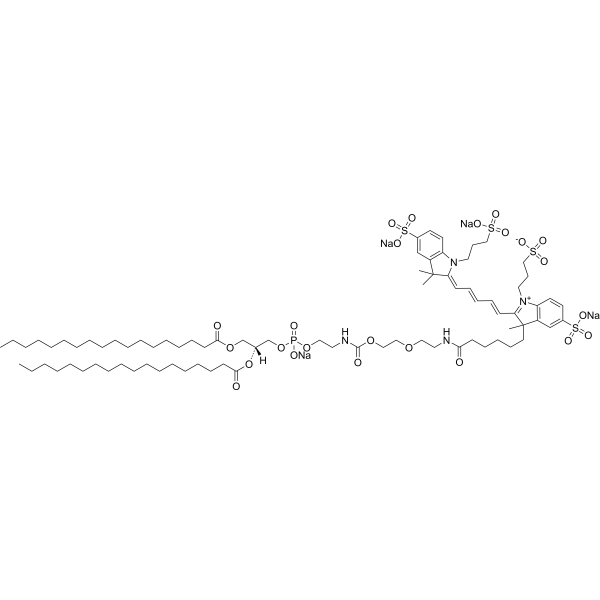
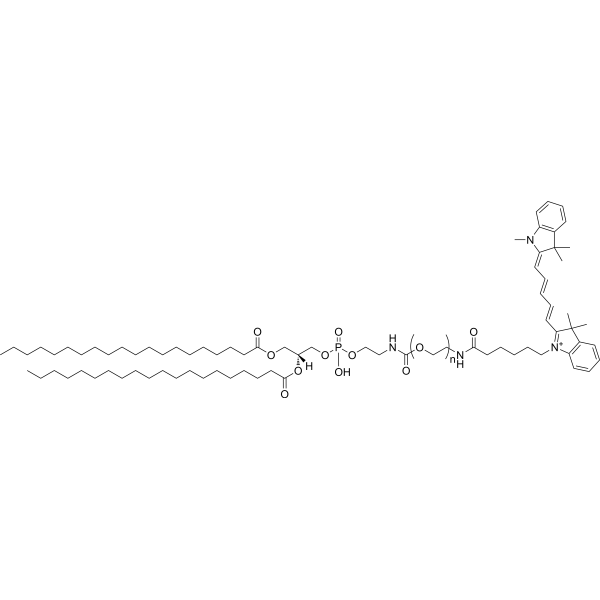
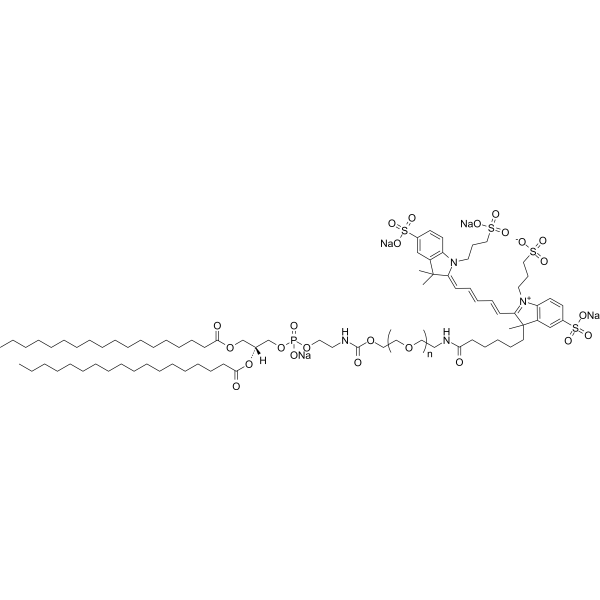
Cy5-DSPE chloride is a far-infrared fluorescent phospholipid (λex/λem = 600/665 nm). Cy5-DSPE chloride is used to label liposomes, membranes and lipid nanoparticles, and can be applied to tracking and imaging studies of liposomes .
|
-
-
- HY-D1630
-
|
|
Fluorescent Dye
|
Others
|
|
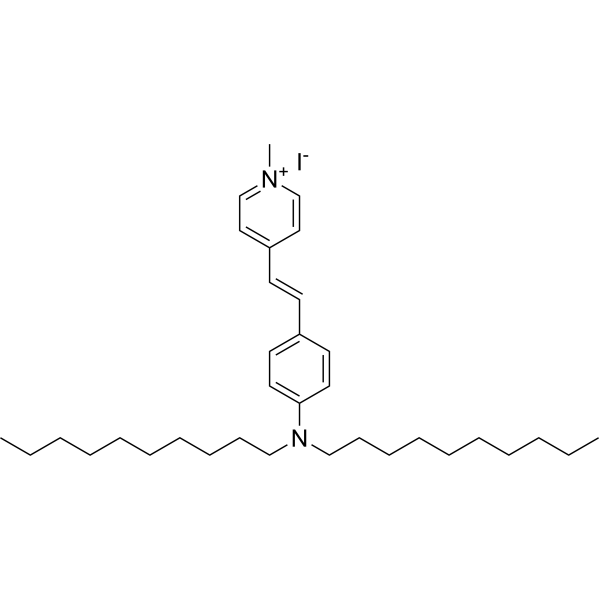
4-Di-10-ASP is a fluorescent lipophilic tracer (Excitation 485 nm; Emission 620 nm). 4-Di-10-ASP can be used to stain phospholipid membranes in a specific manner .
|
-
-
- HY-D2100
-
|
|
Fluorescent Dye
|
Others
|
|
Cy5-DSPE is a far-infrared fluorescent phospholipid (λex/λem = 600/665 nm). Cy5-DSPE is used to label liposomes, membranes and lipid nanoparticles, and can be applied to tracking and imaging studies of liposomes .
|
-
-
- HY-160278
-
|
|
Fluorescent Dye
|
Others
|
|
DSPE-PEG2000-Fluor 647 is a fluorescent lipid (Ex/Em=648/671 nm) composed of PEG-lipid-dye conjugation. DSPE is a phospholipid. Fluor 647 is a fluorescent dye. DSPE-PEG2000-Fluor 647 can be used to prepare nanoparticles or liposomes with fluorescent signals.
|
-
-
- HY-125385
-
|
|
Endogenous Metabolite
|
Metabolic Disease
|
|
Sulforhodamine 101 DHPE is a fluorescent probe made from the conjugation of the phospholipid 1,2-dipalmitoyl-sn-glycero-3-PE to sulforhodamine 101, a red fluorescent dye that displays excitation/emission spectra of 586/605 nm, respectively. It integrates into phospholipid bilayers and has been used for imaging of solid supported lipid bilayers, detection of protein-ligand binding on bilayers, and to monitor colocalization of lipid probes in liposomes via resonance energy transfer (RET).
|
-
-
- HY-W440913
-
|
|
Liposome
Fluorescent Dye
|
Cancer
|
|
DSPE-PEG-Cy5, MW 5000 is a fluorescently labeled PEGylated phospholipid with a molecular weight of 5000 Da. After intravenous injection, DSPE-PEG-Cy5, MW 5000 shows only extremely low fluorescence accumulation at tumor sites in orthotopic tumor-bearing mice, and can be used as a negative control for evaluating tumor accumulation of nanoparticles. DSPE-PEG-Cy5, MW 5000 can serve as a fluorescent marker to prepare Cy5-labeled NPs-DPPA and NPs-DPPA (C3F8) for pharmacokinetic and biodistribution studies in mice. DSPE-PEG-Cy5, MW 5000 is widely applicable to research in fields related to triple-negative breast cancer, hepatocellular carcinoma and so on .
|
-
-
- HY-D2762
-
|
|
Fluorescent Dye
|
Cancer
|
|
18:1 PE AF 594 triammonium is a fluorescently labeled phospholipid probe. 18:1 PE AF 594 triammonium can be used as a fluorescent tracer for lipid nanoparticles (LNPs). 18:1 PE AF 594 triammonium is promising for research of drug delivery systems .
|
-
-
- HY-N15995
-
|
|
Biochemical Assay Reagents
|
Others
|
|
DOPE-PEG(2000) Carboxylic acid sodium is a stabilizer. DOPE-PEG(2000) Carboxylic acid sodium produce a coating around the ferrofluid droplet chains which are dispersed in 5CB. DOPE-PEG(2000) Carboxylic acid sodium tends to fold, effectively shielding the surrounding LC molecules from the homeotropic anchoring at the droplet interface and leading to smaller deformations and thus also creating a more stable interface .
|
-
-
- HY-160279
-
|
|
Fluorescent Dye
|
Others
|
|
DSPE-PEG5000-Fluor 647 is a fluorescent lipid (Ex/Em=648/671 nm) composed of PEG-lipid-dye conjugation. DSPE is a phospholipid. Fluor 647 is a fluorescent dye. DSPE-PEG5000-Fluor 647 can be used to prepare nanoparticles or liposomes with fluorescent signals.
|
-
-
- HY-175086
-
|
DOPI-3,4,5-P3-fluorescein triethylammonium; PI(3,4,5)P3-fluorescein triethylammonium; PIP3[3',4',5']-fluorescein triethylammonium
|
Fluorescent Dye
|
Others
|
|
PtdIns-(3,4,5)-P3 is a second messenger. PtdIns-(3,4,5)-P3-fluorescein triethylammonium is a fluorescent probe that can detect any protein that has a high-affinity binding interaction with inositol-(3,4,5)-triphosphate phospholipids .
|
-
-
- HY-160275
-
|
|
Liposome
|
Others
|
|
DOPE-PEG2000-Fluor 555 is a PEG-lipid-dye conjugate featuring a DOPE phospholipid and a Fluor 555 dye. DOPE (HY-112005) is a neutral helper lipid for cationic liposome. Fluor 555 is a fluorescent dye .
|
-
-
- HY-D1770
-
-
-
- HY-W441021
-
|
|
Liposome
|
Others
|
|
DSPE-Pyrene is a phospholipid molecule with polycyclic aromatic hydrocarbon, and can be used for drug encapsulation, such as drug loaded liposomes or nanoparticles. Pyrene is a fluorescent probe whose spectrum is sensitive to the polarity of its environment.
|
-
-
- HY-D2100A
-
|
|
Fluorescent Dye
|
Others
|
|
Cy5-DSPE chloride ammonium is a far-infrared fluorescent phospholipid (λex/λem = 600/665 nm). Cy5-DSPE chloride ammonium is used to label liposomes, membranes and lipid nanoparticles, and can be applied to tracking and imaging studies of liposomes .
|
-
-
- HY-W440921
-
|
|
Liposome
|
Others
|
|
DSPE-PEG5000-Rhodamine is a phospholipid polyPEG with red fluorescent. The polymer can form lipid bilayer and be used to prepare nanoparticles or liposomes for targeted drug delivery. Rhodamine has maximum absorption at 570 nm and emission around 595 nm and can be easily traced using an imaging technique.
|
-
-
- HY-W440920
-
|
|
Liposome
|
Others
|
|
DSPE-PEG3400-Rhodamine is a phospholipid polyPEG with red fluorescent. The polymer can form lipid bilayer and be used to prepare nanoparticles or liposomes for targeted drug delivery. Rhodamine has maximum absorption at 570 nm and emission around 595 nm and can be easily traced using an imaging technique.
|
-
-
- HY-N15902
-
-
-
- HY-203233
-
|
|
Fluorescent Dye
|
Others
|
|
Rhodamine-DHPE is a fluorescently labeled phosphatidylethanolamine lipid that labels phospholipid bilayers. Rhodamine-DHPE serves as a fluorescence quenching substrate and membrane stain. The fluorescence lifetime of Rhodamine-DHPE decreases significantly in the presence of Cu 2+-PS complexes. Rhodamine-DHPE effectively stains the membranes of human red blood cells and mouse fibroblasts, and supports lifetime-resolved imaging via pump-probe fluorescence microscopy .
|
-
-
- HY-DY1102
-
|
|
Fluorescent Dye
|
Others
|
BODIPY FL-C16 (solution) is a BODIPY-labeled analog of Palmitic acid (HY-N0830), which serves as a fluorescent lipid tracer. BODIPY FL-C16 (solution) also acts as a ligand for liver fatty acid-binding protein (L-FABP) and intestinal fatty acid-binding protein (I-FABP) , with Kd values of 270 nM and 330 nM, respectively. BODIPY FL-C16 (solution) is rapidly taken up by cells, and after metabolic conversion to phospholipids, it is incorporated into the membrane structures of intracellular organelles and extracellular vesicles . Solvent and concentration: DMSO: 5 mM
|
-
-
- HY-179554
-
|
PI(4,5)P2-fluorescein triethylammonium
|
Fluorescent Dye
|
Others
|
|
PtdIns-(4,5)-P2-fluorescein (PI(4,5)P2-fluorescein) triethylammonium is a fluorescently labeled phosphatidylinositol-4,5-bisphosphate, which is a marked form of an important phospholipid signaling molecule (PIP2) on the cell membrane. PtdIns-(4,5)-P2-fluorescein triethylammonium can be used to detect proteins that interact with phosphatidylinositol-4,5-bisphosphate, such as PI3K, PTEN, and PH domain proteins, etc .
|
-
| Cat. No. |
Product Name |
Type |
-
- HY-D0080
-
Laurdan
Maximum Cited Publications
23 Publications Verification
|
Fluorescent Dyes
|
|
Laurdan is a membrane-permeable fluorescent probe that displays spectral sensitivity to the phospholipid phase of the cell membrane to which it is bound. Quantitation of generalized polarization (GP) of Laurdan can be used to identify phospholipid phase (Ex/Em = 370/440-490 nm).
|
-
- HY-D0986
-
|
|
Fluorescent Dyes
|
|
TMA-DPH is a hydrophobic fluorescent membrane probe (Ex=355 nm; Em=430 nm). TMA-DPH is able to anchor on the cell surface and localize to different regions of the phospholipid bilayer. By analyzing the fluorescence polarization values of TMA-DPH in the plasma membrane and membrane substructures, the fluidity of the cell membrane can be determined .
|
-
- HY-D1736
-
|
|
Fluorescent Dyes
|
|
BODIPY FL-C16 is a BODIPY-labeled analog of Palmitic acid (HY-N0830), which serves as a fluorescent lipid tracer. BODIPY FL-C16 also acts as a ligand for liver fatty acid-binding protein (L-FABP) and intestinal fatty acid-binding protein (I-FABP) , with Kd values of 270 nM and 330 nM, respectively. BODIPY FL-C16 is rapidly taken up by cells, and after metabolic conversion to phospholipids, it is incorporated into the membrane structures of intracellular organelles and extracellular vesicles .
|
-
- HY-125623
-
|
|
Fluorescent Dyes
|
|
MitoPerOx is a mitochondrial-targeted, lipid peroxidation-indicating fluorescent probe with BODIPY581/591 fluorophores. The triphenylphosphine cation (TPP+) of MitoPerOx can be selectively enriched in mitochondria (depending on membrane potential) and can be used to detect lipid peroxidation in the inner mitochondrial membrane. Under the action of lipid peroxides, the BODIPY581/591 fluorophores of MitoPerOx shift their emission wavelength from 590 nm (reduced state) to 520 nm (oxidized state), and ratiometric detection can be performed at an excitation wavelength of 488 nm. MitoPerOx can specifically monitor the peroxidation of mitochondrial phospholipids (especially cardiolipin) and is used in the study of oxidative stress-related diseases (such as aging, neurodegenerative diseases, and mitochondrial dysfunction)[1][2].
|
-
- HY-DY1057
-
|
|
Fluorescent Dyes
|
TMA-DPH (solution) is a hydrophobic fluorescent membrane probe (Ex=355 nm; Em=430 nm). TMA-DPH is able to anchor on the cell surface and localize to different regions of the phospholipid bilayer. By analyzing the fluorescence polarization values of TMA-DPH in the plasma membrane and membrane substructures, the fluidity of the cell membrane can be determined . Solvent and concentration: DMSO: 10 mM
|
-
- HY-D1610
-
|
|
Fluorescent Dyes
|
|
BODIPY FL C5 is a green fluorescent fatty acid. BODIPY FL C5 can be used as a precursor for the synthesis of various fluorescent phospholipids. BODIPY FL C5 is relatively insensitive to the environment and fluoresces in both water-soluble and lipid environments .
|
-
- HY-D1602
-
|
|
Fluorescent Dyes
|
|
BODIPY FL DHPE is a green-fluorescent phospholipid probe. BODIPY FL DHPE labels lipid 1,2-dihexadecanoyl-sn-glycero-phosphoethanolamine (DHPE), labeled liposomes can be internalized by membrane fusion. BODIPY FL DHPE can be used for investigations of membrane surface and membrane fusion. (λex=505 nm, λem=511 nm) .
|
-
- HY-DY1025
-
|
|
Fluorescent Dyes
|
Laurdan (solution) is a membrane-permeable fluorescent probe that displays spectral sensitivity to the phospholipid phase of the cell membrane to which it is bound. Quantitation of generalized polarization (GP) of Laurdan can be used to identify phospholipid phase. Solvent and concentration: DMSO: 5 mM
|
-
- HY-DY1073
-
|
|
Fluorescent Dyes
|
MitoPerOx (solution) is a mitochondrial-targeted, lipid peroxidation-indicating fluorescent probe with BODIPY581/591 fluorophores. The triphenylphosphine cation (TPP+) of MitoPerOx can be selectively enriched in mitochondria (depending on membrane potential) and can be used to detect lipid peroxidation in the inner mitochondrial membrane. Under the action of lipid peroxides, the BODIPY581/591 fluorophores of MitoPerOx shift their emission wavelength from 590 nm (reduced state) to 520 nm (oxidized state) , and ratiometric detection can be performed at an excitation wavelength of 488 nm. MitoPerOx can specifically monitor the peroxidation of mitochondrial phospholipids (especially cardiolipin) and is used in the study of oxidative stress-related diseases (such as aging, neurodegenerative diseases, and mitochondrial dysfunction) . Solvent and concentration: DMSO: 2 mM
|
-
- HY-D2100B
-
|
|
Fluorescent Dyes
|
|
Cy5-DSPE chloride is a far-infrared fluorescent phospholipid (λex/λem = 600/665 nm). Cy5-DSPE chloride is used to label liposomes, membranes and lipid nanoparticles, and can be applied to tracking and imaging studies of liposomes .
|
-
- HY-D1630
-
|
|
Fluorescent Dyes
|
|
4-Di-10-ASP is a fluorescent lipophilic tracer (Excitation 485 nm; Emission 620 nm). 4-Di-10-ASP can be used to stain phospholipid membranes in a specific manner .
|
-
- HY-D2100
-
|
|
Fluorescent Dyes
|
|
Cy5-DSPE is a far-infrared fluorescent phospholipid (λex/λem = 600/665 nm). Cy5-DSPE is used to label liposomes, membranes and lipid nanoparticles, and can be applied to tracking and imaging studies of liposomes .
|
-
- HY-D2762
-
|
|
Fluorescent Dyes
|
|
18:1 PE AF 594 triammonium is a fluorescently labeled phospholipid probe. 18:1 PE AF 594 triammonium can be used as a fluorescent tracer for lipid nanoparticles (LNPs). 18:1 PE AF 594 triammonium is promising for research of drug delivery systems .
|
-
- HY-D1770
-
|
|
Fluorescent Dyes
|
|
NBD Dihexadecylamine is a fluorescent probe used for labeling phospholipids.
|
-
- HY-D2100A
-
|
|
Fluorescent Dyes
|
|
Cy5-DSPE chloride ammonium is a far-infrared fluorescent phospholipid (λex/λem = 600/665 nm). Cy5-DSPE chloride ammonium is used to label liposomes, membranes and lipid nanoparticles, and can be applied to tracking and imaging studies of liposomes .
|
-
- HY-203233
-
|
|
Fluorescent Dyes
|
|
Rhodamine-DHPE is a fluorescently labeled phosphatidylethanolamine lipid that labels phospholipid bilayers. Rhodamine-DHPE serves as a fluorescence quenching substrate and membrane stain. The fluorescence lifetime of Rhodamine-DHPE decreases significantly in the presence of Cu 2+-PS complexes. Rhodamine-DHPE effectively stains the membranes of human red blood cells and mouse fibroblasts, and supports lifetime-resolved imaging via pump-probe fluorescence microscopy .
|
-
- HY-DY1102
-
|
|
Fluorescent Dyes
|
BODIPY FL-C16 (solution) is a BODIPY-labeled analog of Palmitic acid (HY-N0830), which serves as a fluorescent lipid tracer. BODIPY FL-C16 (solution) also acts as a ligand for liver fatty acid-binding protein (L-FABP) and intestinal fatty acid-binding protein (I-FABP) , with Kd values of 270 nM and 330 nM, respectively. BODIPY FL-C16 (solution) is rapidly taken up by cells, and after metabolic conversion to phospholipids, it is incorporated into the membrane structures of intracellular organelles and extracellular vesicles . Solvent and concentration: DMSO: 5 mM
|
| Cat. No. |
Product Name |
Type |
-
- HY-D2100
-
|
|
Biochemical Assay Reagents
|
|
Cy5-DSPE is a far-infrared fluorescent phospholipid (λex/λem = 600/665 nm). Cy5-DSPE is used to label liposomes, membranes and lipid nanoparticles, and can be applied to tracking and imaging studies of liposomes .
|
-
- HY-160278
-
|
|
Biochemical Assay Reagents
|
|
DSPE-PEG2000-Fluor 647 is a fluorescent lipid (Ex/Em=648/671 nm) composed of PEG-lipid-dye conjugation. DSPE is a phospholipid. Fluor 647 is a fluorescent dye. DSPE-PEG2000-Fluor 647 can be used to prepare nanoparticles or liposomes with fluorescent signals.
|
-
- HY-W440913
-
|
|
Biochemical Assay Reagents
|
|
DSPE-PEG-Cy5, MW 5000 is a fluorescently labeled PEGylated phospholipid with a molecular weight of 5000 Da. After intravenous injection, DSPE-PEG-Cy5, MW 5000 shows only extremely low fluorescence accumulation at tumor sites in orthotopic tumor-bearing mice, and can be used as a negative control for evaluating tumor accumulation of nanoparticles. DSPE-PEG-Cy5, MW 5000 can serve as a fluorescent marker to prepare Cy5-labeled NPs-DPPA and NPs-DPPA (C3F8) for pharmacokinetic and biodistribution studies in mice. DSPE-PEG-Cy5, MW 5000 is widely applicable to research in fields related to triple-negative breast cancer, hepatocellular carcinoma and so on .
|
-
- HY-160279
-
|
|
Biochemical Assay Reagents
|
|
DSPE-PEG5000-Fluor 647 is a fluorescent lipid (Ex/Em=648/671 nm) composed of PEG-lipid-dye conjugation. DSPE is a phospholipid. Fluor 647 is a fluorescent dye. DSPE-PEG5000-Fluor 647 can be used to prepare nanoparticles or liposomes with fluorescent signals.
|
-
- HY-160275
-
|
|
Biochemical Assay Reagents
|
|
DOPE-PEG2000-Fluor 555 is a PEG-lipid-dye conjugate featuring a DOPE phospholipid and a Fluor 555 dye. DOPE (HY-112005) is a neutral helper lipid for cationic liposome. Fluor 555 is a fluorescent dye .
|
-
- HY-W441021
-
|
|
Biochemical Assay Reagents
|
|
DSPE-Pyrene is a phospholipid molecule with polycyclic aromatic hydrocarbon, and can be used for drug encapsulation, such as drug loaded liposomes or nanoparticles. Pyrene is a fluorescent probe whose spectrum is sensitive to the polarity of its environment.
|
-
- HY-W440921
-
|
|
Biochemical Assay Reagents
|
|
DSPE-PEG5000-Rhodamine is a phospholipid polyPEG with red fluorescent. The polymer can form lipid bilayer and be used to prepare nanoparticles or liposomes for targeted drug delivery. Rhodamine has maximum absorption at 570 nm and emission around 595 nm and can be easily traced using an imaging technique.
|
-
- HY-W440920
-
|
|
Biochemical Assay Reagents
|
|
DSPE-PEG3400-Rhodamine is a phospholipid polyPEG with red fluorescent. The polymer can form lipid bilayer and be used to prepare nanoparticles or liposomes for targeted drug delivery. Rhodamine has maximum absorption at 570 nm and emission around 595 nm and can be easily traced using an imaging technique.
|
| Cat. No. |
Product Name |
Category |
Target |
Chemical Structure |
| Cat. No. |
Product Name |
|
Classification |
-
- HY-162543
-
|
18:1 Lissamine rhodamine PE
|
|
Phospholipids
|
|
18:1 Liss Rhod (18:1 Lissamine rhodamine) PE is a fluorescent phospholipid and fluorescent probe.18:1 Liss Rhod PE admixes into phospholipid inks for large-scale monitoring of dip-pen nanolithography-generated lithographic structures via fluorescence microscopy.18:1 Liss Rhod PE undergoes phase separation or self-quenching under certain conditions in thin lipid membrane stacks .
|
-
- HY-D2100
-
|
|
|
Fluorescent Lipids
|
|
Cy5-DSPE is a far-infrared fluorescent phospholipid (λex/λem = 600/665 nm). Cy5-DSPE is used to label liposomes, membranes and lipid nanoparticles, and can be applied to tracking and imaging studies of liposomes .
|
-
- HY-160278
-
|
|
|
Pegylated Lipids
Fluorescent Lipids
|
|
DSPE-PEG2000-Fluor 647 is a fluorescent lipid (Ex/Em=648/671 nm) composed of PEG-lipid-dye conjugation. DSPE is a phospholipid. Fluor 647 is a fluorescent dye. DSPE-PEG2000-Fluor 647 can be used to prepare nanoparticles or liposomes with fluorescent signals.
|
-
- HY-W440913
-
|
|
|
Pegylated Lipids
Fluorescent Lipids
|
|
DSPE-PEG-Cy5, MW 5000 is a fluorescently labeled PEGylated phospholipid with a molecular weight of 5000 Da. After intravenous injection, DSPE-PEG-Cy5, MW 5000 shows only extremely low fluorescence accumulation at tumor sites in orthotopic tumor-bearing mice, and can be used as a negative control for evaluating tumor accumulation of nanoparticles. DSPE-PEG-Cy5, MW 5000 can serve as a fluorescent marker to prepare Cy5-labeled NPs-DPPA and NPs-DPPA (C3F8) for pharmacokinetic and biodistribution studies in mice. DSPE-PEG-Cy5, MW 5000 is widely applicable to research in fields related to triple-negative breast cancer, hepatocellular carcinoma and so on .
|
-
- HY-D2762
-
|
|
|
Fluorescent Lipids
|
|
18:1 PE AF 594 triammonium is a fluorescently labeled phospholipid probe. 18:1 PE AF 594 triammonium can be used as a fluorescent tracer for lipid nanoparticles (LNPs). 18:1 PE AF 594 triammonium is promising for research of drug delivery systems .
|
-
- HY-N15995
-
|
|
|
Pegylated Lipids
|
|
DOPE-PEG(2000) Carboxylic acid sodium is a stabilizer. DOPE-PEG(2000) Carboxylic acid sodium produce a coating around the ferrofluid droplet chains which are dispersed in 5CB. DOPE-PEG(2000) Carboxylic acid sodium tends to fold, effectively shielding the surrounding LC molecules from the homeotropic anchoring at the droplet interface and leading to smaller deformations and thus also creating a more stable interface .
|
-
- HY-160279
-
|
|
|
Pegylated Lipids
Fluorescent Lipids
|
|
DSPE-PEG5000-Fluor 647 is a fluorescent lipid (Ex/Em=648/671 nm) composed of PEG-lipid-dye conjugation. DSPE is a phospholipid. Fluor 647 is a fluorescent dye. DSPE-PEG5000-Fluor 647 can be used to prepare nanoparticles or liposomes with fluorescent signals.
|
-
- HY-160275
-
|
|
|
Pegylated Lipids
Fluorescent Lipids
|
|
DOPE-PEG2000-Fluor 555 is a PEG-lipid-dye conjugate featuring a DOPE phospholipid and a Fluor 555 dye. DOPE (HY-112005) is a neutral helper lipid for cationic liposome. Fluor 555 is a fluorescent dye .
|
-
- HY-W441021
-
|
|
|
Phospholipids
|
|
DSPE-Pyrene is a phospholipid molecule with polycyclic aromatic hydrocarbon, and can be used for drug encapsulation, such as drug loaded liposomes or nanoparticles. Pyrene is a fluorescent probe whose spectrum is sensitive to the polarity of its environment.
|
-
- HY-W440921
-
|
|
|
Pegylated Lipids
Fluorescent Lipids
|
|
DSPE-PEG5000-Rhodamine is a phospholipid polyPEG with red fluorescent. The polymer can form lipid bilayer and be used to prepare nanoparticles or liposomes for targeted drug delivery. Rhodamine has maximum absorption at 570 nm and emission around 595 nm and can be easily traced using an imaging technique.
|
-
- HY-W440920
-
|
|
|
Pegylated Lipids
Fluorescent Lipids
|
|
DSPE-PEG3400-Rhodamine is a phospholipid polyPEG with red fluorescent. The polymer can form lipid bilayer and be used to prepare nanoparticles or liposomes for targeted drug delivery. Rhodamine has maximum absorption at 570 nm and emission around 595 nm and can be easily traced using an imaging technique.
|
Your information is safe with us. * Required Fields.
Inquiry Information
- Product Name:
- Cat. No.:
- Quantity:
- MCE Japan Authorized Agent:

