
1. Search Result
Search Result
Results for "

gelation

" in MedChemExpress (MCE) Product Catalog:

228

Inhibitors & Agonists

1

Screening Libraries

21

Fluorescent Dye

77

Biochemical Assay Reagents

15

Peptides

46

MCE Kits

1

Inhibitory Antibodies

15

Natural
Products

18

Isotope-Labeled Compounds

6

Click Chemistry

16

Oligonucleotides

Cat. No. Product Name Target Research Areas Chemical Structure
  • HY-B1659
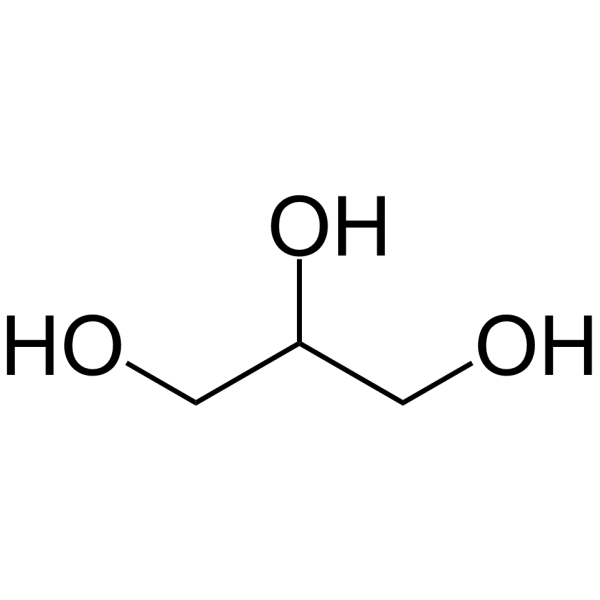
    Glycerol
    2 Publications Verification

    Trihydroxypropane

    Environmental Pollutants Endogenous Metabolite Cardiovascular Disease Inflammation/Immunology Cancer
    Glycerol is used in sample preparation and gel formation for polyacrylamide gel electrophoresis.
    Glycerol
  • HY-D0021
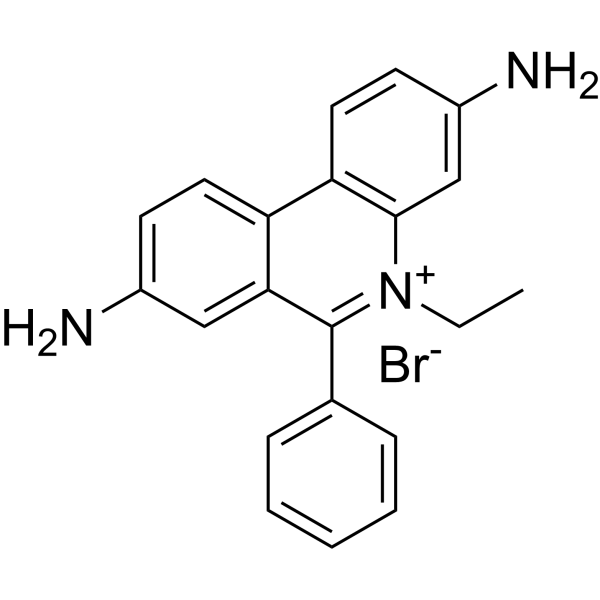
    EthD bromide
    Maximum Cited Publications
    26 Publications Verification

    EtBr; Homidium bromide

    DNA Stain Others
    EthD bromide is an intercalating agent commonly used as a fluorescent tag (nucleic acid stain) in molecular biology laboratories for techniques such as agarose gel electrophoresis.
    EthD bromide
  • HY-W088070A
    Agarose,Low melting point
    1 Publications Verification

    Biochemical Assay Reagents Others
    Agarose,Low melting point is a kind of agarose, a kind of polysaccharide that can be derived from seaweed. It is commonly used in molecular biology and biochemistry to isolate and purify DNA and RNA fragments. Agarose,Low melting point is a low melting point agarose, which is suitable for the recovery of large DNA fragments and enzymatic reactions in gels and other applications. In addition, it has been used in various techniques, such as pulsed field gel electrophoresis and capillary electrophoresis for analyzing genetic material.
    Agarose,Low melting point
  • HY-W134423

    Environmental Pollutants Biochemical Assay Reagents Others Cancer
    Agar, microbiology tested, for cell culture (powder) is a jelly like substance that contains agarose and agar gel. Agar, microbiology tested, for cell culture (powder) can be isolated from the cell walls of red algae species such as Gelidium and Gracilaria (Ogonori). The gelation and melting of Agar, microbiology tested, for cell culture (powder) is based on the hydrogen bridge (physical gels), so the gelation is reversible. Agar, microbiology tested, for cell culture (powder) is widely used in food additives, plant tissue culture, microorganisms culture media, fingerprint recognition, and medical fields .
    Agar, microbiology tested, for cell culture (powder)
  • HY-Y1310A

    Environmental Pollutants Biochemical Assay Reagents Others
    Sodium alginate is an anionic straight chain polysaccharide. Sodium alginate can be obtained from different species of algae. Sodium alginate has different properties, such as pH-sensitivity, nontoxicity, nonimmunogenicity. Sodium alginate has weak gelation, viscosity, and film-forming properties. Sodium alginate can be utilized to prepare gels and film materials for food preservation. Sodium alginate is a versatile functional biomaterial for viscosity enhancement, stabilizer, matrixing agent, encapsulation polymer, bioadhesive and film former .
    Sodium alginate (Viscosity 200±20mpa.s)
  • HY-101064

    N-FMOC-leucine; NPC 15199; NSC 334290

    PPAR Calcium Channel Lipase Metabolic Disease Inflammation/Immunology
    Fmoc-Leucine (N-FMOC-leucine) is an anti-inflammatory agent that not only promotes extracellular Ca 2+ influx but also facilitates intracellular Ca 2+ release. Fmoc-Leucine is a selective ligand for PPARγ (Ki = 15 μM), exhibiting insulin-sensitizing effects but with weak fatogenic activity. Fmoc-Leucine exhibits unique self-assembly properties and can form transient gels, stable gels, or crystals/2D sheets through different pathways. Fmoc-Leucine can be used in the research of diabetes, colitis, and bladder cancer .
    Fmoc-leucine
  • HY-D0232
    Brilliant Blue R250
    1 Publications Verification

    Brilliant Blue R

    Environmental Pollutants Fluorescent Dye Others
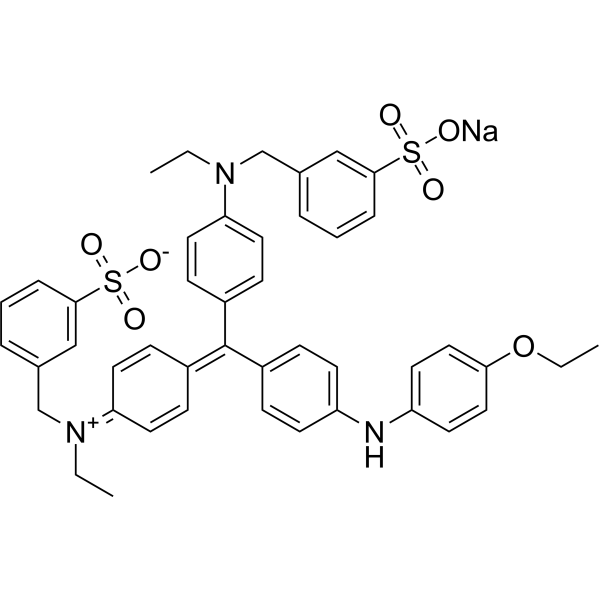
    Brilliant blue R250 (Brilliant Blue R), an anionic dye, is the most popular stain to detect proteins resolved in SDS-PAGE gels .
    Brilliant Blue R250
  • HY-B1659S5

    Trihydroxypropane-13C3

    Endogenous Metabolite Cancer
    Glycerol- 13C3 is the 13C labeled Glycerol . Glycerol is used in sample preparation and gel formation for polyacrylamide gel electrophoresis .
    Glycerol-13C3
  • HY-W116335A

    Environmental Pollutants Biochemical Assay Reagents Inflammation/Immunology
    Dried aluminum hydroxide gel, United States Pharmacopeia (USP) Reference Standard is a commonly used antacid with remarkable compound adhesion and release activity. Dried aluminum hydroxide gel, United States Pharmacopeia (USP) Reference Standard can effectively neutralize gastric acid and relieve stomach discomfort. Dried aluminum hydroxide gel, United States Pharmacopeia (USP) Reference Standard is also often used as an adjuvant in vaccines to enhance immune responses. Dried aluminum hydroxide gel, United States Pharmacopeia (USP) Reference Standard can improve the stability and bioavailability of compounds in preparations .
    Dried aluminum hydroxide gel,United States Pharmacopeia (USP) Reference Standard
  • HY-Y1365L

    Biochemical Assay Reagents Others
    Porcine skin Gelatin,suitable for cell culture(high gel strength) can be used to coat cells to improve cell attachment .
    Porcine skin Gelatin,suitable for cell culture(high gel strength)
  • HY-154487

    Biochemical Assay Reagents Neurological Disease
    Glycerol dioleate is a lipid capable of forming Lyotropic Liquid Crystal (LLC). When formulated with phosphatidylcholine and exposed to aqueous media, glycerol dioleate constructs an inverted hexagonal (HII) phase structure with sustained-release properties. The in-situ forming gel prepared by optimizing glycerol dioleate with phosphatidylcholine and N-methyl-2-pyrrolidone enables stable release of Risperidone (HY-11018) for up to 60 days in vitro and in vivo. Glycerol dioleate causes minimal side effects in rabbits, making it an ideal carrier component for the development of antischizophrenia agents .Note: Lyotropic liquid crystals (Lyotropic Liquid Crystal, LLC) are ordered fluid phases self-assembled by amphipathic molecules (e.g., lipids, surfactants) in solvents (usually water) at specific concentrations .
    Glycerol dioleate
  • HY-Y1324

    Disodium hydrogen phosphate dodecahydrate; Disodium phosphate dodecahydrate

    Environmental Pollutants Biochemical Assay Reagents Endocrinology
    Phosphoric acid disodium dodecahydrate is an inorganic compound and food additive. Phosphoric acid disodium dodecahydrate promotes gel formation, improves food texture and thermal properties of materials. Phosphoric acid disodium dodecahydrate induces glomerular calcification. Phosphoric acid disodium dodecahydrate can be used in kidney disease research .
    Sodium phosphate dibasic dodecahydrate
  • HY-DY1050

    DNA Stain Others
    Ethidium bromide (solution) is an intercalating agent commonly used as a fluorescent tag (nucleic acid stain) in molecular biology laboratories for techniques such as agarose gel electrophoresis.
    Solvent and Concentration: Sterile water: 10 mg/Ml
    Ethidium bromide (solution)
  • HY-W105681

    Biochemical Assay Reagents Others
    Bis-Tris hydrochloride is an amine buffer suitable for protein and nucleic acid systems with a pH buffer range of 5.8-7.2. Bis-Tris hydrochloride can also be mixed with HEPES and cacodylic acid buffer to create a pH 8 environment and monitor fluorescence emission intensity at 305 nm. Gels formulated with Bis-Tris also avoid protein degradation in samples prepared at higher pH (pH 8.5) .
    Bis-Tris hydrochloride
  • HY-W134328

    Dextran blue (MW 2000000)

    Biochemical Assay Reagents Others
    Blue dextran (Dextran blue) (MW 2000000) is a high-molecular-weight long-chain polymer of D-glucose. Blue dextran (MW 2000000) serves as an important model macromolecular drug and molecular weight estimation marker, and can be used as a standard for gel permeation chromatography. The release of Blue dextran (MW 2000000) from alginate microspheres is regulated by preparation conditions; its release rate in a pH 6.8 environment is significantly faster than that in pH 1.2, and it exhibits release characteristics close to zero-order kinetics under this condition .
    Blue dextran (MW 2000000)
  • HY-Y1219H

    Biochemical Assay Reagents Others
    Silica gel, high-purity grade, 200-400 mesh is a low-density, high-surface-area, high-purity inert additive that can be used to prepare chromatographic column sieve plates based on the sol-gel method. Silica gel, high-purity grade prevents DNA degradation by absorbing water from plant leaves, and is suitable for the preservation of field-collected samples for subsequent DNA extraction, restriction endonuclease digestion, PCR amplification and gene sequencing. It can also be reused after being saturated with water. Silica gel, high-purity grade can provide a non-toxic, inert aquatic environment for embedded cells, allowing nutrients, oxygen and metabolic waste to diffuse freely and blocking external pollution, thereby maintaining the activity of fibroblasts and epithelial cells .
    Silica gel, high-purity grade, 200-400 mesh
  • HY-148139

    Biochemical Assay Reagents Others
    Cross-linked dextran G 75 is a Gel-filtration media. Cross-linked dextran G 75 also is a dextran-based matrix and used for Gel-filtration chromatography (Particle size range: 40-120 μm; Sphere protein separation range: 3K-80K Da; Polysaccharide separation range: 1K-50K Da) .
    Cross-linked dextran G 75
  • HY-D0006

    Fluorescent Dye Others
    Bathophenanthroline is a nitrogen-containing organic ligand that can form stable complexes with transition metal ions such as Ru 2+. In proteomics, Bathophenanthroline is often used for in-gel protein staining. The negatively charged sulfonic acid groups of Bathophenanthroline interact electrostatically with the positively charged amino acid residues of proteins, thereby achieving specific binding to proteins and enhancing the fluorescent signal of detection. Bathophenanthroline can be used for protein separation and detection in SDS-PAGE gels in the field of proteomics, as well as other fluorescence studies[1]. Ex/Em=532 nm/610 nm[1].
    Bathophenanthroline
  • HY-138560
    Cross-linked dextran G 50
    2 Publications Verification

    Biochemical Assay Reagents Others
    Cross-linked dextran G 50 is a gel filtration medium. Cross-linked dextran G 50 can be used in gel permeation chromatography for fractionation of the glycopeptide mixture (Sphere protein separation range: 1.5K-30K Da; Polysaccharide separation range: 500-10K Da) .
    Cross-linked dextran G 50
  • HY-141522

    Biochemical Assay Reagents Others
    Cross-linked dextran G 100 is a gel filtration medium that can be used for protein purification (Sphere protein separation range: 4K-150K Da; Polysaccharide separation range: 1K-100K Da) .
    Cross-linked dextran G 100
  • HY-W129513

    Biochemical Assay Reagents Others
    Sorbitan monopalmitate is a food-grade, non-ionic emulsifier that exhibits oral activity. Sorbitan monopalmitate functions as a crystallization modifier, promoting the aggregation of spherical mango butter crystals, introducing lattice defects, and regulating the crystallization rate of mango butter. Sorbitan monopalmitate serves as a component of precursor vesicle gels, enabling the controlled and sustained release of drugs and facilitating the preparation of stable transdermal delivery formulations .
    Sorbitan monopalmitate
  • HY-156829B

    Biochemical Assay Reagents Others
    PLGA-PEG-PLGA (hydrogel) (LA:GA 7:1) is a biodegradable thermosensitive hydrogel product that can undergo phase transition at a specific temperature. PLGA-PEG-PLGA (hydrogel) (LA:GA 7:1) can be widely used in drug delivery systems, tissue engineering, wound dressings, and biosensors. The gelation temperature varies with concentration. The gelation temperature varies with the concentration; the higher the concentration, the lower the gelation temperature .
    PLGA-PEG-PLGA (hydrogel) (LA:GA 7:1)
  • HY-W145493

    Tetraglycol; Poly(ethylene glycol) tetrahydrofurfuryl ether

    Biochemical Assay Reagents Others
    Glycofurol (Tetraglycol) is a hydrophilic, water-miscible cosolvent and absorption enhancer with skin tolerance. Glycofurol can be used as a carrier-based gel for the topical delivery of drugs, including water-insoluble drugs. Glycofurol can form gels with bioadhesiveness, spreadability and suitable viscosity for topical administration .
    Glycofurol
  • HY-W250721B

    CBM 934

    Biochemical Assay Reagents Others
    Carbomer 934 (CBM 934) is an acrylic acid polymer, which can be used as a thickening agent. Carbomer 934 which forms a high viscosity gel, provides a stable gel matrix, and exhibits good heat, light and microbial contamination resistance. Carbomer 934 facilitates the drug release and local application, which can be used in the pharmaceutical industry .
    Carbomer 934
  • HY-Y1365E

    Biochemical Assay Reagents Others
    Porcine skin Gelatin, suitable for cell culture (medium gel strength) can be used to coat cells to improve cell attachment .
    Porcine skin Gelatin,suitable for cell culture(medium gel strength)
  • HY-156829I

    Biochemical Assay Reagents Others
    PLGA-PEG-PLGA (hydrogel) (LA:GA 3:1) (15% solution) is a biodegradable thermosensitive hydrogel product that can undergo phase transition at a specific temperature. PLGA-PEG-PLGA (hydrogel) (LA:GA 3:1) (15% solution) can be widely used in drug delivery systems, tissue engineering, wound dressings, and biosensors . The gelation temperature varies with the concentration; the higher the concentration, the lower the gelation temperature.
    PLGA-PEG-PLGA (hydrogel) (LA:GA 3:1) (15% solution)
  • HY-D0950A

    DNA Stain Others
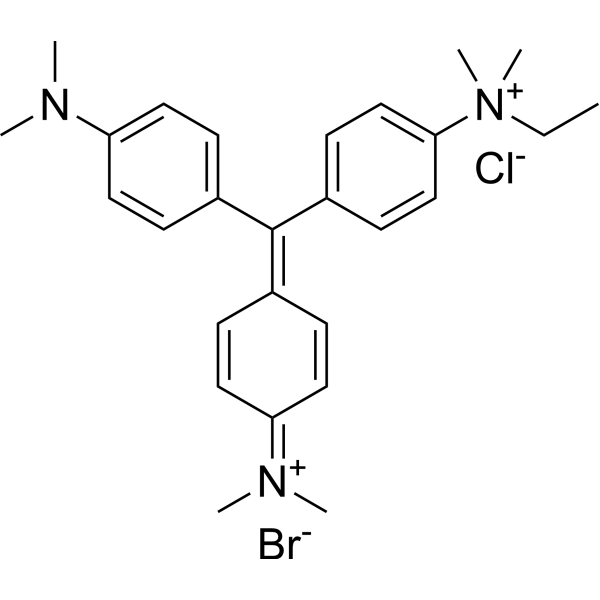
    Methyl Green zinc chloride is a potent fluorescent dye. Methyl Green zinc chloride is a DNA stains of cells and electrophoretic gels. Methyl Green zinc chloride can be used as direct measuring of viability by both microscopy and flow cytometry, with peaks at 633 and 677 nm .
    Methyl Green zinc chloride
  • HY-B1659R

    Trihydroxypropane (Standard)

    Reference Standards Endogenous Metabolite Cardiovascular Disease Inflammation/Immunology Cancer
    Glycerol (Standard) is the analytical standard of Glycerol. This product is intended for research and analytical applications. Glycerol is used in sample preparation and gel formation for polyacrylamide gel electrophoresis.
    Glycerol (Standard)
  • HY-B1659S6

    Trihydroxypropane-d5

    Endogenous Metabolite Cancer
    Glycerol-d5 is the deuterium labeled Glycerol . Glycerol is used in sample preparation and gel formation for polyacrylamide gel electrophoresis .
    Glycerol-d5
  • HY-156045C

    Biochemical Assay Reagents Others
    Cross-linked dextran G 200 is a hydrophilic gel based on molecular size exclusion and targeted macromolecular separation. Cross-linked dextran G 200 works through the gel permeation mechanism, and the cross-linked structure forms a three-dimensional network with a specific pore size, achieving separation based on the molecular hydrodynamic volume. Cross-linked dextran G 200 can be used to adjust the osmotic solute distribution coefficient and the ability to maintain osmotic equilibrium, such as in gel filtration chromatography for purification and analysis of biomacromolecules such as proteins and nucleic acids . Cross-linked dextran G 200 can also be used as a gel filtration filler (particle size range: 40-120 μm; globular protein separation range: 5-600 kDa) .
    Cross-linked dextran G 200
  • HY-156829J

    Biochemical Assay Reagents Others
    PLGA-PEG-PLGA (hydrogel) (LA:GA 3:1) (20% solution) is a biodegradable thermosensitive hydrogel product that can undergo phase transition at a specific temperature. PLGA-PEG-PLGA (hydrogel) (LA:GA 3:1) (20% solution) can be widely used in drug delivery systems, tissue engineering, wound dressings, and biosensors. The gelation temperature varies with the concentration; the higher the concentration, the lower the gelation temperature .
    PLGA-PEG-PLGA (hydrogel) (LA:GA 3:1) (20% solution)
  • HY-W250146

    Locust bean gum, Polysaccharide>75%, 5000-6500 mPa·S

    Environmental Pollutants Biochemical Assay Reagents Others
    Locust bean gum is a natural polysaccharide derived from the seeds of the carob tree. It is commonly used as a thickening, stabilizing and gelling agent in a variety of foods, including dairy, baked goods and meat products. Locust bean gum has several properties suitable for these applications, including high water retention capacity, ability to form stable gels at low temperatures, and resistance to acidic conditions. Additionally, it can be used as a dietary fiber supplement due to its potential health benefits, including improving digestion and lowering cholesterol levels.
    Locust bean gum, from Ceratonia siliqua seeds
  • HY-156045B

    Biochemical Assay Reagents Others
    Cross-linked dextran G 150 is a hydrophilic gel based on molecular size exclusion and targeted for the separation of macromolecules. Cross-linked dextran G 150 functions through the gel permeation mechanism, where the cross-linked structure forms a three-dimensional network with specific pore diameters, achieving separation based on the molecular volumetric flow. Cross-linked dextran G 150 can be used to regulate the distribution coefficient of permeating solutes and maintain the permeation balance, such as in gel filtration chromatography for the purification and analysis of biological macromolecules like proteins and nucleic acids. Cross-linked dextran G 150 can also be used as a gel filtration filler (particle size range: 40-120 μm; spherical protein separation range: 5-300 kDa) .
    Cross-linked dextran G 150
  • HY-Y1219E

    Biochemical Assay Reagents Others
    Silica gel, high-purity grade, 130-270 mesh is a low-density, high-surface-area, high-purity inert additive that can be used to prepare chromatographic column sieve plates based on the sol-gel method. Silica gel, high-purity grade prevents DNA degradation by absorbing water from plant leaves, and is suitable for the preservation of field-collected samples for subsequent DNA extraction, restriction endonuclease digestion, PCR amplification and gene sequencing. It can also be reused after being saturated with water. Silica gel, high-purity grade can provide a non-toxic, inert aquatic environment for embedded cells, allowing nutrients, oxygen and metabolic waste to diffuse freely and blocking external pollution, thereby maintaining the activity of fibroblasts and epithelial cells .
    Silica gel, high-purity grade, 130-270 mesh
  • HY-P4637

    H-Ile-Phe-OH

    Amyloid-β Others
    Ile-Phe is a dipeptide that self-associates in aqueous solution to form a transparent thermoreversible gel formed by a network of fibrillar nanostructures. It may be involved in triggering self-assembly processes such as amyloid formation.
    Ile-Phe
  • HY-158220

    HAMA (MW 400 kDa)

    Biochemical Assay Reagents Others
    Hyaluronic acid Methacryloyl (HAMA) is methacrylated hyaluronic acid that is biocompatible. Hyaluronic acid Methacryloyl is also used as a 3D printing hydrogel ink, which has the characteristics of fast photosensitive response, fast gelation speed and stable hydrogel performance. Hyaluronic acid Methacryloyl can quickly induce gelation with lithium phenyl-2,4,6-trimethylbenzoylphosphinate (LAP) under UV irradiation. The combination of Hyaluronic acid Methacryloyl and tissue-specific extracellular matrix (ECM) materials (such as pancreatic extracellular matrix (pECM)) will become an important source material for organoid culture .
    Hyaluronic acid Methacryloyl (MW 400 kDa)
  • HY-W134423A

    Biochemical Assay Reagents Bacterial Fungal Infection
    Agar, microbiology tested, for cell culture (granular) is a hydrocolloid with gelling ability. Agar, microbiology tested, for cell culture (granular) can be used to prepare microbial culture media (for bacteria, yeasts and molds) .
    Agar, microbiology tested, for cell culture (granular)
  • HY-158220A

    HAMA (MW 150 kDa)

    Biochemical Assay Reagents Others
    Hyaluronic acid Methacryloyl (HAMA) MW 150 kDa is methacrylated hyaluronic acid that is biocompatible. Hyaluronic acid Methacryloyl is also used as a 3D printing hydrogel ink, which has the characteristics of fast photosensitive response, fast gelation speed and stable hydrogel performance. Hyaluronic acid Methacryloyl can quickly induce gelation with lithium phenyl-2,4,6-trimethylbenzoylphosphinate (LAP) under UV irradiation. The combination of Hyaluronic acid Methacryloyl and tissue-specific extracellular matrix (ECM) materials (such as pancreatic extracellular matrix (pECM)) will become an important source material for organoid culture .
    Hyaluronic acid Methacryloyl (MW 150 kDa)
  • HY-P2292

    Bacterial Fungal Infection
    Omiganan, FITC labeled is a peptide-FITC complex composed of Omiganan and a FITC. Omiganan is a bactericidal and fungicidal cationic peptide being developed as a topical gel for prevention of catheter-associated infections. FITC is a derivative of fluorescein for the labeling of amines .
    Omiganan, FITC labeled
  • HY-135514

    H-Lys-Phe-OH

    Amino Acid Derivatives Cardiovascular Disease
    Lys-Phe is a dipeptide that inhibits both cell sickling and the gelation of solutions of sickle-cell haemoglobin .
    Lys-Phe
  • HY-Y0700

    Fluorescent Dye Others
    Calconcarboxylic acid, an azo dye, acts as a silver-ion sensitizer to stain protein in SDS-PAGE gels. Calconcarboxylic acid increases silver binding on protein bands or spots by the formation of a silver-dye complex and also increases the reducing power o
    Calconcarboxylic acid
  • HY-164068

    Biochemical Assay Reagents Others Inflammation/Immunology
    Cross-linked sodium hyaluronate gel is a biomaterial formed by cross-linking sodium hyaluronate. Cross-linked sodium hyaluronate gel has good moisturizing properties, viscoelasticity and biocompatibility. Cross-linked sodium hyaluronate gel can be used for the treatment of arthritis and the development of auxiliary materials in ophthalmic surgery .
    Cross-linked sodium hyaluronate gel
  • HY-B1659S1

    Trihydroxypropane-13C

    Isotope-Labeled Compounds Endogenous Metabolite Cardiovascular Disease Inflammation/Immunology Cancer
    Glycerol- 13C is the 13C labeled Glycerol. Glycerol is used in sample preparation and gel formation for polyacrylamide gel electrophoresis .
    Glycerol-13C
  • HY-W250721G

    Carboxy polymethylene (interpolymer)

    Others
    Carbomer interpolymer (Carboxy polymethylene (interpolymer)) is an acrylic acid polymer, which can be used as a thickening agent. Carbomer interpolymer provides a stable gel matrix, exhibits good heat, light and microbial contamination resistance. Carbomer interpolymer facilitates the drug release and local application, which can be used in the pharmaceutical industry .
    Carbomer interpolymer
  • HY-W250721F

    Carboxy polymethylene (homopolymer)

    Biochemical Assay Reagents Others
    Carbomer homopolymer (Carboxy polymethylene (homopolymer)) is an acrylic acid polymer, which can be used as a thickening agent. Carbomer homopolymer provides a stable gel matrix, exhibits good heat, light and microbial contamination resistance. Carbomer homopolymer facilitates the drug release and local application, which can be used in the pharmaceutical industry .
    Carbomer homopolymer
  • HY-B1659S4

    Trihydroxypropane-13C2

    Endogenous Metabolite Cancer
    Glycerol- 13C2 is the 13C labeled Glycerol . Glycerol is used in sample preparation and gel formation for polyacrylamide gel electrophoresis .
    Glycerol-13C2
  • HY-Y1219C

    Biochemical Assay Reagents Others
    Silica gel, high-purity grade, 220-440 mesh is a low-density, high-surface-area, high-purity inert additive that can be used to prepare chromatographic column sieve plates based on the sol-gel method. Silica gel, high-purity grade prevents DNA degradation by absorbing water from plant leaves, and is suitable for the preservation of field-collected samples for subsequent DNA extraction, restriction endonuclease digestion, PCR amplification and gene sequencing. It can also be reused after being saturated with water. Silica gel, high-purity grade can provide a non-toxic, inert aquatic environment for embedded cells, allowing nutrients, oxygen and metabolic waste to diffuse freely and blocking external pollution, thereby maintaining the activity of fibroblasts and epithelial cells .
    Silica gel, high-purity grade, 220-440 mesh
  • HY-Y1219I

    Biochemical Assay Reagents Others
    Silica gel, high-purity grade, 70-230 mesh is a low-density, high-surface-area, high-purity inert additive that can be used to prepare chromatographic column sieve plates based on the sol-gel method. Silica gel, high-purity grade prevents DNA degradation by absorbing water from plant leaves, and is suitable for the preservation of field-collected samples for subsequent DNA extraction, restriction endonuclease digestion, PCR amplification and gene sequencing. It can also be reused after being saturated with water. Silica gel, high-purity grade can provide a non-toxic, inert aquatic environment for embedded cells, allowing nutrients, oxygen and metabolic waste to diffuse freely and blocking external pollution, thereby maintaining the activity of fibroblasts and epithelial cells .
    Silica gel, high-purity grade, 70-230 mesh
  • HY-Y1219D

    Biochemical Assay Reagents Others
    Silica gel, high-purity grade, 35-70 mesh is a low-density, high-surface-area, high-purity inert additive that can be used to prepare chromatographic column sieve plates based on the sol-gel method. Silica gel, high-purity grade prevents DNA degradation by absorbing water from plant leaves, and is suitable for the preservation of field-collected samples for subsequent DNA extraction, restriction endonuclease digestion, PCR amplification and gene sequencing. It can also be reused after being saturated with water. Silica gel, high-purity grade can provide a non-toxic, inert aquatic environment for embedded cells, allowing nutrients, oxygen and metabolic waste to diffuse freely and blocking external pollution, thereby maintaining the activity of fibroblasts and epithelial cells .
    Silica gel, high-purity grade, 35-70 mesh
  • HY-W250721J

    CBM 960

    Biochemical Assay Reagents Others
    Carbomer 960 is an acrylic acid polymer, which can be used as a thickening agent. Carbomer 960 which forms a high viscosity gel, provides a stable gel matrix, and exhibits good heat, light and microbial contamination resistance. Carbomer 960 facilitates the drug release and local application, which can be used in the pharmaceutical industry .
    Carbomer 960

Inquiry Online

Your information is safe with us. * Required Fields.

Salutation


Country or Region *

Applicant Name *


Organization Name *

Department *


Email Address *


Product Name *

Cat. No.


Requested quantity *

Phone Number *


Remarks

Inquiry Online

Inquiry Information

Product Name:
Cat. No.:
Quantity:
MCE Japan Authorized Agent:

