



Sodium pyrophosphate
Based on 1 publication(s) in Google Scholar
Sodium pyrophosphate (Disodium pyrophosphate) is an orally active reverse transcriptase ribonuclease H inhibitor. Sodium pyrophosphate forms soluble complexes with iron from ferric pyrophosphate to promote intestinal iron absorption. Sodium pyrophosphate increases the β-sheet content of oxidatively damaged myofibrillar protein gels and enhances the gastric digestibility and antioxidant activity of their digestion products. Sodium pyrophosphate prevents the degradation of RNA-DNA hybrids, inhibits antisense complementary DNA synthesis, induces phage DNA leakage, and causes random mutations in temperate phages.
For research use only. We do not sell to patients.
- Assay : 98.2%
- CAS No.: 7758-16-9
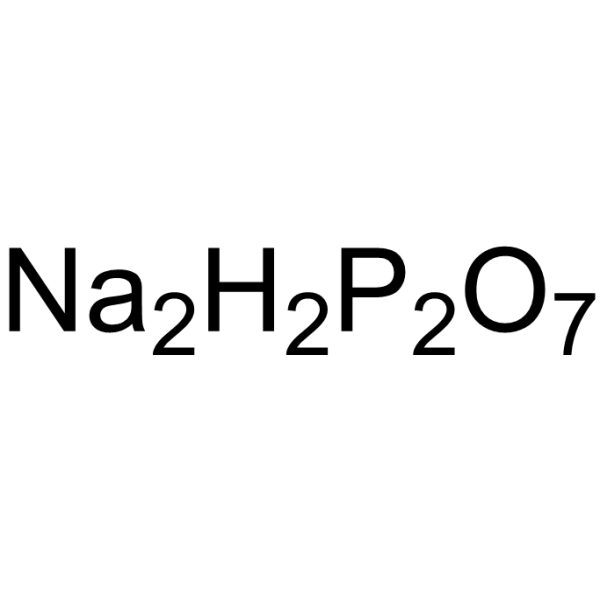
- Formula: Na2H2P2O7
- Molecular Weight:221.94
-
Storage:
4°C, sealed storage, away from moisture
* In solvent : -80°C, 6 months; -20°C, 1 month (sealed storage, away from moisture)

To place orders, for customer services and technical support, please contact: MedChemExpress USA
Tel: 609-228-6898 E-mail: [email protected] [email protected]


-
 Biological Activity
-
Chemical Information
-
Solvent & Solubility
- Protocols
- Purity & Documentation
- References
-
 Help & FAQs


-
HY-D0852
Sodium orthovanadateProtein Tyrosine/Alkaline Phosphatase Inhibitor -

HY-Y0406E
Calcium chloride anhydrous, for cell cultureCalcium Chloride -
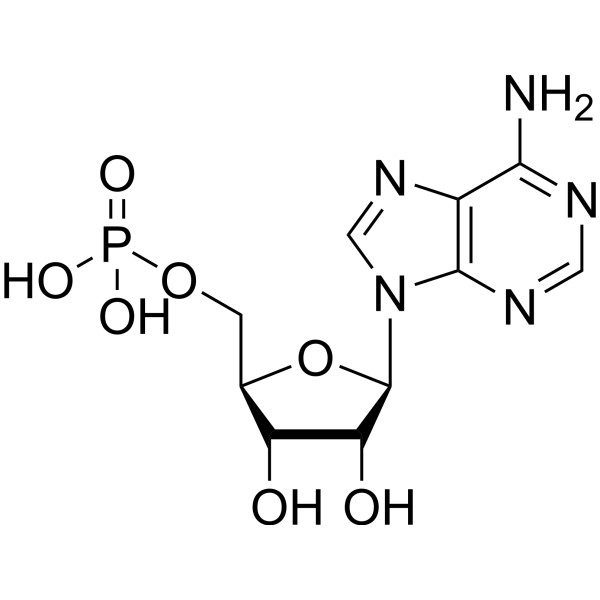
HY-A0181
Adenosine monophosphateAdenosine A1 Receptor Agonist -

HY-Y1885
Tetrasodium pyrophosphateChelating -
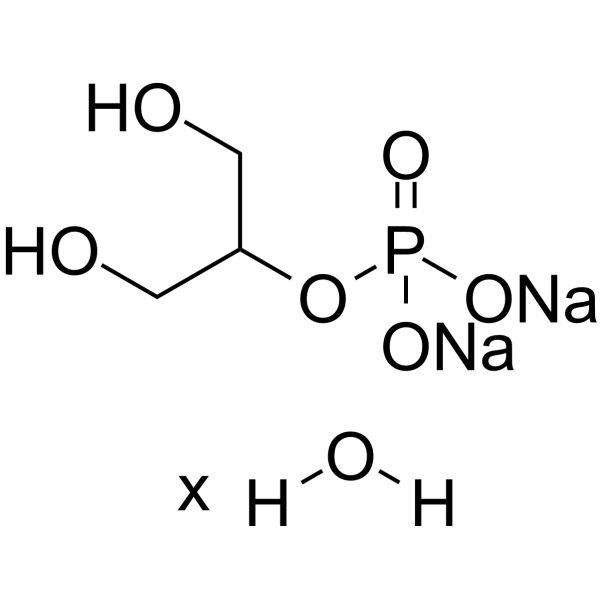
HY-126304
β-Glycerophosphate disodium salt hydratePhosphatase Inhibitor -

HY-B0540
Disodium monofluorophosphateBiochemical Reagent -
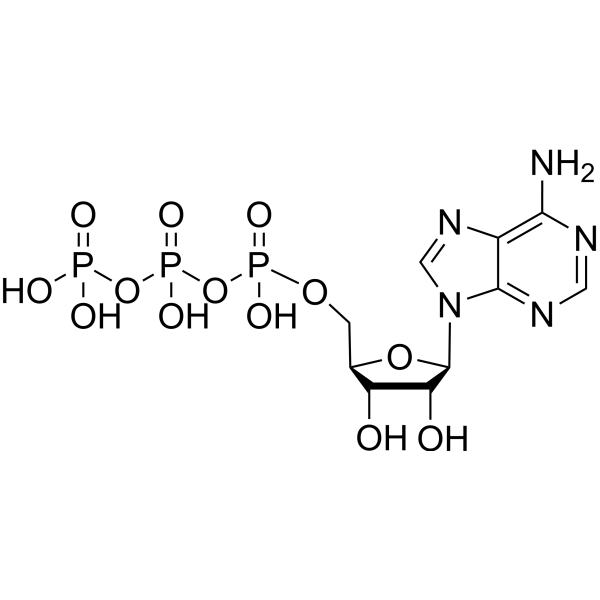
HY-B2176
ATPEndogenous Metabolite -
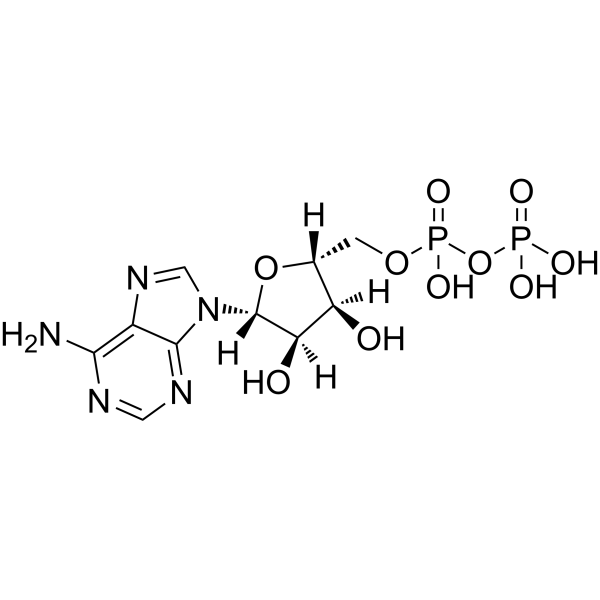
HY-W010918
Adenosine 5'-diphosphate -

HY-108775A
Sodium thiosulfate (99%, water≤1.0%)Antioxidant -
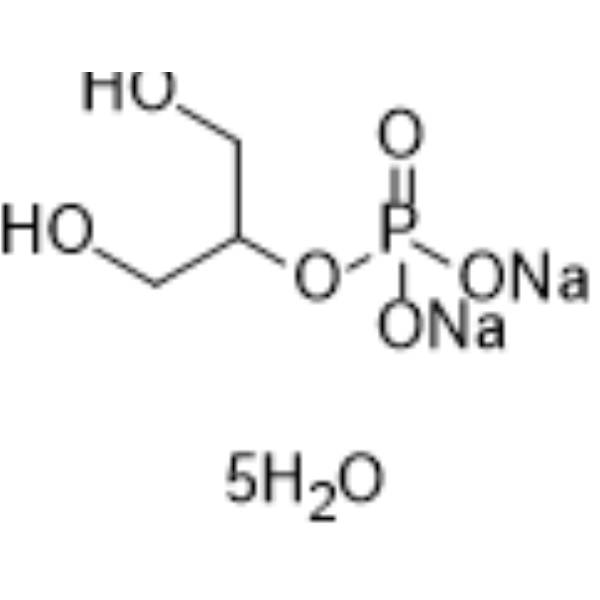
HY-D0886
β-Glycerophosphate disodium salt pentahydratePhosphatase Inhibitor -

HY-Y0406H
Calcium chloride anhydrous, powder, 97%Biochemical Assay Reagents
Publications Citing Use of MedChemExpress (MCE) Sodium pyrophosphate
MoreAll DNA/RNA Synthesis Isoforms
More

Biological Activity
Description
In Vitro
Sodium pyrophosphate (12 mg/4 g broth) increases the levels of dialyzable iron and ionic iron in ferric pyrophosphate-fortified broth cubes during in vitro simulated digestion experiments[1].
Sodium pyrophosphate (2 mM; 12 h) significantly increases the gastric digestibility of myofibrillar protein gels prepared from oxidatively damaged porcine longissimus dorsi muscle, but does not alter their intestinal digestibility[2].
Sodium pyrophosphate (2 mM; 12 h) increases the β-sheet content in undigested myofibrillar protein gels prepared from oxidatively damaged porcine longissimus dorsi muscle, which helps enhance gastric digestibility, and the protein undergoes a typical structural transition to β-turn during gastrointestinal digestion[2].
Sodium pyrophosphate (2 mM; 12 h) alters the microstructure of oxidatively damaged myofibrillar protein gels from porcine longissimus dorsi muscle, making it similar to that of non-oxidized gels; it also generates gastric digestion products with a rougher, more porous structure, which is associated with improved digestibility[2].
Sodium pyrophosphate (2 mM; 12 h) shifts the molecular distribution of gastrointestinal digestion products of oxidatively damaged porcine longissimus dorsi myofibrillar protein gels toward smaller peptide fragments, reduces particle size, and increases the absolute negative value of ζ-potential[2].
Sodium pyrophosphate (4 mM; 15-90 min) inhibits anti-complementary DNA synthesis and stabilizes DNA-RNA hybrids during poliovirus RNA cDNA synthesis catalyzed by avian myeloblastosis virus reverse transcriptase, thereby increasing the yield of full-length 18S poliovirus cDNA[3].
Sodium pyrophosphate (4 mM; 10-60 min) inhibits avian myeloblastosis reverse transcriptase-mediated degradation of isolated poliovirus DNA-RNA hybrids and suppresses anti-complementary DNA synthesis using this hybrid as a template[3].
Sodium pyrophosphate (4 mM; 5-60 min) maintains the nuclease resistance of isolated poliovirus DNA-RNA hybrids during incubation with avian myeloblastosis virus reverse transcriptase, even in the absence of active DNA synthesis[3].
Sodium pyrophosphate significantly enhances the Fe2+ chelating activity and free radical scavenging activities (ABTS, DPPH, hydroxyl free radical) of the digested products from oxidatively damaged porcine longissimus dorsi myofibrillar protein gels after gastric digestion and gastrointestinal digestion[2].
Sodium pyrophosphate (2 mM; 12 h) increases the contents of total free amino acids, antioxidant amino acids and negatively charged amino acids in gastrointestinal digestion products of myofibrillar protein gels from oxidatively damaged porcine longissimus dorsi, while reduces the contents of essential amino acids and hydrophobic amino acids[2].
Continuous stimulation with sodium pyrophosphate (50-400 mM; 1 h) induces random mutations in phage SA3821, generating mutant strain SA3821M, which exhibits enhanced bactericidal activity against Staphylococcus aureus CCARM 3821 and improved thermal stability, whereas phage SA3956 remains unaffected under these conditions[4].
MedChemExpress (MCE) has not independently confirmed the accuracy of these methods. They are for reference only. Further protocols information, click here.
Clinical Trial
| NCT Number | Sponsor | Condition | Start Date |
Phase

|
|---|---|---|---|---|
| NCT01329991 | Plexxikon| | 2011-05 | PHASE1 |


Chemical Information
-
CAS No. 7758-16-9
-
Appearance Solid
-
Molecular Weight 221.94
-
Formula Na2H2P2O7
-
Color White to off-white
-
SMILES
[Na2H2P2O7]
-
Synonyms
Disodium pyrophosphate; Sodium acid pyrophosphate; SAPP
-
Shipping
Room temperature in continental US; may vary elsewhere.
-
Storage
4°C, sealed storage, away from moisture
* In solvent : -80°C, 6 months; -20°C, 1 month (sealed storage, away from moisture)


Publications (1)
-
Journal Impact Factor
-
Most Recent
-
Nature
2025 Jul;643(8070):192-200. PMID: 39695227


Solvent & Solubility
In Vitro:
H2O : 100 mg/mL (450.57 mM; Need ultrasonic)
Please refer to the solubility information to select the appropriate solvent. Once prepared, please aliquot and store the solution to prevent product inactivation from repeated freeze-thaw cycles.
Storage method and period of stock solution: -80°C, 6 months; -20°C, 1 month (sealed storage, away from moisture). When stored at -80°C, please use it within 6 months. When stored at -20°C, please use it within 1 month.
* Note: If you choose water as the stock solution, please dilute it to the working solution, then filter and sterilize it with a 0.22 μm filter before use.
Please refer to the solubility information to select the appropriate solvent. Once prepared, please aliquot and store the solution to prevent product inactivation from repeated freeze-thaw cycles.
Storage method and period of stock solution: -80°C, 6 months; -20°C, 1 month (sealed storage, away from moisture). When stored at -80°C, please use it within 6 months. When stored at -20°C, please use it within 1 month.
* Note: If you choose water as the stock solution, please dilute it to the working solution, then filter and sterilize it with a 0.22 μm filter before use.
Concentration (start) × Volume (start) = Concentration (final) × Volume (final)

Protocols
-
EdU Incorporation Assay (Click Chemistry-Based DNA Synthesis Measurement)
The EdU incorporation assay measures DNA synthesis by adding the thymidine analog 5-ethynyl-2′-deoxyuridine to cells or tissues, where it is incorporated into newly synthesized DNA during S phase. Incorporated EdU is detected by copper-catalyzed azide-alkyne cycloaddition, in which a fluorescent azide covalently reacts with the ethynyl group on EdU, allowing S-phase cells to be detected by fluorescence microscopy, flow cytometry, or high-content imaging. EdU detection does not require DNA denaturation or anti-BrdU antibody access, which preserves sample structure and improves compatibility with immunostaining and multiparameter cytometry compared with BrdU-based detection. EdU can be cytotoxic in a cell-type- and exposure-dependent manner, so pulse duration, concentration, and continuous-labeling designs should be validated for each cell type.
-
BrdU Incorporation Assay
Bromodeoxyuridine (BrdU) incorporation assay is based on the principle that BrdU, a thymidine analog, is incorporated into newly synthesized DNA during the S phase of the cell cycle, thereby serving as a marker of DNA replication and cellular proliferation. Incorporated BrdU can be detected using anti-BrdU antibodies following DNA denaturation, enabling visualization or quantification of proliferating cells through immunochemical detection methods such as immunofluorescence or immunohistochemistry.


Purity & Documentation
-
Data Sheet (274 KB)
-
SDS (394 KB)
- English - EN (394 KB)
- Français - FR (394 KB)
- Deutsch - DE (394 KB)
- Norwegian - NO (394 KB)
- Español - ES (394 KB)
- Swedish - SV (394 KB)
- Italian - IT (394 KB)
- Korean - KR (394 KB)
- Portuguese - PT (394 KB)
-
Handling Instructions (2659 KB)
References


Complete Stock Solution Preparation Table
Please refer to the solubility information to select the appropriate solvent. Once prepared, please aliquot and store the solution to prevent product inactivation from repeated freeze-thaw cycles.
Storage method and period of stock solution: -80°C, 6 months; -20°C, 1 month (sealed storage, away from moisture). When stored at -80°C, please use it within 6 months. When stored at -20°C, please use it within 1 month.
| Optional Solvent | Concentration Solvent Mass | 1 mg | 5 mg | 10 mg | 25 mg |
|---|---|---|---|---|---|
| H2O | 1 mM | 4.5057 mL | 22.5286 mL | 45.0572 mL | 112.6431 mL |
| 5 mM | 0.9011 mL | 4.5057 mL | 9.0114 mL | 22.5286 mL | |
| 10 mM | 0.4506 mL | 2.2529 mL | 4.5057 mL | 11.2643 mL | |
| 15 mM | 0.3004 mL | 1.5019 mL | 3.0038 mL | 7.5095 mL | |
| 20 mM | 0.2253 mL | 1.1264 mL | 2.2529 mL | 5.6322 mL | |
| 25 mM | 0.1802 mL | 0.9011 mL | 1.8023 mL | 4.5057 mL | |
| 30 mM | 0.1502 mL | 0.7510 mL | 1.5019 mL | 3.7548 mL | |
| 40 mM | 0.1126 mL | 0.5632 mL | 1.1264 mL | 2.8161 mL | |
| 50 mM | 0.0901 mL | 0.4506 mL | 0.9011 mL | 2.2529 mL | |
| 60 mM | 0.0751 mL | 0.3755 mL | 0.7510 mL | 1.8774 mL | |
| 80 mM | 0.0563 mL | 0.2816 mL | 0.5632 mL | 1.4080 mL | |
| 100 mM | 0.0451 mL | 0.2253 mL | 0.4506 mL | 1.1264 mL |
* Note: If you choose water as the stock solution, please dilute it to the working solution, then filter and sterilize it with a 0.22 μm filter before use.


Sodium pyrophosphate Related Classifications
HY-W105970 Related Classifications
 Powered by Bioz
Keywords
- Sodium pyrophosphate
- 7758-16-9
- Disodium pyrophosphate
- Sodium acid pyrophosphate
- SAPP
- DNA/RNA Synthesis
- complementary DNA
- avian myeloblastosis virus reverse transcriptase
- phage virion
- porcine longissimus lumborum myofibrillar protein
- Staphylococcus aureus
- iron bioavailability
- Caco-2 cell
- RNA-DNA hybrid
- ribonuclease H
- iron deficiency
- Inhibitor
- inhibitor
- inhibit