1. Search Result
Search Result
Results for "

gerbil

" in MedChemExpress (MCE) Product Catalog:

19

Inhibitors & Agonists

1

Peptides

Cat. No. Product Name Target Research Areas Chemical Structure
  • HY-14751

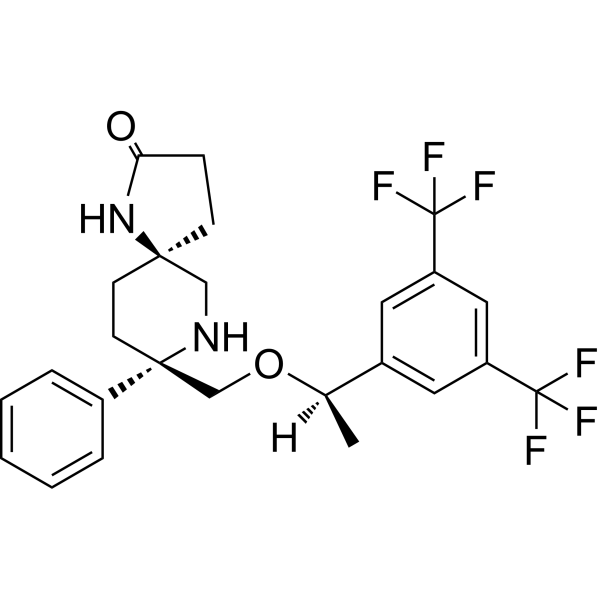
    SCH619734

    Neurokinin Receptor Neurological Disease
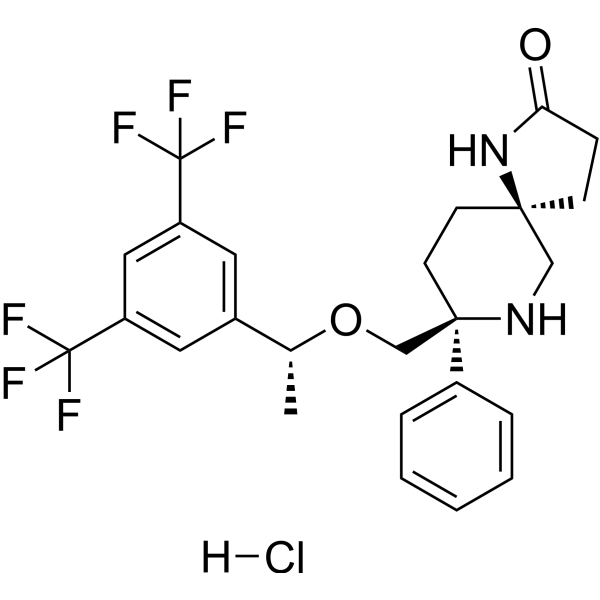
    Rolapitant (SCH619734) is a potent, selective, long-acting and orally active neurokinin 1 (NK1) receptor antagonist with a Ki of 0.66 nM. Rolapitant does not interact with CYP3A4. Rolapitant shows potent anti-emetic activity in a ferret emesis model .
    Rolapitant
  • HY-16436

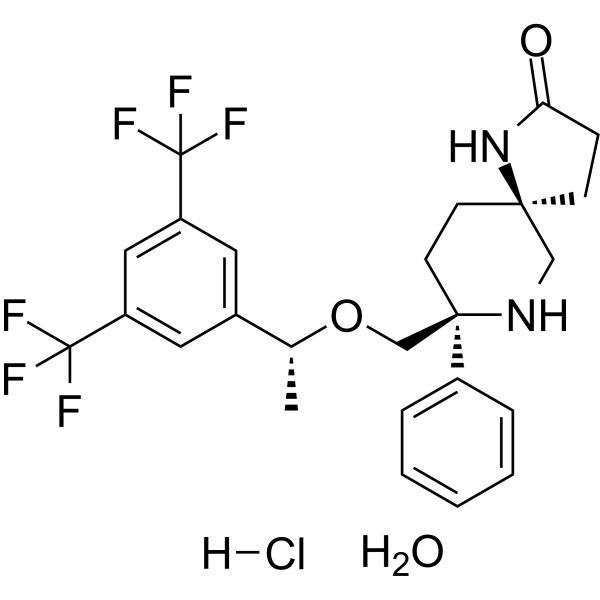
    SCH619734 hydrochloride hydrate

    Neurokinin Receptor Neurological Disease Cancer
    Rolapitant hydrochloride hydrate (SCH619734 hydrochloride hydrate) is a potent, selective, long-acting and orally active neurokinin 1 (NK1) receptor antagonist with a Ki of 0.66 nM. Rolapitant hydrochloride hydrate does not interact with CYP3A4. Rolapitant hydrochloride hydrate shows potent anti-emetic activity in a ferret emesis model .
    Rolapitant hydrochloride hydrate
  • HY-P1192

    Neurokinin Receptor Neurological Disease
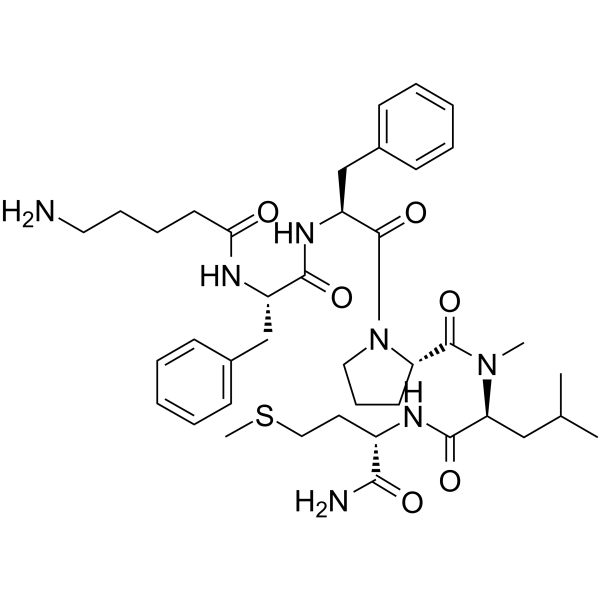
    GR-73632 is a tachykinin NK1 receptor agonist. GR-73632 activates spinal NK1 receptors to induce scratching, biting and licking behaviors. GR-73632 activates peripheral NK1 receptors to trigger lacrimation in guinea pigs, and activates central NK1 receptors to induce repetitive hind paw tapping behavior in gerbils. GR-73632 is applicable to research related to pruritus .
    GR-73632
  • HY-101725

    Ro 11-3128; Ro 11-3128/002

    Parasite Infection Neurological Disease
    Meclonazepam (Ro 11-3128) is a benzodiazepine compound with anxiolytic effect . Meclonazepam is active against immature S. mansoni. Meclonazepam (30 μM) eliminates 100% of immature parasites. Meclonazepam has a anti-schistosomal effect .
    Meclonazepam
  • HY-18006
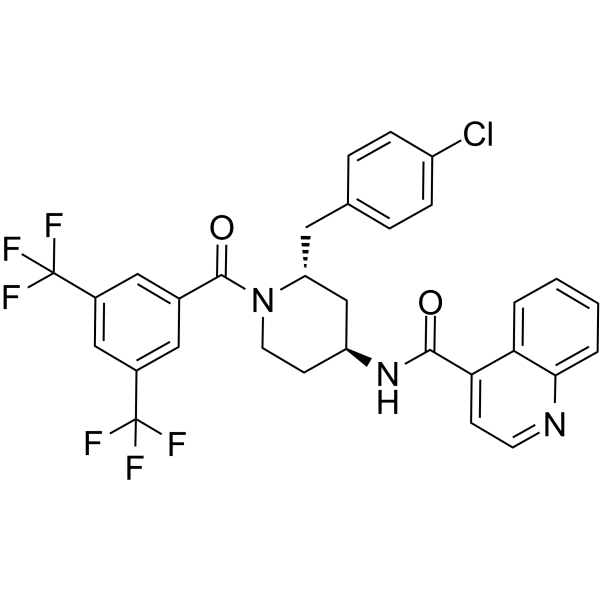
    NKP608
    1 Publications Verification

    Neurokinin Receptor Wnt Bcl-2 Family β-catenin Cyclin G-associated Kinase (GAK) VEGFR Caspase Cadherin Apoptosis Neurological Disease Metabolic Disease Inflammation/Immunology Cancer
    NKP608 is a non-peptidic derivative of 4-aminopiperidine, a highly selective, orally active, neurokinin-1 (NK1) receptor antagonist with IC50 of 2.6 nM. NKP608 is active both in vitro and in vivo, showing extremely low affinity for NK2, NK3 receptors. NKP608 exerts its effects by blocking the NK₁ receptor, regulate cell proliferation and apoptosis, affect neurotransmitter functions and gastric mucosal repair mechanisms, and suppress the Wnt/β-catenin pathway in antitumor research. NKP608 is applicable to research related to various diseases, including cough, anxiety disorders, depression, gastric mucosal injury, and colorectal cancer .
    NKP608
  • HY-129448

    Neurokinin Receptor Neurological Disease
    RO4583298 is a potent, orally active dual antagonist of NK1 (human and gerbil)/NK3 (human, cynomolgus monkey, gerbil and guinea-pig). RO4583298 inhibits senktide-induced potentiation of spontaneous activity of dopaminergic neurons. RO4583298 can block gerbil foot tapping response and inhibits mouse tail whips .
    RO4583298
  • HY-19210

    Endothelin Receptor Cardiovascular Disease
    SB-209670 is an extremely potent and highly specific non-peptide, subnanomolar endothelin (ET) receptor antagonist. SB 209670 selectively inhibits binding of 125I-labeled ET-1 to cloned human ET receptor subtypes ETA and ETB (Ki=0.2 and 18 nM, respectively). SB 209670 produces a dose-dependent reduction in blood pressure in hypertensive rats, protects from ischemia-induced neuronal degeneration in a gerbil stroke model, and attenuates neointima formation following rat carotid artery balloon angioplasty .
    SB-209670
  • HY-139119

    Prostaglandin Receptor Others
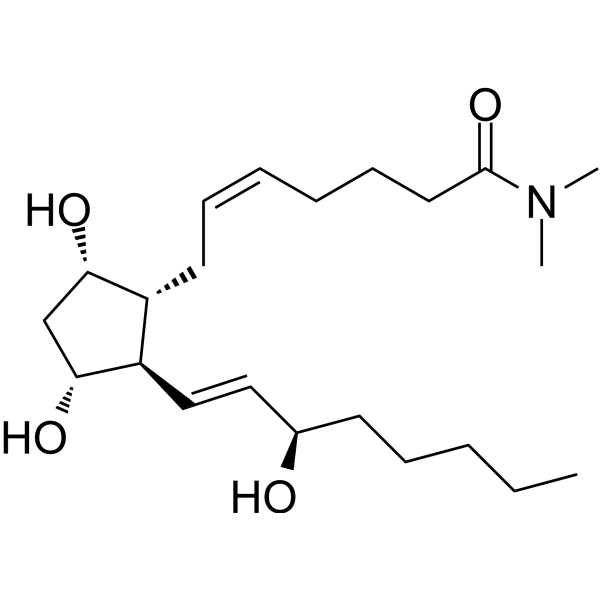
    Prostaglandin F2α dimethyl amide is an antagonist for Prostaglandin F2α (HY-12956), which blocks 50% contraction on gerbilMeriones unguiculatus colon induced by PGF2α at 3.2 μg/mL .
    Prostaglandin F2α dimethyl amide
  • HY-12141

    GW597599 mesylate; GW597599B

    Neurokinin Receptor Neurological Disease
    Vestipitant (GW597599) mesylate is a selective, orally active, and blood-brain barrier penetrant NK1 receptor antagonist. Vestipitant mesylate exhibits high affinity for the human NK1 receptor (pKi: 9.65). Vestipitant mesylate can be used in the research of diseases such as depression, anxiety disorders, and nausea and vomiting .
    Vestipitant mesylate
  • HY-12140

    GW597599

    Neurokinin Receptor Neurological Disease
    Vestipitant (GW597599) is a neurokinin-1 receptor antagonist (pKi: 9.4, hNK1) with hypnotic effects and the ability to suppress primary insomnia. Vestipitant can effectively block substance P-mediated extracellular regulated kinase phosphorylation and relieve anxiety and possible depression induced by the agonist GR73632 (HY-P1192) in gerbils. Vestipitant can also improve functional dyspnea, anxiety, insomnia, irritable bowel disease, gastroesophageal reflux disease, tinnitus and antiemetic effects .
    Vestipitant
  • HY-114947

    9-Deoxy-9-methylene PGE2

    Prostaglandin Receptor Cardiovascular Disease Metabolic Disease
    9-deoxy-9-methylene Prostaglandin E2 (9-deoxy-9-methylene PGE2) is a stable, isosteric analog of PGE2. 9-deoxy-9-methylene PGE2 retains the biological profile of PGE2 with fewer side effects. In the rat 9-deoxy-9-methylene PGE2 is equipotent to PGE2 in decreasing blood pressure. It also stimulates the gerbil colon and primate uterus at the same potency as PGE2.
    9-deoxy-9-methylene Prostaglandin E2
  • HY-15076

    NS-1209 sodium

    iGluR Neurological Disease
    SPD-502 sodium is a novel glutamate antagonist with potential neuroprotective properties, particularly in brain ischemia. It selectively targets the AMPA receptor, showing high affinity (IC50 = 0.043 μM) and competitive inhibition of AMPA-induced effects in rat cortical membranes and cultured mouse cortical neurons. In vivo, SPD-502 sodium effectively blocks AMPA-evoked spike activity in the hippocampus after intravenous administration, significantly increasing the seizure threshold in mice and demonstrating robust protection against ischemia-induced damage to hippocampal neurons in gerbils. These findings suggest SPD-502 sodium may be promising for studying neurodegenerative conditions associated with glutamate excitotoxicity .
    SPD-502 sodium
  • HY-15074

    NS-1209

    iGluR Neurological Disease
    SPD-502 is a novel glutamate antagonist with potential neuroprotective properties, particularly in brain ischemia. It selectively targets the AMPA receptor, showing high affinity (IC50 = 0.043 μM) and competitive inhibition of AMPA-induced effects in rat cortical membranes and cultured mouse cortical neurons. In vivo, SPD-502 effectively blocks AMPA-evoked spike activity in the hippocampus after intravenous administration, significantly increasing the seizure threshold in mice and demonstrating robust protection against ischemia-induced damage to hippocampal neurons in gerbils. These findings suggest SPD-502 may be promising for studying neurodegenerative conditions associated with glutamate excitotoxicity .
    SPD-502
  • HY-14751A

    SCH619734 hydrochloride

    Neurokinin Receptor Neurological Disease Cancer
    Rolapitant (SCH619734) hydrochloride is a potent, selective, long-acting and orally active neurokinin 1 (NK1) receptor antagonist with a Ki of 0.66 nM. Rolapitant hydrochloride does not interact with CYP3A4. Rolapitant hydrochloride shows potent anti-emetic activity in a ferret emesis model .
    Rolapitant hydrochloride
  • HY-14751R

    SCH619734 (Standard)

    Reference Standards Neurokinin Receptor Neurological Disease Cancer
    Rolapitant (Standard) is the analytical standard of Rolapitant. This product is intended for research and analytical applications. Rolapitant (SCH619734) is a potent, selective, long-acting and orally active neurokinin 1 (NK1) receptor antagonist with a Ki of 0.66 nM. Rolapitant does not interact with CYP3A4. Rolapitant shows potent anti-emetic activity in a ferret emesis model .
    Rolapitant (Standard)
  • HY-168320

    N-(1-Oxooctadecyl)-L-tyrosine

    Apoptosis Neurological Disease
    N-Stearoyltyrosine (N-(1-Oxooctadecyl)-L-tyrosine) is an analog of Anandamide (HY-10863). N-Stearoyltyrosine exhibits neuroprotective efficacy in gerbils ischemia-reperfusion model through protection in the CA1 region of the hippocampus. N-Stearoyltyrosine inhibits the free radicals production and improves antioxidant capacity. N-Stearoyltyrosine inhibits the IR-induced apoptosis .
    N-Stearoyltyrosine
  • HY-123497

    Neurokinin Receptor Neurological Disease
    R116031 is a selective Neurokinin-1 (NK-1) receptor antagonist with a Ki of 0.45 nM for human NK-1 receptor. R116031 inhibits Substance P (HY-P0201)-induced peripheral effects (skin reactions and plasma extravasation in guinea pigs) and a central effect (thumping in gerbils).R116031 labeled with 3H significantly accumulate in the striatum, olfactory tubercule, olfactory bulb and locus coeruleus in gerbils models. R116031 can be used as a positron emission tomography (PET) ligand for PET imaging .
    R116031
  • HY-182423

    Neurokinin Receptor Neurological Disease
    RO5328673 is an orally active, blood-brain barrier permeable neurokinin receptor antagonist that effectively targets human NK3 receptors (Ki=0.4 nM, Ka=0.1 nM), human NK2 receptors (Ki=1.1 nM, Ka=0.9 nM), and guinea pig NK3 receptors (Ka=0.1 nM and 0.13 nM). RO5328673 acts as an insurmountable antagonist of NK3 receptors with a slow dissociation rate, while it shows rapid association and dissociation rates at human NK2 receptors. RO5328673 potently inhibits senktide (HY-P0187)-induced enhancement of spontaneous activity in dopaminergic neurons and reverses senktide-induced changes in motor activity of gerbils. RO5328673 is widely applicable to research related to schizophrenia .
    RO5328673
  • HY-101725R

    Ro 11-3128 (Standard); Ro 11-3128/002 (Standard)

    Reference Standards Parasite Infection Neurological Disease
    Meclonazepam (Standard) (Ro 11-3128 (Standard)) is the analytical standard of Meclonazepam (HY-101725). This product is intended for research and analytical applications. Meclonazepam (Ro 11-3128) is a benzodiazepine compound with anxiolytic effect . Meclonazepam is active against immature S. mansoni. Meclonazepam (30 μM) eliminates 100% of immature parasites. Meclonazepam has a anti-schistosomal effect .
    Meclonazepam (Standard)

Inquiry Online

Your information is safe with us. * Required Fields.

Salutation


Country or Region *

Applicant Name *


Organization Name *

Department *


Email Address *


Product Name *

Cat. No.


Requested quantity *

Phone Number *


Remarks

Inquiry Online

Inquiry Information

Product Name:
Cat. No.:
Quantity:
MCE Japan Authorized Agent:

