



Quinestrol

Based on 1 Customer Validation
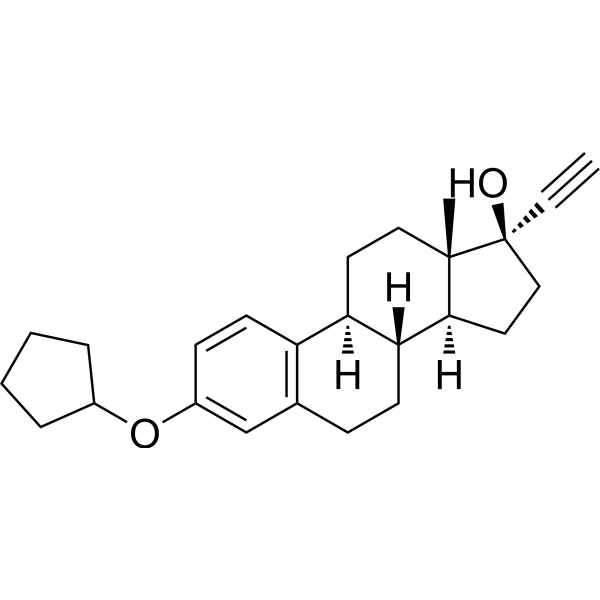
Quinestrol (W-3566) is an orally effective synthetic estrogen compound that acts on CYP3A4, CYP1A2, and GnRH. Quinestrol interferes with GnRH release and disrupts the hypothalamic-pituitary-ovarian axis. Quinestrol downregulates the gene expression of follicle-stimulating hormone β and luteinizing hormone β, induces oxidative stress, damages reproductive organs, reduces sperm density and motility, increases sperm malformation rate, and alters the levels of sex hormones such as testosterone, luteinizing hormone, estradiol, and progesterone. Quinestrol can be used in studies related to reproductive function regulation.
For research use only. We do not sell to patients.
- Purity : 99.19%
- CAS No.: 152-43-2
- Formula: C25H32O2
- Molecular Weight:364.52
-
Storage:Powder -20°C, 3 years , 4°C, 2 years ; In solvent -80°C, 2 years , -20°C, 1 year

To place orders, for customer services and technical support, please contact: MedChemExpress USA
Tel: 609-228-6898 E-mail: [email protected] [email protected]


-
 Biological Activity
-
Chemical Information
-
Solvent & Solubility
- Protocols
- Purity & Documentation
- References
-
 Help & FAQs


-
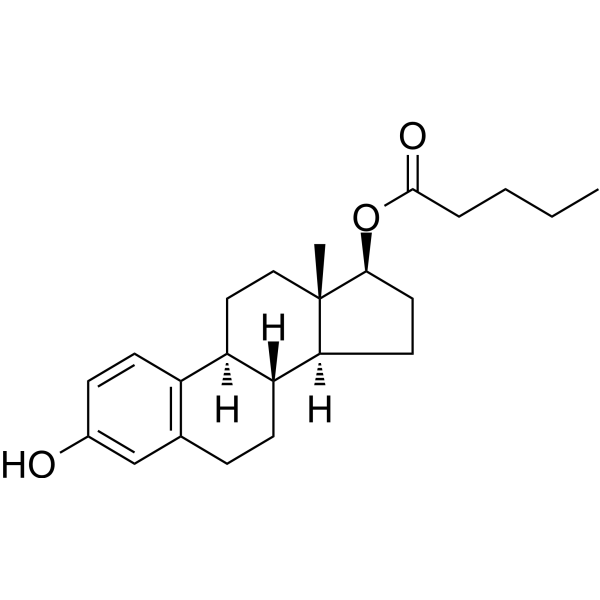
HY-B0672
Estradiol valerateEstrogen Receptor/ERR Agonist -
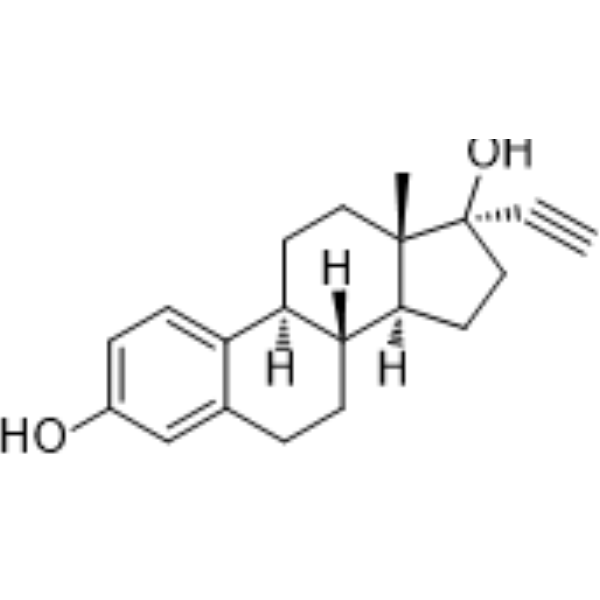
HY-B0216
EthinylestradiolEndogenous Metabolite -
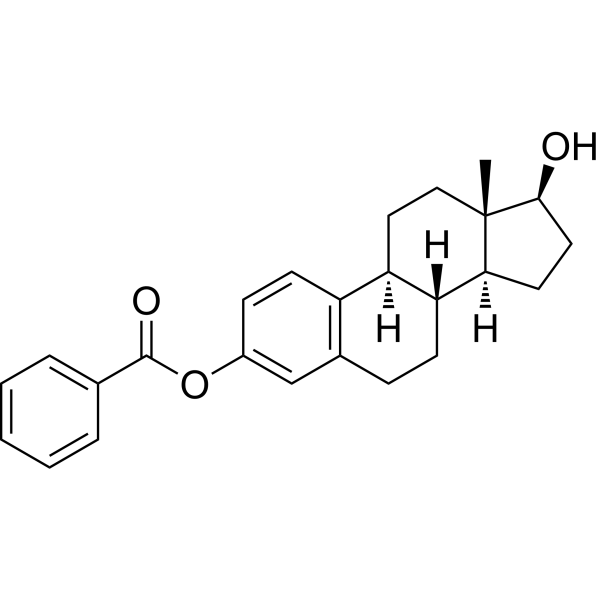
HY-B1192
Estradiol benzoateHBx inhibitor -
HY-B0141
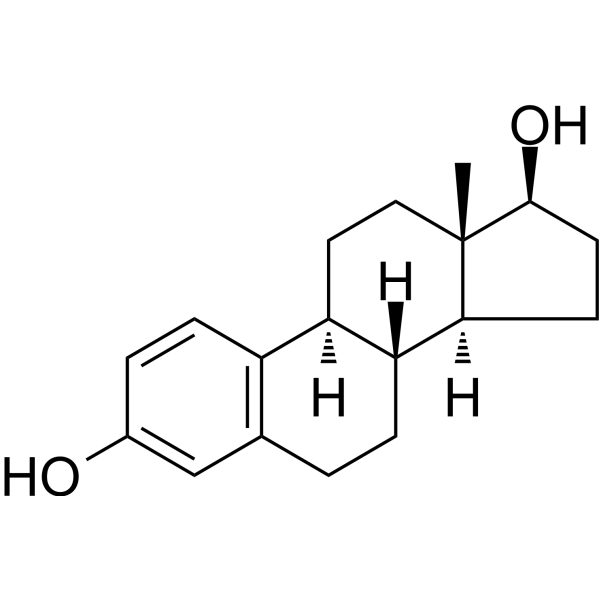
EstradiolHuman Endogenous Metabolite -
HY-B1100
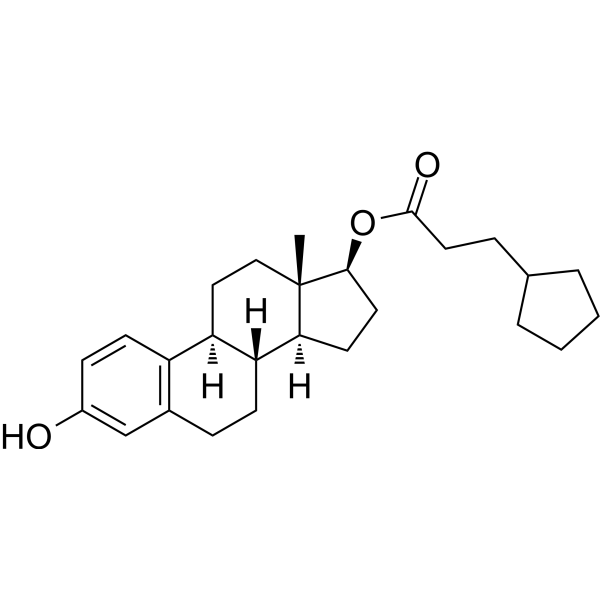
Estradiol cypionateEstrogen Receptor/ERR Inhibitor -
HY-B1403
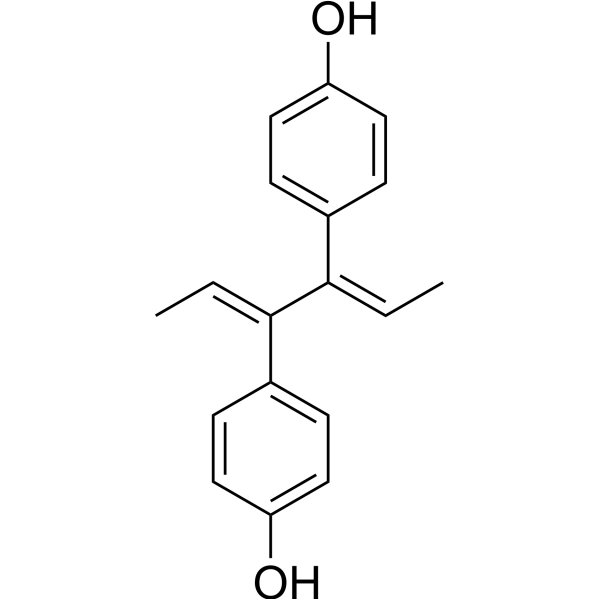
DienestrolEstrogen -
HY-B2245
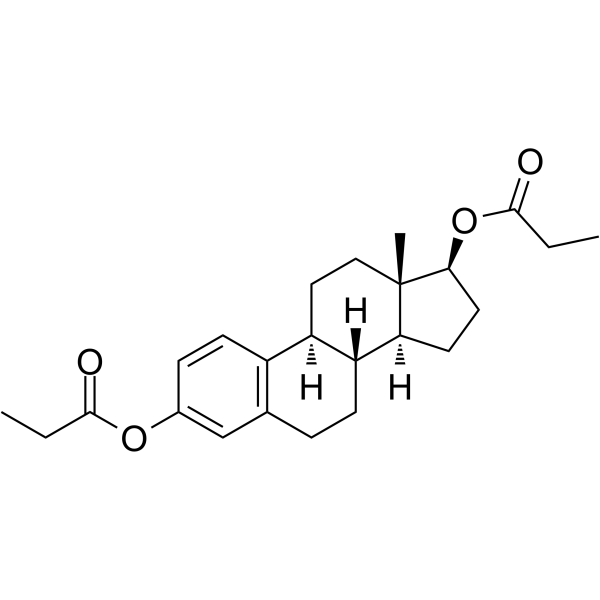
Estradiol dipropionateEstrogen/Progesterone Agonist -
HY-B0672R
Estradiol valerate (Standard)Reference Standard -
HY-N0437
ProgesteroneEndogenous Metabolite -
HY-13636
FulvestrantEstrogen Receptor Antagonist -
HY-13683
MifepristoneProgesterone Receptor Antagonist -
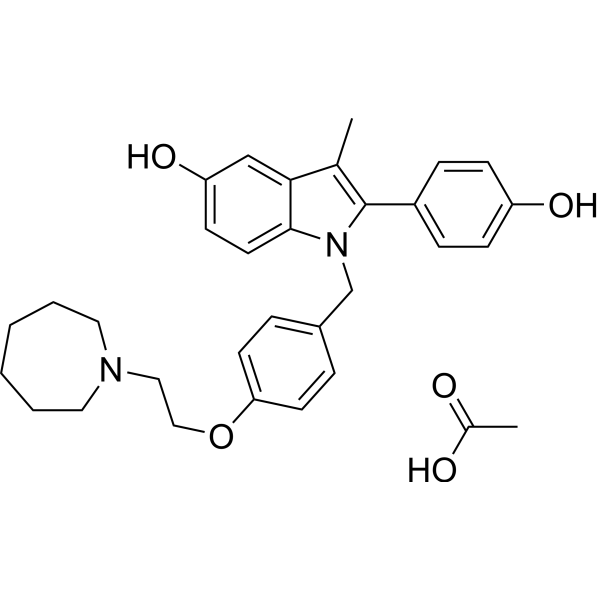
HY-A0036
Bazedoxifene acetateSERM


Biological Activity
Description
IC50 & Target
[2]|
CYP1A2 |
CYP3A4 |
In Vivo
Quinestrol (4 mg/kg; p.o.; daily for 3 days, repeated 25 days later for another 3 days) effectively alters reproductive organ weights, steroid hormone levels, and total hepatic and renal CYP3A4/CYP1A2 content in female Mongolian gerbils, with most metabolic effects reversing by 15 days post-treatment while uterine weight and serum progesterone levels remain elevated[2].
Quinestrol (200 μg; p.o.; every 15 days; up to 210 days) with prolonged oral administration to female rats significantly increases liver weight at all time points, reduces serum cholesterol at 38-42 days and 218-222 days, and reduces bile flow, serum BSP concentration, and bile BSP concentration only at 38-42 days (with these latter effects tending toward control levels after 30 days), with no effect on key hepatic enzymes or bilirubin levels[3].
Quinestrol (1.0-5.0 mg/kg; p.o.; once daily; 3 consecutive days) suppresses male mouse reproductive capacity in a dose-dependent manner, with higher doses (5.0 mg/kg) inducing greater reductions in reproductive organ weight, sperm density, and testosterone levels at 10 days, while effects partially recover by 30 days[4].
Quinestrol (1.0-5.0 mg/kg combined with 0.4-2.0 mg/kg Ketoconazole (HY-B0105); p.o.; sequential gavages 30 minutes apart, once daily; 3 consecutive days) co-administered with ketoconazole enhances reproductive suppression in male Mus musculus[4].
MedChemExpress (MCE) has not independently confirmed the accuracy of these methods. They are for reference only.
-
Animal Model:Swiss mice (male, 4-6 months old, 45-60 g; female, 4-6 months old, 40-55 g)[1]
-
Dosage:50 mg/kg
-
Administration:p.o.; daily; 4 days
-
Result:Reduced body weight from 54.13 g to 51.44 g one week after administration.
Elevated syllable rate to 82.76 syllables/min in early heterosexual interactions, far above the control level.
Raised the proportion of harmonic syllables in ultrasonic vocalizations to 16.1%, compared with 3.55% in the control group.
Increased female approaching frequency to 13.27 times within 30 minutes, notably higher than the control value of 5.00 times.
Displayed no obvious distinctions from controls in vocal parameters and major mating-related behaviors.
-
Animal Model:Meriones unguiculatus (female, virgin, 3-4 months old, 60.6 g)[2]
-
Dosage:4 mg/kg
-
Administration:p.o.; daily for 3 days, repeated 25 days later for another 3 days
-
Result:Raised uterine weight progressively by 147%, 180% and 355% over 5, 10 and 15 days post the second dosing.
Exerted no influence on ovarian weight.
Elevated liver weight at day 5, which gradually normalized by day 15.
Elevated kidney weight at days 5 and 10, which gradually normalized by day 15.
Elevated serum progesterone by 1012%, 816% and 768% across three time points, remaining above baseline at day 15.
Elevated serum estradiol at days 5 and 10, which returned to normal at day 15.
Upregulated total hepatic CYP3A4 and CYP1A2 content at day 5, followed by full recovery later.
Upregulated total renal CYP3A4 and CYP1A2 content at days 5 and 10, followed by full recovery at day 15.
Produced no changes in average CYP3A4 and CYP1A2 content in liver and kidney throughout the experiment.
Triggered no obvious alterations to body mass.
-
Animal Model:Inbred female rats (adult, 150-280 g)[3]
-
Dosage:200 μg
-
Administration:p.o.; every 15 days; up to 210 days
-
Result:Elevated relative liver weight at all monitored time points with distinct statistical differences.
Lowered serum cholesterol notably at 38-42 days and 218-222 days.
Suppressed bile flow significantly only during the 38-42 day period.
Decreased serum BSP content significantly at 38-42 days.
Diminished bile BSP content significantly at 38-42 days.
Exerted no obvious effects on multiple serum enzymes and bilirubin levels throughout the trial.
Induced no histological lesions in liver tissues.
Rendered altered bile flow and BSP contents gradually return to baseline after 30 days of administration.
-
Animal Model:Kunming mice (healthy adult male)[4]
-
Dosage:1.0 mg/kg; 5.0 mg/kg
-
Administration:p.o.; once daily; 3 consecutive days
-
Result:Reduced seminal vesicle weight by 32.17%, sperm density by 18.00%, serum testosterone levels by 73.25%, increased liver weight by 11.63%, and spleen weight by 23.85% compared to control at 10 days with 1.0 mg/kg.
Reduced epididymal weight by 21.97%, seminal vesicle weight by 63.22%, sperm density by 30.85%, serum testosterone levels by 75.09%, increased liver weight by 49.81% (significant, p<0.05), and spleen weight by 25.45% compared to control at 10 days with 5.0 mg/kg.
Reduced seminal vesicle weight by 11.18%, serum testosterone levels by 56.83%, increased liver weight by 9.74% compared to control at 30 days with 1.0 mg/kg.
Reduced seminal vesicle weight by 26.48%, serum testosterone levels by 40.59%, increased liver weight by 18.50%, and spleen weight significantly compared to other groups (p<0.05) compared to control at 30 days with 5.0 mg/kg.
-
Animal Model:Kunming mice (healthy adult male)[4]
-
Dosage:1.0 mg/kg quinestrol + 0.4 mg/kg ketoconazole; 1.0 mg/kg quinestrol + 2.0 mg/kg ketoconazole; 5.0 mg/kg quinestrol + 0.4 mg/kg ketoconazole
-
Administration:p.o.; sequential gavages 30 minutes apart, once daily; 3 consecutive days
-
Result:Lowered reproductive organ weights, sperm parameters and testosterone, elevated spleen weight and CYP3A4 levels at 10 days (1.0 mg/kg quinestrol + 0.4 mg/kg ketoconazole).
Reduced reproductive indicators and LH, slightly raised visceral weights; intestinal CYP3A4 decreased while hepatic CYP3A4 increased at 10 days (1.0 mg/kg quinestrol + 2.0 mg/kg ketoconazole).
Decreased reproductive indexes and LH, increased liver and spleen weight; intestinal CYP3A4 declined and hepatic CYP3A4 rose at 10 days (5.0 mg/kg quinestrol + 0.4 mg/kg ketoconazole).
Reduced reproductive parameters and hormones, slightly increased liver weight; CYP3A4 levels dropped at 30 days (1.0 mg/kg quinestrol + 0.4 mg/kg ketoconazole).
Decreased visceral weight and serum hormones; intestinal and hepatic CYP3A4 were downregulated at 30 days (1.0 mg/kg quinestrol + 2.0 mg/kg ketoconazole).
Reduced visceral and reproductive weights as well as hormones; overall CYP3A4 expression decreased at 30 days (5.0 mg/kg quinestrol + 0.4 mg/kg ketoconazole).


Chemical Information
-
CAS No. 152-43-2
-
Appearance Solid
-
Molecular Weight 364.52
-
Formula C25H32O2
-
Color White to off-white
-
SMILES
C#C[C@]1(O)CC[C@@]2([H])[C@]3([H])CCC4=C(C=CC(OC5CCCC5)=C4)[C@@]3([H])CC[C@]12C
-
Synonyms
W-3566
-
Shipping
Room temperature in continental US; may vary elsewhere.
-
Storage
Powder -20°C 3 years 4°C 2 years In solvent -80°C 2 years -20°C 1 year


Solvent & Solubility
In Vitro:
DMSO : 250 mg/mL (685.83 mM; Need ultrasonic; Hygroscopic DMSO has a significant impact on the solubility of product, please use newly opened DMSO)
Ethanol : 25 mg/mL (68.58 mM; Need ultrasonic)
Please refer to the solubility information to select the appropriate solvent. Once prepared, please aliquot and store the solution to prevent product inactivation from repeated freeze-thaw cycles.
Storage method and period of stock solution: -80°C, 2 years; -20°C, 1 year. When stored at -80°C, please use it within 2 years. When stored at -20°C, please use it within 1 year.
Please refer to the solubility information to select the appropriate solvent. Once prepared, please aliquot and store the solution to prevent product inactivation from repeated freeze-thaw cycles.
Storage method and period of stock solution: -80°C, 2 years; -20°C, 1 year. When stored at -80°C, please use it within 2 years. When stored at -20°C, please use it within 1 year.
Concentration (start) × Volume (start) = Concentration (final) × Volume (final)
In Vivo:
Select the appropriate dissolution method based on your experimental animal and administration route.
- For the following dissolution methods, please ensure to first prepare a clear stock solution using an In Vitro approach and then sequentially add co-solvents:
- To ensure reliable experimental results, the clarified stock solution can be appropriately stored based on storage conditions. As for the working solution for In Vivo experiments, it is recommended to prepare freshly and use it on the same day.
- The percentages shown for the solvents indicate their volumetric ratio in the final prepared solution. If precipitation or phase separation occurs during preparation, heat and/or sonication can be used to aid dissolution.
Add each solvent one by one: 10% EtOH 40% PEG300 5% Tween-80 45% Saline
Solubility: ≥ 2.5 mg/mL (6.86 mM); Clear solution
This protocol yields a clear solution of ≥ 2.5 mg/mL (saturation unknown).
Taking 1 mL working solution as an example, add 100 μL EtOH stock solution (25.0 mg/mL) to 400 μL PEG300, and mix evenly; then add 50 μL Tween-80 and mix evenly; then add 450 μL Saline to adjust the volume to 1 mL.
Preparation of Saline: Dissolve 0.9 g sodium chloride in ddH₂O and dilute to 100 mL to obtain a clear Saline solution.
Add each solvent one by one: 10% EtOH 90% (20% SBE-β-CD in Saline)
Solubility: ≥ 2.5 mg/mL (6.86 mM); Clear solution
This protocol yields a clear solution of ≥ 2.5 mg/mL (saturation unknown).
Taking 1 mL working solution as an example, add 100 μL EtOH stock solution (25.0 mg/mL) to 900 μL 20% SBE-β-CD in Saline, and mix evenly.
Preparation of 20% SBE-β-CD in Saline (4°C, storage for one week): 2 g SBE-β-CD powder is dissolved in 10 mL Saline, completely dissolve until clear.
In Vivo Dissolution Calculator
Please enter the basic information of animal experiments:
-
-
-
-
Recommended: Prepare an additional quantity of animals to account for potential losses during experiments.
Please enter your animal formula composition:
-
%DMSO +
Recommended: Keep the proportion of DMSO in working solution below 2% if your animal is weak.
-
%+
-
+%Tween-80 + +
-
%Saline +
The co-solvents required include: DMSO, . All of co-solvents are available by MedChemExpress (MCE). , Tween 80. All of co-solvents are available by MedChemExpress (MCE).
Working solution concentration: 0.22 mg/mL
Method for preparing stock solution: mg drug dissolved in μL DMSO. Stock solution concentration: mg/mL.
1. Take μL DMSO stock solution;
2. Add μL .
μL , mix evenly;
3. Then add μL Tween 80, mix evenly;
4. Then add μL
Please ensure that the stock solution in the first step is dissolved to a clear state, and add co-solvents in sequence. You can use ultrasonic heating (ultrasonic cleaner, recommended frequency 20-40 kHz), vortexing, etc. to assist dissolution.


Purity & Documentation
-
Data Sheet (285 KB)
-
SDS (420 KB)
- English - EN (420 KB)
- Français - FR (420 KB)
- Deutsch - DE (420 KB)
- Norwegian - NO (420 KB)
- Español - ES (420 KB)
- Swedish - SV (420 KB)
- Italian - IT (420 KB)
- Korean - KR (420 KB)
- Portuguese - PT (420 KB)
-
Handling Instructions (2659 KB)
References
[1]. Chen Y, et al. Effects of quinestrol on the vocal behavior of mice during courtship interactions. Physiol Behav. 2017;173:216-222. [Content Brief]
[2]. Su QQ, et al. Responses in reproductive organs, steroid hormones and CYP450 enzymes in female Mongolian gerbil (Meriones unguiculatus) over time after quinestrol treatment. Pestic Biochem Physiol. 2017;143:122-126. [Content Brief]
[4]. Ji Y, et al. The Effect of Ketoconazole and Quinestrol Combination on Reproductive Physiology in Male Mice. Animals (Basel). 2024;14(22):3240. Published 2024 Nov 12. [Content Brief]


Complete Stock Solution Preparation Table
Please refer to the solubility information to select the appropriate solvent. Once prepared, please aliquot and store the solution to prevent product inactivation from repeated freeze-thaw cycles.
Storage method and period of stock solution: -80°C, 2 years; -20°C, 1 year. When stored at -80°C, please use it within 2 years. When stored at -20°C, please use it within 1 year.
| Optional Solvent | Concentration Solvent Mass | 1 mg | 5 mg | 10 mg | 25 mg |
|---|---|---|---|---|---|
| Ethanol / DMSO | 1 mM | 2.7433 mL | 13.7167 mL | 27.4333 mL | 68.5833 mL |
| 5 mM | 0.5487 mL | 2.7433 mL | 5.4867 mL | 13.7167 mL | |
| 10 mM | 0.2743 mL | 1.3717 mL | 2.7433 mL | 6.8583 mL | |
| 15 mM | 0.1829 mL | 0.9144 mL | 1.8289 mL | 4.5722 mL | |
| 20 mM | 0.1372 mL | 0.6858 mL | 1.3717 mL | 3.4292 mL | |
| 25 mM | 0.1097 mL | 0.5487 mL | 1.0973 mL | 2.7433 mL | |
| 30 mM | 0.0914 mL | 0.4572 mL | 0.9144 mL | 2.2861 mL | |
| 40 mM | 0.0686 mL | 0.3429 mL | 0.6858 mL | 1.7146 mL | |
| 50 mM | 0.0549 mL | 0.2743 mL | 0.5487 mL | 1.3717 mL | |
| 60 mM | 0.0457 mL | 0.2286 mL | 0.4572 mL | 1.1431 mL | |
| DMSO | 80 mM | 0.0343 mL | 0.1715 mL | 0.3429 mL | 0.8573 mL |
| 100 mM | 0.0274 mL | 0.1372 mL | 0.2743 mL | 0.6858 mL |


Quinestrol Related Classifications
HY-B1012 Related Classifications
 Powered by Bioz