1. Search Result
Search Result
Results for "

glass surfaces

" in MedChemExpress (MCE) Product Catalog:

28

Inhibitors & Agonists

25

Biochemical Assay Reagents

2

Peptides

1

Natural
Products

Cat. No. Product Name Target Research Areas Chemical Structure
  • HY-W040203

    Biochemical Assay Reagents Others
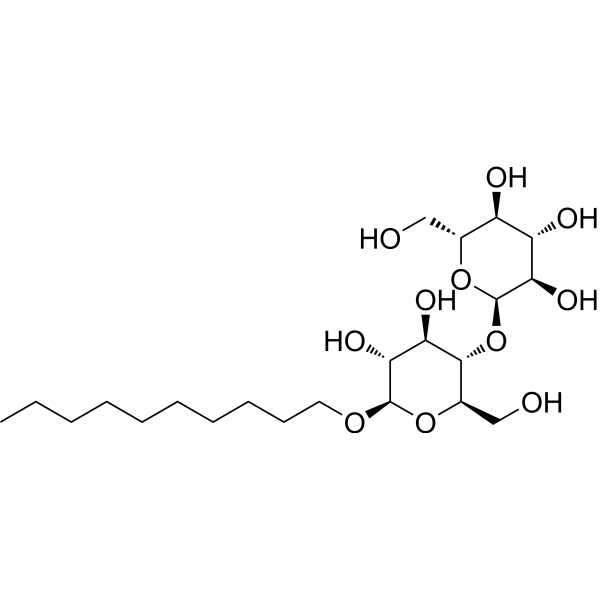
    Decyl β-D-maltopyranoside is an epithelial permeability enhancer. Decyl β-D-maltopyranoside regulates the paracellular transport pathway and increases the permeability of molecules and proteins transported via the paracellular route. Decyl β-D-maltopyranoside enhances the transepithelial paracellular permeability of EPO across cell monolayers .
    Decyl β-D-maltopyranoside
  • HY-W392100A

    PCL-diol (MW 530)

    Biochemical Assay Reagents Fungal Infection
    Polycaprolactone diol (MW 530) (PCL-diol (MW 530)) is a poly (ε-caprolactone) diol with an average molecular weight of 530 g·mol −1, which serves as a monomer for biodegradable network elastic polyesters. Network polyester films undergo enzymatic hydrolysis by Rhizopus delemar lipase .
    Polycaprolactone diol (MW 530)
  • HY-174955B

    Biochemical Assay Reagents Others
    mPEG5000-Silane is a PEG derivative containing silane that can be used to modify glass, silicon or other surfaces by reacting the hydroxyl groups with ethoxy (methoxy) silane .
    mPEG5000-Silane
  • HY-174955A

    Biochemical Assay Reagents Others
    mPEG2000-Silane is a PEG derivative containing silane that can be used to modify glass, silicon or other surfaces by reacting the hydroxyl groups with ethoxy (methoxy) silane .
    mPEG2000-Silane
  • HY-174970D

    Silane-PEG3400-azide

    Biochemical Assay Reagents Others
    Silane-PEG3400-N3 (Silane-PEG3400-azide) is a PEG derivative composed of silane, PEG units, and azide groups, which can be used to modify glass, silicon, or other surfaces by reacting hydroxyl groups with ethoxy (methoxy) silanes. Silane-PEG3400-N3 contains an azide group and can undergo copper-catalyzed azide-alkyne cycloaddition (CuAAc) with molecules containing alkyne groups. It can also undergo ring strain-driven alkyne-azide cycloaddition (SPAAC) with molecules containing DBCO or BCN groups .
    Silane-PEG3400-N3
  • HY-174971C

    Biochemical Assay Reagents Others
    4-Arm-PEG20000-Silane is a silane-modified PEG derivative that can be used to modify glass, silicon or other surfaces by reacting hydroxyl groups with ethoxy (methoxy) silane. PEG can inhibit nonspecific surface binding .
    4-Arm-PEG20000-Silane
  • HY-174958B

    Biochemical Assay Reagents Others
    6-Arm-PEG1000-Silane is a silane-modified PEG derivative that can be used to modify glass, silicon or other surfaces by reacting hydroxyl groups with ethoxy (methoxy) silane. PEG can inhibit nonspecific surface binding .
    6-Arm-PEG1000-Silane
  • HY-174958A

    Biochemical Assay Reagents Others
    6-Arm-PEG600-Silane is a silane-modified PEG derivative that can be used to modify glass, silicon or other surfaces by reacting hydroxyl groups with ethoxy (methoxy) silane. PEG can inhibit nonspecific surface binding .
    6-Arm-PEG600-Silane
  • HY-174955

    Biochemical Assay Reagents Others
    mPEG1000-Silane is a PEG derivative containing silane that can be used to modify glass, silicon or other surfaces by reacting the hydroxyl groups with ethoxy (methoxy) silane .
    mPEG1000-Silane
  • HY-174969

    Biochemical Assay Reagents Others
    Alkyne-PEG1000-Silane is a PEG derivative composed of silane, PEG, and alkynyl groups. Alkyne-PEG1000-Silane is a click chemistry reagent. It contains an Alkyne group, which can undergo copper-catalyzed azide-alkyne cycloaddition reaction (CuAAc) with molecules containing an Azide group. The Silane group enables Alkyne-PEG1000-Silane to modify surfaces such as glass and silicon .
    Alkyne-PEG1000-Silane
  • HY-174970C

    Silane-PEG2000-azide

    Biochemical Assay Reagents Others
    Silane-PEG2000-N3 (Silane-PEG2000-azide) is a PEG derivative composed of silane, PEG units, and azide groups, which can be used to modify glass, silicon, or other surfaces by reacting hydroxyl groups with ethoxy (methoxy) silanes. Silane-PEG2000-N3 contains an azide group and can undergo copper-catalyzed azide-alkyne cycloaddition (CuAAc) with molecules containing alkyne groups. It can also undergo ring strain-driven alkyne-azide cycloaddition (SPAAC) with molecules containing DBCO or BCN groups .
    Silane-PEG2000-N3
  • HY-174970H

    Silane-PEG10000-azide

    Biochemical Assay Reagents Others
    Silane-PEG10000-N3 (Silane-PEG10000-azide) is a PEG derivative composed of silane, PEG units, and azide groups, which can be used to modify glass, silicon, or other surfaces by reacting hydroxyl groups with ethoxy (methoxy) silanes. Silane-PEG10000-N3 contains an azide group and can undergo copper-catalyzed azide-alkyne cycloaddition (CuAAc) with molecules containing alkyne groups. It can also undergo ring strain-driven alkyne-azide cycloaddition (SPAAC) with molecules containing DBCO or BCN groups .
    Silane-PEG10000-N3
  • HY-174970B

    Silane-PEG1000-azide

    Biochemical Assay Reagents Others
    Silane-PEG1000-N3 (Silane-PEG1000-azide) is a PEG derivative composed of silane, PEG units, and azide groups, which can be used to modify glass, silicon, or other surfaces by reacting hydroxyl groups with ethoxy (methoxy) silanes. Silane-PEG1000-N3 contains an azide group and can undergo copper-catalyzed azide-alkyne cycloaddition (CuAAc) with molecules containing alkyne groups. It can also undergo ring strain-driven alkyne-azide cycloaddition (SPAAC) with molecules containing DBCO or BCN groups .
    Silane-PEG1000-N3
  • HY-174971A

    Biochemical Assay Reagents Others
    4-Arm-PEG5000-Silane is a silane-modified PEG derivative that can be used to modify glass, silicon or other surfaces by reacting hydroxyl groups with ethoxy (methoxy) silane. PEG can inhibit nonspecific surface binding .
    4-Arm-PEG5000-Silane
  • HY-174971

    Biochemical Assay Reagents Others
    4-Arm-PEG2000-Silane is a silane-modified PEG derivative that can be used to modify glass, silicon or other surfaces by reacting hydroxyl groups with ethoxy (methoxy) silane. PEG can inhibit nonspecific surface binding .
    4-Arm-PEG2000-Silane
  • HY-174958

    Biochemical Assay Reagents Others
    6-Arm-PEG400-Silane is a silane-modified PEG derivative that can be used to modify glass, silicon or other surfaces by reacting hydroxyl groups with ethoxy (methoxy) silane. PEG can inhibit nonspecific surface binding .
    6-Arm-PEG400-Silane
  • HY-174971B

    Biochemical Assay Reagents Others
    4-Arm-PEG10000-Silane is a silane-modified PEG derivative that can be used to modify glass, silicon or other surfaces by reacting hydroxyl groups with ethoxy (methoxy) silane. PEG can inhibit nonspecific surface binding .
    4-Arm-PEG10000-Silane
  • HY-174958C

    Biochemical Assay Reagents Others
    6-Arm-PEG2000-Silane is a silane-modified PEG derivative that can be used to modify glass, silicon or other surfaces by reacting hydroxyl groups with ethoxy (methoxy) silane. PEG can inhibit nonspecific surface binding .
    6-Arm-PEG2000-Silane
  • HY-174958D

    Biochemical Assay Reagents Others
    6-Arm-PEG3400-Silane is a silane-modified PEG derivative that can be used to modify glass, silicon or other surfaces by reacting hydroxyl groups with ethoxy (methoxy) silane. PEG can inhibit nonspecific surface binding .
    6-Arm-PEG3400-Silane
  • HY-174958E

    Biochemical Assay Reagents Others
    6-Arm-PEG5000-Silane is a silane-modified PEG derivative that can be used to modify glass, silicon or other surfaces by reacting hydroxyl groups with ethoxy (methoxy) silane. PEG can inhibit nonspecific surface binding .
    6-Arm-PEG5000-Silane
  • HY-174958H

    Biochemical Assay Reagents Others
    6-Arm-PEG10000-Silane is a silane-modified PEG derivative that can be used to modify glass, silicon or other surfaces by reacting hydroxyl groups with ethoxy (methoxy) silane. PEG can inhibit nonspecific surface binding .
    6-Arm-PEG10000-Silane
  • HY-P11867

    Wnt β-catenin Others
    UM206_L is a linear Wnt fragment peptide derived from conserved Wnt3a/Wnt5a sequences, inactive in soluble form but capable of activating canonical Wnt/β-catenin signaling when conjugated to magnetic nanoparticles and exposed to a high-gradient, time-varying magnetic field or immobilized on glass surfaces .
    UM206_L
  • HY-P11867A

    Wnt β-catenin Others
    UM206_C is a circular Wnt fragment peptide derived from conserved Wnt3a/Wnt5a sequences, inactive in soluble form but capable of activating canonical Wnt/β-catenin signaling when conjugated to magnetic nanoparticles and exposed to a high-gradient, time-varying magnetic field or immobilized on glass surfaces .
    UM206_C
  • HY-174969C

    Biochemical Assay Reagents Others
    Alkyne-PEG5000-Silane is a PEG derivative composed of silane, PEG, and alkynyl groups. Alkyne-PEG5000-Silane is a click chemistry reagent. It contains an Alkyne group, which can undergo copper-catalyzed azide-alkyne cycloaddition reaction (CuAAc) with molecules containing an Azide group. The Silane group enables Alkyne-PEG5000-Silane to modify surfaces such as glass and silicon .
    Alkyne-PEG5000-Silane
  • HY-174969A

    Biochemical Assay Reagents Others
    Alkyne-PEG2000-Silane is a PEG derivative composed of silane, PEG, and alkynyl groups. Alkyne-PEG2000-Silane is a click chemistry reagent. It contains an Alkyne group, which can undergo copper-catalyzed azide-alkyne cycloaddition reaction (CuAAc) with molecules containing an Azide group. The Silane group enables Alkyne-PEG2000-Silane to modify surfaces such as glass and silicon .
    Alkyne-PEG2000-Silane
  • HY-174969B

    Biochemical Assay Reagents Others
    Alkyne-PEG3400-Silane is a PEG derivative composed of silane, PEG, and alkynyl groups. Alkyne-PEG3400-Silane is a click chemistry reagent. It contains an Alkyne group, which can undergo copper-catalyzed azide-alkyne cycloaddition reaction (CuAAc) with molecules containing an Azide group. The Silane group enables Alkyne-PEG3400-Silane to modify surfaces such as glass and silicon .
    Alkyne-PEG3400-Silane
  • HY-N11732

    Drug Derivative Inflammation/Immunology
    O-Demethylrotenone is a rotenone (HY-B1756) derivative and a photodegradation product of rotenone that induces acute intraperitoneal toxicity. The acute intraperitoneal LD50 of O-Demethylrotenone in Mus musculus is 8.0 mg/kg .
    O-Demethylrotenone
  • HY-174970E

    Silane-PEG5000-azide

    Biochemical Assay Reagents Others
    Silane-PEG5000-N3 (Silane-PEG5000-azide) is a PEG derivative composed of silane, PEG units, and azide groups, which can be used to modify glass, silicon, or other surfaces by reacting hydroxyl groups with ethoxy (methoxy) silanes. Silane-PEG5000-N3 contains an azide group and can undergo copper-catalyzed azide-alkyne cycloaddition (CuAAc) with molecules containing alkyne groups. It can also undergo ring strain-driven alkyne-azide cycloaddition (SPAAC) with molecules containing DBCO or BCN groups .
    Silane-PEG5000-N3

Inquiry Online

Your information is safe with us. * Required Fields.

Salutation


Country or Region *

Applicant Name *


Organization Name *

Department *


Email Address *


Product Name *

Cat. No.


Requested quantity *

Phone Number *


Remarks

Inquiry Online

Inquiry Information

Product Name:
Cat. No.:
Quantity:
MCE Japan Authorized Agent:

