1. Search Result
Search Result
Results for "

gold nanoparticles

" in MedChemExpress (MCE) Product Catalog:

27

Inhibitors & Agonists

1

Fluorescent Dyes

16

Biochemical Assay Reagents

4

Peptides

3

Natural
Products

1

Isotope-Labeled Compounds

2

Oligonucleotides

Cat. No. Product Name Target Research Areas Chemical Structure
  • HY-W094581
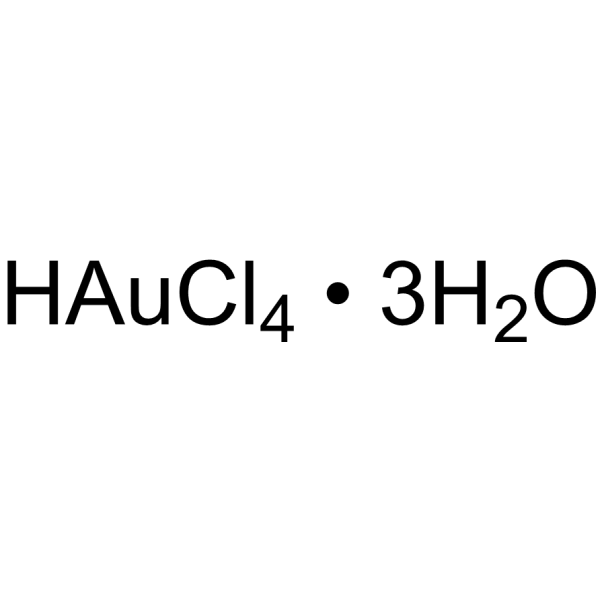
    Gold(III) chloride trihydrate
    1 Publications Verification

    Chloroauric acid trihydrate

    Biochemical Assay Reagents Others
    Gold (III) chloride trihydrate is a reducing agent. Gold (III) chromium trihydrate can be used for chemical synthesis of gold nanoparticles (NP) and spirochromene derivatives .
    Gold(III) chloride trihydrate
  • HY-134797
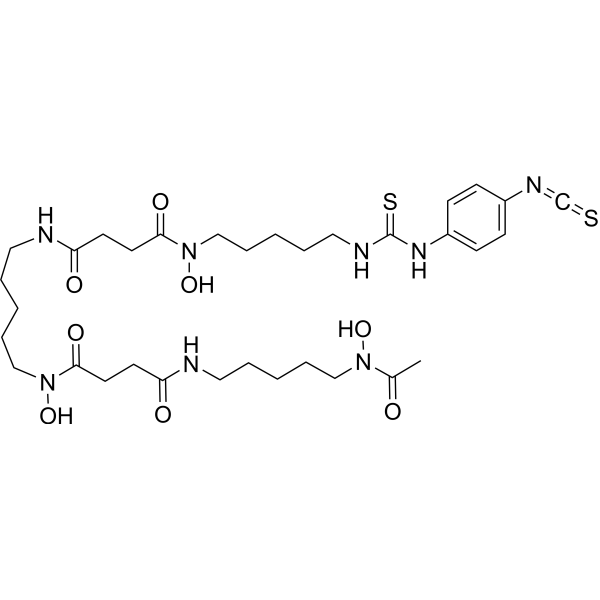
    p-SCN-Bn-deferoxamine
    1 Publications Verification

    Radionuclide-Drug Conjugates (RDCs) Cancer
    P-SCN-Bn-deferoxamine is a bifunctional chelating agent that can link radioactive metal nuclides (such as Zr-89) and biological targeting molecules (such as antibodies). P-SCN-Bn-deferoxamine can be used for the research of immune PET imaging .
    p-SCN-Bn-deferoxamine
  • HY-B1306
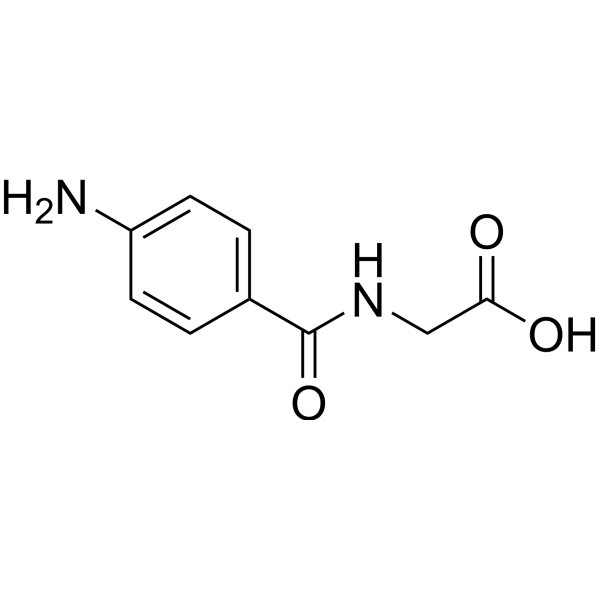
    4-Aminohippuric acid
    4 Publications Verification

    p-Aminohippuric acid

    Others Neurological Disease Metabolic Disease
    4-Aminohippuric acid (p-Aminohippuric acid) is a coordination ligand for metal ions (such as Cu 2+, Fe 3+, Hg 2+) and a functionalization reagent for nanomaterials. 4-Aminohippuric acid can coordinate with metal ions or modify the surface of materials such as carbon nanotubes and gold nanoparticles through amino and carboxyl groups. 4-Aminohippuric acid can form stable complexes with metal ions or participate in the synthesis of nanomaterials as a reducing agent/stabilizer, enriching metal ions or giving nanoparticles peroxidase-mimicking activity. 4-Aminohippuric acid can be used to construct highly sensitive electrochemical sensors or colorimetric sensors to detect and quantitatively analyze heavy metal ions such as copper, iron, and mercury in environmental water samples and biological samples. 4-Aminohippuric acid may also be a biomarker for attention-deficit/hyperactivity disorder (ADHD) .
    4-Aminohippuric acid
  • HY-W019831
    Silicon dioxide
    1 Publications Verification

    Silica; Colloidal anhydrous silica

    Biochemical Assay Reagents Others
    Silicon dioxide (Silica) is the core of gold-coated silica nanoparticles. Silicon dioxide has the characteristic of a spherical structure, with a layer of gold nanoparticles covering its surface. Silicon dioxide can be used as a coating material for quantum dots, enhancing their stability, reducing toxicity and improving hydrophilicity .
    Silicon dioxide
  • HY-W591476

    mPEG1000-SH

    Biochemical Assay Reagents Others
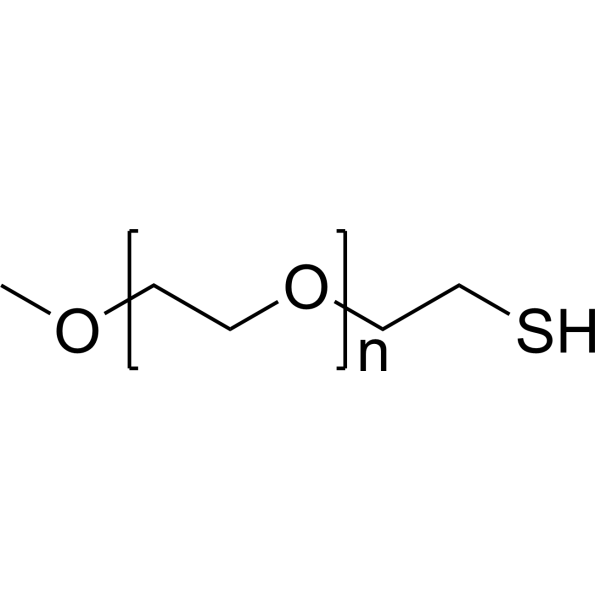
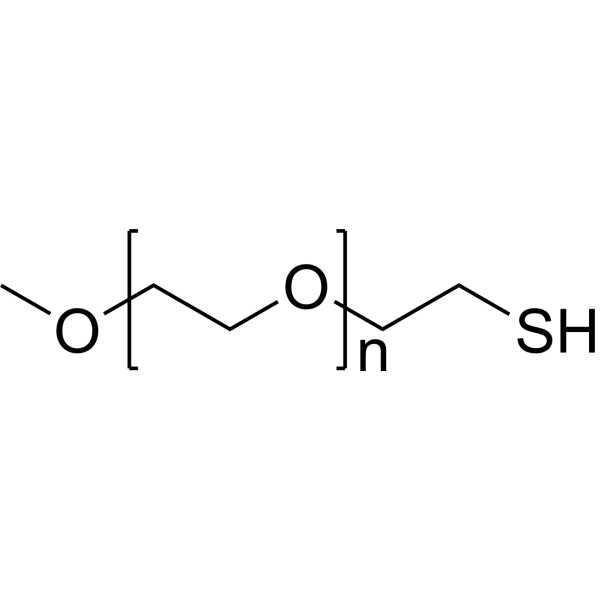
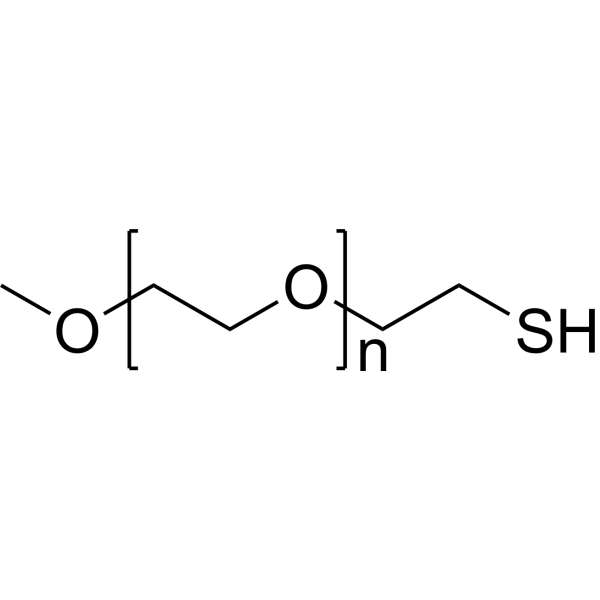
    m-PEG1000-thiol is a surface modifier that can modify DNA thiolation and is used in the synthesis of gold nanorods (AuNR). m-PEG1000-thiol can load thiolated DNA onto AuNR, form a covalent bond with the surface of gold nanoparticles through the thiol group, and stabilize the nanoparticles by the steric hindrance effect of the polyethylene glycol chain, preventing aggregation and enhancing its biocompatibility. m-PEG1000-thiol can also provide a platform for the subsequent coupling of biomolecules (such as DNA, antibodies) by replacing surfactants (such as CTAB) on the surface of nanoparticles, thereby exerting its activity in promoting the functionalization of nanomaterials [2].
    m-PEG1000-thiol
  • HY-126437I

    Biochemical Assay Reagents DNA Alkylator/Crosslinker Amino Acid Derivatives Cancer
    Poly-L-lysine hydrobromide (MW 1000-5000) is a homopolymer of L-lysine and a polycationic non-viral gene delivery vector. Poly-L-lysine hydrobromide (MW 1000-5000) forms complexes with plasmid DNA. Poly-L-lysine hydrobromide (MW 1000-5000) is applicable to relevant research on lung cancer .
    Poly-L-lysine hydrobromide (MW 1000-5000)
  • HY-W073196

    Tetrachloroauric(Ⅲ) acid hydrate (48% Au basis)

    Biochemical Assay Reagents Others
    Gold(Ⅲ) chloride hydrate (Tetrachloroauric(Ⅲ) acid hydrate) (48% Au basis) is an organic intermediate that can be used to prepare gold nanoparticles .
    Gold(Ⅲ) chloride hydrate (48% Au basis)
  • HY-W073196A

    Tetrachloroauric(Ⅲ) acid hydrate (50% Au basis)

    Biochemical Assay Reagents Others
    Gold(Ⅲ) chloride hydrate (Tetrachloroauric(Ⅲ) acid hydrate) (50% Au basis) is an organic intermediate that can be used to prepare gold nanoparticles .
    Gold(Ⅲ) chloride hydrate (50% Au basis)
  • HY-W014989

    Biochemical Assay Reagents Cancer
    Thioglucose is a thiosugar with antioxidant properties. Thioglucose acts as an H2S/polysulfide donor to elevate intracellular sulfane sulfur levels and promote hydropersulfide formation. Thioglucose reduces the endocytosis of gold nanoparticles by phagocytes, enhances cytotoxicity and improves biocompatibility by increasing their adsorption on the surface of cancer cells. Thioglucose can be engineered into a stimulus-responsive prodrug or functional reagent for the development of targeted nanocarriers, and is used in studies related to human breast adenocarcinoma and cervical cancer .
    Thioglucose
  • HY-W011607

    Amino Acid Derivatives Others
    L-Alanyl-L-tryptophan is a dipeptide formed from L-alanyl and L-tryptophan, and is also a metabolite. L-Alanyl-L-tryptophan can be adsorbated on the surface of gold nanoparticles, and the Raman signal can be enhanced by SERS technology to obtain the enhanced Raman spectroscopy .
    L-Alanyl-L-tryptophan
  • HY-B1306R

    p-Aminohippuric acid (Standard)

    Reference Standards Biochemical Assay Reagents Neurological Disease Metabolic Disease
    4-Aminohippuric acid (p-Aminohippuric acid) (Standard) is the analytical standard of 4-Aminohippuric acid (HY-B1306). This product is intended for research and analytical applications. 4-Aminohippuric acid (p-Aminohippuric acid) is a coordination ligand for metal ions (such as Cu 2+, Fe 3+, Hg 2+) and a functionalization reagent for nanomaterials. 4-Aminohippuric acid can coordinate with metal ions or modify the surface of materials such as carbon nanotubes and gold nanoparticles through amino and carboxyl groups. 4-Aminohippuric acid can form stable complexes with metal ions or participate in the synthesis of nanomaterials as a reducing agent/stabilizer, enriching metal ions or giving nanoparticles peroxidase-mimicking activity. 4-Aminohippuric acid can be used to construct highly sensitive electrochemical sensors or colorimetric sensors to detect and quantitatively analyze heavy metal ions such as copper, iron, and mercury in environmental water samples and biological samples. 4-Aminohippuric acid may also be a biomarker for attention-deficit/hyperactivity disorder (ADHD) .
    4-Aminohippuric acid (Standard)
  • HY-W073196B

    Tetrachloroauric(Ⅲ) acid hydrate (52% Au basis)

    Biochemical Assay Reagents Others
    Gold(Ⅲ) chloride hydrate (Tetrachloroauric(Ⅲ) acid hydrate) (52% Au basis) is an organic intermediate that can be used to prepare gold nanoparticles .
    Gold(Ⅲ) chloride hydrate (52% Au basis)
  • HY-B1306S

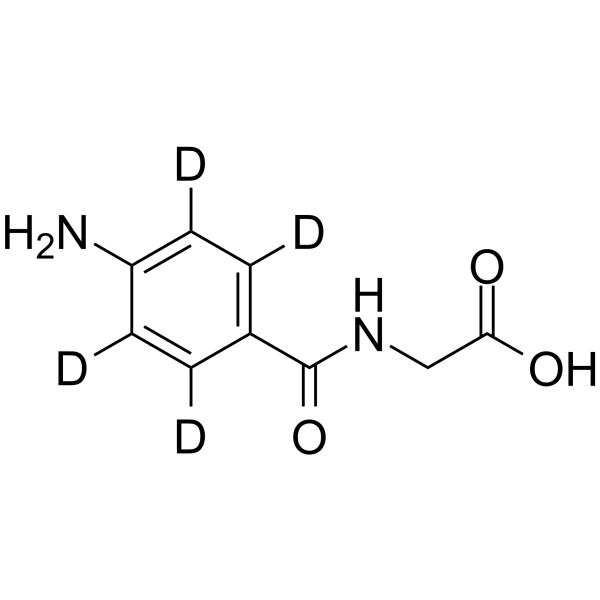
    p-Aminohippuric acid-d4

    Biochemical Assay Reagents Neurological Disease Metabolic Disease
    4-Aminohippuric acid-d4 (p-Aminohippuric acid-d4) is the deuterium labeled 4-Aminohippuric acid (HY-B1306). 4-Aminohippuric acid (p-Aminohippuric acid) is a coordination ligand for metal ions (such as Cu 2+, Fe 3+, Hg 2+) and a functionalization reagent for nanomaterials. 4-Aminohippuric acid can coordinate with metal ions or modify the surface of materials such as carbon nanotubes and gold nanoparticles through amino and carboxyl groups. 4-Aminohippuric acid can form stable complexes with metal ions or participate in the synthesis of nanomaterials as a reducing agent/stabilizer, enriching metal ions or giving nanoparticles peroxidase-mimicking activity. 4-Aminohippuric acid can be used to construct highly sensitive electrochemical sensors or colorimetric sensors to detect and quantitatively analyze heavy metal ions such as copper, iron, and mercury in environmental water samples and biological samples. 4-Aminohippuric acid may also be a biomarker for attention-deficit/hyperactivity disorder (ADHD) .
    4-Aminohippuric acid-d4
  • HY-W590555

    Liposome Cancer
    Thiol-PEG2000-DMG is a phospholipid polyPEG which can be used to prepare liposomes or nanoparticles. The terminal thiol group reacts with maleimide, OPSS, vinylsulfone and transition metal surfaces including gold, silver, etc.
    Thiol-PEG2000-DMG
  • HY-133883

    Fluorescent Dye Others
    Cyanine7.5 amine is a near-infrared Cy7.5-based dye and also a substrate for amide bond coupling (Ex/Em = 788 nm/808 nm). Cyanine7.5 amine contains a free amino group and can be used for coupling with activated carboxylic acid derivatives .
    Cyanine7.5 amine
  • HY-139671

    Biochemical Assay Reagents Others
    Ultrashort α,β-Peptide is found to be able to stabilize colloidal gold nanoparticles in physiological media over 3 months.
    Ultrashort α,β-Peptide
  • HY-130407

    PROTAC Linkers Cancer
    Lipoamido-PEG3-OH is a PEG-based PROTAC linker can be used in the synthesis of PROTACs. Lipoamido-PEG3-OH (compound TA-TEG-G2CN) can be used in the formation of a highly stable, dendronized gold nanoparticle (AuNP)-based drug delivery platform .
    Lipoamido-PEG3-OH
  • HY-W1051944H

    Biochemical Assay Reagents Others
    4-arm PEG1000-LA is a multifunctional drug delivery system composed of lipoic acid (HY-18733) and polyethylene glycol (PEG). The lipoic acid group has a high affinity for metal surfaces and is widely used in gold nanoparticles and quantum dot surfaces.
    4-arm PEG1000-LA
  • HY-W1051944A

    Biochemical Assay Reagents Others
    4-arm PEG5000-LA is a multifunctional drug delivery system composed of lipoic acid (HY-18733) and polyethylene glycol (PEG). The lipoic acid group has a high affinity for metal surfaces and is widely used in gold nanoparticles and quantum dot surfaces.
    4-arm PEG5000-LA
  • HY-W1051944I

    Biochemical Assay Reagents Others
    4-arm PEG3400-LA is a multifunctional drug delivery system composed of lipoic acid (HY-18733) and polyethylene glycol (PEG). The lipoic acid group has a high affinity for metal surfaces and is widely used in gold nanoparticles and quantum dot surfaces.
    4-arm PEG3400-LA
  • HY-W1051944E

    Biochemical Assay Reagents Others
    4-arm PEG600-LA is a multifunctional drug delivery system composed of lipoic acid (HY-18733) and polyethylene glycol (PEG). The lipoic acid group has a high affinity for metal surfaces and is widely used in gold nanoparticles and quantum dot surfaces.
    4-arm PEG600-LA
  • HY-W1051944B

    Biochemical Assay Reagents Others
    4-arm PEG10000-LA is a multifunctional drug delivery system composed of lipoic acid (HY-18733) and polyethylene glycol (PEG). The lipoic acid group has a high affinity for metal surfaces and is widely used in gold nanoparticles and quantum dot surfaces.
    4-arm PEG10000-LA
  • HY-W1051944

    Biochemical Assay Reagents Others
    4-arm PEG2000-LA is a multifunctional drug delivery system composed of lipoic acid (HY-18733) and polyethylene glycol (PEG). The lipoic acid group has a high affinity for metal surfaces and is widely used in gold nanoparticles and quantum dot surfaces.
    4-arm PEG2000-LA
  • HY-W1051944D

    Biochemical Assay Reagents Others
    4-arm PEG400-LA is a multifunctional drug delivery system composed of lipoic acid (HY-18733) and polyethylene glycol (PEG). The lipoic acid group has a high affinity for metal surfaces and is widely used in gold nanoparticles and quantum dot surfaces.
    4-arm PEG400-LA
  • HY-W1048549H

    HOOC-PEG1000-Thiol

    Biochemical Assay Reagents Others
    HOOC-PEG1000-SH (HOOC-PEG1000-Thiol) is a reactive thiol PEG derivative with a terminal carboxyl group. The carboxyl group can react with amine or hydroxyl groups to form a stable amide bond or an unstable ester bond. The reaction of the carboxyl group allows the amine or hydroxyl group to be converted into a free thiol with a linear PEG linkage. The generated thiol group can be used to modify the surface of gold nanoparticles or participate in other PEGylation reactions. The PEG linkage between the thiol and carboxyl groups has good water solubility, flexible linker distance and higher stability .
    HOOC-PEG1000-SH
  • HY-W1048549J

    HOOC-PEG40000-Thiol

    Biochemical Assay Reagents Others
    HOOC-PEG40000-SH (HOOC-PEG40000-Thiol) is a reactive thiol PEG derivative with a terminal carboxyl group. The carboxyl group can react with amine or hydroxyl groups to form a stable amide bond or an unstable ester bond. The reaction of the carboxyl group allows the amine or hydroxyl group to be converted into a free thiol with a linear PEG linkage. The generated thiol group can be used to modify the surface of gold nanoparticles or participate in other PEGylation reactions. The PEG linkage between the thiol and carboxyl groups has good water solubility, flexible linker distance and higher stability .
    HOOC-PEG40000-SH
  • HY-P11490

    MDM-2/p53 Inflammation/Immunology Cancer
    DPMI-ω is a dual-specificity d-peptide antagonist of oncogenic proteins MDM2 and MDMX. DPMI-ω, upon fabrication on gold nanoparticles, efficiently traverses tumor cells and kills them by reactivating the p53 signaling pathway. DPMI-ω can disrupte the p53-MDM2/MDMX complex. DPMI-ω can inhibit B16 melanoma growth and induce cells G0/G1 phase arrest. DPMI-ω can augment the efficacy of immunotherapy by expanding CD3 +/CD8 + cytotoxic T cells and suppressing CD4 +/CD25 + regulatory T cells companied with anti-PD1 antibody. DPMI-ω can be used for research of melanoma .
    DPMI-ω

Inquiry Online

Your information is safe with us. * Required Fields.

Salutation


Country or Region *

Applicant Name *


Organization Name *

Department *


Email Address *


Product Name *

Cat. No.


Requested quantity *

Phone Number *


Remarks

Inquiry Online

Inquiry Information

Product Name:
Cat. No.:
Quantity:
MCE Japan Authorized Agent:

