

1. Search Result
Search Result
Results for "

higher plants

" in MedChemExpress (MCE) Product Catalog:

22

Inhibitors & Agonists

1

Fluorescent Dyes

1

Biochemical Assay Reagents

11

Natural
Products

2

Oligonucleotides

Cat. No. Product Name Target Research Areas Chemical Structure
  • HY-N0794
    Proanthocyanidins
    4 Publications Verification

    Bacterial Fungal Infection Cardiovascular Disease Inflammation/Immunology Cancer
    Proanthocyanidin (Procyanidin) are a class of polyphenolic that are widely distributed in higher plants, consisted of an electrophilic flavanyl unit. Proanthocyanidin can be used as antioxidant and anti-cancers agent. Proanthocyanidin also exhibit anti-inflammatory, cardioprotective, antibacterial and antifungal properties, which can be used in the treatment of chronic venous insufficiency, capillary fragility, sunburn and retinopathy. .
    Proanthocyanidins
  • HY-126386

    EC 3.2.1.15

    Biochemical Assay Reagents Others
    Pectinase (EC 3.2.1.15) is a mixed enzymes that hydrolyze pectic substances, it mostly presents in microorganisms and higher plants. Pectinase is involved in the metabolism of the cell wall as well as in the growth of the cell, senescence, ripening of fruits, pathogenesis and abscission process .
    Pectinase, aspergillus niger
  • HY-W145518

    Environmental Pollutants Antibiotic Endogenous Metabolite Bacterial Infection Cancer
    Pectin is a heteropolysaccharide, derived from the cell wall of higher plants. Pectin involves in the formation of nanoparticles as a delivery vehicle of agents. Pectin is also an adsorbent, a broad-spectrum antimicrobial agent that binds to bacteria toxins and other irritants in the intestinal mucosa, relieves irritated mucosa .
    Pectin
  • HY-125773

    Beta-cyano-l-alanine

    Endogenous Metabolite Neurological Disease
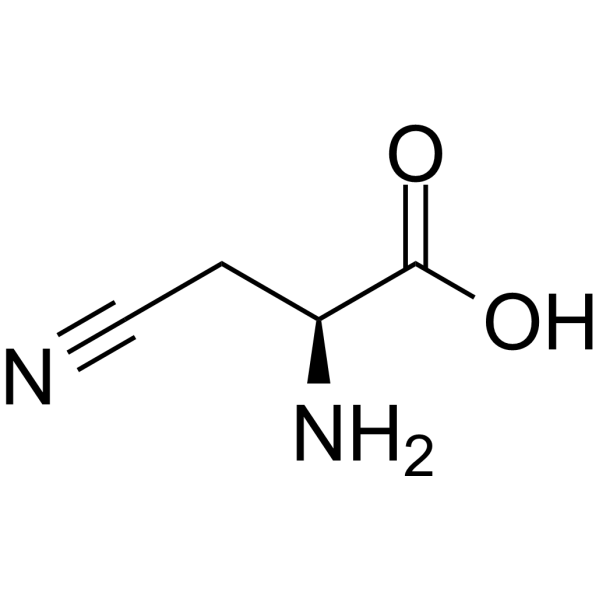
    β-cyano-L-Alanine (Beta-cyano-l-alanine), a nitrile of widespread occurrence in higher plants, is enzymatically produced by cyanoalanine synthase from cyanide and cysteine as substrates . β-cyano-L-Alanine abolishes the protective effect of ethanol on cerebral ischemia/reperfusion (I/R) injury .
    β-cyano-L-Alanine
  • HY-W040198

    Fluorescent Dye Others
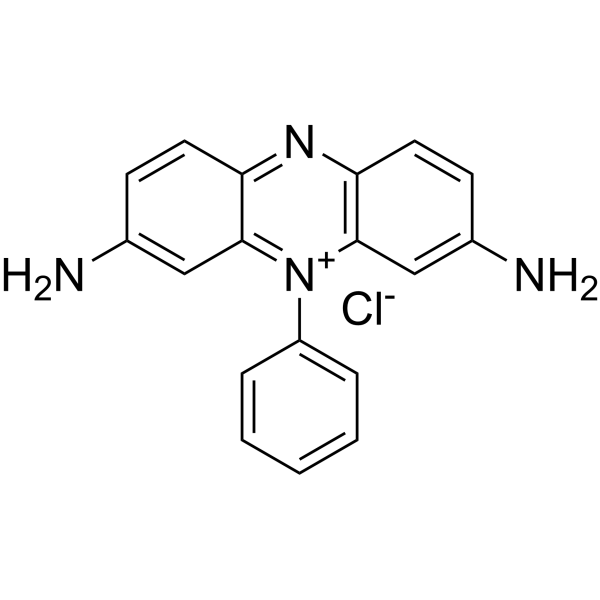
    Phenosafranine is a phenazine dye. Phenosafranine exhibits higher binding affinity for triple-stranded RNA than for double-stranded RNA, and binds to both types of RNA via intercalation. Phenosafranine interacts with hemoglobin. Phenosafranine can be used for plant cell staining, as well as the detection of hemoglobin, dopamine, serotonin, etc.
    Phenosafranine
  • HY-151231

    Aldose Reductase Neurological Disease Metabolic Disease
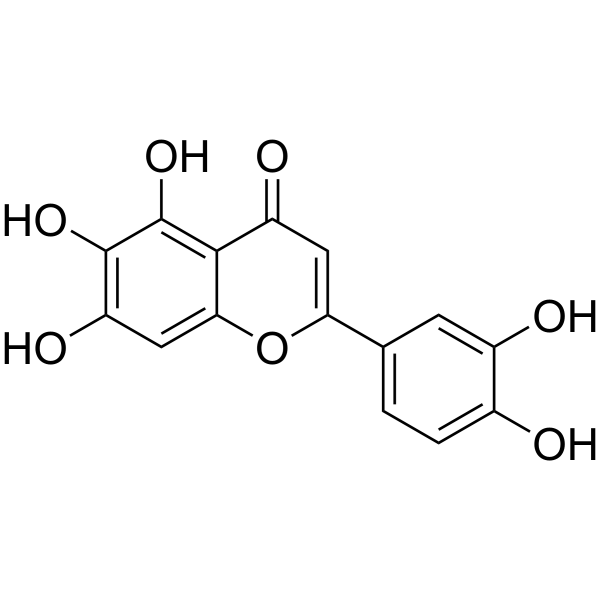
    6-Hydroxyluteolin (Compound 17) is a flavonoid derivative and also an inhibitor of Aldose reductase, with an experimental -log IC50 value of 6.690. 6-Hydroxyluteolin can be isolated from the leaves of multiple plant families, including Plantaginaceae, Globulariaceae and Labiatae. 6-Hydroxyluteolin serves as a phylogenetic marker for higher plants. 6-Hydroxyluteolin can be used in the research of diabetic cataract .
    6-Hydroxyluteolin
  • HY-126386B

    Macerozyme R-10

    Biochemical Assay Reagents Others
    Pectinase, rhizobia is a mixed enzymes that hydrolyze pectic substances, it mostly presents in microorganisms and higher plants. Pectinase is involved in the metabolism of the cell wall as well as in the growth of the cell, senescence, ripening of fruits, pathogenesis and abscission process .
    Pectinase, rhizobia
  • HY-B2012

    DPX-H6573

    Environmental Pollutants Fungal Infection
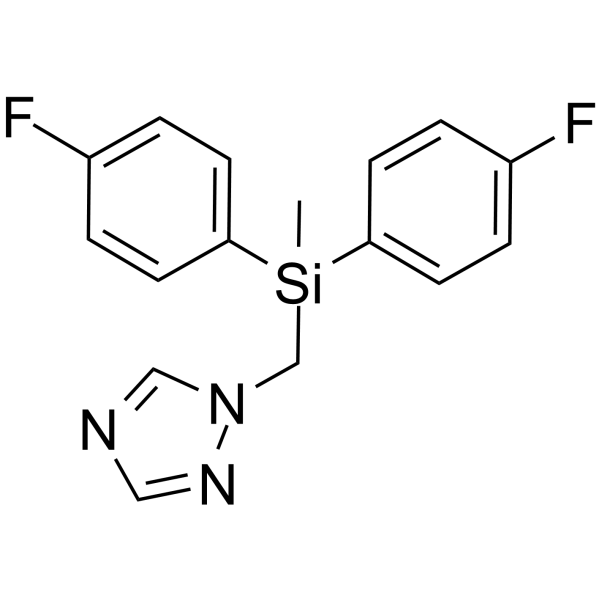
    Flusilazole (DPX-H6573) is a broad-spectrum fungicide and cytochrome P-450 inhibitor that can be used in studies related to fungal infections .
    Flusilazole
  • HY-128033

    Environmental Pollutants Fungal Infection
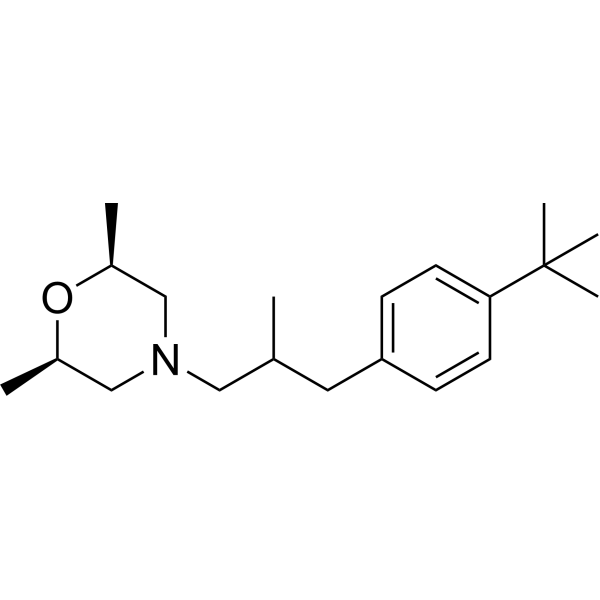
    Fenpropimorph is a fungicide that inhibits the sterol pathway. Fenpropimorph inhibits δ8-δ7-sterol isomerase in yeast at low concentrations, with δ14-sterol reductase being blocked at higher levels, preventing the biosynthesis of ergosterol. Fenpropimorph also inhibits sterol synthesis in certain plants and mammalian cells .
    Fenpropimorph
  • HY-N9625

    Photosystem II Others
    Violaxanthin is a lipophilic epoxy carotenoid and a light energy scavenger with biological activities such as antioxidation and anti-inflammation. Violaxanthin exists in photosynthetic eukaryotes including higher plants and participates in the xanthophyll cycle. As a component of the xanthophyll cycle, violaxanthin can be synthesized from zeaxanthin under the catalysis of epoxidase and scavenge excess light energy in photosynthetic eukaryotes .
    Violaxanthin
  • HY-124504

    Endogenous Metabolite Others
    Lunularic acid is a dihydrostilbene compound with anti-hyaluronidase activity (IC50: 0.13 nM). Lunularic acid can be used as an endogenous growth inhibitor in liverworts, replacing the function of abscisic acid in higher plants .
    Lunularic acid
  • HY-126386A

    Biochemical Assay Reagents Others
    Pectinase, aspergillus acne is a mixed enzymes that hydrolyze pectic substances, it mostly presents in microorganisms and higher plants. Pectinase is involved in the metabolism of the cell wall as well as in the growth of the cell, senescence, ripening of fruits, pathogenesis and abscission process .
    Pectinase, aspergillus acne
  • HY-P3001

    Endogenous Metabolite Metabolic Disease
    Malate dehydrogenase (oxaloacetate-decarboxylating, NADP+) is a redox agent targeting metabolic pathways. Malate dehydrogenase (oxaloacetate-decarboxylating, NADP+) catalyzes the reduction of oxaloacetate to malate in leaves of higher plants. Malate dehydrogenase (oxaloacetate-decarboxylating, NADP+) is promising for research of metabolic diseases, such as diabetes, obesity .
    Malate dehydrogenase oxaloacetate-decarboxylating, NADP+
  • HY-157618

    Bacterial Others
    18:0-18:1 PG sodium is a hydrogenated phospholipid that contributes to the stability of photosystem I and II protein complexes and plays a role in bacterial defense mechanisms, featuring two extra methylene groups in its saturated sn-1 chain, and is present in the thylakoid membranes of higher plants and cyanobacteria.
    18:0-18:1 PG sodium
  • HY-N9689

    Biochemical Assay Reagents Others
    D-Apiose (10% in water) is a branched pentose found in rhamnogalacturonan-II (RG-II) in the cell walls of higher plants and in apigalacturonan in the cell walls of aquatic monocots. D-Apiose (10% in water) increases cell wall stability by participating in interstrand RG-II crosslinking via boronate esters .
    Size denotes the total mass of the entire solution, with the D-Apiose content of 10% (w/w).
    D-Apiose (10% in water)
  • HY-N4145

    Cinnamtannin A3; Cinnamtannin II

    Drug Derivative Bacterial Fungal Infection Cardiovascular Disease Inflammation/Immunology Cancer
    Procyanidin A3 (Cinnamtannin A3; Cinnamtannin II) is a sub class of Proanthocyanidins (HY-N0794). Proanthocyanidin are a class of polyphenolic that are widely distributed in higher plants, consisted of an electrophilic flavanyl unit. Proanthocyanidin can be used as antioxidant and anti-cancer agent. Proanthocyanidin also exhibit anti-inflammatory, cardioprotective, antibacterial and antifungal properties, which can be used in the treatment of chronic venous insufficiency, capillary fragility, sunburn and retinopathy .
    Procyanidin A3
  • HY-128033R

    Fungal Reference Standards Infection
    Fenpropimorph (Standard) is the analytical standard of Fenpropimorph. This product is intended for research and analytical applications. Fenpropimorph is a fungicide that inhibits the sterol pathway. Fenpropimorph inhibits δ8-δ7-sterol isomerase in yeast at low concentrations, with δ14-sterol reductase being blocked at higher levels, preventing the biosynthesis of ergosterol. Fenpropimorph also inhibits sterol synthesis in certain plants and mammalian cells .
    Fenpropimorph (Standard)
  • HY-N1651

    Others Others
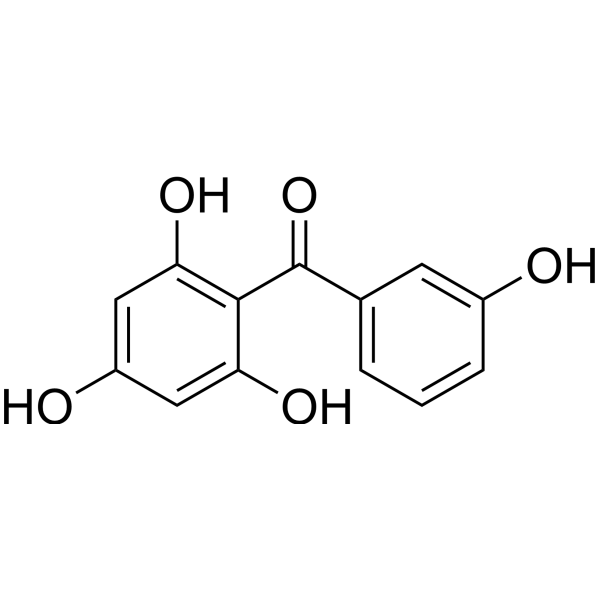
    2,3',4,6-Tetrahydroxybenzophenone, a kind of benzophenone, is the immediate precursor of xanthones in higher plants .
    2,3',4,6-Tetrahydroxybenzophenone
  • HY-125773R

    Beta-cyano-l-alanine (Standard)

    Endogenous Metabolite Reference Standards Neurological Disease
    β-cyano-L-Alanine (Standard) is the analytical standard of β-cyano-L-Alanine. This product is intended for research and analytical applications. β-cyano-L-Alanine (Beta-cyano-l-alanine), a nitrile of widespread occurrence in higher plants, is enzymatically produced by cyanoalanine synthase from cyanide and cysteine as substrates . β-cyano-L-Alanine abolishes the protective effect of ethanol on cerebral ischemia/reperfusion (I/R) injury .
    β-cyano-L-Alanine (Standard)
  • HY-N16480

    Lindetannin trimer

    Drug Derivative Bacterial Fungal Infection Cardiovascular Disease Inflammation/Immunology Cancer
    Lindetannin (Lindetannin trimer) is an A-type trimer of proanthocyanidin (HY-N0794) found in the bark of Cinnamomum trees. Proanthocyanidin are a class of polyphenolic that are widely distributed in higher plants, consisted of an electrophilic flavanyl unit. Proanthocyanidin can be used as antioxidant and anti-cancer agent. Proanthocyanidin also exhibit anti-inflammatory, cardioprotective, antibacterial and antifungal properties, which can be used in the treatment of chronic venous insufficiency, capillary fragility, sunburn and retinopathy .
    Lindetannin
  • HY-N18359

    Others Others
    Lanatin is a Furanocoumarin .
    Lanatin
  • HY-E71354

    Biochemical Assay Reagents Others
    p-Coumaroyl-CoA and sinapoyl-CoA are substrates of ω-hydroxypalmitate O-feruloyl transferase (EC 2.3.1.188). This enzyme is widely distributed in the roots of higher plants.
    ω-Hydroxypalmitate O-feruloyl transferase

Inquiry Online

Your information is safe with us. * Required Fields.

Salutation


Country or Region *

Applicant Name *


Organization Name *

Department *


Email Address *


Product Name *

Cat. No.


Requested quantity *

Phone Number *


Remarks

Inquiry Online

Inquiry Information

Product Name:
Cat. No.:
Quantity:
MCE Japan Authorized Agent:

