
16 Results for "

hypersensitive response

" in MedChemExpress (MCE) Product Catalog:
Products (16)

16 Results for "hypersensitive response" in MCE Product Catalog:

11
11 Cited Publications
Cat. No.: HY-P0286
CAS No.: 92915-79-2
Target:  

Peptides

Research Areas:  

Inflammation/Immunology

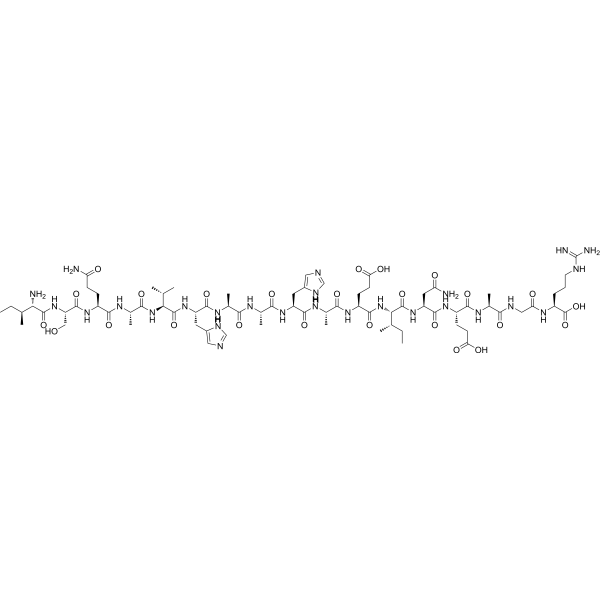
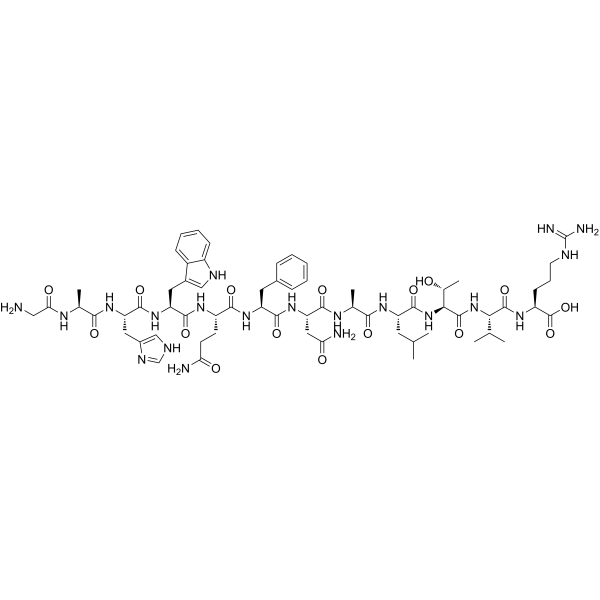
OVA Peptide (323-339) represents a T and B cell epitope of Ovalbumin (Ova), which is important in the generation and development of immediate hypersensitivity responses in BALB/c mice.
loading...
    loading...
2
2 Cited Publications
Cat. No.: HY-17484
CAS No.: 99464-64-9
Synonyms: CP 65703
Target:  

Drug Derivative

Research Areas:  

Inflammation/Immunology

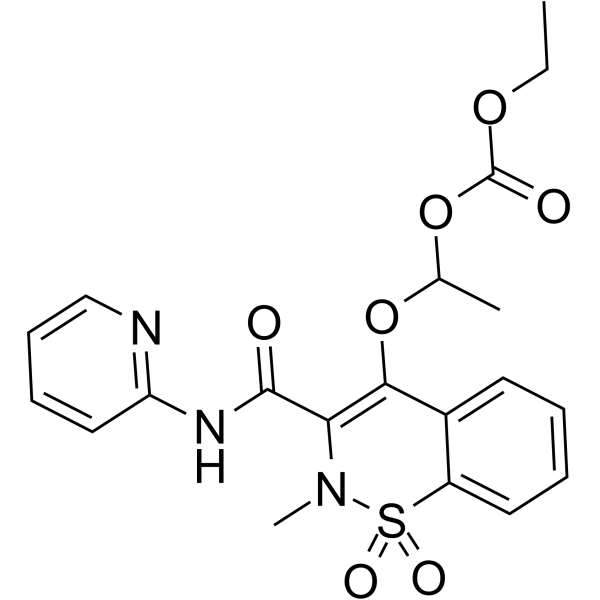
Ampiroxicam is an orally active prodrug of non-steroidal anti-inflammatory drug (NSAID). Ampiroxicam inhibits paw swelling in adjuvant-induced arthritis and acute inflammation models, and suppresses phenylbenzoquinone-induced stretching responses in mice. Ampiroxicam is rapidly and completely converted to Piroxicam (HY-B0253) via non-specific esterases and first-pass metabolism. Ampiroxicam induces contact hypersensitivity and photosensitivity reactions through photoproducts generated by UVA. Ampiroxicam can be used in research related to photosensitivity, adjuvant-induced arthritis, rheumatism, osteoarthritis and other inflammatory diseases .
loading...
    loading...
Cat. No.: HY-N1389
CAS No.: 1390-65-4
Synonyms: Carmine red
Carmine (Carmine red), a natural red dye extracted from the dried females of the insect Dactylopius coccus var. Costa (cochineal). Carmine is a widely used food additive. Carmine provokes both an immediate hypersensitivity and a delayed systemic response with cutaneous expression .
loading...
    loading...
Cat. No.: HY-P2717
CAS No.: 149231-65-2
Target:  

Caspase

Research Areas:  

Infection

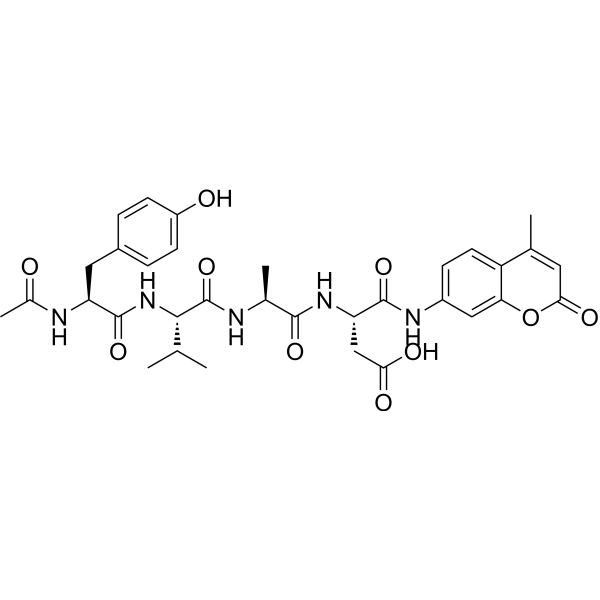
Ac-YVAD-AMC is an inhibitor for caspase. Ac-YVAD-AMC inhibits bacteria-induced cell death of hypersensitive response (HR) cells .
loading...
    loading...
Cat. No.: HY-N5025
CAS No.: 1354-84-3
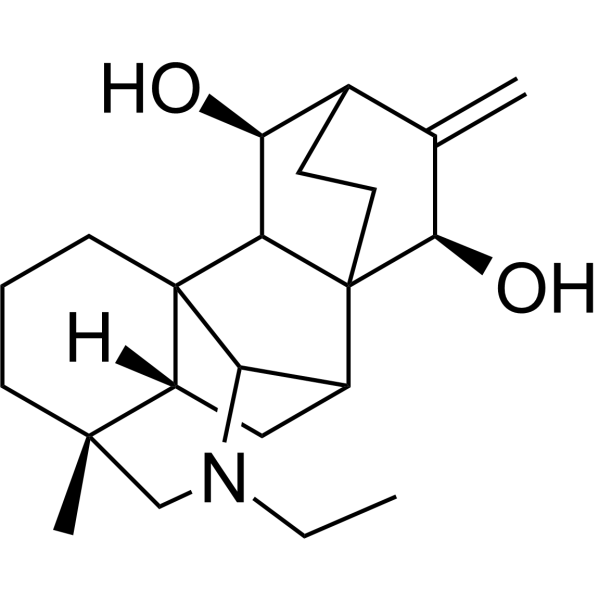
Bullatine A, a diterpenoid alkaloid, is a potent P2X7 antagonist. Bullatine A possesses anti-rheumatic, anti-inflammatory and anti-nociceptive effects. Bullatine A inhibits ATP-induced BV-2 cell death/apoptosis and P2X receptor-mediated inflammatory responses. Bullatine A suppresses glioma cell growth by targeting SIRT6. Bullatine A specifically attenuates pain hypersensitivity in rats. Bullatine A attenuates LPS (HY-D1056)-induced systemic inflammatory response by inhibiting the ROS/JNK/NF-κB pathway in mice. Bullatine A improves despair behavior in Chronic chronic social defeat stress (CSDS) mice. Bullatine A can be used for the study of inflammation, glioblastoma (GBM) and depression .
loading...
    loading...
Cat. No.: HY-149711
CAS No.: 68000-92-0
Target:  

ICMT

Research Areas:  

Metabolic Disease

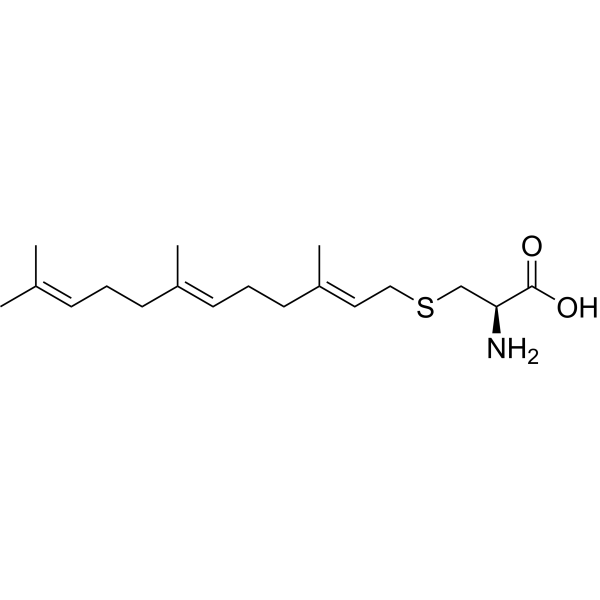
Farnesylcysteine (FC) is a competitive inhibitor of ICMT. The fcly mutant has quantitatively low farnesylcysteine (FC) lyase activity and an enhanced response to ABA. Farnesylcysteine induces an ABA hypersensitive phenotype in Arabidopsis thaliana .
loading...
    loading...
Cat. No.: HY-P5352
CAS No.: 299157-43-0
Target:  

CD44

Research Areas:  

Inflammation/Immunology Cancer

Hyaluronan-IN-1 (Pep-1) is a Hyaluronan inhibitor with a Kd value of 1.65 μM. Hyaluronan-IN-1 blocks CD44-dependent cell adhesion. Hyaluronan-IN-1 inhibits cell adhesion to hyaluronan substrates. Hyaluronan-IN-1 suppresses the development of contact hypersensitivity in mice by blocking the homing process of inflammatory cells to the skin. Hyaluronan-IN-1 also inhibits responses during the sensitization phase. Hyaluronan-IN-1 reduces lung metastasis of melanoma and prolongs the survival of mice. Hyaluronan-IN-1 can be used in research related to contact hypersensitivity, chronic skin inflammation, and melanoma .
loading...
    loading...
Cat. No.: HY-119681
CAS No.: 79889-39-7
Target:  

Others

Research Areas:  

Inflammation/Immunology

YM 11124 is an orally active selective immunosuppressive agent. YM 11124 can inhibit cell-mediated immune responses (type IV allergic reactions, such as delayed-type hypersensitivity and allogenic skin graft rejection) and type III allergic reactions (such as passive Arthus reaction). YM 11124 has no effect on type I, type II allergic reactions or acute inflammation. YM 11124 can be used in research related to organ transplantation and immune hypersensitivity .
loading...
    loading...
Cat. No.: HY-108492
CAS No.: 1257093-40-5
Target:  

LPL Receptor

Research Areas:  

Inflammation/Immunology

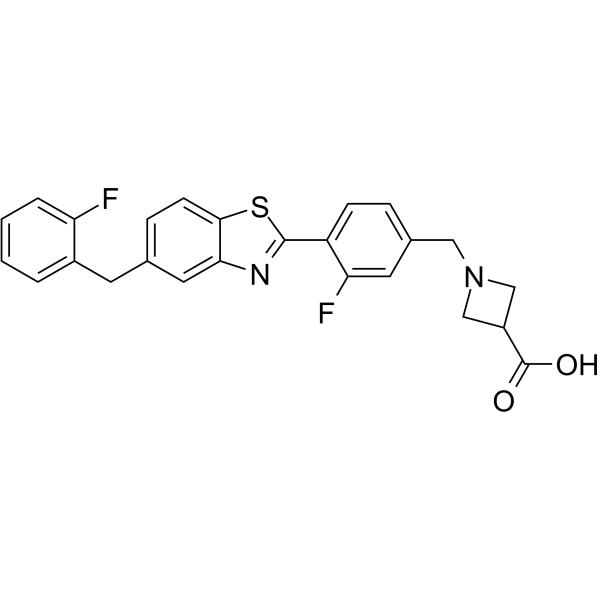
TC-SP 14 (compound 14) is an orally active and potent S1P1 agonist (EC50 = 0.042 μM) with minimal activity at S1P3 (EC50 = 3.47 μM). TC-SP 14 significantly reduces blood lymphocyte counts and attenuates a delayed type hypersensitivity (DTH) response to antigen challenge .
loading...
    loading...
Cat. No.: HY-162376
CAS No.: 2316760-41-3
Target:  

Bacterial

Research Areas:  

Infection

T3SS-IN-4 (Compound Z-8) is a T3SS inhibitor that can inhibit the expression of Xanthomonas oryzae pv oryzae (Xoo) T3SS-related genes without affecting bacterial growth. T3SS-IN-4 can effectively reduce the hypersensitive response (HR) induced by Xoo in tobacco and lower the pathogenicity of Xoo in rice .
loading...
    loading...
Cat. No.: HY-118935
CAS No.: 666256-06-0
Target:  

Adrenergic Receptor

Research Areas:  

Inflammation/Immunology

NGD9002 free base is a new generation of selective corticotropin-releasing factor-1 (CRF-1) receptor antagonist with inhibitory activity on CRF-induced colonic function stimulation. NGD9002 free base can reduce CRF-induced fecal output response and show an inhibitory IC50 value of 4.3 mg/kg. NGD9002 free base can effectively block CRF-induced colonic secretory motility stimulation at the highest dose and reduce acute water avoidance-induced defecation. NGD9002 free base can also prevent the occurrence of pain hypersensitivity reactions to repeated colonic distension .
loading...
    loading...
Cat. No.: HY-17484R
CAS No.: 99464-64-9
Synonyms: CP 65703 (Standard)
Target:  

Reference Standards

Research Areas:  

Inflammation/Immunology

Ampiroxicam (Standard) is the analytical standard of Ampiroxicam. This product is intended for research and analytical applications. Ampiroxicam is an orally active prodrug of non-steroidal anti-inflammatory drug (NSAID). Ampiroxicam inhibits paw swelling in adjuvant-induced arthritis and acute inflammation models, and suppresses phenylbenzoquinone-induced stretching responses in mice. Ampiroxicam is rapidly and completely converted to Piroxicam (HY-B0253) via non-specific esterases and first-pass metabolism. Ampiroxicam induces contact hypersensitivity and photosensitivity reactions through photoproducts generated by UVA. Ampiroxicam can be used in research related to photosensitivity, adjuvant-induced arthritis, rheumatism, osteoarthritis and other inflammatory diseases.
loading...
    loading...
Cat. No.: HY-121365
CAS No.: 71522-58-2
Target:  

Bacterial

Research Areas:  

Infection

Forphenicinol is an immunomodulator and a derivative of the bacterial metabolite forphenicine. It increases the phagocytosis of yeast by peritoneal macrophages isolated from thioglycolate-stimulated mice. Forphenicinol (100 μg/animal) prevents cyclophosphamide-induced suppression of delayed-type hypersensitivity (DTH), as well as enhances DTH in response to the hapten oxazolone or sheep red blood cells in mice. It enhances the bactericidal activity of macrophages against P. aeruginosa in mice when administered at a dose of 0.5 mg/kg.2 Forphenicinol (15.6-1,000 μg/animal) increases survival in a mouse model of P. aeruginosa infection. It also inhibits tumor growth in S180 sarcoma and IMC carcinoma mouse xenograft models when administered at doses ranging from 0.05 to 5 mg/kg per day.
loading...
    loading...
Cat. No.: HY-15026
CAS No.: 915798-75-3
Target:  

Endogenous Metabolite

Research Areas:  

Inflammation/Immunology

ATB-429, a novel H2S-releasing derivative of mesalamine, demonstrates significant anti-nociceptive and anti-inflammatory effects in models of irritable bowel syndrome (IBS). By releasing hydrogen sulfide (H2S), ATB-429 modulates colorectal distension-induced hypersensitivity in both healthy and postcolitic rats. It attenuates abdominal withdrawal responses and suppresses spinal c-Fos mRNA expression, indicating its potential to alleviate pain associated with gastrointestinal inflammation. Moreover, ATB-429 down-regulates colonic cyclooxygenase-2 and interleukin-1β mRNA expression, effects not observed with mesalamine alone. The mechanism involves ATP-sensitive K+ (KATP) channels, as evidenced by reversal of ATB-429's effects with glibenclamide. These findings suggest ATB-429 could offer therapeutic benefits for managing painful intestinal disorders linked to inflammation .
loading...
    loading...
Cat. No.: HY-182515
CAS No.: 112682-32-3
Target:  

Leukotriene Receptor

Research Areas:  

Others Inflammation/Immunology

U-19052 is a selective competitive peptidoleukotriene D/E receptor antagonist. U-19052 acts as a reversible antagonist that not affecting responses to non-leukotriene agonists. U-19052 does not exhibit agonist activity or induce contraction in guinea pig tracheal or ileal strips. U-19052 is a leukotriene antagonist developed by modifying leukotriene chemical structure. U-19052 can be used for the research of allergic asthma and hypersensitivity diseases .
loading...
    loading...
Cat. No.: HY-L076
641 compounds

Drug-induced liver injury (DILI; also known as drug-induced hepatotoxicity) is caused by medications (prescription or OTC), herbal and dietary supplements (HDS), or other xenobiotics that result in abnormalities in liver tests or in hepatic dysfunction that cannot be explained by other causes. Drugs are an important cause of liver injury. Drug-induced hepatic injury is the most common reason cited for withdrawal of an approved drug.

DILI is thought to occur via several different mechanisms. Among these are direct impairment of the structural (e.g., mitochondrial dysfunction) and functional integrity of the liver; production of a metabolite that alters hepatocellular structure and function; production of a reactive drug metabolite that binds to hepatic proteins to produce new antigenic drug-protein adducts, which are targeted by hosts’ defenses (the hapten hypothesis); and initiation of a systemic hypersensitivity response (i.e., drug allergy) that damages the liver.

MCE Drug-induced Liver Injury (DILI) Compound Library contains a unique collection of 641 hepatotoxicity causing compounds and is a powerful tool to research DILI and other drug toxicities. This library can be used to understand the mechanisms of DILI, identify biomarkers for early DILI prediction, and allow timely recognition during drug development, thus finally achieving successful DILI prevention and assessment in the pre-marketing phase.

  • 1

