18 Results for "

immunoreactive

" in MedChemExpress (MCE) Product Catalog:
Products (18)

18 Results for "immunoreactive" in MCE Product Catalog:

11
11 Cited Publications
Cat. No.: HY-127090
CAS No.: 53678-77-6
Purity:  ≥98.0%
Synonyms: MDP
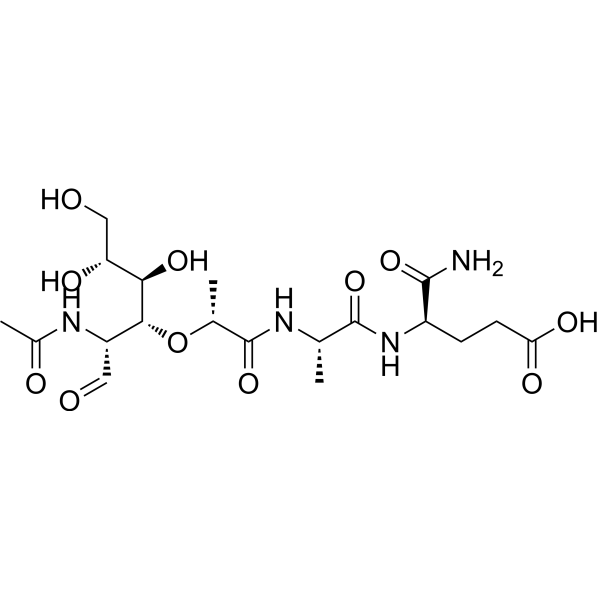
Muramyl dipeptide (MDP) is a synthetic immunoreactive peptide, consisting of N-acetyl muramic acid attached to a short amino acid chain of L-Ala-D-isoGln. Muramyl dipeptide is an inducer of bone formation through induction of Runx2. Muramyl dipeptide directly enhances osteoblast differentiation by up-regulating Runx2 gene expression through MAPK pathways. Muramyl dipeptide is a NLRP1 agonist .
loading...
    loading...
Cat. No.: HY-P1248
CAS No.: 99566-27-5
Synonyms: NPFF
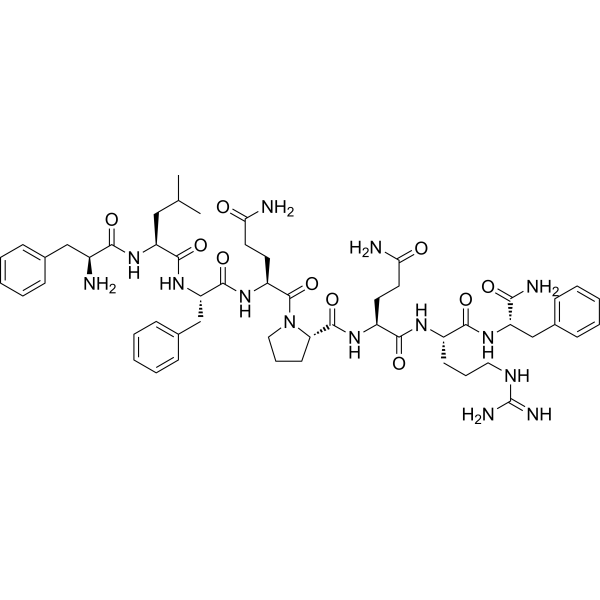
Neuropeptide FF (NPFF), an octapeptide belonging to the RF-amide family of peptides, is a NPFF1 and NPFF2 receptors agonist with Ki values of 2.82 nM and 0.21 nM, respectively. Neuropeptide FF induces abstinence syndrome, exerts antiopioid and analgesic effects, releases via calcium-dependent mechanisms from rat spinal cord, regulates memory, autonomic function, and neuroendocrine function, modulates pain and opioid antinociception, reduces food intake, stimulates water intake, alters cardiovascular parameters, and shows differential activity in hypothalamic paraventricular nucleus neurons. Neuropeptide FF is present in mammalian central nervous system and periphery, with NPFF-immunoreactivity increases in rat cerebrospinal fluid during opiate tolerance, and its NPFF gene and NPFF-R2 gene are up-regulated in rat spinal cord and dorsal root ganglia during peripheral inflammation. Neuropeptide FF can be used for the research of opioid tolerance, morphine-induced analgesia, abstinence syndrome, pain, hypertension, nociception, inflammatory pain, and neuropathic pain .
loading...
    loading...
Cat. No.: HY-P2198
CAS No.: 196305-05-2
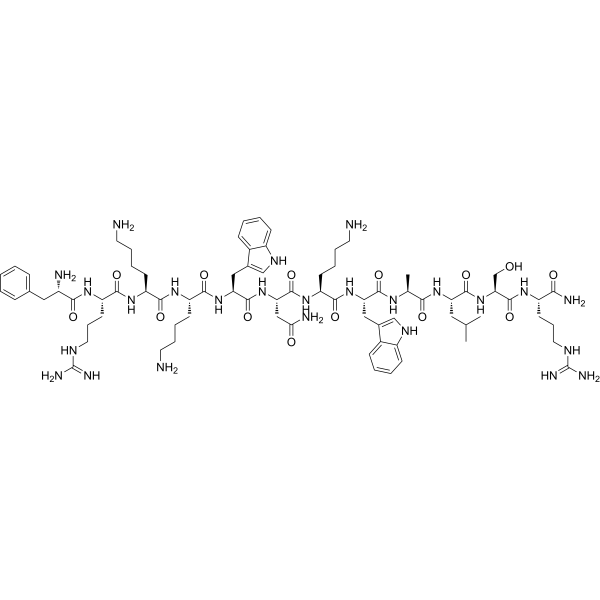
PAMP-12(human, porcine) is a major component of immunoreactive (ir)-PAMP, is processed from the adrenomedullin precursor, is a potent hypotensive peptide and participates in cardiovascular control .
loading...
    loading...
Cat. No.: HY-115822
CAS No.: 81839-27-2
Purity:  ≥99.0%
α-Fluoromethylhistidine dihydrochloride is an orally active histidine decarboxylase inhibitor. α-Fluoromethylhistidine dihydrochloride depletes histamine in enterochromaffin-like (ECL) cells, reduces the number and volume density of secretory vesicles in ECL cells, and does not affect histamine storage in mast cells. α-Fluoromethylhistidine dihydrochloride abolishes Omeprazole (HY-B0113)-induced vacuolization of ECL cells and decreases gastrin-induced histamine efflux from ECL cells. α-Fluoromethylhistidine dihydrochloride does not alter the granular characteristics of ECL cells, omeprazole-induced hypertrophy of ECL cells, gastrin-induced pancreastatin-like immunoreactivity efflux, nor does it affect gastric acid secretion induced by histamine or vagal stimulation. α-Fluoromethylhistidine dihydrochloride inhibits basal and gastrin-stimulated gastric acid secretion, reduces acid output induced by gastrin+IBMX (HY-12318), but does not directly affect acid generation in isolated parietal cells .
loading...
    loading...
Cat. No.: HY-W1015419
CAS No.: 73804-75-8
Synonyms: α-Fluoromethylhistidine
α-FMH (α-Fluoromethylhistidine) is an orally active histidine decarboxylase inhibitor. α-FMH depletes histamine in enterochromaffin-like (ECL) cells, reduces the number and volume density of secretory vesicles in ECL cells, and does not affect histamine storage in mast cells. α-FMH abolishes Omeprazole (HY-B0113)-induced vacuolization of ECL cells and decreases gastrin-induced histamine efflux from ECL cells. α-FMH does not alter the granular characteristics of ECL cells, omeprazole-induced hypertrophy of ECL cells, gastrin-induced pancreastatin-like immunoreactivity efflux, nor does it affect gastric acid secretion induced by histamine or vagal stimulation. α-FMH inhibits basal and gastrin-stimulated gastric acid secretion, reduces acid output induced by gastrin+IBMX (HY-12318), but does not directly affect acid generation in isolated parietal cells .
loading...
    loading...
Cat. No.: HY-129502
CAS No.: 91776-47-5
Synonyms: P-23924C
Fibrostatin C (P-23924C) is an orally active prolyl hydroxylase inhibitor that also inhibits collagen biosynthesis. Fibrostatin C also increases the number of cytoplasmic granules immunoreactive with antibodies to collagen I or III. Fibrostatin C inhibits the secretion of type I collagen in Tenon's capsule fibroblasts. Fibrostatin C is promising for research of the wound fibrotic response in the wound of glaucoma filtering surgery .
loading...
    loading...
Cat. No.: HY-177326
CAS No.: 143631-62-3
Synonyms: Ro 44-9375
Target:  

Renin

Research Areas:  

Cardiovascular Disease

Ciprokiren (Ro 44-9375) is a Renin inhibitor with IC50s of 0.07 and 0.65 nM for hRenin in buffer and plasma, respectively. Ciprokiren be applied transdermally with similar hemodynamic effects without decrease of plasma renin activity or plasma immunoreactive angiotensin II. Ciprokiren has antihypertensive efficacy and can be used for hypertension research .
loading...
    loading...
Cat. No.: HY-114753
CAS No.: 163000-63-3
Synonyms: CR-2249; XY-2401
Target:  

iGluR

Research Areas:  

Neurological Disease

Neboglamine (CR-2249; XY-2401) is a modulator for N-methyl-D-aspartate (NMDA) receptor. Neboglamine increases the levels of fos-like immunoreactivity (FLI)-positive cells in the prefrontal cortex, nucleus accumbens, and lateral septal nucleus in rat models, .restores NMDA (HY-17551) -mediated neurotransmitter release, and inhibits phencyclidine-induced hyperlocomotion .
loading...
    loading...
Cat. No.: HY-154802
CAS No.: 2307311-19-7
Research Areas:  

Cancer

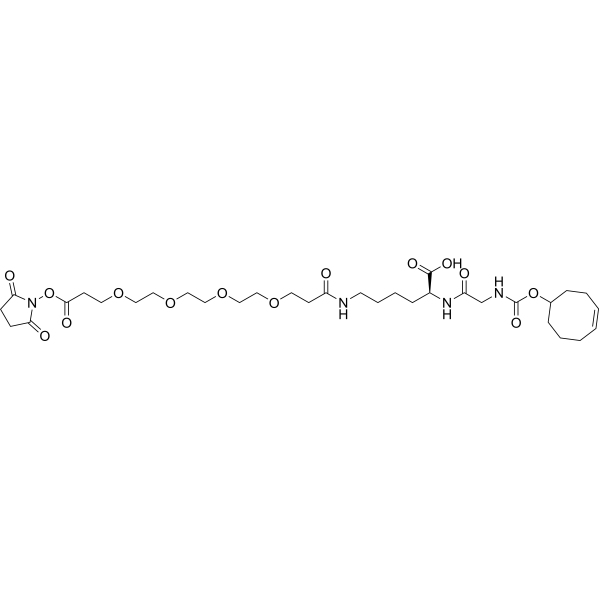
TCO-GK-PEG4-NHS ester is an ADC Linker, and can be used for synthesis of [18F]AlF-NOTA-Tz-TCO-GK-2Rs15d. [18F]AlF-NOTA-Tz-TCO-GK-2Rs15d binds with high affinity and immunoreactivity to HER2 . TCO-GK-PEG4-NHS ester is a click chemistry reagent, it contains a TCO group that can undergo an inverse electron demand Diels-Alder reaction (iEDDA) with molecules containing Tetrazine groups.
loading...
    loading...
Cat. No.: HY-P2198A
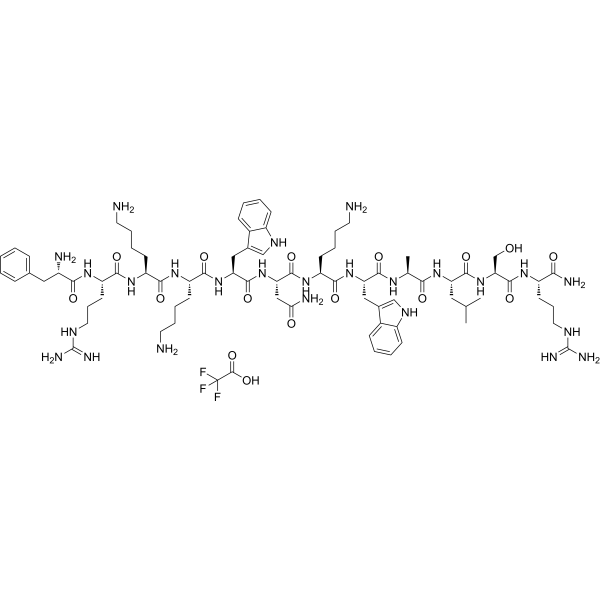
PAMP-12(human, porcine) TFA is a major component of immunoreactive (ir)-PAMP, is processed from the adrenomedullin precursor, is a potent hypotensive peptide and participates in cardiovascular control .
loading...
    loading...
Cat. No.: HY-113726
CAS No.: 102771-12-0
Synonyms: GYKI52322; EGIS-6775
Target:  

GABA Receptor

Research Areas:  

Neurological Disease

Nerisopam is an orally active gamma-aminobutyric acid (GABA) receptor agonist. Nerisopam is an anxiolytic and antipsychotic homophthalazine. Nerisopam induces rapid, intense expression of Fos-like immunoreactivity in the rostral, dorsomedial and lateral parts of the striatum in the rat .
loading...
    loading...
Cat. No.: HY-173215
3-Dimethylaminopropyl deacetylforskolin is a dehydro derivative of adenylate cyclase activator Forskolin (HY-15371) and may cause cross-immunoreactivity with anti-Forskolin antibodies .
loading...
    loading...
Cat. No.: HY-117913
CAS No.: 129445-88-1
Target:  

Renin

Research Areas:  

Cardiovascular Disease

ES-8891 is a renin inhibitor. Oral administration of ES-8891 to normotensive sodium-depleted macaques for one week significantly reduced plasma renin activity, immunoreactive renin concentrations, and plasma angiotensin I concentrations, while mean blood pressure decreased significantly, without significant changes in heart rate. ES-8891 regulates blood pressure by inhibiting plasma renin levels and renal renin synthesis .
loading...
    loading...
Cat. No.: HY-12172
CAS No.: 903579-36-2
Synonyms: ACT-077825
Target:  

Renin

Research Areas:  

Cardiovascular Disease

MK-8141 (ACT-077825) is a renin inhibitor that significantly increases levels of immunoreactive renin (ir-AR) by sevenfold but does not result in sustained reductions in blood renin activity (PRA). This study evaluated the antihypertensive efficacy of MK-8141 in hypertensive disease. Despite its effects on ir-AR, MK-8141 (ACT-077825) did not produce significant blood pressure-lowering effects in the absence of sustained PRA inhibition.
loading...
    loading...
Cat. No.: HY-76652
CAS No.: 1264191-73-2
Target:  

Renin

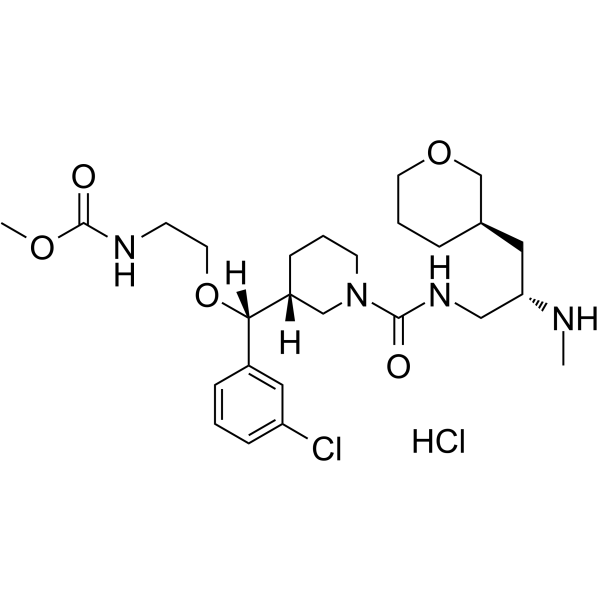
VTP-27999 Hydrochloride is an orally active renin inhibitor. VTP-27999 Hydrochloride functionally inhibits renin and acid-activated prorenin, suppresses plasma renin activity and modulates plasma and urinary aldosterone levels. VTP-27999 Hydrochloride reduces mean arterial blood pressure, induces plasma renin concentration increases, decreases plasma angiotensin II levels and enhances renin immunoreactivity. VTP-27999 (Hydrochloride) can be used for the research of hypertension and chronic renal disease .
loading...
    loading...
Cat. No.: HY-182504
CAS No.: 244276-65-1
NRA‑0562 is a dopamine antagonist with high affinities for dopamine D1/D2/D3/D4, 5‑HT2A and α1‑adrenoceptors. NRA-0562 dose‑dependently reverses induced suppression of firing activity in rat A9 and A10 midbrain dopamine neurons, with preferential potency at A10 neurons (ED50 = 0.3 mg/kg). NRA-0562 elevates Fos-like immunoreactivity in rat nucleus accumbens and dorsolateral striatum. NRA-0562 can be used for preclinical research on schizophrenia . .
loading...
    loading...
Cat. No.: HY-127090S
Synonyms: MDP-d3
Muramyl dipeptide-d3 (MDP-d3) is the deuterium labeled Muramyl dipeptide. Muramyl dipeptide (MDP) is a synthetic immunoreactive peptide, consisting of N-acetyl muramic acid attached to a short amino acid chain of L-Ala-D-isoGln. Muramyl dipeptide is an inducer of bone formation through induction of Runx2. Muramyl dipeptide directly enhances osteoblast differentiation by up-regulating Runx2 gene expression through MAPK pathways. Muramyl dipeptide is a NLRP1 agonist .
loading...
    loading...
Cat. No.: HY-117578
CAS No.: 131916-69-3
Target:  

Endogenous Metabolite

Research Areas:  

Neurological Disease

KB 5666 is a benzoxazine derivative with lipid peroxidation inhibitory activity. KB 5666 showed protective effects against post-ischemic neuronal death. KB 5666 effectively protected CA1 neurons when injected 5 minutes before or immediately after ischemia. KB 5666 also showed a dose-dependent protective effect when injected within 1 hour after ischemia. KB 5666 effectively prevented the significant decrease in microtubule-associated protein 2 immunoreactivity within the dendritic field of CA1 pyramidal cells. KB 5666 prevented the decrease in [3H]PDBu binding activity in different layers of the CA1 region after ischemia. The application of KB 5666 showed the ability to improve the cellular and functional consequences of ischemia .
loading...
    loading...
  • 1

