

1. Search Result
Search Result
Results for "

labor

" in MedChemExpress (MCE) Product Catalog:

28

Inhibitors & Agonists

1

Biochemical Assay Reagents

7

Peptides

3

Natural
Products

2

Isotope-Labeled Compounds

1

Oligonucleotides

Cat. No. Product Name Target Research Areas Chemical Structure
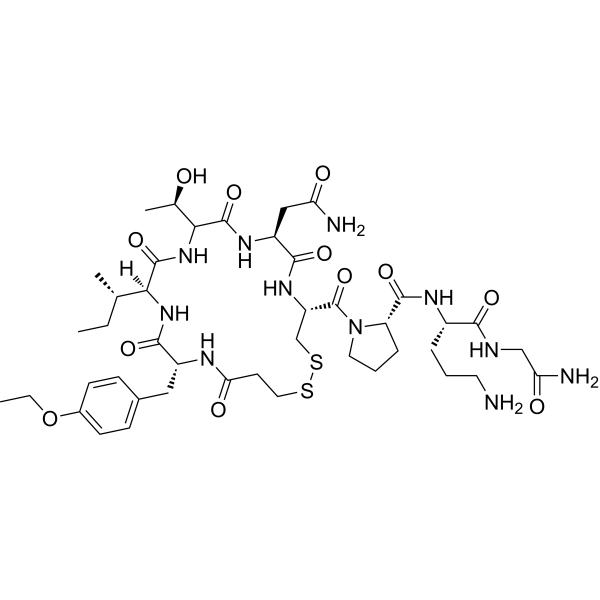
  • HY-17572
    Atosiban
    5+ Cited Publications

    RW22164; RWJ22164

    Oxytocin Receptor Vasopressin Receptor Cardiovascular Disease Endocrinology Cancer
    Atosiban (RW22164; RWJ22164) is a nonapeptide competitive vasopressin/oxytocin receptor antagonist, and is a desamino-oxytocin analogue. Atosiban is the main tocolytic agent and has the potential for spontaneous preterm labor research .
    Atosiban
  • HY-107799
    Castor oil
    5 Publications Verification

    Environmental Pollutants Biochemical Assay Reagents Others
    Castor oil is a natural triglyceride and a solvent. Castor oil has a laxative effect and induces labor in pregnant females. Castor oil can be used as a solvent, co-solvent, stabilizing agent and polyol for the formation of polymer-nanoparticle composites .
    Castor oil
  • HY-N6070

    Environmental Pollutants Prostaglandin Receptor Inflammation/Immunology
    Ricinoleic acid (purity≥85%), a hydroxy fatty acid, is an attractive feedstock for the production of high-performance lubricants, cosmetics, polymers, surfactants, and coatings. Ricinoleic acid is the main active ingredient of Castor oil (HY-107799). Ricinoleic acid is the agonist for prostaglandin EP3 receptor (EP3 receptor) (EC50 in MEG-01 is 0.5 μM), that causes laxative effects and uterine contraction. Ricinoleic acid exhibits antianxiety-like, anti-inflammatory and pro-inflammatory properties .
    Ricinoleic acid (purity≥85%)
  • HY-W011602

    Environmental Pollutants Biochemical Assay Reagents Neurological Disease
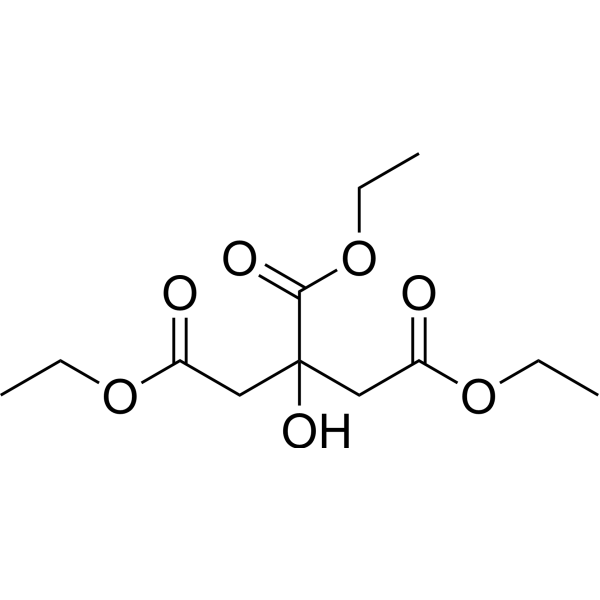
    Triethyl citrate is an orally active citrate compound. Triethyl citrate induces acute toxic effects, including weakness, depression, ataxia, hyperexcitability, restlessness, dripping urine, and irregular, labored breathing. Triethyl citrate can be used in research on plasticizers for food packaging materials .
    Triethyl citrate
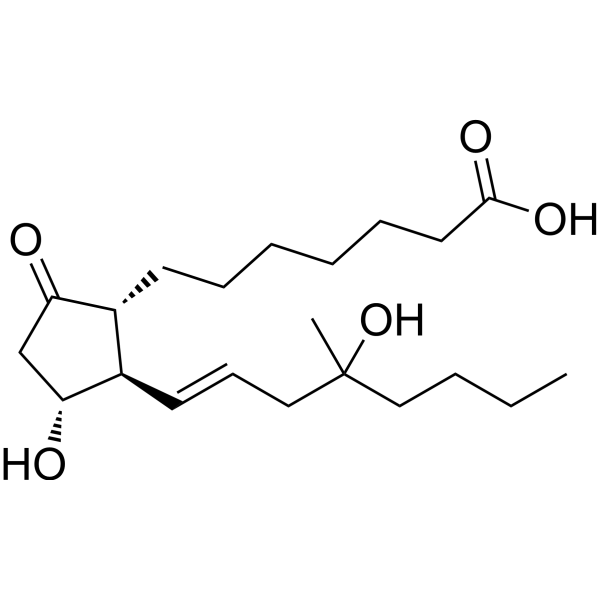
  • HY-118189
    Misoprostol acid
    1 Publications Verification

    Prostaglandin Receptor Inflammation/Immunology
    Misoprostol acid is an active metabolite of Misoprostol. Misoprostol is a synthetic analogue of prostaglandin E1 (PGE1), extensively absorbed, and undergoes rapid de-esterification to Misoprostol acid in the gastrointestinal tract after oral administration. Misoprostol can be used for non-steroidal anti-inflammatory drug-induced (NSAID) gastric ulcers . Misoprostol is an oral agent used to induce labor .
    Misoprostol acid
  • HY-P2168

    Oxytocin Receptor Drug Derivative Metabolic Disease
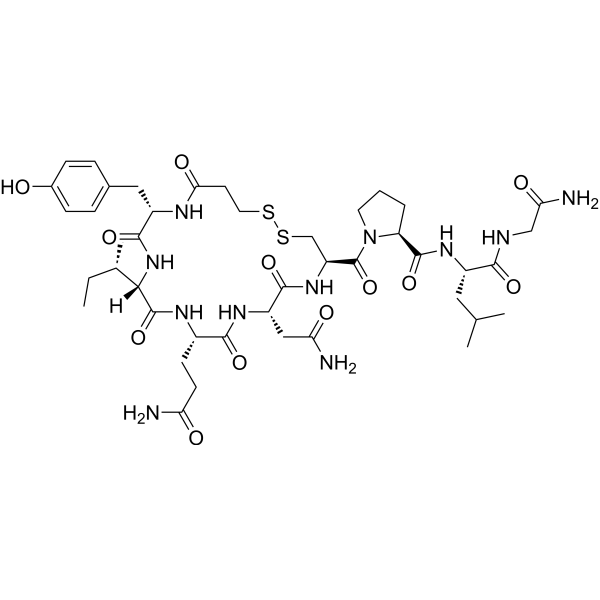
    Demoxytocin is a heterologous cyclic peptide and an analog of Oxytocin (HY-17571). Demoxytocin affects the permeability of cell membranes and increases calcium ion levels in smooth muscle cells, thereby enhancing the contraction of smooth muscle cells. Demoxytocin also stimulates the contraction of uterine smooth muscle. Demoxytocin possesses the functions of oxytocin. Demoxytocin can be used to study labor stimulation in preterm premature rupture of membranes .
    Demoxytocin
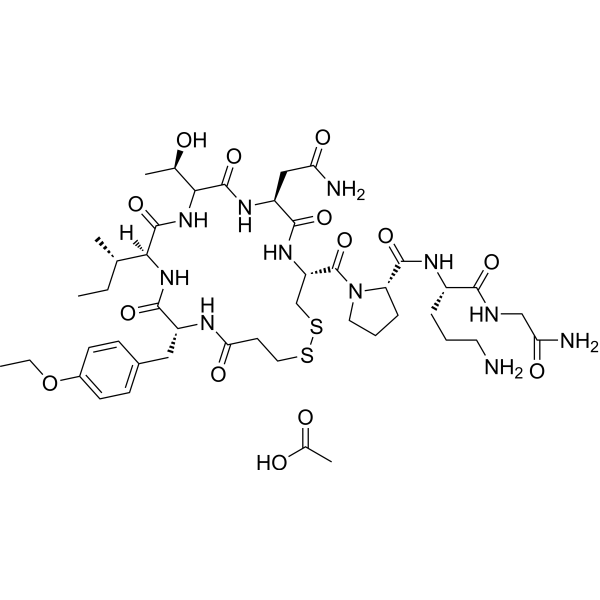
  • HY-17572A
    Atosiban acetate
    5+ Cited Publications

    RW22164 acetate; RWJ22164 acetate

    Oxytocin Receptor Vasopressin Receptor Cardiovascular Disease Endocrinology Cancer
    Atosiban acetate (RW22164 acetate;RWJ22164 acetate) is a nonapeptide competitive vasopressin/oxytocin receptor antagonist, and is a desamino-oxytocin analogue. Atosiban is the main tocolytic agent and has the potential for spontaneous preterm labor research .
    Atosiban acetate
  • HY-W089845
    Heneicosane
    1 Publications Verification

    Environmental Pollutants Fungal Sex Pheromone Infection Endocrinology
    Heneicosane is a royal-specific pheromone of insects (such as subterranean termites) and is an identification signal for queens and kings in termites. Heneicosane mediates royal recognition and the maintenance of social division of labor by being sensed by worker ants and triggering vibrations and antennal behaviors. Heneicosane can exert anti-inflammatory, analgesic and antipyretic activities by inhibiting the release of inflammatory mediators (such as prostaglandins and cytokines). At the same time, Heneicosane can also inhibit the mycelial growth of aflatoxin-producing fungi and inhibit the production of aflatoxin. Heneicosane can be used in insect chemical ecology research to analyze the regulatory mechanism of termite social behavior, and is also a potential target for new anti-inflammatory drugs .
    Heneicosane
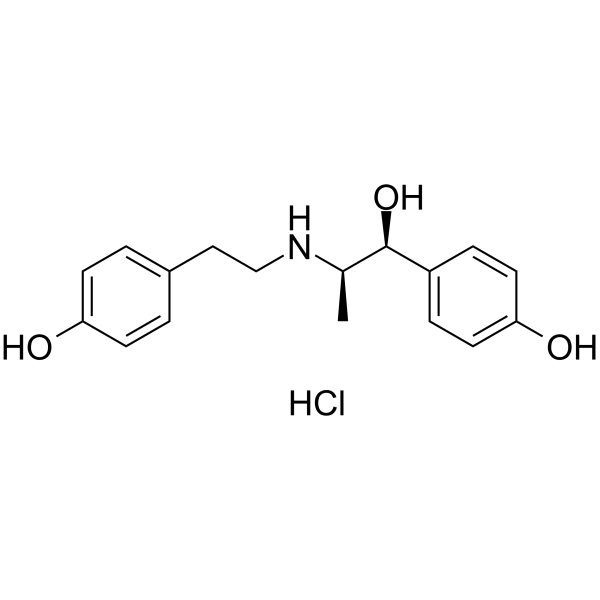
  • HY-B0452
    Ritodrine hydrochloride
    2 Publications Verification

    DU21220 hydrochloride

    Adrenergic Receptor Endocrinology
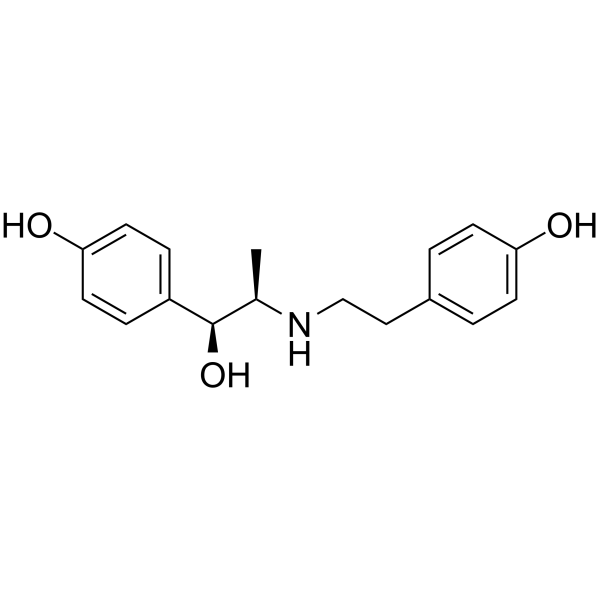
    Ritodrine (DU21220) hydrochloride is a potent and orally active β-adrenergic agonist. Ritodrine hydrochloride decreases preterm delivery and uterine contraction. Ritodrine hydrochloride has the potential for the research of preterm labor .
    Ritodrine hydrochloride
  • HY-B2112

    mAChR Neurological Disease
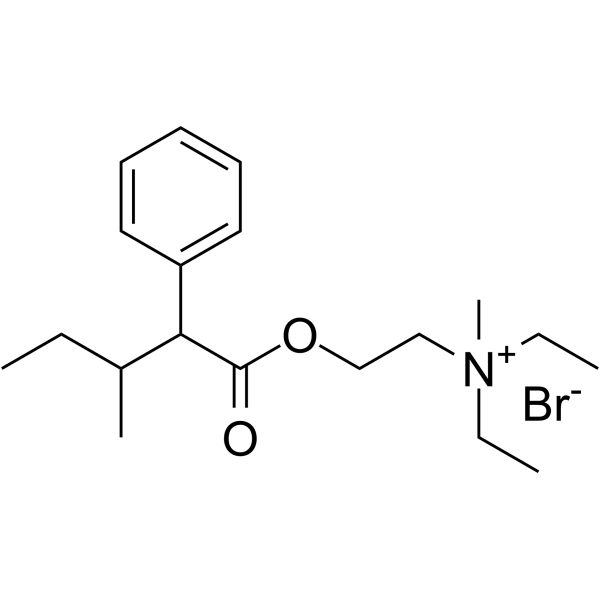
    Valethamate bromide is an ester, serving as an effective rapidly acting anticholinergic antispasmodic and muscle relaxant. Valethamate bromide accelerates labor by improving cervical dilation. Valethamate bromide can significantly shorten the labor process and have fewer side effects .
    Valethamate bromide
  • HY-113111

    Drug Metabolite Inflammation/Immunology
    11,12-DiHETrE is a dihydroxy fatty acid metabolite of Arachidonic Acid (HY-109590). 11,12-DiHETrE is converted to 11,12-DiHETrE under elevated soluble epoxide hydrolase (sEH) activity, a process closely related to inflammation and oxidative stress. 11,12-DiHETrE can serve as a single biomarker to differentiate between NAFL (non-alcoholic fatty liver disease) and NASH (non-alcoholic steatohepatitis). 11,12-DiHETrE can be used in studies on preterm birth, autism, and pulmonary hypertension .
    11,12-DiHETrE
  • HY-P3516

    FE-200440

    Oxytocin Receptor Endocrinology
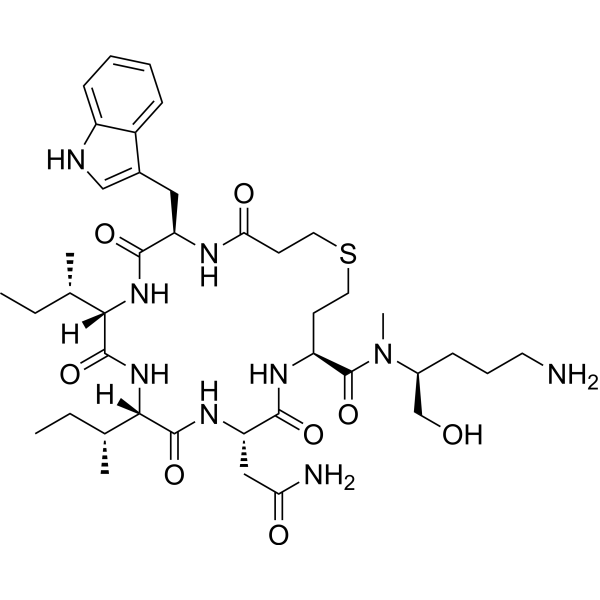
    Barusiban (FE-200440) is an oxytocin receptor (OT-R) antagonist (Ki=0.8 nM), inhibits OT-induced contraction. Barusiban can be used in preterm labor (PTL), in vitro fertilisation (IVF) and infertility research .
    Barusiban
  • HY-P4160

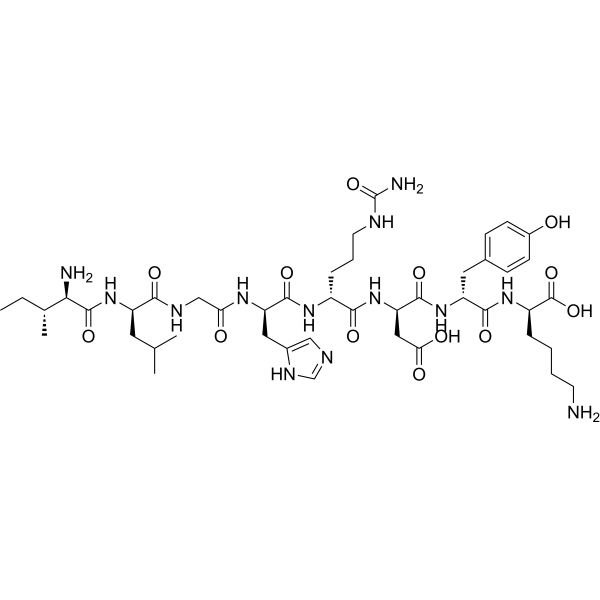
    THG113.31; ILGHXDYK

    Prostaglandin Receptor Endocrinology
    PDC31 (THG113.31; ILGHXDYK) is an allosteric and non-competitive inhibitor of FP Prostaglandin Receptor. PDC31 is the D-amino acid-based oligopeptide, is used for smooth muscle contractile agent. PDC31 decreases the strength and duration of uterine contractions in vivo, which can be used for research of preterm labor and primary dysmenorrhea (PD). PDC31 also enhances Ca 2+-dependent large-conductance K +-channel in human myometrial cells .
    PDC31
  • HY-15008

    Oxytocin Receptor Endocrinology
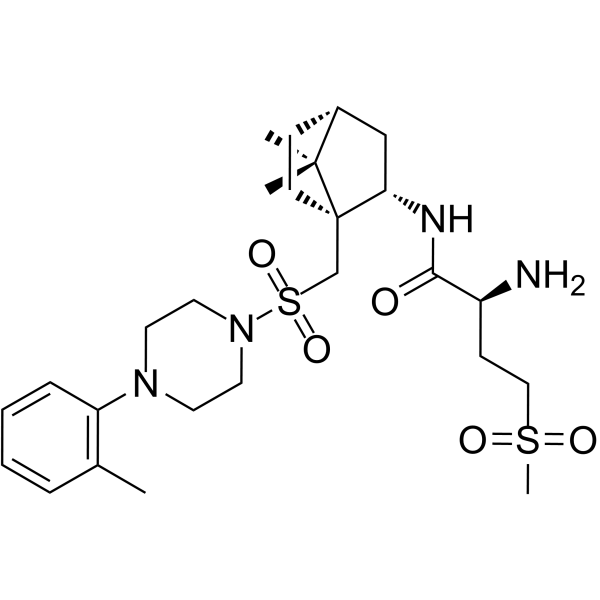
    L-368,899 is an orally active and selective OT (oxytocin ) receptor antagonist, with IC50s of 8.9 and 26 nM for uterus of rat and human, respectively. L-368,899 can cross the blood-brain barrier (BBB). L-368,899 inhibits oxytocin-stimulated uterine contractions in rats and can be used in study of preterm labor .
    L-368,899
  • HY-16741

    OBE001

    Oxytocin Receptor Endocrinology
    Erlosiban (OBE001) is an orally active non-peptide type oxytocin receptor antagonist. Erlosiban inhibits the increase of intracellular calcium concentration, thereby reducing uterine smooth muscle contraction. Erlosiban can be used for research on premature birth and to improve embryo implantation and pregnancy rate in assisted reproductive technology (AR).
    Erlosiban
  • HY-129333

    Oxytocin Receptor Vasopressin Receptor Metabolic Disease
    L-364918 is a potent and selective oxytocin and arginine vasopressin antagonist with Ki values of 30, 1300, 2400 nM for OT, AVP-V1, AVP-V2, respectively. L-364918 has the potential for the research of preterm labor and disturbances in water balance .
    L-364918
  • HY-B0452A

    DU21220

    Adrenergic Receptor Endocrinology
    Ritodrine (DU21220) is a β-adrenergic agonist, also an effective smooth muscle and uterine relaxant. Ritodrine prolongs contraction interval, can be used for researching arrest premature labor .
    Ritodrine
  • HY-B0452R

    DU21220 hydrochloride (Standard)

    Reference Standards Adrenergic Receptor Endocrinology
    Ritodrine (hydrochloride) (Standard) is the analytical standard of Ritodrine (hydrochloride). This product is intended for research and analytical applications. Ritodrine (DU21220) hydrochloride is a potent and orally active β-adrenergic agonist. Ritodrine hydrochloride decreases preterm delivery and uterine contraction. Ritodrine hydrochloride has the potential for the research of preterm labor .
    Ritodrine hydrochloride (Standard)
  • HY-118189S

    Isotope-Labeled Compounds Prostaglandin Receptor Inflammation/Immunology
    Misoprostol acid-d5 is deuterium labeled Misoprostol acid. Misoprostol acid is an active metabolite of Misoprostol. Misoprostol is a synthetic analogue of prostaglandin E1 (PGE1), extensively absorbed, and undergoes rapid de-esterification to Misoprostol acid in the gastrointestinal tract after oral administration. Misoprostol can be used for non-steroidal anti-inflammatory drug-induced (NSAID) gastric ulcers . Misoprostol is an oral agent used to induce labor .
    Misoprostol acid-d5
  • HY-15018A

    Oxytocin Receptor Endocrinology
    SSR126768A free base is an orally active antagonist for oxytocin receptor, with Ki of 0.44 nM. SSR126768A free base is a tocolytic agent, that antagonizes the Oxytocin (HY-17571)-induced intracellular Ca 2+ increase and prostaglandin release in human uterine smooth muscle cells, inhibits thus the Oxytocin (HY-17571)-induced uterine contraction and delays parturition in pregnant rats in labor .
    SSR126768A free base
  • HY-B1230A

    Endogenous Metabolite Inflammation/Immunology
    Camylofin dihydrochloride is an antispasmodic drug with activity in relieving smooth muscle spasms. Camylofin dihydrochloride is used to suppress spasms during labor and to provide pharmacotherapy for ulcerative colitis. The analysis of camylofin dihydrochloride can be quantitatively determined by gas chromatography to assess its content in pharmaceutical preparations .
    Camylofin dihydrochloride
  • HY-124515

    Histamine Receptor mAChR Neurological Disease
    Dihexyverine hydrochloride is a compound belonging to the amino alcohol ester class. Dihexyverine hydrochloride possesses anticholinergic, smooth muscle relaxant, antihistaminic, and antiemetic effects. Dihexyverine hydrochloride can also shorten the duration of labor. Dihexyverine hydrochloride can be used in research related to gastrointestinal spasms, obstetrics, and other fields .
    Dihexyverine hydrochloride
  • HY-17572R

    RW22164 (Standard); RWJ22164 (Standard)

    Reference Standards Oxytocin Receptor Vasopressin Receptor Endocrinology Cancer
    Atosiban (Standard) is the analytical standard of Atosiban. This product is intended for research and analytical applications. Atosiban (RW22164; RWJ22164) is a nonapeptide competitive vasopressin/oxytocin receptor antagonist, and is a desamino-oxytocin analogue. Atosiban is the main tocolytic agent and has the potential for spontaneous preterm labor research .
    Atosiban (Standard)
  • HY-17572AR

    RW22164 acetate (Standard); RWJ22164 acetate (Standard)

    Reference Standards Oxytocin Receptor Vasopressin Receptor Endocrinology Cancer
    Atosiban (acetate) (Standard) is the analytical standard of Atosiban (acetate). This product is intended for research and analytical applications. Atosiban acetate (RW22164 acetate;RWJ22164 acetate) is a nonapeptide competitive vasopressin/oxytocin receptor antagonist, and is a desamino-oxytocin analogue. Atosiban is the main tocolytic agent and has the potential for spontaneous preterm labor research .
    Atosiban acetate (Standard)
  • HY-120585

    Oxytocin Receptor Endocrinology
    L-365209 is a oxytocin antagonist and can be isolated from Streptomyces .
    L-365209
  • HY-W089845R

    Reference Standards Sex Pheromone Fungal Infection Endocrinology
    Heneicosane (Standard) is the analytical standard of Heneicosane (HY-W089845). This product is intended for research and analytical applications. Heneicosane is a royal-specific pheromone of insects (such as subterranean termites) and is an identification signal for queens and kings in termites. Heneicosane mediates royal recognition and the maintenance of social division of labor by being sensed by worker ants and triggering vibrations and antennal behaviors. Heneicosane can exert anti-inflammatory, analgesic and antipyretic activities by inhibiting the release of inflammatory mediators (such as prostaglandins and cytokines). At the same time, Heneicosane can also inhibit the mycelial growth of aflatoxin-producing fungi and inhibit the production of aflatoxin. Heneicosane can be used in insect chemical ecology research to analyze the regulatory mechanism of termite social behavior, and is also a potential target for new anti-inflammatory drugs .
    Heneicosane (Standard)
  • HY-W089845S

    Isotope-Labeled Compounds Sex Pheromone Fungal Infection Endocrinology
    Heneicosane-d44 is the deuterium labeled Heneicosane (HY-W089845). Heneicosane is a royal-specific pheromone of insects (such as subterranean termites) and is an identification signal for queens and kings in termites. Heneicosane mediates royal recognition and the maintenance of social division of labor by being sensed by worker ants and triggering vibrations and antennal behaviors. Heneicosane can exert anti-inflammatory, analgesic and antipyretic activities by inhibiting the release of inflammatory mediators (such as prostaglandins and cytokines). At the same time, Heneicosane can also inhibit the mycelial growth of aflatoxin-producing fungi and inhibit the production of aflatoxin. Heneicosane can be used in insect chemical ecology research to analyze the regulatory mechanism of termite social behavior, and is also a potential target for new anti-inflammatory drugs .
    Heneicosane-d44
  • HY-175105

    17-Phenoxy-PGF2α isopropyl ester

    Drug Derivative Endocrinology
    17-Phenoxy trinor prostaglandin F2α isopropyl ester is a PGF (HY-12956) analog. PGF2α is an orally active agonist of the PGF receptor (FP receptor). PGF2α plays a key role in labor and delivery.
    17-Phenoxy trinor prostaglandin F2α isopropyl ester

Inquiry Online

Your information is safe with us. * Required Fields.

Salutation


Country or Region *

Applicant Name *


Organization Name *

Department *


Email Address *


Product Name *

Cat. No.


Requested quantity *

Phone Number *


Remarks

Inquiry Online

Inquiry Information

Product Name:
Cat. No.:
Quantity:
MCE Japan Authorized Agent:

