

1. Search Result
Search Result
Results for "

lipid utilization

" in MedChemExpress (MCE) Product Catalog:

27

Inhibitors & Agonists

8

Biochemical Assay Reagents

3

Peptides

3

Natural
Products

3

Isotope-Labeled Compounds

11

Oligonucleotides

Cat. No. Product Name Target Research Areas Chemical Structure
  • HY-145405
    C12-200
    Maximum Cited Publications
    16 Publications Verification

    Liposome Others
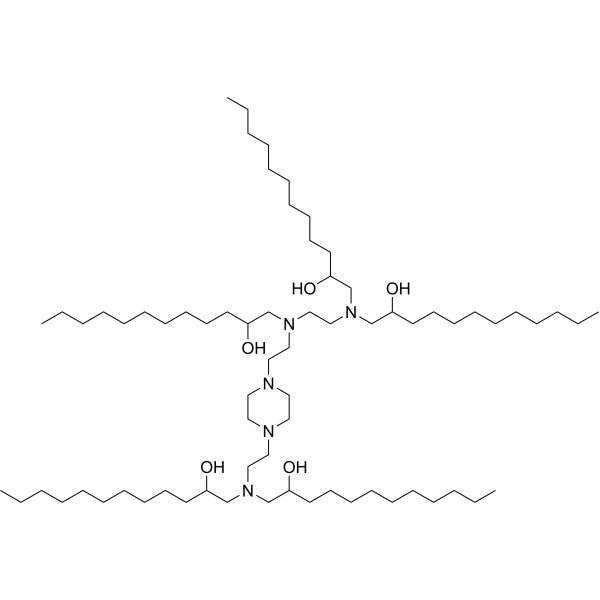
    C12-200 is a type of ionizable cationic lipid and helper lipid commonly used for mRNA delivery. In the hemophilia B mouse model, mRNA encoding human erythropoietin (EPO) and coagulation factor IX (FIX) can be successfully delivered and expressed using C12-200. C12-200 is utilized in research related to hemophilia B .
    C12-200
  • HY-130751
    DODAP
    1 Publications Verification

    Liposome Inflammation/Immunology
    DODAP is a cationic lipid utilized as the lipid component in liposomes (pKa = 5.59 in TNS binding tests). DODAP is employed for encapsulating siRNA and delivering immunostimulated chemotherapeutic agents both in vitro and in vivo. DODAP holds great promise for research in vaccines and inflammation .
    DODAP
  • HY-148842

    Liposome Others
    C14-4 is an ionizable lipid utilized for the synthesis of lipid nanoparticles (LNPs). C14-4 enhances mRNA delivery, enabling the effective transport of mRNA to primary human T cells, which in turn induces functional protein expression. C14-4 demonstrates high transfection efficiency while maintaining low cytotoxicity .
    C14-4
  • HY-140739

    Liposome Neurological Disease Cancer
    DSPE-PEG2000-Maleimide sodium (purity>95%) is a phospholipid-PEG conjugate. DSPE-PEG2000-Maleimide utilizes the amphiphilicity of DSPE to insert into the lipid bilayer of liposomes or nanoparticles. DSPE-PEG2000-Maleimide covalently couples to the sulfhydryl (-SH) of ligands (such as antibodies, peptides, or proteins) via thiol-maleimide click chemistry, giving the particles targeting capabilities. DSPE-PEG2000-Maleimide sodium (purity>95%) can be used in the researches of breast cancer, lymphoma, and inherited retinal degeneration .
    DSPE-PEG2000-Maleimide sodium (purity>95%)
  • HY-N3686

    AMPK PGC-1α Metabolic Disease
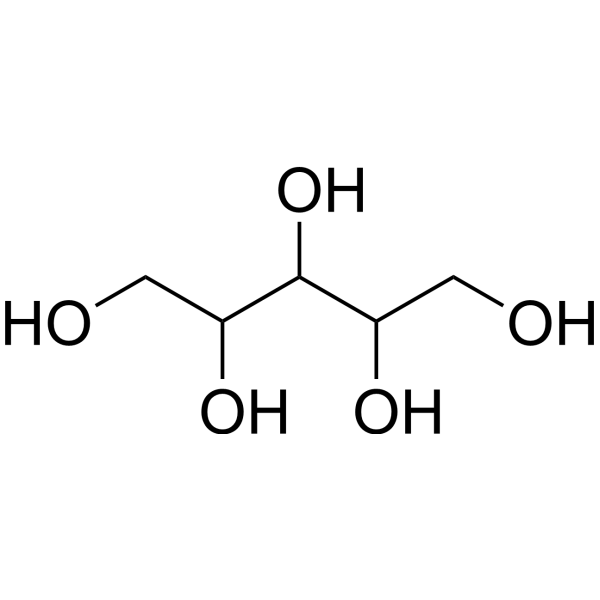
    D-Arabitol is an orally active D-enantiomer of arabitol. D-Arabitol modulates the composition of gut microbiota, increases short-chain fatty acids, and promotes AMPK-PGC-1α-related browning of white adipose tissue. D-Arabitol improves weight gain, fat accumulation, insulin resistance, lipid deposition and inflammatory responses. D-Arabitol serves as the sole carbon/energy source for Bacillus methanolicus MGA3, a strain that can co-utilize it with mannitol. D-Arabitol is applicable to obesity-related research .
    D-Arabitol
  • HY-P2752

    LPL

    Endogenous Metabolite Metabolic Disease Cancer
    Lipoprotein lipase, Pseudomonas sp (LPL) is a multifunctional enzyme from adipose tissue, heart and skeletal muscle, islets and macrophages. Lipoprotein lipase promotes normal lipoprotein metabolism, delivery and utilization of tissue-specific substrates. Lipoprotein lipase catalyzes the rate-limiting step of lipids in blood circulation .
    Lipoprotein lipase, Pseudomonas sp
  • HY-P10471A

    MARCKS-ED TFA

    MARCKS PKC Others
    MPSD TFA (MARCKS-ED TFA) is the TFA salt form of MPSD (HY-P10471). MPSD TFA is a 25-amino acid peptide based on the effector domain sequence of the intracellular membrane protein myristoylated alanine-rich C-kinase substrate (MARCKS). MPSD TFA can sense membrane curvature and recognize phosphatidylserine. MPSD TFA can be utilized as biological probe to study membrane shape and lipid composition .
    MPSD TFA
  • HY-N3686R

    Reference Standards AMPK PGC-1α Metabolic Disease
    D-Arabitol (Standard) is the analytical standard of D-Arabitol. This product is intended for research and analytical applications. D-Arabitol is an orally active D-enantiomer of arabitol. D-Arabitol modulates the composition of gut microbiota, increases short-chain fatty acids, and promotes AMPK-PGC-1α-related browning of white adipose tissue. D-Arabitol improves weight gain, fat accumulation, insulin resistance, lipid deposition and inflammatory responses. D-Arabitol serves as the sole carbon/energy source for Bacillus methanolicus MGA3, a strain that can co-utilize it with mannitol. D-Arabitol is applicable to obesity-related research.
    D-Arabitol (Standard)
  • HY-N15841

    Ceramidase Others
    C25 Ceramide (d18:1/25:0) is an endogenous ultra-long-chain ceramide that antagonizes the detrimental effects of long-chain ceramides on insulin sensitivity. C25 Ceramide (d18:1/25:0) is specifically enriched in oxidative skeletal muscle fibers, where it serves dual roles in providing structural support to cell membranes and regulating cellular signaling. By participating in the regulation of lipid homeostasis within muscle fibers, C25 Ceramide (d18:1/25:0) helps maintain normal insulin signaling. C25 Ceramide (d18:1/25:0) is primarily utilized in research concerning metabolic diseases—particularly in mechanistic studies investigating the muscle fiber type-specific aspects of insulin resistance .
    C25 Ceramide (d18:1/25:0)
  • HY-P10471

    MARCKS-ED

    MARCKS PKC Others
    MPSD (MARCKS-ED) is a 25-amino acid peptide based on the effector domain sequence of the intracellular membrane protein myristoylated alanine-rich C-kinase substrate (MARCKS). MPSD can sense membrane curvature and recognize phosphatidylserine. MPSD can be utilized as biological probe to study membrane shape and lipid composition .
    MPSD
  • HY-P10471D

    MARCKS-ED control peptide

    MARCKS PKC Others
    MPSD control peptide (MARCKS-ED control peptide) is a control peptide for MPSD peptide (HY-P10471). MPSD (MARCKS-ED) is a 25-amino acid peptide based on the effector domain sequence of the intracellular membrane protein myristoylated alanine-rich C-kinase substrate (MARCKS). MPSD can sense membrane curvature and recognize phosphatidylserine. MPSD can be utilized as biological probe to study membrane shape and lipid composition .
    MPSD control peptide
  • HY-140739A

    Liposome Neurological Disease Cancer
    DSPE-PEG2000-Maleimide free acid is a phospholipid-PEG conjugate. DSPE-PEG2000-Maleimide free acid utilizes the amphiphilicity of DSPE to insert into the lipid bilayer of liposomes or nanoparticles. DSPE-PEG2000-Maleimide free acid covalently couples to the sulfhydryl (-SH) of ligands (such as antibodies, peptides, or proteins) via thiol-maleimide click chemistry, giving the particles targeting capabilities. DSPE-PEG2000-Maleimide free acid can be used in the researches of breast cancer, lymphoma, and inherited retinal degeneration .
    DSPE-PEG2000-Maleimide free acid
  • HY-148178

    Parasite Infection
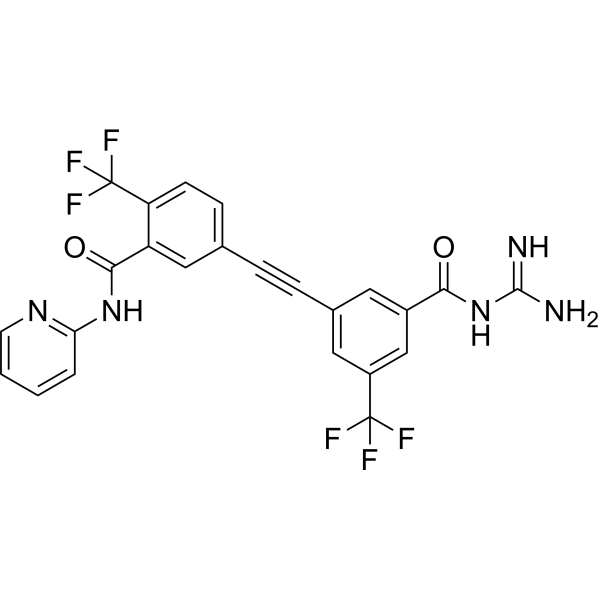
    MMV688533 is an antimalarial agent. MMV688533 interferes with intracellular trafficking, lipid utilization, and endocytosis pathways in Plasmodium falciparum. MMV688533 rapidly kills asexual blood-stage Plasmodium falciparum and Plasmodium vivax parasites in vitro and reduces parasitemia in a Plasmodium falciparum NSG mouse model. MMV688533 can be used for the research of malaria .
    MMV688533
  • HY-168775

    Biochemical Assay Reagents Others
    Lipid 29d is an unsaturated ionizable cationic lipid that can be utilized in the formation of lipid nanoparticles and the delivery of mRNA .
    Lipid 29d
  • HY-158867

    Liposome Infection
    DOSPA hydrochlorid is a frequently utilized cationic lipid in the generation of Lipid Nanoparticles (LNPs) for the development of mRNA vaccines, including the COVID-19 vaccine.
    DOSPA (hydrochlorid)
  • HY-171019

    Liposome Others
    Lipid 119-23 is an ionizable cationic lipid which can be utilized in the formation of lipid nanoparticles and the delivery of mRNA. Lipid 119-23 exhibits an enhanced capability to express functional mCre in several categories of immune cells, spanning the liver, spleen and lung .
    Lipid 119-23
  • HY-168776

    Biochemical Assay Reagents Others
    (S)-C12-200 is the (S)-isomer of C12-200 (HY-145405), an ionizable cationic lipid and helper lipid. (S)-C12-200 can be utilized in the formation of lipid nanoparticles and mRNA delivery .
    (S)-C12-200
  • HY-179677

    Liposome Others
    DSPE-PEG2000-Mal-Cys-DT7 is a phospholipid-PEG conjugate. DSPE-PEG2000-Mal-Cys-DT7 utilizes the amphiphilicity of DSPE to insert into the lipid bilayer of liposomes or nanoparticles.
    DSPE-PEG2000-Mal-Cys-DT7
  • HY-179677A

    Liposome Others
    DSPE-PEG3400-Mal-Cys-DT7 is a phospholipid-PEG conjugate. DSPE-PEG3400-Mal-Cys-DT7 utilizes the amphiphilicity of DSPE to insert into the lipid bilayer of liposomes or nanoparticles.
    DSPE-PEG3400-Mal-Cys-DT7
  • HY-159483

    Topoisomerase Autophagy Glutathione Peroxidase Cancer
    SelB-1 serves as a dual inhibitor for Topoisomerase I/II. SelB-1 possesses anticancer activity and can be utilized in the research of prostate cancer and colon cancer. Furthermore, SelB-1 is also capable of inducing autophagy gene expression and lipid peroxidation, while simultaneously reducing the level of GSH .
    SelB-1
  • HY-160726

    Biochemical Assay Reagents Others
    Polymethacrylate Copolymer N−C4−52−6.9 is a polymer that consists of hydrophobic butylmethacrylate and cationic methacroylcholine chloride monomers. Polymethacrylate Copolymer N−C4−52−6.9 is able to solubilise lipid bilayers into nanodiscs. Polymethacrylate Copolymer N−C4−52−6.9 can be utilized in structure and functional studies on membrane proteins .
    Polymethacrylate Copolymer (N−C4−52−6.9)
  • HY-N3686S

    Isotope-Labeled Compounds AMPK PGC-1α Metabolic Disease
    D-Arabitol- 13C is the 13C labeled D-Arabitol. D-Arabitol is an orally active D-enantiomer of arabitol. D-Arabitol modulates the composition of gut microbiota, increases short-chain fatty acids, and promotes AMPK-PGC-1α-related browning of white adipose tissue. D-Arabitol improves weight gain, fat accumulation, insulin resistance, lipid deposition and inflammatory responses. D-Arabitol serves as the sole carbon/energy source for Bacillus methanolicus MGA3, a strain that can co-utilize it with mannitol. D-Arabitol is applicable to obesity-related research.
    D-Arabitol-13C
  • HY-N3686S1

    Isotope-Labeled Compounds AMPK PGC-1α Metabolic Disease
    D-Arabitol- 13C-1 is the 13C labeled D-Arabitol. D-Arabitol is an orally active D-enantiomer of arabitol. D-Arabitol modulates the composition of gut microbiota, increases short-chain fatty acids, and promotes AMPK-PGC-1α-related browning of white adipose tissue. D-Arabitol improves weight gain, fat accumulation, insulin resistance, lipid deposition and inflammatory responses. D-Arabitol serves as the sole carbon/energy source for Bacillus methanolicus MGA3, a strain that can co-utilize it with mannitol. D-Arabitol is applicable to obesity-related research.
    D-Arabitol-13C-1
  • HY-N3686S2

    Isotope-Labeled Compounds AMPK PGC-1α Metabolic Disease
    D-Arabitol- 13C-2 is the 13C labeled D-Arabitol. D-Arabitol is an orally active D-enantiomer of arabitol. D-Arabitol modulates the composition of gut microbiota, increases short-chain fatty acids, and promotes AMPK-PGC-1α-related browning of white adipose tissue. D-Arabitol improves weight gain, fat accumulation, insulin resistance, lipid deposition and inflammatory responses. D-Arabitol serves as the sole carbon/energy source for Bacillus methanolicus MGA3, a strain that can co-utilize it with mannitol. D-Arabitol is applicable to obesity-related research.
    D-Arabitol-13C-2
  • HY-180474

    Liposome Neurological Disease
    LP293-p is a lipid with activated ester groups, which can be used for the synthesis of ATXN2 RNAi. LP293-p can be utilized to enhance the targeting of the central nervous system (CNS) .
    LP293-p
  • HY-179677B

    Liposome Others
    DSPE-PEG5000-Mal-Cys-DT7 is a phospholipid-PEG conjugate. DSPE-PEG5000-Mal-Cys-DT7 utilizes the amphiphilicity of DSPE to insert into the lipid bilayer of liposomes or nanoparticles.
    DSPE-PEG5000-DT7
  • HY-W1130459

    Liposome Cancer
    (R)-C12-200 is the (R)-isomer of C12-200 (HY-145405), an ionizable cationic lipid and helper lipid. (R)-C12-200 enables functional mRNA delivery to head and neck squamous cell carcinoma xenograft tumor cells in NU/J immunocompromised mice, with minimal off-target delivery to liver or spleen. (R)-C12-200 can be utilized in the formation of lipid nanoparticles and mRNA delivery .
    (R)-C12-200

Inquiry Online

Your information is safe with us. * Required Fields.

Salutation


Country or Region *

Applicant Name *


Organization Name *

Department *


Email Address *


Product Name *

Cat. No.


Requested quantity *

Phone Number *


Remarks

Inquiry Online

Inquiry Information

Product Name:
Cat. No.:
Quantity:
MCE Japan Authorized Agent:

