15 Results for "

locus coeruleus

" in MedChemExpress (MCE) Product Catalog:
Products (15)

15 Results for "locus coeruleus" in MCE Product Catalog:

2
2 Cited Publications
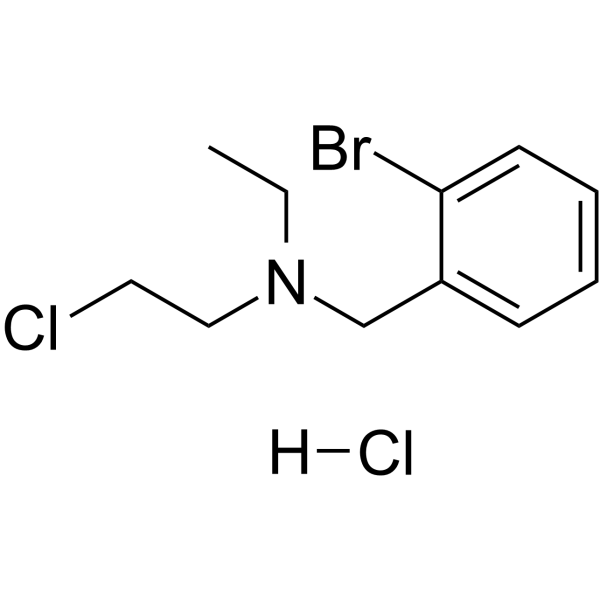
Cat. No.: HY-103210
CAS No.: 40616-75-9
Purity:  ≥98.0%
Synonyms: Neurotoxin DSP 4 hydrochloride
Target:  

Adrenergic Receptor

Research Areas:  

Neurological Disease

DSP-4 hydrochloride is a highly and selective adrenergic neurotoxin. DSP-4 hydrochloride can cross the blood brain barrier. DSP-4 hydrochloride can be used for the temporary selective degradation of the central and peripheral noradrenergic neurons .
loading...
    loading...
1
1 Cited Publications
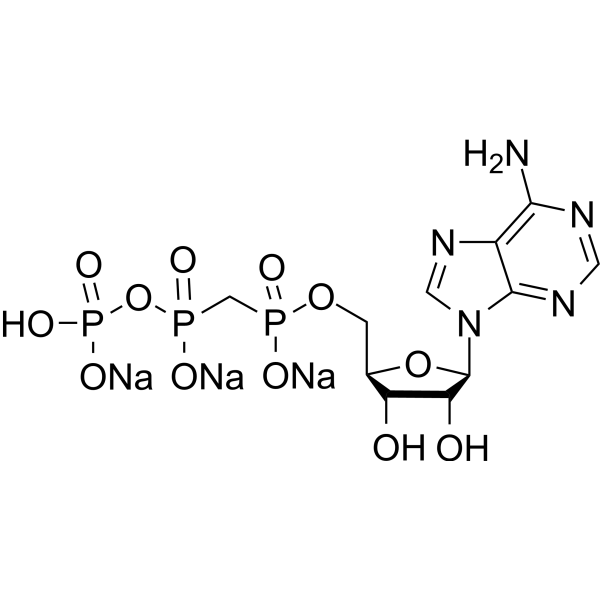
Cat. No.: HY-108652
CAS No.: 1343364-54-4
Purity:  99.75%
Target:  

P2X Receptor

Research Areas:  

Inflammation/Immunology

α,β-Methylene-ATP trisodium is an agonist of P2X1 and P2X3 receptors and can cross the blood-brain barrier. α,β-Methylene-ATP trisodium can trigger a reflex pressor response by activating P2X receptors in peripheral muscles and the central locus coeruleus (LC); this effect can be blocked by the P2X antagonist PPADS (HY-108960). α,β-Methylene-ATP trisodium also activates noradrenergic neurons in the central locus coeruleus, mediating antinociceptive effects; this effect can be attenuated by the locus coeruleus damaging agent DSP-4 (HY-103210/HY-121602). α,β-Methylene-ATP trisodium can be used to study the pathological mechanisms of neuropathic pain, cardiovascular reflex regulation, and antinociceptive effects of the central nervous system .
loading...
    loading...
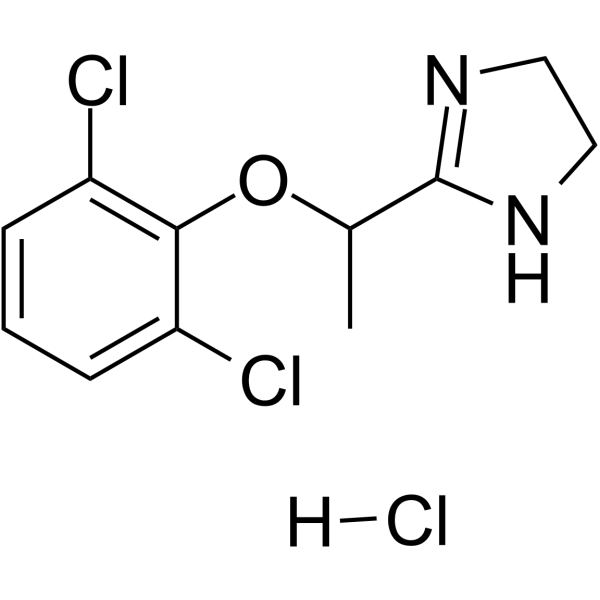
Cat. No.: HY-B1052
CAS No.: 21498-08-8
Synonyms: Baq-168; MDL-14042
Lofexidine hydrochloride (Baq-168) is an orally active agonist of the imidazoline I1 receptor (imidazoline I1 receptor) (Ki: 1.9 nM) and α2-adrenergic receptor (α2-adrenergic receptor). Lofexidine hydrochloride binds to the α2A-adrenergic receptor, reduces sympathetic outflow, lowers blood pressure, and exhibits vasoconstrictive effects. Lofexidine hydrochloride regulates the expression of c-fos and alleviates opioid withdrawal symptoms. Lofexidine hydrochloride is applicable to research on opioid addiction and withdrawal .
loading...
    loading...
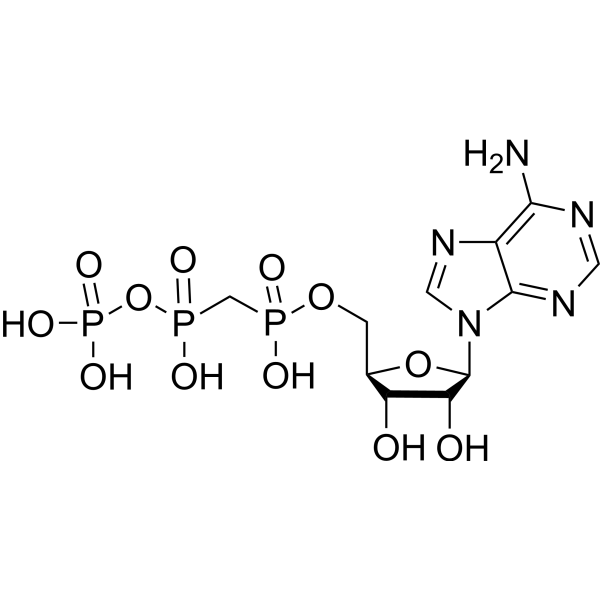
Cat. No.: HY-134440A
CAS No.: 7292-42-4
Target:  

P2X Receptor

Research Areas:  

Inflammation/Immunology

α,β-Methylene-ATP is an agonist of P2X1 and P2X3 receptors and can cross the blood-brain barrier. α,β-Methylene-ATP can trigger a reflex pressor response by activating P2X receptors in peripheral muscles and the central locus coeruleus (LC); this effect can be blocked by the P2X antagonist PPADS (HY-108960). α,β-Methylene-ATP also activates noradrenergic neurons in the central locus coeruleus, mediating antinociceptive effects; this effect can be attenuated by the locus coeruleus damaging agent DSP-4 (HY-103210/HY-121602). α,β-Methylene-ATP can be used to study the pathological mechanisms of neuropathic pain, cardiovascular reflex regulation, and antinociceptive effects of the central nervous system .
loading...
    loading...
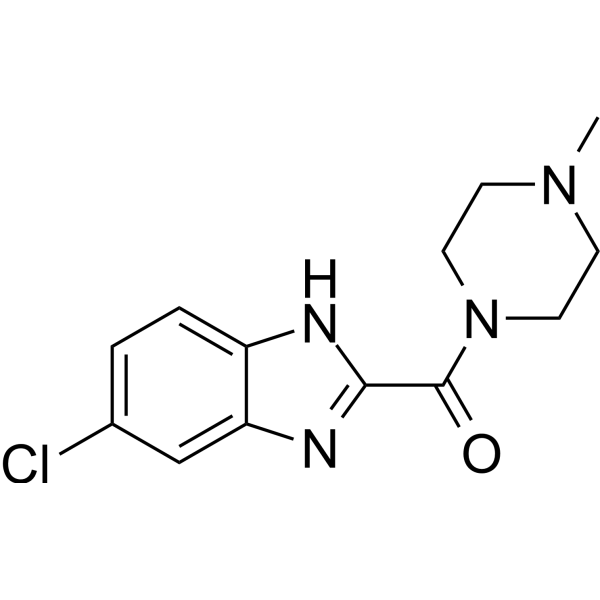
Cat. No.: HY-123532
CAS No.: 73903-17-0
Purity:  99.95%
Synonyms: VUF6002
Target:  

Histamine Receptor

Research Areas:  

Neurological Disease

JNJ10191584 (VUF6002) is an orally active and selective histamine H4 receptor antagonist with a Ki value of 26 nM. JNJ10191584 shows 540-fold selectivity to H4 receptor over H3 receptor with a Ki value of 14.1 μM. JNJ10191584 inhibits chemotaxis of eosinophils and mast cells with IC50 values of 530 nM and 138 nM, respectively .
loading...
    loading...
Cat. No.: HY-100027A
CAS No.: 127917-66-2
Purity:  99.96%
Research Areas:  

Neurological Disease

Ro 41-1049 hydrochloride is a highly selective, reversible MAO-A inhibitor. Ro 41-1049 hydrochloride effectively blocks the Quinpirole (HY-B1752)-induced increase in dopamine D2-like receptor density in the nucleus accumbens and alters the pattern of behavioral sensitization, shifting animals' responses from enhanced motor activity to immobile self-directed gaping behavior. Tritium-labeled Ro 41-1049 hydrochloride serves as a high-affinity radioligand, enabling accurate mapping of the distribution and abundance of MAO-A in the central nervous system, peripheral organs, and human brain via quantitative enzyme autoradiography. Ro 41-1049 hydrochloride can be used for basic research on depression and other related diseases .
loading...
    loading...
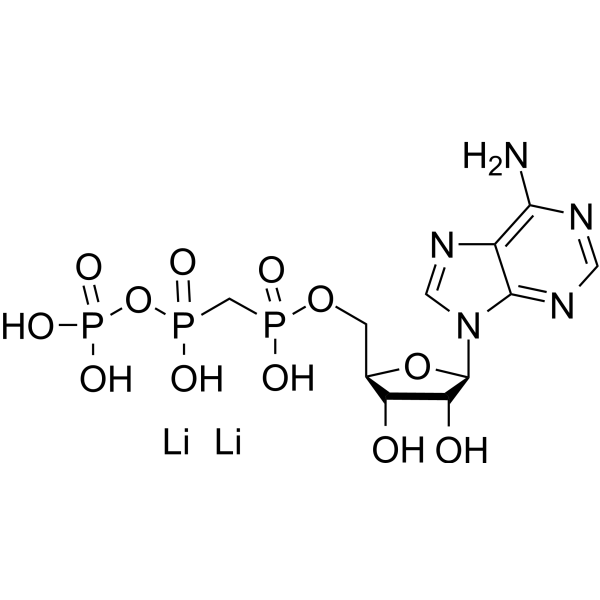
Cat. No.: HY-134440
CAS No.: 104809-20-3
Target:  

P2X Receptor

Research Areas:  

Inflammation/Immunology

α,β-Methylene-ATP dilithium is an agonist of P2X1 and P2X3 receptors and can cross the blood-brain barrier. α,β-Methylene-ATP dilithium can trigger a reflex pressor response by activating P2X receptors in peripheral muscles and the central locus coeruleus (LC); this effect can be blocked by the P2X antagonist PPADS (HY-108960). α,β-Methylene-ATP dilithium also activates noradrenergic neurons in the central locus coeruleus, mediating antinociceptive effects; this effect can be attenuated by the locus coeruleus damaging agent DSP-4 (HY-103210/HY-121602). α,β-Methylene-ATP dilithium can be used to study the pathological mechanisms of neuropathic pain, cardiovascular reflex regulation, and antinociceptive effects of the central nervous system .
loading...
    loading...
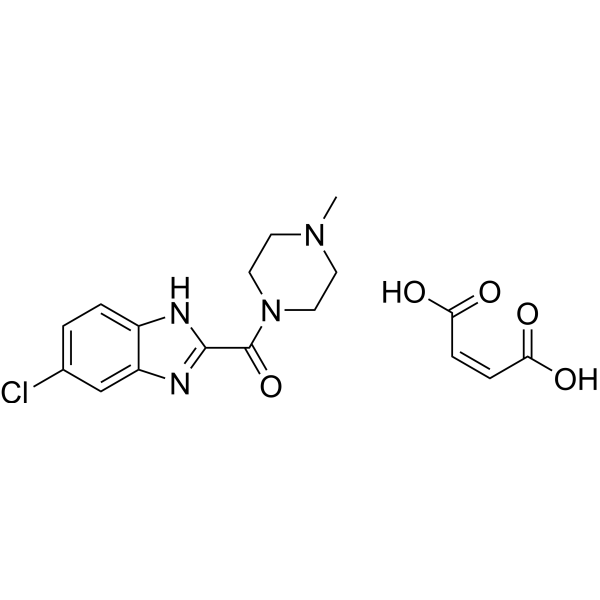
Cat. No.: HY-107558
CAS No.: 869497-75-6
Synonyms: VUF6002 maleate
Target:  

Histamine Receptor

Research Areas:  

Neurological Disease

JNJ10191584 (VUF6002) maleate (compound 40) is an orally active and selective histamine H4 receptor antagonist with a Ki value of 26 nM. JNJ10191584 maleate shows 540-fold selectivity to H4 receptor over the H3 receptor with a Ki value of 14.1 μM. JNJ10191584 maleate inhibits chemotaxis of eosinophils and mast cells with IC50 values of 530 nM and 138 nM, respectively .
loading...
    loading...
Cat. No.: HY-W982195
CAS No.: 87495-33-8
Research Areas:  

Neurological Disease

Napamezole hydrochloride is an orally active α-2 adrenergic receptor antagonist and serotonin (5-HT Receptor) reuptake inhibitor, with Ki values of 28 nM and 93 nM for rat α-2 and α-1 adrenergic receptors, respectively. Napamezole hydrochloride can be used for the research of depression .
loading...
    loading...
Cat. No.: HY-121602
CAS No.: 62078-98-2
Target:  

Adrenergic Receptor

Research Areas:  

Neurological Disease

DSP 4 Free base is a selective neurotoxin that targets noradrenergic neurons in the locus coeruleus noradrenergic system. DSP 4 Free base possesses the unique ability to cross the blood–brain barrier. DSP 4 Free base cyclizes to form a reactive aziridinium derivative that accumulates in noradrenergic neurons.
loading...
    loading...
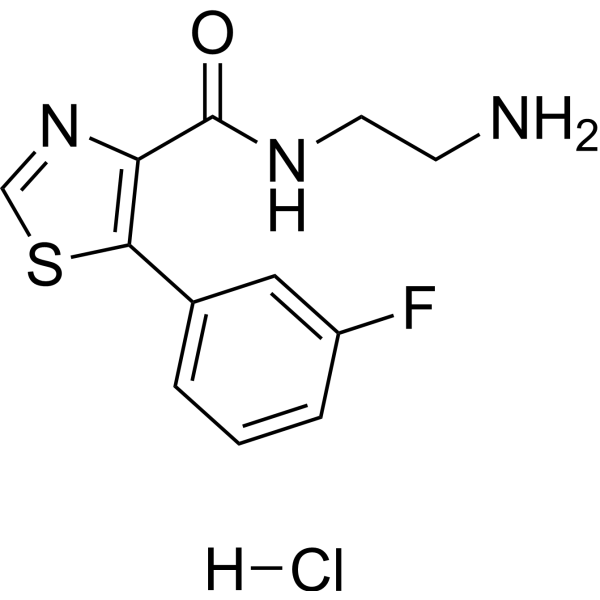
Cat. No.: HY-W653777
CAS No.: 13023-73-9
Target:  

Tau Protein

Research Areas:  

Neurological Disease

Dopegal is a metabolite od Norepinephrine. Dopegal activates asparagine endopeptidase and pathological Tau aggregation in locus coeruleus.
loading...
    loading...
Cat. No.: HY-108652R
CAS No.: 1343364-54-4
Research Areas:  

Inflammation/Immunology

α,β-Methylene-ATP trisodium (Standard) is the analytical standard of α,β-Methylene-ATP (trisodium) (HY-108652). This product is intended for research and analytical applications. α,β-Methylene-ATP trisodium is an agonist of P2X1 and P2X3 receptors and can cross the blood-brain barrier. α,β-Methylene-ATP trisodium can trigger a reflex pressor response by activating P2X receptors in peripheral muscles and the central locus coeruleus (LC); this effect can be blocked by the P2X antagonist PPADS (HY-108960). α,β-Methylene-ATP trisodium also activates noradrenergic neurons in the central locus coeruleus, mediating antinociceptive effects; this effect can be attenuated by the locus coeruleus damaging agent DSP-4 (HY-103210/HY-121602). α,β-Methylene-ATP trisodium can be used to study the pathological mechanisms of neuropathic pain, cardiovascular reflex regulation, and antinociceptive effects of the central nervous system .
loading...
    loading...
Cat. No.: HY-123497
CAS No.: 336884-84-5
Target:  

Neurokinin Receptor

Research Areas:  

Neurological Disease

R116031 is a selective Neurokinin-1 (NK-1) receptor antagonist with a Ki of 0.45 nM for human NK-1 receptor. R116031 inhibits Substance P (HY-P0201)-induced peripheral effects (skin reactions and plasma extravasation in guinea pigs) and a central effect (thumping in gerbils).R116031 labeled with 3H significantly accumulate in the striatum, olfactory tubercule, olfactory bulb and locus coeruleus in gerbils models. R116031 can be used as a positron emission tomography (PET) ligand for PET imaging .
loading...
    loading...
Cat. No.: HY-103210R
CAS No.: 40616-75-9
Synonyms: Neurotoxin DSP 4 hydrochloride (Standard)
DSP-4 hydrochloride (Standard) is the analytical standard of DSP-4 hydrochloride (HY-103210). This product is intended for research and analytical applications. DSP-4 hydrochloride is a highly and selective adrenergic neurotoxin. DSP-4 hydrochloride can cross the blood brain barrier. DSP-4 hydrochloride can be used for the temporary selective degradation of the central and peripheral noradrenergic neurons .
loading...
    loading...
Cat. No.: HY-100027
CAS No.: 127500-84-9
Research Areas:  

Neurological Disease

Ro 41-1049 is a highly selective, reversible MAO-A inhibitor. Ro 41-1049 effectively blocks the Quinpirole (HY-B1752)-induced increase in dopamine D2-like receptor density in the nucleus accumbens and alters the pattern of behavioral sensitization, shifting animals' responses from enhanced motor activity to immobile self-directed gaping behavior. Tritium-labeled Ro 41-1049 serves as a high-affinity radioligand, enabling accurate mapping of the distribution and abundance of MAO-A in the central nervous system, peripheral organs, and human brain via quantitative enzyme autoradiography. Ro 41-1049 can be used for basic research on depression and other related diseases .
loading...
    loading...
  • 1

