1. Search Result
Search Result
Results for "

mental disorders

" in MedChemExpress (MCE) Product Catalog:

56

Inhibitors & Agonists

4

Screening Libraries

3

Natural
Products

5

Isotope-Labeled Compounds

Cat. No. Product Name Target Research Areas Chemical Structure
  • HY-B1069
    Molsidomine
    1 Publications Verification

    SIN-10; Morsydomine

    Drug Metabolite Cardiovascular Disease Neurological Disease Metabolic Disease
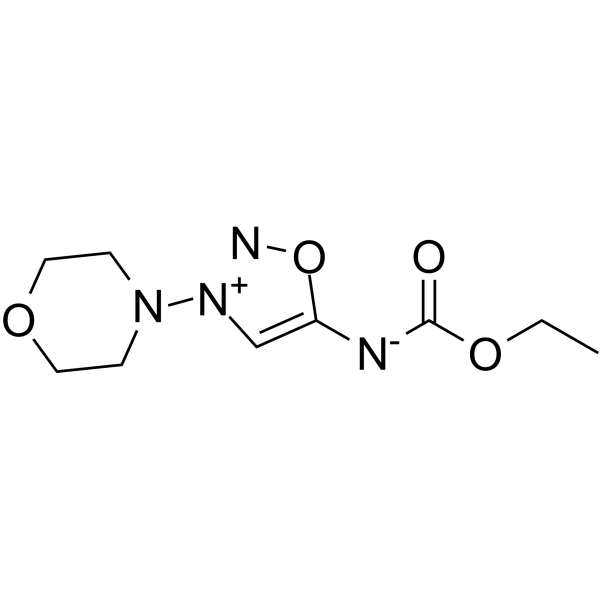
    Molsidomine, a nitric oxide (NO) donor, is an orally active vasodilator agent. Molsidomine is a prodrug that can be rapidly metabolized in the liver to its active metabolite, Linsidomine (HY-101200). Molsidomine can be used for the study of angina pectoris, mental disorders and diabetic complications .
    Molsidomine
  • HY-B1834

    Progesterone Receptor Glucocorticoid Receptor Infection Neurological Disease Inflammation/Immunology Cancer
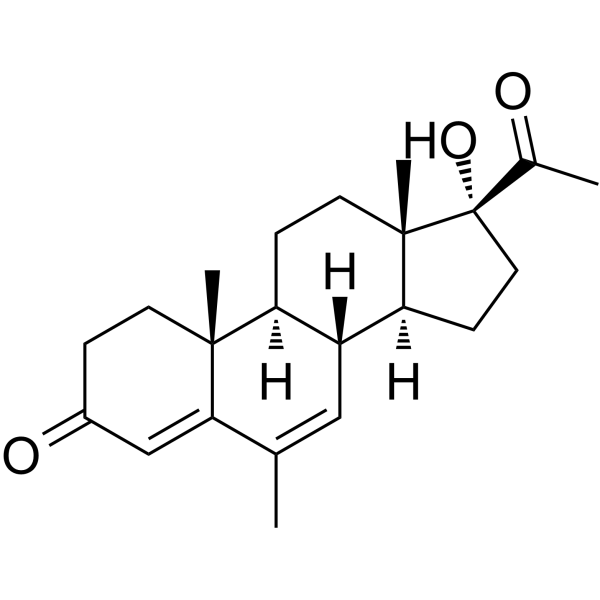
    Megestrol is an orally active glucocorticoid and progesterone receptor agonist. Megestrol can alleviate anorexia, cachexia or unexplained significant weight loss associated with acquired immunodeficiency syndrome (AIDS). Megestrol may cause manifestations similar to those of glucocorticoids and increase the risk of mental disorders .
    Megestrol
  • HY-132806

    RG-7816; RO-7017773

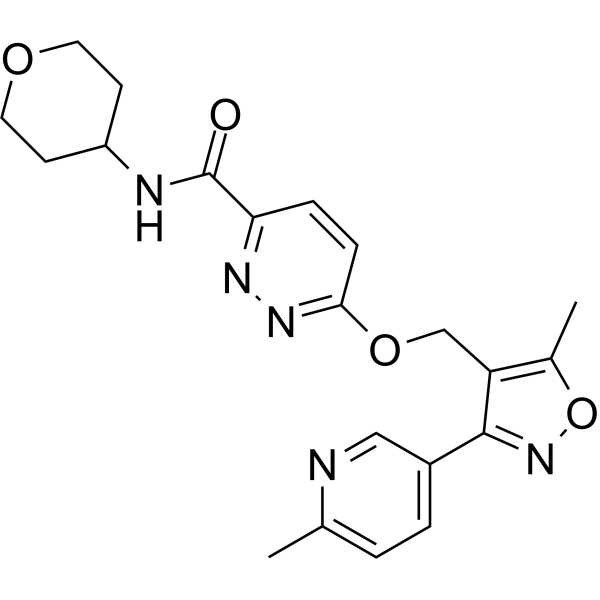
    GABA Receptor Neurological Disease
    Alogabat is a positive allosteric modulator (PAM) and agonist (Ki <100 nM) of the GABAA α5 receptor, targeting the α5β3γ2 subunit with a Ki of 8.7 nM. Alogabat increases the expression level of α5β3γ2 in oocytes (1.97-fold). GABAA has been implicated in cognitive impairment associated with central nervous system (CNS) disorders, brain cancer (including brain tumors such as medulloblastoma), and can be used in the study of mild cognitive impairment (MCI), amnestic MCI (aMCI), age-associated memory impairment (AAMI), age-related cognitive decline (ARCD), dementia, Alzheimer's disease (AD), prodromal AD, post-traumatic stress disorder (PTSD), schizophrenia, bipolar disorder, amyotrophic lateral sclerosis (ALS), cognitive impairment associated with cancer treatment, mental retardation, Parkinson's disease (PD), autism spectrum disorder, fragile X, Rett syndrome, obsessive-compulsive behavior, and substance addiction .
    Alogabat
  • HY-136379
    CID44216842
    2 Publications Verification

    Cdc42-IN-1

    Ras Cancer
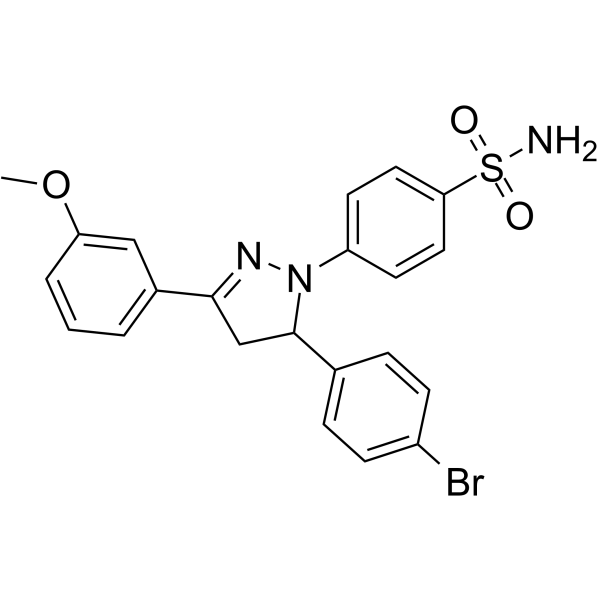
    CID44216842 (Cdc42-IN-1) is a potent Cdc42-selective guanine nucleotide binding lead inhibitor. The EC50s for Cdc42 WT and Cdc42Q61L mutant are 1.0 and 1.2 μM in GTP binding assay, respectively. The EC50s for Cdc42 WT and Cdc42Q61L mutant are 0.3 and 0.5 μM in GDP binding assay, respectively. Use as a molecular probe .
    CID44216842
  • HY-100703

    Floropipamide; McN-JR 3345; R 3345

    5-HT Receptor Dopamine Receptor Neurological Disease
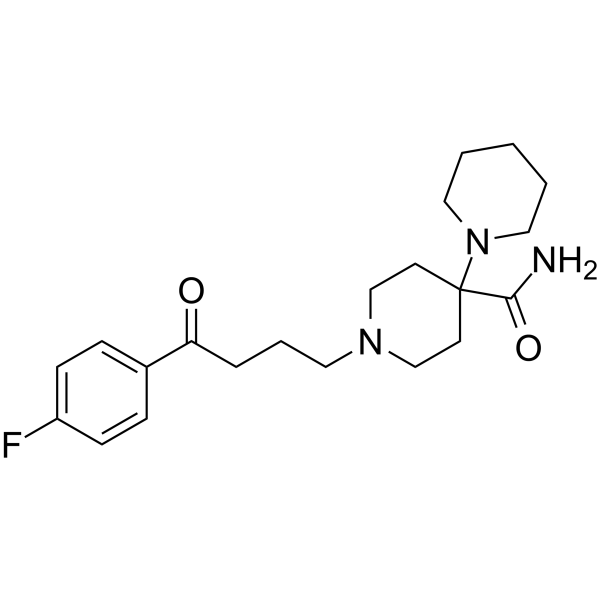
    Pipamperone (Floropipamide) is a butyrophenone derivative and high-affinity antagonist of 5-HT2A receptor (pKi=8.2) and D4 receptor (pKi=8.0). Pipamperone is also a low-affinity antagonist of D2 receptor (pKi=6.7). Pipamperone affects neurotransmitter functions and exerts antipsychotic activity. Pipamperone is used in the research of mental disorders such as autism-related behavioral disorders and Alzheimer's disease .
    Pipamperone
  • HY-W010265

    1-Phenylbutan-1-one; 1-Phenyl-1-butanone

    Environmental Pollutants Dopamine Receptor Neurological Disease
    Butyrophenone (1-Phenylbutan-1-one) is a dopamine receptor (DA Receptor) antagonist and can be used in research on mental disorders .
    Butyrophenone
  • HY-U00051

    Histamine Receptor Dopamine Receptor Neurological Disease
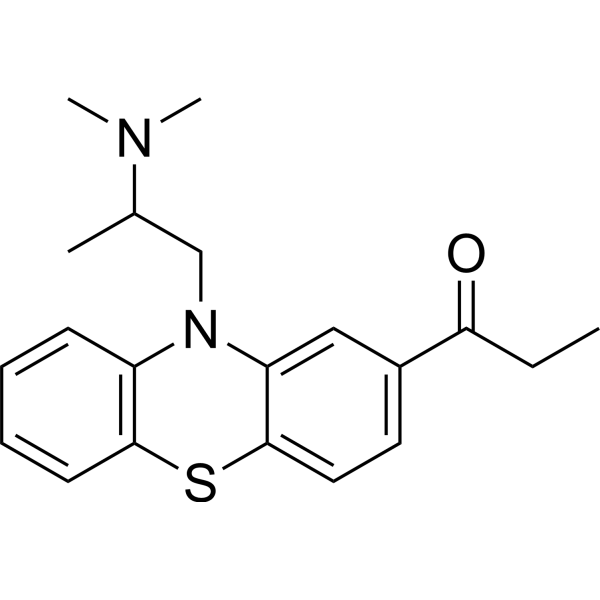
    Propiomazine is an orally active antihistamine agent. Propiomazine is a potent prolactin (PRL) release stimulant, whose effect depends on the antagonism of the dopaminergic system and can inhibit the secretion of luteinizing hormone (LH). Propiomazine is mainly used for anesthesia assistance, mental disorders and anxiety-induced sedation, and can also be used in research related to insomnia .
    Propiomazine
  • HY-13340
    VU0152100
    1 Publications Verification

    VU152100

    mAChR Neurological Disease
    VU0152100 (VU152100) is a highly selective mAChR positive allosteric modulator (permeable to the blood-brain barrier). VU0152100 reverses Amphetamine-induced hypermotility in rats and increased levels of extracellular dopamine in nucleus accumbens and caudate-putamen. VU0152100 has good research potential in psychosis and cognitive impairment associated with mental disorders such as schizophrenia .
    VU0152100
  • HY-W100249

    5-Methoxy-6-methyl-2-aminoindan

    5-HT Receptor Neurological Disease
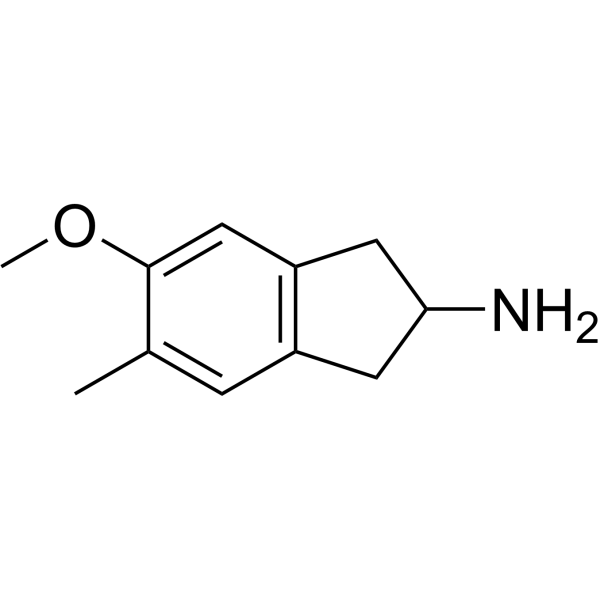
    MMAI is a selective serotonin releaser that can be used in the research of mental illnesses .
    MMAI
  • HY-W009754

    5-HT Receptor Neurological Disease
    Antidepressant agent 10 (Compound 4) is an orally active compound. Antidepressant agent 10 has IC50 values of 190 nM and 110 nM for 5-HT1A and 5-HT2, respectively. Antidepressant agent 10 can be used in the research of mental disorders .
    Antidepressant agent 10
  • HY-A0163A

    Dopamine Receptor Neurological Disease
    Clopenthixol is a thiaquinoline compound with inhibitory effects similar to those of phenothiazine antipsychotics. Clopenthixol is an antagonist of D1 and D2 dopamine receptors. Clopenthixol is mainly used to suppress schizophrenia and other mental disorders .
    Clopenthixol
  • HY-119918

    mAChR Neurological Disease
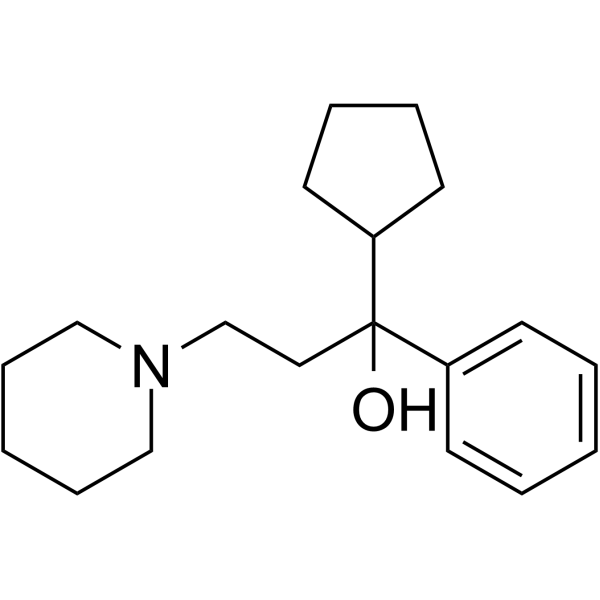
    Cycrimine is an orally active muscarinic cholinergic receptor (mAChR) M1 antagonist, reduces the acetylcholine levels in parkinson model. Cycrimine shows antispasmodic activity, can be used in studies of behavioral and mental disorder .
    Cycrimine
  • HY-14753

    Cannabinoid Receptor Cardiovascular Disease Metabolic Disease
    Rosonabant is a selective antagonist for cannabinoid receptor (CB1 receptor), which reduces body weight and improves improves the risk of obesity-related cardiovascular metabolic diseases. Rosonabant exhibits adverse side effect, such as nausea and mental disorder .
    Rosonabant
  • HY-177313

    NVP-AAG 561

    CFTR Neurological Disease
    AAG561 is a corticotropin-releasing factor receptor 1 (CRF1) antagonist. AAG561 can be used for the study of the underlying emotion dysregulation of a mental disease or disorder .
    AAG561
  • HY-W1123900

    5-HT Receptor Neurological Disease
    5-HT2A agonist 3 (Compound P-141) is a selective 5-hydroxytryptamine 2A receptor (5-HT2A) agonist with an EC50 value of 13.80 nM. 5-HT2A agonist 3 is promising for research of mental illnesses such as depression, post-traumatic stress disorder, obsessive-compulsive disorder, and central nervous system disorders .
    5-HT2A agonist 3
  • HY-100703A

    Floropipamide dihydrochloride; McN-JR 3345 dihydrochloride; R 3345 dihydrochloride

    Dopamine Receptor 5-HT Receptor Neurological Disease
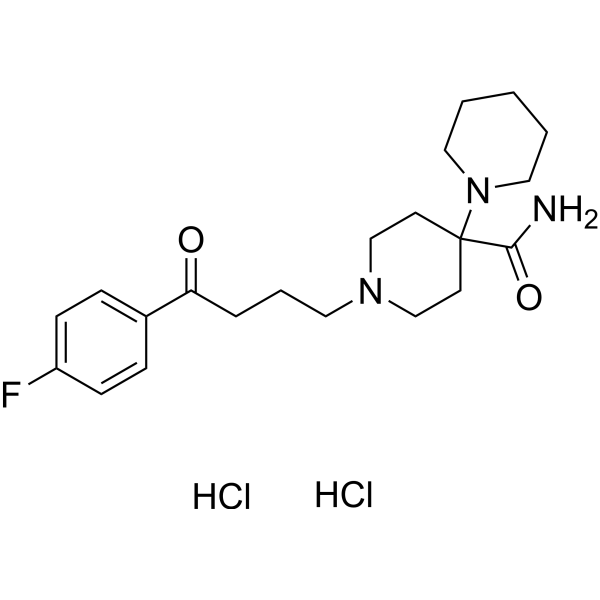
    Pipamperone dihydrochloride (Floropipamide dihydrochloride) is a butyrophenone derivative and high-affinity antagonist of 5-HT2A receptor (pKi=8.2) and D4 receptor (pKi=8.0). Pipamperone dihydrochloride is also a low-affinity antagonist of D2 receptor (pKi=6.7). Pipamperone dihydrochloride affects neurotransmitter functions and exerts antipsychotic activity. Pipamperone dihydrochloride is used in the research of mental disorders such as autism-related behavioral disorders and Alzheimer's disease .
    Pipamperone dihydrochloride
  • HY-W010265R

    1-Phenylbutan-1-one (Standard); 1-Phenyl-1-butanone (Standard)

    Reference Standards Dopamine Receptor Neurological Disease
    Butyrophenone (Standard) is the analytical standard of Butyrophenone. This product is intended for research and analytical applications. Butyrophenone (1-Phenylbutan-1-one) is a dopamine receptor (DA Receptor) antagonist and can be used in research on mental disorders .
    Butyrophenone (Standard)
  • HY-U00244

    P2647; BZQ; Benzoquinamide

    Adrenergic Receptor Dopamine Receptor Metabolic Disease
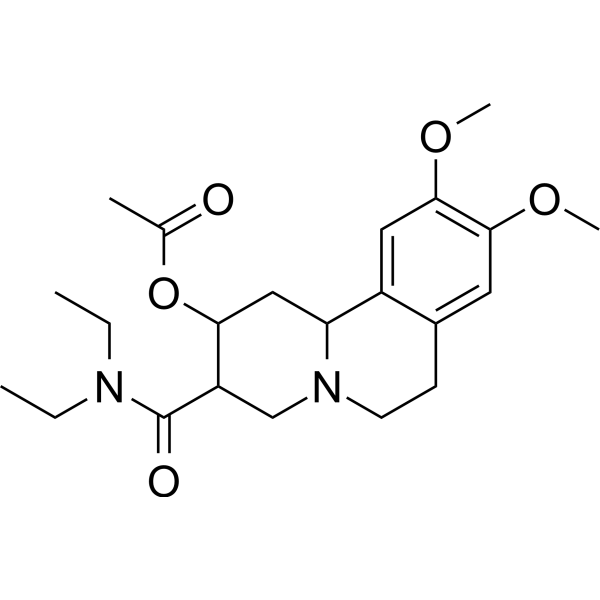
    Benzquinamide (P2647; BZQ; Benzoquinamide) is an orally active binder of dopamine receptors and adrenergic receptors. Benzquinamide specifically targets dopamine D2, D3, D4 receptors and α-2A, α-2B, α-2C adrenergic receptors. Benzquinamide regulates blood pressure and heart rate, attenuates the pressor effect of adrenaline, and exhibits activities such as antiemesis, anxiolysis, and reduction of histamine-induced bronchoconstriction. Benzquinamide has good safety and does not deplete serotonin or norepinephrine in the brain. Benzquinamide can be used in studies related to nausea/vomiting, mental disorders, anxiety states, neurosis, and psychosis .
    Benzquinamide
  • HY-139035

    CRFR Neurological Disease
    CRHR1 antagonist 1 (compound 10a) is a non-peptide corticotropin-releasing hormone type 1 receptor (CRHR1) antagonist. CRHR1 antagonist 1 can be utilized in mental disorders research .
    CRHR1 antagonist 1
  • HY-N12134

    Monoamine Oxidase Neurological Disease
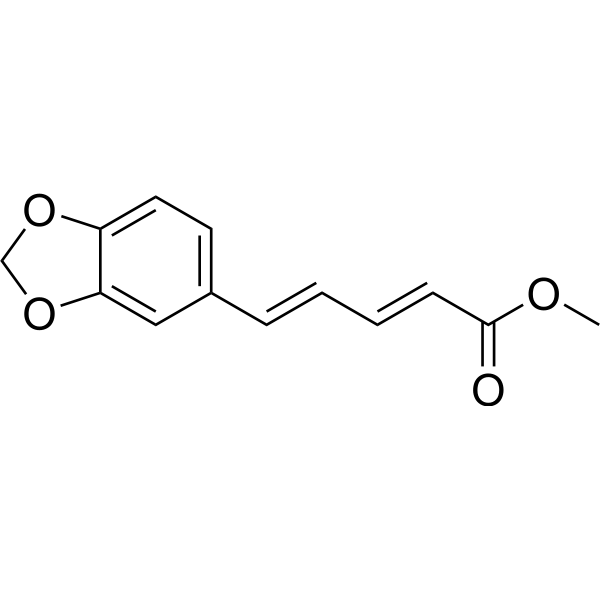
    Methylpiperic acid is a piperine alkaloid with significant MAO inhibitory activity (IC503.6 μM). Methylpiperic acid is less effective against MAO-B (IC 501.6 μM) than MAO-A (IC5027.1 μM) has a bidirectional inhibitory effect. Methylphenidate is used to research mental disorders .
    Methyl piperate
  • HY-174909

    5-HT Receptor Neurological Disease
    5-HT2A receptor agonist-11 (Compound I-69) is a 5-HT2A receptor agonist with an EC50 of 22 nM. 5-HT2A receptor agonist-11 can be used in the research of mental illness or central nervous system disorders .
    5-HT2A receptor agonist-11
  • HY-160978

    KC-7507 free base

    GABA Receptor Neurological Disease
    Timelotem (KC-7507 free base) is a representative of a class of 1, 2-cyclo1, 4-benzodiazepines. Timelotem shows significant antipsychotic properties. Timelotem produces sedative, anti-anxiety and anti-convulsant effects by enhancing the action of the neurotransmitter gamma-aminobutyric acid (GABA). Timelotem can be used in studies of schizophrenia and other mental disorders .
    Timelotem
  • HY-176721

    5-HT Receptor Neurological Disease
    5-HT2A receptor agonist-10 (Compound (R)-I-121.HCl) is a 5-HT2A receptor agonist, with an IC50 of 2192.39 nM for h5-HT2A and h5-HT1A, respectively. 5-HT2A receptor agonist-10 can be used for the research of psychosis, mental illnesses and CNS disorders .
    5-HT2A receptor agonist-10
  • HY-13340R

    VU152100 (Standard)

    mAChR Reference Standards Neurological Disease
    VU0152100 (Standard) is the analytical standard of VU0152100. This product is intended for research and analytical applications. VU0152100 (VU152100) is a highly selective mAChR positive allosteric modulator (permeable to the blood-brain barrier). VU0152100 reverses Amphetamine-induced hypermotility in rats and increased levels of extracellular dopamine in nucleus accumbens and caudate-putamen. VU0152100 has good research potential in psychosis and cognitive impairment associated with mental disorders such as schizophrenia .
    VU0152100 (Standard)
  • HY-130689

    Endogenous Metabolite Neurological Disease
    Pinoxepin hydrochloride is an antipsychotic drug with sedative and antidepressant activities. Pinoxepin hydrochloride is used to suppress mental disorders such as schizophrenia and depression. Pinoxepin hydrochloride also has the effect of improving sleep quality .
    Pinoxepin hydrochloride
  • HY-154867

    DNA Methyltransferase Cancer
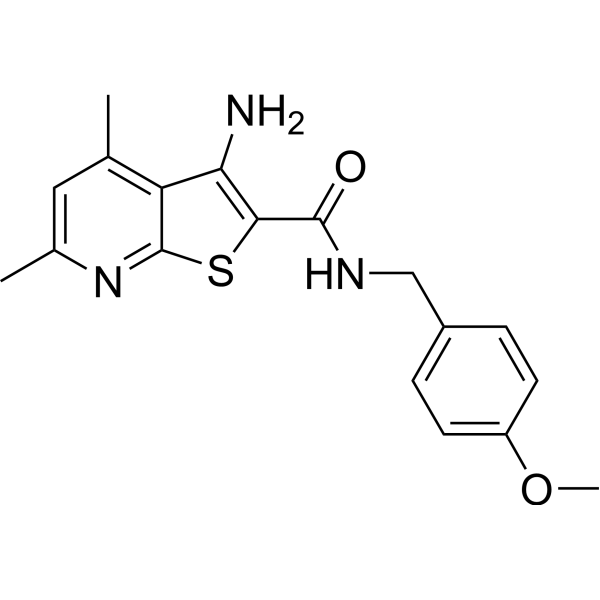
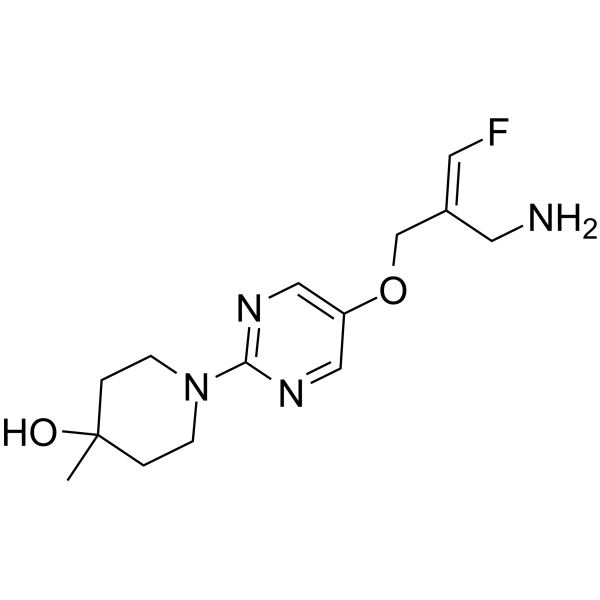
    DNMT2-IN-1 (compound 80) is a potent and selective DNMT2 (DNA methyltransferase 2) inhibitor with an IC50 value of 1.2 μM, and has the potential for mental and metabolic disorders or cancer research .
    DNMT2-IN-1
  • HY-B1834S1

    Isotope-Labeled Compounds Progesterone Receptor Glucocorticoid Receptor Infection Neurological Disease Inflammation/Immunology Cancer
    Megestrol-d5 is the deuterium labeled Megestrol. Megestrol is an orally active glucocorticoid and progesterone receptor agonist. Megestrol can alleviate anorexia, cachexia or unexplained significant weight loss associated with acquired immunodeficiency syndrome (AIDS). Megestrol may cause glucocorticoid-like effects and an increased risk of mental disorders.
    Megestrol-d5
  • HY-U00051A

    Histamine Receptor Neurological Disease
    Propiomazine hydrochloride is an orally active antihistamine agent. Propiomazine hydrochloride is a potent prolactin (PRL) release stimulant, whose effect depends on the antagonism of the dopaminergic system and can inhibit the secretion of luteinizing hormone (LH). Propiomazine hydrochloride is mainly used for anesthesia assistance, mental disorders and anxiety-induced sedation, and can also be used in research related to insomnia .
    Propiomazine hydrochloride
  • HY-B1834R

    Reference Standards Progesterone Receptor Glucocorticoid Receptor Infection Neurological Disease Inflammation/Immunology Cancer
    Megestrol (Standard) is the analytical standard of Megestrol. This product is intended for research and analytical applications. Megestrol is an orally active glucocorticoid and progesterone receptor agonist. Megestrol can alleviate anorexia, cachexia or unexplained significant weight loss associated with acquired immunodeficiency syndrome (AIDS). Megestrol may cause manifestations similar to those of glucocorticoids and increase the risk of mental disorders.
    Megestrol (Standard)
  • HY-U00051AS1

    Isotope-Labeled Compounds Neurological Disease
    (R)-Propiomazine-d6 hydrochloride is deuterium labeled Propiomazine hydrochloride. Propiomazine hydrochloride is an orally active antihistamine agent. Propiomazine hydrochloride is a potent prolactin (PRL) release stimulant, whose effect depends on the antagonism of the dopaminergic system and can inhibit the secretion of luteinizing hormone (LH). Propiomazine hydrochloride is mainly used for anesthesia assistance, mental disorders and anxiety-induced sedation, and can also be used in research related to insomnia.
    (R)-Propiomazine-d6 hydrochloride
  • HY-U00051AS

    Isotope-Labeled Compounds Histamine Receptor Neurological Disease
    Propiomazine-d6 hydrochloride is deuterium labeled Propiomazine hydrochloride. Propiomazine hydrochloride is an orally active antihistamine agent. Propiomazine hydrochloride is a potent prolactin (PRL) release stimulant, whose effect depends on the antagonism of the dopaminergic system and can inhibit the secretion of luteinizing hormone (LH). Propiomazine hydrochloride is mainly used for anesthesia assistance, mental disorders and anxiety-induced sedation, and can also be used in research related to insomnia.
    Propiomazine-d6 hydrochloride
  • HY-U00051AS2

    Isotope-Labeled Compounds Neurological Disease
    (S)-Propiomazine-d6 hydrochloride is deuterium labeled Propiomazine hydrochloride. Propiomazine hydrochloride is an orally active antihistamine agent. Propiomazine hydrochloride is a potent prolactin (PRL) release stimulant, whose effect depends on the antagonism of the dopaminergic system and can inhibit the secretion of luteinizing hormone (LH). Propiomazine hydrochloride is mainly used for anesthesia assistance, mental disorders and anxiety-induced sedation, and can also be used in research related to insomnia.
    (S)-Propiomazine-d6 hydrochloride
  • HY-B1069R

    SIN-10 (Standard); Morsydomine (Standard)

    Reference Standards Drug Metabolite Cardiovascular Disease Neurological Disease Metabolic Disease
    Molsidomine (Standard) (SIN-10 (Standard)) is the analytical standard of Molsidomine (HY-B1069). This product is intended for research and analytical applications. Molsidomine, a nitric oxide (NO) donor, is an orally active vasodilator agent. Molsidomine is a prodrug that can be rapidly metabolized in the liver to its active metabolite, Linsidomine (HY-101200). Molsidomine can be used for the study of angina pectoris, mental disorders and diabetic complications.
    Molsidomine (Standard)
  • HY-149702

    mAChR Neurological Disease
    M1/M4 muscarinic agonist 1 (compound 41) is a selective muscarinic M4/M1 agonist with EC50 values of 14 and 55 nM for M4 and M1, respectively. M1/M4 muscarinic agonist 1 can be used for research on mental diseases, such as schizophrenia, delusional disorder, etc .
    M1/M4 muscarinic agonist 1
  • HY-100703S

    Floropipamide-d10 dihydrochloride; McN-JR 3345-d10 dihydrochloride; R 3345-d10 dihydrochloride

    Isotope-Labeled Compounds Dopamine Receptor 5-HT Receptor Neurological Disease
    Pipamperone-d10 (Floropipamide-d10) dihydrochloride is a deuterated Pipamperone dihydrochloride (HY-100703A). Pipamperone dihydrochloride (Floropipamide dihydrochloride) is a butyrophenone derivative and high-affinity antagonist of 5-HT2A receptor (pKi=8.2) and D4 receptor (pKi=8.0). Pipamperone dihydrochloride is also a low-affinity antagonist of D2 receptor (pKi=6.7). Pipamperone dihydrochloride affects neurotransmitter functions and exerts antipsychotic activity. Pipamperone dihydrochloride is used in the research of mental disorders such as autism-related behavioral disorders and Alzheimer's disease .
    Pipamperone-d10 dihydrochloride
  • HY-100703R

    Floropipamide (Standard); McN-JR 3345 (Standard); R 3345 (Standard)

    Reference Standards 5-HT Receptor Dopamine Receptor Neurological Disease
    Pipamperone (Standard) is the analytical standard of Pipamperone (HY-100703). This product is intended for research and analytical applications. Pipamperone (Floropipamide) is a butyrophenone derivative and high-affinity antagonist of 5-HT2A receptor (pKi=8.2) and D4 receptor (pKi=8.0). Pipamperone is also a low-affinity antagonist of D2 receptor (pKi=6.7). Pipamperone affects neurotransmitter functions and exerts antipsychotic activity. Pipamperone is used in the research of mental disorders such as autism-related behavioral disorders and Alzheimer's disease .
    Pipamperone (Standard)
  • HY-117637

    Oxytocin Receptor Neurological Disease
    ALS-I-41 is a novel, potent and selective oxytocin receptor antagonist with the potential to modulate biological activities related to social behavior and mental disorders. ALS-I-41 is being evaluated for behavioral pharmacology experiments in non-human primates and can be administered via intranasal or intramuscular injection. The central nervous system penetration and metabolic rate of ALS-I-41 were studied by mass spectrometry analysis in cerebrospinal fluid and plasma of macaque monkeys .
    ALS-I-41
  • HY-B0098C

    (S)-UK 33274

    Adrenergic Receptor Cardiovascular Disease Neurological Disease
    (S)-Doxazosin is a long-acting selective α1-adrenoceptor antagonist. (S)-Doxazosin exhibits antihypertensive activity through lowering total perioheral resistance by selective postsynaptic α1-blockade. (S)-Doxazosin reduces blood pressure in dog model with experimentally induced renal hypertension. (S)-Doxazosin can alleviate bladder outflow obstruction. (S)-Doxazosin can also be studied in mental health disorder-related research .
    (S)-Doxazosin
  • HY-106964A

    5-HT Receptor Neurological Disease
    (Rac)-S 16924 is a partial agonist of the 5-HT1A receptor. (Rac)-S 16924 regulates signaling through its interaction with the 5-HT1A receptor, and (Rac)-S 16924 can stabilize the receptor in its G-protein-coupled conformation without fully activating it, which may affect intracellular signaling pathways associated with this receptor. (Rac)-S 16924 can be used to study the 5-HT1A receptor in mental disorders, especially schizophrenia .
    (Rac)-S 16924
  • HY-U00244A

    P2647 hydrochloride; BZQ hydrochloride; Benzoquinamide hydrochloride

    Adrenergic Receptor Dopamine Receptor Neurological Disease
    Benzquinamide (P2647; BZQ; Benzoquinamide) hydrochloride is an orally active binder of dopamine receptors and adrenergic receptors. Benzquinamide hydrochloride specifically targets dopamine D2, D3, D4 receptors and α-2A, α-2B, α-2C adrenergic receptors. Benzquinamide hydrochloride regulates blood pressure and heart rate, attenuates the pressor effect of adrenaline, and exhibits activities such as antiemesis, anxiolysis, and reduction of histamine-induced bronchoconstriction. Benzquinamide hydrochloride has good safety and does not deplete serotonin or norepinephrine in the brain. Benzquinamide hydrochloride can be used in studies related to nausea/vomiting, mental disorders, anxiety states, neurosis, and psychosis .
    Benzquinamide hydrochloride
  • HY-180584

    5-HT Receptor Neurological Disease
    5-HT2A agonist 9 (Compound I-53) is a 5-HT2A agonist with an EC₅₀ of 34 nM. 5-HT2A agonist 9 can be used for the study of mental disorders and central system disorders .
    5-HT2A agonist 9
  • HY-186056

    HCN Channel Neurological Disease
    HCN2-IN-3 is an orally active HCN2 inhibitor. HCN2-IN-3 inhibits the activity of HCN2 ion channels. HCN2-IN-3 is applicable to research related to pain, tinnitus, central nervous system diseases, mental illnesses and mood disorders .
    HCN2-IN-3
  • HY-175125

    Drug Derivative Neurological Disease
    N-Butyl-N-methyl buphedrone hydrochloride is a drug analogue that can be used for the study of mental disorders.
    N-Butyl-N-methyl buphedrone hydrochloride
  • HY-175153

    Isohexedrone hydrochloride

    Drug Derivative Neurological Disease
    α-Methylaminoisohexanophenone (Isohexedrone) hydrochloride is a drug analogue and can be used for the study of mental disorders .
    α-Methylaminoisohexanophenone hydrochloride
  • HY-182585

    Dopamine Receptor Neurological Disease
    Berupipam is a benzazepine-selective dopamine D1 receptor antagonist. Berupipam is used in the research of mental disorders .
    Berupipam
  • HY-172844

    Drug Derivative Neurological Disease
    3-Ethoxy-4-methoxy N,N-diethylpentedrone hydrochloride is a drug analogue that can be used in the research of mental disorders.
    3-Ethoxy-4-methoxy N,N-diethylpentedrone hydrochloride
  • HY-N9628

    Adrenergic Receptor Neurological Disease
    Polygalatenoside A is a noradrenaline reuptake inhibitor with an IC50 of 30.0 μM against human noradrenaline transporter. Polygalatenoside A can be used in the research of mental disorders .
    Polygalatenoside A
  • HY-181721

    Dopamine Receptor Neurological Disease
    Dopamine D3 receptor agonist 1 is a dopamine D3 Receptor agonist with a Ki value of 0.268 nM. Dopamine D3 receptor agonist 1 exhibits metabolic stability in rat liver microsomes. Dopamine D3 receptor agonist 1 can be used to study severe mental disorders comorbid with substance use disorders .
    Dopamine D3 receptor agonist 1
  • HY-W750825A

    Drug Intermediate Neurological Disease
    4,7,10,13,16,19-Docosahexaenoyl chloride is an ester derivative formed by Iloperidone (HY-17410) metabolite P-88-8991 and polyunsaturated fatty acid (linoleic acid derivative), which acts as a prodrug of P-88-8991. 4,7,10,13,16,19-Docosahexaenoyl chloride can be used for the research of mental disorders (schizophrenia, bipolar disorder) .
    4,7,10,13,16,19-Docosahexaenoyl chloride
  • HY-186170B

    5-HT Receptor Neurological Disease
    (R,S)-MDMA acts as a partial agonist of 5-HT2A, 5-HT2B and 5-HT2C receptors. (R,S)-MDMA belongs to psychoactive substances. (R,S)-MDMA exhibits antidepressant activity. (R,S)-MDMA can be used for research on mental disorders such as post-traumatic stress disorder and depression .
    (R,S)-MDMA

Inquiry Online

Your information is safe with us. * Required Fields.

Salutation


Country or Region *

Applicant Name *


Organization Name *

Department *


Email Address *


Product Name *

Cat. No.


Requested quantity *

Phone Number *


Remarks

Inquiry Online

Inquiry Information

Product Name:
Cat. No.:
Quantity:
MCE Japan Authorized Agent:

