1. Search Result
Search Result
Results for "

metalloenzyme

" in MedChemExpress (MCE) Product Catalog:

28

Inhibitors & Agonists

1

Screening Libraries

1

Biochemical Assay Reagents

5

Peptides

1

Natural
Products

Cat. No. Product Name Target Research Areas Chemical Structure
  • HY-P1775

    EC 4.2.1.1

    Carbonic Anhydrase Neurological Disease Metabolic Disease Cancer
    Carbonic anhydrase, Bovine erythrocytes (EC 4.2.1.1) is ubiquitous zinc-containing metalloenzyme present in prokaryotes and eukaryotes. Carbonic anhydrase can catalyze reversible conversion of carbon dioxide to bicarbonate and protons. Carbonic anhydrase can be used for the research of cancer, glaucoma, obesity and epilepsy .

    Carbonic anhydrase, Bovine erythrocytes
  • HY-W001951

    Tetrakis(acetato)dirhodium(II); Rhodium(II) acetate dimer

    DNA/RNA Synthesis Cancer
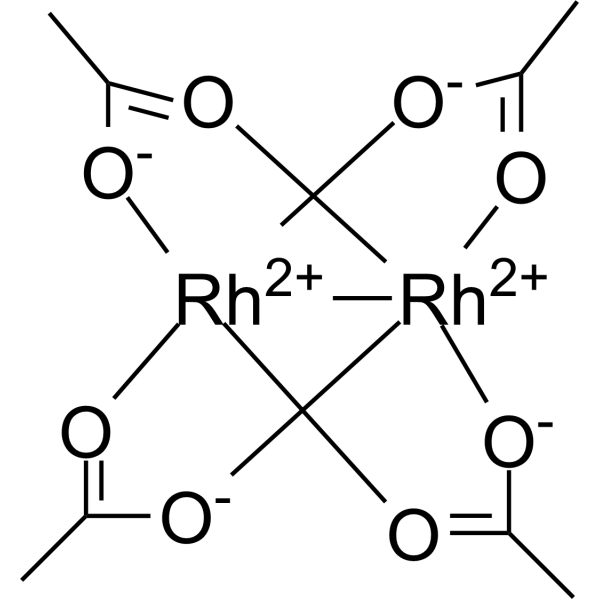
    Dirhodium tetraacetate (Tetrakis (acetato) dirhodium (II)) is an anticancer agent. Dirhodium tetraacetate functionally inhibits the activities of DNA polymerase I and RNA polymerase. It also acts as a catalyst and can be used to construct rhodium-based artificial metalloenzymes .
    Dirhodium tetraacetate
  • HY-100518
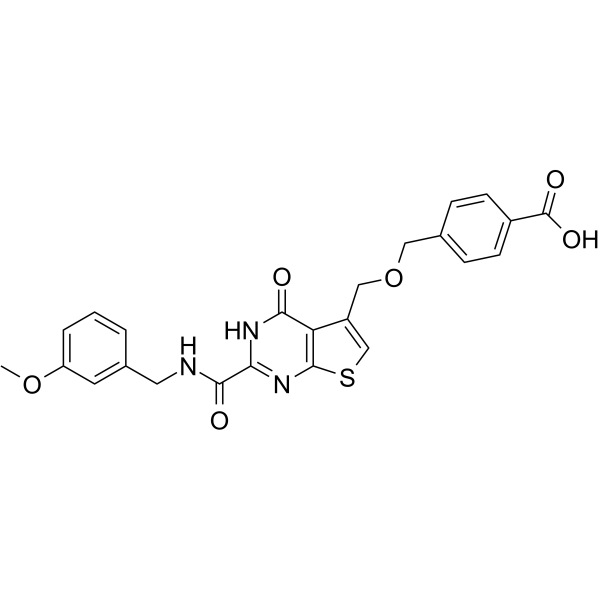
    T-26c
    3 Publications Verification

    MMP Inflammation/Immunology
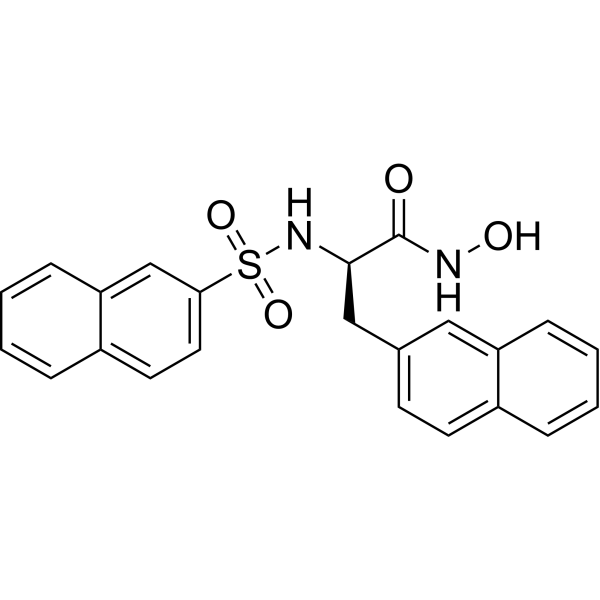
    T-26c, a chemical probe, is highly potent and selective matrix metalloproteinase-13 (MMP-13) inhibitor with an IC50 of 6.75 pM and more than 2600-fold selectivity over the other related metalloenzymes .
    T-26c
  • HY-P2910
    Galactose Oxidase, Dactylium dendroides
    2 Publications Verification

    GOase

    Endogenous Metabolite Others
    Galactose Oxidase, Dactylium dendroides (GOase) from fungus is often used in biochemical studies. Galactose oxidase is a type II copper metalloenzyme, and it containing a single polypeptide. Galactose oxidase catalyzes two-electron oxidation of primary alcohols to their corresponding aldehydes, coupling with the reduction of dioxygen to hydrogen peroxide .
    Galactose Oxidase, Dactylium dendroides
  • HY-P1775A

    Carbonic Anhydrase Neurological Disease Metabolic Disease Cancer
    Carbonic anhydrase isoenzyme is the isoenzyme of Carbonic anhydrase (HY-P1775). Carbonic anhydrase isoenzyme is ubiquitous zinc-containing metalloenzyme present in prokaryotes and eukaryotes. Carbonic anhydrase isoenzyme catalyzes reversible conversion of carbon dioxide to bicarbonate and protons, and can be used for the research of cancer, glaucoma, obesity and epilepsy .
    Carbonic anhydrase (isoenzyme)
  • HY-152101

    SARS-CoV Infection
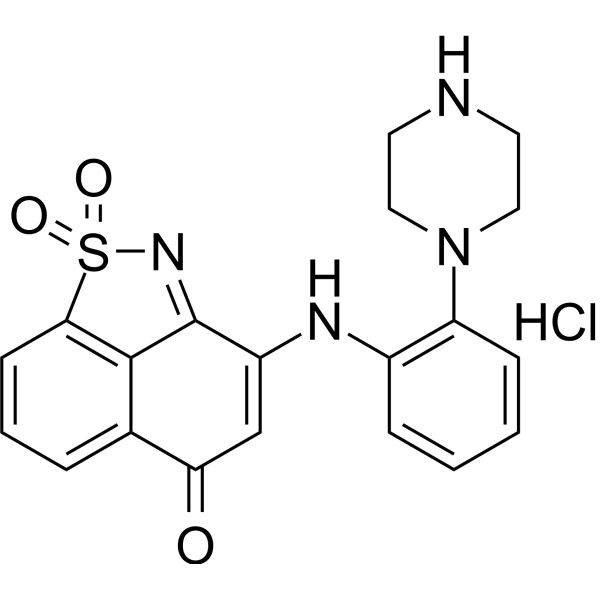
    LY1 is a potent, selective and covalent inhibitor against both SARS-CoV-2 PL pro and M pro with Kd values of 1.5 μM and 2.3 μM for M pro C145A protein and PL pro C111A protein, respectively. LY1 potent against the viral proteases, with IC50s of 0.12 μM and 0.99 μM against M pro and PL pro. LY1 shows high selectivity over other kinases, human proteases and metalloenzyme .
    LY1
  • HY-W041193

    MMP Lipoxygenase Tyrosinase Infection Inflammation/Immunology Cancer
    3-Hydroxy-2-pyrone (Compound 12d) is a metalloenzyme inhibitor. 3-Hydroxy-2-pyrone shows an inhibition rate of approximately 50% for matrix metalloproteinases (MMP) and the inhibition rate for non-heme iron enzyme 5-lipoxygenase (5-LOX) was over 70% at 1 mM. 3-Hydroxy-2-pyrone also has certain inhibitory activity against copper-dependent enzyme tyrosinase. 3-Hydroxy-2-pyrone can be used for the research of cancer, infection and inflammation .
    3-Hydroxy-2-pyrone
  • HY-135890
    CG347B
    2 Publications Verification

    HDAC Neurological Disease Inflammation/Immunology Cancer
    CG347B is a selective HDAC6 inhibitor, also involves in synthesis of other metalloenzyme inhibitors. HDAC6 inhibitors can be used for oncology, immunology, and neurology research .
    CG347B
  • HY-W101299

    Amino Acid Derivatives Metabolic Disease
    N-Acetyl-D-allo-isoleucine is an amino acid derivative. N-Acetyl-D-allo-isoleucine is promising for research of amino acid metabolism, such as abnormal isoleucine metabolism .
    N-Acetyl-D-allo-isoleucine
  • HY-138869

    Endogenous Metabolite Cancer
    AubipyOMe serves as a potent inhibitor of tartrate-resistant acid phosphatase (TRAP/ACP5), a metalloenzyme found in activated osteoclasts and macrophages, demonstrating IC50 values of 1.3 μM for TRAP5a and 1.8 μM for TRAP5b, while effectively inhibiting TRAP activity in extracts from murine macrophages and human lung tissue.
    AubipyOMe
  • HY-172734

    Bacterial Infection
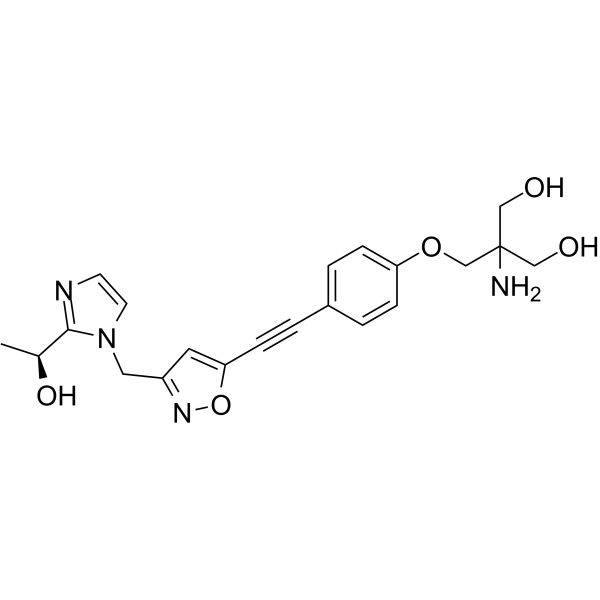
    FG-2101 is a selective and orally active non-hydroxamate LpxC inhibitor with an IC50 of ~1 nM. FG-2101 exhibits exquisite selectivity over other bacterial and human metalloenzymes. FG-2101 can be used for the study of Gram-negative bacteria infections including drug-resistant strains .
    FG-2101
  • HY-121021

    Bacterial Infection
    BB-78485 is an LpxC metalloenzyme inhibitor with antibacterial activity. BB-78485 can inhibit LpxC with an IC50 value of 160 nM. BB-78485 can be used for the research of gram-negative selective antibacterials .
    BB-78485
  • HY-19548

    Arginase Endocrinology
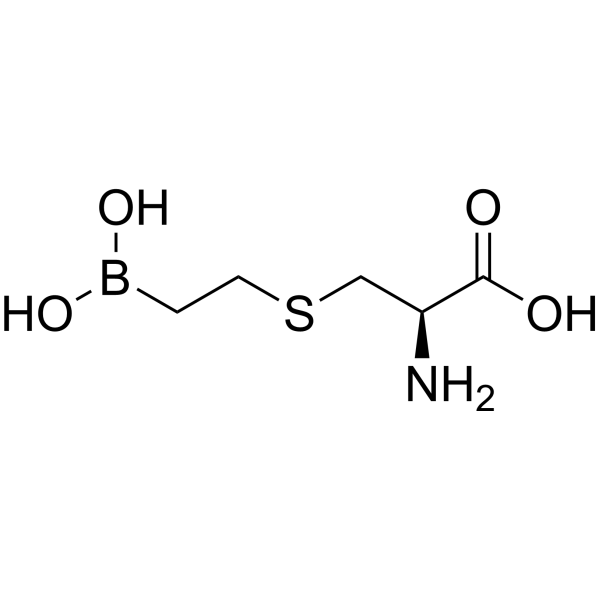
    BEC, an arginine analogue, is a slow-binding competitive inhibitor of the binuclear manganese metalloenzyme arginase. BEC enhances substrate flux to NO synthase, thereby enhancing NO-dependent smooth muscle relaxation in the corpus cavernosum, and enhances penile erection .
    BEC
  • HY-131907

    Bacterial Infection
    LpxC-IN-5 is a potent non-hydroxamate LpxC (UDP-3-O-acyl-N-acetylglucosamine deacetylase) inhibitor with an IC50 of 20 nM. LpxC-IN-5 shows antibacterial activity against E. coli ATCC25922, P. aeruginosa ATCC27853, K. pneumoniae ATCC13883 and P. aeruginosa 5567 with MIC of 16, 4, 64, and 4 μg/mL, respectively .
    LpxC-IN-5
  • HY-P4910

    Proteasome Apoptosis Cancer
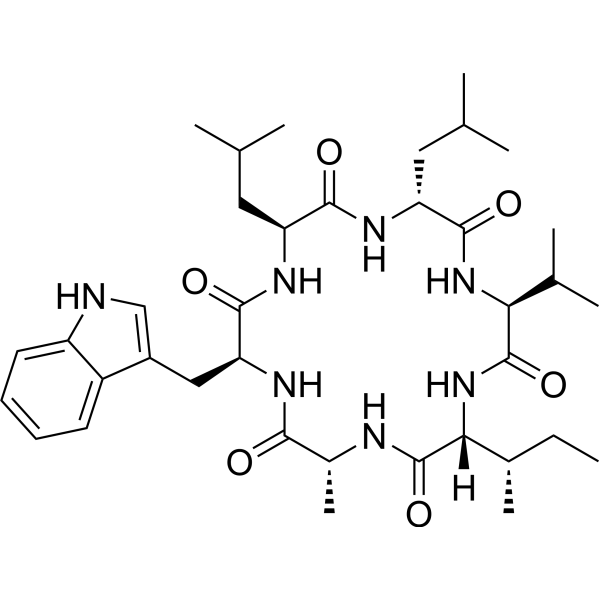
    Baceridin is a proteasome inhibitor and a cyclic hexapeptide. Baceridin can be isolated from the culture medium of Epiphytic Bacillus. Baceridin can inhibit cell cycle progression and induce tumor cell apoptosis through a p53-independent pathway. Baceridin can be used in cancer research .
    Baceridin
  • HY-114900

    Antibiotic Infection Others
    BB-3497 is a potent, orally active and selective peptide deformylase (PDF) inhibitor. BB-3497 is highly selective for PDF (IC50 = 7 nM for E. coli PDF.Ni) over the other mammalian metalloenzymes (MMP-1/2/3/7 and enkephalinase). BB-3497 exhibits potent activity against gram-positive bacteria and some gram-negative pathogens. BB-3497 protects mice from infection in systemic models of Staphylococeus aureus. BB-3497 can be used for anti-bacterial infection research .
    BB-3497
  • HY-P2120

    Bacterial Others
    Pseudobactin A is a non-fluorescent extracellular iron carrier produced by the plant growth-promoting bacterium Pseudomonas B10 .
    Pseudobactin A
  • HY-143449

    Tyrosinase Others
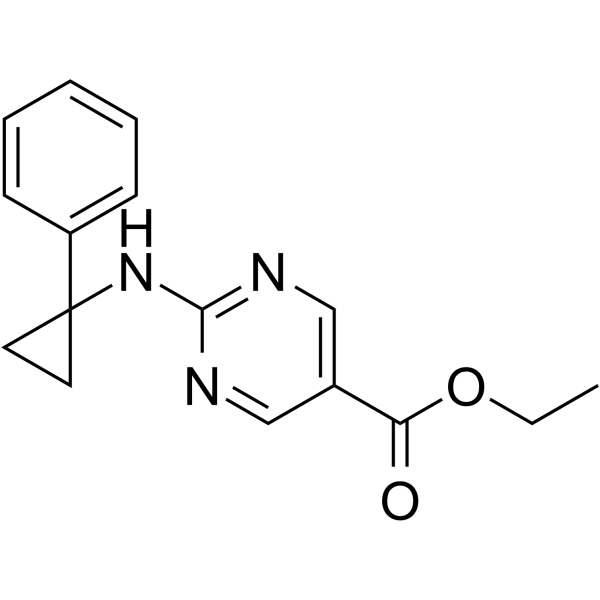
    Tyrosinase-IN-2 (compound 67) is a potent inhibitor of tyrosinase. Tyrosinase is a copper-containing metalloenzyme that is responsible for the rate-limiting catalytic step in the melanin biosynthesis and enzymatic browning. Tyrosinase-IN-2 has the potential for the research of skin whitening agents and food preservatives .
    Tyrosinase-IN-2
  • HY-143448

    Tyrosinase Others
    Tyrosinase-IN-1 (compound 90) is a potent inhibitor of tyrosinase. Tyrosinase is a copper-containing metalloenzyme that is responsible for the rate-limiting catalytic step in the melanin biosynthesis and enzymatic browning. Tyrosinase-IN-1 has the potential for the research of skin whitening agents and food preservatives .
    Tyrosinase-IN-1
  • HY-143450

    Tyrosinase Others
    Tyrosinase-IN-3 (compound 54) is a potent inhibitor of tyrosinase. Tyrosinase is a copper-containing metalloenzyme that is responsible for the rate-limiting catalytic step in the melanin biosynthesis and enzymatic browning. Tyrosinase-IN-3 has the potential for the research of skin whitening agents and food preservatives .
    Tyrosinase-IN-3
  • HY-143451

    Tyrosinase Others
    Tyrosinase-IN-4 (compound 34) is a potent inhibitor of tyrosinase. Tyrosinase is a copper-containing metalloenzyme that is responsible for the rate-limiting catalytic step in the melanin biosynthesis and enzymatic browning. Tyrosinase-IN-4 has the potential for the research of skin whitening agents and food preservatives .
    Tyrosinase-IN-4
  • HY-143249

    Bacterial Infection
    MtMetAP1-IN-1 is an inhibitor of Mycobacterium tuberculosis (Mtb), targeting methionine aminopeptidase 1 (MetAP1). MtMetAP1-IN-1 exerts antimycobacterial activity .
    MtMetAP1-IN-1
  • HY-E70991

    Biochemical Assay Reagents Metabolic Disease
    D-Ribulose-5-phosphate 3-Epimerase, Baker's yeast (S. cerevisiae) (EC 5.1.3.1) is a metalloenzyme that primarily utilizes divalent zinc ions (Zn2+) for catalysis.
    D-Ribulose-5-phosphate 3-Epimerase, Baker's yeast (S. cerevisiae)
  • HY-P4613

    Drug Derivative Drug Intermediate Others
    Fmoc-D-allo-Thr-OH is a derivative of D-allothreonine (HY-W001959), which is commonly used as a building block in solid-phase peptide synthesis (SPPS) .
    Fmoc-D-allo-Thr-OH
  • HY-P1775B

    Endogenous Metabolite Metabolic Disease
    Carbonic Anhydrase, Human (EC 4.2.1.1) is a zinc metalloenzyme that catalyzes the hydration of carbon dioxide to form carbonic acid. Carbonic Anhydrase participates in a variety of important physiological processes, such as the maintenance of pH and carbon dioxide homeostasis, the transport of bicarbonate and carbon dioxide, biosynthetic reactions, bone resorption, calcification, and tumorigenesis.
    Carbonic Anhydrase, Human
  • HY-E70986

    Endogenous Metabolite Metabolic Disease
    Carbonic Anhydrase I, Human (EC 4.2.1.1) is a zinc metalloenzyme that catalyzes the hydration of carbon dioxide to form carbonic acid. Carbonic Anhydrase I participates in a variety of important physiological processes, such as the maintenance of pH and carbon dioxide homeostasis, the transport of bicarbonate and carbon dioxide, biosynthetic reactions, bone resorption, calcification, and tumorigenesis.
    Carbonic Anhydrase I, Human
  • HY-100518R

    MMP Reference Standards Inflammation/Immunology
    T-26c (Standard) is the analytical standard of T-26c (HY-100518). This product is intended for research and analytical applications. T-26c, a chemical probe, is highly potent and selective matrix metalloproteinase-13 (MMP-13) inhibitor with an IC50 of 6.75 pM and more than 2600-fold selectivity over the other related metalloenzymes .
    T-26c (Standard)
  • HY-P11022

    A-3302-B

    Endogenous Metabolite HSV TRP Channel Infection Cancer
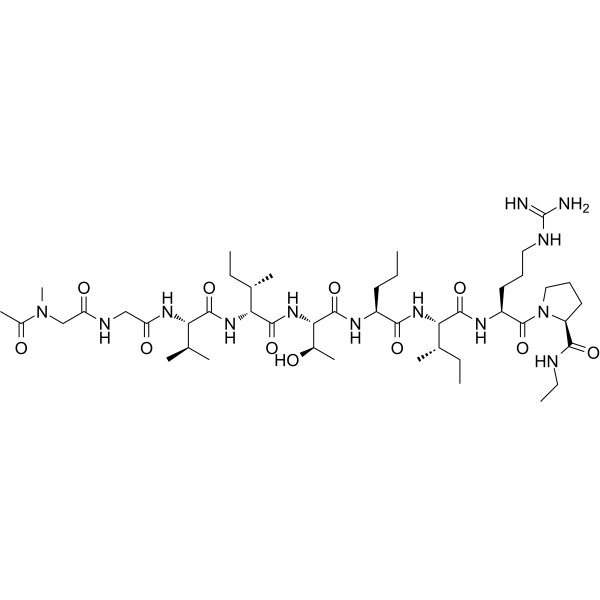
    TL-119 (A-3302-B) is a polypeptide. TL-119 can be isolated from the bacteria Micromonospora sp. MAG 9-7 and Saccharomonospora sp. CNQ-490. TL-119 inhibits TRPV-1. TL-119 exhibits antiviral activity against HSV-2. TL-119 possesses anticancer activity against gastric cancer and colorectal cancer .
    TL-119

Inquiry Online

Your information is safe with us. * Required Fields.

Salutation


Country or Region *

Applicant Name *


Organization Name *

Department *


Email Address *


Product Name *

Cat. No.


Requested quantity *

Phone Number *


Remarks

Inquiry Online

Inquiry Information

Product Name:
Cat. No.:
Quantity:
MCE Japan Authorized Agent:

