1. Search Result
Search Result
Results for "

methylated derivative

" in MedChemExpress (MCE) Product Catalog:

30

Inhibitors & Agonists

5

Peptides

9

Natural
Products

2

Isotope-Labeled Compounds

1

Oligonucleotides

Targets Recommended:
Cat. No. Product Name Target Research Areas Chemical Structure
  • HY-17442

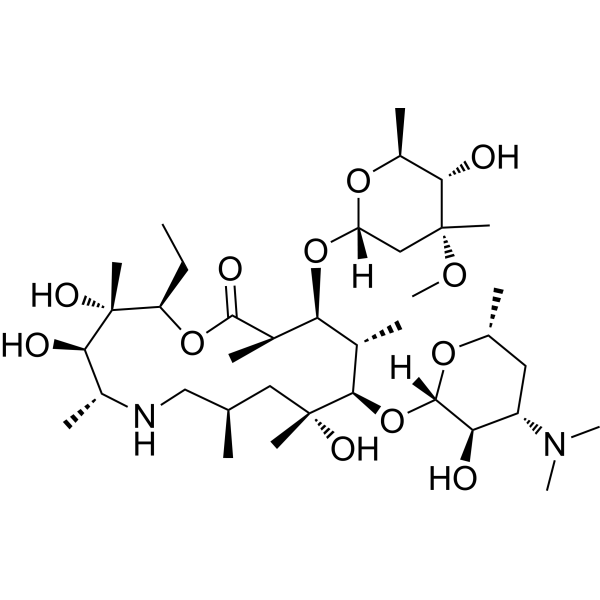
    Azaerythromycin A; Desmethyl Azithromycin

    Drug Derivative Bacterial Antibiotic Infection
    Azathramycin (Azaerythromycin A) is a methylated derivative of the antibiotic Azithromycin (HY-17506).
    Azathramycin
  • HY-16466

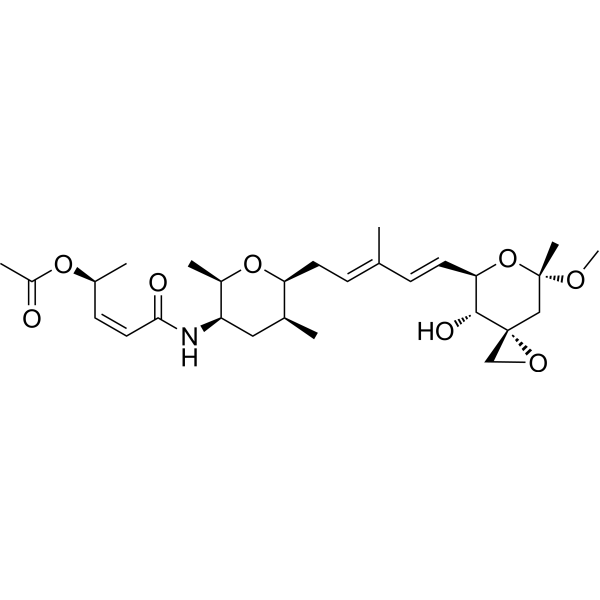
    SF3B1 Cancer
    Spliceostatin A, the FR901464 (HY-16212) methylated derivative, is a potent anti-tumor agent. Spliceostatin A inhibits splicing and promotes pre-mRNA accumulation by binding SF3B1. SF3B1 is a subcomplex of U2 small nuclear ribonucleoprotein in the spliceosome. Spliceostatin A induces Apoptosis in chronic lymphocytic leukemia (CLL) cells .
    Spliceostatin A
  • HY-B0243

    Glucocorticoid Receptor Inflammation/Immunology
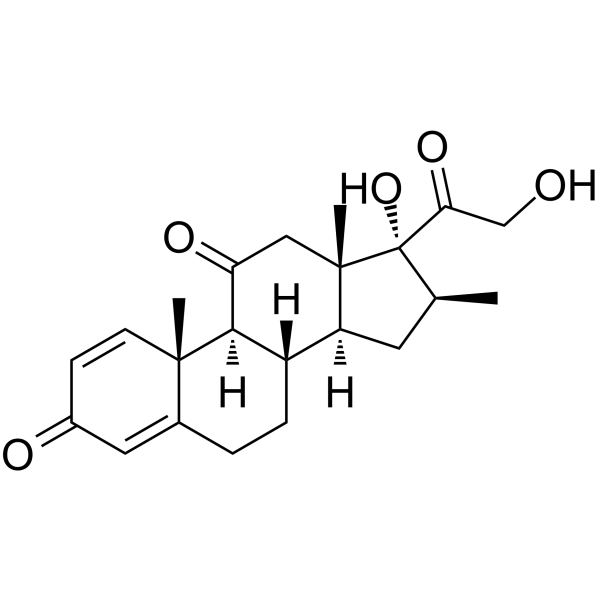
    Meprednisone is a glucocorticoid and a methylated derivative of Prednisone (HY-B0214). Meprednisone modulates glucocorticoid receptor. Meprednisone is orally active .
    Meprednisone
  • HY-W018326

    DNA/RNA Synthesis Cancer
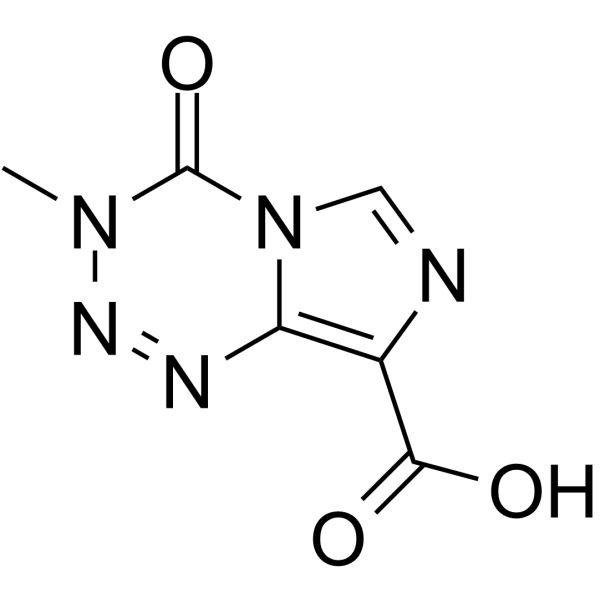
    Temozolomide acid is a carboxylic acid derivative of Temozolomide (HY-17364) with anticancer activity. Temozolomide is a DNA alkylating agent, methylating the guanine and adenine bases of DNA, causing breaks in DNA double strand, cell cycle arrest, and eventually cell death. Temozolomide acid is promising for research of glioblastoma and brain cancer .
    Temozolomide acid
  • HY-19340
    TMS
    5+ Cited Publications

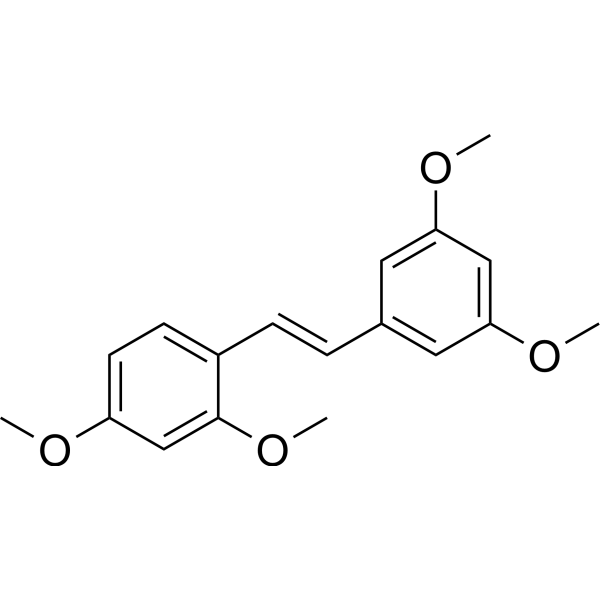
    (E)-2,3',4,5'-tetramethoxystilbene

    Cytochrome P450 Cancer
    TMS ((E)-2,3',4,5'-tetramethoxystilbene) is a selective and competitive CYP1B1 inhibitor with an IC50 of 6 nM and a Ki value of 3 nM. TMS shows a lesser extent inhibitory effect on CYP1A1 (IC50=300 nM) and CYP1A2 (IC50=3.1 μM). TMS is a methylated derivative of resveratrol and has anti-cancer activity .
    TMS
  • HY-P4198

    Fmoc-Sar10

    Biochemical Assay Reagents Others
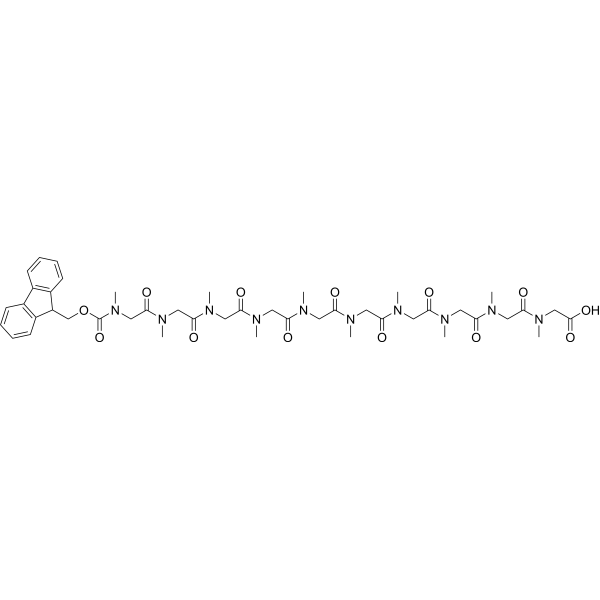
    Fmoc-N(Me)-Sar10 (Fmoc-Sar10) is an Fmoc-protected derivative of a methylated sarcosine decamer, which supports cell adhesion, proliferation, and maintenance of cell phenotype. Fmoc-N(Me)-Sar10 is primarily used in peptide synthesis to introduce enzymatically stable spacer sequences. By mimicking the extracellular matrix (ECM), Fmoc-N(Me)-Sar10 provides a 3D growth microenvironment for cells and is mainly used in tissue engineering and 3D cell culture, particularly suitable for in vitro culture studies of cells such as chondrocytes .
    Fmoc-N(Me)-Sar10
  • HY-Y1078

    N-Dimethoxymethyl-N,N-dimethylamine

    Biochemical Assay Reagents Others
    DMF-DMA (N-Dimethoxymethyl-N,N-dimethylamine) is a reagent with both condensation and alkylation functions. DMF-DMA can undergo condensation reactions with active methylene groups or amino groups to generate enamine and imino derivatives, and can also act as an alkylating agent to methylate nitrogen and oxygen atoms in heterocyclic structures. DMF-DMA is widely used in the synthesis of enaminones and dimethylamino imine intermediates, as well as in the construction of heterocyclic backbones such as pyridine, pyrimidine and pyrazole. DMF-DMA can also serve as a polar aprotic co-solvent; although DMF-DMA cannot dissolve cellulose alone, it can form an efficient cellulose dissolution system with diallylimidazolium methoxyacetate .
    DMF-DMA
  • HY-137977
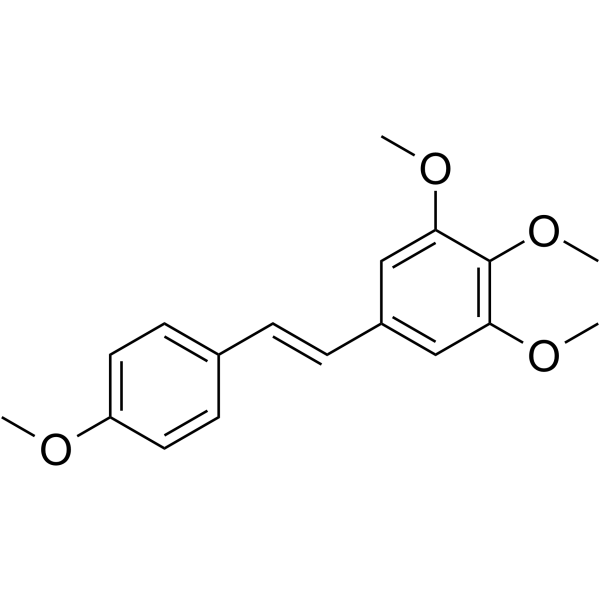
    DMU-212
    2 Publications Verification

    ERK Apoptosis Cancer
    DMU-212 is a methylated derivative of Resveratrol (HY-16561), with antimitotic, anti-proliferative, antioxidant and apoptosis promoting activities. DMU-212 induces mitotic arrest via induction of apoptosis and activation of ERK1/2 protein. DMU-212 has orally active .
    DMU-212
  • HY-126061

    Biochemical Assay Reagents Drug Metabolite Others
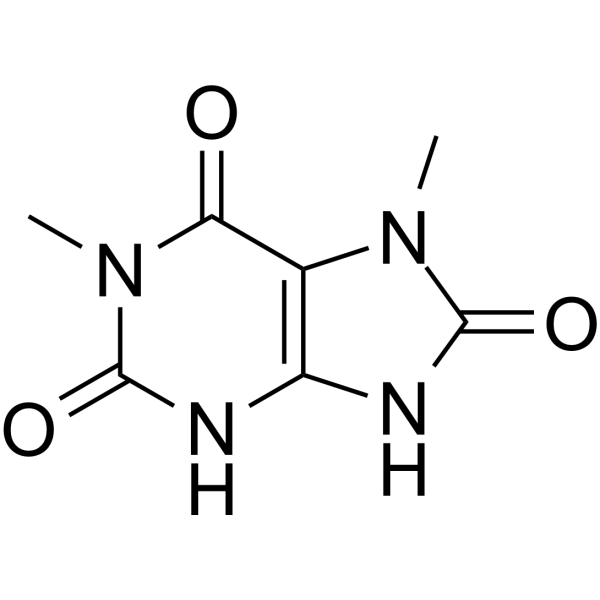
    1,7-Dimethyluric acid is an N-methylated uric acid and purine derivative, as well as a caffeine metabolite. When 1,7-Dimethyluric acid is acted upon by peroxidase in the presence of H2O2, it follows the same oxidation pathway to generate a UV-absorbing intermediate, which decays via first-order kinetics. 1,7-Dimethyluric acid can adsorb onto pyrolytic graphite electrodes, but not onto glassy carbon electrodes or platinum electrodes. The N-methylation modification of its pyrimidine ring prevents ring contraction of the diol intermediate, and no NMR evidence of O-alkylation is observed during propylation under the test conditions .
    1,7-Dimethyluric acid
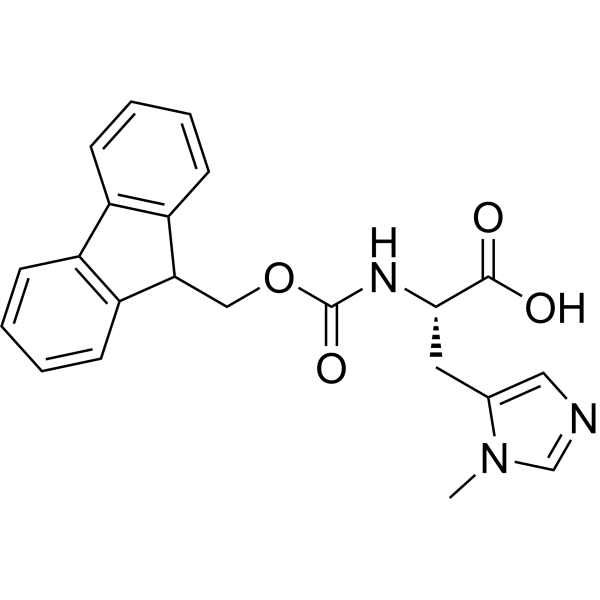
  • HY-W111226

    Amyloid-β Amino Acid Derivatives Cardiovascular Disease Neurological Disease
    Fmoc-His (3-Me)-OH is a histidine derivative with a methylated imidazole group. Fmoc-His (3-Me)-OH can be used for the synthesis of the chemically modified tripeptide His (3-methyl)-Arg-Trp (H (3-Me)-RW). Fmoc-His (3-Me)-OH serves as a resin in Fmoc solid-phase synthesis for the generation of the His-(3-Me)-Gly-Lys peptide. Fmoc-His (3-Me)-OH is a building block for the synthesis of NAHIS02-(p-Met). Fmoc-His (3-Me)-OH can be applied in research related to Alzheimer's disease .
    Fmoc-His(3-Me)-OH
  • HY-W010235

    Drug Derivative Infection
    3,5-Dimethoxytoluene, a methylated phenolic derivative, is one of characteristic scent compounds emitted from flowers of most rose varieties. 3,5-Dimethoxytoluene shows significant fumigant toxicity against L. serricorne and L. bostrychophila with LC50 values of 4.99 mg/L air and 0.91 mg/L air, respectively .
    3,5-Dimethoxytoluene
  • HY-W586822

    Pomalidomide-methyl

    Ligands for E3 Ligase Cancer
    N-methylated pomalidomide (Pomalidomide-methyl), a derivative of Pomalidomide (HY-10984), is a cereblon (CRBN) ligand. N-methylated pomalidomide is unable to recruit CRBN that can be used as a negative control for Pomalidomide. N-methylated pomalidomide can be used to synthesize PROTAC .
    N-Methylated pomalidomide
  • HY-W010235R

    Reference Standards Biochemical Assay Reagents Infection
    3,5-Dimethoxytoluene (Standard) is the analytical standard of 3,5-Dimethoxytoluene. This product is intended for research and analytical applications. 3,5-Dimethoxytoluene, a methylated phenolic derivative, is one of characteristic scent compounds emitted from flowers of most rose varieties. 3,5-Dimethoxytoluene shows significant fumigant toxicity against L. serricorne and L. bostrychophila with LC50 values of 4.99 mg/L air and 0.91 mg/L air, respectively[1].
    3,5-Dimethoxytoluene (Standard)
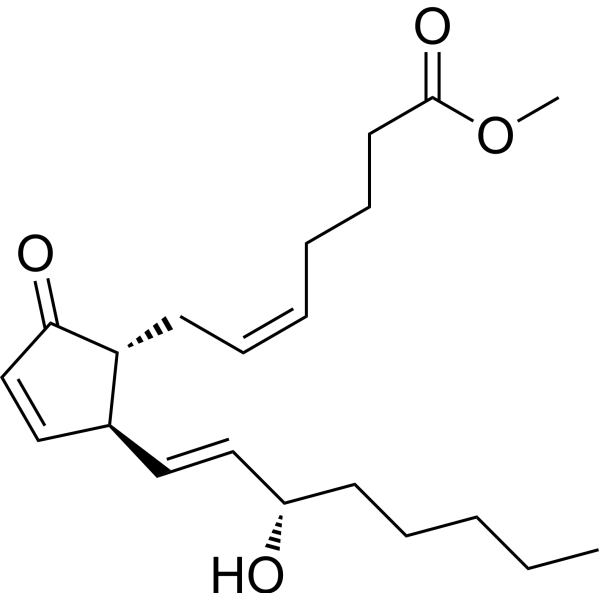
  • HY-118728

    PGA2 methyl ester

    Prostaglandin Receptor Others
    Prostaglandin A2 methyl ester (PGA2 methyl ester) is a methylated derivative of the prostaglandin PGA2 (HY-113041) .
    Prostaglandin A2 methyl ester
  • HY-17442R

    Azaerythromycin A (Standard); Desmethyl Azithromycin (Standard)

    Reference Standards Drug Derivative Bacterial Antibiotic Infection
    Azathramycin (Azaerythromycin A) Standard is the analytical standard of Azathramycin (HY-17442). This product is intended for research and analytical applications. Azathramycin (Azaerythromycin A) is a methylated derivative of the antibiotic Azithromycin (HY-17506) .
    Azathramycin (Standard)
  • HY-B0243R

    Reference Standards Glucocorticoid Receptor Inflammation/Immunology
    Meprednisone (Standard) is the analytical standard of Meprednisone. This product is intended for research and analytical applications. Meprednisone is a glucocorticoid and a methylated derivative of Prednisone (HY-B0214). Meprednisone modulates glucocorticoid receptor. Meprednisone is orally active .
    Meprednisone (Standard)
  • HY-172002

    3'-O-Methyl GTP sodium

    Drug Derivative Metabolic Disease
    3'-O-Methylguanosine-5'-O-triphosphate (3'-O-Methyl GTP) sodium is a methylated derivative of Guanosine 5'-triphosphate (HY-W010737). 3'-O-Methylguanosine-5'-O-triphosphate has been used as a chain termination reagent in the preparation of early RNA polymerase II elongation intermediates.
    3'-O-Methylguanosine-5'-O-triphosphate sodium
  • HY-118041

    Carboxylesterase (CES) Endogenous Metabolite Cancer
    PMPMEase-IN-1 is an allylated methylated protein methylesterase inhibitor with the property of inhibiting PMPMEase activity. PMPMEase-IN-1 may provide a useful strategy for cancer inhibition by enhancing its affinity for polyisoprenyl derivatives. PMPMEase-IN-1 showed the potential to have an effective concentration (EC50) value in causing degeneration of human neuroblastoma SH-SY5Y cells. Specific inhibition of PMPMEase-IN-1 may help regulate the metabolism of polyisoprenyl proteins and thus maintain normal cell survival. Further development and application of PMPMEase-IN-1 may open up new avenues for inhibiting degenerative diseases and cancer .
    PMPMEase-IN-1
  • HY-139938

    11,12-EET methyl ester; (±)11,12-EpETrE methyl ester

    Drug Derivative Cardiovascular Disease Inflammation/Immunology
    (±)11(12)-EET methyl ester (11,12-EET-methyl ester) is a methylated derivative of 11,12-epoxyeicosatrienoic acid (11,12-EET) (HY-130494). (±)11(12)-EET methyl ester cannot induce β-arrestin recruitment of the G protein-coupled receptor GPR132. (±)11(12)-EET methyl ester fails to enhance the expression of hematopoietic stem and progenitor cell (HSPC) markers. (±)11(12)-EET methyl ester can be used as a negative control molecule to study the structure-function relationship of 11,12-EET, facilitating the analysis of the role of the oxygenated fatty acid-GPR132 signaling axis in hematopoiesis .
    (±)11(12)-EET methyl ester
  • HY-139938S

    11,12-EET methyl ester-d11; (±)11,12-EpETrE methyl ester-d11

    Isotope-Labeled Compounds Cardiovascular Disease Inflammation/Immunology
    (±)11(12)-EET-d11 methyl ester (11,12-EET methyl ester-d11) is the deuterium labeled (±)11(12)-EET methyl ester (HY-139938). (±)11(12)-EET methyl ester (11,12-EET-methyl ester) is a methylated derivative of 11,12-epoxyeicosatrienoic acid (11,12-EET) (HY-130494). (±)11(12)-EET methyl ester cannot induce β-arrestin recruitment of the G protein-coupled receptor GPR132. (±)11(12)-EET methyl ester fails to enhance the expression of hematopoietic stem and progenitor cell (HSPC) markers. (±)11(12)-EET methyl ester can be used as a negative control molecule to study the structure-function relationship of 11,12-EET, facilitating the analysis of the role of the oxygenated fatty acid-GPR132 signaling axis in hematopoiesis .
    (±)11(12)-EET methyl ester-d11
  • HY-186081

    Drug Metabolite Metabolic Disease
    Ramiprilat acyl-β-D-glucuronide is an acyl glucuronide metabolite of Ramiprilat (HY-B0279). Ramiprilat acyl-β-D-glucuronide undergoes methylation on its glucuronic acid moiety during solid phase extraction with strong cation exchanger cartridges, forming a methylated derivative. Ramiprilat acyl-β-D-glucuronide undergoes in-source conversion to Ramiprilat in mass spectrometry, with conversion extent proportional to declustering potential voltage .
    Ramiprilat acyl-β-D-glucuronide
  • HY-126084

    Prostaglandin Receptor Cardiovascular Disease
    Carbaprostacyclin methyl ester is a methylated derivative of Carbacyclin (HY-112322).
    Carbaprostacyclin methyl ester
  • HY-N9935

    Drug Derivative Others
    Coumestrol dimethyl ether (compound 2) is a methylated derivative of the phytoestrogen Coumestrol (HY-N2335). Coumestrol dimethyl ether can be used as a model compound for studying the protonation and fluorescence properties of Coumestrol .
    Coumestrol dimethyl ether
  • HY-N18016

    Hesperitin-5,7-dimethyl-ether

    Drug Derivative Others
    4'-Hydroxy-5,7,3'-trimethoxyflavanone (Hesperitin-5,7-dimethyl-ether) (Compound 13) is an O-methylated flavanone and a derivative of Hesperetin (HY-N0168) .
    4'-Hydroxy-5,7,3'-trimethoxyflavanone
  • HY-N19784

    Fungal Infection
    12,13-Dimethyl chebulate is a methylated chebulic acid derivative that can be found in sugar maple fall leaves and Terminalia dhofarica leaves. 12,13-Dimethyl chebulate exhibits antifungal activity and DPPH scavenging activity. 12,13-Dimethyl chebulate can be used for the research of fungal infection .
    12,13-Dimethyl chebulate
  • HY-N19663

    Fungal Infection Others
    12-O-Methyl chebulic acid is an antifungal agent, methylated chebulic acid derivative and probable isolation artifact from Terminalia dhofarica leaves. 12-O-Methyl chebulic acid inhibits growth of several plant pathogens. 12-O-Methyl chebulic acid can be used for the research of phytopathogenic fungal infection and phytopathogenic oomycete infection .
    12-O-Methyl chebulic acid
  • HY-N19627

    3′-M-ECG

    Drug Derivative Inflammation/Immunology
    3'-O-Methyl-(-)-epicatechin gallate (3′-M-ECG) is a methylated Catechin (HY-N0898) derivative and is an antioxidant agent. 3'-O-Methyl-(-)-epicatechin gallate reduces oxygen consumption and prevents decreases in linoleic and α-linolenic acids to protect canola oil from lipid oxidation when heated .
    3'-O-Methyl-(-)-epicatechin gallate
  • HY-N17745

    Others
    (-)-EGCG-3'-O-Me is a catechin derivative (HY-N0898). (-)-EGCG-3'-O-Me inhibits lipid oxidation in rapeseed oil by reducing oxygen consumption and protecting linoleic acid and α-linolenic acid from degradation during heating. The antioxidant activity of (-)-EGCG-3'-O-Me in heated rapeseed oil is lower than that of its non-methylated precursor, (-)-epigallocatechin (EGCG) (HY-N0225) .
    (-)-EGCG-3'-O-Me
  • HY-174162A

    2'-Methyl GTP sodium

    Nucleoside Antimetabolite/Analog DNA/RNA Synthesis Infection
    2'-O-Methylguanosine-5'-O-triphosphate sodium (2'-Methyl GTP sodium), a methylated derivative of Guanosine 5'-triphosphate (HY-W010737), is a HCV NS5B RNA-dependent RNA polymerase inhibitor. 2'-O-Methylguanosine-5'-O-triphosphate sodium is a nucleotide competitor of GTP and acts as a chain terminator to inhibit RNA synthesis. 2'-O-Methylguanosine-5'-O-triphosphate sodium can be used for HCV infections research .
    2'-O-Methylguanosine-5'-O-triphosphate sodium
  • HY-179551S

    Isotope-Labeled Compounds Cardiovascular Disease Inflammation/Immunology
    (±)11(12)-EET-d11 Methyl ester is the deuterium labeled (±)11(12)-EET methyl ester (HY-139938). (±)11(12)-EET methyl ester is a methylated derivative of 11,12-epoxyeicosatrienoic acid (11,12-EET) (HY-130494). (±)11(12)-EET methyl ester cannot induce β-arrestin recruitment of the G protein-coupled receptor GPR132. (±)11(12)-EET methyl ester fails to enhance the expression of hematopoietic stem and progenitor cell (HSPC) markers. (±)11(12)-EET methyl ester can be used as a negative control molecule to study the structure-function relationship of 11,12-EET, facilitating the analysis of the role of the oxygenated fatty acid-GPR132 signaling axis in hematopoiesis.
    (±)11(12)-EET-d11 Methyl ester

Inquiry Online

Your information is safe with us. * Required Fields.

Salutation


Country or Region *

Applicant Name *


Organization Name *

Department *


Email Address *


Product Name *

Cat. No.


Requested quantity *

Phone Number *


Remarks

Inquiry Online

Inquiry Information

Product Name:
Cat. No.:
Quantity:
MCE Japan Authorized Agent:

