29 Results for "

mouse liver tissue

" in MedChemExpress (MCE) Product Catalog:
Products (29)

29 Results for "mouse liver tissue" in MCE Product Catalog:

12
12 Publications Verification
Cat. No.: HY-D1168
CAS No.: 1320-06-5
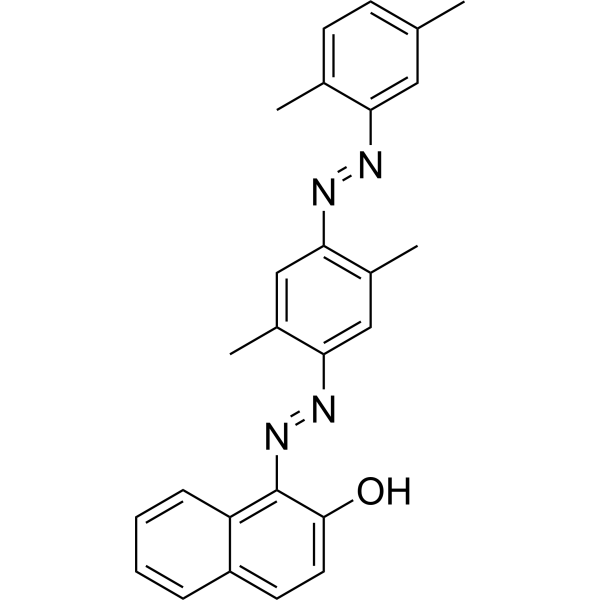
Oil Red O is a fat-soluble diazol dye, with a maximum absorption at 518 nm. Oil Red O stains neutral lipids and cholesteryl esters but not biological membranes. Oil Red O can be used for detecting and quantifying hepatic steatosis in mouse liver biopsies. Oil Red O staining efficiently helps to visualize the radical changes that occur in tissues as metabolic disease occurs and progresses .
loading...
    loading...
8
8 Cited Publications
Cat. No.: HY-14648A
CAS No.: 1177-87-3
Purity:  99.84%
Synonyms: Dexamethasone 21-acetate; Hexadecadrol acetate
Research Areas:  

Inflammation/Immunology

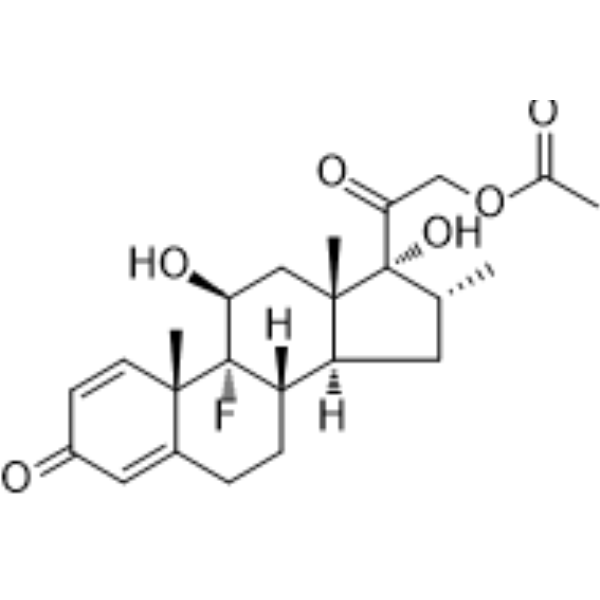
Dexamethasone acetate (Dexamethasone 21-acetate) is the acetate form of the glucocorticoid Dexamethasone (HY-14648). Dexamethasone acetate has a longer duration of action than Dexamethasone. Dexamethasone acetate can accumulate at inflammatory sites, in mouse liver and mouse lung via nanostructured lipid carriers. Dexamethasone acetate can be used to prepare topical formulations for studies related to sensorineural hearing loss, γ-carrageenan-induced paw edema, chronic active hepatitis, pulmonary diseases, and inflammation after vitreoretinal surgery .
loading...
    loading...
2
2 Cited Publications
Cat. No.: HY-15163
CAS No.: 1204918-72-8
Synonyms: TG02; SB1317
Target:  

JAK CDK FLT3

Research Areas:  

Cancer

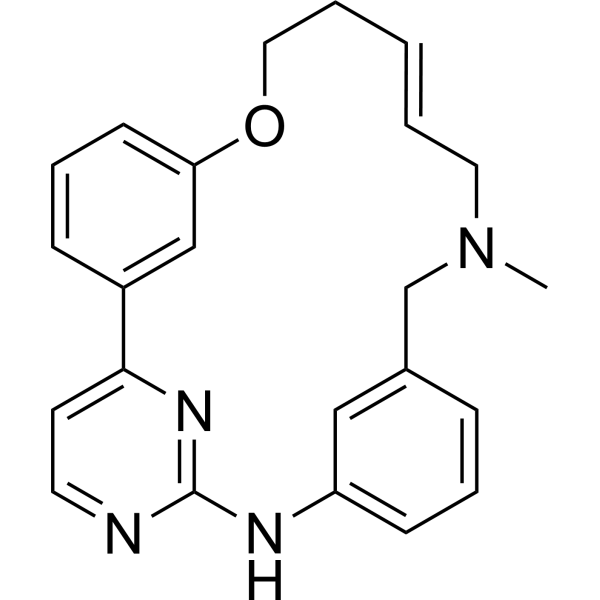
Zotiraciclib (TG02; SB1317) is an orally active JAK2/FLT3/CDK2 inhibitor with IC50 values of 13 nM, 73 nM and 56 nM , respectively. Zotiraciclib inhibits cancer cell proliferation, tumor growth and the activity of CYP2D6. Zotiraciclib exhibits high plasma protein binding rate, Caco-2 permeability and tissue distribution capacity, as well as metabolic stability in human and canine liver microsomes. Zotiraciclib achieves tumor growth inhibition in nude mouse models of colon cancer and lymphoma xenografts. Zotiraciclib can be used for research related to colon cancer, B-cell lymphoma, advanced leukemia, acute leukemia and multiple myeloma .
loading...
    loading...
1
1 Cited Publications
Cat. No.: HY-P73375
Purity:  ≥ 95%, as determined by reducing SDS-PAGE.
Synonyms: PRDX5; B166; Peroxiredoxin 5; Thioredoxin-Dependent Peroxiredoxin 5; AOEB166; Peroxiredoxin-5, Mitochondrial; ACR1; Alu Co-Repressor 1; PLP; Peroxiredoxin V; Peroxisomal Antioxidant Enzyme; MGC142285; liver tissue 2D-Page Spot 71B; MGC117264; Thioredoxin
Species:  
Source:  
loading...
    loading...
Cat. No.: HY-169179
CAS No.: 2984505-88-4
Target:  

PROTACs STAT

Research Areas:  

Cancer

AK-1690 is a selective PROTAC degrader targeting STAT6 (DC50=1 nM) with a Ki of 6 nM against human STAT6. AK-1690 degrades STAT6 via the interaction of STAT6 with cereblon and a ubiquitin-like process. AK-1690 effectively depletes STAT6 protein in mouse liver and lung tissues, and is applicable to research related to leukemia, Hodgkin's lymphoma, follicular lymphoma, etc. .
loading...
    loading...
Cat. No.: HY-133737
CAS No.: 2409538-70-9
Purity:  99.93%
Synonyms: PROTAC BRD4 Degrader-5
Research Areas:  

Cancer

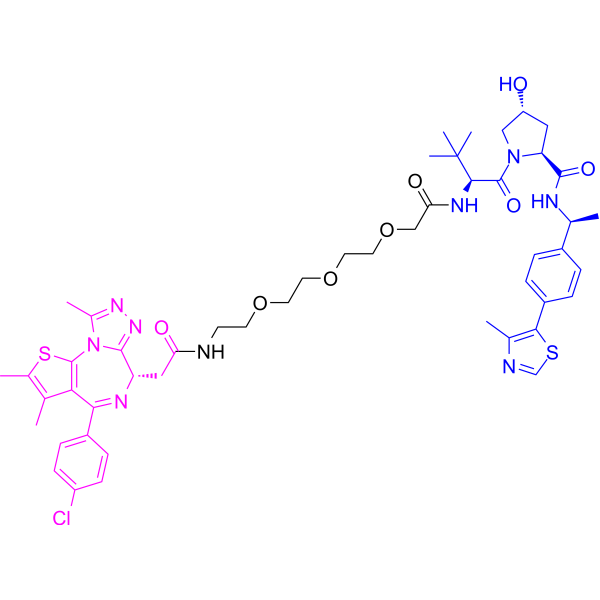
GAL-02-221 is a BRD4 PROTAC degrader with blood-brain barrier permeability, with a DC50 of 0.009 μM (Jurkat BRD4-HiBiT). GAL-02-221 induces proteasome-catalyzed BRD4 degradation, binds to VHL to trigger BRD4 ubiquitination, and recruits the VHL E3 ligase complex to participate in protein degradation. GAL-02-221 degrades BRD4 in breast cancer cells as well as mouse liver and brain tissues. GAL-02-221 is applicable to research related to breast cancer .
loading...
    loading...
Cat. No.: HY-131501
CAS No.: 523-39-7
Purity:  ≥98.0%
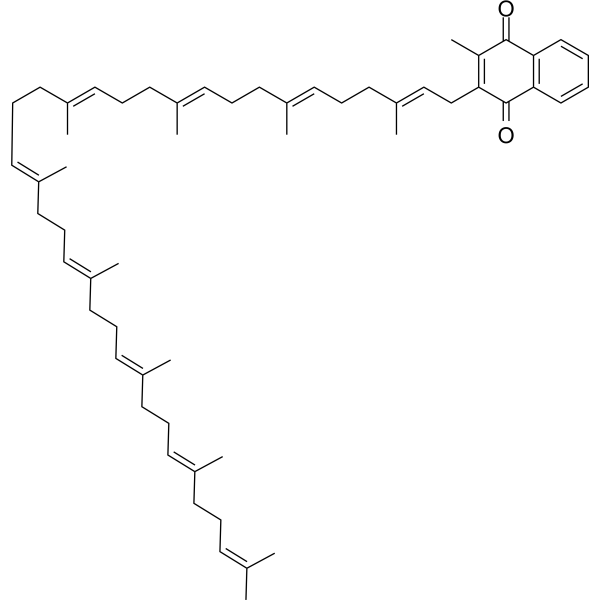
Menaquinone 9 is a naphthoquinone-type vitamin K and electron transport component produced by bacteria. Menaquinone 9 is an orally active analog of Vitamin K2 (HY-109569). Menaquinone 9 acts as an ultraviolet-sensitive, photooxidizable substrate that generates more polar photodegradation products under oxygen and ultraviolet irradiation. Menaquinone 9 binds to the αβ dimer of Escherichia coli nitrate reductase, supporting electron transport within the αβ subunit structure of the enzyme. Menaquinone 9 serves as a precursor for bone Menaquinone-4 (HY-B2156). Menaquinone 9 can be used in studies related to metabolic diseases .
loading...
    loading...
Cat. No.: HY-126850
CAS No.: 6543-77-7
Target:  

EGFR

Research Areas:  

Cancer

4-Epidoxycycline is a liver metabolite of the antibiotic doxycycline (doxycycline, HY-N0565) and doesn't have antibiotic properties in mice. 4-Epidoxycycline’s ability to regulate HER2 gene expression in vitro and in live mouse models is similar to that of doxycycline, and it shows comparable high efficacy in tumor tissues, achieving over 95% tumor regression rates .
loading...
    loading...
Cat. No.: HY-159771
CAS No.: 3095069-75-0
Target:  

FAP

Research Areas:  

Cancer

FAP6-19 is a fibroblast activation protein (FAP) targeting radioligand with a Kd of 18.2 nM. FAP6-19 selectively delivers therapeutic radioactive nuclides (such as 177Lu) to the tumor site by targeting the overexpressed FAP protein in the tumor microenvironment, achieving precise killing of cancer cells while minimizing radiation damage to healthy tissues. FAP6-19 exhibits extremely high total cellular uptake and good intracellular retention ability in HT1080 cells. After being labeled with 111In, FAP6-19 produced extremely high tumor/kidney and tumor/liver dose ratios in the mouse model with 4T1 tumors. FAP6-19 can be used in the research of solid tumors expressing FAP.
loading...
    loading...
Cat. No.: HY-161449
CAS No.: 916828-66-5
Target:  

11β-HSD

Research Areas:  

Metabolic Disease

JTT-654 is an orally active, potent and selective11β-Hydroxysteroid dehydrogenase type 1 (11β-HSD1) inhibitor. The IC50 of JTT-654 for 11β-HSD1 is 4.65, 0.97, and 0.74 nM in human, rat, and mouse recombinant enzymes, respectively. JTT-654 showed competitive inhibition against human recombinant enzyme. The IC50 value for human 11β-HSD2 is > 30 μM (human 11β-HSD2 is responsible for the reverse reaction against human 11β-HSD1). JTT-654 ameliorates insulin resistance and non-obese type 2 diabetes by inhibiting adipose tissue and liver 11β-HSD1 .
loading...
    loading...
Cat. No.: HY-159494
PROTAC sEH degrader-1 is a PROTAC degrader targeting soluble epoxide hydrolase (sEH) with a DC50 of 0.5 nM, and it also possesses sEH inhibitory activity. PROTAC sEH degrader-1 has an IC50 of 3.8 nM against human sEH and an IC50 of 210 nM against mouse sEH. PROTAC sEH degrader-1 relies on the ubiquitin-proteasome system to achieve target protein degradation, and it selectively degrades cytoplasmic sEH. PROTAC sEH degrader-1 rapidly reduces endoplasmic reticulum stress in cells, downregulates the phosphorylation levels of IRE1α, PERK and eIF2α, enhances cell viability, and alleviates Thapsigargin (HY-13433)-induced apoptosis. PROTAC sEH degrader-1 effectively degrades sEH in mouse liver and brown adipose tissue. PROTAC sEH degrader-1 can be used in studies related to metabolic disorders and inflammation .
loading...
    loading...
Cat. No.: HY-177809
Target:  

TNF Receptor

Research Areas:  

Inflammation/Immunology

aptTNF-α sodium is a TNF-α-targeting aptamer that has tissue protective effect and systemic anti-inflammatory effect upon acute tissue injury using the mouse acute lung injury (ALI) and acute liver failure (ALF) models.
loading...
    loading...
Cat. No.: HY-131501R
CAS No.: 523-39-7
Menaquinone 9 (Standard) is the analytical standard of Menaquinone 9 (HY-131501). This product is intended for research and analytical applications. Menaquinone 9 is a naphthoquinone-type vitamin K and electron transport component produced by bacteria. Menaquinone 9 is an orally active analog of Vitamin K2 (HY-109569). Menaquinone 9 acts as an ultraviolet-sensitive, photooxidizable substrate that generates more polar photodegradation products under oxygen and ultraviolet irradiation. Menaquinone 9 binds to the αβ dimer of Escherichia coli nitrate reductase, supporting electron transport within the αβ subunit structure of the enzyme. Menaquinone 9 serves as a precursor for bone Menaquinone-4 (HY-B2156). Menaquinone 9 can be used in studies related to metabolic diseases .
loading...
    loading...
Cat. No.: HY-131501S
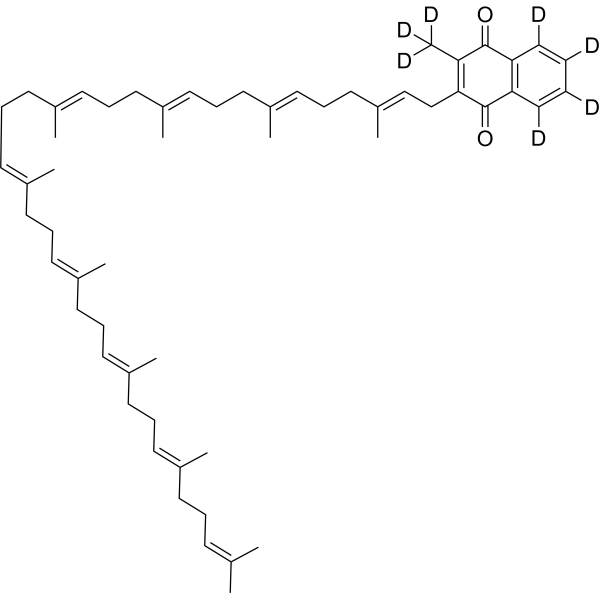
Menaquinone-9-d7 is the deuterated-labeled Menaquinone 9 (HY-131501). Menaquinone 9 is a naphthoquinone-type vitamin K and electron transport component produced by bacteria. Menaquinone 9 is an orally active analog of Vitamin K2 (HY-109569). Menaquinone 9 acts as an ultraviolet-sensitive, photooxidizable substrate that generates more polar photodegradation products under oxygen and ultraviolet irradiation. Menaquinone 9 binds to the αβ dimer of Escherichia coli nitrate reductase, supporting electron transport within the αβ subunit structure of the enzyme. Menaquinone 9 serves as a precursor for bone Menaquinone-4 (HY-B2156). Menaquinone 9 can be used in studies related to metabolic diseases .
loading...
    loading...
Cat. No.: HY-131501S1
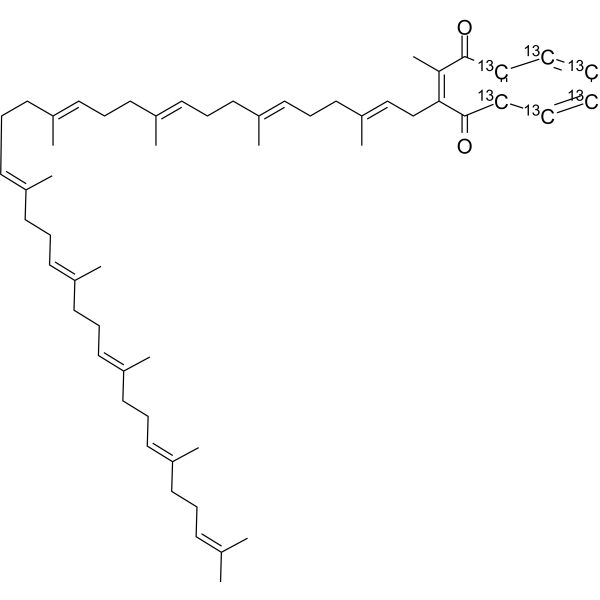
Menaquinone-9-13C6 is the 13C-labeled Menaquinone 9 (HY-131501). Menaquinone 9 is a naphthoquinone-type vitamin K and electron transport component produced by bacteria. Menaquinone 9 is an orally active analog of Vitamin K2 (HY-109569). Menaquinone 9 acts as an ultraviolet-sensitive, photooxidizable substrate that generates more polar photodegradation products under oxygen and ultraviolet irradiation. Menaquinone 9 binds to the αβ dimer of Escherichia coli nitrate reductase, supporting electron transport within the αβ subunit structure of the enzyme. Menaquinone 9 serves as a precursor for bone Menaquinone-4 (HY-B2156). Menaquinone 9 can be used in studies related to metabolic diseases .
loading...
    loading...
Cat. No.: HY-D3085
CAS No.: 2882924-23-2
SSR-LDs is a fluorescent probe for lipid droplet polarity detection and lipid droplet imaging. SSR-LDs exhibits polarity-dependent fluorescence: it produces intense short-wavelength emission in low-polarity environments, while generating weak long-wavelength emission in high-polarity environments. SSR-LDs enters cells via free diffusion, specifically targets lipid droplets, and is unaffected by intracellular viscosity or pH values ranging from 4.5 to 9.0. SSR-LDs shows variable Ex/Em wavelengths in different solvents, including 590/663 nm in THF, 600/660 nm in mouse tissue and in vivo imaging, and an excitation wavelength of 580 nm with an emission wavelength range of 610-750 nm in cell imaging. SSR-LDs can be used for research related to fatty liver, liver injury and hepatitis .
loading...
    loading...
Cat. No.: HY-P74415
Purity:  ≥ 95%, as determined by reducing SDS-PAGE.
Synonyms: ALPL; Alkaline Phosphatase, liver/Bone/Kidney; Prev. HOPS; TNS-ALP; TNSALP; liver/Bone/Kidney-Type Alkaline Phosphatase; Alkaline Phosphatase, tissue-Nonspecific Isozyme; tissue-Nonspecific ALP; Alkaline Phosphatase liver/Bone/Kidney Isozyme; Alkaline Pho
Species:  
Source:  
loading...
    loading...
Cat. No.: HY-P74416
Purity:  ≥ 90%, as determined by reducing SDS-PAGE.
Synonyms: ALPL; Alkaline Phosphatase, liver/Bone/Kidney; Prev. HOPS; TNS-ALP; TNSALP; liver/Bone/Kidney-Type Alkaline Phosphatase; Alkaline Phosphatase, tissue-Nonspecific Isozyme; tissue-Nonspecific ALP; Alkaline Phosphatase liver/Bone/Kidney Isozyme; Alkaline Pho
Species:  
Source:  
loading...
    loading...
Cat. No.: HY-183339
IL-6/RIPK3-IN-1 is an inhibitor of IL-6, RIPK3 and BRD4, with IC50 values of 0.22, 1.32 and 5.91 μM, respectively. IL-6/RIPK3-IN-1 can be used in studies related to inflammation and tissue damage .
loading...
    loading...
Cat. No.: HY-183723
Research Areas:  

Metabolic Disease

GAA-4OH is a potent and irreversible dihydroceramide desaturase-1 (DES1) inhibitor with an IC50 of 0.6 μM and a Ki of 139.5 nM. GAA-4OH undergoes oxidation to form a reactive iminoquinone that covalently blocks DES1’s catalytic cavity, causing permanent enzyme inactivation. GAA-4OH modulates sphingolipid balance by reducing ceramide-to-dihydroceramide ratios in liver tissue. GAA-4OH improves liver steatosis, inflammation, fibrosis, and reduces pro-inflammatory and pro-fibrogenic gene expression. GAA-4OH can be used for the research of metabolic dysfunction-associated steatotic liver disease (MASLD) .
loading...
    loading...

