Search Result
Results for "
nucleotide derivative
" in MedChemExpress (MCE) Product Catalog:
3
Biochemical Assay Reagents
6
Isotope-Labeled Compounds
| Cat. No. |
Product Name |
Target |
Research Areas |
Chemical Structure |
-
- HY-B0128
-
-
-
- HY-15794
-
|
Methoxymorpholinyl doxorubicin; FCE 23762; PNU 152243
|
G-quadruplex
|
Cancer
|
|
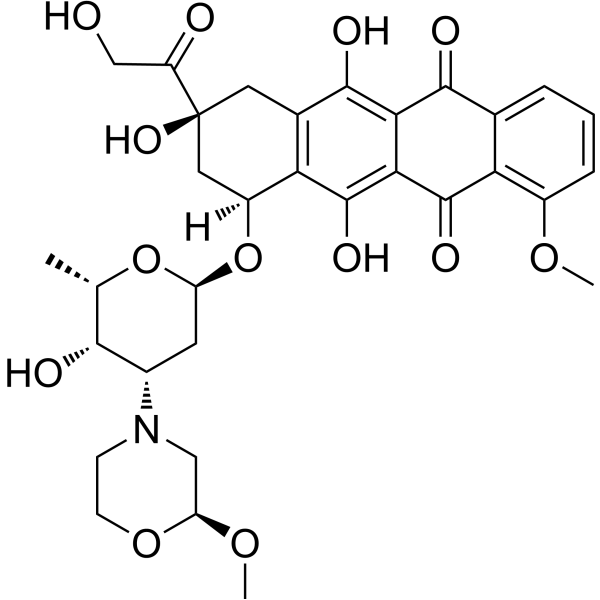
Nemorubicin (Methoxymorpholinyl doxorubicin) is a Doxorubicin derivative with potent antitumor activity. Nemorubicin is highly cytotoxic to a variety of tumor cell lines presenting a multidrug-resistant phenotype. Nemorubicin not only intercalate into the duplex DNA, but also result in significant ligands for G-quadruplex DNA segments, stabilizing their structure. Nemorubicin requirs an intact nucleotide excision repair (NER) system to exert its activity .
|
-
-
- HY-104014
-
|
|
Phosphoramidites
DNA/RNA Synthesis
Nucleoside Antimetabolite/Analog
|
Others
|
|
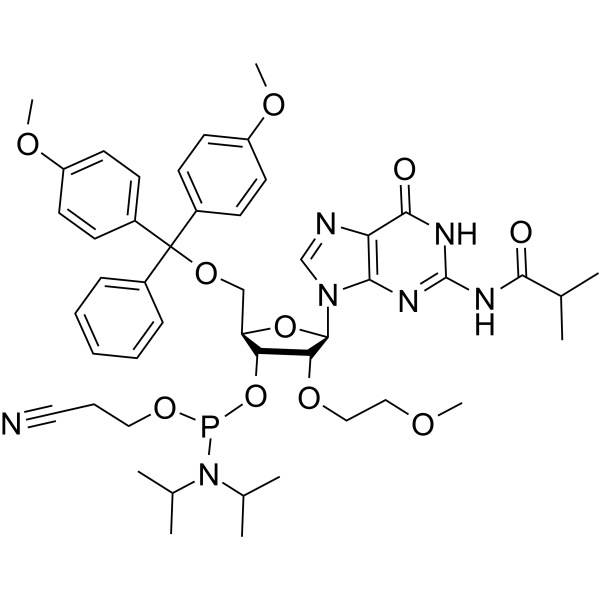
DMT-2'O-MOE-rG(ib) Phosphoramidite belongs to cyanoethyl-protected nucleoside phosphoramidites. DMT-2'O-MOE-rG(ib) Phosphoramidite is a derivative of nucleotide and guanosine. DMT-2'O-MOE-rG(ib) Phosphoramidite can be used for the stereochemical synthesis of phosphorothioate oligonucleotides .
|
-
-
- HY-W013159
-
|
5′-dGMP disodium
|
Endogenous Metabolite
Nucleoside Antimetabolite/Analog
|
Metabolic Disease
|
|
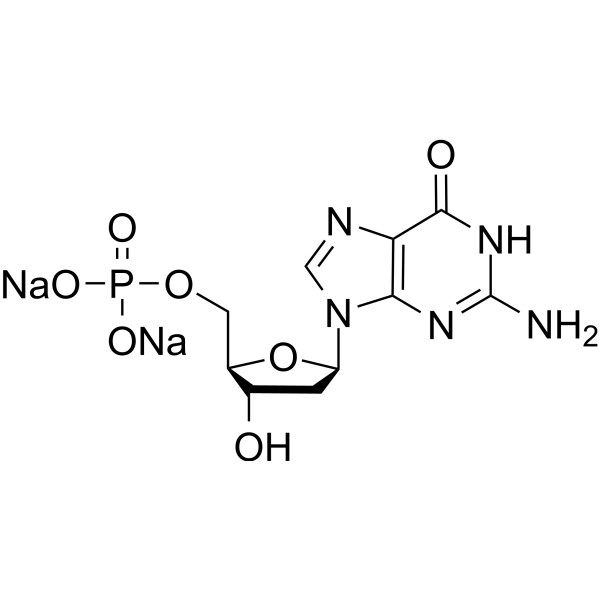
2'-Deoxyguanosine 5'-monophosphate (5′-dGMP) disodium is a mononucleotide having guanine as the nucleobase. 2'-Deoxyguanosine 5'-monophosphate disodium is a reactant involved in analysis of self-assembling in solution and nucleation/growth of G-qudruplexes, nucleophilic trapping and reductive alkylation. 2'-Deoxyguanosine 5'-monophosphate disodium can be used as an oxidizable target. 2'-Deoxyguanosine 5'-monophosphate disodium is a nucleic acid guanosine triphosphate (GTP) derivative and is a nucleotide precursor used in DNA synthesis .
|
-
-
- HY-143469
-
-
-
- HY-W250153
-
|
|
P2Y Receptor
|
Cardiovascular Disease
|
|
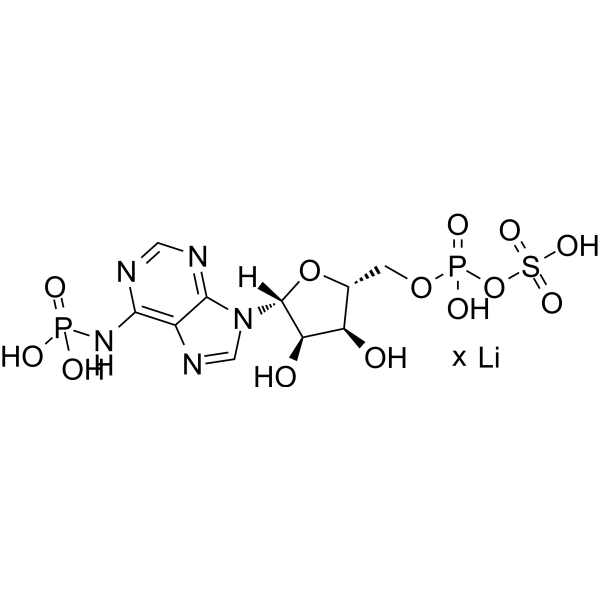
Adenosine 3'-phosphate 5'-phosphosulfate lithium, an adenine nucleotide derivative, is a selective P2Y1 antagonist with no effect on P2Y2, P2Y4, or P2Y6 receptors. Adenosine 3'-phosphate 5'-phosphosulfate lithium can competitive inhibit ADP-induced platelet aggregation, as well as the ability of ADP to cause shape change and increases in Ca 2+ in platelets, but had no effect on the inhibition of stimulated adenylate cyclase by ADP. Adenosine 3'-phosphate 5'-phosphosulfate lithium is a co-substrate used for the sulfonation of glycans. Adenosine 3'-phosphate 5'-phosphosulfate lithium can be used for Golgi-resident PAP-specific 3'-phosphatase-coupled sulfotransferase assays, which as donor substrate to transfer a sulfonate group .
|
-
-
- HY-W131753
-
|
N-Acetyl-2′-deoxy-2′-fluorocytidine
|
Nucleoside Antimetabolite/Analog
|
Others
|
|
2'-F-Ac-C (N-Acetyl-2′-deoxy-2′-fluorocytidine) is a nucleoside analog that can be used to synthesize oligoribonucleotides .
|
-
-
- HY-16398
-
|
|
DNA Alkylator/Crosslinker
DNA/RNA Synthesis
|
Cancer
|
|
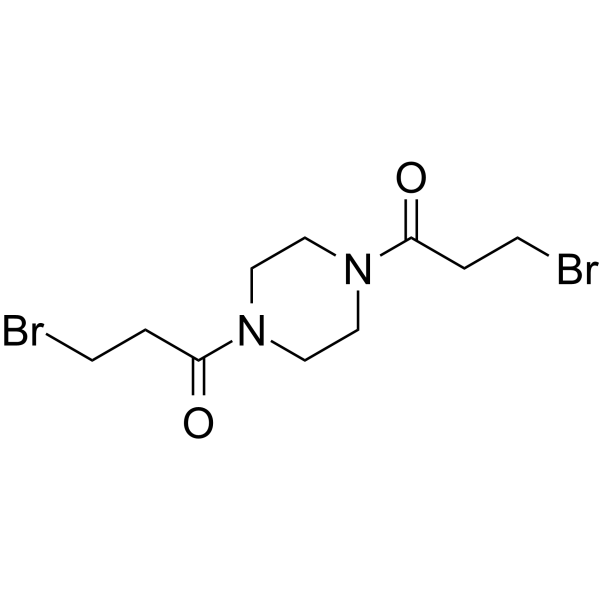
Pipobroman is a bromide derivative of piperazine and acts as an alkylating agent. Pipobroman plays its role by inhibiting DNA and RNA polymerase or by reducing pyrimidine nucleotide incorporation into DNA. Pipobroman can be used for the cancer research, including polycythemia vera, myeloproliferative neoplasm, and AML et.al .
|
-
-
- HY-164090
-
|
|
P2Y Receptor
|
Cardiovascular Disease
|
|
Adenosine 3'-phosphate 5'-phosphosulfate, an adenine nucleotide derivative, is a selective P2Y1 antagonist with no effect on P2Y2, P2Y4, or P2Y6 receptors. Adenosine 3'-phosphate 5'-phosphosulfate can competitive inhibit ADP-induced platelet aggregation, as well as the ability of ADP to cause shape change and increases in Ca 2+ in platelets, but had no effect on the inhibition of stimulated adenylate cyclase by ADP. Adenosine 3'-phosphate 5'-phosphosulfate is a co-substrate used for the sulfonation of glycans. Adenosine 3'-phosphate 5'-phosphosulfate can be used for Golgi-resident PAP-specific 3'-phosphatase-coupled sulfotransferase assays, which as donor substrate to transfer a sulfonate group .
|
-
-
- HY-113225S3
-
|
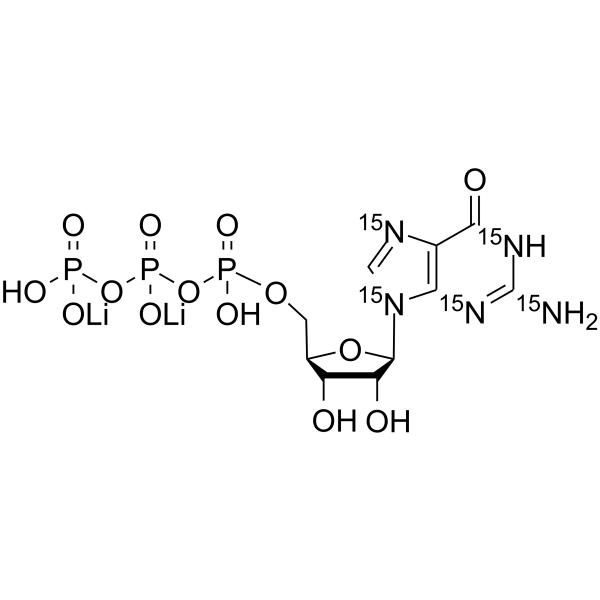
GTP-15N5 dilithium
|
Isotope-Labeled Compounds
Endogenous Metabolite
Mitosis
Apoptosis
DNA/RNA Synthesis
|
Infection
Cancer
|
|
Guanosine triphosphate- 15N5 (GTP- 15N5) dilithium is 15N labeled Guanosine triphosphate (HY-113225). Guanosine triphosphate dilithium (GTP) is a critical nucleotide and regulator of cellular metabolism. Guanosine triphosphate dilithium promotes ribosomal DNA localization, pre-rRNA transcription and ribosome biogenesis by binding to RNA polymerase I and GPN proteins (GPN1/3). Guanosine triphosphate dilithium links MYC-dependent ribosome biogenesis to nucleotide sufficiency, acts as a metabolic gatekeeper supporting protein synthesis, DNA/RNA synthesis and cellular signal transduction, while also participating in the physiological activities of pancreatic β-cells and serving as an oxidative substrate for reactive oxygen species. In small cell lung cancer with high MYC expression, Guanosine triphosphate dilithium accumulates through the IMPDH-driven synthetic pathway, thereby affecting apoptosis and mitotic processes. Guanosine triphosphate dilithium is used in the research of small cell lung cancer, hepatoblastoma and cellular metabolism .
|
-
-
- HY-113225S2
-
|
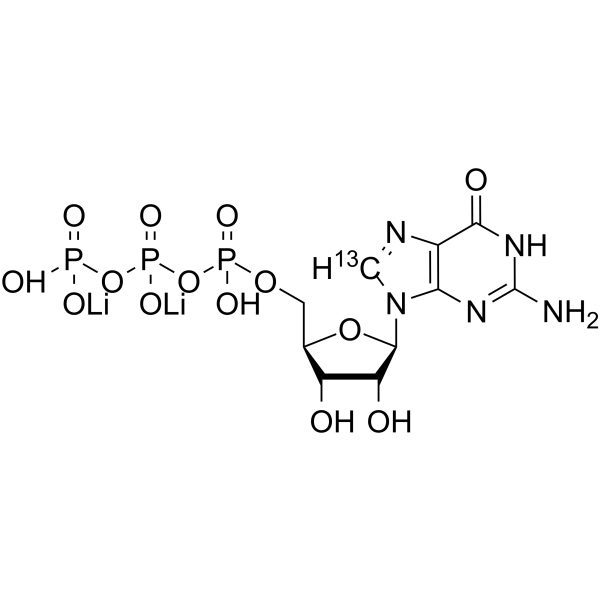
GTP-13C dilithium
|
Isotope-Labeled Compounds
Endogenous Metabolite
Mitosis
Apoptosis
DNA/RNA Synthesis
|
Infection
Cancer
|
|
Guanosine triphosphate- 13C (GTP- 13C) dilithium is 13C-labeled Guanosine triphosphate (HY-113225). Guanosine triphosphate (GTP) is a critical nucleotide and regulator of cellular metabolism. Guanosine triphosphate promotes ribosomal DNA localization, pre-rRNA transcription and ribosome biogenesis by binding to RNA polymerase I and GPN proteins (GPN1/3). Guanosine triphosphate links MYC-dependent ribosome biogenesis to nucleotide sufficiency, acts as a metabolic gatekeeper supporting protein synthesis, DNA/RNA synthesis and cellular signal transduction, while also participating in the physiological activities of pancreatic β-cells and serving as an oxidative substrate for reactive oxygen species. In small cell lung cancer with high MYC expression, Guanosine triphosphate accumulates through the IMPDH-driven synthetic pathway, thereby affecting apoptosis and mitotic processes. Guanosine triphosphate is used in the research of small cell lung cancer, hepatoblastoma and cellular metabolism .
|
-
-
- HY-113225S5
-
|
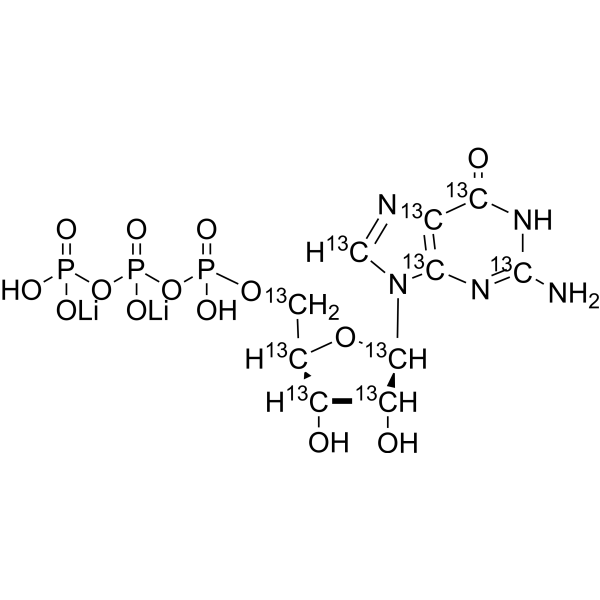
GTP-13C10 dilithium
|
Isotope-Labeled Compounds
Endogenous Metabolite
Mitosis
Apoptosis
DNA/RNA Synthesis
|
Infection
Cancer
|
|
Guanosine triphosphate- 13C10 (GTP- 13C10) dilithium is 13C-labeled Guanosine triphosphate (HY-113225). Guanosine triphosphate dilithium (GTP) is a critical nucleotide and regulator of cellular metabolism. Guanosine triphosphate dilithium promotes ribosomal DNA localization, pre-rRNA transcription and ribosome biogenesis by binding to RNA polymerase I and GPN proteins (GPN1/3). Guanosine triphosphate dilithium links MYC-dependent ribosome biogenesis to nucleotide sufficiency, acts as a metabolic gatekeeper supporting protein synthesis, DNA/RNA synthesis and cellular signal transduction, while also participating in the physiological activities of pancreatic β-cells and serving as an oxidative substrate for reactive oxygen species. In small cell lung cancer with high MYC expression, Guanosine triphosphate dilithium accumulates through the IMPDH-driven synthetic pathway, thereby affecting apoptosis and mitotic processes. Guanosine triphosphate dilithium is used in the research of small cell lung cancer, hepatoblastoma and cellular metabolism .
|
-
-
- HY-136647
-
|
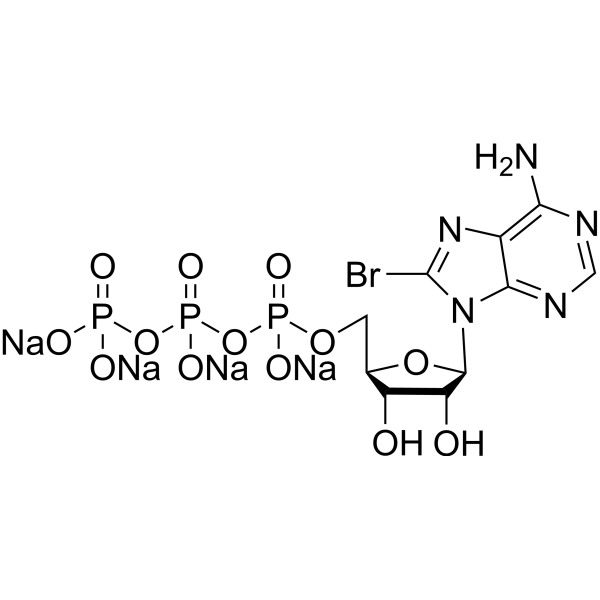
8-Br-ATP tetrasodium
|
Drug Derivative
|
Others
|
|
8-Bromoadenosine 5'-triphosphate tetrasodium (8-Br-ATP tetrasodium) is an ATP analogue. ATP is a central component of energy storage and metabolism in vivo .
|
-
-
- HY-150773S1
-
-
-
- HY-N9422
-
|
|
P2Y Receptor
|
Cardiovascular Disease
|
|
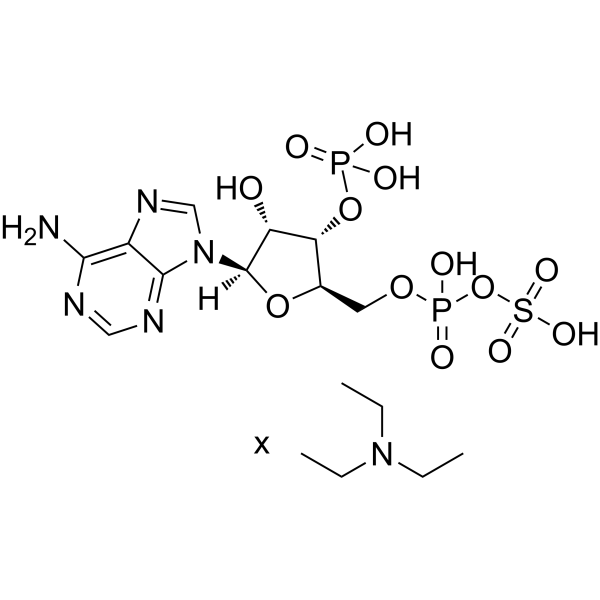
Adenosine 3'-phosphate 5'-phosphosulfate triethylamine, an adenine nucleotide derivative, is a selective P2Y1 antagonist with no effect on P2Y2, P2Y4, or P2Y6 receptors. Adenosine 3'-phosphate 5'-phosphosulfate triethylamine can competitive inhibit ADP-induced platelet aggregation, as well as the ability of ADP to cause shape change and increases in Ca 2+ in platelets, but had no effect on the inhibition of stimulated adenylate cyclase by ADP. Adenosine 3'-phosphate 5'-phosphosulfate triethylamine is a co-substrate used for the sulfonation of glycans. Adenosine 3'-phosphate 5'-phosphosulfate triethylamine can be used for Golgi-resident PAP-specific 3'-phosphatase-coupled sulfotransferase assays, which as donor substrate to transfer a sulfonate group .
|
-
-
- HY-W013159S
-
|
5′-dGMP-13C10,15N5 disodium
|
Isotope-Labeled Compounds
Endogenous Metabolite
Nucleoside Antimetabolite/Analog
|
Metabolic Disease
|
|
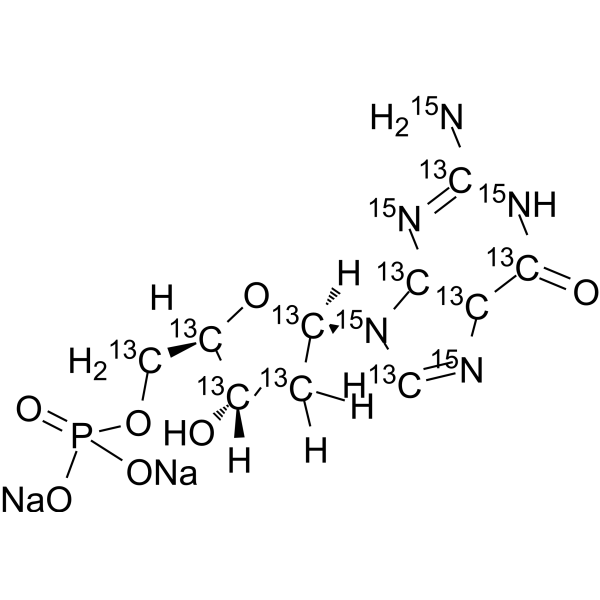
2'-Deoxyguanosine 5'-monophosphate- 13C10, 15N5 (dGMP- 13C10, 15N5) disodium is the 13C and 15N labeled 2'-Deoxyguanosine 5'-monophosphate disodium (HY-W013159). 2'-Deoxyguanosine 5'-monophosphate (5′-dGMP) disodium is a mononucleotide having guanine as the nucleobase. 2'-Deoxyguanosine 5'-monophosphate disodium is a reactant involved in analysis of self-assembling in solution and nucleation/growth of G-qudruplexes, nucleophilic trapping and reductive alkylation. 2'-Deoxyguanosine 5'-monophosphate disodium can be used as an oxidizable target. 2'-Deoxyguanosine 5'-monophosphate disodium is a nucleic acid guanosine triphosphate (GTP) derivative and is a nucleotide precursor used in DNA synthesis .
|
-
-
- HY-W700549
-
-
-
- HY-177787A
-
|
|
Nucleoside Antimetabolite/Analog
|
Others
|
2'-Deoxy-N-methyl-AMP ammonium is an N6-substituted adenine nucleotide derivative and a glycosyl donor. On one hand, 2'-Deoxy-N-methyl-AMP ammonium acts as a specific substrate for N6-methyl-AMP aminohydrolase, and it is catalytically converted to dIMP to participate in the nucleotide metabolic cycle. On the other hand, 2'-Deoxy-N-methyl-AMP ammonium also serves as a guanosine diphosphate (GDP)-linked fucose derivative donor, driving site-specific glycoconjugation of proteins under the mediation of α-1,3-fucosyltransferase. 2'-Deoxy-N-methyl-AMP ammonium is an important molecular tool for investigating the mechanisms of nucleotide modification and protein glycosylation .
|
-
-
- HY-113225S4
-
|
GTP-15N5,d14 dilithium
|
Isotope-Labeled Compounds
Endogenous Metabolite
Mitosis
Apoptosis
DNA/RNA Synthesis
|
Infection
Cancer
|
|
Guanosine triphosphate- 15N5,d14 (GTP- 15N5,d14) dilithium is deuterium and 15N labeled Guanosine triphosphate (HY-113225). Guanosine triphosphate dilithium (GTP) is a critical nucleotide and regulator of cellular metabolism. Guanosine triphosphate dilithium promotes ribosomal DNA localization, pre-rRNA transcription and ribosome biogenesis by binding to RNA polymerase I and GPN proteins (GPN1/3). Guanosine triphosphate dilithium links MYC-dependent ribosome biogenesis to nucleotide sufficiency, acts as a metabolic gatekeeper supporting protein synthesis, DNA/RNA synthesis and cellular signal transduction, while also participating in the physiological activities of pancreatic β-cells and serving as an oxidative substrate for reactive oxygen species. In small cell lung cancer with high MYC expression, Guanosine triphosphate dilithium accumulates through the IMPDH-driven synthetic pathway, thereby affecting apoptosis and mitotic processes. Guanosine triphosphate dilithium is used in the research of small cell lung cancer, hepatoblastoma and cellular metabolism .
|
-
-
- HY-112944A
-
|
CMP-NeuNAz sodium
|
Sialyltransferase
|
Infection
|
|
CMP-SiaNAz (CMP-NeuNAz) sodium is a sialic acid nucleotide sugar derivative. CMP-SiaNAz sodium is integrated into the glycosidic chain through the action of STs in the Golgi apparatus, forming SiaNAz substances. CMP-SiaNAz sodium can serve as a substrate for bacterial-derived sialic acid transferases and is used for chemical enzymatic labeling and imaging of cell surface glycosides .
|
-
-
- HY-D2772
-
|
|
Biochemical Assay Reagents
|
Others
|
|
5-TAMRA cadaverine can used to modify carboxylic acid group in the presence of activators (e.g. EDC, or DCC) or activated esters (e.g. NHS esters) through a stable amide bond. It also can be reversibly coupled to aldehydes and ketones to form a Schiff base – which can be reduced to a generate stable amine derivative by sodium borohydride (NaBH4) or sodium cyanoborohydride (NaCNH3).
Although the mixed isomers of 5(6)-TAMRA cadaverine is a preferred, routinely used orange-fluorescent dye for staining proteins, it is rearly used for labeling peptides and nucleotides. Purification of 5(6)-TAMRA labeled peptide and nucleotides might be troublesome due to significant signal broadening in HPLC purification. Peptides and nucleotides labeled with a single isomer TAMRA usually give better resolution in HPLC purification that is often required in the conjugation processes.
|
-
-
- HY-137749A
-
|
2'-Deoxy-3'-MANT-ADP trisodium
|
Biochemical Assay Reagents
|
Others
|
|
MANT-dADP (trisodium) (2'-Deoxy-3'-MANT-ADP (trisodium)) is a fluorescent nucleotide derivative, with an emission maximum of 453 nm upon excitation at 350 nm. MANT-dADP (trisodium) can decrease inositol phoshate formation in CHO-K1 cells that express human purinergic P2Y12 receptor. MANT-dADP (trisodium) can be studied in research on the interaction between cardiac troponin I and myofibrils .
|
-
-
- HY-W250153A
-
|
|
P2Y Receptor
|
Cardiovascular Disease
|
|
Adenosine 3'-phosphate 5'-phosphosulfate lithium hydrate, an adenine nucleotide derivative, is a selective P2Y1 antagonist with no effect on P2Y2, P2Y4, or P2Y6 receptors. Adenosine 3'-phosphate 5'-phosphosulfate lithium hydrate can competitive inhibit ADP-induced platelet aggregation, as well as the ability of ADP to cause shape change and increases in Ca 2+ in platelets, but had no effect on the inhibition of stimulated adenylate cyclase by ADP. Adenosine 3'-phosphate 5'-phosphosulfate lithium hydrate is a co-substrate used for the sulfonation of glycans. Adenosine 3'-phosphate 5'-phosphosulfate lithium hydrate can be used for Golgi-resident PAP-specific 3'-phosphatase-coupled sulfotransferase assays, which as donor substrate to transfer a sulfonate group .
|
-
-
- HY-159849
-
-
-
- HY-W114328
-
-
-
- HY-N7517
-
|
|
Nucleoside Antimetabolite/Analog
|
Others
|
|
Adenosine 5′-monophosphoramidate sodium is an adenosine derivative and can be used as an intermediate for nucleotide synthesis. Adenosine 5′-monophosphoramidate has a significant effect on the accumulation of cyclic AMP .
|
-
-
- HY-174295
-
|
|
Drug Derivative
|
Others
|
|
Guanine nucleotide imidazolide intermediate (Compound 19e) disodium is a guanine nucleotide derivative that can be used to synthesize modified RNA .
|
-
-
- HY-131838A
-
|
6-AB-ADP trisodium
|
Nucleoside Antimetabolite/Analog
DNA/RNA Synthesis
|
Others
|
|
N6-4-aminobutyl-ADP (6-AB-ADP) trisodium is an ADP derivative that can be used as a nucleotide mimetic or coupling agent for labeling enzyme substrates (such as kinases), constructing biological probes, or functionalizing nucleotide chains .
|
-
-
- HY-138587
-
-
-
- HY-138588
-
-
-
- HY-134382
-
|
7-Deaza-2'-deoxyadenosine-5'-O-diphosphate
|
Nucleoside Antimetabolite/Analog
|
Others
|
|
7-CH-dADP (7-Deaza-2'-deoxyadenosine-5'-O-diphosphate) is a dehydroxylated and deaminated derivative of the nucleotide ADP.
|
-
-
- HY-134382A
-
|
7-Deaza-2'-deoxyadenosine-5'-O-diphosphate trisodium
|
Nucleoside Antimetabolite/Analog
|
Others
|
|
7-CH-dADP (7-Deaza-2'-deoxyadenosine-5'-O-diphosphate) trisodium is a dehydroxylated and deaminated derivative of the nucleotide ADP.
|
-
-
- HY-171020
-
|
|
Endogenous Metabolite
|
Others
|
|
8-Nitro-2'3'cGMP is a cyclic nucleotide derivative. 8-Nitro-2'3'cGMP is composed of 8-Nitro-GMP, ribose and phosphoric acid.
|
-
-
- HY-134280
-
|
Nicotinamide 8-Br-hypoxanthine dinucleotide
|
Drug Derivative
|
Others
|
|
8-Br-NHD+ (Nicotinamide 8-Br-hypoxanthine dinucleotide) is a derivative of NAD+ (nicotinamide adenine dinucleotide) that acts as a potential substrate, competitive inhibitor or modulator of enzymes that interact with β-NAD+. 8-Br-NHD+ can be used to synthesize a cyclic ADP nucleotide (cADPR) analog .
|
-
-
- HY-B0128R
-
|
Diprophylline (Standard)
|
Reference Standards
Adenosine Receptor
Phosphodiesterase (PDE)
|
Cardiovascular Disease
Inflammation/Immunology
|
|
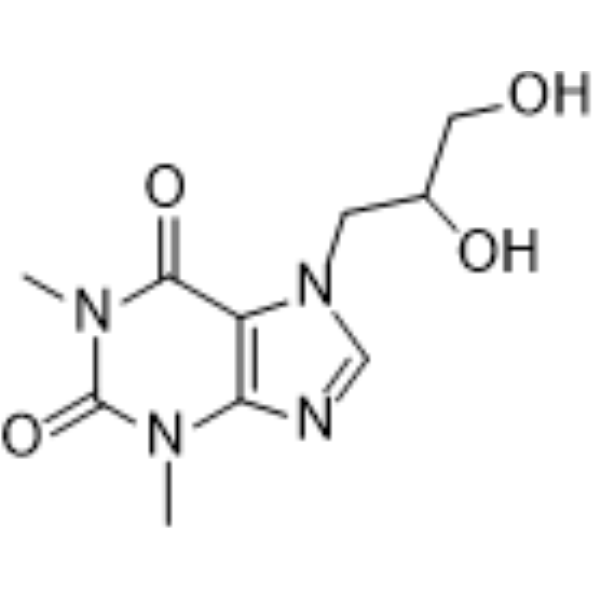
Diphylline (Standard) is the analytical standard of Diphylline. This product is intended for research and analytical applications. Diphylline (Diprophylline) is a potent A1/A2 adenosine receptor antagonist and cyclic nucleotide phosphodiesterase inhibitor. Diphylline, a xanthine derivative, is a bronchodilator and vasodilator agent and has the potential for chronic bronchitis and emphysema .
|
-
-
- HY-131776A
-
|
2-Chloroadenosine 5′-diphosphate sodium
|
Adenylate Cyclase
HSP
|
Cardiovascular Disease
|
|
2-Chloro-ADP (2-Chloroadenosine 5′-diphosphate) sodium is a Adenosine 5'-diphosphate (ADP; HY-W010918) derivative that induces human platelet aggregation and inhibits stimulated adenylate cyclase . 2-Chloro-ADP sodium inhibits mortalin nucleotide-binding domain (NBD) with a Ki of 45.05 μM .
|
-
-
- HY-134245
-
|
Tubercidin 5'-phosphate; 7-Deaza-AMP
|
Nucleoside Antimetabolite/Analog
|
Others
|
|
7-Deazaadenosine 5'-phosphate (Tubercidin 5'-phosphate; 7-Deaza-AMP) is a potential substrate or competitive inhibitor of enzymes that interact with 5′-adenylic acid monophosphate. As a nucleotide derivative, 7-Deazaadenosine 5'-phosphate can regulate cellular functions by affecting intracellular signaling pathways, especially in signaling involving AMP .
|
-
-
- HY-131776
-
|
2-Chloroadenosine 5′-diphosphate
|
Adenylate Cyclase
HSP
|
Cardiovascular Disease
|
|
2-Chloro-ADP (2-Chloroadenosine 5′-diphosphate) sis a Adenosine 5'-diphosphate (ADP; HY-W010918) derivative that induces human platelet aggregation and inhibits stimulated adenylate cyclase . 2-Chloro-ADP inhibits mortalin nucleotide-binding domain (NBD) with a Ki of 45.05 μM .
|
-
-
- HY-16398R
-
|
|
DNA Alkylator/Crosslinker
DNA/RNA Synthesis
Reference Standards
|
Cancer
|
|
Pipobroman (Standard) is the analytical standard of Pipobroman. This product is intended for research and analytical applications. Pipobroman is a bromide derivative of piperazine and acts as an alkylating agent. Pipobroman plays its role by inhibiting DNA and RNA polymerase or by reducing pyrimidine nucleotide incorporation into DNA. Pipobroman can be used for the cancer research, including polycythemia vera, myeloproliferative neoplasm, and AML et.al .
|
-
-
- HY-131799A
-
|
|
Nucleoside Antimetabolite/Analog
|
Others
|
|
3'-Amino-3'-deoxyadenosine-5'-O-diphosphate sodium is an amine-modified nucleotide that can be used in the synthesis of other active compounds. The coumarin-labeled derivatives of 3'-Amino-3'-deoxyadenosine-5'-O-diphosphate sodium exhibit significant fluorescence changes when interacting with myosin and can mimic the function of natural ADP .
|
-
-
- HY-W784572A
-
|
3'-O-Acetyl-2'-deoxyadenosine-5'-O-triphosphate sodium
|
DNA/RNA Synthesis
|
Others
|
|
3'-O-Acetyl-2'-deoxyadenosine-5'-O-triphosphate (sodium) (3'-O-Acetyl-dATP (sodium)) is an acetylated derivative of the purine nucleotide 2'-deoxyadenosine-5'-triphosphate (HY-136648). 3'-O-Acetyl-2'-deoxyadenosine-5'-O-triphosphate (sodium) can been used as a DNA synthesis chain termination reagent in Sanger sequencing.
|
-
-
- HY-15794G
-
|
Methoxymorpholinyl doxorubicin; FCE 23762; PNU 152243
|
G-quadruplex
|
Cancer
|
|
Nemorubicin (Methoxymorpholinyl doxorubicin) GMP is a GMP-class Nemorubicin (HY-15794). Nemorubicin is a Doxorubicin derivative with potent antitumor activity. Nemorubicin is highly cytotoxic to a variety of tumor cell lines presenting a multidrug-resistant phenotype. Nemorubicin not only intercalate into the duplex DNA, but also result in significant ligands for G-quadruplex DNA segments, stabilizing their structure. Nemorubicin requirs an intact nucleotide excision repair (NER) system to exert its activity .
|
-
-
- HY-138844
-
|
|
Eukaryotic Initiation Factor (eIF)
p38 MAPK
JNK
Apoptosis
|
Cancer
|
|
3-AP-Me is a dimethyl derivative of the nucleotide reductase inhibitor 3-AP (SML0568). 3-AP-Me can activate the endoplasmic reticulum (ER) stress pathway by promoting the phosphorylation of eIF2α and increasing the gene expression of transcription factors ATF4 and ATF6, leading to cell apoptosis. Additionally, 3-AP-Me can activate the stress kinases c-Jun N-terminal kinase (JNK) and p38 mitogen-activated protein kinases. 3-AP-Me also leads to the upregulation of the spliced mRNA variant XBP1, can be used in cancer research .
|
-
-
- HY-104014R
-
|
|
Reference Standards
DNA/RNA Synthesis
Nucleoside Antimetabolite/Analog
|
Others
|
|
DMT-2'O-MOE-rG(ib) Phosphoramidite (Standard) is the analytical standard of DMT-2'O-MOE-rG(ib) Phosphoramidite (HY-104014). This product is intended for research and analytical applications. DMT-2'O-MOE-rG(ib) Phosphoramidite belongs to cyanoethyl-protected nucleoside phosphoramidites. DMT-2'O-MOE-rG(ib) Phosphoramidite is a derivative of nucleotide and guanosine. DMT-2'O-MOE-rG(ib) Phosphoramidite can be used for the stereochemical synthesis of phosphorothioate oligonucleotides .
|
-
-
- HY-164903A
-
|
|
Biochemical Assay Reagents
|
Others
|
|
UDP-D-GalNAlk disodium is an alkyne-modified UDP sugar and unnatural sugar nucleotide. UDP-D-GalNAlk disodium allows in vitro synthesis via mutant AGX1 enzyme. UDP-D-GalNAlk disodium serves as a substrate for engineered GalNAc-T enzymes, enabling the selective installation of alkyne-modified D-GalNAc derivatives in glycoproteomes. UDP-D-GalNAlk disodium is a biochemical reagent used as a biological material or organic compound for life science research .
|
-
-
- HY-137615C
-
-
-
- HY-172578
-
|
|
Drug Derivative
|
Others
|
|
8-AHT-GTP tetrasodium is a aminohexylthiol-substituted derivative of Guanosine triphosphate (GTP) (HY-113225). Guanosine triphosphate is a native nucleotide .
|
-
-
- HY-176023
-
|
3'-O-Monosuccinyl dATP triethylammonium
|
Drug Derivative
|
Others
|
|
2'-Deoxy-3'-O-monosuccinyladenosine-5'-O-triphosphate (3'-O-monosuccinyl dATP) triethylammonium is a derivative of the purine nucleotide 2'-deoxyadenosine-5'-O-triphosphate .
|
-
-
- HY-176024
-
|
2'-Deoxy-3'-IVal-dATP triethylammonium
|
Drug Derivative
|
Others
|
|
2'-Deoxy-3'-O-isovaleryladenosine-5'-O-triphosphate (2'-Deoxy-3'-IVal-dATP) triethylammonium is a derivative of the purine nucleotide 2'-deoxyadenosine-5'-O-triphosphate (dATP; HY-136648) .
|
-
-
- HY-164903
-
|
|
Biochemical Assay Reagents
|
Others
|
|
UDP-D-GalNAlk is an alkyne-modified UDP sugar and unnatural sugar nucleotide. UDP-D-GalNAlk allows in vitro synthesis via mutant AGX1 enzyme. UDP-D-GalNAlk serves as a substrate for engineered GalNAc-T enzymes, enabling the selective installation of alkyne-modified D-GalNAc derivatives in glycoproteomes. UDP-D-GalNAlk is a biochemical reagent used as a biological material or organic compound for life science research .
|
-
- HY-162844
-
|
|
Drug Derivative
IFNAR
NF-κB
Interleukin Related
TNF Receptor
|
Cancer
|
|
CDN-3 (Compound 10) is a cyclic dideoxy nucleotide derivative. CDN-3 can stimulate the production of IFN-β, activate the IRF-3 and NF-κB pathways, and induce the production of type I interferons as well as pro-inflammatory factors such as IL-6 and TNF-α. CDN-3 can inhibit cancer cells proliferation. CDN-3 can be used for research of colon cancer .
|
-
- HY-174162A
-
|
2'-Methyl GTP sodium
|
Nucleoside Antimetabolite/Analog
DNA/RNA Synthesis
|
Infection
|
|
2'-O-Methylguanosine-5'-O-triphosphate sodium (2'-Methyl GTP sodium), a methylated derivative of Guanosine 5'-triphosphate (HY-W010737), is a HCV NS5B RNA-dependent RNA polymerase inhibitor. 2'-O-Methylguanosine-5'-O-triphosphate sodium is a nucleotide competitor of GTP and acts as a chain terminator to inhibit RNA synthesis. 2'-O-Methylguanosine-5'-O-triphosphate sodium can be used for HCV infections research .
|
-
- HY-W013159R
-
|
5′-dGMP disodium (Standard)
|
Endogenous Metabolite
Reference Standards
Nucleoside Antimetabolite/Analog
|
Metabolic Disease
|
|
2'-Deoxyguanosine 5'-monophosphate (disodium) (Standard) is the analytical standard of 2'-Deoxyguanosine 5'-monophosphate (disodium) (HY-W013159). This product is intended for research and analytical applications. 2'-Deoxyguanosine 5'-monophosphate (5′-dGMP) disodium is a mononucleotide having guanine as the nucleobase. 2'-Deoxyguanosine 5'-monophosphate disodium is a reactant involved in analysis of self-assembling in solution and nucleation/growth of G-qudruplexes, nucleophilic trapping and reductive alkylation. 2'-Deoxyguanosine 5'-monophosphate disodium can be used as an oxidizable target. 2'-Deoxyguanosine 5'-monophosphate disodium is a nucleic acid guanosine triphosphate (GTP) derivative and is a nucleotide precursor used in DNA synthesis .
|
-
| Cat. No. |
Product Name |
Type |
-
- HY-D2772
-
|
|
Fluorescent Dye
|
|
5-TAMRA cadaverine can used to modify carboxylic acid group in the presence of activators (e.g. EDC, or DCC) or activated esters (e.g. NHS esters) through a stable amide bond. It also can be reversibly coupled to aldehydes and ketones to form a Schiff base – which can be reduced to a generate stable amine derivative by sodium borohydride (NaBH4) or sodium cyanoborohydride (NaCNH3).
Although the mixed isomers of 5(6)-TAMRA cadaverine is a preferred, routinely used orange-fluorescent dye for staining proteins, it is rearly used for labeling peptides and nucleotides. Purification of 5(6)-TAMRA labeled peptide and nucleotides might be troublesome due to significant signal broadening in HPLC purification. Peptides and nucleotides labeled with a single isomer TAMRA usually give better resolution in HPLC purification that is often required in the conjugation processes.
|
-
- HY-15794G
-
|
Methoxymorpholinyl doxorubicin; FCE 23762; PNU 152243
|
Fluorescent Dye
|
|
Nemorubicin (Methoxymorpholinyl doxorubicin) GMP is a GMP-class Nemorubicin (HY-15794). Nemorubicin is a Doxorubicin derivative with potent antitumor activity. Nemorubicin is highly cytotoxic to a variety of tumor cell lines presenting a multidrug-resistant phenotype. Nemorubicin not only intercalate into the duplex DNA, but also result in significant ligands for G-quadruplex DNA segments, stabilizing their structure. Nemorubicin requirs an intact nucleotide excision repair (NER) system to exert its activity .
|
| Cat. No. |
Product Name |
Type |
-
- HY-W250153
-
|
|
Biochemical Assay Reagents
|
|
Adenosine 3'-phosphate 5'-phosphosulfate lithium, an adenine nucleotide derivative, is a selective P2Y1 antagonist with no effect on P2Y2, P2Y4, or P2Y6 receptors. Adenosine 3'-phosphate 5'-phosphosulfate lithium can competitive inhibit ADP-induced platelet aggregation, as well as the ability of ADP to cause shape change and increases in Ca 2+ in platelets, but had no effect on the inhibition of stimulated adenylate cyclase by ADP. Adenosine 3'-phosphate 5'-phosphosulfate lithium is a co-substrate used for the sulfonation of glycans. Adenosine 3'-phosphate 5'-phosphosulfate lithium can be used for Golgi-resident PAP-specific 3'-phosphatase-coupled sulfotransferase assays, which as donor substrate to transfer a sulfonate group .
|
-
- HY-W250153A
-
|
|
Biochemical Assay Reagents
|
|
Adenosine 3'-phosphate 5'-phosphosulfate lithium hydrate, an adenine nucleotide derivative, is a selective P2Y1 antagonist with no effect on P2Y2, P2Y4, or P2Y6 receptors. Adenosine 3'-phosphate 5'-phosphosulfate lithium hydrate can competitive inhibit ADP-induced platelet aggregation, as well as the ability of ADP to cause shape change and increases in Ca 2+ in platelets, but had no effect on the inhibition of stimulated adenylate cyclase by ADP. Adenosine 3'-phosphate 5'-phosphosulfate lithium hydrate is a co-substrate used for the sulfonation of glycans. Adenosine 3'-phosphate 5'-phosphosulfate lithium hydrate can be used for Golgi-resident PAP-specific 3'-phosphatase-coupled sulfotransferase assays, which as donor substrate to transfer a sulfonate group .
|
-
- HY-15794G
-
|
Methoxymorpholinyl doxorubicin; FCE 23762; PNU 152243
|
Biochemical Assay Reagents
|
|
Nemorubicin (Methoxymorpholinyl doxorubicin) GMP is a GMP-class Nemorubicin (HY-15794). Nemorubicin is a Doxorubicin derivative with potent antitumor activity. Nemorubicin is highly cytotoxic to a variety of tumor cell lines presenting a multidrug-resistant phenotype. Nemorubicin not only intercalate into the duplex DNA, but also result in significant ligands for G-quadruplex DNA segments, stabilizing their structure. Nemorubicin requirs an intact nucleotide excision repair (NER) system to exert its activity .
|
| Cat. No. |
Product Name |
Category |
Target |
Chemical Structure |
-
- HY-W013159
-
-
-
- HY-W013159R
-
|
5′-dGMP disodium (Standard)
|
Structural Classification
Natural Products
Endogenous metabolite
Source Classification
|
Endogenous Metabolite
Reference Standards
Nucleoside Antimetabolite/Analog
|
|
2'-Deoxyguanosine 5'-monophosphate (disodium) (Standard) is the analytical standard of 2'-Deoxyguanosine 5'-monophosphate (disodium) (HY-W013159). This product is intended for research and analytical applications. 2'-Deoxyguanosine 5'-monophosphate (5′-dGMP) disodium is a mononucleotide having guanine as the nucleobase. 2'-Deoxyguanosine 5'-monophosphate disodium is a reactant involved in analysis of self-assembling in solution and nucleation/growth of G-qudruplexes, nucleophilic trapping and reductive alkylation. 2'-Deoxyguanosine 5'-monophosphate disodium can be used as an oxidizable target. 2'-Deoxyguanosine 5'-monophosphate disodium is a nucleic acid guanosine triphosphate (GTP) derivative and is a nucleotide precursor used in DNA synthesis .
|
-
| Cat. No. |
Product Name |
Chemical Structure |
-
- HY-113225S3
-
|
|
|
Guanosine triphosphate- 15N5 (GTP- 15N5) dilithium is 15N labeled Guanosine triphosphate (HY-113225). Guanosine triphosphate dilithium (GTP) is a critical nucleotide and regulator of cellular metabolism. Guanosine triphosphate dilithium promotes ribosomal DNA localization, pre-rRNA transcription and ribosome biogenesis by binding to RNA polymerase I and GPN proteins (GPN1/3). Guanosine triphosphate dilithium links MYC-dependent ribosome biogenesis to nucleotide sufficiency, acts as a metabolic gatekeeper supporting protein synthesis, DNA/RNA synthesis and cellular signal transduction, while also participating in the physiological activities of pancreatic β-cells and serving as an oxidative substrate for reactive oxygen species. In small cell lung cancer with high MYC expression, Guanosine triphosphate dilithium accumulates through the IMPDH-driven synthetic pathway, thereby affecting apoptosis and mitotic processes. Guanosine triphosphate dilithium is used in the research of small cell lung cancer, hepatoblastoma and cellular metabolism .
|
-
-
- HY-113225S2
-
|
|
|
Guanosine triphosphate- 13C (GTP- 13C) dilithium is 13C-labeled Guanosine triphosphate (HY-113225). Guanosine triphosphate (GTP) is a critical nucleotide and regulator of cellular metabolism. Guanosine triphosphate promotes ribosomal DNA localization, pre-rRNA transcription and ribosome biogenesis by binding to RNA polymerase I and GPN proteins (GPN1/3). Guanosine triphosphate links MYC-dependent ribosome biogenesis to nucleotide sufficiency, acts as a metabolic gatekeeper supporting protein synthesis, DNA/RNA synthesis and cellular signal transduction, while also participating in the physiological activities of pancreatic β-cells and serving as an oxidative substrate for reactive oxygen species. In small cell lung cancer with high MYC expression, Guanosine triphosphate accumulates through the IMPDH-driven synthetic pathway, thereby affecting apoptosis and mitotic processes. Guanosine triphosphate is used in the research of small cell lung cancer, hepatoblastoma and cellular metabolism .
|
-
-
- HY-113225S5
-
|
|
|
Guanosine triphosphate- 13C10 (GTP- 13C10) dilithium is 13C-labeled Guanosine triphosphate (HY-113225). Guanosine triphosphate dilithium (GTP) is a critical nucleotide and regulator of cellular metabolism. Guanosine triphosphate dilithium promotes ribosomal DNA localization, pre-rRNA transcription and ribosome biogenesis by binding to RNA polymerase I and GPN proteins (GPN1/3). Guanosine triphosphate dilithium links MYC-dependent ribosome biogenesis to nucleotide sufficiency, acts as a metabolic gatekeeper supporting protein synthesis, DNA/RNA synthesis and cellular signal transduction, while also participating in the physiological activities of pancreatic β-cells and serving as an oxidative substrate for reactive oxygen species. In small cell lung cancer with high MYC expression, Guanosine triphosphate dilithium accumulates through the IMPDH-driven synthetic pathway, thereby affecting apoptosis and mitotic processes. Guanosine triphosphate dilithium is used in the research of small cell lung cancer, hepatoblastoma and cellular metabolism .
|
-
-
- HY-150773S1
-
|
|
|
Guanosine triphosphate-d14 (GTP-d14) dilithium is a deuterium labeled Guanosine triphosphate (HY-113225). Guanosine triphosphate is a native nucleotide. The derivatives of GTP may be used as specific inhibitors against COVID-19 .
|
-
-
- HY-W013159S
-
|
|
|
2'-Deoxyguanosine 5'-monophosphate- 13C10, 15N5 (dGMP- 13C10, 15N5) disodium is the 13C and 15N labeled 2'-Deoxyguanosine 5'-monophosphate disodium (HY-W013159). 2'-Deoxyguanosine 5'-monophosphate (5′-dGMP) disodium is a mononucleotide having guanine as the nucleobase. 2'-Deoxyguanosine 5'-monophosphate disodium is a reactant involved in analysis of self-assembling in solution and nucleation/growth of G-qudruplexes, nucleophilic trapping and reductive alkylation. 2'-Deoxyguanosine 5'-monophosphate disodium can be used as an oxidizable target. 2'-Deoxyguanosine 5'-monophosphate disodium is a nucleic acid guanosine triphosphate (GTP) derivative and is a nucleotide precursor used in DNA synthesis .
|
-
-
- HY-113225S4
-
|
|
|
Guanosine triphosphate- 15N5,d14 (GTP- 15N5,d14) dilithium is deuterium and 15N labeled Guanosine triphosphate (HY-113225). Guanosine triphosphate dilithium (GTP) is a critical nucleotide and regulator of cellular metabolism. Guanosine triphosphate dilithium promotes ribosomal DNA localization, pre-rRNA transcription and ribosome biogenesis by binding to RNA polymerase I and GPN proteins (GPN1/3). Guanosine triphosphate dilithium links MYC-dependent ribosome biogenesis to nucleotide sufficiency, acts as a metabolic gatekeeper supporting protein synthesis, DNA/RNA synthesis and cellular signal transduction, while also participating in the physiological activities of pancreatic β-cells and serving as an oxidative substrate for reactive oxygen species. In small cell lung cancer with high MYC expression, Guanosine triphosphate dilithium accumulates through the IMPDH-driven synthetic pathway, thereby affecting apoptosis and mitotic processes. Guanosine triphosphate dilithium is used in the research of small cell lung cancer, hepatoblastoma and cellular metabolism .
|
-
| Cat. No. |
Product Name |
|
Classification |
-
- HY-104014
-
|
|
|
Phosphoramidites
Guanine
|
|
DMT-2'O-MOE-rG(ib) Phosphoramidite belongs to cyanoethyl-protected nucleoside phosphoramidites. DMT-2'O-MOE-rG(ib) Phosphoramidite is a derivative of nucleotide and guanosine. DMT-2'O-MOE-rG(ib) Phosphoramidite can be used for the stereochemical synthesis of phosphorothioate oligonucleotides .
|
-
- HY-W013159
-
|
5′-dGMP disodium
|
|
Nucleotide Analogs
|
|
2'-Deoxyguanosine 5'-monophosphate (5′-dGMP) disodium is a mononucleotide having guanine as the nucleobase. 2'-Deoxyguanosine 5'-monophosphate disodium is a reactant involved in analysis of self-assembling in solution and nucleation/growth of G-qudruplexes, nucleophilic trapping and reductive alkylation. 2'-Deoxyguanosine 5'-monophosphate disodium can be used as an oxidizable target. 2'-Deoxyguanosine 5'-monophosphate disodium is a nucleic acid guanosine triphosphate (GTP) derivative and is a nucleotide precursor used in DNA synthesis .
|
-
- HY-W250153
-
|
|
|
Nucleotide Analogs
Adenine Nucleotide
|
|
Adenosine 3'-phosphate 5'-phosphosulfate lithium, an adenine nucleotide derivative, is a selective P2Y1 antagonist with no effect on P2Y2, P2Y4, or P2Y6 receptors. Adenosine 3'-phosphate 5'-phosphosulfate lithium can competitive inhibit ADP-induced platelet aggregation, as well as the ability of ADP to cause shape change and increases in Ca 2+ in platelets, but had no effect on the inhibition of stimulated adenylate cyclase by ADP. Adenosine 3'-phosphate 5'-phosphosulfate lithium is a co-substrate used for the sulfonation of glycans. Adenosine 3'-phosphate 5'-phosphosulfate lithium can be used for Golgi-resident PAP-specific 3'-phosphatase-coupled sulfotransferase assays, which as donor substrate to transfer a sulfonate group .
|
-
- HY-W131753
-
|
N-Acetyl-2′-deoxy-2′-fluorocytidine
|
|
Nucleoside Analogs
Cytidine
|
|
2'-F-Ac-C (N-Acetyl-2′-deoxy-2′-fluorocytidine) is a nucleoside analog that can be used to synthesize oligoribonucleotides .
|
-
- HY-164090
-
|
|
|
Nucleotide Analogs
Adenine Nucleotide
|
|
Adenosine 3'-phosphate 5'-phosphosulfate, an adenine nucleotide derivative, is a selective P2Y1 antagonist with no effect on P2Y2, P2Y4, or P2Y6 receptors. Adenosine 3'-phosphate 5'-phosphosulfate can competitive inhibit ADP-induced platelet aggregation, as well as the ability of ADP to cause shape change and increases in Ca 2+ in platelets, but had no effect on the inhibition of stimulated adenylate cyclase by ADP. Adenosine 3'-phosphate 5'-phosphosulfate is a co-substrate used for the sulfonation of glycans. Adenosine 3'-phosphate 5'-phosphosulfate can be used for Golgi-resident PAP-specific 3'-phosphatase-coupled sulfotransferase assays, which as donor substrate to transfer a sulfonate group .
|
-
- HY-136647
-
|
8-Br-ATP tetrasodium
|
|
Nucleotide Analogs
Adenine Nucleotide
|
|
8-Bromoadenosine 5'-triphosphate tetrasodium (8-Br-ATP tetrasodium) is an ATP analogue. ATP is a central component of energy storage and metabolism in vivo .
|
-
- HY-W700549
-
-
- HY-177787A
-
|
|
|
Nucleotide Analogs
|
2'-Deoxy-N-methyl-AMP ammonium is an N6-substituted adenine nucleotide derivative and a glycosyl donor. On one hand, 2'-Deoxy-N-methyl-AMP ammonium acts as a specific substrate for N6-methyl-AMP aminohydrolase, and it is catalytically converted to dIMP to participate in the nucleotide metabolic cycle. On the other hand, 2'-Deoxy-N-methyl-AMP ammonium also serves as a guanosine diphosphate (GDP)-linked fucose derivative donor, driving site-specific glycoconjugation of proteins under the mediation of α-1,3-fucosyltransferase. 2'-Deoxy-N-methyl-AMP ammonium is an important molecular tool for investigating the mechanisms of nucleotide modification and protein glycosylation .
|
-
- HY-153846
-
|
|
|
Aptamers
|
|
RNA Aptamer Mango Ⅰ (sodium) consists of 39 nucleotides and has an exceptionally high affinity to TO1-biotin (a thiazole orange derivative fluorophore). RNA Aptamer Mango Ⅰ (sodium) can be used to visualize RNA expression or localization in live cells.
|
-
- HY-W250153A
-
|
|
|
Nucleotide Analogs
Adenine Nucleotide
|
|
Adenosine 3'-phosphate 5'-phosphosulfate lithium hydrate, an adenine nucleotide derivative, is a selective P2Y1 antagonist with no effect on P2Y2, P2Y4, or P2Y6 receptors. Adenosine 3'-phosphate 5'-phosphosulfate lithium hydrate can competitive inhibit ADP-induced platelet aggregation, as well as the ability of ADP to cause shape change and increases in Ca 2+ in platelets, but had no effect on the inhibition of stimulated adenylate cyclase by ADP. Adenosine 3'-phosphate 5'-phosphosulfate lithium hydrate is a co-substrate used for the sulfonation of glycans. Adenosine 3'-phosphate 5'-phosphosulfate lithium hydrate can be used for Golgi-resident PAP-specific 3'-phosphatase-coupled sulfotransferase assays, which as donor substrate to transfer a sulfonate group .
|
-
- HY-159849
-
|
|
|
Nucleoside Analogs
Uridine
|
|
Cytidylyl-(3′,5′)-uridine is a dinucleotide derivative that can be used to study nucleotide metabolism .
|
-
- HY-W114328
-
|
N-Acetyl-5'-O-(4,4'-dimethoxytrityl)-2'-O-methylcytidine
|
|
Phosphoramidites
Cytosine
|
|
DMT-OMe-rC(Ac) (N-Acetyl-5'-O-(4,4'-dimethoxytrityl)-2'-O-methylcytidine) is a nucleotide derivative that can be used to synthesize oligoribonucleotides .
|
-
- HY-N7517
-
|
|
|
Nucleotide Analogs
Adenine Nucleotide
|
|
Adenosine 5′-monophosphoramidate sodium is an adenosine derivative and can be used as an intermediate for nucleotide synthesis. Adenosine 5′-monophosphoramidate has a significant effect on the accumulation of cyclic AMP .
|
-
- HY-134245
-
|
Tubercidin 5'-phosphate; 7-Deaza-AMP
|
|
Nucleotide Analogs
Adenine Nucleotide
|
|
7-Deazaadenosine 5'-phosphate (Tubercidin 5'-phosphate; 7-Deaza-AMP) is a potential substrate or competitive inhibitor of enzymes that interact with 5′-adenylic acid monophosphate. As a nucleotide derivative, 7-Deazaadenosine 5'-phosphate can regulate cellular functions by affecting intracellular signaling pathways, especially in signaling involving AMP .
|
-
- HY-176023
-
|
3'-O-Monosuccinyl dATP triethylammonium
|
|
Nucleotide Analogs
Adenine Nucleotide
|
|
2'-Deoxy-3'-O-monosuccinyladenosine-5'-O-triphosphate (3'-O-monosuccinyl dATP) triethylammonium is a derivative of the purine nucleotide 2'-deoxyadenosine-5'-O-triphosphate .
|
-
- HY-176024
-
|
2'-Deoxy-3'-IVal-dATP triethylammonium
|
|
Nucleotide Analogs
Adenine Nucleotide
|
|
2'-Deoxy-3'-O-isovaleryladenosine-5'-O-triphosphate (2'-Deoxy-3'-IVal-dATP) triethylammonium is a derivative of the purine nucleotide 2'-deoxyadenosine-5'-O-triphosphate (dATP; HY-136648) .
|
| Cat. No. |
Product Name |
Target |
Research Areas |
Chemical Structure |
-
- HY-15794G
-
|
Methoxymorpholinyl doxorubicin; FCE 23762; PNU 152243
|
G-quadruplex
|
Cancer
|
|
Nemorubicin (Methoxymorpholinyl doxorubicin) GMP is a GMP-class Nemorubicin (HY-15794). Nemorubicin is a Doxorubicin derivative with potent antitumor activity. Nemorubicin is highly cytotoxic to a variety of tumor cell lines presenting a multidrug-resistant phenotype. Nemorubicin not only intercalate into the duplex DNA, but also result in significant ligands for G-quadruplex DNA segments, stabilizing their structure. Nemorubicin requirs an intact nucleotide excision repair (NER) system to exert its activity .
|
-
Your information is safe with us. * Required Fields.
Inquiry Information
- Product Name:
- Cat. No.:
- Quantity:
- MCE Japan Authorized Agent:

