1. Search Result
Search Result
Pathways Recommended: MAPK/ERK Pathway
Results for "

pathway analysis

" in MedChemExpress (MCE) Product Catalog:

13

Inhibitors & Agonists

1

Screening Libraries

1

Biochemical Assay Reagents

1

Peptides

4

Natural
Products

1

Isotope-Labeled Compounds

Cat. No. Product Name Target Research Areas Chemical Structure
  • HY-N6614

    VD/VDR Others
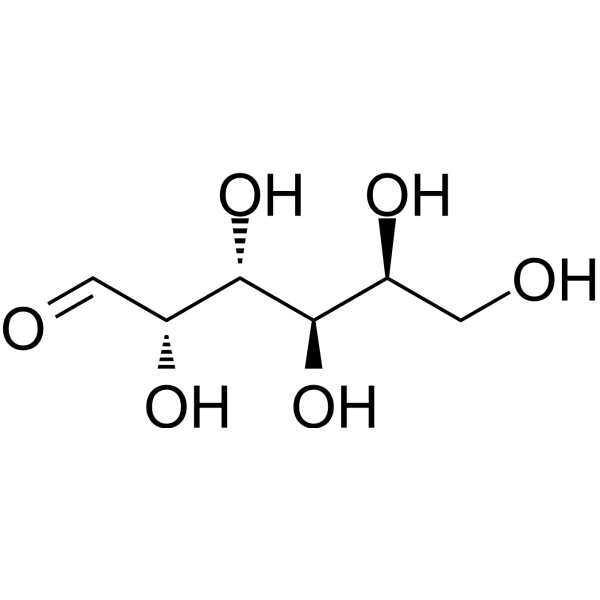
    L-Galactose is a key intermediate in the de novo synthesis of vitamin C (L-ascorbic acid) in plants. It is converted into L-ascorbic acid by participating in the VTC2 cycle and enzymatic steps, exerting antioxidant activities, maintaining cell structure, and participating in the carbon flow distribution of photosynthesis. L-Galactose can be used to study the analysis of the synthesis pathway of vitamin C in plant physiology .
    L-Galactose
  • HY-W089645

    N-Methyl-n-trimethylsilyltrifluoroacetamide

    Biochemical Assay Reagents Cancer
    2,2,2-Trifluoro-N-methyl-N-(trimethylsilyl)acetamide (N-Methyl-n-trimethylsilyltrifluoroacetamide) is an ester product commonly used for silylation reactions in analyticalchemistry. 2,2,2-Trifluoro-N-methyl-N-(trimethylsilyl)acetamide can be used in the derivatization step of metabolomics analysis with gas chromatography/mass spectrometry (GC/MS) or as a derivatization reagent in GC with flame ionization detection analysis. 2,2,2-Trifluoro-N-methyl-N-(trimethylsilyl)acetamide can be used in research for studying Tamoxifen (HY-13757A) resistant breast cancer cells and other disease pathways .
    2,2,2-Trifluoro-N-methyl-N-(trimethylsilyl)acetamide
  • HY-W749209

    Anhydrous sodium acetate-13C2

    Endogenous Metabolite
    Acetic acid-13C2 is a stable isotope labeled compound with biomarker and metabolic tracking activity. Acetic acid-13C2 is often used in biochemical research for the analysis of metabolic pathways. Acetic acid-13C2 is also used in medical imaging and compound development to improve the understanding of biological processes.
    Acetic acid-13C2 sodium
  • HY-169798

    Fluorescent Dye VSV Infection
    1,9-Dimethylmethylene blue is a photosensitizer, virus inactivator and hemoglobin oxidant derived from methylene blue. When activated, 1,9-Dimethylmethylene blue generates reactive oxygen species including singlet oxygen, and acts as a metachromatic dye. When activated in monomeric or dimeric form, 1,9-Dimethylmethylene blue induces photoinactivation of R17 phage and vesicular stomatitis virus and oxidizes hemoglobin via non-singlet oxygen reactive oxygen species or singlet oxygen-mediated pathways, respectively. The monomeric form, with higher nucleic acid affinity, achieves virus inactivation under specific conditions without forming methemoglobin. 1,9-Dimethylmethylene blue binds to substances such as glycosaminoglycans to produce color changes. Although it is susceptible to interference from non-glycosaminoglycan components in urine, it is still applicable to spectrophotometric analysis for glycosaminoglycan quantification. With these unique photochemical and binding properties, 1,9-Dimethylmethylene blue is widely used in studies of viral infections and related biochemical analyses .
    1,9-Dimethylmethylene blue
  • HY-139621

    DNA Alkylator/Crosslinker Cancer
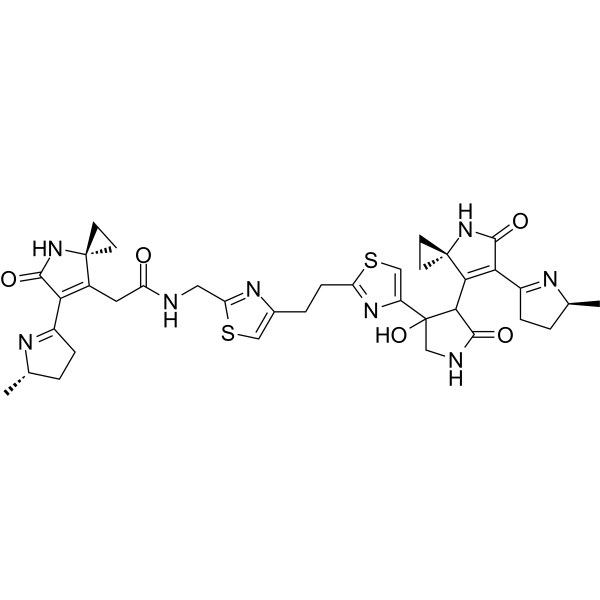
    Colibactin 742 is a covalently binding DNA-damaging agent targeting DNA, with an IC50 of 5.2 μM against human cervical cancer cells (HeLa). Colibactin 742 covalently binds to DNA, forming interstrand crosslinks (ICLs), activating the Fanconi anemia DNA repair pathway, inducing γH2AX and FANCD2 foci formation and cell cycle arrest, while exacerbating mismatch repair deficiency (MMRd)-related mutations. Colibactin 742 can mimic the genotoxicity of natural Colibactin while avoiding its instability, and is mainly used in colorectal cancer (CRC) related research, including microbial tumorigenesis mechanisms, DNA damage repair pathways, and mutation signature analysis .
    Colibactin 742
  • HY-W016103

    Bacterial Drug Intermediate Infection
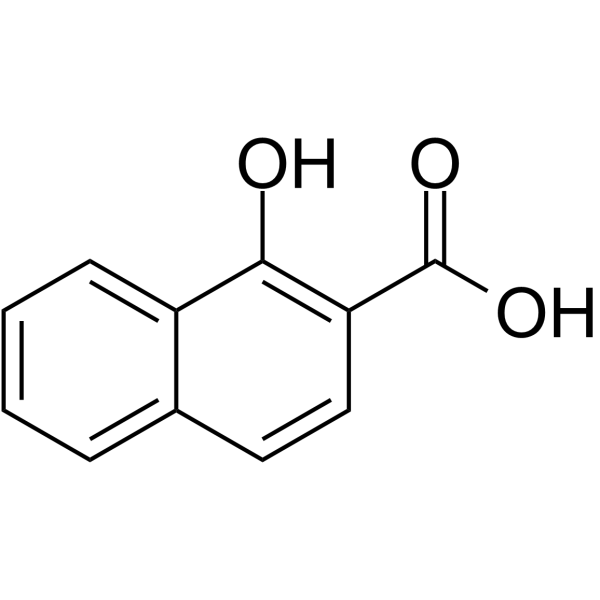
    1-Hydroxy-2-naphthoic acid is a ubiquitous bicyclic intermediate metabolite in the microbial degradation process of polycyclic aromatic hydrocarbons (PAHs). 1-Hydroxy-2-naphthoic acid can be converted into 1,2-naphthalenediol, which enters the naphthalene degradation pathway and participates in the tricarboxylic acid (TCA) cycle to achieve complete mineralization .
    1-Hydroxy-2-naphthoic acid
  • HY-100978

    DL-Hexanoylcarnitine chloride

    Endogenous Metabolite Metabolic Disease
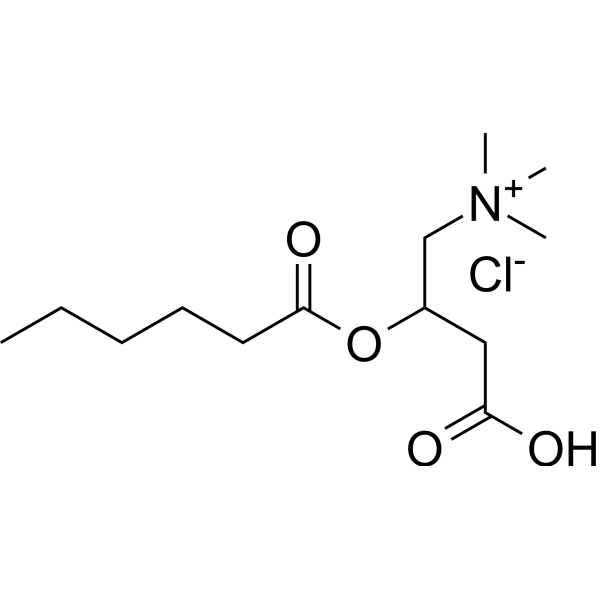
    (±)-Hexanoylcarnitine chloride is a fatty acid metabolite that breaks down fatty acids into energy that can be used by the body. (±)-Hexanoylcarnitine chloride also serves as a specific and easily detectable biomarker for rat skeletal muscle toxicity. Cerivastatin (HY-129458) and TMPD (HY-W012145) induce an increase in Hexanoylcarnitine in rats in a metabolomic analysis of the rectus femoris muscle. In type 2 diabetes, Hexanoylcarnitine is also significantly associated with and improves prediction of all-cause mortality. Hexanoylcarnitine is a biomarker for the identification of novel pathogenic pathways .
    (±)-Hexanoylcarnitine chloride
  • HY-137115

    Smo Cancer
    BODIPY-Cyclopamine is a fluorescently labeled ligand for the Smoothened (SMO) receptor. The activation of SMO is regulated by Patch protein, and over-activated SMO signaling pathways are associated with tumorigenesis. The NanoBRET (Nanofluorescein bioluminescence resonance energy transfer) technique used in the study can sensitively detect the resonance energy transfer between SMO and BODIPY-Cyclopamine, which can be used for high-throughput screening and kinetic analysis. Studying the binding site of BODIPY-Cyclopamine on SMO can also further explore SMO-targeted drugs .
    BODIPY-Cyclopamine
  • HY-142080

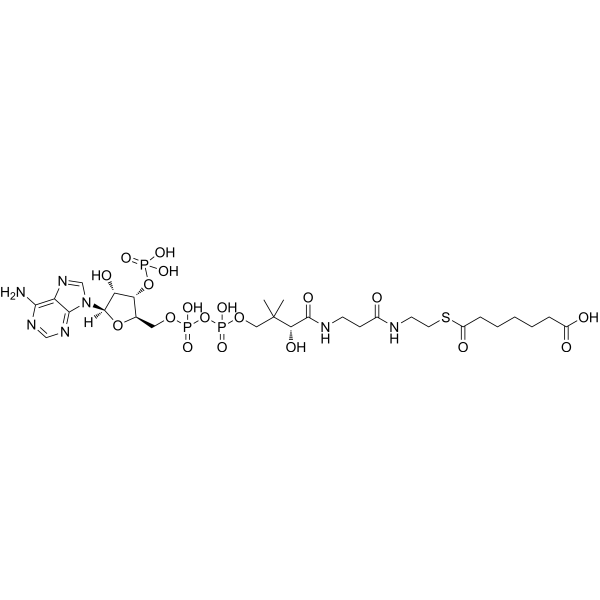
    Pimeloyl-coenzyme A

    Endogenous Metabolite Metabolic Disease
    Pimeloyl-CoA is a key precursor compound in the biotin synthesis pathway, which can promote the de novo synthesis of biotin. Pimeloyl-CoA is mainly used in the study of microbial metabolic mechanisms, especially the analysis of biotin synthesis pathways and basic research on the biosynthesis of related antibiotics or vitamins .
    Pimeloyl-CoA
  • HY-W718678

    Drug Metabolite Cancer
    6-Hydroxymelatonin glucuronide is a metabolite of Melatonin (HY-B0075). 6-Hydroxymelatonin glucuronide can be used for the research on the diagnosis of hepatocellular carcinoma (HCC) .
    6-Hydroxymelatonin glucuronide
  • HY-N17022

    Others Others
    Methyl pechueloate is a guaiane-type sesquiterpene ester compound, a potential precursor of xerantholide, and is used in the structural analysis and biosynthetic pathway research of sesquiterpenoid compounds. Methyl pechueloate can be naturally extracted from the aerial parts of Pechuel-Loeschea leibnitziae (Kuntze) O. Hoffm .
    Methyl pechueloate
  • HY-179734

    PROTACs Epigenetic Reader Domain Apoptosis c-Myc Cancer
    PROTAC BRD4 Degrader-41 (Compound A5) is a BRD4 PROTAC degrader with a DC50 of 0.97 nM. PROTAC BRD4 Degrader-41 exhibits potent anti-proliferative activity against various types of cancer cells such as AML, lymphoma, breast cancer, ovarian cancer, and non-small cell lung cancer. PROTAC BRD4 Degrader-41 can induce G0/G1 phase arrest and apoptosis in MV4-11 cells. PROTAC BRD4 Degrader-41 downregulates the transcriptional level of c-Myc .
    PROTAC BRD4 Degrader-41
  • HY-48813

    Endogenous Metabolite NF-κB Interleukin Related Metabolic Disease
    Glycoursodeoxycholic acid 3-sulfate is a glycine-conjugated sulfated bile acid 3-sulfate, which is produced by SULT2A1-mediated sulfation of glycoursodeoxycholic acid (HY-N1424) in the liver. Glycoursodeoxycholic acid 3-sulfate attenuates the anti-inflammatory effect of glycoursodeoxycholic acid and impairs the inhibitory effect on the IL-17 and NF-κB signaling pathways. Glycoursodeoxycholic acid 3-sulfate shows a significant correlation with aortic flow velocity and BNP in patients with aortic stenosis. Glycoursodeoxycholic acid 3-sulfate is mainly used in related studies such as quantitative analysis, quality control and biochemical experiments; it often serves as a reagent for metabolomics analysis and can also be applied to research related to aortic stenosis .
    Glycoursodeoxycholic acid 3-sulfate

Inquiry Online

Your information is safe with us. * Required Fields.

Salutation


Country or Region *

Applicant Name *


Organization Name *

Department *


Email Address *


Product Name *

Cat. No.


Requested quantity *

Phone Number *


Remarks

Inquiry Online

Inquiry Information

Product Name:
Cat. No.:
Quantity:
MCE Japan Authorized Agent:

