1. Search Result
Search Result
Results for "

phenol groups

" in MedChemExpress (MCE) Product Catalog:

32

Inhibitors & Agonists

2

Screening Libraries

1

Fluorescent Dye

4

Biochemical Assay Reagents

6

Natural
Products

1

Isotope-Labeled Compounds

3

Click Chemistry

Cat. No. Product Name Target Research Areas Chemical Structure
  • HY-131442
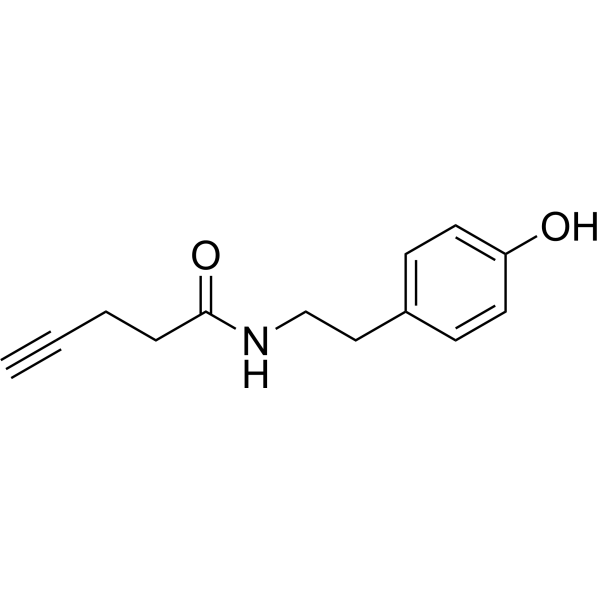
    Alkyne-phenol
    3 Publications Verification

    Alkyne tyramide; Alk-Ph

    Biochemical Assay Reagents Others
    Alkyne-phenol (Alk-Ph) is a clickable ascorbate peroxidase 2 (APEX2) probe. Alkyne-phenol substantially improves APEX-labeling efficiency in intact yeast cells, as it is more cell wall-permeant than APEX2 substrate biotin-phenol (BP). Alkyne-phenol also facilitates the identification of APEX-labeling sites, allowing the unambiguous assignment of membrane topology of mitochondrial proteins . Alkyne-phenol is a click chemistry reagent, it contains an Alkyne group and can undergo copper-catalyzed azide-alkyne cycloaddition (CuAAc) with molecules containing Azide groups.
    Alkyne-phenol
  • HY-W127711

    Phosphatase Lipase Metabolic Disease Inflammation/Immunology
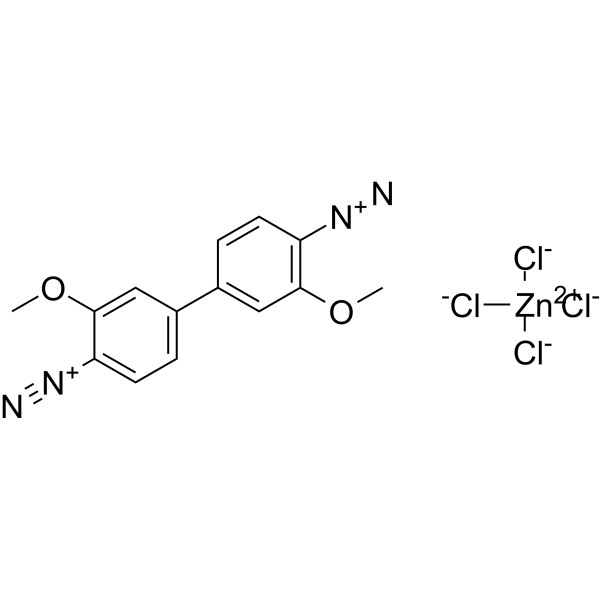
    Fast Blue B Salt, Dye content ~95% is a diazo dye, primarily used as a chromogenic substrate in biochemical analysis. Fast Blue B Salt, Dye content ~95% is the coupling agent for the histochemical demonstration of proteases. Fast Blue B Salt, Dye content ~95% can be used for the detection of acid phosphatase in Clostridium perfringens, and also for the determination of lipase activity. Fast Blue B Salt, Dye content ~95% reacts directly with the active hydroxyl groups in phenolic compounds to determine the content of phenolic substances .
    Fast Blue B Salt, Dye content ~95%
  • HY-Y0801

    Drug Metabolite Others
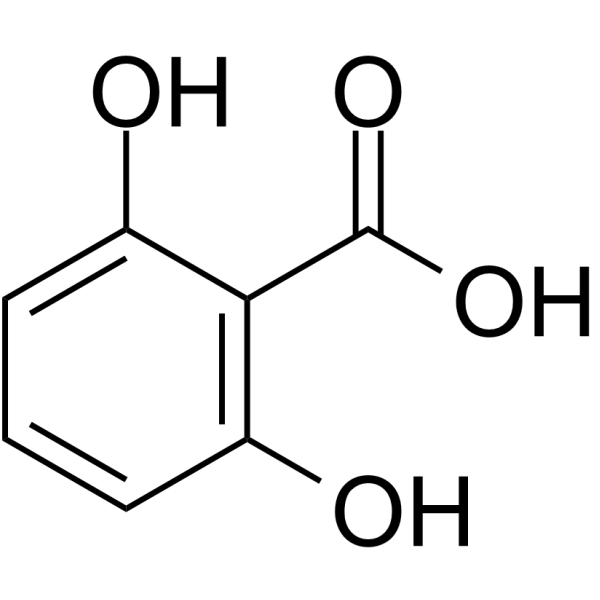
    2,6-Dihydroxybenzoic acid is an aromatic compound containing phenolic hydroxyl groups and carboxyl groups, and it is a secondary metabolite of Salicylic acid (HY-B0167). 2,6-Dihydroxybenzoic acid is also present in olive oil wastewater .
    2,6-Dihydroxybenzoic acid
  • HY-119323
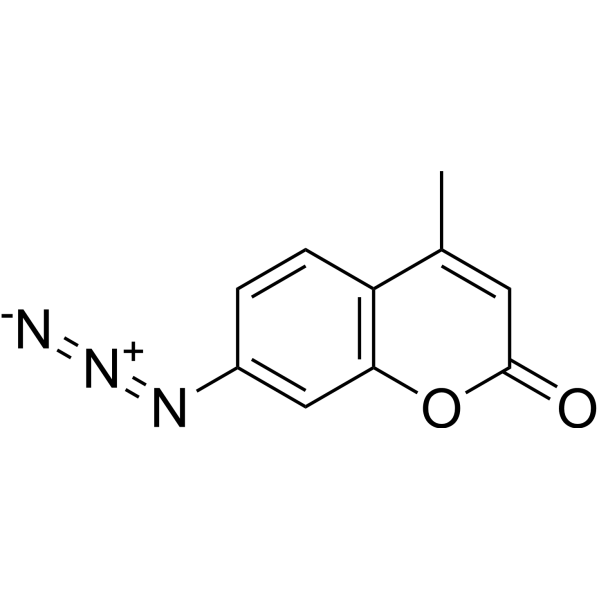
    7-Azido-4-methylcoumarin
    1 Publications Verification

    Fluorescent Dye Others
    7-Azido-4-methylcoumarin is a selective coumarin-based fluorescent probe for hydrogen sulfide (H2S). In the presence of H2S, the aromatic azido group of 7-Azido-4-methylcoumarin is selectively reduced to produce the fluorescently active 7-amino-4-methylcoumarin (AMC). 7-Azido-4-methylcoumarin binds to the coumarin/phenol-binding site of BSA, the aglycone-binding site of UGT1A6, and the substrate-binding site of SULT1A1, respectively. 7-Azido-4-methylcoumarin retains its fluorescent properties after covalent binding, acts as a fluorescent H2S probe, and does not react with cysteine, homocysteine or glutathione (Ex/Em = 340/445 nm) .
    7-Azido-4-methylcoumarin
  • HY-N6654
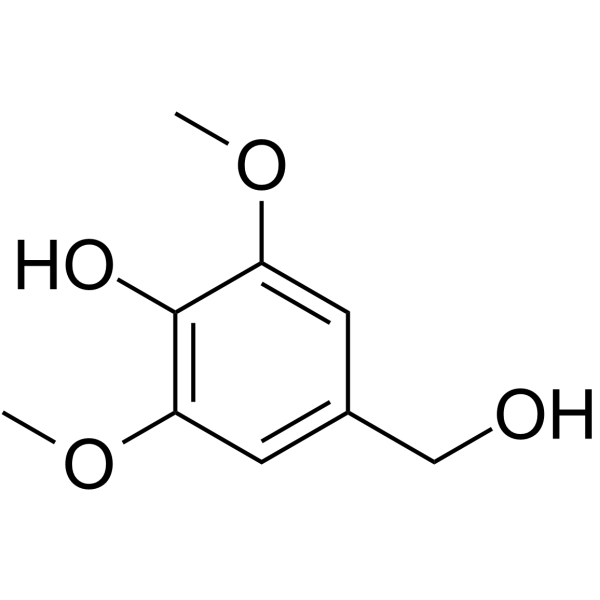
    Syringyl Alcohol
    1 Publications Verification

    Syringic Alcohol

    Drug Derivative Others
    Syringyl Alcohol (Syringic Alcohol) is a derivate of phenol comprises both phenolic and alcoholic functional groups. Syringyl Alcohol is a probe molecule for the evaluation of the catalytic performance of various carbonaceous nanomaterials (CNMs) .
    Syringyl Alcohol
  • HY-W022036

    Guaethol; Guethol; NSC 180

    Biochemical Assay Reagents Others
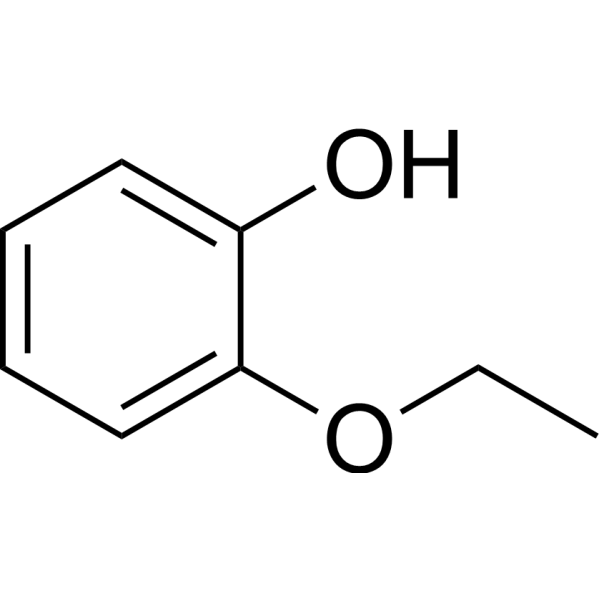
    2-Ethoxyphenol, also known as guaiacol ethyl ether, consists of a phenolic ring and an ethoxy group connected to the 2-position. The compound has a sweet, smoky flavor and is commonly used as a flavoring in foods such as baked goods, candy and beverages.
    2-Ethoxyphenol
  • HY-128835

    PROTAC Linker 21

    PROTAC Linkers Cancer
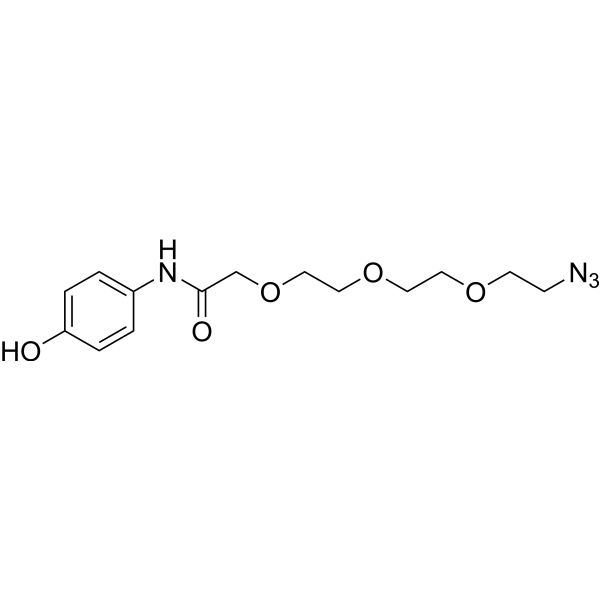
    Phenol-amido-C1-PEG3-N3 (PROTAC Linker 21) is an PEG-based PROTAC linker can be used in the synthesis of PROTACs . Phenol-amido-C1-PEG3-N3 is a click chemistry reagent, it contains an Azide group and can undergo copper-catalyzed azide-alkyne cycloaddition reaction (CuAAc) with molecules containing Alkyne groups. It can also undergo strain-promoted alkyne-azide cycloaddition (SPAAC) reactions with molecules containing DBCO or BCN groups.
    Phenol-amido-C1-PEG3-N3
  • HY-G0004

    3-Hydroxyacetaminophen

    Drug Metabolite Inflammation/Immunology
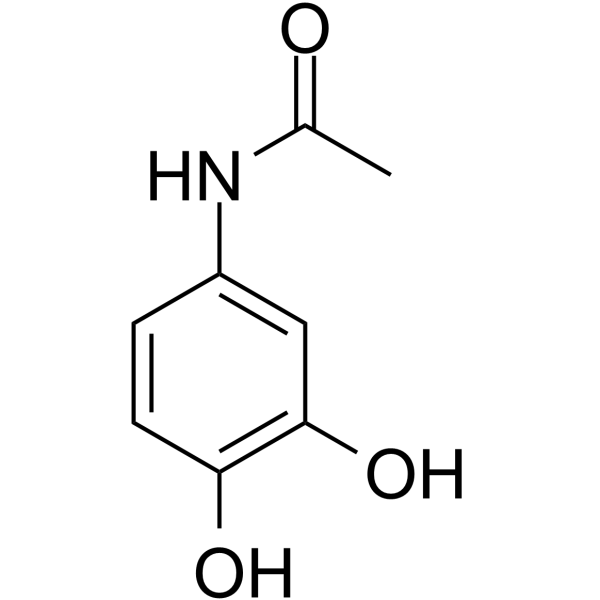
    Acetaminophen metabolite 3-hydroxy-acetaminophen (3-Hydroxyacetaminophen) is a non-toxic metabolite and antioxidant of acetaminophen (HY-66005) with free radical scavenging activity. Acetaminophen metabolite 3-hydroxy-acetaminophen can reduce oxidative damage by exerting electron donation ability and antioxidant activity through phenolic hydroxyl groups. 3-hydroxy-acetaminophen can be used to study the toxicity mechanism and drug metabolism of acetaminophen .
    Acetaminophen metabolite 3-hydroxy-acetaminophen
  • HY-116772

    Irganox 1790

    Biochemical Assay Reagents Others
    Cyanox CY 1790 (Irganox 1790) is a synthetic phenolic antioxidant. Cyanox CY 1790 is mainly used to protect polyolefin materials such as polypropylene and polyethylene from thermo-oxidative degradation during processing (high temperature) and service .
    Cyanox CY 1790
  • HY-Y1374

    Biochemical Assay Reagents Others
    Benzoic anhydride is a catalyst that can be used for organic synthesis reactions. Benzoic anhydride is used as a chemical titration reagent for selective quantification and deactivation of phenolic hydroxyl groups on the surface of carbon nanotubes .
    Benzoic anhydride
  • HY-W017092

    Drug Intermediate Others
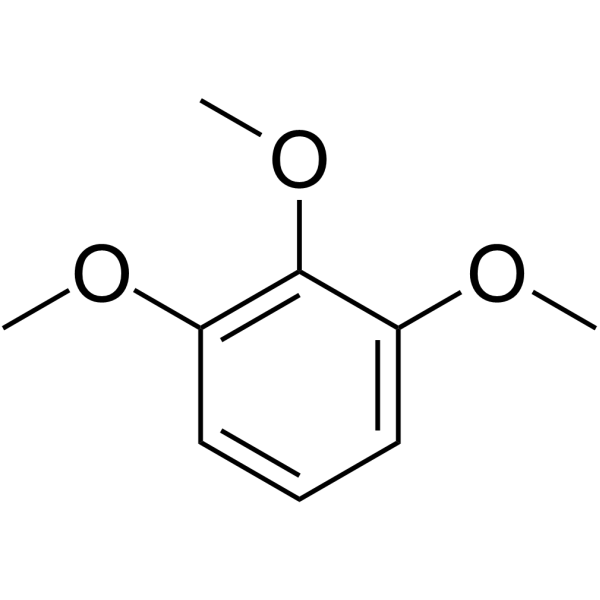
    1,2,3-Trimethoxybenzene is a model compound of lignin. 1,2,3-Trimethoxybenzene can potentially serve as a biomarker for certain foods due to its presence in tea. 1,2,3-Trimethoxybenzene can be used as a drug intermediate for synthesizing 2,6-dimethoxy-1,4-benzoquinone (HY-N1677) .
    1,2,3-Trimethoxybenzene
  • HY-W007671
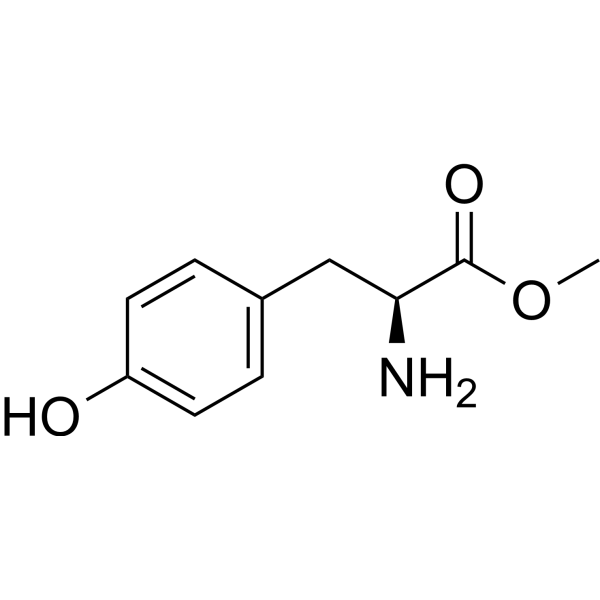
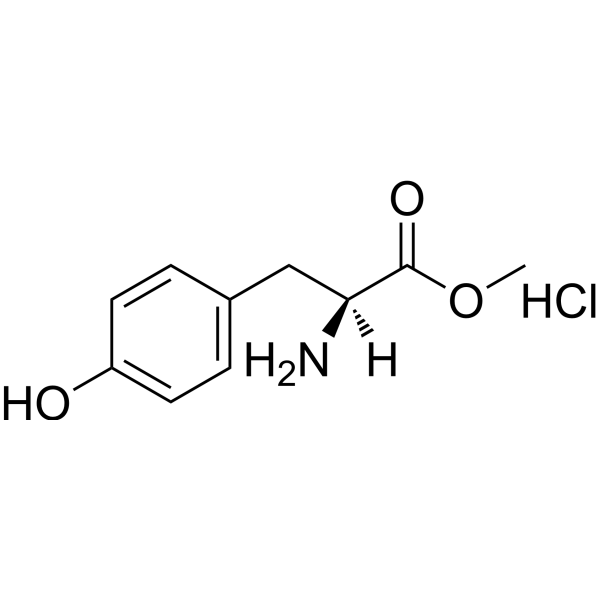
    H-Tyr-OMe
    1 Publications Verification

    Endogenous Metabolite Tyrosinase Others
    H-Tyr-OMe is an endogenous metabolite. H-Tyr-OMe quenches the fluorescence of carbon dots by oxidizing the phenolic hydroxyl group to quinone under the catalysis of Tyrosinase, and its amino and thiol binding ability can respond to changes in the concentration of biothiols .
    H-Tyr-OMe
  • HY-150175

    Fluorescent Dye Inflammation/Immunology
    HKSOX-1 and its derivatives (HKSOX-1r and HKSOX-1m) are novel fluorescent probes designed for highly sensitive and selective detection of the superoxide anion radical (O2 •−) in cellular environments. These probes utilize an aryl trifluoromethanesulfonate group that undergoes O2 •−-mediated cleavage, releasing a free phenol and emitting fluorescence. They demonstrate excellent specificity and sensitivity across various pH ranges, withstand interference from strong oxidants and reductants typical in cellular contexts. HKSOX-1r, optimized for cellular retention, has been effectively employed in diverse assays including confocal imaging, flow cytometry, and zebrafish embryo studies, highlighting its utility in investigating O2 •− roles in inflammation, mitochondrial stress, and other physiological processes .
    HKSOX-1
  • HY-W010221

    Trimethylanilinium hydroxide (ca. 8.5% in Methanol)

    Biochemical Assay Reagents Others
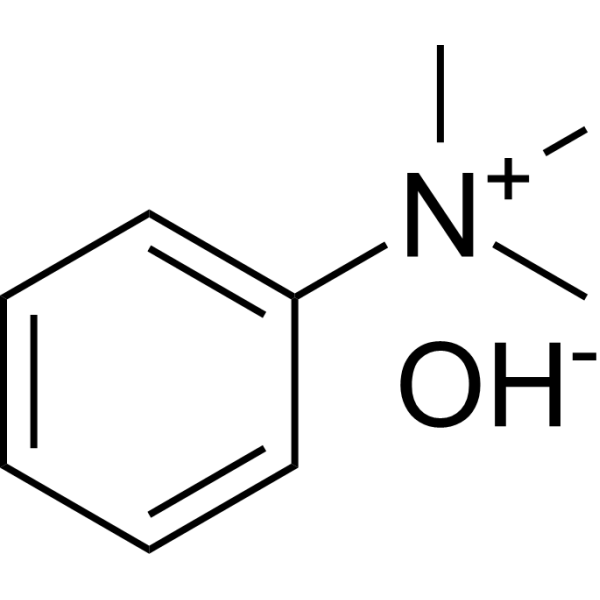
    Phenyltrimethylammonium hydroxide (Trimethylanilinium hydroxide (ca. 8.5% in Methanol)) is a derivatization reagent. Phenyltrimethylammonium hydroxide converts phenolic compounds including pentachlorophenol herbicides into methyl ethers .
    Phenyltrimethylammonium hydroxide
  • HY-A0108S

    Isotope-Labeled Compounds Others
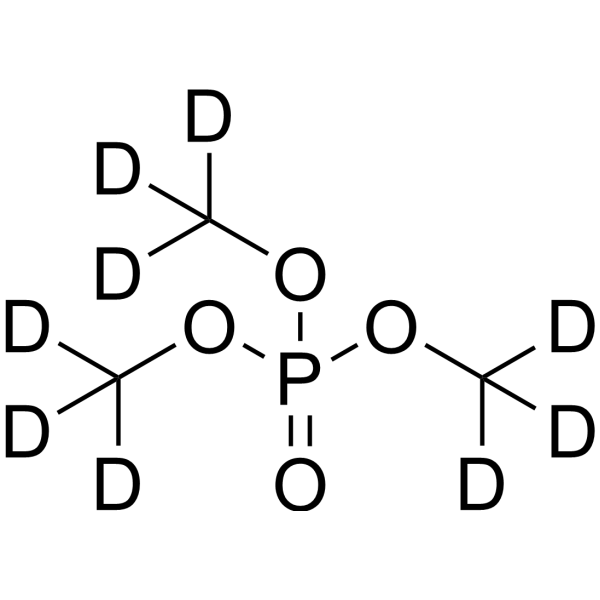
    Trimethyl phosphate-d9 is the deuterium labeled Trimethyl phosphate (HY-A0108A). Trimethyl phosphate is a methylating agent. Trimethyl phosphate transfers methyl groups to aliphatic alcohols, phenols, and amines .
    Trimethyl phosphate-d9
  • HY-A0108AR

    Reference Standards Others
    Trimethyl phosphate (Standard) is the analytical standard of Trimethyl phosphate (HY-A0108A). This product is intended for research and analytical applications. Trimethyl phosphate is a methylating agent. Trimethyl phosphate transfers methyl groups to aliphatic alcohols, phenols, and amines .
    Trimethyl phosphate (Standard)
  • HY-W007671R

    Reference Standards Endogenous Metabolite Tyrosinase Others
    H-Tyr-OMe is an endogenous metabolite. H-Tyr-OMe quenches the fluorescence of carbon dots by oxidizing the phenolic hydroxyl group to quinone under the catalysis of Tyrosinase, and its amino and thiol binding ability can respond to changes in the concentration of biothiols .
    H-Tyr-OMe (Standard)
  • HY-Y0801R

    Reference Standards Drug Metabolite Others
    2,6-Dihydroxybenzoic acid (Standard) is the analytical standard of 2,6-Dihydroxybenzoic acid (HY-Y0801). This product is used for research and analytical applications. 2,6-Dihydroxybenzoic acid is an aromatic compound containing phenolic hydroxyl groups and carboxyl groups, and it is a secondary metabolite of Salicylic acid (HY-B0167). 2,6-Dihydroxybenzoic acid is also present in olive oil wastewater .
    2,6-Dihydroxybenzoic acid (Standard)
  • HY-121011

    Cannabinoid Receptor
    Cannabigerorcin is a phenolic compound found in cannabis plants, featuring a diphenol backbone and a terpene side chain. By reacting with radiolabeled methylmagnesium carbonate (MMC), its carboxyl group can be 14C-labeled. Radiolabeled Cannabigerorcin is widely used in research on cannabinoid biosynthesis pathways and metabolic processes .
    Cannabigerorcin
  • HY-Y1374R

    Biochemical Assay Reagents Reference Standards Others
    Benzoic anhydride (Standard) is the analytical standard of Benzoic anhydride. This product is intended for research and analytical applications. Benzoic anhydride is a catalyst that can be used for organic synthesis reactions. Benzoic anhydride is used as a chemical titration reagent for selective quantification and deactivation of phenolic hydroxyl groups on the surface of carbon nanotubes .
    Benzoic anhydride (Standard)
  • HY-164055

    Fluorescent Dye Cancer
    HL1 is a Schiff base ligand. HL1 exhibits chelation-enhanced fluorescence effect when forming complexes and can be used as a fluorescent probe for metal ions. HL1 can be used for the research of cancer .
    HL1
  • HY-G0004R

    3-Hydroxyacetaminophen (Standard)

    Reference Standards Drug Metabolite Inflammation/Immunology
    Acetaminophen metabolite 3-hydroxy-acetaminophen (3-Hydroxyacetaminophen) (Standard) is the analytical standard of Acetaminophen metabolite 3-hydroxy-acetaminophen (HY-G0004). This product is intended for research and analytical applications. Acetaminophen metabolite 3-hydroxy-acetaminophen is a non-toxic metabolite and antioxidant of acetaminophen (HY-66005) with free radical scavenging activity. Acetaminophen metabolite 3-hydroxy-acetaminophen can reduce oxidative damage by exerting electron donation ability and antioxidant activity through phenolic hydroxyl groups. 3-hydroxy-acetaminophen can be used to study the toxicity mechanism and drug metabolism of acetaminophen .
    Acetaminophen metabolite 3-hydroxy-acetaminophen (Standard)
  • HY-114735

    Antibiotic Infection
    Mandelonitrile benzoate is a defensive secretion of millipedes that releases other chemicals during the cyanidation process in addition to hydrocyanic acid (HCN) and benzaldehyde. Several families of millipedes, including Polydesmidae, Paradoxosomatidae, and Euryuridae, have been shown to secrete phenols and guaiaeol, with one Paradoxosomatid also producing ethylbenzoic acid and benzoic acid. In addition, members of the Xystodesmidae family commonly produce three compounds: benzoic acid, mandelonitrile benzoate, and benzoyl cyanide. Benzoyl cyanide has not been previously discovered as a natural product. These additional natural products are discussed as defensive antipredator and antibiotic agents. Benzoyl cyanide appears to have anesthetic properties for some predators. The study provides a preliminary chemotaxonomic basis for distinguishing various taxonomic groups of millipedes.
    Mandelonitrile benzoate
  • HY-N15727

    Others Inflammation/Immunology
    2,5-Dimethylchromone-7-O-β-D-glucopyranoside is an orally active chromone glycoside found in the underground parts of Rheum australe. 2,5-Dimethylchromone-7-O-β-D-glucopyranoside shows a DPPH radical scavenging activity with an IC50 value of 66.9 μM. 2,5-Dimethylchromone-7-O-β-D-glucopyranoside scavenges free radicals by providing hydrogen atoms through phenolic hydroxyl groups, inhibiting lipid peroxidation. 2,5-Dimethylchromone-7-O-β-D-glucopyranoside is promising for research of oxidative stress-related diseases such as inflammation and skin diseases .
    2,5-Dimethylchromone-7-O-β-D-glucopyranoside
  • HY-W140502

    Biochemical Assay Reagents Others
    4-Hexadecylphenol is a phenol group with a 16-carbon tail.
    4-Hexadecylphenol
  • HY-W413662

    Biochemical Assay Reagents Others
    4-[(4-Methoxyphenyl)methoxy]butan-1-ol is a compound with a methyl phenol group and a butanol tail. The hydroxyl group enables further derivatization or replacement with other reactive functional groups.
    4-((4-Methoxybenzyl)oxy)butan-1-ol
  • HY-W598194

    Biochemical Assay Reagents Others
    1-((4-Azidobutoxy)methyl)-4-methoxybenzene is a compound with a methyl phenol group and a butyl tail ending in a terminal azide. The azide (N3) group can react with alkyne, BCN, DBCO via Click Chemistry to yield a stable triazole linkage.
    1-((4-Azidobutoxy)methyl)-4-methoxybenzene
  • HY-W015811

    PDI Metabolic Disease Inflammation/Immunology Cancer
    3-N-Propylphenol is a small phenolic derivative containing a hydroxyl aryl group that competitively inhibits the binding of the peptide to pancreatic-specific protein disulfide isomerase (PDIp). 3-Propylphenol can be used for research on pancreatic-related diseases .
    3-N-Propylphenol
  • HY-W006081

    UGT Others
    3-Methyl-2-nitrophenol is a UDP-glucuronyltransferase (EC 2.4.1.17) acceptor substrate that can be confirmed to undergo glucuronidation catalyzed by the enzyme to form a glucuronide conjugate. 3-Methyl-2-nitrophenol functions as a substrate for conjugation, with glucuronidation forming a glucuronide conjugate that eliminates the parent compound’s characteristic yellow color. 3-Methyl-2-nitrophenol has higher lipid solubility that contributes to high glucuronidation conversion rate, and exhibits lower absorbance at 340 nm to act as a less interfering substrate for the NADH-NAD +-linked UDP-glucuronyltransferase assay .
    3-Methyl-2-nitrophenol
  • HY-E71131

    Biochemical Assay Reagents Others
    (S)-Stylopine synthase (EC 1.14.21.1) catalyzes an oxidation reaction that does not introduce oxygen into the product. (S)-Stylopine synthase (EC 1.14.21.1) forms a second methylenedioxy bridge in the protoberberine alkaloid stylopine by oxidatively cyclizing cheilanthifoline with adjacent phenolic hydroxyl and methoxy groups.
    (S)-Stylopine synthase
  • HY-E71128

    Biochemical Assay Reagents Others
    (S)-Nandinine synthase (EC 1.14.21.12) is a cytochrome P-450 heme-thiolate enzyme catalysing an oxidative reaction that does not incorporate oxygen into the product. Forms the methylenedioxy bridge of the protoberberine alkaloid (S)-Nandinine by the oxidative ring closure of adjacent phenolic and methoxy groups of (S)-Scoulerine.
    (S)-Nandinine synthase
  • HY-N17138

    Others Inflammation/Immunology Cancer
    threo-1-(4-Hydroxyphenyl)-1-methoxy-2,3-propanediol is an aromatic propanediol phenolic derivative containing methoxy and hydroxyl groups. It can be naturally extracted from the dried aerial parts of Abies delavayi Franch. var. delavayi (Cangshan fir) from Dali, Yunnan, China. This source plant produces anti-inflammatory and anti-tumor active components .
    threo-1-(4-Hydroxyphenyl)-1-methoxy-2,3-propanediol

Inquiry Online

Your information is safe with us. * Required Fields.

Salutation


Country or Region *

Applicant Name *


Organization Name *

Department *


Email Address *


Product Name *

Cat. No.


Requested quantity *

Phone Number *


Remarks

Inquiry Online

Inquiry Information

Product Name:
Cat. No.:
Quantity:
MCE Japan Authorized Agent:

