1. Search Result
Search Result
Results for "

phosphorylated STAT3

" in MedChemExpress (MCE) Product Catalog:

14

Inhibitors & Agonists

1

Screening Libraries

1

Peptides

6

Natural
Products

2

Antibodies

Targets Recommended:
Cat. No. Product Name Target Research Areas Chemical Structure
  • HY-N0201
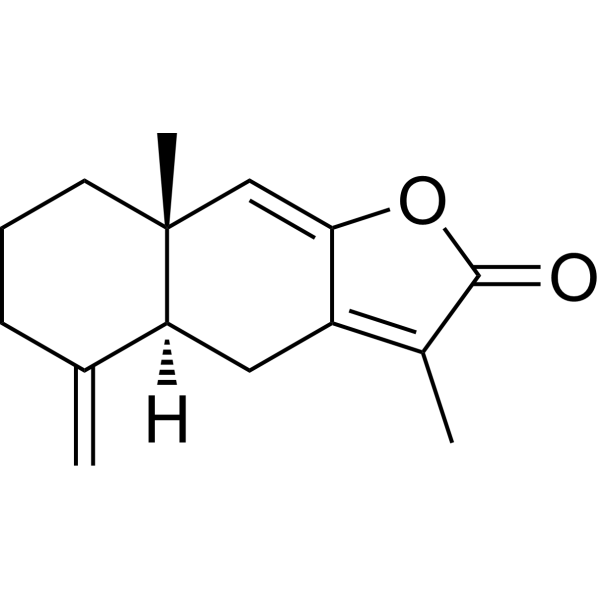
    Atractylenolide I
    5 Publications Verification

    TNF Receptor Toll-like Receptor (TLR) JAK STAT Cancer
    Atractylenolide I is a sesquiterpene derived from the rhizome of Atractylodes macrocephala, possesses diverse bioactivities, such as neuroprotective, anti-allergic, anti-inflammatory and anticancer properties. Atractylenolide I reduces protein levels of phosphorylated JAK2 and STAT3 in A375 cells, and acts as a TLR4-antagonizing agent.
    Atractylenolide I
  • HY-N0732
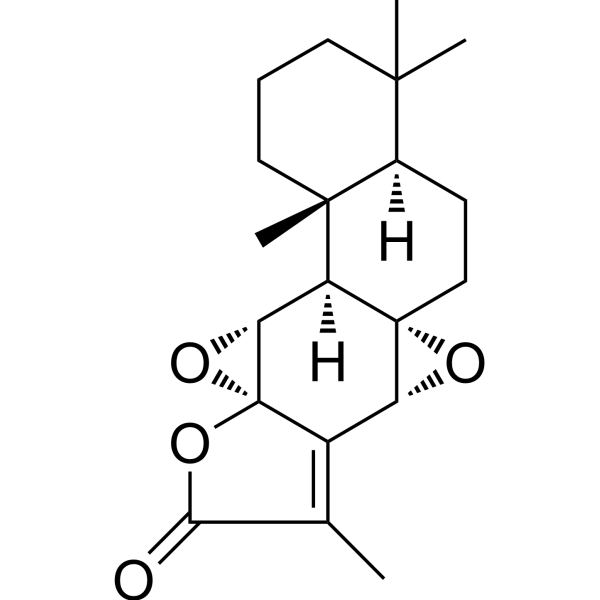
    Jolkinolide B
    1 Publications Verification

    IAP Akt Caspase NF-κB TGF-beta/Smad JAK Bacterial Apoptosis Infection Metabolic Disease Inflammation/Immunology Cancer
    Jolkinolide B is a bioactive diterpene isolated from the roots of Euphorbia fischeriana Steud with oral activity. Jolkinolide B downregulates XIAP, cIAP1, cIAP2, and phosphorylated Akt, upregulates Smac, activates caspase-3 and caspase-9, and inhibits NF-κB, TGFβ/smad3 and JAK/STAT3 pathways. Jolkinolide B exerts comprehensive biological effects including inducing cancer cell apoptosis, suppressing inflammatory responses, improving lung function, alleviating hepatic steatosis and eliminating intracellular Mycobacterium tuberculosis. Jolkinolide B can be used for the research of leukemia, histiocytic lymphoma, asthma, metabolic dysfunction-associated steatotic liver disease and tuberculosis .
    Jolkinolide B
  • HY-N8389

    Bacterial Fungal PAK Akt STAT PD-1/PD-L1 Apoptosis CCR Infection Cancer
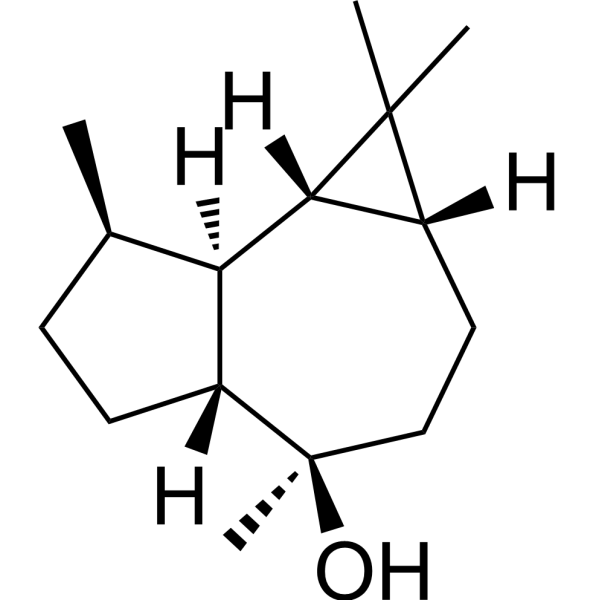
    Globulol is a terpenoid metabolite and Antimicrobial agent. Globulol can be isolated from Alpinia oxyphylla Miq. Globulol binds to PAK4, reduces the expression level of PAK4 in cancer cells, decreases the phosphorylation of AKT, and downregulates the expressions of STAT3, phosphorylated STAT3, and PD-L1. Globulol promotes the secretion of CCL4 by cancer cells. Globulol reduces the viability and proliferation ability of cancer cells, induces G0/G1 cell cycle arrest and Apoptosis in cancer cells, and inhibits cancer cell migration and the integrity of 3D tumor spheres. Globulol enhances the relevant effects of anti-PD-1 agents in the cancer cell microenvironment. Globulol exhibits anticancer activity against liver cancer. Globulol inhibits the mycelial growth of phytopathogenic fungi and the growth of phytopathogenic bacteria. Globulol can be used in studies related to hepatocellular carcinoma .
    Globulol
  • HY-171825

    PROTACs Anaplastic lymphoma kinase (ALK) Cancer
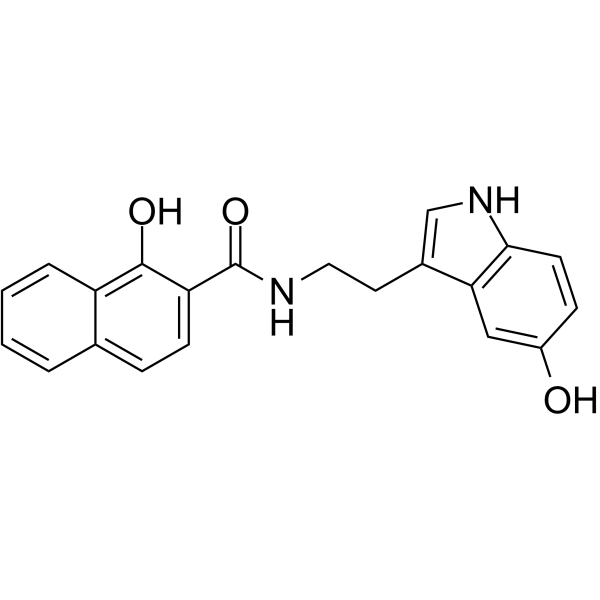
    SIAIS001 is a CRBN-dependent ALK PROTAC degrader with a DC50 of 3.9 nM. SIAIS001 induces ALK protein degradation via the ubiquitin-proteasome system. SIAIS001 induces G1/S phase cell cycle arrest and inhibits proliferation of cancer cells. SIAIS001 can be used for the research of anaplastic large-cell lymphomas .
    SIAIS001
  • HY-123099

    JAK Cancer
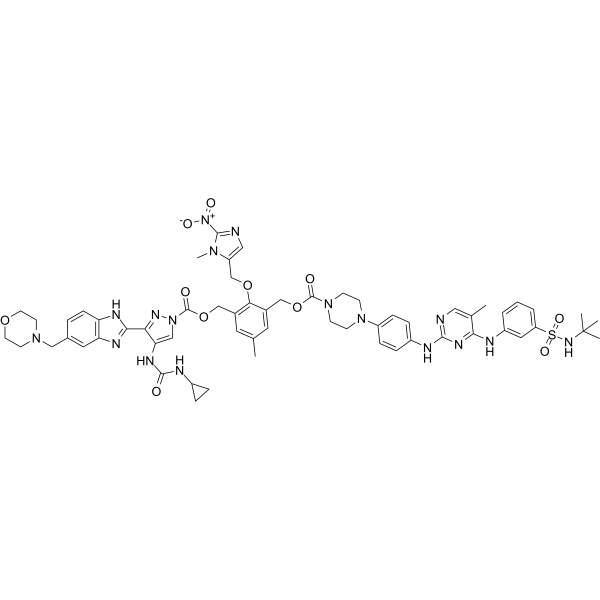
    MS-1020 is a potent and ATP-competitive JAK3 inhibitor. MS-1020 inhibits JAK3/STAT signaling and induces apoptosis. MS-1020 promotes cell death. MS-1020 decreases the expression of tyrosine phosphorylated STAT3 levels. MS-1020 has the potential for the research of cancers harboring aberrant JAK3 signaling .
    MS-1020
  • HY-P10854

    NF-κB Interleukin Related STAT Akt Neurological Disease Inflammation/Immunology
    TAT-N15 is a p55PIK inhibitor with remarkable anti-inflammatory activity and neuroprotective effects. TAT-N15 can significantly inhibit the activation of IL-6, IL-8, Akt, and NF-κB pathways, as well as suppress the protein expression of phosphorylated STAT3 and NF-κB. By inhibiting the activation of Akt, STAT3, and NF-κB pathways, TAT-N15 is used in research on acute conjunctivitis, allergic rhinitis, chronic obstructive pulmonary disease (COPD), and stroke .
    TAT-N15
  • HY-164551

    VEGFR STAT ERK Apoptosis Cancer
    YLL545 is a type of vascular endothelial growth factor receptor 2 (VEGFR2) inhibitor. YLL545 can inhibit VEGF-induced phosphorylation of VEGFR2 and the activation of downstream signaling factors (like phosphorylated STAT3 and phosphorylated ERK1/2) in human umbilical vein endothelial cells (HUVEC). YLL545 can suppress the proliferation, migration, invasion, and angiogenesis of HUVEC. YLL545 can induce apoptosis in breast cancer mice and inhibit tumor growth .
    YLL545
  • HY-149257

    JAK STAT Cancer
    HAT-SIL-TG-1&AT is a Janus tyrosine kinase (JAK) inhibitor with antitumor effects. HAT-SIL-TG-1&AT is the hypoxia-activated prodrug, witch inhibits JAK-STAT signaling in tumor tissue. And HAT-SIL-TG-1&AT inhibits HEL cells proliferation and downregulated phosphorylated STAT3/5 under hypoxic conditions .
    HAT-SIL-TG-1&AT
  • HY-N0201R

    TNF Receptor Reference Standards Toll-like Receptor (TLR) JAK STAT Cancer
    Atractylenolide I (Standard) is the analytical standard of Atractylenolide I. This product is intended for research and analytical applications. Atractylenolide I is a sesquiterpene derived from the rhizome of Atractylodes macrocephala, possesses diverse bioactivities, such as neuroprotective, anti-allergic, anti-inflammatory and anticancer properties. Atractylenolide I reduces protein levels of phosphorylated JAK2 and STAT3 in A375 cells, and acts as a TLR4-antagonizing agent.
    Atractylenolide I (Standard)
  • HY-N16557

    Apoptosis EGFR STAT PERK Cancer
    (Rac)-8-Gingerol is a non-volatile component. (Rac)-8-Gingerol can be extracted from ginger. (Rac)-8-Gingerol enhances Apoptosis. (Rac)-8-Gingerol decreases the level of phosphorylated EGFR and, accordingly, the phosphorylation levels of its downstream effectors, STAT3 and ERK. (Rac)-8-Gingerol exhibits anticancer activity against colorectal cancer .
    (Rac)-8-Gingerol
  • HY-N0732R

    Reference Standards IAP Akt Caspase NF-κB TGF-beta/Smad JAK Bacterial Apoptosis Infection Inflammation/Immunology Cancer
    Jolkinolide B (Standard) is the analytical standard of Jolkinolide B (HY-N0732). This product is intended for research and analytical applications. Jolkinolide B is a bioactive diterpene isolated from the roots of Euphorbia fischeriana Steud with oral activity. Jolkinolide B downregulates XIAP, cIAP1, cIAP2, and phosphorylated Akt, upregulates Smac, activates caspase-3 and caspase-9, and inhibits NF-κB, TGFβ/smad3 and JAK/STAT3 pathways. Jolkinolide B exerts comprehensive biological effects including inducing cancer cell apoptosis, suppressing inflammatory responses, improving lung function, alleviating hepatic steatosis and eliminating intracellular Mycobacterium tuberculosis. Jolkinolide B can be used for the research of leukemia, histiocytic lymphoma, asthma, metabolic dysfunction-associated steatotic liver disease and tuberculosis .
    Jolkinolide B (Standard)
  • HY-115438

    JAK STAT Apoptosis Cancer
    AUH-6-96 is a JAK/STAT signaling inhibitor. AUH-6-96 reduces Unpaired-induced transcriptional activity in Drosophila cells and blocks tyrosine phosphorylation of STAT92E. AUH-6-96 blocks both constitutive and IL-6-induced phosphorylation of STAT3. AUH-6-96 decreases the level of tyrosine-phosphorylated JAK3. AUH-6-96 induces cancer cell Apoptosis by downregulating the expression of anti-apoptotic genes downstream of STAT3. AUH-6-96 selectively reduces the viability of cancer cells with abnormal JAK/STAT signaling pathway. AUH-6-96 is applicable to related research on Hodgkin's lymphoma, breast cancer, and prostate cancer .
    AUH-6-96
  • HY-206870

    Interleukin Related STAT Inflammation/Immunology
    BP79 is a potent TSLP receptor inhibitor. BP79 disrupts TSLP-mediated ternary complex formation, blocks TSLPR-IL7Rα co-localization, binds and stabilizes TSLPR, and inhibits phosphorylated STAT3/6. BP79 suppresses immune cell infiltration, secretion of IL-13, IL-4. BP79 can be used for the research of inflammation diseases, such as atopic dermatitis, allergic asthma, and allergic rhinitis .
    BP79
  • HY-115541

    Epigenetic Reader Domain JAK FLT3 RET ROS Kinase PDGFR FGFR c-Myc STAT Apoptosis PARP Cancer
    BRD4-IN-41 is a BRD4 inhibitor with an IC50 of 34 nM. BRD4-IN-41 also inhibits JAK2, FLT3, RET, ROS1, NTRK3, PDGFRb, and FGFR1 kinases with IC50 values ranging from 0.9 nM to 43 nM. BRD4-IN-41 inhibits acetyl-lysine binding site of BRD4, downregulates c-MYC, reduces phosphorylated STAT3 levels, induces G1 cell cycle arrest and apoptosis, thereby inhibiting cancer cells growth. BRD4-IN-41 can be used for the research of cancer, such as multiple myeloma and acute myeloid leukemia .
    BRD4-IN-41

Inquiry Online

Your information is safe with us. * Required Fields.

Salutation


Country or Region *

Applicant Name *


Organization Name *

Department *


Email Address *


Product Name *

Cat. No.


Requested quantity *

Phone Number *


Remarks

Inquiry Online

Inquiry Information

Product Name:
Cat. No.:
Quantity:
MCE Japan Authorized Agent:

