



Jolkinolide B
Based on 1 publication(s) in Google Scholar
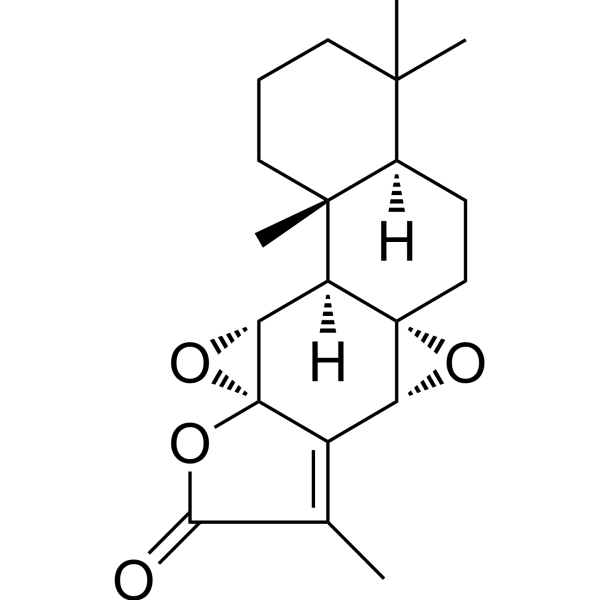
Jolkinolide B is a bioactive diterpene isolated from the roots of Euphorbia fischeriana Steud with oral activity. Jolkinolide B downregulates XIAP, cIAP1, cIAP2, and phosphorylated Akt, upregulates Smac, activates caspase-3 and caspase-9, and inhibits NF-κB, TGFβ/smad3 and JAK/STAT3 pathways. Jolkinolide B exerts comprehensive biological effects including inducing cancer cell apoptosis, suppressing inflammatory responses, improving lung function, alleviating hepatic steatosis and eliminating intracellular Mycobacterium tuberculosis. Jolkinolide B can be used for the research of leukemia, histiocytic lymphoma, asthma, metabolic dysfunction-associated steatotic liver disease and tuberculosis.
Nur für Forschungszwecke. Wir verkaufen nicht an Patienten.
- Reinheit : 99.65%
- CAS. Nr.: 37905-08-1
- Formel: C20H26O4
- Molecular Weight:330.42
-
Speicherung:
-20°C, protect from light
* In solvent : -80°C, 6 months; -20°C, 1 month (protect from light)

To place orders, for customer services and technical support, please contact: MedChemExpress USA
Tel: 609-228-6898 E-mail: [email protected] [email protected]


-
 Biologische Aktivität
-
Chemical Information
-
Lösungsmittel & Löslichkeit
- Protokoll
- Reinheit & Dokumentation
- Verweise
-
 Help & FAQs


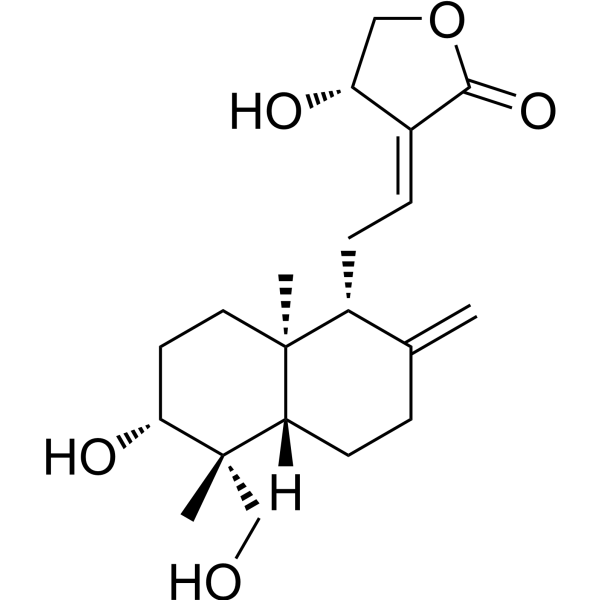
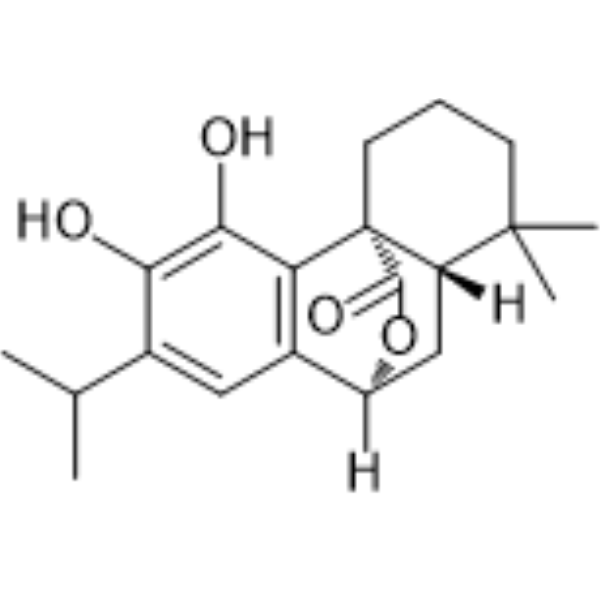


Publications Citing Use of MedChemExpress (MCE) Jolkinolide B
More Customer Validation & Images

-
Cell Proliferation/Viability Assay
-
Cell Migration/Invasion Assay
-
WB
-
Apoptosis Analysis
-
RT-PCR
Alle Caspase Isoform-spezifische Produkte anzeigen
More

Biologische Aktivität
Beschreibung
|
Akt |
cIAP-1 |
cIAP-2 |
XIAP |
Caspase-9 |
Caspase-3 |
NFκB |
JAK |
Cellular Effect
|
Cell Line

|
Type | Value | Description | References |
|---|---|---|---|---|
| A2780 | IC50 |
5.09 μg/mL
Compound: 8
|
Cytotoxicity against human A2780 cells by MTT assay
Cytotoxicity against human A2780 cells by MTT assay
|
[PMID: 18205316] |
| A549 | IC50 |
28.238 μM
Compound: Compound 4
|
Cytotoxicity against human A549 cells assessed as cell growth inhibition by MTT assay
Cytotoxicity against human A549 cells assessed as cell growth inhibition by MTT assay
|
[PMID: 27913179] |
| A549 | IC50 |
6.1 μg/mL
Compound: 8
|
Cytotoxicity against human A549 cells by MTT assay
Cytotoxicity against human A549 cells by MTT assay
|
[PMID: 18205316] |
| Bel-7402 | IC50 |
5.95 μg/mL
Compound: 8
|
Cytotoxicity against human Bel 7402 cells by MTT assay
Cytotoxicity against human Bel 7402 cells by MTT assay
|
[PMID: 18205316] |
| BGC-823 | IC50 |
5.81 μg/mL
Compound: 8
|
Cytotoxicity against human BGC 823 cells by MTT assay
Cytotoxicity against human BGC 823 cells by MTT assay
|
[PMID: 18205316] |
| HCT-15 | IC50 |
48 μM
Compound: 6
|
Cytotoxicity against human HCT-15 cells incubated for 48 hrs by MTT assay
Cytotoxicity against human HCT-15 cells incubated for 48 hrs by MTT assay
|
[PMID: 33289552] |
| HCT-8 | IC50 |
6.88 μg/mL
Compound: 8
|
Cytotoxicity against human HCT8 cells by MTT assay
Cytotoxicity against human HCT8 cells by MTT assay
|
[PMID: 18205316] |
| HeLa | IC50 |
7 μM
Compound: 6
|
Cytotoxicity against human HeLa cells
Cytotoxicity against human HeLa cells
|
[PMID: 33289552] |
| Hep 3B2 | IC50 |
>100 μM
Compound: Compound 4
|
Cytotoxicity against human Hep3B cells assessed as cell growth inhibition by MTT assay
Cytotoxicity against human Hep3B cells assessed as cell growth inhibition by MTT assay
|
[PMID: 27913179] |
| LNCaP C4-2B | IC50 |
4.4 μM
Compound: 6
|
Cytotoxicity against human LNCaP C4-2B cells incubated for 48 hrs by MTT assay
Cytotoxicity against human LNCaP C4-2B cells incubated for 48 hrs by MTT assay
|
[PMID: 33289552] |
| MCF7 | IC50 |
9.1 μM
Compound: 6
|
Cytotoxicity against human MCF7 cells incubated for 48 hrs by sulforhodamine B staining based spectrophotometric assay
Cytotoxicity against human MCF7 cells incubated for 48 hrs by sulforhodamine B staining based spectrophotometric assay
|
[PMID: 33289552] |
| MDA-MB-231 | IC50 |
31 μM
Compound: 6
|
Cytotoxicity against human MDA-MB-231 cells incubated for 48 hrs by MTT assay
Cytotoxicity against human MDA-MB-231 cells incubated for 48 hrs by MTT assay
|
[PMID: 33289552] |
| RAW264.7 | IC50 |
0.88 μM
Compound: 7
|
Antiinflammatory activity in mouse RAW264.7 cells assessed as inhibition of LPS-induced NO production after 24 hrs by Griess method
Antiinflammatory activity in mouse RAW264.7 cells assessed as inhibition of LPS-induced NO production after 24 hrs by Griess method
|
[PMID: 26615888] |
| RAW264.7 | IC50 |
4.9 μM
Compound: 6
|
Inhibition of LPS-induced nitric oxide production in mouse RAW264.7 cells after 24 hrs by Griess assay
Inhibition of LPS-induced nitric oxide production in mouse RAW264.7 cells after 24 hrs by Griess assay
|
[PMID: 26702644] |
| UACC-62 | IC50 |
2.8 μM
Compound: 6
|
Cytotoxicity against human UACC-62 cells incubated for 48 hrs by sulforhodamine B staining based spectrophotometric assay
Cytotoxicity against human UACC-62 cells incubated for 48 hrs by sulforhodamine B staining based spectrophotometric assay
|
[PMID: 33289552] |
In Vitro
Jolkinolide B (25-100 μg/mL, 24-72 h) reduces viability and induces dose‑ and time‑dependent apoptosis in human leukemic U937 cells. It markedly activates caspase‑3 and caspase‑9, and inhibition of PI3K or XIAP further enhances both apoptosis and caspase activation[1].
Jolkinolide B (50 μg/mL) induces apoptosis in human leukemic U937 cells and time-dependently modulates apoptosis-related proteins and mRNAs by downregulating phosphorylated Akt, Survivin, XIAP, cIAP1, cIAP2 and upregulating Smac[1].
Jolkinolide B (1, 5, 10 μM; 24 h) attenuates PA-induced lipotoxicity in mouse primary hepatocytes and Hep3B cells, and 10 μM can restore the Bax/Bcl-2 ratio in primary hepatocytes to normal[3].
Jolkinolide B (10 μM, 24 h) ameliorates
Palmitic acid (HY-N0830)-induced mitochondrial dysfunction, lipid accumulation, hepatic steatosis and inflammation in mouse primary hepatocytes and Hep3B cells via inhibiting JAK/STAT3 signaling and regulating downstream lipid synthesis and inflammatory gene expression[3].
Jolkinolide B (3 μg/mL; 7 days) inhibits the growth of Mycobacterium tuberculosis H37Ra in vitro with an MIC of 3 μg/mL[4].
Jolkinolide B (3-12 μg/mL; 8 days) inhibits the growth of Mycobacterium tuberculosis H37Ra in 7H9 broth in a concentration- and time-dependent manner over 8 days[4].
Jolkinolide B (3-6 μg/mL; 2 days) exhibits significant intracellular bactericidal activity against Mycobacterium tuberculosis H37Ra in RAW264.7 macrophages at MOI 5:1 and 10:1[4].
Jolkinolide B (6 μg/mL; 24 h) alters the morphology of Mycobacterium tuberculosis H37Ra, causing bacilli to become shorter and deformed after 24 hours of treatment[4].
Jolkinolide B (6 μg/mL; 24 h) alters the transcriptome of Mycobacterium tuberculosis H37Ra after 24 hours of treatment, significantly down-regulating 17 ribosomal protein genes and enriching ribosome-related pathways[4].
Jolkinolide B (3-6 μg/mL; 24 h) down-regulates the expression of 50S and 30S ribosomal protein genes in Mycobacterium tuberculosis H37Ra[4].
Jolkinolide B (3-6 μg/mL; 2 days) reduces the number of GFP-expressing Mycobacterium tuberculosis H37Ra in RAW264.7 macrophages[4].
MedChemExpress (MCE) has not independently confirmed the accuracy of these methods. They are for reference only.
-
Cell Line:human leukemic U937 cells
-
Concentration:25 μg/mL, 50 μg/mL, 100 μg/mL
-
Incubation Time:24 h, 48 h, 72 h
-
Result:Reduced U937 cell viability in a dose- and time-dependent manner.
Decreased viability with increasing drug concentration and exposure time relative to control cells with 98.01% viability.
-
Cell Line:human leukemic U937 cells
-
Concentration:25 μg/mL, 50 μg/mL, 100 μg/mL; 50 μg/mL (with 30 min pretreatment of 50 μM LY294002 (HY-10108) or 20 μM Embelin (HY-17473))
-
Incubation Time:48 h (25 μg/mL); 24 h, 48 h, 72 h (50 μg/mL); 48 h (100 μg/mL); 48 h (50 μg/mL with pretreatment)
-
Result:Induced apoptosis in U937 cells in a dose- and time-dependent manner.
Reached ~20% apoptosis rate at 25 μg/mL for 48 h, ~35% at 50 μg/mL for 48 h, ~60% at 100 μg/mL for 48 h.
Reached ~15% apoptosis rate at 50 μg/mL for 24 h, ~35% at 48 h, ~50% at 72 h.
Significantly increased the apoptosis rate induced by 50 μg/mL Jolkinolide B for 48 h when cells were pretreated with LY294002 or Embelin.
-
Cell Line:human leukemic U937 cells
-
Concentration:50 μg/mL
-
Incubation Time:24 h, 48 h, 72 h
-
Result:Decreased P-Akt levels in a time-dependent manner, while total Akt levels remained unchanged.
Decreased the protein expression of Survivin, XIAP, cIAP1, and cIAP2 in a time-dependent manner.
Increased Smac protein expression in a time-dependent manner.
-
Cell Line:human leukemic U937 cells
-
Concentration:50 μg/mL
-
Incubation Time:24 h, 48 h
-
Result:Decreased XIAP and cIAP2 mRNA expression in a time-dependent manner.
Increased Smac mRNA expression in a time-dependent manner.
-
Cell Line:RAW264.7 macrophages infected with Mycobacterium tuberculosis H37Ra/pCG76-GFP
-
Concentration:3 μg/mL (1×MIC); 6 μg/mL (2×MIC)
-
Incubation Time:2 days
-
Result:Reduced the number of GFP-positive M.
tuberculosis H37Ra/pCG76-GFP bacilli in RAW264.7 macrophages, with a greater reduction observed at 2×MIC compared to 1×MIC.
In Vivo
MedChemExpress (MCE) has not independently confirmed the accuracy of these methods. They are for reference only.
-
Animal Model:BALB/c (6-week-old male, OVA-induced asthma model)[2]
-
Dosage:2.5 mg/kg; 10 mg/kg
-
Administration:p.o.; daily; 35 days
-
Result:Reversed OVA-induced allergic airway inflammation and remodeling, restored lung function, and suppressed inflammatory responses and related cytokine secretion.
Inhibited the activation of NF-κB and TGFβ/smad3 signaling pathways in asthmatic mice.
Exerted partial effects at 2.5 mg/kg and achieved significant therapeutic efficacy only at 10 mg/kg.


Chemical Information
-
CAS. Nr. 37905-08-1
-
Appearance Solid
-
Molecular Weight 330.42
-
Formel C20H26O4
-
Color White to off-white
-
SMILES
C[C@]([C@]1([H])CC2)(CCCC1(C)C)[C@@]([C@@H]3[C@@]4(O5)O3)([H])[C@@]62[C@@H](C4=C(C)C5=O)O6
-
Structure Classification
-
Initial Source
-
Versand
Room temperature in continental US; may vary elsewhere.
-
Speicherung
-20°C, protect from light
* In solvent : -80°C, 6 months; -20°C, 1 month (protect from light)


Publications (1)
-
Journal Impact Factor
-
Most Recent
-
PLoS One
Jolkinolide B inhibits the progression of hepatocellular carcinoma by regulating Musashi-2 protein. [Abstract]2024 Apr 17;19(4):e0299920. PMID: 38630658
Jolkinolide B purchased from MedChemExpress. Usage Cited in: PLoS One. 2024 Apr 17;19(4):e0299920. [Abstract]
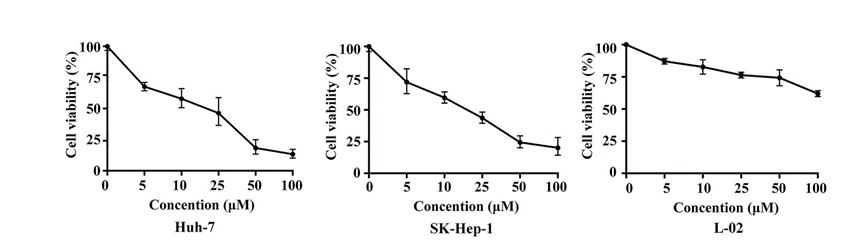
Cell viability assays of Huh-7, SK-Hep-1 and L-02 cells were performed using CCK-8 method after treatment with different concentrations (0, 5, 10, 25, 50, or 100 μM) of Jolkinolide B for 48 h.
Jolkinolide B purchased from MedChemExpress. Usage Cited in: PLoS One. 2024 Apr 17;19(4):e0299920. [Abstract]
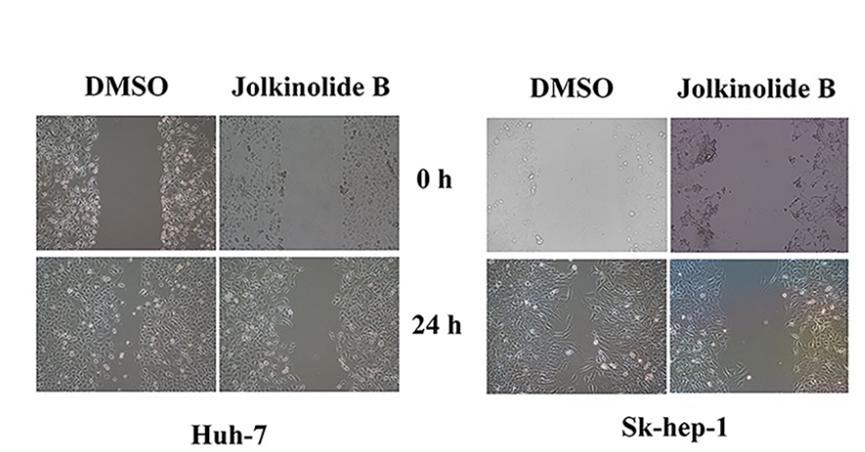
Huh-7 and SK-Hep-1 cells were seeded, scratched, and then treated with Jolkinolide B at a concentration of 10 μM for 48 h. The wound healing assays were performed to assess the migration abilities of Huh-7 and SK-Hep-1 cells.
Jolkinolide B purchased from MedChemExpress. Usage Cited in: PLoS One. 2024 Apr 17;19(4):e0299920. [Abstract]
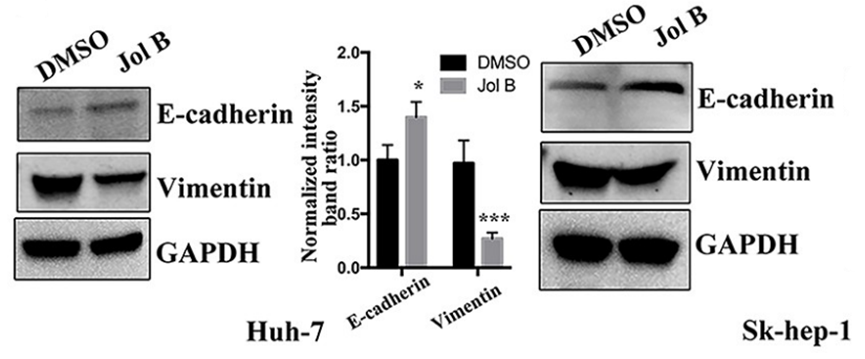
Huh-7 and SK-Hep-1 cells were treated with DMSO or Jolkinolide B at a concentration of 10 μM for 48 h; then the protein expression of E-cadherin and vimentin was analyzed using western blotting.
Jolkinolide B purchased from MedChemExpress. Usage Cited in: PLoS One. 2024 Apr 17;19(4):e0299920. [Abstract]
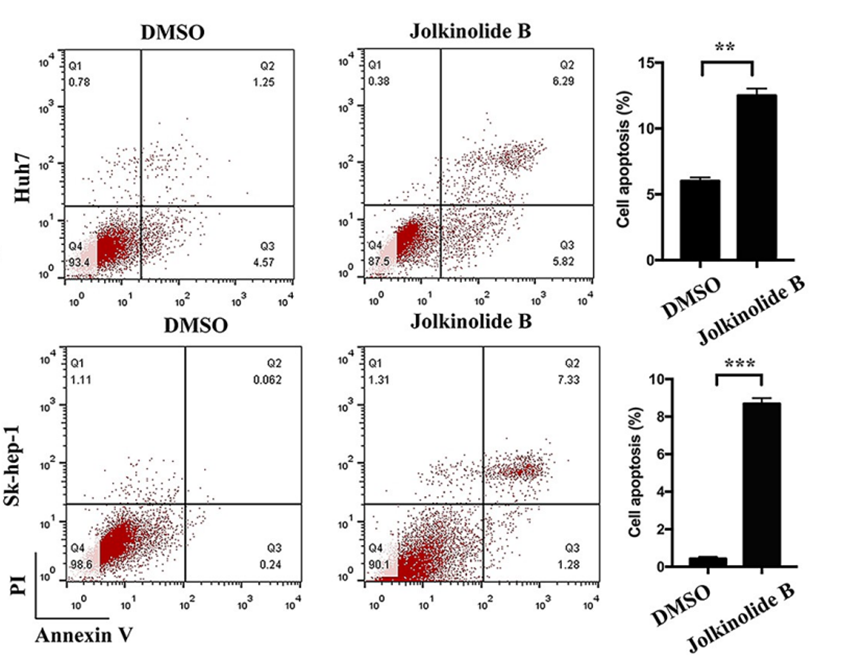
Huh-7 and SK-Hep-1 cells were treated with DMSO or Jolkinolide B, the cells apoptosis was analyzed by flow cytometry and apoptosis rates were calculated.
Jolkinolide B purchased from MedChemExpress. Usage Cited in: PLoS One. 2024 Apr 17;19(4):e0299920. [Abstract]
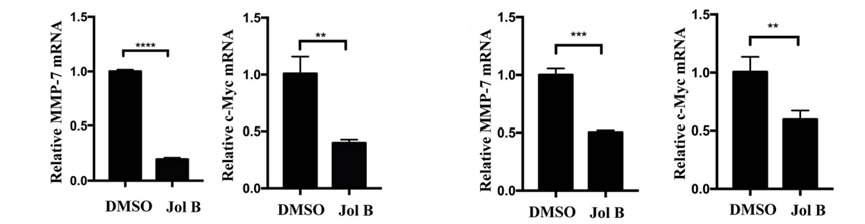
Huh-7 and SK-Hep-1 cells were treated with 10 μM Jolkinolide B for 48 h. The mRNA expression of MMP-7 and C-MYC in Huh-7 and SK-Hep-1 cells analyzed using RT-qPCR method.


Lösungsmittel & Löslichkeit
In Vitro:
DMSO : 8.33 mg/mL (25.21 mM; ultrasonic and warming and heat to 60°C; Hygroscopic DMSO has a significant impact on the solubility of product, please use newly opened DMSO)
Please refer to the solubility information to select the appropriate solvent. Once prepared, please aliquot and store the solution to prevent product inactivation from repeated freeze-thaw cycles.
Storage method and period of stock solution: -80°C, 6 months; -20°C, 1 month (protect from light). When stored at -80°C, please use it within 6 months. When stored at -20°C, please use it within 1 month.
Please refer to the solubility information to select the appropriate solvent. Once prepared, please aliquot and store the solution to prevent product inactivation from repeated freeze-thaw cycles.
Storage method and period of stock solution: -80°C, 6 months; -20°C, 1 month (protect from light). When stored at -80°C, please use it within 6 months. When stored at -20°C, please use it within 1 month.
Konzentration (Stammlösung) × Volumen (Stammlösung) = Konzentration (Ziellösung) × Volumen (Ziellösung)
In Vivo:
Select the appropriate dissolution method based on your experimental animal and administration route.
- For the following dissolution methods, please ensure to first prepare a clear stock solution using an In Vitro approach and then sequentially add co-solvents:
- To ensure reliable experimental results, the clarified stock solution can be appropriately stored based on storage conditions. As for the working solution for In Vivo experiments, it is recommended to prepare freshly and use it on the same day.
- The percentages shown for the solvents indicate their volumetric ratio in the final prepared solution. If precipitation or phase separation occurs during preparation, heat and/or sonication can be used to aid dissolution.
For the following dissolution methods, please prepare the working solution directly:
It is recommended to prepare fresh solutions and use them promptly within a short period of time.
The percentages shown for the solvents indicate their volumetric ratio in the final prepared solution. If precipitation or phase separation occurs during preparation, heat and/or sonication can be used to aid dissolution.
In Vivo Dissolution Calculator
Please enter the basic information of animal experiments:
-
-
-
-
Recommended: Prepare an additional quantity of animals to account for potential losses during experiments.
Please enter your animal formula composition:
-
%DMSO +
Recommended: Keep the proportion of DMSO in working solution below 2% if your animal is weak.
-
%+
-
+%Tween-80 + +
-
%Saline +
The co-solvents required include: DMSO, . All of co-solvents are available by MedChemExpress (MCE). , Tween 80. All of co-solvents are available by MedChemExpress (MCE).
Working solution concentration: 0.22 mg/mL
Method for preparing stock solution: mg drug dissolved in μL DMSO. Stock solution concentration: mg/mL. * In solvent : -80°C, 6 months; -20°C, 1 month (protect from light)
1. Take μL DMSO stock solution;
2. Add μL .
μL , mix evenly;
3. Then add μL Tween 80, mix evenly;
4. Then add μL
Please ensure that the stock solution in the first step is dissolved to a clear state, and add co-solvents in sequence. You can use ultrasonic heating (ultrasonic cleaner, recommended frequency 20-40 kHz), vortexing, etc. to assist dissolution.


Reinheit & Dokumentation
-
Data Sheet (300 KB)
-
SDS (392 KB)
- English - EN (392 KB)
- Français - FR (392 KB)
- Deutsch - DE (392 KB)
- Norwegian - NO (392 KB)
- Español - ES (392 KB)
- Swedish - SV (392 KB)
- Italian - IT (392 KB)
- Korean - KR (392 KB)
- Portuguese - PT (392 KB)
-
Handling Instructions (2659 KB)
Verweise
[1]. Wang JH, et al. Jolkinolide B from Euphorbia fischeriana Steud induces apoptosis in human leukemic U937 cells through PI3K/Akt and XIAP pathways. Mol Cells. 2011;32(5):451-457. [Content Brief]
[2]. Lin H, et al. Jolkinolide B attenuates allergic airway inflammation and airway remodeling in asthmatic mice. Allergol Immunopathol (Madr). 2024;52(4):91-96. Published 2024 Jul 1. [Content Brief]
[3]. Noh HR, et al. Jolkinolide B Ameliorates Liver Inflammation and Lipogenesis by Regulating JAK/STAT3 Pathway. Biomol Ther (Seoul). 2024;32(6):793-800. [Content Brief]
[4]. Zhao R, et al. Jolkinolide B inhibits mycobacterial growth by down-regulating ribosomal proteins and interfering with protein synthesis. Bioorg Med Chem. 2025;129:118294. [Content Brief]


Complete Stock Solution Preparation Table
Please refer to the solubility information to select the appropriate solvent. Once prepared, please aliquot and store the solution to prevent product inactivation from repeated freeze-thaw cycles.
Storage method and period of stock solution: -80°C, 6 months; -20°C, 1 month (protect from light). When stored at -80°C, please use it within 6 months. When stored at -20°C, please use it within 1 month.
| Optional Solvent | Concentration Solvent Mass | 1 mg | 5 mg | 10 mg | 25 mg |
|---|---|---|---|---|---|
| DMSO | 1 mM | 3.0265 mL | 15.1323 mL | 30.2645 mL | 75.6613 mL |
| 5 mM | 0.6053 mL | 3.0265 mL | 6.0529 mL | 15.1323 mL | |
| 10 mM | 0.3026 mL | 1.5132 mL | 3.0265 mL | 7.5661 mL | |
| 15 mM | 0.2018 mL | 1.0088 mL | 2.0176 mL | 5.0441 mL | |
| 20 mM | 0.1513 mL | 0.7566 mL | 1.5132 mL | 3.7831 mL | |
| 25 mM | 0.1211 mL | 0.6053 mL | 1.2106 mL | 3.0265 mL |


Jolkinolide B Related Classifications
HY-N0732 Related Classifications
 Powered by Bioz