


1. Search Result
Search Result
Results for "

physicochemical properties

" in MedChemExpress (MCE) Product Catalog:

39

Inhibitors & Agonists

14

Screening Libraries

2

Fluorescent Dye

7

Biochemical Assay Reagents

2

Peptides

1

Natural
Products

1

Isotope-Labeled Compounds

2

Oligonucleotides

1

GMP Molecules

Cat. No. Product Name Target Research Areas Chemical Structure
  • HY-128952
    Tesirine
    Maximum Cited Publications
    7 Publications Verification

    SG3249

    Drug-Linker Conjugates for ADC DNA Alkylator/Crosslinker Cancer
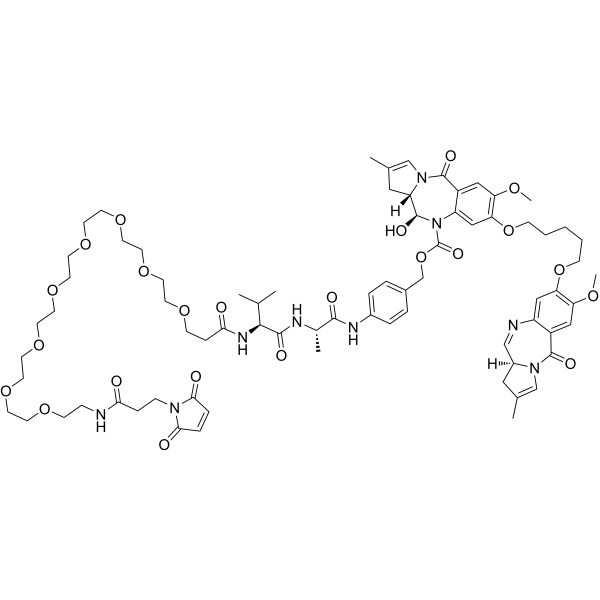
    Tesirine (SG3249) is an antibody-drug conjugate (ADC) pyrrolobenzodiazepine (PBD) dimer payload. Tesirine combines potent antitumor activity with desirable physicochemical properties such as favorable hydrophobicity and improved conjugation characteristics. SG3199 (HY-101161) is the released warhead component of the ADC payload Tesirine. SG3199 retains picomolar activity in a panel of cancer cell lines. PBD dimers are highly efficient DNA minor groove cross-linking agents with potent cytotoxicity .
    Tesirine
  • HY-Y1213

    Biochemical Assay Reagents Drug Intermediate Others
    Carbon possesses unique physicochemical properties such as electrical and structural characteristics, making it a core material in the field of fuel cells. Carbon also serves as a pharmaceutical excipient and can be used in the synthesis of other compounds .
    Carbon
  • HY-Y1213S
    Carbon-13C
    2 Publications Verification

    Isotope-Labeled Compounds Biochemical Assay Reagents Drug Intermediate Others
    Carbon- 13C is the 13C labeled Carbon (HY-Y1213). Carbon possesses unique physicochemical properties such as electrical and structural characteristics, making it a core material in the field of fuel cells. Carbon also serves as a pharmaceutical excipient and can be used in the synthesis of other compounds .
    Carbon-13C
  • HY-129328
    Magnesium glycinate
    1 Publications Verification

    Magnesium bisglycinate; Magnesium diglycinate

    Biochemical Assay Reagents Cancer
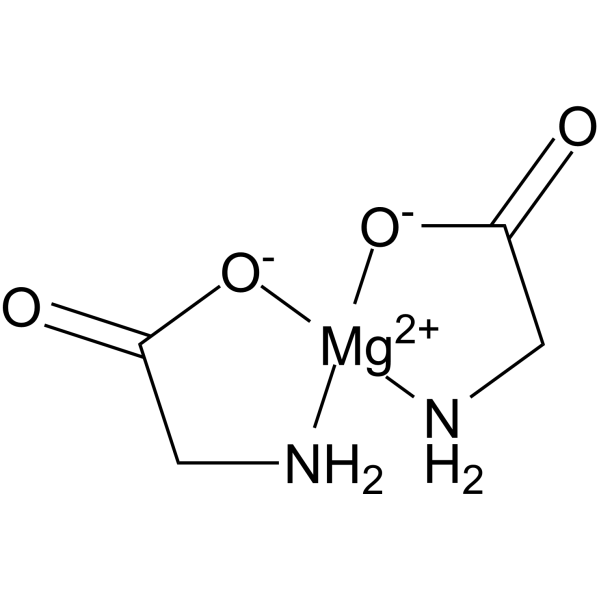
    Magnesium glycinate (Magnesium bisglycinate), the magnesium salt of glycine, is a nutrient supplement. Magnesium glycinate has satisfactory physico-chemical properties and bioactivities. Metal glycinate chelates are formed by glycine and metal compounds through chemical reactions. Magnesium is an essential mineral that plays a critical role in the human body. Magnesium takes part in the process of energy metabolism and assists the maintenance of normal muscle function .
    Magnesium glycinate
  • HY-W020768

    Biochemical Assay Reagents Cancer
    Fullerene-C60, a representative of carbon nanocompounds, is suggested to be promising agent for application in photodynamic research due to its unique physicochemical properties. Fullerene-C60 probes the intramolecular dynamics of its electron and energy transfer .
    Fullerene-C60
  • HY-W019885A

    Sodium triphosphate pentabasic, 98%

    Environmental Pollutants Biochemical Assay Reagents Others
    Sodium tripolyphosphate (STPP), 98% is an inorganic, non-toxic polyphosphate crosslinker, inducer and enhancer. Sodium tripolyphosphate (STPP), 98% induces the formation of unique needle-like microcrystals in sodium alginate-chitosan composite films. Sodium tripolyphosphate (STPP), 98% enhances the DPPH free radical scavenging activity of sodium alginate-chitosan composite films .
    Sodium tripolyphosphate (STPP), 98%
  • HY-112626
    CDK12-IN-2
    1 Publications Verification

    CDK Cancer
    CDK12-IN-2 is a potent, selective and nanomolar CDK12 inhibitor (IC50=52 nM) with good physicochemical properties. CDK12-IN-2 is also a strong CDK13 inhibitor due to CDK13 is the closest homologue of CDK12. CDK12-IN-2 shows excellent kinase selectivity for CDK12 over CDK2, 9, 8, and 7. CDK12-IN-2 inhibits the phosphorylation of Ser2 in the C-terminal domain of RNA polymerase II. CDK12-IN-2 can be used an excellent chemical probe for functional studies of CDK12 .
    CDK12-IN-2
  • HY-W099927

    Biochemical Assay Reagents Others
    [C3MPr]NTf2 is a representative ionic liquid that covers all 12 IL property datasets .
    [C3MPr]NTf2
  • HY-103671

    Glutaminase Inflammation/Immunology Cancer
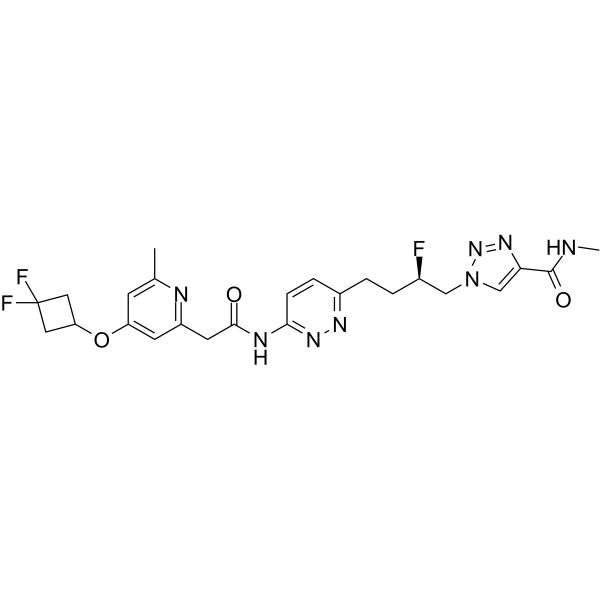
    IPN-60090 is an orally active and highly selective inhibitor of glutaminase 1 (GLS1; IC50=31 nM), with no activity observed against GLS-2. IPN-60090 exhibits excellent physicochemical and pharmacokinetic properties in vivo. IPN-60090 can be used for solid tumors research, such as lung and ovarian cancers .
    IPN60090
  • HY-175746

    CX3CR1 Cardiovascular Disease
    AZD0233 is an orally active CX3CR1 antagonist. AZD0233 modulates the CX3CR1/CX3CL1 signaling axis via immunomodulatory effects. AZD0233 has improved physicochemical properties, metabolic stability, low toxicity and CYP inhibition. AZD0233 improves cardiac function and reduces macrophages and fibrotic scar in mice model of dilated cardiomyopathy. AZD0233 can be used for cardiovascular diseases like dilated cardiomyopathy research .
    AZD0233
  • HY-103671A

    Glutaminase Inflammation/Immunology Cancer
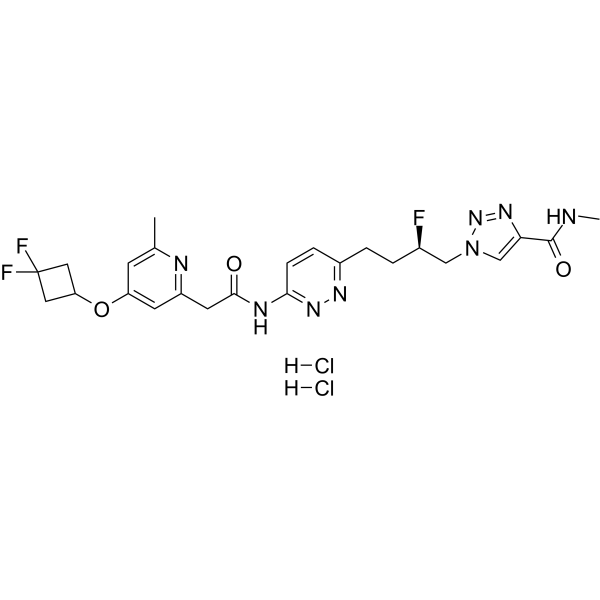
    IPN-60090 dihydrochloride is an orally active and highly selective inhibitor of glutaminase 1 (GLS1; IC50=31 nM), with no activity observed against GLS-2. IPN-60090 dihydrochloride exhibits excellent physicochemical and pharmacokinetic properties in vivo. IPN-60090 dihydrochloride can be used for solid tumors research, such as lung and ovarian cancers .
    IPN60090 dihydrochloride
  • HY-D2826

    Fluorescent Dye Others
    FITC-Chitosan (MW 100000) is a chitosan (Chitosan) (HY-B2144A) labeled with FITC (HY-66019). FITC-Chitosan (MW 100000) combines the biological and physicochemical properties of chitosan (such as biocompatibility, positive charge, and nanoparticle-forming ability) with the fluorescent visibility of FITC (Ex/Em = ~485/535 nm) .
    FITC-Chitosan (MW 100000)
  • HY-126248

    PARP Wnt Cancer
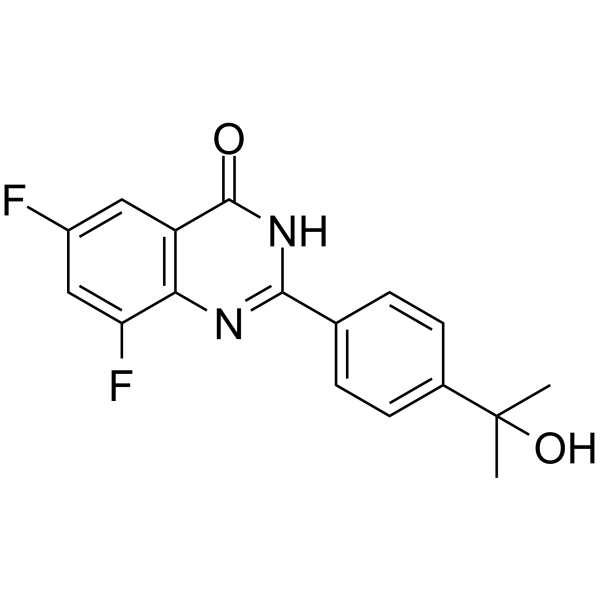
    Tankyrase-IN-2 (compound 5k) is a potent, selective, and orally active tankyrase inhibitor (IC50s of 10, 7, and 710 nM for TNKS1, TNKS2 as well as PARP1, respectively). Tankyrase-IN-2 has favorable physicochemical profile and pharmacokinetic properties modulating Wnt pathway activity in a colorectal xenograft model .
    Tankyrase-IN-2
  • HY-142991

    POPG

    Liposome Others
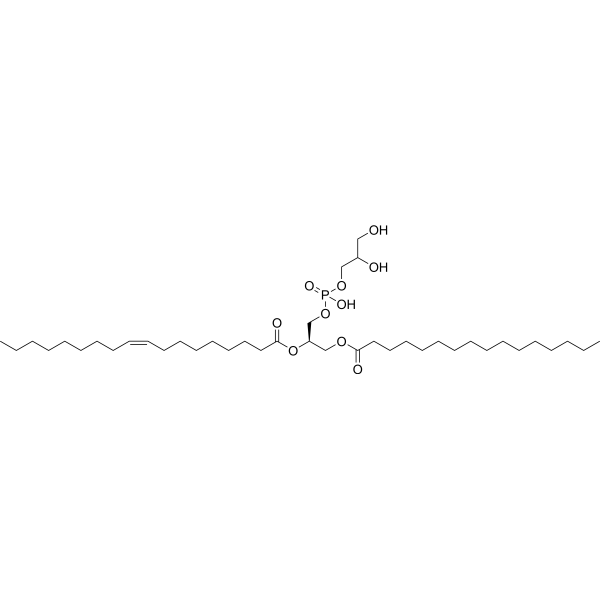
    1-Palmitoyl-2-oleoyl-sn-glycero-3-phosphatidylglycerol (POPG) is an anionic phosphatidylglycerol that often serves as a key component to co-construct model phospholipid bilayers with phosphatidylcholine (e.g., at a 3:1 POPC:POPG ratio) for investigating the structure and dynamics of transmembrane proteins. 1-Palmitoyl-2-oleoyl-sn-glycero-3-phosphatidylglycerol acts as a fundamental material for mimicking the physicochemical properties of biological membranes and enables the elucidation of membrane protein interaction mechanisms .
    1-Palmitoyl-2-oleoyl-sn-glycero-3-phosphatidylglycerol
  • HY-175888

    Mc-exo-EVC-Exatecan

    Drug-Linker Conjugates for ADC Cancer
    APL-1082 is a drug-Linker conjugate that can be used for ADC synthesis. APL-1082 contains Exatecan (HY-13631) and Linker (HY-175929). APL-1082 reduces aggregation and hydrophobicity in Trastuzumab (HY-P9907) ADCs, enables production of high-DAR (10) ADCs with homogeneity and defined physicochemical properties. APL-1082 forms a Trastuzumab ADC with enhanced stability, showing greater DAR retention over time. APL-1082 can be used for the research of gastric cancer .
    APL-1082
  • HY-152472

    Trk Receptor Neurological Disease
    ENT-C225 is an effective activator of TrkB neurotrophin receptor. ENT-C225 has high effect on activating TrkB receptor (TrkBR), and has good physicochemical properties and neuroprotective properties .
    ENT-C225
  • HY-178794

    PGE synthase Inflammation/Immunology
    AGU661 is a Microsomal prostaglandin E2 synthase 1 (mPGES-1) inhibitor with an IC50 of 0.22  nM. AGU661 lowers PGE2 formation in human pro-inflammatory M1 macrophages and activated monocytes without affecting other lipid mediator pathways. AGU661 has unfavorable physicochemical properties with poor metabolic stability and strong plasma protein binding tendencies. AGU661 into PLGA-based NPs significantly enhances its bioactivity. AGU661 can be used for inflammatory disorders research .
    AGU661
  • HY-173623

    iGluR Neurological Disease
    EU 1622-240 is a biased positive allosteric modulator of GluN2B, GluN2C, and GluN2D, with EC50s of 0.57, 0.82, 1.1 μM respectively. EU 1622-240 has good physicochemical properties, in vitro stability, and permeability .
    EU 1622-240
  • HY-174825

    TRP Channel Cannabinoid Receptor Interleukin Related TNF Receptor Inflammation/Immunology
    TRPM8 antagonist 4 is a CB2R partial agonist (EC50=54.2 nM, Ki=3.2 μM) and TRPM8 antagonists (IC50=42.3 nM) with high functional selectivity and good physicochemical properties. TRPM8 antagonist 4 has significant anti-inflammatory and analgesic effects and good safety, reduces the mRNA expression of TNF-α, IL-6, and IL-1β .
    TRPM8 antagonist 4
  • HY-W010361

    Biochemical Assay Reagents Others
    Tetramethylammonium acetate is an organic compound commonly used as a phase transfer catalyst in organic synthesis reactions, especially those involving charged species or polar reagents. It can facilitate the transfer of reactants between two immiscible phases, such as water and organic solvents, by forming stable ion pairs. Additionally, Tetramethylammonium acetate has been used to prepare a variety of organic compounds, including esters, amides, and carboxylic acids. Due to its unique physicochemical properties, it has also been investigated for its potential use in developing new materials such as ionic liquids and liquid crystals. "x" in the formula represents the number of water molecules in the crystal structure, which can vary depending on the preparation method.
    Tetramethylammonium acetate
  • HY-16387

    VEGFR Others
    PF-00337210 is a potent and selective inhibitor of VEGFRs, designed for treating age-related macular degeneration via intravitreal injection. The formulation strategy focused on developing an ophthalmic solution that would precipitate upon injection into the vitreous, ensuring sustained drug delivery. Challenges included maintaining low dosing volumes, selecting safe excipients for intravitreal use, and addressing the drug's unique physicochemical properties. The final formulation, an isotonic solution in a citrate-buffered vehicle with NaCl, demonstrated stability, potency, and recovery through intravitreal dosing syringes. It formed a depot upon injection into vitreous humor, representing a novel nonpolymeric in situ-forming depot formulation for intravitreal drug delivery .
    PF 00337210
  • HY-128952G

    SG3249

    Drug-Linker Conjugates for ADC DNA Alkylator/Crosslinker Cancer
    Tesirine (GMP) (SG3249 (GMP)) is Tesirine (HY-128952) produced by using GMP guidelines. GMP small molecules works appropriately as an auxiliary reagent for cell therapy manufacture. Tesirine (SG3249) is an antibody-drug conjugate (ADC) pyrrolobenzodiazepine (PBD) dimer payload. Tesirine combines potent antitumor activity with desirable physicochemical properties such as favorable hydrophobicity and improved conjugation characteristics. SG3199 (HY-101161) is the released warhead component of the ADC payload Tesirine. SG3199 retains picomolar activity in a panel of cancer cell lines. PBD dimers are highly efficient DNA minor groove cross-linking agents with potent cytotoxicity .
    Tesirine
  • HY-145347

    Epigenetic Reader Domain Cancer
    GSK232 is a highly selective, cellularly penetrant CECR2 inhibitor with excellent physicochemical properties.
    GSK232
  • HY-111333

    Dioxapyrrolomycin; LL-F42248α; AL-R2081

    Bacterial Infection
    Pyrroxamycin is a novel antibiotic produced by Streptomyces, whose chemical structure was determined by chemical properties and X-ray crystallography and 13C NMR spectroscopy analysis. It is active against Gram-positive bacteria and dermatophytes. In this paper, the authors discuss the taxonomy, fermentation, isolation, physicochemical properties, chemical structure, and biological activity of the strain producing Pyrroxamycin.
    Pyrroxamycin
  • HY-149776

    nAChR Neurological Disease
    RGH-560 (compound 53) shows highly advanced α7 nAChR positive modulator properties and favorable physicochemical features. RGH-560 has robust procognitive in vivo potential. RGH-560 can be used to study Scopolamine (HY-N0296) -induced amnesia in mice .
    RGH-560
  • HY-W250179

    Polyoxyethylene (6) cetyl ether

    Biochemical Assay Reagents Others
    Hexaethylene glycol monohexadecyl ether, is a nonionic surfactant belonging to the polyethylene glycol (PEG) ether family. It has a hydrophilic head and a lipophilic tail, which makes it suitable for a wide range of applications. Specifically, Hexaethylene glycol monohexadecyl ether is commonly used in membrane protein research, for solubilization and stabilization of proteins, and for structural analysis techniques such as X-ray crystallography and electron microscopy. Additionally, Hexaethylene glycol monohexadecyl ether is used in a variety of other industrial and research applications, including drug delivery systems, nanotechnology, and diagnostic analysis. Its unique properties make it ideal for facilitating interactions between molecules with different physicochemical properties.
    Hexaethylene glycol monohexadecyl ether
  • HY-146372

    CXCR Cancer
    CXCR4 antagonist 5 (compound 23) is a highly potent CXCR4 antagonist with an IC50 value of 8.8 nM. CXCR4 antagonist 5 can inhibit CXCL12-induced cytosolic calcium increase (IC50 = 0.02 nM) and inhibits CXCR4/CXLC12-mediated chemotaxis. CXCR4 antagonist 5 has good physicochemical properties and in vitro safety profiles, inhibiting CYP isozymes and hERG marginally or moderately .
    CXCR4 antagonist 5
  • HY-155527

    SARS-CoV Infection
    SARS-CoV-2 Mpro-IN-9 (compound c7) is a nonpeptidic, noncovalent SARS-CoV-2 M pro inhibitor (IC50=0.085 μM), with improved physicochemical and drug metabolism and pharmacokinetics (DMPK) properties. SARS-CoV-2 Mpro-IN-9 inhibits viral replication (EC50=1.10 μM) in SARS-CoV-2-infected Vero E6 cells, while exhibits low cytotoxic effects (CC50>50 μM) .
    SARS-CoV-2 Mpro-IN-9
  • HY-118243

    Amyloid-β Others
    KMS88009 is a potent small molecule that directly interferes with the formation of amyloid-β oligomers, thereby preserving cognitive behavior when used preventively and reversing cognitive behavior decline when used therapeutically. Oral administration of KMS88009 around the onset of Alzheimer's disease symptoms significantly reduced the assembly of amyloid-β oligomers and improved cognitive behavior in the APP/PS1 double transgenic mouse model. This unique dual mode of action suggests that KMS88009 may be a powerful therapeutic candidate for the treatment of Alzheimer's disease. In an evaluation, the physicochemical properties, pharmacokinetics and toxicity of this anti-amyloidogenic small molecule KMS88009 were studied, as well as post-mortem analysis of APP/PS1 TG mice after behavioral testing.
    KMS88009
  • HY-P11690

    Biochemical Assay Reagents Cancer
    Fmoc-Aeg-OBn is a benzyl-protected N-(2-aminoethyl)-glycine PNA backbone derivative. Fmoc-Aeg-OBn serves as a key intermediate for the synthesis of Fmoc-protected PNA monomers with modified nucleobases. Fmoc-Aeg-OBn can be used to prepare PNA with unique physicochemical properties, which is suitable for antisense and gene diagnostic applications. Fmoc-Aeg-OBn is applicable to cancer-related research .
    Fmoc-Aeg-OBn
  • HY-181238

    Carbonic Anhydrase Others
    CAII-IN-13 is a human carbonic anhydrase inhibitor, with a Ki of 65.9 nM against human carbonic anhydrase II and a Ki of 968.4 nM against human carbonic anhydrase I. CAII-IN-13 functionally inhibits the catalytic activities of human carbonic anhydrase II and human carbonic anhydrase I. CAII-IN-13 satisfies the Lipinski's rule of five and may possess physicochemical properties and pharmacokinetic profiles associated with in vivo bioavailability .
    CAII-IN-13
  • HY-103671AR

    Reference Standards Glutaminase Inflammation/Immunology Cancer
    IPN60090 dihydrochloride (Standard) is the analytical standard of IPN60090 dihydrochloride (HY-103671A). This product is intended for research and analytical applications. IPN-60090 dihydrochloride is an orally active and highly selective inhibitor of glutaminase 1 (GLS1; IC50=31 nM), with no activity observed against GLS-2. IPN-60090 dihydrochloride exhibits excellent physicochemical and pharmacokinetic properties in vivo. IPN-60090 dihydrochloride can be used for solid tumors research, such as lung and ovarian cancers .
    IPN60090 dihydrochloride (Standard)
  • HY-103671R

    Reference Standards Glutaminase Inflammation/Immunology Cancer
    IPN60090 (Standard) is the analytical standard of IPN60090 (HY-103671). This product is intended for research and analytical applications. IPN-60090 is an orally active and highly selective inhibitor of glutaminase 1 (GLS1; IC50=31 nM), with no activity observed against GLS-2. IPN-60090 exhibits excellent physicochemical and pharmacokinetic properties in vivo. IPN-60090 can be used for solid tumors research, such as lung and ovarian cancers .
    IPN60090 (Standard)
  • HY-181010

    HDAC Parasite Infection
    HDAC1-IN-12 is a Plasmodium falciparum HDAC1 (PfHDAC1) inhibitor with an IC50 of 4.1 nM against Pf3D7. HDAC1-IN-12 inhibits PfHDAC1, upregulates histone H3 acetylation in P. falciparum parasites, downregulates malaria invasion-related gene expression, and exhibits favorable safety profiles, improved physicochemical properties, and potent in vivo antimalarial activity. HDAC1-IN-12 can be used for the research of malaria .
    HDAC1-IN-12
  • HY-176972

    ADC Payload DNA/RNA Synthesis Cancer
    Di(MMY-SJG)-Ph-prop-2-yne-1-sulfonic acid (Compound 5) is a cytotoxic pyrrolobenzodiazepine (PBD) dimer derivative. Di(MMY-SJG)-Ph-prop-2-yne-1-sulfonic acid exhibits moderate DNA alkylating activity. Di(MMY-SJG)-Ph-prop-2-yne-1-sulfonic acid can be used as the payload of ADC, thereby demonstrating strong antigen-dependent cytotoxicity .
    Di(MMY-SJG)-Ph-prop-2-yne-1-sulfonic acid
  • HY-179393

    HBV Cancer
    HBV-IN-54 is a selective and orally active HBV inhibitor. HBV-IN-54 exhibits anti-HBV activity in both HepAD38 cells (EC50 = 0.020 μM, CC50 > 100 μM) and HLCZ01 cells (EC50 = 0.024 μM, CC50 > 100 μM). HBV-IN-54 inhibits viral replication in vivo. HBV-IN-54 displays favorable physicochemical properties and high plasma stability. HBV-IN-54 can be used for research on Hepatitis B (HBV) .
    HBV-IN-54
  • HY-180452

    Paraptosis Infection
    HAT-IN-10 (Compound 12a) is an anti-human African trypanosomiasis (HAT) agent, with an EC50 value of 0.23 μM for T. brucei. HAT-IN-10 can be used for research on HAT .
    HAT-IN-10
  • HY-P11743

    Biochemical Assay Reagents Reactive Oxygen Species (ROS) Metabolic Disease
    Mitochondrial penetrating peptide is a peptide sequence (FrFKFrFK-CONH2) that selectively transports cargo into mitochondria. Mitochondrial penetrating peptide possesses special physicochemical properties, enabling it to selectively translocate dinuclear Ru (II) polypyridine complexes into mitochondria of living mammalian cells without the aid of solvents or membrane permeabilization treatments, thus achieving precise mitochondrial localization and enrichment of the complexes while excluding their distribution in the nucleus. Mitochondrial penetrating peptide enables dynamic monitoring of mitochondrial oxygen concentration and ROS production in living mammalian cells via changes in the luminescence lifetime of the coupled Ru (II) complex .
    Mitochondrial penetrating peptide
  • HY-182905

    Somatostatin Receptor G protein-coupled Bile Acid Receptor 1 Metabolic Disease
    SSTR5/TGR5-modulator-1 is an orally active and dual-target small molecule, balanced in vitro activity at human TGR5 and human SSTR5. SSTR5/TGR5-modulator-1 activates human TGR5 to promote cAMP accumulation. SSTR5/TGR5-modulator-1 blocks human SSTR5 to inhibit agonist-induced calcium mobilization. SSTR5/TGR5-modulator-1 improves glucose tolerance in mice. SSTR5/TGR5-modulator-1 alleviates gallbladder filling in mice at pharmacologically relevant doses. SSTR5/TGR5-modulator-1 has suboptimal physicochemical and metabolic properties.SSTR5/TGR5-modulator-1 can be used for the research of type 2 diabetes mellitus .
    SSTR5/TGR5-modulator-1

Inquiry Online

Your information is safe with us. * Required Fields.

Salutation


Country or Region *

Applicant Name *


Organization Name *

Department *


Email Address *


Product Name *

Cat. No.


Requested quantity *

Phone Number *


Remarks

Inquiry Online

Inquiry Information

Product Name:
Cat. No.:
Quantity:
MCE Japan Authorized Agent: