1. Search Result
Search Result
Results for "

polyposis

" in MedChemExpress (MCE) Product Catalog:

10

Inhibitors & Agonists

2

Peptides

4

Recombinant Proteins

Cat. No. Product Name Target Research Areas Chemical Structure
  • HY-100685
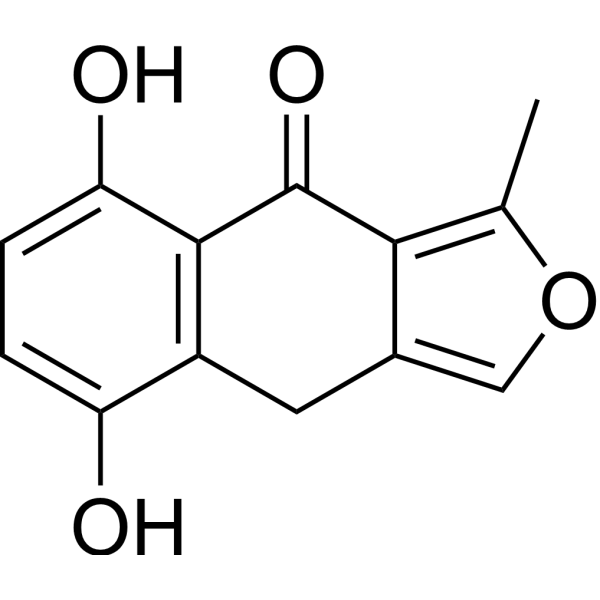
    MS-444
    2 Publications Verification

    BE-34776

    HuR Apoptosis COX Neurological Disease Cancer
    MS-444 (BE-34776) is a HuR (ELAVL1) inhibitor that blocks the cytoplasmic translocation of HuR and inhibits its dimerization. MS-444 reduces cytoplasmic HuR levels by preventing the binding of HuR to ARE-mRNA, without altering the total expression of HuR. MS-444 induces apoptosis, inhibits cell growth, angiogenesis and invasion, and also regulates immune function and microbiota. MS-444 effectively alters the number, size and invasiveness of tumors in various cancer models. MS-444 is tolerable to intraperitoneal injection in vivo and can be applied to research related to colorectal cancer, familial adenomatous polyposis, colitis-associated cancer and glioblastoma .
    MS-444
  • HY-B0327
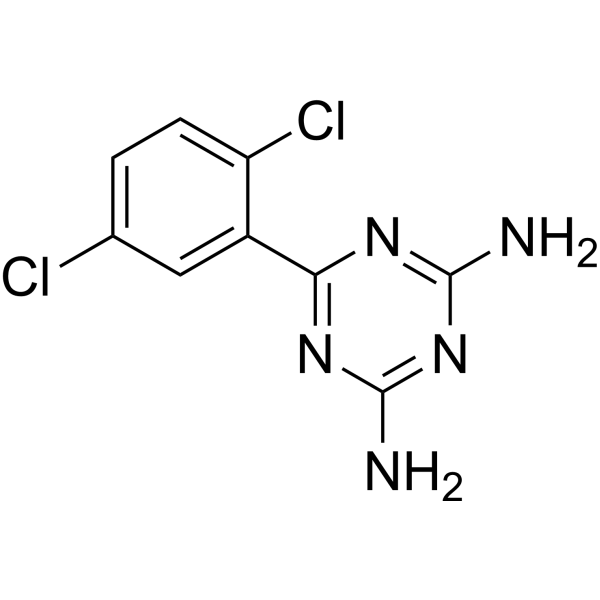
    Irsogladine
    3 Publications Verification

    Dicloguamine

    Phosphodiesterase (PDE) NF-κB AP-1 TRP Channel Interleukin Related Inflammation/Immunology Cancer
    Irsogladine (Dicloguamine) is an orally active gastric mucosal protective agent. Irsogladine inhibits breast cancer recurrence and lung metastasis in nude mice . Irsogladine inhibits the transcriptional activities of NF-κB and AP-1, suppresses the activities of PDE and PDE4 to elevate intracellular cAMP levels, and activates TRPV1 and KATP channels. Irsogladine enhances iNOS expression, NO production, and the activation of cAMP-responsive elements. Irsogladine inhibits the development and progression of intestinal polyps in Apc-mutant mice. Irsogladine alleviates oxidative stress, increases gastric mucosal blood flow, and stimulates the production of endogenous prostaglandins. Irsogladine promotes insulin secretion in MIN6 cells. Irsogladine inhibits tumor angiogenesis, cancer cell proliferation, and the production of proinflammatory cytokines. Irsogladine exerts protective effects on astrocytes in ethanol/hydrochloric acid-induced gastric ulcers in mice. Irsogladine prevents colitis in IL-10 gene-deficient mice by reducing the production of IL-12 and IL-23. Irsogladine upregulates gap junction intercellular communication in pancreatic cancer cells via the PKA pathway. Irsogladine is applicable to research related to breast cancer, intestinal polyposis, gastric ulcer, spontaneous colitis, glioma, liver cancer, and pancreatic cancer [5][6] .
    Irsogladine
  • HY-116572A

    Reactive Oxygen Species (ROS) JNK Apoptosis Caspase Cancer
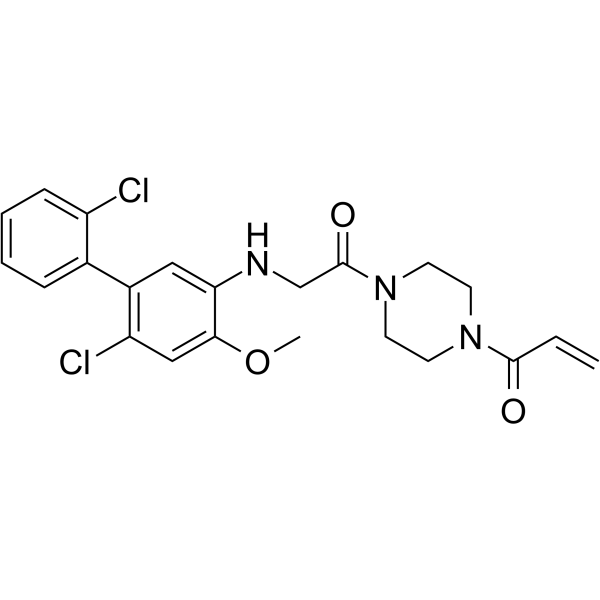
    TASIN-1 is a selective inhibitor of truncated APC TR (adenomatous polyposis coli gene) that exerts cytotoxic effects by inhibiting cholesterol biosynthesis. TASIN-1 specifically targets colorectal cancer (CRC) cells carrying APC truncated mutations, while having no significant toxicity to wild-type APC cells. TASIN-1 exerts cytotoxic effects by targeting Emopamil binding protein (EBP) to inhibit cholesterol biosynthesis, triggering endoplasmic reticulum (ER) stress, reactive oxygen species (ROS) generation, and JNK-mediated apoptosis, and inhibiting Akt survival signaling. TASIN-1 can be used to prevent and intervene in APC mutant colorectal cancer .
    TASIN-1
  • HY-109182

    JNJ-64251330

    JAK STAT Inflammation/Immunology
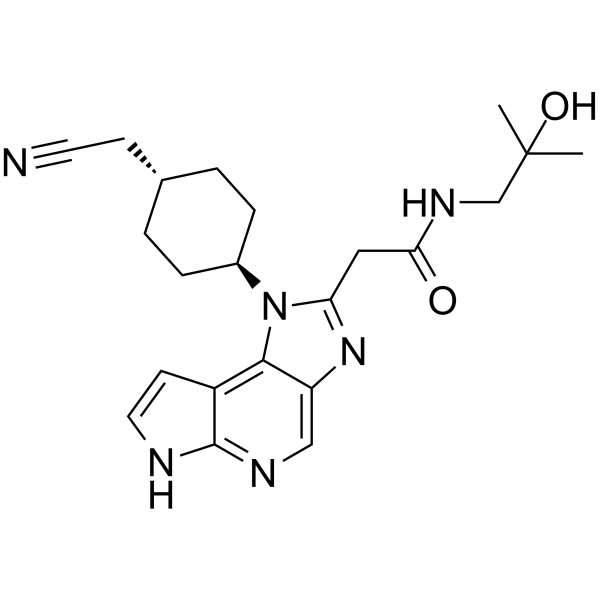
    Lorpucitinib (JNJ-64251330) is an orally active pan-JAK inhibitor with good enteric selectivity and safety. Lorpucitinib can inhibit the JAK/STAT pathway and reduce the levels of inflammatory biomarkers in serum. Lorpucitinib can be used in the research of familial adenomatous polyposis and gastrointestinal inflammatory diseases .
    Lorpucitinib
  • HY-118139

    COX Inflammation/Immunology
    Desmethyl Celecoxib (compound 3b) is a selective cyclooxygenase-2 (COX-2) inhibitor (IC50=32 nM) with anti-inflammatory activities. Desmethyl Celecoxib is an analog of Celecoxib and with the optimal yield of 75% .
    Desmethyl Celecoxib
  • HY-178028

    Histone Methyltransferase Cancer
    PRMT5-IN-53 is a gut-restricted and orally active PRMT5 inhibitor with pIC50s of ≥ 9.7 against hPRMT5 and mPRMT5. PRMT5-IN-53 binds to the PRMT5:MEP50 complex with a KD of 11.3 pM. PRMT5-IN-53 effectively inhibits PRMT5 locally in the intestines of mice, significantly reducing the number and area of polyps, while avoiding systemic hematological toxicity (such as anemia, neutropenia). PRMT5-IN-53 can be used for the study of colorectal cancer especially for familial adenomatous polyposis (FAP) .
    PRMT5-IN-53
  • HY-116572

    Reactive Oxygen Species (ROS) JNK Apoptosis Caspase Cancer
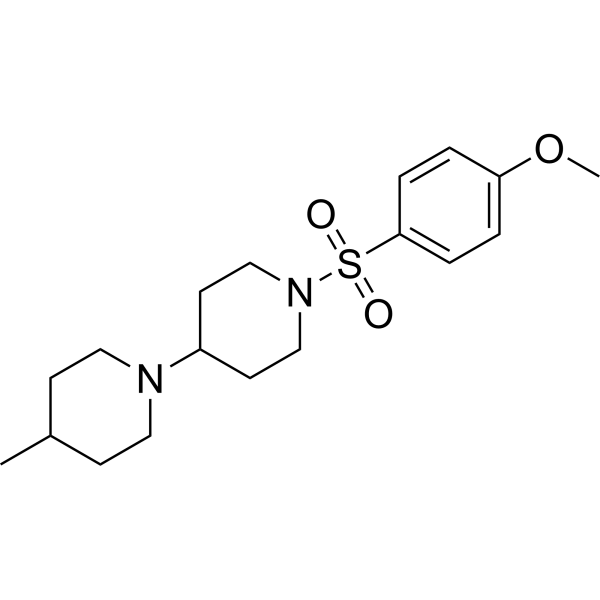
    TASIN-1 hydrochloride is a selective inhibitor of truncated APC TR (adenomatous polyposis coli gene) that exerts cytotoxic effects by inhibiting cholesterol biosynthesis. TASIN-1 hydrochloride specifically targets colorectal cancer (CRC) cells carrying APC truncated mutations, while having no significant toxicity to wild-type APC cells. TASIN-1 hydrochloride exerts cytotoxic effects by targeting Emopamil binding protein (EBP) to inhibit cholesterol biosynthesis, triggering endoplasmic reticulum (ER) stress, reactive oxygen species (ROS) generation, and JNK-mediated apoptosis, and inhibiting Akt survival signaling. TASIN-1 hydrochloride can be used to prevent and intervene in APC mutant colorectal cancer .
    TASIN-1 hydrochloride
  • HY-P2269

    Drug Derivative Cancer
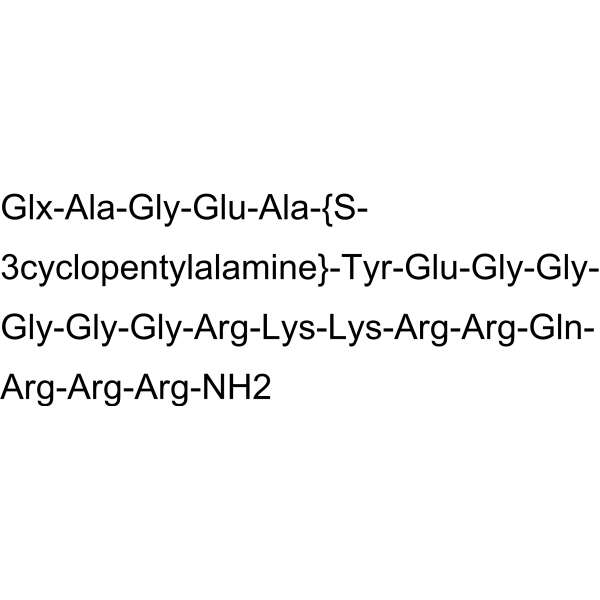
    MAIT-203, a cyclopentyalanin-derived peptidomimetic, potently inhibits the interaction of adenomatous polyposis coli (APC) and Asef (RhoGEF4), but not APC-Sam68 or APC-striatin interactions. MAIT-203 binds APC-ARM with a Ki of 0.015 μM and a Kd of 0.036 μM. MAIT-203 significantly represses the migration and invasion of colorectal cancer cells.
    MAIT-203
  • HY-P2269A

    Drug Derivative Cancer
    MAIT-203 acetate is a cyclopentyalanin-derived peptidomimetic, potently inhibits the interaction of adenomatous polyposis coli (APC) and Asef (RhoGEF4), but not APC-Sam68 or APC-striatin interactions. MAIT-203 acetate binds APC-ARM with a Ki value of 0.015 μM and aKd value of 0.036 μM. MAIT-203 acetate significantly represses the migration and invasion of colorectal cancer cells .
    MAIT-203 acetate
  • HY-181901

    PROTACs STAT Inflammation/Immunology
    PROTAC STAT6 degrader-4 (Compound 3u247) is a STAT6 PROTAC degrader with a DC50 of 0.04 nM. PROTAC STAT6 degrader-4 promotes the ubiquitination and degradation of STAT6, and is applicable to the research of immune diseases .
    PROTAC STAT6 degrader-4

Inquiry Online

Your information is safe with us. * Required Fields.

Salutation


Country or Region *

Applicant Name *


Organization Name *

Department *


Email Address *


Product Name *

Cat. No.


Requested quantity *

Phone Number *


Remarks

Inquiry Online

Inquiry Information

Product Name:
Cat. No.:
Quantity:
MCE Japan Authorized Agent:

