1. Search Result
Search Result
Results for "

polyubiquitination

" in MedChemExpress (MCE) Product Catalog:

21

Inhibitors & Agonists

1

Peptides

1

Inhibitory Antibodies

1

Click Chemistry

Cat. No. Product Name Target Research Areas Chemical Structure
  • HY-160141

    BGB-16673; BTK-IN-29

    PROTACs Btk NF-κB Inflammation/Immunology Cancer
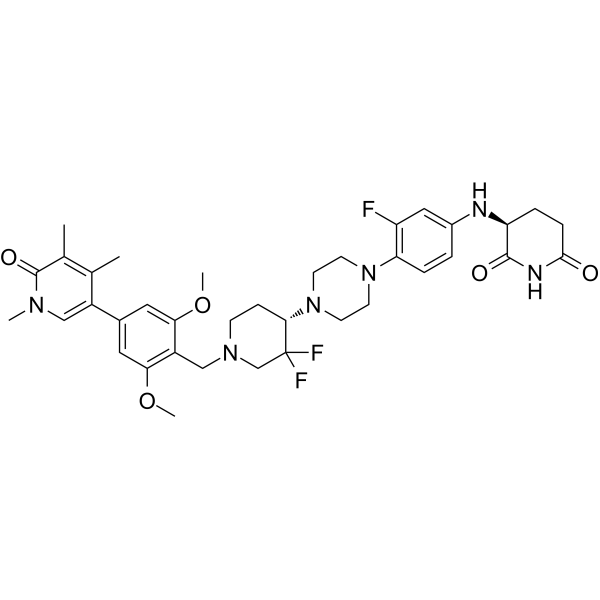
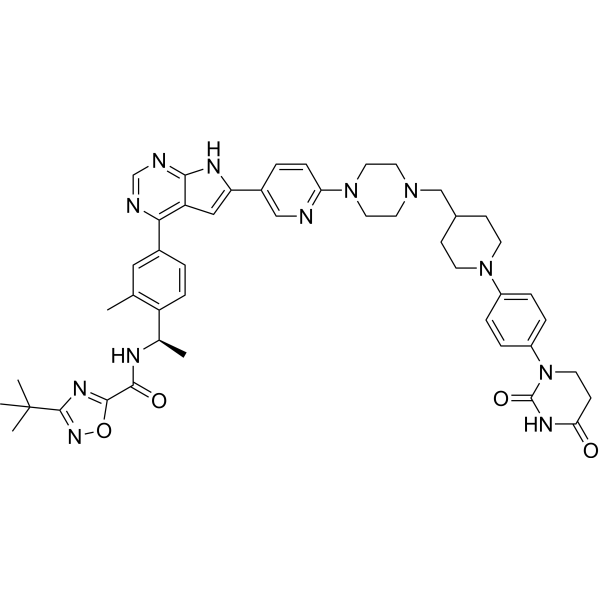
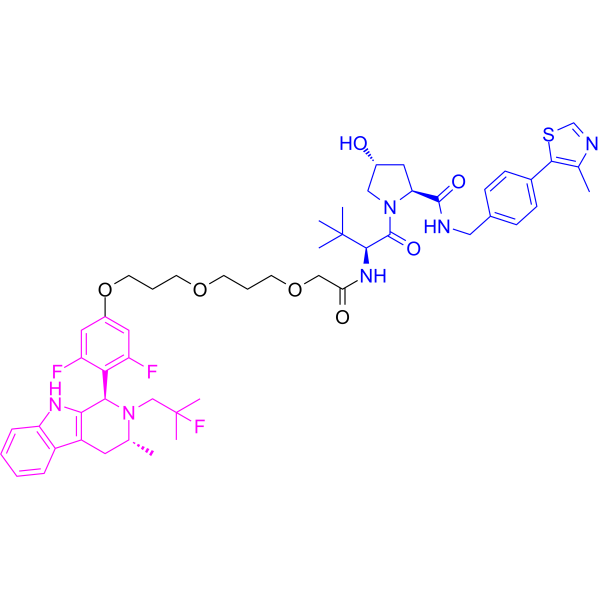
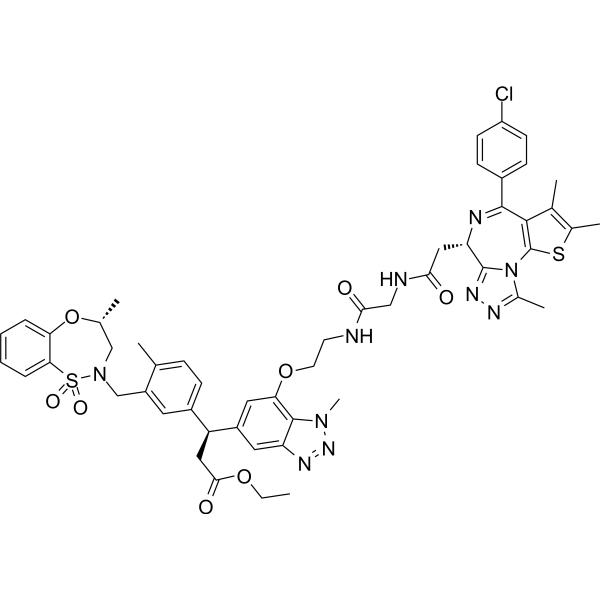
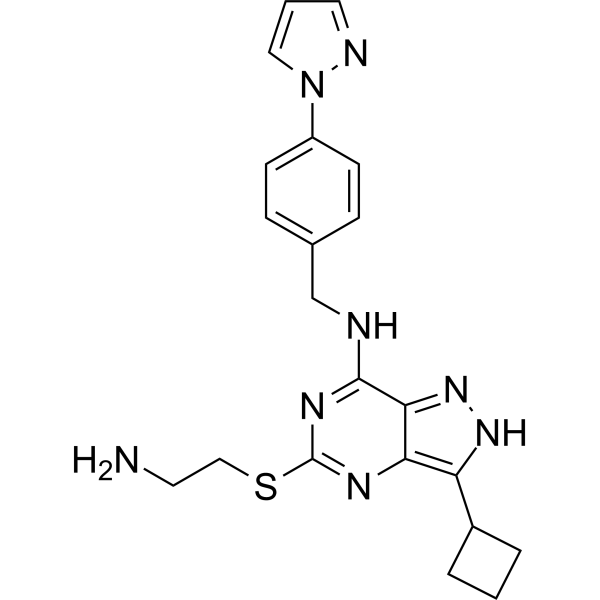
    BGB-16673 (BGB-16673) is an orally active, selective BTK PROTAC degrader (IC50=0.69 nM). BGB-16673 ligates BTK to E3 ubiquitin ligase, causing BTK to undergo polyubiquitination, which is then recognized and degraded by the proteasome, thereby exerting efficient BTK degradation activity. BGB-16673 can be used in the research of B-cell malignancies such as chronic lymphocytic leukemia, small lymphocytic lymphoma, and mantle cell lymphoma .
    Catadegbrutinib
  • HY-170430

    Molecular Glues E1/E2/E3 Enzyme Cancer
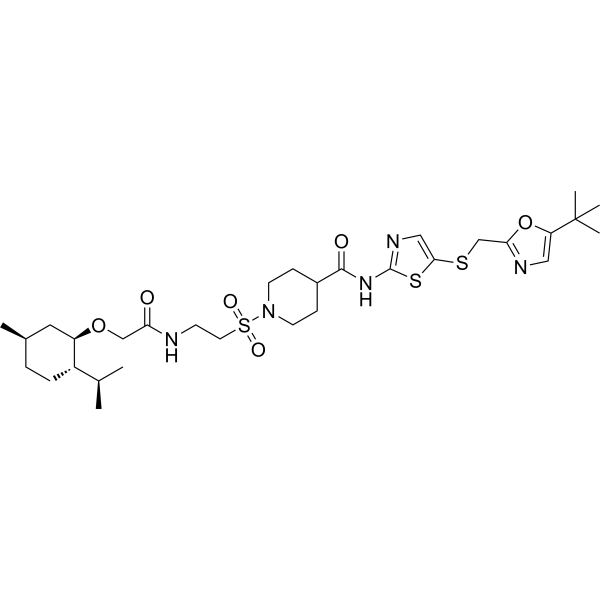
    HGC652 is a molecular glue degrader targeting TRIM21 with a TRIM21-dependent nuclear membrane disruption effect. HGC652 binds to the PRY-SPRY domain of TRIM21 with high affinity (Ka=0.061 μM), mediates the interaction between TRIM21 and NUP98, and redirects E3 ligase activity. By triggering the polyubiquitination and proteasomal degradation of nucleoporins (such as NUP155 and GLE1), HGC652 disrupts nuclear membrane integrity, alters nuclear morphology, induces genomic instability, and thereby induces cancer cell death .
    HGC652
  • HY-159607

    PROTACs SWI/SNF Complex Cancer
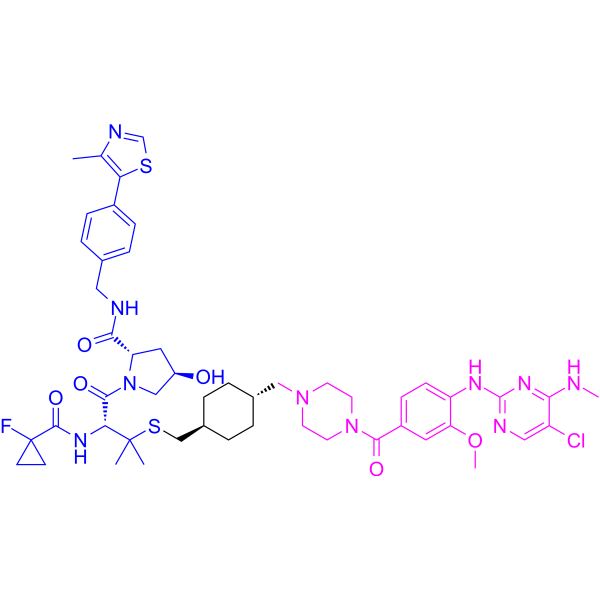
    PRT3789 is a selective SMARCA2 PROTAC degrader (DC50 in HeLa cell: 0.72 nM for SMARCA2, 14 nM for SMARCA4). PRT3789 forms a stable ternary complex with Von Hippel-Lindau (VHL) E3 ligase, induces polyubiquitination at SMARCA2-specific lysine residues, and drives proteasome-dependent SMARCA2 degradation. PRT3789 disrupts SWI/SNF chromatin remodeling complex integrity, induces dissociation of specific subunits, suppresses oncogenic gene expression, reduces chromatin accessibility, and upregulates antigen processing/presentation-related gene expression. PRT3789 induces synthetic lethality, inhibits proliferation and colony formation, and drives tumor growth inhibition and regression in SMARCA4-deficient contexts. PRT3789 can be used for the research of SMARCA4-mutated solid tumors, non-small cell lung cancer, endometrial cancer, colorectal cancer, bladder cancer, esophageal cancer, ovarian cancer, and gastric cancer .
    PRT3789
  • HY-P1934
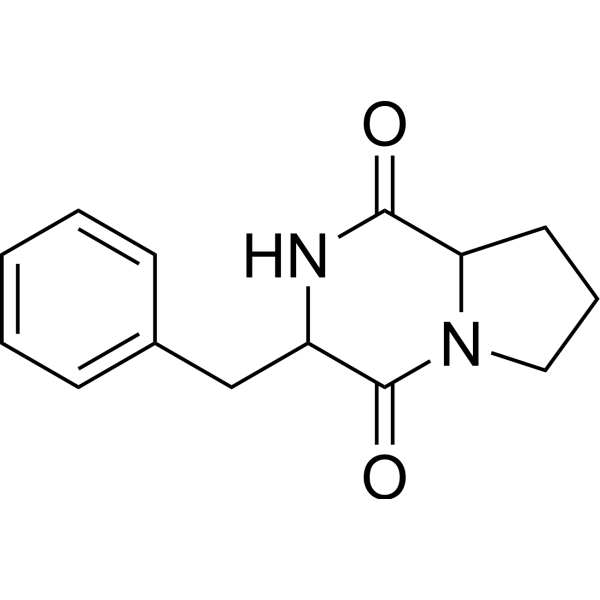
    Cyclo(Phe-Pro)
    5+ Cited Publications

    Cyclo(phenylalanylprolyl); A-64863

    HCV Bacterial Antibiotic Reactive Oxygen Species (ROS) Infection
    Cyclo(Phe-Pro) (Cyclo(phenylalanylprolyl)) is a quorum-sensing molecule of Vibrio vulnificus that specifically interacts with RIG-I, inhibiting RIG-I polyubiquitination, suppressing IRF-3 activation, and reducing type I interferon production. Cyclo(Phe-Pro) enhances susceptibility to HCV and influenza virus and also alleviates plant aluminum toxicity stress. The mechanism of Cyclo(Phe-Pro) involves the regulation of host immune signaling pathways, bacterial virulence gene expression, and plant antioxidant systems, making it a promising candidate for research in viral infections, bacterial virulence regulation, and agricultural stress resistance .
    Cyclo(Phe-Pro)
  • HY-161779

    Molecular Glues Epigenetic Reader Domain Apoptosis Cancer
    PLX-3618 is a molecular glue, that degrades BRD4 with DC50 of 12.2 nM. PLX-3618 promotes polyubiquitination and subsequent proteasomal degradation of BRD4 by recruiting of the E3 ligase substrate receptor, DCAF11. PLX-3618 inhibits the proliferation of various cancer cells, induces apoptosis in AML cells. PLX-3618 exhibits antitumor activity against AML in mouse models .
    PLX-3618
  • HY-175247

    Large Tumor Suppressor (LATS) E1/E2/E3 Enzyme YAP Cancer
    DDO-4033 is a SPOP inhibitor (IC50 = 16.9 μM, Kd = 15.1 μM). DDO-4033 impairs the malignant migration, invasion, and proliferation of clear cell renal cell carcinoma (ccRCC) cell lines. DDO-4033 disrupts SPOP recruitment to its substrate LATS1, inhibits its polyubiquitination and subsequent degradation, and upregulates LATS1 expression. DDO-4033 has promising antitumor activity and is promising for renal cell carcinoma research .
    DDO-4033
  • HY-150408

    AUTACs Cancer
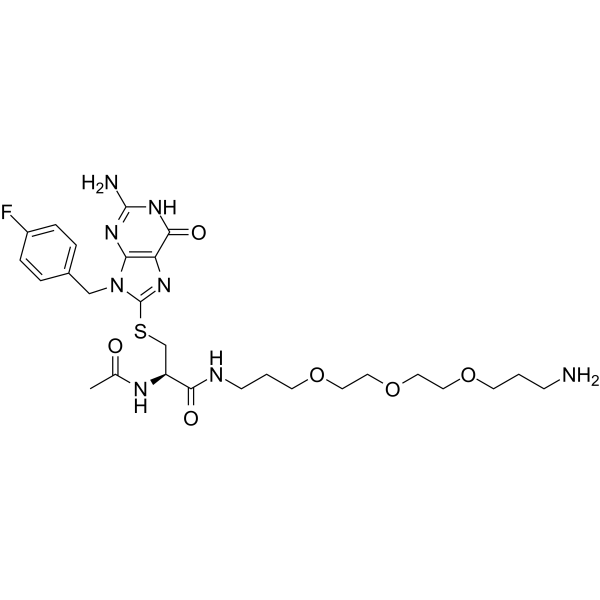
    FBnG-(Cys-acetamide)-CH2-PEG3-CH2-CH2-CH2-NH2 is a tag-linker conjugate of AUTAC4 (HY-134640) that incorporates a degradation tag FBnG (HY-W073762) and a glycol linker. AUTAC4 contains an p-fluorobenzylguanine (FBnG) and a phenylindole moiety, which can induce K63-linked polyubiquitination and degradation of mitochondria in HeLa cells .
    FBnG-(Cys-acetamide)-CH2-PEG3-CH2-CH2-CH2-NH2
  • HY-101939A

    LPL Receptor Neurological Disease
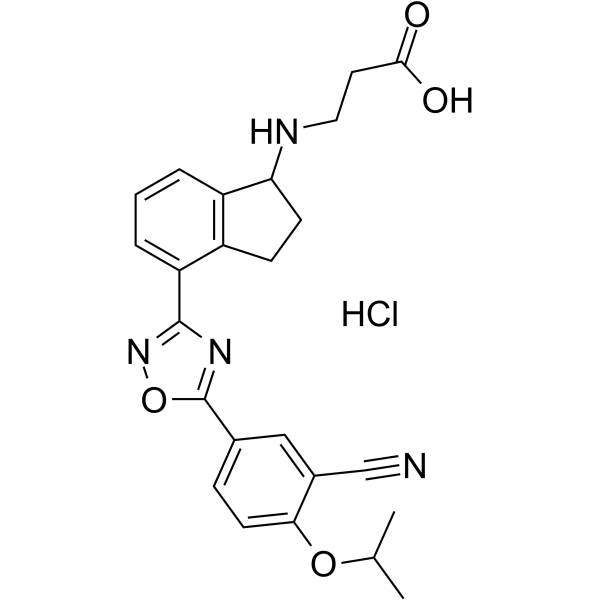
    RP-001 hydrochloride is a picomolar short-acting S1P1 (EDG1) selective agonist, with an EC50 of 9 pM. RP-00 hydrochloride induces internalization and polyubiquitination of S1P1. RP-001 hydrochloride has little activity on S1P2-S1P4 and only moderate affinity for S1P5 .
    RP-001 hydrochloride
  • HY-161795

    Drug Metabolite Cancer
    SP3CHO is an active metabolite generated by the metabolism of SP3N in cell culture by the action of amine oxidase. SP3CHO can induce polyubiquitination of specific proteins by recruiting the SCFFBXO22 E3 ligase complex. SP3CHO can be used in cancer therapy research .
    SP3CHO
  • HY-150641

    CDK Apoptosis DNA/RNA Synthesis Molecular Glues Cancer
    CDK-IN-9 (compound 24) is a potent CDK inhibitor, also as a molecular glue inducing an interaction between CDK12 and DDB1, with an IC50 values of 4 nM for CDK2/E. CDK-IN-9 leads to polyubiquitination of cyclin K and its subsequent degradation. CDK-IN-9 induce apoptosis through dephosphorylation of retinoblastoma protein and RNA polymerase II .
    CDK-IN-9
  • HY-124791

    MDM-2/p53 PARP Cancer
    MMRi6 is a Mdm2-MdmX RING domain inhibitor that can disrupt Mdm2-MdmX RING-RING interaction in vitro. MMRi6 inhibits MdmX-stimulated Mdm2 autoubiquitination and Mdm2-MdmX-mediated p53 polyubiquitination in vitro without affecting NEDD4-1 autoubiquitination. MMRi6 induces p53 stabilization and accumulation and induces PARP cleavage in wt-p53 Emu-myc lymphoma cells. MMRi6 inhibits the growth of wt-p53 and p53-null Emu-myc lymphoma cells with IC50s of approximately 0.5 μM and 3 μM, respectively. MMRi6 can be used for the study of leukemia/lymphoma .
    MMRi6
  • HY-101939

    LPL Receptor Neurological Disease
    RP-001 is a picomolar short-acting S1P1 (EDG1) selective agonist, with an EC50 of 9 pM. RP-00 induces internalization and polyubiquitination of S1P1. RP-001 has little activity on S1P2-S1P4 and only moderate affinity for S1P5 .
    RP-001
  • HY-169766

    Molecular Glues Keap1-Nrf2 Cancer
    VVD 065 is an orally active KEAP1-dependent NRF2 molecular glue degrader with a KEAP1 KD of 65 nM. VVD 065 covalently engages KEAP1 at Cys151, allosterically stabilizes KEAP1-CUL3 complex formation and enhances NRF2 polyubiquitination and proteasomal degradation. VVD 065 can be used for the research of esophageal squamous cell carcinoma, lung cancer, head-and-neck cancer, uterine cancers .
    VVD 065
  • HY-182350

    DUBTACs Deubiquitinase Metabolic Disease
    FXR DUBTAC modulator-1 is a deubiquitinase-targeting chimeric molecule (DUBTAC) that targets FXR, with a Ka value of 2.12e-5 M for FXR. FXR DUBTAC modulator-1 recruits the deubiquitinase OTUB1, binds to OTUB1 and forms a ternary complex with FXR, reduces the polyubiquitination level of FXR, prevents FXR degradation via the ubiquitin-proteasome pathway, and elevates the protein level of FXR. FXR DUBTAC modulator-1 can be used in the research of cholestatic liver injury .
    FXR DUBTAC modulator-1
  • HY-181154

    PROTACs SARS-CoV Virus Protease Infection
    PROTAC SARS-CoV-2 Mpro degrader-5 is a SARS-CoV-2 main protease (Mpro) PROTAC. PROTAC SARS-CoV-2 Mpro degrader-5 engages CRBN E3 ubiquitin ligase to form a ternary complex with SARS-CoV-2 Mpro, induces K48-linked polyubiquitination of SARS-CoV-2 Mpro, and drives proteasome-dependent turnover of SARS-CoV-2 Mpro with a high selectivity index (CC50/DC50 > 10) in human embryonic kidney cells.PROTAC SARS-CoV-2 Mpro degrader-5 can be used for the research of COVID-19 .
    PROTAC SARS-CoV-2 Mpro degrader-5
  • HY-181193

    PROTACs SARS-CoV Virus Protease Infection
    PROTAC SARS-CoV-2 Mpro degrader-7 is a SARS-CoV-2 main protease (Mpro) PROTAC degrader with a DC50 of 0.985 μM. PROTAC SARS-CoV-2 Mpro degrader-7 promotes K48-linked polyubiquitination of SARS-CoV-2 Mpro, leading to proteasome-dependent degradation via the ubiquitin-proteasome system.PROTAC SARS-CoV-2 Mpro degrader-7 forms a ternary complex with SARS-CoV-2 Mpro and CRBN E3 ubiquitin ligase to enable viral protease ubiquitination.PROTAC SARS-CoV-2 Mpro degrader-7 exhibits a high selectivity index, and induces dose-dependent degradation of SARS-CoV-2 Mpro in stable cells expressing the viral protease.PROTAC SARS-CoV-2 Mpro degrader-7 can be used for the research of COVID-19 .
    PROTAC SARS-CoV-2 Mpro degrader-7
  • HY-179576

    PROTACs Estrogen Receptor/ERR Others
    CV2a is a 14-3-3-directed molecular glue-based PROTAC that selectively targets the ERα protein complex with an EC50 of 0.10 μM. CV2a cooperatively recruits VHL to the 14-3-3/ERα complex and promotes robust polyubiquitination of the 14-3-3ζ/ERα complex .
    CV2a
  • HY-181192

    PROTACs SARS-CoV Virus Protease Infection
    PROTAC SARS-CoV-2 Mpro degrader-6 is a PROTACs degrader targeting the SARS-CoV-2 main protease (M pro). PROTAC SARS-CoV-2 Mpro degrader-6 effectively induces the degradation of M pro and increases K48-linked polyubiquitination of M pro in HEK293 cells. PROTAC SARS-CoV-2 Mpro degrader-6 can be used in studies related to coronavirus disease 2019 (COVID-19) .
    PROTAC SARS-CoV-2 Mpro degrader-6
  • HY-181654

    Epigenetic Reader Domain CXCR MMP Inflammation/Immunology
    Snail IN-1 is an orally active Snail inhibitor with a Ka of 0.36 μM.Snail IN-1 disrupts Snail-CBP interaction, accelerates Snail protein degradation, reduces Snail acetylation, increases Snail polyubiquitination, and selectively downregulates Snail protein without altering other EMT transcription factors.Snail IN-1 reduces atherosclerotic plaque burden, modulates inflammation and plaque stability factors, downregulates CCL5, CXCL10, MMP2, and MMP9, and upregulates α-smooth muscle actin.Snail IN-1 exerts anti-inflammatory and plaque-stabilizing properties.Snail IN-1 can be used for the research of atherosclerosis .
    Snail IN-1
  • HY-183257

    Autophagy Beclin1 Reactive Oxygen Species (ROS) p97 Cancer
    ATI-1 is an autophagy initiation inhibitor. ATI-1 targets valosin-containing protein (VCP/p97, disrupts its interaction with UFL1, impairs UFMylation homeostasis associated with VCP, promotes polyubiquitination and degradation of Beclin1, and blocks the formation of early autophagosomes. ATI-1 induces synergistic death of autophagy-dependent malignant tumor cells under nutrient deprivation conditions, accompanied by decreased mitochondrial membrane potential, reduced ROS levels and lysosomal stress. ATI-1 exhibits anti-tumor efficacy in a pancreatic adenocarcinoma xenograft mouse model. ATI-1 can be used for the research of pancreatic adenocarcinoma and lung cancer .
    ATI-1
  • HY-183116

    Molecular Glues Anaplastic lymphoma kinase (ALK) Cancer
    TRI-611 is a brain-penetrant, orally active molecular glue degrader targeting ALK. TRI-611 engages ALK via a distal degron, forms a ternary complex with CRBN, triggers ALK polyubiquitination and degradation, including TKI-resistant ALK fusion proteins. TRI-611 inhibits ALK downstream signaling pathways, induces anti-proliferative effects in ALK-positive cancer cells. TRI-611 induces regression of ALK-positive non-small cell lung cancer tumors in preclinical xenograft models. TRI-611 can be used for the research of ALK-positive non-small cell lung cancer, including TKI-refractory tumors and central nervous system metastases .
    TRI-611

Inquiry Online

Your information is safe with us. * Required Fields.

Salutation


Country or Region *

Applicant Name *


Organization Name *

Department *


Email Address *


Product Name *

Cat. No.


Requested quantity *

Phone Number *


Remarks

Inquiry Online

Inquiry Information

Product Name:
Cat. No.:
Quantity:
MCE Japan Authorized Agent:

