Search Result
Results for "
rabbit plasma
" in MedChemExpress (MCE) Product Catalog:
4
Biochemical Assay Reagents
3
Isotope-Labeled Compounds
| Cat. No. |
Product Name |
Target |
Research Areas |
Chemical Structure |
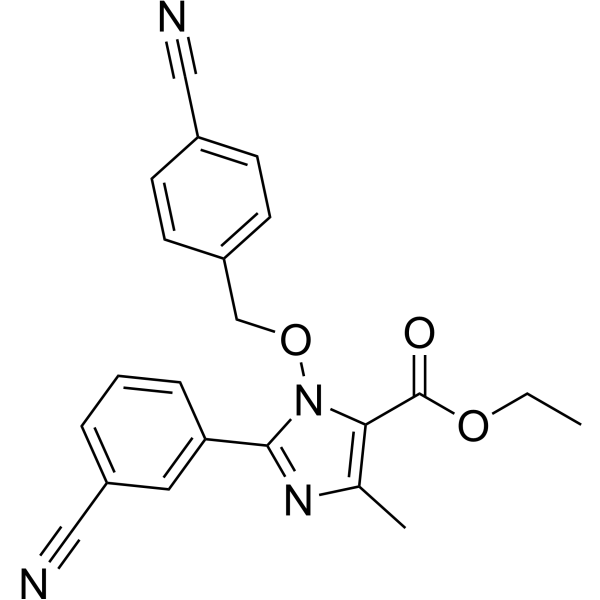
-
- HY-50667
-
Apixaban
Maximum Cited Publications
13 Publications Verification
BMS-562247-01
|
Factor Xa
|
Cardiovascular Disease
Cancer
|
|
Apixaban (BMS-562247-01) is a highly selective, reversible and orally active inhibitor of Factor Xa with Ki of 0.08 nM and 0.17 nM in human and rabbit, respectively . Apixaban is in development for the prevention and treatment of various thromboembolic diseases .
|
-
-
- HY-NP002B
-
|
|
Biochemical Assay Reagents
|
Inflammation/Immunology
|
|
Rabbit Serum Albumin is a plasma protein derived from rabbits. Rabbit Serum Albumin can hydrolyze the carbamate pesticide carbaryl and induce fever in rabbits. Rabbit Serum Albumin can be used for biochemical and immunological research, including vaccine developing .
|
-
-
- HY-113202
-
|
|
Endogenous Metabolite
PKC
GlyT
|
Neurological Disease
Metabolic Disease
|
|
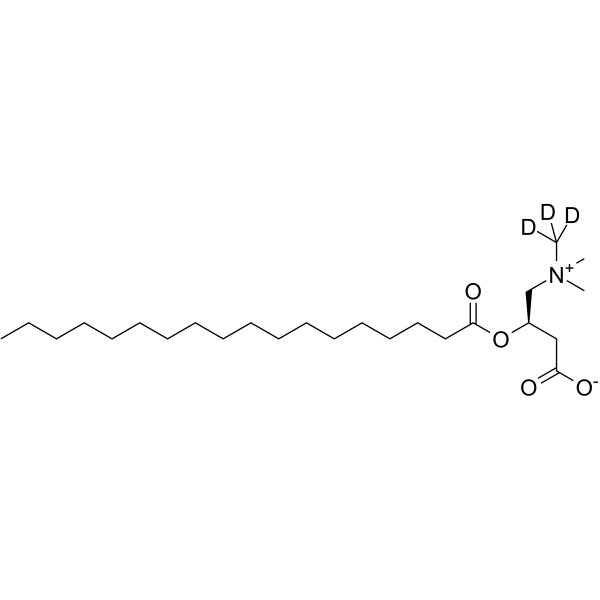
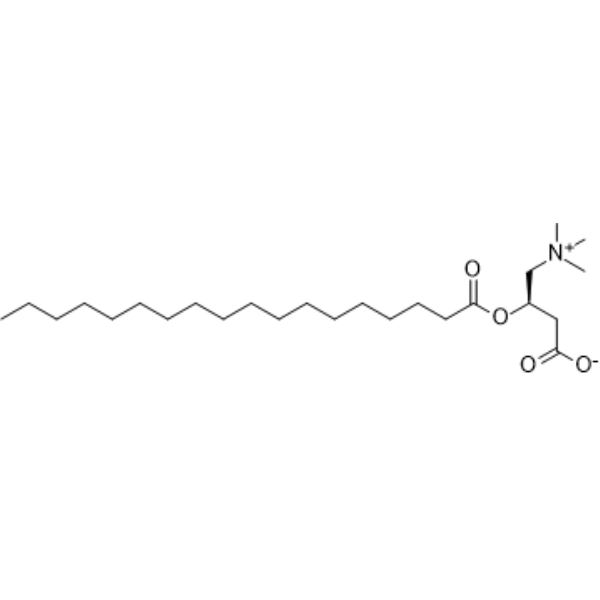
Stearoylcarnitine, a fatty ester lipid molecule, is an endogenous metabolite. Stearoylcarnitine can be used as PKC inhibitor. Stearoylcarnitine accumulates in β cells, leading to arrest of insulin synthesis and energy deficiency in type 2 diabetes mouse. Stearoylcarnitine inhibits lecithin cholesterol acyltransferase (LCAT) in rat and rabbits plasma. Stearoylcarnitine acts as a metabolomics biomarker for Parkinson’s disease. Stearoylcarnitine is a less potent inhibitor of GlyT2 .
|
-
-
- HY-126573
-
-
-
- HY-174374
-
|
|
Topoisomerase
|
Cardiovascular Disease
|
|
Topobexin is a TOP2B-selective inhibitor with IC50 values of 0.19 μM and 4.8 μM for TOP2B and TOP2A (DNA decatenation assay). Topobexin binds to non-homologous residues in the obex pocket and targets the ATPase domain of TOP2B. Topobexin prevents anthracycline-induced DNA double-strand break formation, apoptotic signaling mediated by caspase 3/7, 8 and 9, cardiomyocyte morphological changes, mitochondrial depolarization/loss, left ventricular systolic dysfunction, extracellular matrix remodeling, fibrotic alterations, and increases in plasma cardiac troponin T and BNP. Topobexin does not impair the antiproliferative effects of anthracyclines in cancer cells, exhibits no intrinsic cytotoxicity in cardiomyocytes, and is well tolerated in rabbits. Topobexin can be used in studies related to anthracycline-induced cardiotoxicity .
|
-
-
- HY-122351A
-
|
|
Taste Receptor
|
Others
|
|
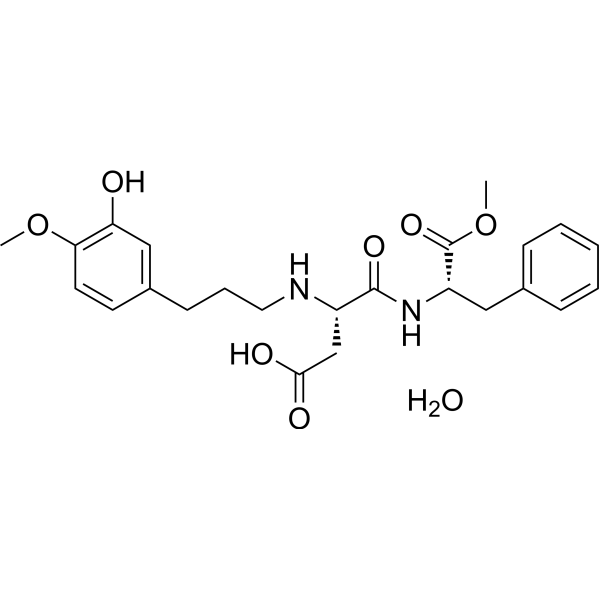
Advantame is an N-substituted derivative of aspartame. Advantame is a high-intensity, low calorie sweetener. Advantame can interact with plasma protein. Advantame has the potential to produce hypotension and inhibit hERG K + channel to produce carditoxicity. Advantame binds to T1R2/T1R3 taste GPCR to form an oligomeric functional selectivity of biased heteromers with NMBR to induce a significant sialidase activity in vitro. Advantame has maternal toxicity (gastrointestinal disturbances) in the prenatal developmental toxicity study in rabbits .
|
-
-
- HY-50667S
-
|
BMS-562247-01-13C,d3
|
Factor Xa
|
Cardiovascular Disease
|
|
Apixaban- 13C,d3 (BMS-562247-01- 13C,d3) is a deuterium and 13C labeled Apixaban (HY-50667). Apixaban is a highly selective, reversible inhibitor of Factor Xa with Ki of 0.08 nM and 0.17 nM in human and rabbit, respectively .
|
-
-
- HY-117290
-
|
|
Factor Xa
|
Cardiovascular Disease
|
|
BMS-962212 is a factor XIa (FXIa) inhibitor with a Ki of 0.7 nM against human FXIa and a Ki of 3 nM against rabbit FXIa. BMS-962212 blocks thrombosis while preserving normal hemostatic function. BMS-962212 is applicable to thrombosis-related research .
|
-
-
- HY-P11292
-
|
|
Calcium Channel
|
Cardiovascular Disease
|
|
Caloxin 1b3, a peptide, is a selective plasma membrane Ca 2+ pump 1 (PMCA1) inhibitor. Caloxin 1b3 significantly inhibits PMCA1 Ca 2+–Mg 2+-ATPase in the rabbit duodenal mucosa than the PMCA4 in the human erythrocyte ghosts. Caloxin 1b3 also increases cytosolic Ca 2+ concentration in endothelial cells. Caloxin 1b3 can be used for cardiovascular disorders research .
|
-
-
- HY-129043
-
|
|
Drug Metabolite
|
Infection
|
|
3-Formyl rifamycin is an acid degradation product of the broad-spectrum antibiotic Rifampicin (HY-B0272). 3-Formyl rifamycin forms via acid hydrolysis of Rifampicin in an acidic environment .
|
-
-
- HY-50667R
-
|
BMS-562247-01 (Standard)
|
Reference Standards
Factor Xa
|
Cardiovascular Disease
Cancer
|
|
Apixaban (Standard) is the analytical standard of Apixaban. This product is intended for research and analytical applications. Apixaban (BMS-562247-01) is a highly selective, reversible and orally active inhibitor of Factor Xa with Ki of 0.08 nM and 0.17 nM in human and rabbit, respectively . Apixaban is in development for the prevention and treatment of various thromboembolic diseases .
|
-
-
- HY-149454
-
|
|
P2Y Receptor
|
Cancer
|
|
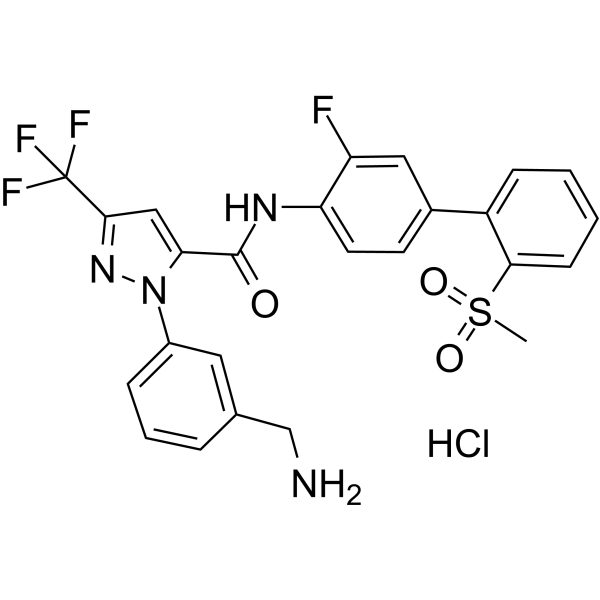
P2Y1/P2Y12 antagonist-1 (compound 24w) is an orally available dual inhibitor of P2Y1 and P2Y12 with antiplatelet activity. P2Y1/P2Y12 antagonist-1 inhibits ADP-induced platelet aggregation in rabbit plasma with an IC50 of 4.23 μM. P2Y1/P2Y12 antagonist-1 exhibits potent inhibitory effects in rat thrombosis model.
|
-
-
- HY-125864D
-
|
|
Interleukin Related
NF-κB
|
Cardiovascular Disease
|
|
Rabbit Fibrinogen is a native fibrinogen from rabbit plasma. Fibrinogen is a selective proteolytic molecule that can be activated by thrombin to assemble fibrin clots. Fibrinogen can regulate the activation of NF-KB in endothelial cells and upregulate the expression of inflammatory chemokines MCP-1 and MCP-1. Fibrinogen plays a key role in blood clotting, thrombosis, atherosclerosis and the pathological development of venous grafts, and can be used in the study of blood clotting and vascular diseases .
|
-
-
- HY-NP002C
-
|
|
Biochemical Assay Reagents
|
Others
|
|
Rabbit Serum Albumin (globulin free) is a plasma protein derived from rabbits. Serum albumin is a multifunctional protein with extraordinary ligand binding capacity, making it a transporter molecule for a diverse range of metabolites, drugs, nutrients, metals and other molecules .
|
-
-
- HY-119431
-
|
2-Hydroxypropanamide
|
Biochemical Assay Reagents
|
Others
|
|
Lactamide (2-Hydroxypropanamide) is an amide compound. Lactamide can be used as a cryoprotectant and is employed in experiments for the cryopreservation of white rabbit sperm .
|
-
-
- HY-Y1094
-
|
Chloro(1,5-cyclooctadiene)rhodium(I) dimer
|
Biochemical Assay Reagents
|
Cardiovascular Disease
|
|
[Rh(cod)Cl]2 (Chloro(1,5-cyclooctadiene)rhodium(I) dimer) is a rhodium (I) organometallic dimer complex. [Rh(cod)Cl]2 can inhibit platelet-activating factor-mediated platelet aggregation with IC50 values of 5.2 and 43.3 μM in washed rabbit platelets and human platelet-rich plasmas. [Rh(cod)Cl]2 also can inhibit thrombin-, ADP (HY-W010918)- and collagen-induced aggregation with IC50 values of 16.7, 162 and 69.8 μM. [Rh(cod)Cl]2 can be used for the research of cardiovascular disease, such as thrombosis .
|
-
-
- HY-101605
-
|
|
Dipeptidyl Peptidase
|
Cardiovascular Disease
|
|
Prodipine, a diphenyl-phosphonate derivative. The IC50s of Prodipine for purified and plasma Dipeptidyl peptidase IV (DPP IV) from the rabbit are 4.5 μM and 30 μM, respectively.
|
-
-
- HY-123341
-
|
9-KODE
|
Endogenous Metabolite
|
Metabolic Disease
|
|
9-OxoODE results from oxidation of the allylic hydroxyl of either 9(S)- or 9(R)-HODE. Rabbit reticulocyte plasma and mitochondrial membranes contain both 9- and 13-oxoODEs, representing about 2% of the total linoleate residues in the membranes. Most of these oxidized linoleate residues are esterified to membrane lipids.
|
-
-
- HY-113202S
-
|
|
Isotope-Labeled Compounds
Endogenous Metabolite
PKC
GlyT
|
Neurological Disease
Metabolic Disease
|
|
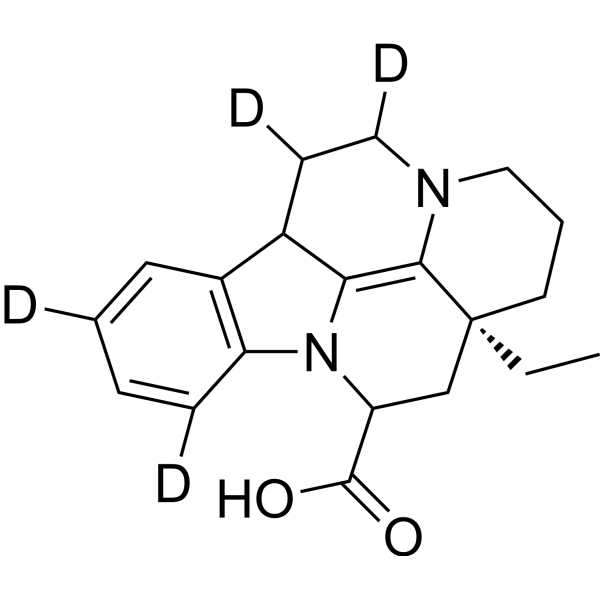
Stearoyl-L-carnitine-d3 is the deuterium labeled Stearoylcarnitine. Stearoylcarnitine, a fatty ester lipid molecule, is an endogenous metabolite. Stearoylcarnitine can be used as PKC inhibitor. Stearoylcarnitine accumulates in β cells, leading to arrest of insulin synthesis and energy deficiency in type 2 diabetes mouse. Stearoylcarnitine inhibits lecithin cholesterol acyltransferase (LCAT) in rat and rabbits plasma. Stearoylcarnitine acts as a metabolomics biomarker for Parkinson’s disease. Stearoylcarnitine is a less potent inhibitor of GlyT2 .
|
-
-
- HY-165498
-
|
|
Na+/K+ ATPase
|
Metabolic Disease
|
|
AU-461 is an orally active and reversible inhibitor of the gastric H⁺/K⁺ ATPase with IC₅₀ values for rabbit-derived and pig-derived enzymes are 12.15 μM and 4.20 μM respectively. AU-461 competes with activated cationic K⁺ (Kᵢ = 1.64 μM). AU-461 reduces both histamine-stimulated gastric acid secretion and basal gastric acid secretion in rats. AU-461 inhibits ulcer formation caused by ethanol or sodium hydroxide, and restores the plasma gastrin level to normal. AU-461 can be used for the study of peptic ulcers .
|
-
-
- HY-N11932
-
-
-
- HY-P1428A
-
|
|
Neuropeptide Y Receptor
|
Cardiovascular Disease
|
|
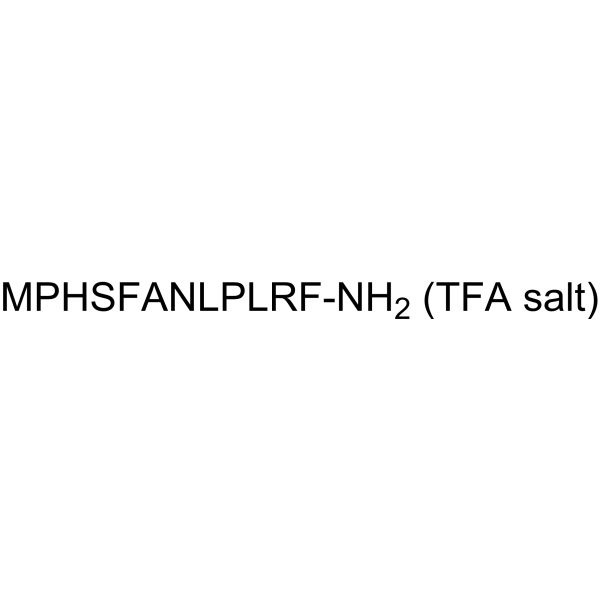
RFRP-1(human) TFA is a potent endogenous NPFF receptor agonist (EC50 values are 0.0011 and 29 nM for NPFF2 and NPFF1, respectively). Attenuates contractile function of isolated rat and rabbit cardiac myocytes. Reduces heart rate, stroke volume, ejection fraction and cardiac output, and increases plasma prolactin levels in rats.
|
-
-
- HY-19126
-
|
|
Platelet-activating Factor Receptor (PAFR)
|
Infection
Cardiovascular Disease
|
|
CL-184005 is an antagonist for platelet-activating factor (PAF), that inhibits the PAF-induced platelet aggregation with IC50 of 600 nM and 510 nM, in human and rabbit platelet-rich plasma. CL-184005 protects the rats from endotoxin-induced gastrointestinal damage and hypotension. CL-184005 exhibits potential attenuating Gram-negative bacterial sepsis .
|
-
-
- HY-11090A
-
|
|
Factor Xa
Kallikrein
Thrombin
Ser/Thr Protease
|
Cardiovascular Disease
|
|
DPC423 is a selective and orally active factor Xa inhibitor with a Kis of 0.15 (human) and 0.3 (rabbit) nM. DPC423 exhibits Kis of 60, 61 and 6000 nM against human trypsin, plasma kallikrein and thrombin. DPC423 blocks the formation of prothrombinase complex, reduces thrombin production, inhibits fibrin formation and platelet activation. DPC423 can be used for the study of anticoagulation of arterial thrombosis .
|
-
-
- HY-11090
-
|
|
Factor Xa
Kallikrein
Thrombin
Ser/Thr Protease
|
Cardiovascular Disease
|
|
DPC423 free base is a selective and orally active factor Xa inhibitor with a Kis of 0.15 (human) and 0.3 (rabbit) nM. DPC423 free base exhibits Kis of 60, 61 and 6000 nM against human trypsin, plasma kallikrein and thrombin. DPC423 free base blocks the formation of prothrombinase complex, reduces thrombin production, inhibits fibrin formation and platelet activation. DPC423 free base can be used for the study of anticoagulation of arterial thrombosis .
|
-
-
- HY-113202S1
-
|
|
Isotope-Labeled Compounds
GlyT
Endogenous Metabolite
PKC
|
Neurological Disease
Metabolic Disease
|
|
Stearoyl-L-carnitine-d9 chloride is the deuterium labeled Stearoyl-L-carnitine chloride. Stearoyl-L-carnitine chloride, a fatty ester lipid molecule, is an endogenous metabolite. Stearoyl-L-carnitine chloride can be used as PKC inhibitor. Stearoyl-L-carnitine chloride accumulates in β cells, leading to arrest of insulin synthesis and energy deficiency in type 2 diabetes mouse. Stearoyl-L-carnitine chloride inhibits lecithin cholesterol acyltransferase (LCAT) in rat and rabbits plasma. Stearoyl-L-carnitine chloride acts as a metabolomics biomarker for Parkinson’s disease. Stearoyl-L-carnitine chloride is a less potent inhibitor of GlyT2 .
|
-
-
- HY-122351
-
|
|
Drug Derivative
Taste Receptor
|
Others
|
|
Advantame is an N-substituted derivative of aspartame. Advantame is a high-intensity, low calorie sweetener. Advantame can interact with plasma protein. Advantame has the potential to produce hypotension and inhibit hERG K + channel to produce carditoxicity. Advantame binds to T1R2/T1R3 taste GPCR to form an oligomeric functional selectivity of biased heteromers with NMBR to induce a significant sialidase activity in vitro. Advantame has maternal toxicity (gastrointestinal disturbances) in the prenatal developmental toxicity study in rabbits .
|
-
-
- HY-122351AR
-
|
|
Reference Standards
Taste Receptor
|
Others
|
|
Advantame (Standard) is the analytical standard of Advantame. This product is intended for research and analytical applications. Advantame is an N-substituted derivative of aspartame. Advantame is a high-intensity, low calorie sweetener. Advantame can interact with plasma protein. Advantame has the potential to produce hypotension and inhibit hERG K + channel to produce carditoxicity. Advantame binds to T1R2/T1R3 taste GPCR to form an oligomeric functional selectivity of biased heteromers with NMBR to induce a significant sialidase activity in vitro. Advantame has maternal toxicity (gastrointestinal disturbances) in the prenatal developmental toxicity study in rabbits .
|
-
-
- HY-182418
-
|
|
Platelet-activating Factor Receptor (PAFR)
|
Cardiovascular Disease
|
|
UR-11353 is a selective platelet activating factor (PAF) antagonist with long-lasting activity. UR-11353 inhibits PAF-induced platelet aggregation in rabbit platelet-rich plasma. UR-11353 inhibits PAF-induced hypotension in normotensive rats. UR-11353 protects against PAF-induced mortality in mice .
|
-
-
- HY-182407
-
|
|
Angiotensin-converting Enzyme (ACE)
|
Cardiovascular Disease
|
|
CV 5975 is an orally active angiotensin converting enzyme (ACE) competitive inhibitor with a rabbit lung ACE IC50 of 3.1 nM and Ki values of 2.6 nM. CV 5975 inhibits ACE in plasma, aorta, kidney, and brain, intensifying inhibition with repeated administration. CV 5975 inhibits Angiotensin I (HY-P1032)-induced pressor responses and ileum contraction, and augments bradykinin-induced ileum contraction and depressor responses. CV 5975 reduces blood pressure via ACE-independent mechanisms, with sustained action across multiple hypertensive and normotensive animal models, intensified by repeated dosing or Hydrochlorothiazide (HY-B0252) co-administration. CV 5975 can be used for the research of hypertension .
|
-
-
- HY-NP0221
-
|
|
Transferrin Receptor
|
Inflammation/Immunology
|
|
Rabbit Transferrin is the major iron-containing protein in plasma, responsible for transporting iron absorbed from the digestive tract and iron released by erythrocyte degradation .
|
-
-
- HY-W923355
-
|
EPA-TG; Glycerol trieicosapentaenoate; TG(20:5/20:5/20:5)
|
Others
|
Others
|
|
1,2,3-Trieicosapentaenoyl glycerol (EPA-TG) is a glycerol ester that can be obtained by the reaction of polyunsaturated fatty acids or lower alkyl esters with glycerol catalyzed by alkoxide ions . After two intravenous injections of the EPA-TG emulsion into rabbits, the EPA content in plasma and platelet phospholipids increased markedly . In another study, by administering the EPA-TG emulsion, the production of leukotriene B4 by polymorphonuclear leukocytes in rabbits was reduced by 40% .
|
-
-
- HY-44667
-
|
|
Adrenergic Receptor
Drug Metabolite
|
Others
|
|
Deacetylmoxisylyte is an orally active metabolite in plasma of the prodrug Moxisylyte. Deacetylmoxisylyte exhibits similar affinity and selectivity for rabbit corpus cavernosum and urethra. Deacetylmoxisylyte has IC50 values of 400 and 1200 nM for alpha-1 and alpha-2 adrenoceptors .
|
-
-
- HY-175986
-
|
|
Prostaglandin Receptor
|
Inflammation/Immunology
|
|
IP receptor agonist 1 (compound 6c-14S) is an orally active I prostanoid receptor agonist, with an IC50 of 0.15 μM for inhibiting platelet aggregation induced by ADP (HY-W010918,300 μM) in rabbit platelet-rich plasma. IP receptor agonist 1 can be used for study of Pulmonary arterial hypertension .
|
-
-
- HY-N17941
-
|
|
Others
|
Cardiovascular Disease
|
|
19-Anhydro-4-epirotungenic acid is a triterpenoid compound that can be isolated from the bark of Ilex rotunda Thunb. 19-Anhydro-4-epirotungenic acid shows no activity against ADP-induced platelet aggregation .
|
-
-
- HY-N19876
-
-
-
- HY-182301
-
|
|
Renin
|
Cardiovascular Disease
|
|
CP 71362 is a renin inhibitor, a highly potent substrate-analog transition state mimic with antihypertensive properties. CP 71362 exhibits significant inhibitory activity against plasma renin from rats, dogs, and humans (IC50 values are 3 nM, 0.0033 nM, and 20 nM, respectively). CP 71362 reduces the mean arterial pressure of anesthetized and conscious sodium-depleted animals in a dose-dependent manner, and has pharmacokinetic characteristics of rapid elimination and short duration of action. CP 71362 can be used in research related to hypertension and congestive heart failure .
|
-
-
- HY-182625
-
|
|
Platelet-activating Factor Receptor (PAFR)
|
Others
Inflammation/Immunology
|
|
GS-1160-180 is a PAF receptor antagonist. GS-1160-180 competes with PAF for receptor binding, with no activity against collagen or adenosine diphosphate-induced platelet aggregation. GS-1160-180 can be used for research on asthma, anaphylactic shock, gastric ulceration, and transplant rejection .
|
-
-
- HY-106830
-
|
|
Phosphodiesterase (PDE)
|
Cardiovascular Disease
|
|
Pelrinone is an orally active cardiotonic agent and PDE III inhibitor with an IC50 of 36 μM. Pelrinone elevates intracellular cAMP levels. The action of Pelrinone is independent of β-adrenergic receptors, and it does not inhibit Na +/K +-ATPase. Pelrinone exerts positive inotropic and vasodilatory effects. Pelrinone inhibits platelet aggregation, reduces thrombus formation, and exerts weak anticoagulant activity without altering hematocrit or circulating platelet counts. Pelrinone can be used in research related to congestive heart failure and coronary thrombosis .
|
-
| Cat. No. |
Product Name |
Type |
-
- HY-NP002B
-
|
|
Biochemical Assay Reagents
|
|
Rabbit Serum Albumin is a plasma protein derived from rabbits. Rabbit Serum Albumin can hydrolyze the carbamate pesticide carbaryl and induce fever in rabbits. Rabbit Serum Albumin can be used for biochemical and immunological research, including vaccine developing .
|
-
- HY-NP002C
-
|
|
Biochemical Assay Reagents
|
|
Rabbit Serum Albumin (globulin free) is a plasma protein derived from rabbits. Serum albumin is a multifunctional protein with extraordinary ligand binding capacity, making it a transporter molecule for a diverse range of metabolites, drugs, nutrients, metals and other molecules .
|
-
- HY-119431
-
|
2-Hydroxypropanamide
|
Biochemical Assay Reagents
|
|
Lactamide (2-Hydroxypropanamide) is an amide compound. Lactamide can be used as a cryoprotectant and is employed in experiments for the cryopreservation of white rabbit sperm .
|
-
- HY-NP0221
-
|
|
Biochemical Assay Reagents
|
|
Rabbit Transferrin is the major iron-containing protein in plasma, responsible for transporting iron absorbed from the digestive tract and iron released by erythrocyte degradation .
|
| Cat. No. |
Product Name |
Target |
Research Area |
-
- HY-P11292
-
|
|
Calcium Channel
|
Cardiovascular Disease
|
|
Caloxin 1b3, a peptide, is a selective plasma membrane Ca 2+ pump 1 (PMCA1) inhibitor. Caloxin 1b3 significantly inhibits PMCA1 Ca 2+–Mg 2+-ATPase in the rabbit duodenal mucosa than the PMCA4 in the human erythrocyte ghosts. Caloxin 1b3 also increases cytosolic Ca 2+ concentration in endothelial cells. Caloxin 1b3 can be used for cardiovascular disorders research .
|
-
- HY-P1428A
-
|
|
Neuropeptide Y Receptor
|
Cardiovascular Disease
|
|
RFRP-1(human) TFA is a potent endogenous NPFF receptor agonist (EC50 values are 0.0011 and 29 nM for NPFF2 and NPFF1, respectively). Attenuates contractile function of isolated rat and rabbit cardiac myocytes. Reduces heart rate, stroke volume, ejection fraction and cardiac output, and increases plasma prolactin levels in rats.
|
| Cat. No. |
Product Name |
Category |
Target |
Chemical Structure |
| Cat. No. |
Product Name |
Chemical Structure |
-
- HY-50667S
-
|
|
|
Apixaban- 13C,d3 (BMS-562247-01- 13C,d3) is a deuterium and 13C labeled Apixaban (HY-50667). Apixaban is a highly selective, reversible inhibitor of Factor Xa with Ki of 0.08 nM and 0.17 nM in human and rabbit, respectively .
|
-
-
- HY-113202S
-
|
|
|
Stearoyl-L-carnitine-d3 is the deuterium labeled Stearoylcarnitine. Stearoylcarnitine, a fatty ester lipid molecule, is an endogenous metabolite. Stearoylcarnitine can be used as PKC inhibitor. Stearoylcarnitine accumulates in β cells, leading to arrest of insulin synthesis and energy deficiency in type 2 diabetes mouse. Stearoylcarnitine inhibits lecithin cholesterol acyltransferase (LCAT) in rat and rabbits plasma. Stearoylcarnitine acts as a metabolomics biomarker for Parkinson’s disease. Stearoylcarnitine is a less potent inhibitor of GlyT2 .
|
-
-
- HY-113202S1
-
|
|
|
Stearoyl-L-carnitine-d9 chloride is the deuterium labeled Stearoyl-L-carnitine chloride. Stearoyl-L-carnitine chloride, a fatty ester lipid molecule, is an endogenous metabolite. Stearoyl-L-carnitine chloride can be used as PKC inhibitor. Stearoyl-L-carnitine chloride accumulates in β cells, leading to arrest of insulin synthesis and energy deficiency in type 2 diabetes mouse. Stearoyl-L-carnitine chloride inhibits lecithin cholesterol acyltransferase (LCAT) in rat and rabbits plasma. Stearoyl-L-carnitine chloride acts as a metabolomics biomarker for Parkinson’s disease. Stearoyl-L-carnitine chloride is a less potent inhibitor of GlyT2 .
|
-
| Cat. No. |
Product Name |
|
Classification |
-
- HY-126573
-
|
|
|
Fillers
|
|
Trilaurin is an orally active triglyceride. Trilaurin inhibits DMBA-induced, croton oil-promoted skin tumor formation in Swiss Webster mice. Trilaurin increases plasma high-density lipoprotein cholesterol and apolipoprotein A-I concentrations. Trilaurin is used as an occlusive skin conditioning agent and/or non-aqueous thickener in cosmetics .
|
Your information is safe with us. * Required Fields.
Inquiry Information
- Product Name:
- Cat. No.:
- Quantity:
- MCE Japan Authorized Agent: