1. Search Result
Search Result
Results for "

red shift

" in MedChemExpress (MCE) Product Catalog:

24

Inhibitors & Agonists

18

Fluorescent Dyes

1

Biochemical Assay Reagents

1

Natural
Products

1

Isotope-Labeled Compounds

Cat. No. Product Name Target Research Areas Chemical Structure
  • HY-123533

    NSC 12097

    Reactive Oxygen Species (ROS) Fluorescent Dye Cancer
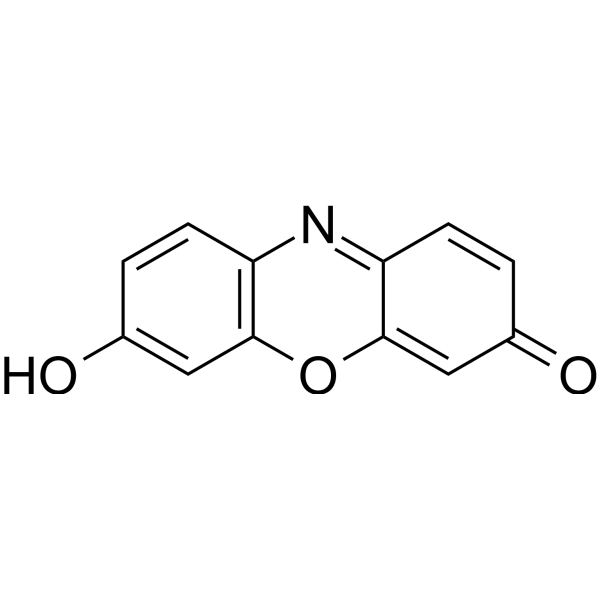
    Resorufin (NSC 12097) is a highly fluorescent pink dye. Resorufin shows favorable properties such as water solubility, red-shifted absorption/emission signals. Resorufin is used for the detection of ROS/RNS and a second analyte .
    Resorufin
  • HY-D1094
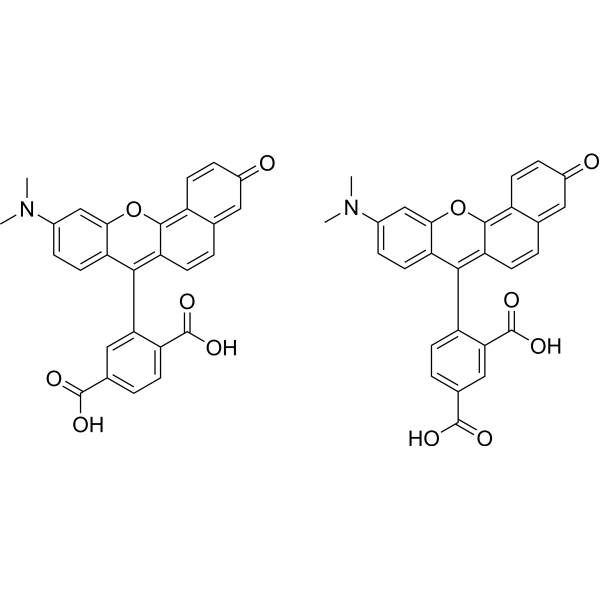
    Carboxy-SNARF 1 (5/6-mixture)
    1 Publications Verification

    SNARF 1

    Fluorescent Dye Others
    Carboxy-SNARF 1 (5/6-mixture) (SNARF 1) is a fluorescent probe that is sensitive to pH (Ex: 488 nm). Carboxy-SNARF 1 (5/6-mixture) can be used for measurement pH. Carboxy-SNARF 1 (5/6-mixture) exhibits a significant emission shift from yellow-orange (Em: 580 nm) to deep red fluorescence (Em: 640 nm) under acidic and basic conditions (pH=7-8), respectively .
    Carboxy-SNARF 1 (5/6-mixture)
  • HY-123533A

    NSC 12097 sodium salt

    Reactive Oxygen Species (ROS) Others
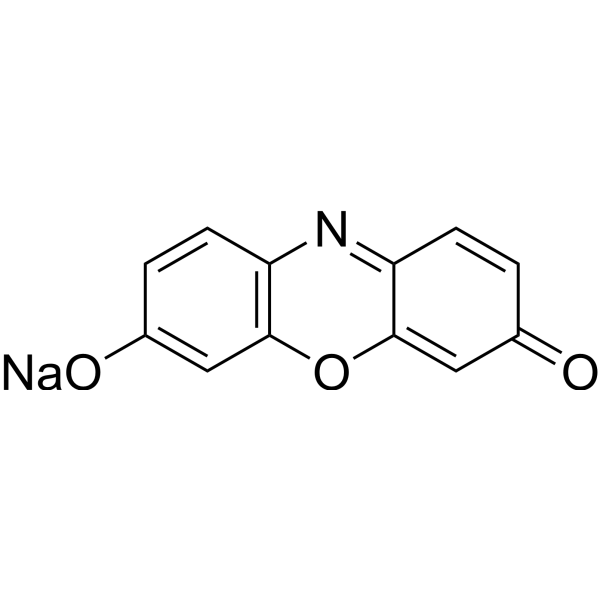
    Resorufin sodium salt (NSC 12097) is a highly fluorescent pink dye. Resorufin sodium salt shows favorable properties such as water solubility, red-shifted absorption/emission signals. Resorufin sodium salt is used for the detection of ROS/RNS and a second analyte .
    Resorufin sodium salt
  • HY-D0219

    Thymolsulphonephthalein

    Fluorescent Dye Others
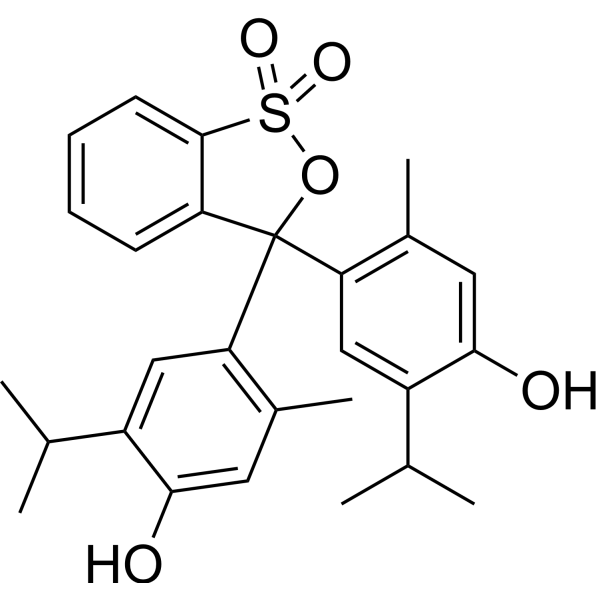
    Thymol blue is a reversible pH indicator that responds to the pH of the solution through structural changes of protonation and deprotonation. Thymol blue is red (HI - form) under acidic conditions and blue (I 2- form) under alkaline conditions. Quantitative detection is achieved through the absorption peak shift (435 nm/596 nm) of the UV-visible spectrum. Thymol blue selectively responds to pH changes, changing from red to yellow at pH 1.2-2.8 and from yellow to blue at pH 8.0-9.6. Thymol blue can be fixed in a silica gel matrix through sol-gel technology to form a solid-state sensor for in-situ pH measurement in the marine environment and acid-base monitoring in the biomedical field[1][2].
    Thymol blue
  • HY-47176

    Fluorescent Dye Others
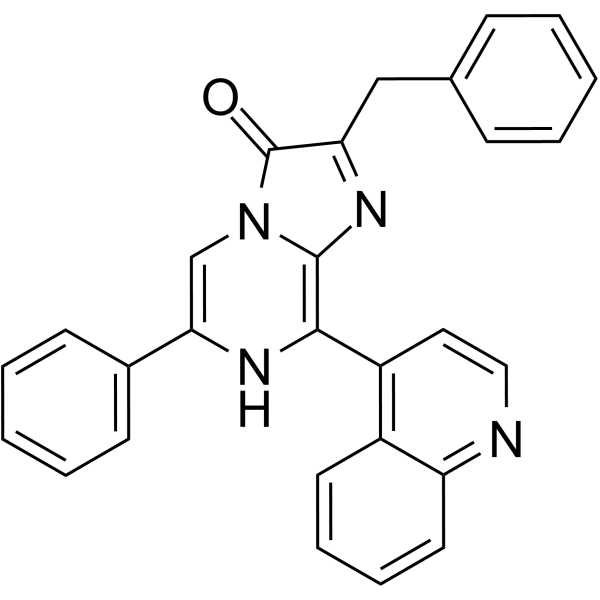
    QTZ is a bioluminescence agent for in vivo imaging. QTZ has red-shifted emission and yields very little background. QTZ is a coelenterazine analog with the 4-quinolinyl substitution at the C8 position of the imidazopyrazinone core .
    QTZ
  • HY-D1190

    RAR/RXR Others
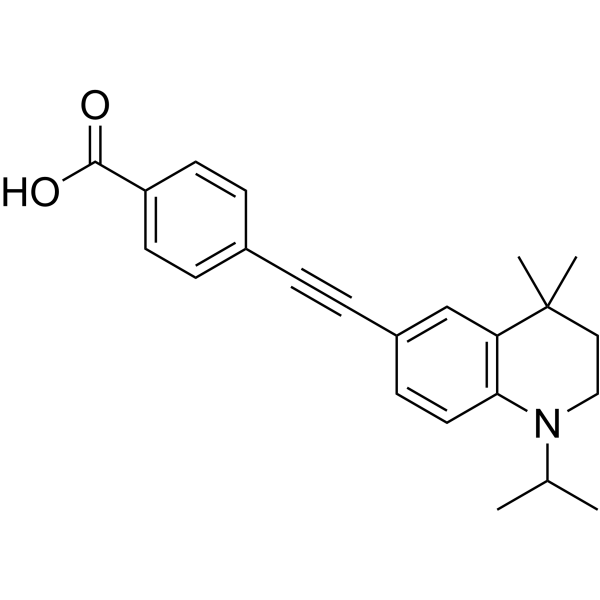
    DC271 is a RAR agonist and synthetic retinoid that binds to the retinoid-binding site of cellular retinoic acid-binding protein II (CRBP-II). DC271 exhibits solvatochromic fluorescence properties: it produces intense blue-shifted emission in nonpolar environments and weak red-shifted emission in polar environments, and its severe fluorescence quenching in aqueous solutions can be reversed by embedding in the hydrophobic retinoid-binding protein pocket. DC271 enables direct detection of the binding between unlabeled compounds and related retinoid-binding proteins via fluorescence competition assays (Ex/Em = 355 nm/460 nm) .
    DC271
  • HY-D0812

    Fluorescent Dye Biochemical Assay Reagents Others
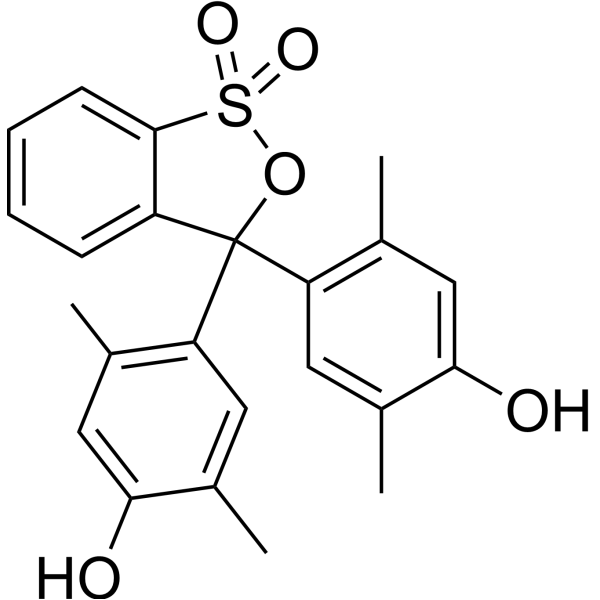
    Xylenol Blue is a sulfonephthalein dye. It exhibits observable color changes in response to variations in pH. Xylenol Blue undergoes two distinct color transitions across two specific pH ranges: an acidic range and an alkaline range. In a neutral solution, Xylenol Blue appears yellow (at pH 8); in a strongly acidic medium, its color shifts to red (at pH 2.8); and in an alkaline medium, the yellow hue transitions to blue (at pH 9.6) .
    Xylenol blue
  • HY-124891

    N-Phenylpyrrole

    Fluorescent Dye Others
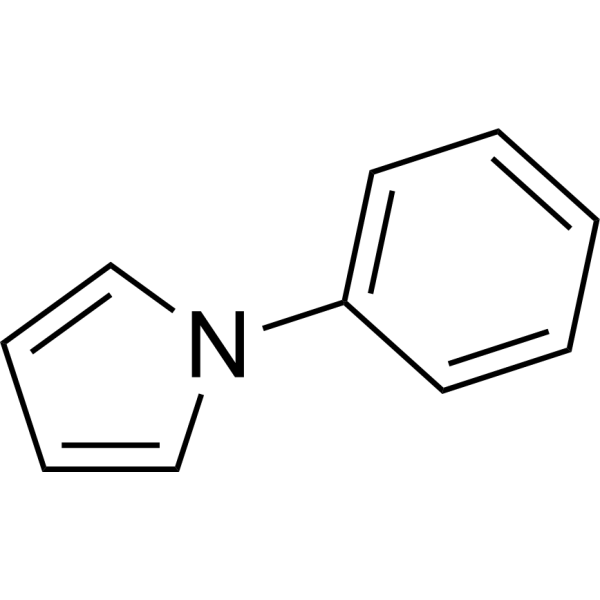
    1-Phenylpyrrole (N-Phenylpyrrole) has dual fluorescent properties. 1-Phenylpyrrole displays a single band in nonpolar solvents and a second red-shifted fluorescent band in polar solvents .
    1-Phenylpyrrole
  • HY-W133997

    Fluorescent Dye Others
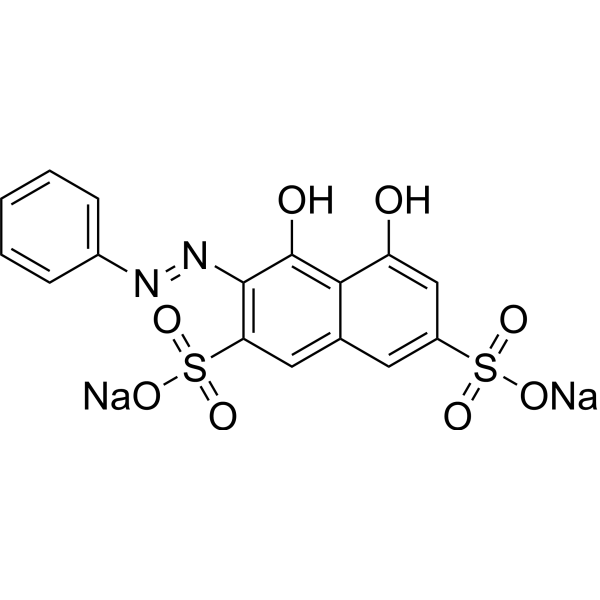
    Chromotrope 2R can be used as a chromogenic analytical probe for the quantification of proteins. Basic proteins stained red and the peak wavelength red shifts from 501.6 nm to 567 nm .
    Chromotrope 2R
  • HY-D0219A

    Fluorescent Dye Others
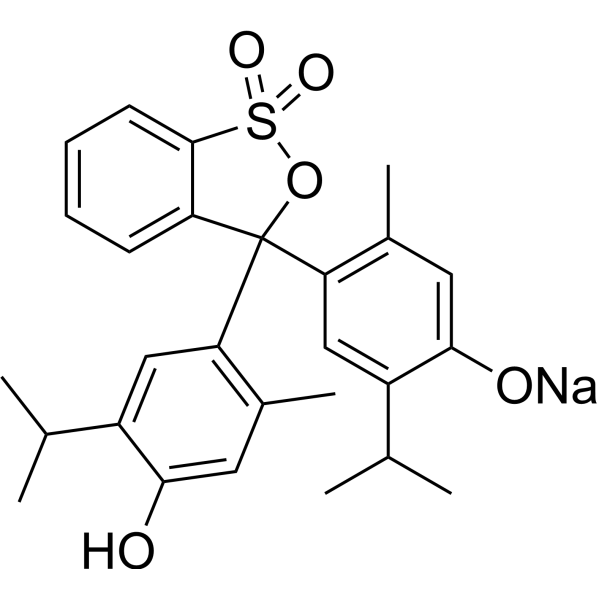
    Thymol Blue sodium is an acid-base indicator used to indicate changes in pH. Thymol Blue sodium fades from red to yellow at pH 1.2 to 2.8 and from yellow to blue at pH 8.0 to 9.6. Quantitative detection is achieved through the absorption peak shift (435 nm/596 nm) of the UV-visible spectrum. Thymol blue sodium can be fixed in a silica gel matrix through sol-gel technology to form a solid-state sensor for in-situ pH measurement in the marine environment and acid-base monitoring in the biomedical field .
    Thymol Blue sodium
  • HY-W127781

    Fluorescent Dye Others
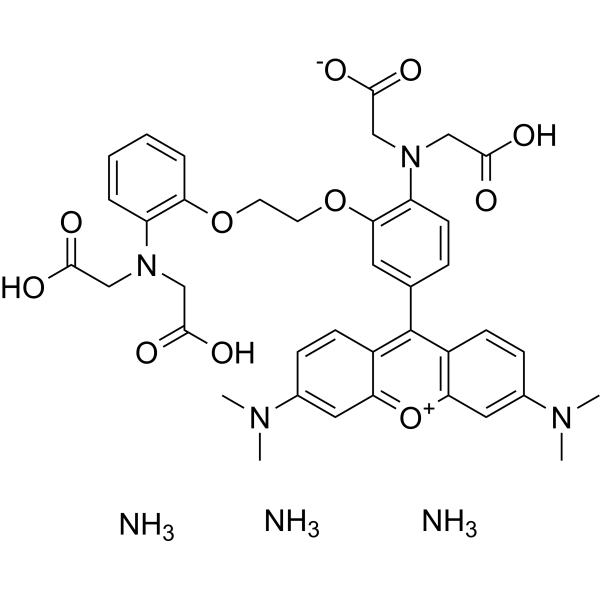
    Rhod-2 triammonium is a cell impermeant, red fluorescent calcium indicator. Rhod-2 triammonium exhibits a significant shift in fluorescence intensity upon calcium binding (ex max=549 nm; calcium-free v. ex/em max=552/581 nm; calcium-bound). Unlike the UV-excitable indicators Fura-2 and Indo-1 (HY-D0121), there is no accompanying spectral shift .
    Rhod-2 triammonium
  • HY-D1497

    Fluorescent Dye Others
    Fluorescent Red Mega 480 is a dye that is specifically designed for multicolor techniques. Fluorescent Red Mega 480 is characterized by an extremely large stoke′s shift between excitation and emission maxima .
    Fluorescent Red Mega 480
  • HY-D2338

    Fluorescent Dye Others
    PMBD is a lysosome (Lyso)-targeting fluorescent probe. PMBD selectively and sensitively detects endogenous N-acylethanolamine amidase (NAAA), allowing real-time visual monitoring of endogenous NAAA in living cells. PMBD has a maximum absorption peak at 350 nm. After the metabolism of NAAA, the maximum absorption peak of the product AMBD shifts red to 450 nm, and a significant fluorescence emission signal appears at 550 nm .
    PMBD
  • HY-136784A

    Fluorescent Dye Others
    Rhod-2 sodium is a cell impermeant, red fluorescent calcium indicator. Rhod-2 sodium exhibits a significant shift in fluorescence intensity upon calcium binding (ex max=549 nm; calcium-free v. ex/em max=552/581 nm; calcium-bound). Unlike the UV-excitable indicators Fura-2 and Indo-1 (HY-D0121), there is no accompanying spectral shift .
    Rhod-2 sodium
  • HY-136784

    Fluorescent Dye Others
    Rhod-2 potassium is a cell impermeant, red fluorescent calcium indicator. Rhod-2 potassium exhibits a significant shift in fluorescence intensity upon calcium binding (ex max=549 nm; calcium-free v. ex/em max=552/581 nm; calcium-bound). Unlike the UV-excitable indicators Fura-2 and Indo-1 (HY-D0121), there is no accompanying spectral shift .
    Rhod-2 potassium
  • HY-D3183

    Fluorescent Dye Aldehyde Dehydrogenase (ALDH) Others
    AldRed 659-A is a red-shifted fluorescent substrate for aldehyde dehydrogenase (ALDH). AldRed 659-A exhibits only minimal fluorescent uptake shift in comparison with DEAB (ALDH inhibitor)-treated control .
    AldRed 659-A
  • HY-D3012

    Fluorescent Dye Others
    12-AS is a 9-anthracenoxy fatty acid probe. 12-AS’s fluorescence decay is not a single index, and its lifetime increases with the red shift of the emission wavelength .
    12-AS
  • HY-N17679

    Amino Acid Derivatives Endogenous Metabolite Metabolic Disease
    Euhalothece-362 is a red-shifted mycosporine-like amino acid that can be found in halophilic cyanobacterium (Euhalothece sp.). Euhalothece-362 can be utilized for studying the secondary metabolism of microorganisms in high-salt environments .
    Euhalothece 362
  • HY-124891S

    N-Phenylpyrrole-d9

    Isotope-Labeled Compounds Others
    1-Phenylpyrrole-d9 (N-Phenylpyrrole-d9) is the deuterium labeled 1-Phenylpyrrole (HY-124891). 1-Phenylpyrrole (N-Phenylpyrrole) has dual fluorescent properties. 1-Phenylpyrrole displays a single band in nonpolar solvents and a second red-shifted fluorescent band in polar solvents .
    1-Phenylpyrrole-d9
  • HY-D3230

    Fluorescent Dye Others
    FLCS1 is a BODIPY-based Fluorescent probe and selective copper (I) ion binder (λex = 630 nm, λemis = 660 nm). Binding of FLCS1 to copper (I) ions induces fluorescence turn-on. Addition of copper (I) to a methanolic solution of FLCS1 causes a slight red shift (4 nm) in the maximum absorption wavelength (λmax) in the UV-Vis spectrum .
    FLCS1
  • HY-D3182

    Fluorescent Dye Aldehyde Dehydrogenase (ALDH) Cancer
    AldeRed 588-A is a fluorescent labeling reagent and a substrate for aldehyde dehydrogenase (ALDH). AldeRed 588-A is metabolized by functionally active ALDH enzymes, thereby specifically labeling viable ALDH bright cell populations with red-shifted fluorescence. AldeRed 588-A supports one-step isolation and sorting of ALDH-expressing cells (including normal stem cells and cancer stem cells), and can be used in combination with green fluorophores for multicolor experimental applications. AldeRed 588-A is widely applicable to research related to various cancers such as bladder cancer, breast cancer, and head and neck cancer .
    AldRed 588-A
  • HY-D3269

    Fluorescent Dye Others
    Mito-Cu (II) is a mitochondria-targeted fluorescent probe (Ex/Em = 370/450 nM). Mito-Cu (II) specifically accumulates in mitochondria of living cells and enables real-time detection of exogenous Cu 2+ within mitochondria of living cells. Mito-Cu (II) achieves "on-off-on" fluorescence switching through sequential exposure to Cu 2+ and ethylenediaminetetraacetic acid (EDTA) (HY-Y0682). Its fluorescence is quenched after forming a 1:1 complex with Cu 2+, and the fluorescence recovers when Cu 2+ is chelated by EDTA .
    Mito-Cu(II)
  • HY-D3404

    DNA Stain Others
    BODi-1 is a fluorescent modulator targeting dsDNA, which binds to dsDNA via a bis-intercalation mechanism (Ex=465 nm, Em=490 nm). BODi-1 exhibits a fluorescence enhancement effect upon binding to nucleic acids, but its fluorescence intensity, anisotropy and average lifetime decrease at higher dye/DNA ratios. When BODi-1 binds to DNA in liposome complexes, it also shows red-shifted emission spectra, along with reduced quantum yield and average lifetime. BODi-1 does not induce significant DNA conformational changes when the dye/DNA ratio is below 0.01. BODi-1 can be used as a fluorescent probe for the characterization of liposome complexes and FRET studies at this ratio .
    BODi-1
  • HY-D1737

    Bacterial Infection
    RADA is a fluorescent D-amino acid (FDAA) with high photostability and thermostability, which emits yellow-to-orange fluorescence. RADA shows low outer membrane permeability in wild-type Gram-negative Escherichia coli, but it targets penicillin-binding proteins and L,D-transpeptidases, mimics the interaction between acyl acceptors and enzyme intermediates, and integrates into peptidoglycan during biosynthesis. As a peptidoglycan labeling reagent, RADA metabolically integrates into the nascent peptidoglycan of live bacterial cells, labels the peptidoglycan at the poles and lateral walls of mycobacteria, and enables visualization of peptidoglycan synthesis and remodeling processes. RADA serves as a non-specific stain for fixed cells, is non-toxic to bacterial cells, and its red-shifted excitation/emission spectra reduce phototoxicity. RADA also supports virtual pulse-chase labeling experiments and stochastic optical reconstruction microscopy for sub-diffraction-limited imaging of bacterial cell walls .
    RADA

Inquiry Online

Your information is safe with us. * Required Fields.

Salutation


Country or Region *

Applicant Name *


Organization Name *

Department *


Email Address *


Product Name *

Cat. No.


Requested quantity *

Phone Number *


Remarks

Inquiry Online

Inquiry Information

Product Name:
Cat. No.:
Quantity:
MCE Japan Authorized Agent:

