1. Search Result
Search Result
Results for "

sensation

" in MedChemExpress (MCE) Product Catalog:

20

Inhibitors & Agonists

1

Biochemical Assay Reagents

3

Peptides

5

Natural
Products

2

Isotope-Labeled Compounds

Cat. No. Product Name Target Research Areas Chemical Structure
  • HY-Y1168
    DMTMM
    2 Publications Verification

    4-(4,6-Dimethoxy-1,3,5-triazin-2-yl)-4-methylmorpholinium chloride

    Biochemical Assay Reagents Neurological Disease Cancer
    DMTMM (4-(4,6-dimethoxy-1,3,5-triazine-2-yl)-4-methylmorpholinium chloride) is a coupling agent. DMTMM can activate carboxyl groups and promote the formation of amide bonds. DMTMM plays an important role in promoting the chemical modification of biomacromolecules such as polysaccharides and proteins. DMTMM can be used for research of tissue engineering, breast cancer, corneal regeneration, and biomaterials .
    DMTMM
  • HY-B0364A
    Dyclonine hydrochloride
    1 Publications Verification

    Dyclocaine hydrochloride

    Bacterial Fungal Aldehyde Dehydrogenase (ALDH) Infection Cancer
    Dyclonine (Dyclocaine) hydrochloride is an orally effective ALDH covalent inhibitor (crosses blood-brain barrier), with an IC50 of 35 μM for ALDH2 and 76 μM for ALDH3A1. Dyclonine hydrochloride has sensitizing activities for targeted cancer cells and antibacterial. Dyclonine hydrochloride is also a local agent that can suppress or relieve pain. that blocks the transmission of various nerve impulses or stimuli and inhibits the sensation of touch and pain .
    Dyclonine hydrochloride
  • HY-14380
    PF-3845
    2 Publications Verification

    FAAH Autophagy Inflammation/Immunology Cancer
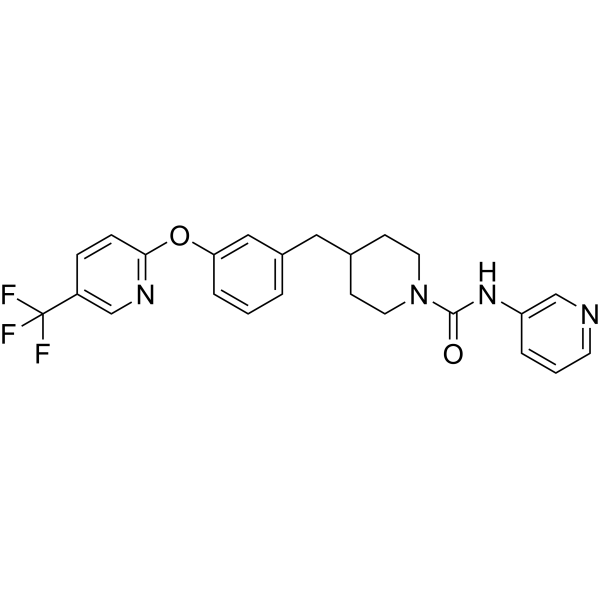
    PF-3845 is a potent, selective, irreversible and orally active inhibitor of fatty acid amide hydrolase (FAAH), with a Ki of 0.23 μM. PF-3845 is a covalent inhibitor that carbamylates FAAH's serine nucleophile. PF-3845 can reduce pain sensation, inflammation, and anxiety/depression without substantial effects on motility or cognition .
    PF-3845
  • HY-N0449

    Environmental Pollutants Keap1-Nrf2 GABA Receptor Metabolic Disease Cancer
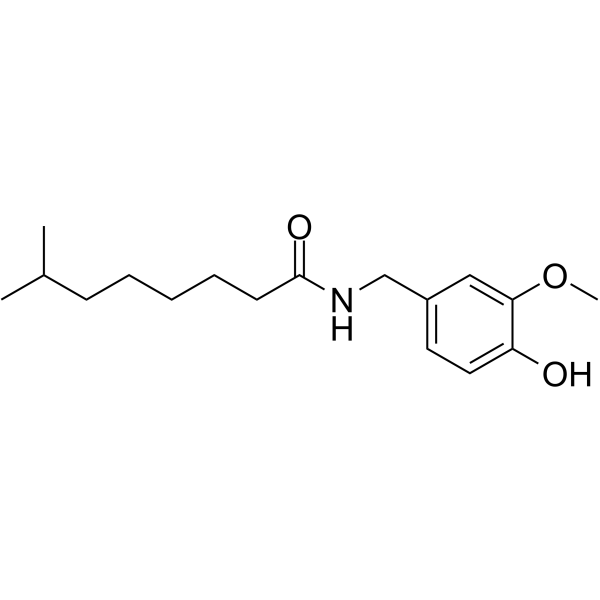
    Nordihydrocapsaicin, an analog of Capsaicin (HY-10448), is an orally active compound with pungent properties and anti-cancer activities, which is found in fresh and processed peppers. Nordihydrocapsaicin can cause a burning sensation when consumed .
    Nordihydrocapsaicin
  • HY-B1243
    Propoxycaine hydrochloride
    1 Publications Verification

    Sodium Channel Neurological Disease
    Propoxycaine hydrochloride inhibits voltage-gated sodium channels, and thereby inhibits the ionic flux required for the initiation and conduction of impulses. Propoxycaine hydrochloride application can lead to a loss of sensation.
    Propoxycaine hydrochloride
  • HY-W014394

    TRP Channel Parasite Infection Cardiovascular Disease
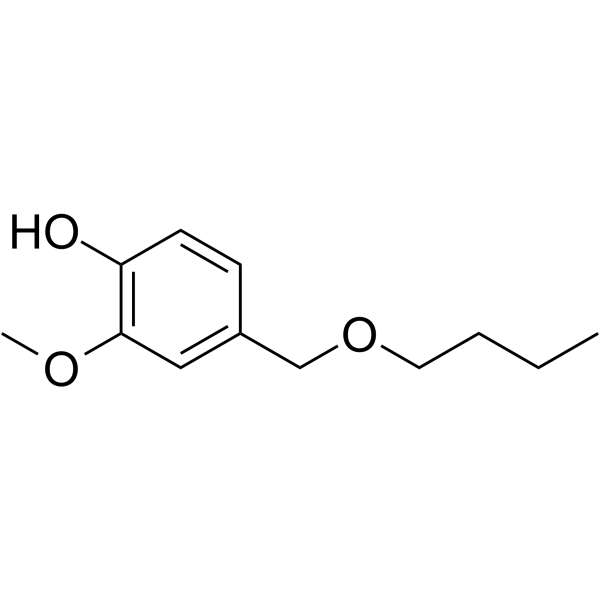
    Vanillyl butyl ether is a major contributor to the characteristic flavor and fragrance of vanilla. Vanillyl butyl ether is one of the eco-friendly and nontoxic substances. Vanillyl butyl ether exhibits mutually inhibitory effects on mammalian TRPV1 and TRPM8 channels. Vanillyl butyl ether shows repellency activity against Tribolium castaneum, T. confusum and L. bostrychophila. Vanillyl butyl ether acts as a mild warming agent, providing a warming sensation and enhancing blood circulation .
    Vanillyl butyl ether
  • HY-103293A

    Kallidin (380-389) (human, porcine, bovine) TFA

    Bradykinin Receptor Cardiovascular Disease Neurological Disease Inflammation/Immunology
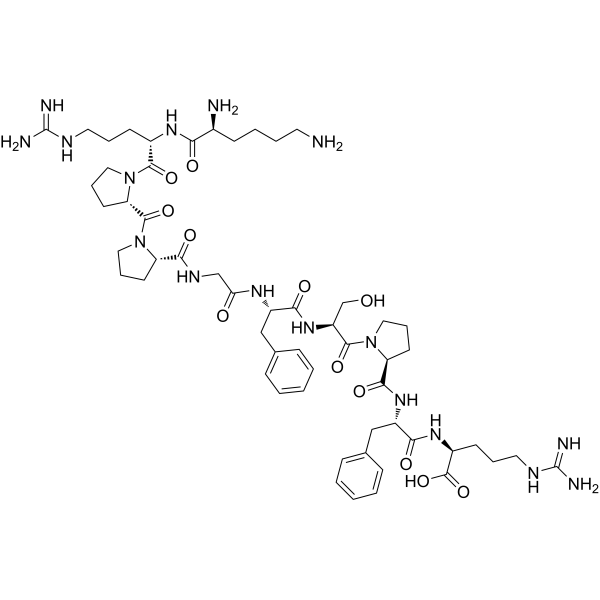
    Lys-Bradykinin TFA is the TFA salt form of Lys-Bradykinin (HY-103293). Lys-Bradykinin TFA is a ligand for kallidin and bradykinin receptor, which can be generated by kininogen protein through enzymatic cleavage by the protease kallikrein. Lys-Bradykinin TFA serves as a vasodilator, which widens blood vessels and increases blood flow. Lys-Bradykinin TFA stimulates net Na+ influx, and contributes to DNA synthesis. Lys-Bradykinin TFA involves in vascular regulation, inflammation and pain sensation .
    Lys-Bradykinin TFA
  • HY-N7014

    Others Neurological Disease
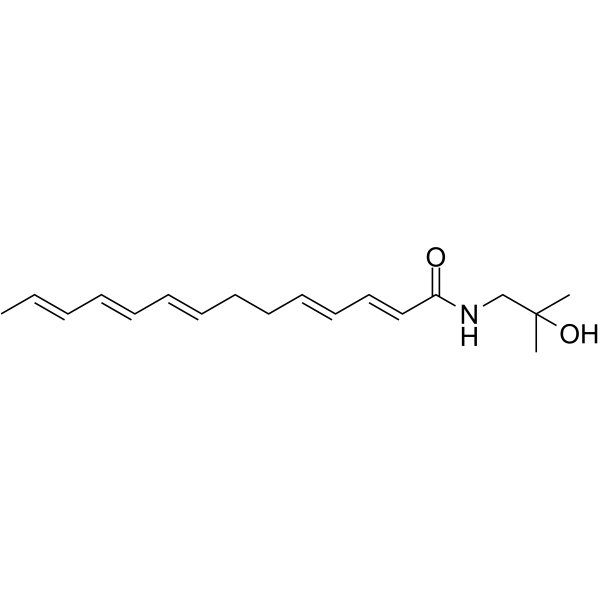
    Hydroxyl-γ-isosanshool is one of the major alkylamides in Z. bungeanum and Z. schinifolium oils. Hydroxyl-γ-isosanshoo induces a numbing sensation .
    Hydroxyl-​γ-​isosanshool
  • HY-103293

    Kallidin (380-389) (human, porcine, bovine)

    Bradykinin Receptor Cardiovascular Disease Neurological Disease Inflammation/Immunology
    Lys-Bradykinin, a kind of kallidin and bradykinin receptor ligand, can be generated by kininogen protein through enzymatic cleavage by the protease kallikrein. Lys-Bradykinin, also a vasodilator, can widen blood vessels and increase blood flow. ys-Bradykinin stimulates net Na+ influx, and also the DNA synthesis. Lys-Bradykinin involves in vascular regulation, inflammation and pain sensation .
    Lys-Bradykinin
  • HY-N1369S1

    Calcium Channel Isotope-Labeled Compounds Neurological Disease
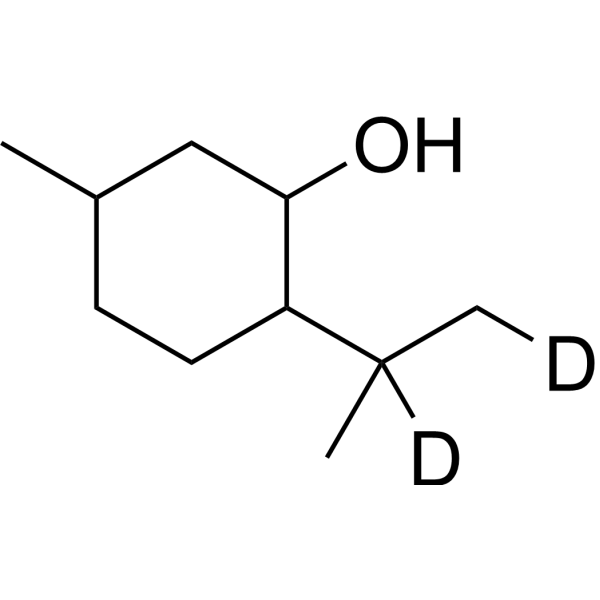
    Menthol-d2 is deuterated labeled Menthol (HY-N1369). Menthol is an analgesic and TRPM8 modulator. TRPM8 is a cold temperature sensing ion channel, and Menthol can regulate TRPM8 to exert analgesic and anti-irritation mechanisms. Menthol stimulates cold receptors and produces a cooling sensation by inhibiting Ca++ currents in neuronal cell membranes .
    Menthol-d2
  • HY-173003

    Mas-related G-protein-coupled Receptor (MRGPR) Inflammation/Immunology
    EP-3945 is a potent agonist of Mas-related G protein-coupled receptor (MRGPR), more effective than the MRGPRD small molecule agonist β-Alanine (HY-N0230). MRGPR plays a crucial role in inflammatory pruritus and pain sensation. Additionally, MRGPR binds to Gq (MRGPRX2, MRGPRX4, MRGPRX1 couple with Gq; MRGPRX2, MRGPRD couple with Gi), with EP-3945 measured EC50 for Gq being 211.6 nM .
    EP-3945
  • HY-106325

    Phosphodiesterase (PDE) Inflammation/Immunology
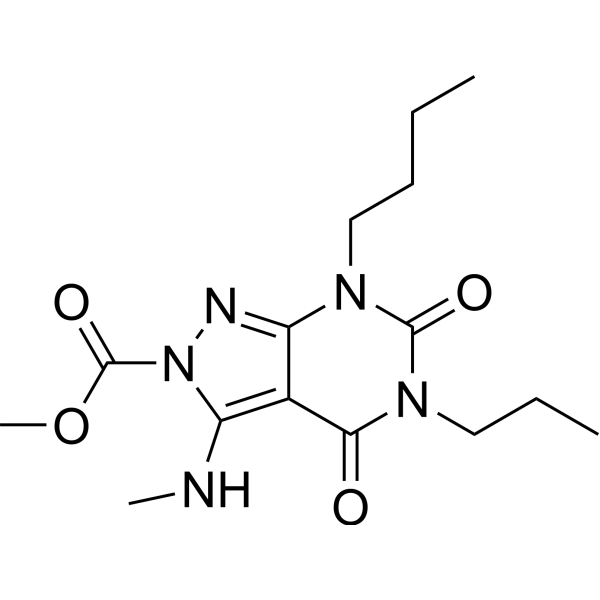
    AA 2379 is an orally active antirheumatic agent. AA 2379 has antiinflammatory, antipyretic activities and reduces pain sensation .
    AA 2379
  • HY-178233

    Potassium Channel Neurological Disease
    CAT335 is a TREK activator. CAT335 selectively and irreversibly activates TREK-1 CG∗. CAT335 can be used in the research of pain sensation, sleep, and intraocular pressure .
    CAT335
  • HY-103293B

    Kallidin (380-389) (human, porcine, bovine) tetraacetate

    Bradykinin Receptor Cardiovascular Disease Neurological Disease Inflammation/Immunology
    Lys-Bradykinin (Kallidin (380-389) (human, porcine, bovine)) tetraacetate, a kind of kallidin and bradykinin receptor ligand, can be generated by kininogen protein through enzymatic cleavage by the protease kallikrein. Lys-Bradykinin tetraacetate, also a vasodilator, can widen blood vessels and increase blood flow. ys-Bradykinin stimulates net Na+ influx, and also the DNA synthesis. Lys-Bradykinin tetraacetate involves in vascular regulation, inflammation and pain sensation .
    Lys-Bradykinin tetraacetate
  • HY-N9484S

    Drug Metabolite Isotope-Labeled Compounds Others
    Menthofuran- 13C2 is 13C labeled Menthol (HY-N1369). Menthol is an analgesic and TRPM8 modulator. TRPM8 is a cold temperature sensing ion channel, and Menthol can regulate TRPM8 to exert analgesic and anti-irritation mechanisms. Menthol stimulates cold receptors and produces a cooling sensation by inhibiting Ca ++ currents in neuronal cell membranes. Menthol also improves oral nicotine rejection in mice .
    Menthofuran-13C2
  • HY-B0364AR

    Dyclocaine hydrochloride (Standard)

    Reference Standards Bacterial Fungal Aldehyde Dehydrogenase (ALDH) Infection Cancer
    Dyclonine (hydrochloride) (Standard) is the analytical standard of Dyclonine (hydrochloride). This product is intended for research and analytical applications. Dyclonine (Dyclocaine) hydrochloride is an orally effective ALDH covalent inhibitor (crosses blood-brain barrier), with an IC50 of 35 μM for ALDH2 and 76 μM for ALDH3A1. Dyclonine hydrochloride has sensitizing activities for targeted cancer cells and antibacterial. Dyclonine hydrochloride is also a local agent that can suppress or relieve pain. that blocks the transmission of various nerve impulses or stimuli and inhibits the sensation of touch and pain .
    Dyclonine hydrochloride (Standard)
  • HY-W726468

    Others Others
    Feruloylaspartic acid (Compound 19) is an N-cinnamoyl-L-amino acid, and it is a key astringent compound responsible for the puckering sensation in roasted cocoa beans. Feruloylaspartic acid elicits a puckering, astringent oral sensation without exhibiting a bitter taste .
    Feruloylaspartic acid
  • HY-N19049

    Others Neurological Disease
    Acmella oleracea extract, derived from the leaves and buds of the Acmella oleracea plant, is a versatile natural ingredient. It contains various bioactive compounds, including alkylamide alkaloids such as acmella alcohol, which impart a tingling sensation and local anesthetic effect to the extract.
    Acmella oleracea extract
  • HY-182513

    Prostaglandin Receptor Others Inflammation/Immunology
    ONO-8539 is an orally active prostanoid EP1 receptor antagonist with competitive, insurmountable binding and slow receptor dissociation for long-duration inhibition. ONO-8539 modulates afferent nerve function related to bladder activity, inhibits detrusor overactivity-related contractions, decreases nonvoiding contractions and voiding duration, and increases uroflow rate with ATP (HY-B2176)-induced detrusor overactivity. ONO-8539 attenuates acid-induced heartburn symptoms, extends time to first heartburn sensation, and prevents primary hypersensitivity after distal esophageal acidification. ONO-8539 can be used for the research of overactive bladder and gastroesophageal reflux disease .
    ONO-8539
  • HY-182517

    TRP Channel Inflammation/Immunology
    AG1529 is a TRPV1 inhibitor and capsaicinoid-based soft agent with a human TRPV1 IC50 of 0.9-0.93 μM. AG1529 reversibly blocks capsaicin-evoked TRPV1 activation, binds to the TRPV1 capsaicin binding site, moderately affects pH-induced TRPV1 gating, and does not alter voltage- or heat-mediated TRPV1 responses. AG1529 suppresses TRPV1-mediated neuronal excitability, reduces capsaicin- and pH-evoked neuronal firing, abolishes histaminergic and inflammation-mediated TRPV1 sensitization. AG1529 exhibits anti-nociceptive and antipruritic effects, attenuates in vivo hyperalgesia and pruritus, dose-dependently reduces acute histaminergic itch in rodents, and mildly blocks hTRPA1 and hTRPM8 channel activity. AG1529 undergoes hydrolysis and dermal deactivation, minimizes TRPV1-associated side reactions, does not evoke capsaicin-like burning sensation, and does not disrupt physiological thermal regulation. AG1529 can be used for the research of inflammatory cutaneous nociception and acute histaminergic pruritus .
    AG1529

Inquiry Online

Your information is safe with us. * Required Fields.

Salutation


Country or Region *

Applicant Name *


Organization Name *

Department *


Email Address *


Product Name *

Cat. No.


Requested quantity *

Phone Number *


Remarks

Inquiry Online

Inquiry Information

Product Name:
Cat. No.:
Quantity:
MCE Japan Authorized Agent:

