25 Results for "

silver nanoparticle

" in MedChemExpress (MCE) Product Catalog:
Products (25)

25 Results for "silver nanoparticle" in MCE Product Catalog:

2
2 Cited Publications
Cat. No.: HY-G0006
CAS No.: 73590-85-9
Synonyms: Ufiprazole
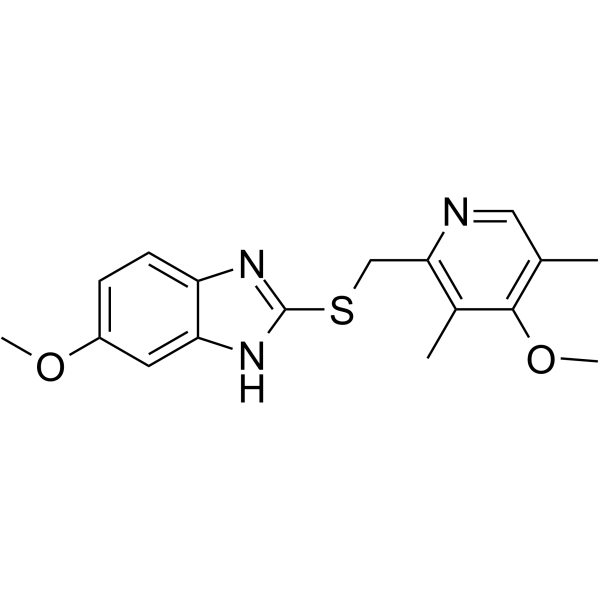
Omeprazole sulfide (Ufiprazole) is a metabolic degradation product of Omeprazole (HY-B0113). Omeprazole sulfide acts as a modulator of AhR. Omeprazole sulfide in cells with low CYP3A4 expression, functions as an AhR antagonist; however, in cells with high CYP3A4 expression, it is rapidly metabolized to Omeprazole, thereby acting as an AhR agonist. Omeprazole sulfide exhibits antibacterial activity when conjugated with silver nanoparticles (AgNPs). Omeprazole sulfide can be used in research on acid suppression and bacterial infections .
loading...
    loading...
Cat. No.: HY-N2362
CAS No.: 302-72-7
Synonyms: DL-2-Aminopropionic acid
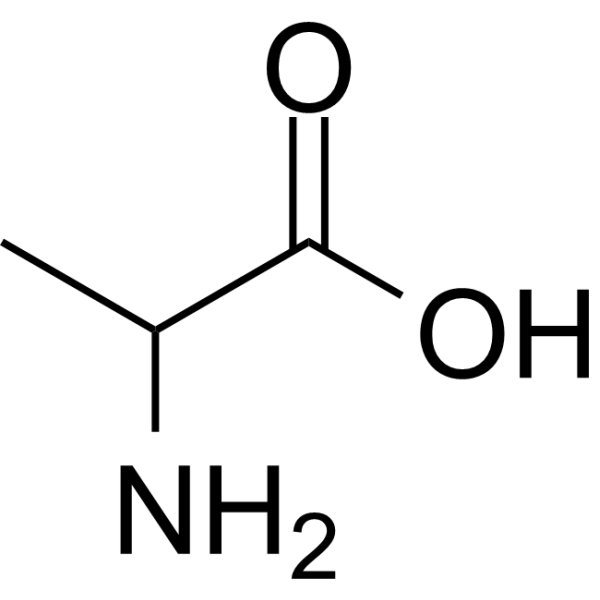
DL-alanine, an orally active amino acid, is the racemic compound of L- and D-alanine. DL-alanine is employed both as a reducing and a capping agent, used with silver nitrate aqueous solutions for the production of nanoparticles. DL-alanine can be used for the research of transition metals chelation, such as Cu(II), Zn(II), Cd(11). DL-alanine, a sweetener, is classed together with glycine and sodium saccharin. DL-alanine plays a key role in the glucose-alanine cycle between tissues and liver .
loading...
    loading...
Cat. No.: HY-N6613
CAS No.: 25990-10-7
Synonyms: Galacturonic acid polymer
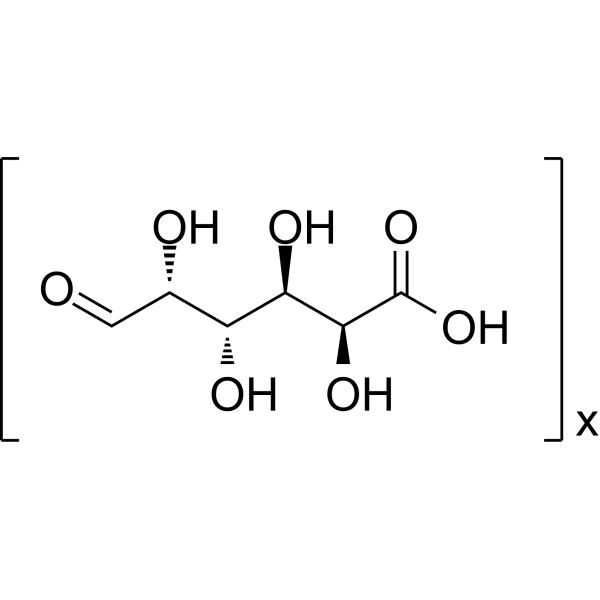
Polygalacturonic acid (Galacturonic acid polymer) is transparent colloid, is a major component of the cell wall. Polygalacturonic acid can be used to prepare silver nanoparticles (AgNPs), as an antioxidant and anti-inflammatory that protect cells from destructive effect of elevated ROS and accelerate wound healing. Polygalacturonic acid nanoparticles also displays anti-bacterial activity .
loading...
    loading...
Cat. No.: HY-140646
CAS No.: 24991-53-5
Purity:  99.39%
Synonyms: Poly(ethylene glycol)-bis-amine 2000
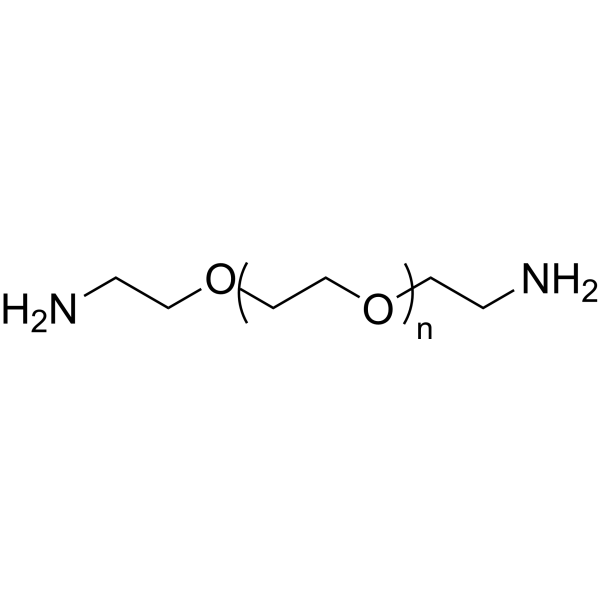
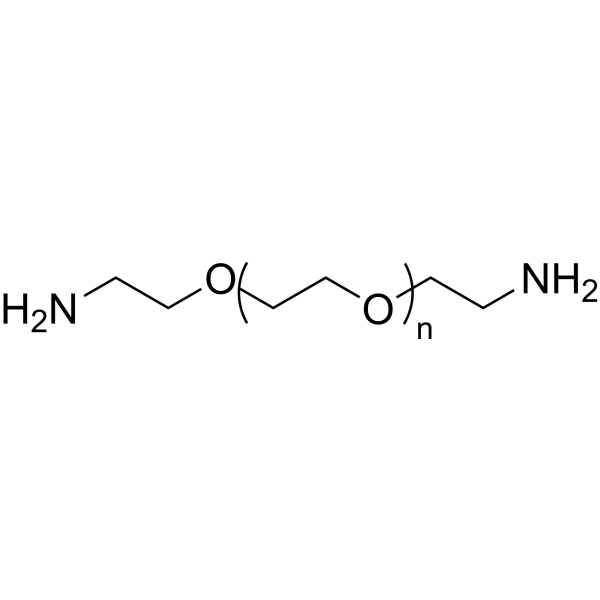
PEG2000-bis-amine (Poly(ethylene glycol)-bis-amine 2000) is a diamine-terminated polyethylene glycol and conjugate linker. PEG2000-bis-amine endows the surface of carbon capsules with stealth properties, biocompatibility, and free amino groups for antibody conjugation. PEG2000-bis-amine acts as a reducing agent and passivating agent to promote the formation and assembly of silver nanoparticles on silica nanospheres, and increases the number of silver nanoparticles on the silica surface.
loading...
    loading...
Cat. No.: HY-N5070
CAS No.: 176182-06-2
Synonyms: Depressin
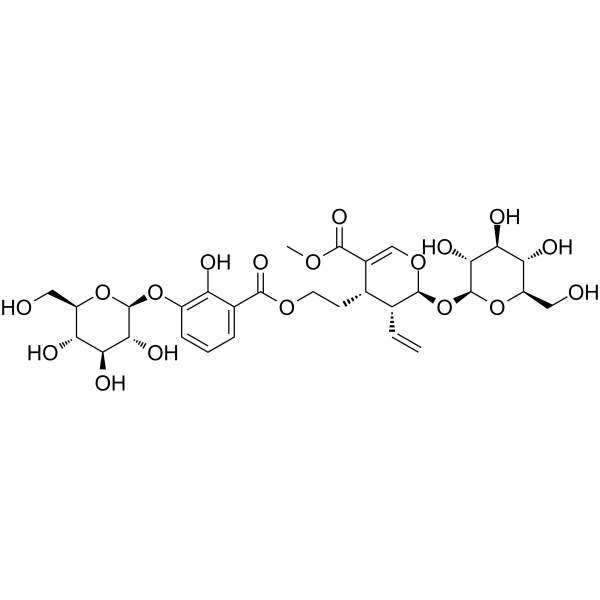
Depressine is an iridoid glycoside that can be isolated from the methanol extract of the aerial parts of Gentiana depressa. Depressine can be used to reduce oxidative DNA base damage and strand breaks that are prone to occur during the preparation of silver nanoparticles (AgNPs) .
loading...
    loading...
Cat. No.: HY-140649
CAS No.: 24991-53-5
Purity:  ≥98.0%
Synonyms: Poly(ethylene glycol)-bis-amine 20000
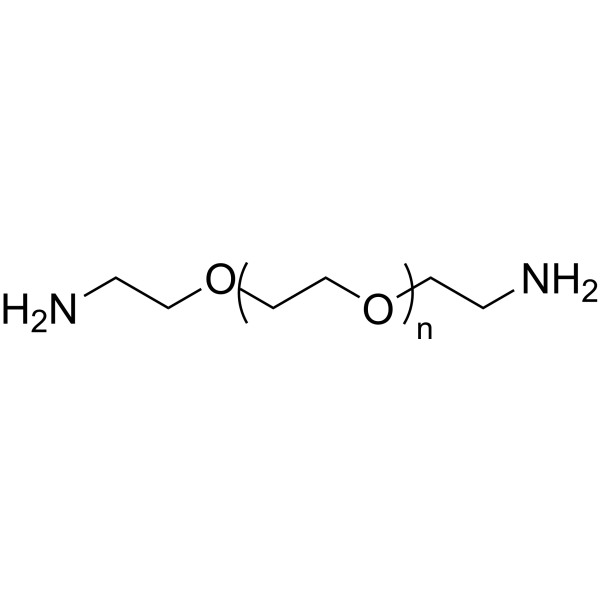
PEG20000-bis-amine (Poly(ethylene glycol)-bis-amine 20000) is a diamine-terminated polyethylene glycol and conjugate linker. PEG20000-bis-amine endows the surface of carbon capsules with stealth properties, biocompatibility, and free amino groups for antibody conjugation. PEG20000-bis-amine acts as a reducing agent and passivating agent to promote the formation and assembly of silver nanoparticles on silica nanospheres, and increases the number of silver nanoparticles on the silica surface.
loading...
    loading...
Cat. No.: HY-140647
CAS No.: 24991-53-5
Synonyms: Poly(ethylene glycol)-bis-amine 3400
PEG3400-bis-amine (Poly(ethylene glycol)-bis-amine 3400) is a diamine-terminated polyethylene glycol and conjugate linker. PEG3400-bis-amine endows the surface of carbon capsules with stealth properties, biocompatibility, and free amino groups for antibody conjugation. PEG3400-bis-amine acts as a reducing agent and passivating agent to promote the formation and assembly of silver nanoparticles on silica nanospheres, and increases the number of silver nanoparticles on the silica surface.
loading...
    loading...
Cat. No.: HY-172351A
CAS No.: 24991-53-5
PEG6000-bis-amine is a diamine-terminated polyethylene glycol (MW≈6000) and conjugate linker. PEG6000-bis-amine endows the surface of carbon capsules with stealth properties, biocompatibility, and free amino groups for antibody conjugation. PEG6000-bis-amine acts as a reducing agent and passivating agent to promote the formation and assembly of silver nanoparticles on silica nanospheres, and increases the number of silver nanoparticles on the silica surface .
loading...
    loading...
Cat. No.: HY-W414069
CAS No.: 1249-81-6
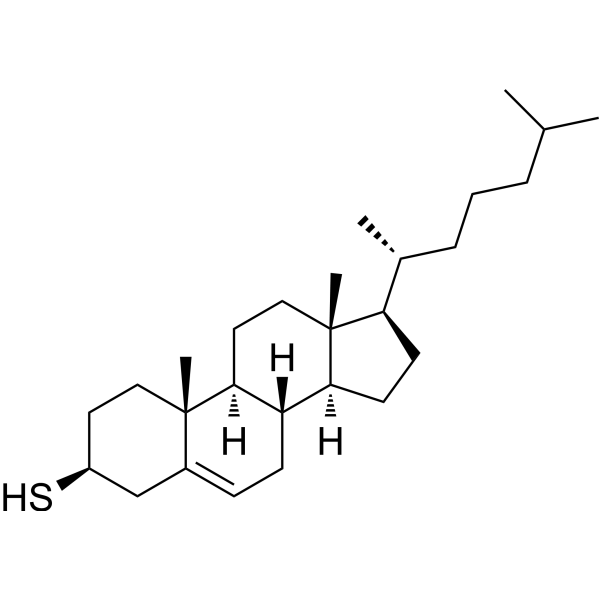
Thiocholesterol is a member of the class of cholesteric liquid crystals (CLCs) that can be used to synthesis cationic lipid. Thiocholesterol is a stronger stabilizer of silver nanoparticles (SNPs). Thiocholesterol can be used for plasma membrane research and drug delivery .
loading...
    loading...
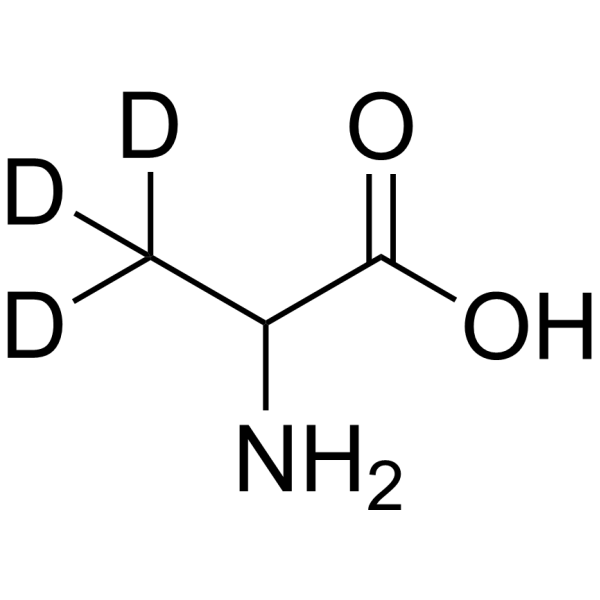
Cat. No.: HY-N2362S2
CAS No.: 53795-94-1
Synonyms: DL-2-Aminopropionic acid-d3
DL-Alanine-d3 is the deuterium labeled DL-Alanine. DL-alanine, an amino acid, is the racemic compound of L- and D-alanine. DL-alanine is employed both as a reducing and a capping agent, used with silver nitrate aqueous solutions for the production of nanoparticles. DL-alanine can be used for the research of transition metals chelation, such as Cu(II), Zn(II), Cd(11). DL-alanine, a sweetener, is classed together with glycine, and sodium saccharin. DL-alanine plays a key role in the glucose-alanine cycle between tissues and liver .
loading...
    loading...
Cat. No.: HY-172351
CAS No.: 24991-53-5
PEG400-bis-amine is a diamine-terminated polyethylene glycol and conjugate linker. PEG400-bis-amine endows the surface of carbon capsules with stealth properties, biocompatibility, and free amino groups for antibody conjugation. PEG400-bis-amine acts as a reducing agent and passivating agent to promote the formation and assembly of silver nanoparticles on silica nanospheres, and increases the number of silver nanoparticles on the silica surface.
loading...
    loading...
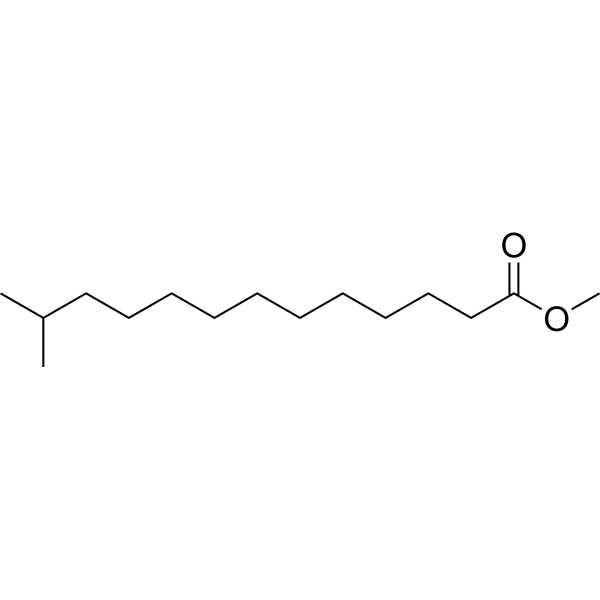
Cat. No.: HY-153936
CAS No.: 5129-58-8
Target:  

Apoptosis ROS Kinase

Research Areas:  

Others

Methyl 12-methyltridecanoate is a biosurfactant. Methyl 12-methyltridecanoate provides a novel approach for functionalizing the silver nanoparticles higher biocompatibility in vivo environmental .
loading...
    loading...
Cat. No.: HY-N16510
CAS No.: 163565-66-0
Cinnabarone is a biflavonoid that can be isolated from dragon's blood of Dracaena cinnabari. Cinnabarone is a reducing and stabilizing agent which can be used for formation of silver nanoparticles .
loading...
    loading...
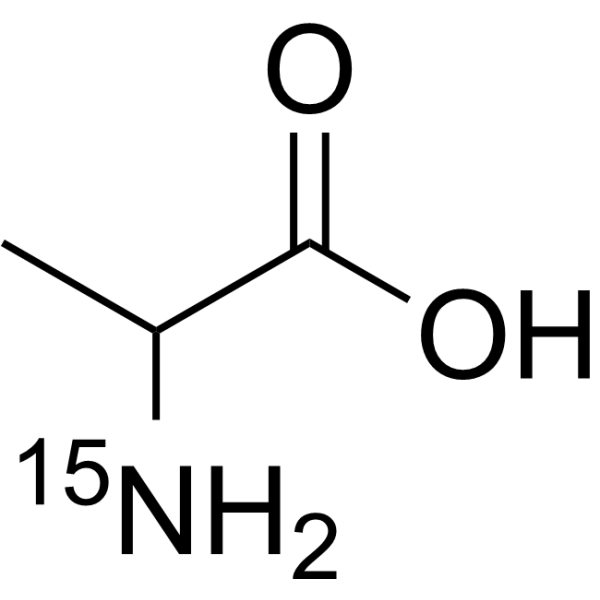
Cat. No.: HY-N2362S5
CAS No.: 71261-64-8
Synonyms: DL-2-Aminopropionic acid-15N
DL-Alanine- 15N is the 15N labeled DL-Alanine . DL-alanine, an amino acid, is the racemic compound of L- and D-alanine. DL-alanine is employed both as a reducing and a capping agent, used with silver nitrate aqueous solutions for the production of nanoparticles. DL-alanine can be used for the research of transition metals chelation, such as Cu(II), Zn(II), Cd(11). DL-alanine, a sweetener, is classed together with glycine, and sodium saccharin. DL-alanine plays a key role in the glucose-alanine cycle between tissues and liver .
loading...
    loading...
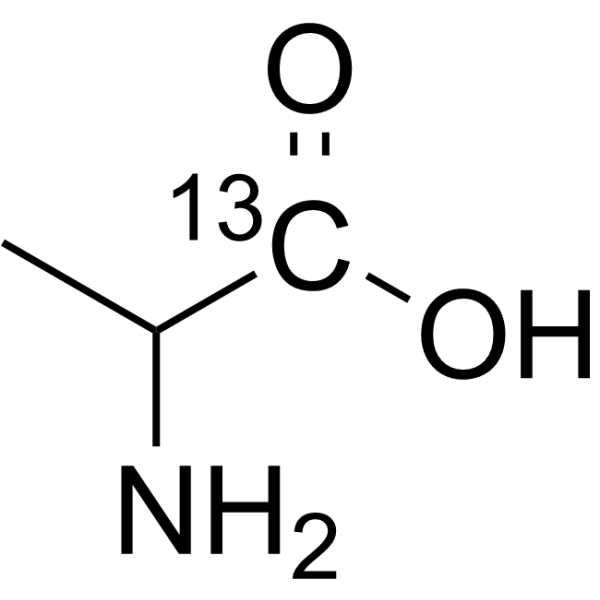
Cat. No.: HY-N2362S
CAS No.: 102029-81-2
Synonyms: DL-2-Aminopropionic acid-13C-1
DL-Alanine- 13C-1 is the 13C-labeled DL-Alanine. DL-alanine, an amino acid, is the racemic compound of L- and D-alanine. DL-alanine is employed both as a reducing and a capping agent, used with silver nitrate aqueous solutions for the production of nanoparticles. DL-alanine can be used for the research of transition metals chelation, such as Cu(II), Zn(II), Cd(11). DL-alanine, a sweetener, is classed together with glycine, and sodium saccharin. DL-alanine plays a key role in the glucose-alanine cycle between tissues and liver .
loading...
    loading...
Cat. No.: HY-N2362S1
CAS No.: 131157-42-1
Synonyms: DL-2-Aminopropionic acid-13C-3
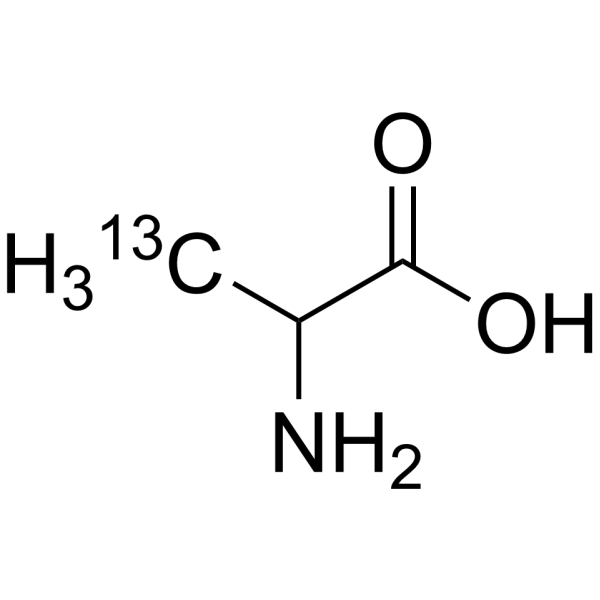
DL-Alanine- 13C-3 is the 13C-labeled DL-Alanine. DL-alanine, an amino acid, is the racemic compound of L- and D-alanine. DL-alanine is employed both as a reducing and a capping agent, used with silver nitrate aqueous solutions for the production of nanoparticles. DL-alanine can be used for the research of transition metals chelation, such as Cu(II), Zn(II), Cd(11). DL-alanine, a sweetener, is classed together with glycine, and sodium saccharin. DL-alanine plays a key role in the glucose-alanine cycle between tissues and liver .
loading...
    loading...
Cat. No.: HY-N2362S8
Synonyms: DL-2-Aminopropionic acid-d7
DL-Alanine-d7 (DL-2-Aminopropionic acid-d7) is deuterium labeled DL-Alanine. DL-alanine, an orally active amino acid, is the racemic compound of L- and D-alanine. DL-alanine is employed both as a reducing and a capping agent, used with silver nitrate aqueous solutions for the production of nanoparticles. DL-alanine can be used for the research of transition metals chelation, such as Cu(II), Zn(II), Cd(11). DL-alanine, a sweetener, is classed together with glycine and sodium saccharin. DL-alanine plays a key role in the glucose-alanine cycle between tissues and liver .
loading...
    loading...
Cat. No.: HY-N2362S9
CAS No.: 221080-39-3
Synonyms: DL-2-Aminopropionic acid-13C2,15N2
DL-Alanine- 13C2, 15N (DL-2-Aminopropionic acid- 13C2, 15N) is 13C and 15N labeled DL-Alanine. DL-alanine, an orally active amino acid, is the racemic compound of L- and D-alanine. DL-alanine is employed both as a reducing and a capping agent, used with silver nitrate aqueous solutions for the production of nanoparticles. DL-alanine can be used for the research of transition metals chelation, such as Cu(II), Zn(II), Cd(11). DL-alanine, a sweetener, is classed together with glycine and sodium saccharin. DL-alanine plays a key role in the glucose-alanine cycle between tissues and liver .
loading...
    loading...
Cat. No.: HY-W093378
CAS No.: 21548-73-2
Research Areas:  

Infection

Silver (I) sulfide is a biochemical reagent. Silver (I) sulfide nanoparticles exert Antibacterial effects against a variety of resistant bacteria, including Gram-positive and Gram-negative bacteria. Silver (I) sulfide can be used in the research of bacterial infections, such as infections caused by Staphylococcus aureus, Streptococcus agalactiae, Escherichia coli and Pseudomonas species .
loading...
    loading...
Cat. No.: HY-184604
Silver nanoclusters (AgNCs) are ultrasmall nanoparticles composed of several to tens of silver atoms. Their size is close to the Fermi wavelength of electrons, thus exhibiting unique molecular-like properties, such as strong fluorescence. Silver nanoclusters possess small size, low toxicity, excellent photostability, large Stokes shift, and good biocompatibility. Lipoic acid (also known as octylsulfonic acid) acts as a ligand in the synthesis of silver nanoclusters, primarily playing a role in stabilizing and protecting the silver nanoclusters. The ligand binds to silver atoms through its specific chemical structure, forming a stable nanocluster structure and influencing the physicochemical properties of the clusters, such as fluorescence performance, catalytic activity, and biocompatibility. This demonstrates potential application value in various fields such as chemical analysis, biosensing, catalysis, medicine, and bioimaging.
loading...
    loading...

