







Search Result
Results for "
solvent
" in MedChemExpress (MCE) Product Catalog:
158
Biochemical Assay Reagents
40
Isotope-Labeled Compounds
| Cat. No. |
Product Name |
Target |
Research Areas |
Chemical Structure |
-
- HY-Y0320
-
|
DMSO, meets analytical specification of Ch.P.
|
Environmental Pollutants
Bacterial
Cholinesterase (ChE)
|
Infection
Inflammation/Immunology
Cancer
|
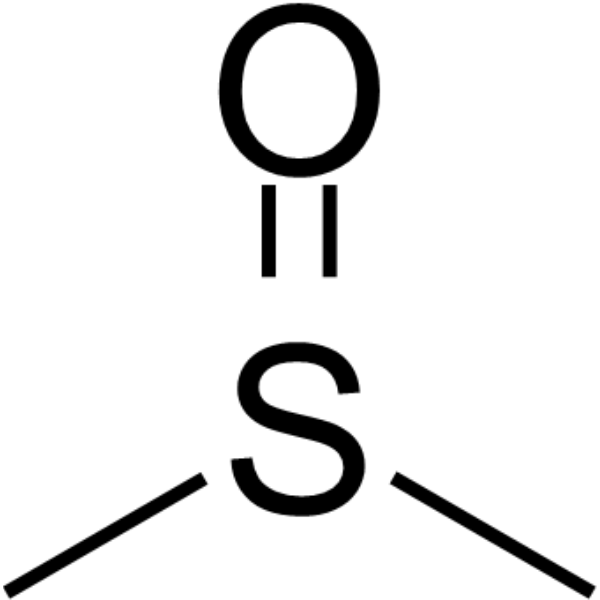
Dimethyl sulfoxide (DMSO), meets analytical specification of Ch.P. is an aprotic solvent that dissolves polar and non-polar compounds, including water-insoluble therapeutic and toxic agents. Dimethyl sulfoxide (DMSO) has a strong affinity for water and can rapidly penetrate or enhance the penetration of other substances into biological membranes. Dimethyl sulfoxide also has potential free radical scavenging and anticholinesterase effects and may affect coagulation activity. Dimethyl sulfoxide also induces histamine release from mast cells but is thought to have low systemic toxicity. Dimethyl sulfoxide also exhibits antifreeze and antibacterial properties . MCE provides Dimethyl sulfoxide that complies with the inspection standards (Ch.P) of Part 4 of the Chinese Pharmacopoeia (2020 Edition). Amicrobic, low endotoxin, can be used in various biochemical experiments such as drug dissolution.
|
-
-
- HY-Y0320C
-
|
DMSO
|
Environmental Pollutants
Bacterial
Cholinesterase (ChE)
|
Inflammation/Immunology
|
Dimethyl sulfoxide (DMSO) is an aprotic solvent that can dissolve water-insoluble therapeutic and toxic agents. Dimethyl sulfoxide (DMSO) has a strong affinity for water and has the ability to rapidly penetrate or enhance the penetration of other substances through biological membranes. Dimethyl sulfoxide also has potential free radical scavenging and anticholinesterase effects and may affect coagulation activity. Dimethyl sulfoxide also induces histamine release from mast cells but is thought to have low systemic toxicity . Low endotoxin, can be used in various biochemical experiments such as drug dissolution.
|
-
-
- HY-Y1891
-
-
-
- HY-Y0873A
-
-
-
- HY-Y0842
-
|
Methanamide; Formimidic acid
|
Biochemical Assay Reagents
|
Cardiovascular Disease
Cancer
|
|
Formamide is an effective DNA denaturant that significantly reduces the stability of DNA in buffer solutions. Formamide can also be used as a decalcifying agent for rat cardiac cells. Additionally, formamide is widely used as a solvent or chemical raw material for ion compounds, resins, and plasticizers.
|
-
-
- HY-Y0873C
-
-
-
- HY-W042416
-
|
DMAc
|
NF-κB
|
Neurological Disease
Metabolic Disease
Inflammation/Immunology
|
|
N,N-Dimethylacetamide (DMAc) is an organic solvent with blood-brain transmissibility and an FDA-approved drug excipient. N, N-dimethylacetamide exerts anti-inflammatory activity by inhibiting the NF-κB signaling pathway. N, N-dimethylacetamide can be used in studies of weight gain caused by a high-fat diet and neuroinflammation in Alzheimer's disease .
|
-
-
- HY-Y1275
-
|
NMP; 1-Methyl-2-pyrrolidinone
|
Environmental Pollutants
Biochemical Assay Reagents
|
Cancer
|
|
N-Methylpyrrolidone (1-Methyl-2-pyrrolidinone), a five-membered cyclic amide, is an orally active organic polar solvent with teratogenicity and toxicity. N-Methylpyrrolidone is low in acute toxicity with a LD50 value of 3914 mg/kg in rats and of 4050 mg/kg in mice. N-Methylpyrrolidone is extensively used in the manufacture of adhesives, paints, fuels, and pharmaceuticals .
|
-
-
- HY-154629
-
-
-
- HY-Y0873L
-
-
-
- HY-107799
-
|
|
Environmental Pollutants
Biochemical Assay Reagents
|
Others
|
|
Castor oil is a natural triglyceride and a solvent. Castor oil has a laxative effect and induces labor in pregnant females. Castor oil can be used as a solvent, co-solvent, stabilizing agent and polyol for the formation of polymer-nanoparticle composites .
|
-
-
- HY-Y0842B
-
|
Methanamide (deionized); Formimidic acid (deionized)
|
Biochemical Assay Reagents
|
Cardiovascular Disease
Cancer
|
|
Formamide deionized (Methanamide deionizde) is an effective DNA denaturant that significantly reduces the stability of DNA in buffer solutions. Formamide deionized can also be used as a decalcifying agent for rat cardiac cells. Additionally, Formamide deionized is widely used as a solvent or chemical raw material for ion compounds, resins, and plasticizers .
|
-
-
- HY-Y0873N
-
PEG3000
2 Publications Verification
Polyethylene glycol 3000
|
Environmental Pollutants
Biochemical Assay Reagents
|
Others
|
|
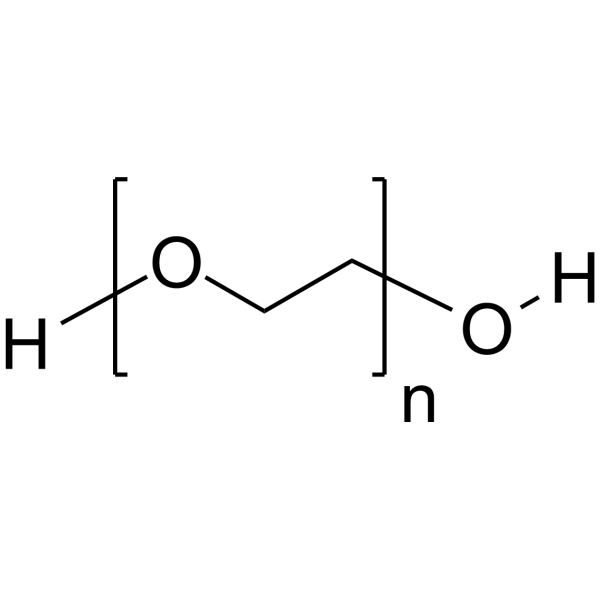
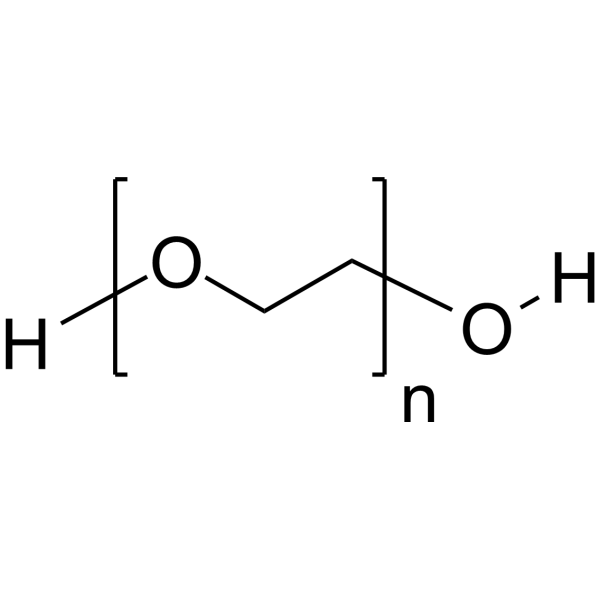
PEG3000 (Polyethylene glycol 3000) is a solvent for a large number of substances. PEG3000 can be used as a carrier material and modifying agent. PEG3000 is widely used in a variety of pharmaceutical formulations .
|
-
-
- HY-Y0873M
-
|
Polyethylene glycol 500
|
Environmental Pollutants
Biochemical Assay Reagents
|
Others
|
|
PEG500 (Polyethylene glycol 500) is a versatile polymer that's used as a solvent, dispersant, lubricant, and more in industries like pharmaceuticals and biotechnology, and it can also modify liposomes. PEG500 is commonly used as a solvent or carrier for drugs, helping with capsule endoscopy to improve image quality and cecum completion rates .
|
-
-
- HY-D0023
-
|
HPTS; solvent Green 7
|
Environmental Pollutants
Fluorescent Dye
|
Others
|
|
Pyranine (HPTS; Solvent Green 7) is a cell-impermeant pH-sensitive fluorescent indicator. Pyranine acts as a class of fluorescent chemosensor for the Cu + ion. Pyranine is used as a coloring agent, biological stain, optical detecting reagent, and pH indicator (Ex/Em = 450/510 nm) .
|
-
-
- HY-Y0320GL
-
|
DMSO (GMP Like)
|
Cholinesterase (ChE)
Bacterial
|
Infection
Inflammation/Immunology
Cancer
|
|
Dimethyl sulfoxide (DMSO) (GMP Like) is the GMP Like class Dimethyl sulfoxide (HY-Y0320C). Dimethyl sulfoxide is an aprotic solvent that can dissolve water-insoluble therapeutic and toxic agents. Dimethyl sulfoxide has a strong affinity for water and has the ability to rapidly penetrate or enhance the penetration of other substances through biological membranes. Dimethyl sulfoxide also has potential free radical scavenging and anticholinesterase effects and may affect coagulation activity. Dimethyl sulfoxide also induces histamine release from mast cells but is thought to have low systemic toxicity .
|
-
-
- HY-D0516
-
-
-
- HY-D0304
-
|
solvent red 49
|
Fluorescent Dye
|
Others
|
|
Rhodamine B base (Solvent red 49) is a fluorescent dye (Ex=543 nM; Em=565 nM) .
|
-
-
- HY-D0932
-
|
solvent Red 24; C.I. 26105
|
Environmental Pollutants
Biochemical Assay Reagents
Cytochrome P450
Aryl Hydrocarbon Receptor
|
Metabolic Disease
|
|
Sudan IV is an agonist of the aryl hydrocarbon receptor (AhR) that activates downstream signaling pathways and induces CYP1A1 expression. Sudan IV promotes CYP1A1 gene transcription by activating AhR-ARNT heterodimers and binding to exogenous response elements (XREs) on DNA, thereby enhancing drug metabolizing enzyme activity. Sudan IV can be used to study the toxicity mechanisms of industrial dyes and the effects of interactions with serum proteins (such as bovine serum albumin (BSA)) on their distribution in vivo. Sudan IV is a fat-soluble diazo dye that can be used to stain lipids, triglycerides, and lipoproteins on frozen sections .
|
-
-
- HY-Y0320R
-
|
DMSO, meets analytical specification of Ch.P. (Standard)
|
Reference Standards
Cholinesterase (ChE)
Bacterial
|
Infection
Inflammation/Immunology
Cancer
|
|
Dimethyl sulfoxide (Standard) is the analytical standard of Dimethyl sulfoxide. This product is intended for research and analytical applications. Dimethyl sulfoxide (DMSO) is an aprotic solvent that dissolves both polar and nonpolar compounds. Dimethyl sulfoxide has anti-freezing and bacteriostatic properties .
|
-
-
- HY-D0024
-
|
solvent Yellow 14
|
Environmental Pollutants
Bacterial
|
Others
|
|
Sudan I (Solvent Yellow 14) is a diazo-conjugate red dye and can be used as an additive to products such as oils, solvents or polishes. Sudan I inhibits growth of bacterial strains Clostridium perfringens and L. rhamnosus .
|
-
-
- HY-D0953
-
|
solvent Blue 38
|
Environmental Pollutants
Fluorescent Dye
|
Neurological Disease
|
|
Direct Blue 86 (Solvent Blue 38) is a myelin-sheath stain, commonly utilized in microscopy to detect demyelination in the central nervous system. Direct Blue 86 also is a dye with various applications including as a commercial dye in the printing of cotton and mucilage glue fabrics .
|
-
-
- HY-D0376
-
|
C.I. 48160
|
Fluorescent Dye
|
Others
|
|
Solvent Yellow 93 (C.I. 48160) is an azomethine dye. Solvent Yellow 93 is used as a colorant of toner. Solvent Yellow 93 is used for the coloring of polyester fiber pulp and is also used to make polyester masterbatch .
|
-
-
- HY-W093282
-
|
Soybean oil epoxide
|
Environmental Pollutants
Biochemical Assay Reagents
|
Others
|
|
Epoxidized soya bean oil (ESBO) is a vegetable oil-derived organic compound used as a plasticizer and stabilizer in various applications. It is produced by epoxidation of soybean oil, which introduces epoxy groups into the fatty acid chains of the oil. ESBO is a viscous, pale yellow liquid that is soluble in many organic solvents, such as chloroform and ethanol, but insoluble in water. It is commonly used as a plasticizer in polyvinyl chloride (PVC) products, including toys, food packaging materials and medical devices. In addition to its plasticizing properties, ESBO acts as an antioxidant and UV stabilizer, helping to prevent degradation and discoloration of PVC products over time. ESBOs have been investigated for their potential use in biodegradable plastics and as bio-based alternatives to traditional petroleum-derived plasticizers.
|
-
-
- HY-114907
-
|
Eosinic acid; solvent Red 72
|
Fluorescent Dye
|
Others
|
|
4',5'-Dibromofluorescein (Eosinic acid) is a fluorescein derivative that can used as a ligand for studying of protein properties by spectral analysis .
|
-
-
- HY-134524
-
-
-
- HY-D0303A
-
|
solvent Orange 3 hydrochloride
|
Fluorescent Dye
|
Others
|
|
Chrysoidine G (Solvent Orange 3 hydrochloride) is an industrial azoic dye (cationic dye). Chrysoidine G (Solvent Orange 3 hydrochloride) is used for the construction of most textile dyestuffs and also in synthetic industrial compounds. Chrysoidine G (Solvent Orange 3 hydrochloride) concentration can be determined by UV-Vis spectroscopy .
|
-
-
- HY-Y1155
-
-
-
- HY-DY1077
-
|
|
Fluorescent Dye
|
Others
|
Rhodamine B (solution) is a staining fluorescent dye, commonly used for dyeing textiles, paper, soap, leather, and agents. Solvent and concentration: DMSO: 10 mM
|
-
-
- HY-W133953
-
|
Propylene glycol monomethyl ether acetate
|
Biochemical Assay Reagents
|
Others
|
|
1-Methoxy-2-propyl acetate (Propylene glycol monomethyl ether acetate) is utilized as solvent, especially in the electronic-grade semiconductor industry .
|
-
-
- HY-D0370
-
|
|
Environmental Pollutants
Biochemical Assay Reagents
|
Others
|
|
Solvent Yellow 16 is a disperse dye. Dyes are important tools in biological experiments. They can help researchers observe and analyze cell structures, track biomolecules, evaluate cell functions, distinguish cell types, detect biomolecules, study tissue pathology and monitor microorganisms. Their applications range from basic scientific research to clinical A wide range of diagnostics. Dyes are also widely used in traditional fields such as textile dyeing, as well as in emerging fields such as functional textile processing, food pigments and dye-sensitized solar cells .
|
-
-
- HY-119791
-
|
|
Fluorescent Dye
|
Others
|
|
NBD-amine is a fluorogenic amine. NBD-amine displays the property of fluorescing weakly in water and strongly in organic solvents, membranes or hydrophobic environments .
|
-
-
- HY-Y0320E
-
|
|
Cholinesterase (ChE)
Bacterial
|
Infection
Inflammation/Immunology
Cancer
|
|
Dimethyl sulfoxide (suitable for HPLC) is an aprotic solvent that can dissolve water-insoluble therapeutic and toxic agents. Dimethyl sulfoxide (DMSO) has a strong affinity for water and has the ability to rapidly penetrate or enhance the penetration of other substances through biological membranes. Dimethyl sulfoxide also has potential free radical scavenging and anticholinesterase effects and may affect coagulation activity. Dimethyl sulfoxide also induces histamine release from mast cells but is thought to have low systemic toxicity. Dimethyl sulfoxide (suitable for HPLC) is suitable for HPLC .
|
-
-
- HY-W067358
-
-
-
- HY-DY1063
-
|
|
Fluorescent Dye
|
Others
|
Cy5-SE (Cy5 NHS Ester) (solution) is a reactive dye for the labeling of amino-groups in peptides, proteins, and oligonucleotides. This dye requires small amount of organic co-solvent (such as DMF or DMSO) to be used in labeling reaction. This reagent is ideal for very cost-efficient labeling of soluble proteins, as well as all kinds of peptides and oligonucleotides. This reagent also works well in organic solvents for small molecule labeling.
Excitation (nm) :649, Emission (nm) : 670. Solvent and concentration: DMSO: 10 mM
|
-
-
- HY-DY1078
-
|
|
Fluorescent Dye
|
Others
|
Acridine Orange 10-Nonyl Bromide (solution) is a fluorescent probe for cardiolipin (λex: 489 nm, λem: 525 nm). Solvent and concentration: DMSO: 10 mM
|
-
-
- HY-D1216
-
|
|
Fluorescent Dye
|
Others
|
|
Solvent Yellow 98 is a yellow dye. Its series of products, such as Solvent orange 60 (HY-D1177), has been used in dyeing applications of plastic materials.
|
-
-
- HY-D0702
-
|
|
Fluorescent Dye
|
|
|
Solvent red 195 is a red dye. Its series of products, such as Solvent orange 60 (HY-D1177), has been used in dyeing applications of plastic materials.
|
-
-
- HY-W250148
-
|
Spirit nigrosine
|
Biochemical Assay Reagents
|
Others
|
|
Solvent black 5 (Spirit nigrosine) is a synthetic dye belonging to the family of azo dyes. Also known as oil black or naphthol black, it is dark blue-black and has excellent solubility in organic solvents. Solvent black 5 is commonly used as a colorant in various industrial applications such as printing inks, coatings and plastics. It can also be used as an indicator dye to detect the presence of metals in solution. Furthermore, due to its high absorption and emission properties in the near-infrared region, it has been used in scientific research as a fluorescent biomarker for tissues and cells. However, Solvent black 5 has been reported to have potentially toxic effects on human health and the environment and its use is therefore regulated in some countries.
|
-
-
- HY-121986
-
|
solvent yellow 5
|
Fluorescent Dye
|
Others
|
|
Yellow AB (Solvent yellow 5) is an azo dye that can be used as food dye .
|
-
-
- HY-W027857
-
|
|
Fluorescent Dye
|
Others
|
|
Coumarin 314 is a dye which has an intense absorption in the visible and additionally presents a large solvent dependence .
|
-
-
- HY-D0960
-
|
|
Fluorescent Dye
|
|
|
C.I. Solvent Blue 43 is the most important colorant used to add color or change the color of something and is chemically essentially unaffected by the carrier or medium into which it is incorporated. It can be widely used in textile, medicine, food, cosmetics, plastics, paint, ink, photography and paper industries.
|
-
-
- HY-N9542
-
|
|
Others
|
Others
|
|
Dimethylurea/citric acid is a highly efficient deep eutectic solvent (DES). Dimethylurea/citric acid can be used as a catalyst and a green reaction medium for the synthesis of bis(indolyl)methanes, quinolines and aryl-4, 5-diphenyl-1H-imidazoles.
|
-
-
- HY-W775174
-
|
C.I. solvent red 80
|
Fluorescent Dye
|
|
|
Citrus red 2 (CI Solvent red 80) is a synthetic dye with coloring power and antioxidant activity. Citrus red 2 can be used in food and cosmetics to provide a bright color to the product. Citrus red 2 is also used as a reference substance for testing and analysis in certain situations.
|
-
-
- HY-141610
-
|
Methyl enanthate
|
Biochemical Assay Reagents
|
Others
|
|
Methyl heptanoate, commonly used as a flavoring and fragrance ingredient in the food and cosmetic industries, Methyl heptanoate is also used as a solvent for various substances, including resins, oils and waxes, in addition, it has been studied for its potential as a biofuel and polymer production application.
|
-
-
- HY-D0932R
-
|
solvent Red 24 (Standard); C.I. 26105 (Standard)
|
Biochemical Assay Reagents
Aryl Hydrocarbon Receptor
Cytochrome P450
Reference Standards
|
Metabolic Disease
|
|
Sudan IV (Standard) (Solvent Red 24 (Standard)) is the analytical standard of Sudan IV (HY-D0932). This product is intended for research and analytical applications. Sudan IV is an agonist of the aryl hydrocarbon receptor (AhR) that activates downstream signaling pathways and induces CYP1A1 expression. Sudan IV promotes CYP1A1 gene transcription by activating AhR-ARNT heterodimers and binding to exogenous response elements (XREs) on DNA, thereby enhancing drug metabolizing enzyme activity. Sudan IV can be used to study the toxicity mechanisms of industrial dyes and the effects of interactions with serum proteins (such as bovine serum albumin (BSA)) on their distribution in vivo. Sudan IV is a fat-soluble diazo dye that can be used to stain lipids, triglycerides, and lipoproteins on frozen sections.
|
-
-
- HY-124891
-
|
N-Phenylpyrrole
|
Fluorescent Dye
|
Others
|
|
1-Phenylpyrrole (N-Phenylpyrrole) has dual fluorescent properties. 1-Phenylpyrrole displays a single band in nonpolar solvents and a second red-shifted fluorescent band in polar solvents .
|
-
-
- HY-W005507
-
|
2-imidazolidinone, 1-methyl-
|
Biochemical Assay Reagents
|
Others
|
|
1-Methylimidazolidin-2-one is an organic compound commonly used as a solvent and intermediate. It can play a buffering and stabilizing role in some organic synthesis reactions, and can be used as a solvent in some chemical reactions and industrial production processes. In addition, the compound also has good toxicity and biocompatibility, and is widely used in some medical fields.
|
-
-
- HY-D1177
-
|
|
Fluorescent Dye
|
|
|
Solvent orange 60 is a cyclic ketone dye commonly used in plastic materials such as eyeglass frames and has been shown to cause contact allergies.
|
-
-
- HY-D0421
-
|
|
Fluorescent Dye
|
Others
|
|
C.I. Solvent yellow 18 is a lipid-soluble fluorescent azo dye, which is widely used in industries such as textiles, medicine, food, cosmetics, plastics, paints, inks, photography and papermaking .
|
-
- HY-W025785
-
|
solvent Yellow 2; Dimethyl yellow
|
Biochemical Assay Reagents
|
Cancer
|
|
Methyl yellow (Solvent Yellow 2) is a pH indicator. Methyl yellow appears red at low pH, and becomes yellow above pH 4.0 .
|
-
- HY-D0457
-
|
|
Fluorescent Dye
|
|
|
C.I. Solvent red 179 is the most important colorant used to add color or change the color of something and is chemically essentially unaffected by the carrier or medium into which it is incorporated. It can be widely used in textile, medicine, food, cosmetics, plastics, paint, ink, photography and paper industries.
|
-
- HY-Y1066
-
|
Diethylene glycol monochlorohydrin
|
Drug Intermediate
|
Others
|
|
2-(2-Chloroethoxy)ethanol (Diethylene glycol monochlorohydrin) is an unclassified residual solvent and known impurity, with an acceptance criterion of 0.10%.2-(2-Chloroethoxy)ethanol serves as a starting material in quetiapine synthesis .
|
-
- HY-Y1911
-
-
- HY-D0605
-
|
|
Fluorescent Dye
|
|
|
Solvent Black 46 is a black dye. Its series of products, such as Solvent orange 60 (HY-D1177), has been used in dyeing applications of plastic materials.
|
-
- HY-D0212
-
|
|
Fluorescent Dye
|
|
|
Solvent blue 97 is a blue dye. Its series of products, such as Solvent orange 60 (HY-D1177), has been used in dyeing applications of plastic materials.
|
-
- HY-D0327
-
|
4-(Diethylamino)azobenzene
|
Fluorescent Dye
|
|
|
Solvent Yellow 56 is a yellow dye. Its series of products, such as Solvent orange 60 (HY-D1177), has been used in dyeing applications of plastic materials.
|
-
- HY-D0314
-
|
Sudan R
|
Fluorescent Dye
|
|
|
Solvent Red 1 (C.I.) is a red dye. Its series of products, such as Solvent orange 60 (HY-D1177), has been used in dyeing applications of plastic materials.
|
-
- HY-D0287
-
|
Fluorescent red H5B
|
Fluorescent Dye
|
|
|
Solvent red 52 is a red dye. Its series of products, such as Solvent orange 60 (HY-D1177), has been used in dyeing applications of plastic materials.
|
-
- HY-W130500A
-
-
- HY-W099437
-
|
|
Environmental Pollutants
Biochemical Assay Reagents
|
Others
|
|
Diethylene glycol monobutyl ether acetate is an orally available high molecular weight glycol ether solvent that can be used as a coalescing agent for polyvinyl acetate (latex) coatings, the acute oral LD in mice and rats is about 7 g/kg .
|
-
- HY-D0341
-
|
solvent Violet 26
|
Fluorescent Dye
|
|
|
Disperse Red 11 is a red dye derived from anthraquinone. It is used in plastics, textiles and cosmetics.
|
-
- HY-129756
-
|
N-Phenylthioacetamide
|
Biochemical Assay Reagents
|
Metabolic Disease
|
|
Thioacetanilide (N-Phenylthioacetamide) is a sulfur-containing thioamide derivative of acetanilide. Thioacetanilide displays a solvent‑dependent Z/E isomeric distribution, preferring the E conformation in polar hydrogen‑bonding solvents and the Z conformation in halogenated solvents. Thioacetanilide serves as a substrate for metabolic desulfurization and aromatic hydroxylation. Thioacetanilide is mainly metabolized via desulfurization and 4‑hydroxylation of the aromatic ring in Rattus norvegicus, and the released sulfur integrates into the total body sulfur pool. Thioacetanilide is well absorbed in rats, and more than 90% of the dose is excreted in urine as conjugated metabolites after oral administration .
|
-
- HY-W127740
-
|
Isomethyl-α-ionone; α-Isomethylionone
|
Environmental Pollutants
Biochemical Assay Reagents
|
Others
|
|
Isonaline 70 is an industrial solvent that belongs to the family of high flash point aromatic naphtha solvents. It is commonly used in a variety of industries including paints and coatings, adhesives and rubber manufacturing, as a thinner and thinner for resins and polymers. Isonaline 70 has various properties that make it suitable for these applications, including its low viscosity, high solvency and good compatibility with other materials. In addition, it can also be used as a cleaning agent for mechanical equipment.
|
-
- HY-W010177
-
|
|
Environmental Pollutants
Biochemical Assay Reagents
|
Others
|
|
Ethyl heptanoate, Ethyl heptanoate is commonly used as a fragrance ingredient in a variety of products, including food, beverages, and personal care products, it can also be used as a solvent, and a building block for the synthesis of various organic compounds, including pharmaceuticals and agrochemicals, in addition , due to its low toxicity and biodegradability, Ethyl heptanoate has been investigated for its potential use as a bio-based solvent, as well as for its potential antimicrobial properties against certain bacteria and fungi.
|
-
- HY-W025785S
-
-
- HY-D0303AR
-
|
solvent Orange 3 hydrochloride (Standard)
|
Fluorescent Dye
Reference Standards
|
Others
|
|
Chrysoidine G (Standard) is the analytical standard of Chrysoidine G. This product is intended for research and analytical applications. Chrysoidine G (Solvent Orange 3 hydrochloride) is an industrial azoic dye (cationic dye). Chrysoidine G (Solvent Orange 3 hydrochloride) is used for the construction of most textile dyestuffs and also in synthetic industrial compounds. Chrysoidine G (Solvent Orange 3 hydrochloride) concentration can be determined by UV-Vis spectroscopy .
|
-
- HY-D0303
-
|
solvent Orange 3; Chrysoidine Y base
|
Fluorescent Dye
|
Others
|
|
Chrysoidine G (free base) (Solvent Orange 3; Chrysoidine Y base) is a multifunctional dye. Dyes are important tools in biological experiments. They can help researchers observe and analyze cell structures, track biomolecules, evaluate cell functions, distinguish cell types, detect biomolecules, study tissue pathology and monitor microorganisms. Their applications range from basic scientific research to clinical A wide range of diagnostics. Dyes are also widely used in traditional fields such as textile dyeing, as well as in emerging fields such as functional textile processing, food pigments and dye-sensitized solar cells.
|
-
- HY-D1210
-
|
|
Fluorescent Dye
|
|
|
Solvent Orange 14 is an orange dye. Its series of products, such as Solvent orange 60 (HY-D1177), has been used in dyeing applications of plastic materials.
|
-
- HY-D0546
-
|
|
Fluorescent Dye
|
Others
|
|
Solvent yellow 124 is a yellow dye. Its series of products, such as Solvent orange 60 (HY-D1177), has been used in dyeing applications of plastic materials.
|
-
- HY-D1179
-
|
|
Fluorescent Dye
|
|
|
Solvent violet 38 is a violet dye. Its series of products, such as Solvent orange 60 (HY-D1177), has been used in dyeing applications of plastic materials.
|
-
- HY-D0297
-
|
|
Fluorescent Dye
|
|
|
Solvent blue 12 is a blue dye. Its series of products, such as Solvent orange 60 (HY-D1177), has been used in dyeing applications of plastic materials.
|
-
- HY-W341497
-
-
- HY-125786
-
-
- HY-Y0842R
-
|
Methanamide (Standard); Formimidic acid (Standard)
|
Reference Standards
Biochemical Assay Reagents
Apoptosis
|
Cancer
|
|
Formamide (Standard) is the analytical standard of Formamide. This product is intended for research and analytical applications. Formamide is an effective DNA denaturant that significantly reduces the stability of DNA in buffer solutions. It induces apoptosis by promoting the formation of cyclic nucleotides and the phosphorylation and dephosphorylation processes of nucleotides, making it useful in cancer research. Formamide can also be used as a decalcifying agent for rat cardiac cells. Additionally, formamide is widely used as a solvent or chemical raw material for ion compounds, resins, and plasticizers. [4]
|
-
- HY-D0475
-
-
- HY-D0314R
-
|
Sudan R (Standard)
|
Fluorescent Dye
Reference Standards
|
Others
|
|
Solvent Red 1 (C.I.) (Standard) is the analytical standard of Solvent Red 1 (C.I.). This product is intended for research and analytical applications. Solvent Red 1 (C.I.) is a red dye. Its series of products, such as Solvent orange 60 (HY-D1177), has been used in dyeing applications of plastic materials.
|
-
- HY-W874904
-
-
- HY-D0024R
-
|
solvent Yellow 14 (Standard)
|
Reference Standards
Bacterial
|
Others
|
|
Sudan I (Standard) is the analytical standard of Sudan I. This product is intended for research and analytical applications. Sudan I (Solvent Yellow 14) is a diazo-conjugate red dye and can be used as an additive to products such as oils, solvents or polishes. Sudan I inhibits growth of bacterial strains Clostridium perfringens and L. rhamnosus .
|
-
- HY-W719653
-
|
solvent Blue 14
|
Biochemical Assay Reagents
|
Others
|
|
Oil Blue N (Solvent Blue 14) is a kind of biological materials or organic compounds that are widely used in life science research .
|
-
- HY-D0023A
-
|
HPTS hydrate; solvent Green 7 hydrate
|
Fluorescent Dye
|
Others
|
|
Pyranine (HPTS; Solvent Green 7) hydrate is a cell-impermeant pH-sensitive fluorescent indicator. Pyranine hydrate acts as a class of fluorescent chemosensor for the Cu + ion. Pyranine hydrate is used as a coloring agent, biological stain, optical detecting reagent, and pH indicator (Ex/Em = 450/510 nm) .
|
-
- HY-D1162
-
|
|
Fluorescent Dye
|
Others
|
|
Solvent orange 62 is a multifunctional dye. Dyes are important tools in biological experiments. They can help researchers observe and analyze cell structures, track biomolecules, evaluate cell functions, distinguish cell types, detect biomolecules, study tissue pathology and monitor microorganisms. Their applications range from basic scientific research to clinical A wide range of diagnostics. Dyes are also widely used in traditional fields such as textile dyeing, as well as in emerging fields such as functional textile processing, food pigments and dye-sensitized solar cells.
|
-
- HY-W019776
-
|
solvent Yellow 14-d5
|
Bacterial
|
Infection
|
|
Sudan I-d5 is a the deuterated Sudan I. Sudan I is a diazo-conjugate red dye and can be used as an additive to products such as oils, solvents or polishes. Sudan I inhibits growth of bacterial strains Clostridium perfringens and L. rhamnosus .
|
-
- HY-D0116
-
|
HPTS free acid; solvent Green 7 free acid
|
Fluorescent Dye
|
Others
|
|
Pyranine (HPTS; Solvent Green 7) free acid is a pH-sensitive fluorescent indicator. Pyranine free acid acts as a class of fluorescent chemosensor for the Cu + ion. Pyranine free acid is used as a coloring agent, biological stain, optical detecting reagent, and pH indicator (Ex/Em = 450/510 nm) .
|
-
- HY-Y1805S
-
|
Tetralin solvent-d4
|
Isotope-Labeled Compounds
|
Others
|
|
1,2,3,4-Tetrahydronaphthalene-d4 (Tetralin solvent-d4) is the deuterium labeled 1,2,3,4-Tetrahydronaphthalene (HY-Y1805) .
|
-
- HY-113864
-
|
|
Drug Metabolite
|
Metabolic Disease
|
|
Diisobutyl carbinol (DIBC) is an orally active organic solvent widely used as industrial intermediates and fragrance ingredient. Diisobutyl carbinol and Diisobutyl ketone are well interconverted metabolically in rats .
|
-
- HY-W099580R
-
|
n-Hexadecane (Standard); Cetane (Standard)
|
Reference Standards
Biochemical Assay Reagents
|
Others
|
|
Hexadecane (Standard) (n-Hexadecane (Standard)) is the analytical standard of Hexadecane (HY-W099580). This product is intended for research and analytical applications. Hexadecane (n-Hexadecane) is a saturated hydrocarbon of alkanes or paraffins and can be used as an organic solvent. Hexadecane is a component of petroleum, belongs to hydrophobic substrates, and is a model substance for studying bacterial degradation of hydrophobic compounds .
|
-
- HY-W042416R
-
|
DMAc (Standard)
|
Reference Standards
NF-κB
|
Neurological Disease
Metabolic Disease
Inflammation/Immunology
|
|
N,N-Dimethylacetamide (Standard) is the analytical standard of N,N-Dimethylacetamide. This product is intended for research and analytical applications. N,N-Dimethylacetamide (DMAc) is an organic solvent with blood-brain transmissibility and an FDA-approved drug excipient. N, N-dimethylacetamide exerts anti-inflammatory activity by inhibiting the NF-κB signaling pathway. N, N-dimethylacetamide can be used in studies of weight gain caused by a high-fat diet and neuroinflammation in Alzheimer's disease .
|
-
- HY-D0932S
-
|
solvent Red 24-d6; C.I. 26105-d6
|
Isotope-Labeled Compounds
Biochemical Assay Reagents
Aryl Hydrocarbon Receptor
Cytochrome P450
|
Metabolic Disease
|
|
Sudan IV-d6 (Solvent Red 24-d6) is the deuterium labeled Sudan IV(HY-D0932). Sudan IV is an agonist of the aryl hydrocarbon receptor (AhR) that activates downstream signaling pathways and induces CYP1A1 expression. Sudan IV promotes CYP1A1 gene transcription by activating AhR-ARNT heterodimers and binding to exogenous response elements (XREs) on DNA, thereby enhancing drug metabolizing enzyme activity. Sudan IV can be used to study the toxicity mechanisms of industrial dyes and the effects of interactions with serum proteins (such as bovine serum albumin (BSA)) on their distribution in vivo. Sudan IV is a fat-soluble diazo dye that can be used to stain lipids, triglycerides, and lipoproteins on frozen sections .
|
-
- HY-160996
-
-
- HY-W585942
-
|
3-Methylhexahydrophthalic anhydride
|
Drug Intermediate
|
Others
|
|
4-Methylhexahydroisobenzofuran-1,3-dione (3-Methylhexahydrophthalic anhydride) is mainly used as an intermediate for solvents, resins and adhesives in industry.
|
-
- HY-116234
-
-
- HY-D0303AS
-
|
solvent Orange 3-d5 hydrochloride
|
Isotope-Labeled Compounds
Fluorescent Dye
|
Others
|
|
Chrysoidine G-d5 hydrochloride (Solvent Orange 3-d5 hydrochloride) is the deuterium labeled Chrysoidine G (HY-D0303A). Chrysoidine G (Solvent Orange 3 hydrochloride) is an industrial azoic dye (cationic dye). Chrysoidine G (Solvent Orange 3 hydrochloride) is used for the construction of most textile dyestuffs and also in synthetic industrial compounds. Chrysoidine G (Solvent Orange 3 hydrochloride) concentration can be determined by UV-Vis spectroscopy .
|
-
- HY-D0516S
-
|
Sudan Blue II-d17; Oil Blue 35-d17
|
Isotope-Labeled Compounds
Biochemical Assay Reagents
|
Others
|
|
Solvent Blue 35-d17 (Sudan Blue II-d17) is the deuterium labeled Solvent Blue 35 (HY-D0516). Solvent Blue 35 (Sudan Blue II; Oil Blue 35) is a blue solvent dye that can be used to mark specific diesel fuels, among other things .
|
-
- HY-W025785S1
-
|
solvent Yellow 2-d6; Dimethyl yellow-d6
|
Isotope-Labeled Compounds
Biochemical Assay Reagents
|
Cancer
|
|
Methyl yellow-d6 (Solvent Yellow 2-d6) is the deuterium labeled Methyl yellow (HY-W025785). Methyl yellow (Solvent Yellow 2) is a pH indicator. Methyl yellow appears red at low pH, and becomes yellow above pH 4.0 .
|
-
- HY-D0024S1
-
|
|
Isotope-Labeled Compounds
Bacterial
|
Infection
|
|
Sudan I-d6 is the deuterium labeled Sudan I (HY-D0024). Sudan I (Solvent Yellow 14) is a diazo-conjugate red dye and can be used as an additive to products such as oils, solvents or polishes. Sudan I inhibits growth of bacterial strains Clostridium perfringens and L. rhamnosus.
|
-
- HY-124891S
-
|
N-Phenylpyrrole-d9
|
Isotope-Labeled Compounds
|
Others
|
|
1-Phenylpyrrole-d9 (N-Phenylpyrrole-d9) is the deuterium labeled 1-Phenylpyrrole (HY-124891). 1-Phenylpyrrole (N-Phenylpyrrole) has dual fluorescent properties. 1-Phenylpyrrole displays a single band in nonpolar solvents and a second red-shifted fluorescent band in polar solvents .
|
-
- HY-W338839
-
|
Decyl cyanide
|
Biochemical Assay Reagents
|
Others
|
|
Undecanenitrile (Decyl cyanide) is a low molecular weight amine solvent that can be used as a reducing agent in debenzylation reactions .
|
-
- HY-W587484
-
|
|
Drug Metabolite
|
Metabolic Disease
|
|
N-Acetyl-S-(N-methylcarbamoyl) cysteine is a metabolite of solvent N,N-dimethylformamide and could be used for monitoring industrial exposure.
|
-
- HY-165058
-
|
|
Others
|
Others
|
|
Himandridine (compound I) is a compound synthesized by a specific chemical reaction and is an intermediate in the synthesis of related alkaloids. The success of its key reaction is sensitive to substrate structure and solvent.
|
-
- HY-DY1083
-
|
|
Fluorescent Dye
|
Others
|
Zinquin (solution) is a cell-impermeant fluorescent sensor and used to observe reactive Zn 2+. λex/λem=368/490 nm. Solvent and concentration: DMSO: 5 mM
|
-
- HY-119526
-
|
|
Biochemical Assay Reagents
|
Others
|
|
Bismaleimide is a compound used to prepare aerogels with excellent heat resistance. By optimizing its use as a bridging moiety and the polarity of the solvent, aerogels with good properties can be produced.
|
-
- HY-D0819
-
|
Cy5 NHS Ester; Sulfo-Cyanine5 Succinimidyl Ester
|
Fluorescent Dye
|
Others
|
|
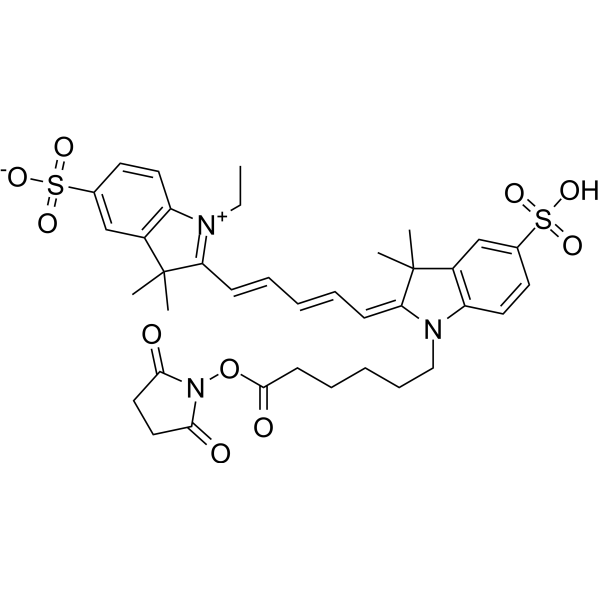
Cy5-SE (Cy5 NHS Ester) is a reactive dye for the labeling of amino-groups in peptides, proteins, and oligonucleotides. This dye requires small amount of organic co-solvent (such as DMF or DMSO) to be used in labeling reaction. This reagent is ideal for very cost-efficient labeling of soluble proteins, as well as all kinds of peptides and oligonucleotides. This reagent also works well in organic solvents for small molecule labeling.
Excitation (nm):649, Emission (nm): 670.
|
-
- HY-DY1028
-
|
|
Fluorescent Dye
|
Others
|
Fluo-4 AM (solution) is a cell-permeable Ca 2+ (calcium ion) indicator (Ex/Em = 485/526 nm) . Solvent and concentration: DMSO: 1 mM
|
-
- HY-113016S
-
-
- HY-DY1052
-
|
|
Fluorescent Dye
|
Others
|
Monochlorobimane (Chlorobimane) (solution) is a fluorescent dye (λex=380 nm, λem=470 nm) to measure glutathione (GSH) in cellular assays . Solvent and concentration: DMSO: 10 mM
|
-
- HY-113016S1
-
|
|
Isotope-Labeled Compounds
|
Metabolic Disease
|
|
Elaidic acid-d17 is deuterium labeled Elaidic acid. Elaidic acid is the major trans fat found in hydrogenated vegetable oils and can be used as a pharmaceutical solvent .
|
-
- HY-W142744
-
|
2,2,4,4,6,8,8-Heptamethylnonane
|
Biochemical Assay Reagents
|
Others
|
|
Isocetane (2,2,4,4,6,8,8-Heptamethylnonane) is an alkane that can be determined using capillary flow techniques. Isocetane is a viscous solvent .
|
-
- HY-DY1060
-
|
|
Proteasome
Fluorescent Dye
|
Others
|
Suc-Leu-Leu-Val-Tyr-AMC (solution) is a membrane-permeable calpain-specific fluorogenic substrate (Ex/Em = 390/480 nm) . Solvent and concentration: DMSO: 20 mM
|
-
- HY-113016R
-
|
|
Reference Standards
Endogenous Metabolite
|
Metabolic Disease
|
|
Elaidic acid (Standard) is the analytical standard of Elaidic acid. This product is intended for research and analytical applications. Elaidic acid is the major trans fat found in hydrogenated vegetable oils and can be used as a pharmaceutical solvent.
|
-
- HY-DY1013
-
|
|
Fluorescent Dye
|
Cancer
|
DiR (solution) is a long-chain carbocyanine dye. Carbocyanine dyes are widely used as Di to label cells, organelles, liposomes, viruses and lipoproteins . Solvent and concentration: DMSO: 5 mM
|
-
- HY-DY1010
-
|
|
Fluorescent Dye
|
Others
|
DiO (solution) is a long-chain carbocyanine dye. Carbocyanine dyes are widely used as Di to label cells, organelles, liposomes, viruses and lipoproteins . Solvent and concentration: DMSO: 5 mM
|
-
- HY-DY1066
-
|
|
Fluorescent Dye
|
Others
|
Cy3 (Sulfo-Cyanine3) (solution) is an orange-fluorescent label for protein and nucleic acid (λex=554, λem=568). Solvent and concentration: DMSO: 10 mM
|
-
- HY-W198670
-
|
|
Drug Metabolite
Endogenous Metabolite
|
Others
|
|
1,2-Diacetylbenzene, a γ-diketone metabolite derived from the neurotoxic solvent 1,2-diethylbenzene, is an aromatic hydrocarbon known for its reactivity with proteins.
|
-
- HY-W042416S2
-
|
DMAc-d3
|
Isotope-Labeled Compounds
|
Others
|
|
N,N-Dimethylacetamide-d3 is the deuterium labeled N,N-Dimethylacetamide . N,N-Dimethylacetamide (DMAc) is an inexpensive, common aprotic organic solvent .
|
-
- HY-W042416S1
-
|
DMAc-d6
|
Isotope-Labeled Compounds
|
Others
|
|
N,N-Dimethylacetamide-d6 is the deuterium labeled N,N-Dimethylacetamide . N,N-Dimethylacetamide (DMAc) is an inexpensive, common aprotic organic solvent .
|
-
- HY-DY1012
-
|
|
Fluorescent Dye
|
Others
|
DiI (solution) is a long-chain carbocyanine dye. Carbocyanine dyes are widely used as Di to label cells, organelles, liposomes, viruses and lipoproteins . Solvent and concentration: DMSO: 5 mM
|
-
- HY-W042416S
-
|
DMAc-d9
|
Isotope-Labeled Compounds
|
Others
|
|
N,N-Dimethylacetamide-d9 is the deuterium labeled N,N-Dimethylacetamide . N,N-Dimethylacetamide (DMAc) is an inexpensive, common aprotic organic solvent .
|
-
- HY-DY1084
-
|
|
Fluorescent Dye
|
Others
|
DiD perchlorate (solution)is a long-chain carbocyanine dye. Carbocyanine dyes are widely used as Di to label cells, organelles, liposomes, viruses and lipoproteins . Solvent and concentration: DMSO: 5 mM
|
-
- HY-W337894
-
|
Methyl 9-oxostearate
|
Biochemical Assay Reagents
|
Others
|
|
Methyl 9-oxooctadecanoate (Methyl 9-oxostearate) can be used for the preparation of fatty acids and esters. It can also be used as an organic solvent that is used as a reaction medium for the synthesis of dioxolanes.
|
-
- HY-DY1050
-
|
|
DNA Stain
|
Others
|
Ethidium bromide (solution) is an intercalating agent commonly used as a fluorescent tag (nucleic acid stain) in molecular biology laboratories for techniques such as agarose gel electrophoresis. Solvent and Concentration: Sterile water: 10 mg/Ml
|
-
- HY-W016613
-
|
|
Biochemical Assay Reagents
|
Others
|
|
Tri(ethylene glycol) monoethyl ether is a physical solvent with a strong affinity for CO2. Tri(ethylene glycol) monoethyl ether can be used for the removal of acid gases from mixtures of gases .
|
-
- HY-D2231
-
|
|
ADC Payload
|
Others
|
|
Cy3.5 maleimide is a relatively water-soluble fluorescent dye. Cy3.5 maleimide is soluble in organic solvents, including DMF, DMSO and acetonitrile and so on .
|
-
- HY-Y0075
-
|
|
Drug Derivative
|
Others
|
|
2-Naphthaldehyde is an aromatic aldehyde. 2-Naphthaldehyde is soluble in various organic solvents. 2-Naphthaldehyde can participate in chemical reactions to generate functionalized ketone derivatives .
|
-
- HY-Y0075R
-
|
|
Reference Standards
Drug Derivative
|
Others
|
|
2-Naphthaldehyde is an aromatic aldehyde. 2-Naphthaldehyde is soluble in various organic solvents. 2-Naphthaldehyde can participate in chemical reactions to generate functionalized ketone derivatives .
|
-
- HY-112572
-
|
|
Biochemical Assay Reagents
|
Others
|
|
Bisdisulizole disodium is an organic chromophore with large near UV absorption cross section. Solutions of Bisdisulizole disodium dissolved in polar solvents show a strong, broad UV absorption feature centered at 340 nm .
|
-
- HY-Y0873B
-
|
Polyethylene glycol 2000
|
Environmental Pollutants
Biochemical Assay Reagents
|
Others
|
|
PEG2000 (Polyethylene glycol 2000) is a solvent for a large number of substances. PEG2000 can be used as a carrier material and modifying agent. PEG2000 is widely used in a variety of pharmaceutical formulations .
|
-
- HY-DY1014
-
|
|
Fluorescent Dye
|
Others
|
ATP-Red 1 (solution) is a multisite-binding switchable fluorescent probe, and can selectively and rapidly responds to intracellular concentrations of ATP in living cells (Ex/Em = 510/590 nm). Solvent and concentration: DMSO: 1 mM
|
-
- HY-178400S
-
|
|
Isotope-Labeled Compounds
Biochemical Assay Reagents
|
Others
|
|
Ethyl heptanoate-d13 is the deuterium labeled Ethyl heptanoate (HY-W010177). Ethyl heptanoate, Ethyl heptanoate is commonly used as a fragrance ingredient in a variety of products, including food, beverages, and personal care products, it can also be used as a solvent, and a building block for the synthesis of various organic compounds, including pharmaceuticals and agrochemicals, in addition , due to its low toxicity and biodegradability, Ethyl heptanoate has been investigated for its potential use as a bio-based solvent, as well as for its potential antimicrobial properties against certain bacteria and fungi.
|
-
- HY-Y1810
-
|
|
Environmental Pollutants
Biochemical Assay Reagents
|
Others
|
|
Diethylene glycol diethyl ether is an electrolyte solvent for a non-aqueous lithium-air cell. Diethylene glycol diethyl ether can facilitate the reversible reduction and oxidation processes at the porous carbon electrode without a catalyst .
|
-
- HY-DY1093
-
|
Thioflavin S (solution); Direct Yellow 7 (solution)
|
Fluorescent Dye
|
Others
|
Thioflavine S (solution) (Thioflavin S (solution)) is a fluorescent histochemical marker of dense core senile plaques. Thioflavine S can be used for Alzheimer's research . Solvent and concentration: ddH2O: 10 mg/mL
|
-
- HY-DY1039
-
|
|
Fluorescent Dye
|
Others
|
DiBAC4 (3) (solution) is a voltage-sensitive fluorescent dye (λex=490 nm, λem=505 nm). DiBAC4 (3) can be used to measure cell membrane potential. Solvent and concentration: DMSO: 10 mM
|
-
- HY-N18213
-
|
|
Drug Derivative
|
Others
|
|
1-O-Detigloyl-1-O-benzoylohchinolal is a limonoid compound present in the leaves and twigs of Melia toosendan .
|
-
- HY-D2752
-
|
|
Fluorescent Dye
|
Others
|
|
Cy5.5 dimethyl is a free non-activated dye and can be used as a non-reactive fluorophore for experiment controls and instrument calibration. It is a non-sulfonated reagent with good solubility in organic solvents and limited aquous solubility.
|
-
- HY-DY1072
-
|
ICG-OSu (solution)
|
Fluorescent Dye
|
Cancer
|
ICG NHS ester (ICG-OSu) (solution) is a near-infrared fluorescent agent ICG derivative. ICG NHS ester is amine-reactive and has been widely used to design in vivo imaging probes . Solvent and concentration: DMSO: 10 mM
|
-
- HY-W098559
-
|
|
Biochemical Assay Reagents
|
Metabolic Disease
|
|
N-Methylsuccinimide is a versatile solvent and extractant. N-Methylsuccinimide possesses anti-calculiating activity. N-Methylsuccinimide can be used in calculi research. N-Methylsuccinimide is also used in organic synthesis, chemical engineering, and other fields .
|
-
- HY-W115738
-
|
|
Biochemical Assay Reagents
|
Others
|
|
PAR is an azo dye widely used as a colorimetric reagent for metal ions. PAR forms stable chelates with different metal ions. PAR can also complex with heavy metal ions in polar organic solvents, such as ethanol .
|
-
- HY-DY1080
-
|
Monodansyl cadaverine (solution)
|
Autophagy
|
Others
|
Dansylcadaverine (solution) (Monodansyl cadaverine (solution)) is an autofluorescent compound used for the labeling of autophagic vacuoles. Dansylcadaverine, a high affinity substrate of transglutaminases, can block the receptor-mediated endocytosis of many ligands . Solvent and concentration: DMSO: 10 mM
|
-
- HY-DY1025
-
|
|
Fluorescent Dye
|
Others
|
Laurdan (solution) is a membrane-permeable fluorescent probe that displays spectral sensitivity to the phospholipid phase of the cell membrane to which it is bound. Quantitation of generalized polarization (GP) of Laurdan can be used to identify phospholipid phase. Solvent and concentration: DMSO: 5 mM
|
-
- HY-B0903R
-
|
2-Methyl-2,4-pentanediol (Standard); MPD (Standard)
|
Biochemical Assay Reagents
Reference Standards
|
Others
|
|
Hexylene glycol (Standard) is the analytical standard of Hexylene glycol. This product is intended for research and analytical applications. Hexylene glycol is a low molecular weight surfactant that is widely used as an industrial coating solvent without causing adverse health or environmental effects.
|
-
- HY-D0074
-
|
|
Fluorescent Dye
|
Others
|
|
Prodan, a solvatochromic fluorophore, has been used as a microenvironment-sensitive membrane reporter. Based on the chemistry of Prodan, fluorescent nucleosides are designed and synthesized.The fluorescent nucleosides sensitively varied the Stokes shift values depending on the orientational polarizability of the solvent .
|
-
- HY-Y1783
-
|
N-Methylethanolamine
|
Environmental Pollutants
|
Others
|
|
2-(Methylamino)ethanol (N-Methylethanolamine) is an alkaloid that can be isolated from lentil seeds. 2-(Methylamino)ethanol is used as an organic building block in chemical synthesis and as a solvent for removing carbon dioxide from gas streams .
|
-
- HY-W008039
-
|
Tetra-n-butylammonium acetate
|
Biochemical Assay Reagents
|
Others
|
|
Tetrabutylammonium acetate is an organic compound commonly used as a catalyst and solvent. It can be used to catalyze or promote reactions in certain organic reactions, and is widely used in batteries, solar cells and pigments. In addition, this compound is widely used in the oil and gas industry, for example as a carbonate dissolver.
|
-
- HY-D2770
-
|
|
Fluorescent Dye
|
Others
|
|
Cyanine3.5 dimethyl is a non-sulfonated cyanine dye with good solubility in organic solvents and bright fluorescence in the yellow-orange spectrum range. The dye can be used as a non-reactive fluorophore for control experiments, calibration, and other technical applications.
|
-
- HY-21226
-
|
|
Biochemical Assay Reagents
|
Others
|
|
Levoglucosenone Levoglucosenone has unique chemical properties that make it an important intermediate in the production of a wide variety of chemicals, including pharmaceuticals, fragrances and flavorings. Due to its ability to dissolve polar and non-polar compounds, it can also be used as a solvent or fuel additive.
|
-
- HY-121206
-
|
|
Environmental Pollutants
Antibiotic
|
Infection
|
|
(-)-Isopulegol is prepared directly from the treatment of essential oil of citronella under solid supported acid catalysis and solvent-free microwave assisted ene-cyclisation. (-)-Isopulegol shows high activity in reacting with carbonyl compounds. (-)-Isopulegol can be used for antiviral activity research .
|
-
- HY-W016638
-
|
1-Butyl-1-methylpyrrolidin-1-ium chloride
|
Biochemical Assay Reagents
|
Others
|
|
1-Butyl-1-methylpyrrolidin-1-ium chloride, also known as BMIM chloride, belongs to the class of ionic liquids and consists of a positively charged pyrrolidine cation and a negatively charged chloride anion. This compound is commonly used as a solvent for various chemical reactions, especially those involving organic compounds and metals. Its unique physical and chemical properties, such as low volatility, high thermal stability, and tunable solubility, make it useful in a range of applications in catalysis, electrochemistry, and separation science. Furthermore, 1-butyl-1-methylpyrrolidin-1-ium chloride may have potential applications as a green solvent in energy storage devices and various industrial processes.
|
-
- HY-W009202
-
|
TAPI
|
Biochemical Assay Reagents
|
Others
|
|
Tetrapropylammonium iodide is an organic compound commonly used as ionic liquids and catalysts. It can be used as a solvent in some chemical reactions, and can also be used as a catalyst to promote some organic synthesis reactions. In addition, the compound is also widely used in batteries, solar cells and pigments.
|
-
- HY-Y1699
-
|
|
Biochemical Assay Reagents
|
Others
|
|
Tetrabutylammonium hexafluorophosphate is an organic-inorganic compound commonly used as an ionic solvent and catalyst. It can be used to catalyze or promote reactions in certain chemical reactions, and is widely used in batteries, solar cells and pigments. In addition, this compound is also widely used in organic synthesis and chemical analysis.
|
-
- HY-W017077
-
|
4-Phenyltoluene
|
Drug Intermediate
|
Inflammation/Immunology
|
|
4-Methylbiphenyl (4-Phenyltoluene) is an organic compound. 4-Methylbiphenyl has excellent chemical stability and antioxidant properties, and is widely used in industry. 4-Methylbiphenyl can serve as a solvent, coating additive, plastic additive and dye intermediate .
|
-
- HY-DY1027
-
|
|
Fluorescent Dye
|
Cancer
|
Indocyanine green (Foxgreen) (solution) is a low toxicic fluorescent agent that has been widely used in medical diagnostics, such as determining cardiac output, hepatic function, and liver blood flow, and for ophthalmic angiography (Ex/Em = 785/813 nm) . Solvent and concentration: DMSO: 10 mM
|
-
- HY-DY1029
-
|
|
Fluorescent Dye
|
Others
|
BODIPY-cholesterol (solution) is an intrinsically lipophilic, and cell-permeable analog of cholesterol with a fluorescent BODIPY group. BODIPY-cholesterol can be used to monitor sterol uptake and inter-organelle sterol flux in cells. (Excitation/Emission: 505/515 nm) . Solvent and concentration: DMSO: 1 mM
|
-
- HY-P2759
-
|
TrxR
|
TrxR
|
Infection
Cardiovascular Disease
Inflammation/Immunology
Cancer
|
|
Thioredoxin reductase (TrxR) is a selenoprotein that plays a central role in cellular redox homeostasis by utilizing highly reactive selenocysteine (Sec) residues exposed to solvents at its active site. Thioredoxin reductase can be used for the study of diverse diseases, from rheumatoid arthritis and ischemia to cancer and parasitic infections .
|
-
- HY-N0455D
-
|
(S)-(+)-Arginine butanoate
|
Amino Acid Derivatives
|
Others
|
|
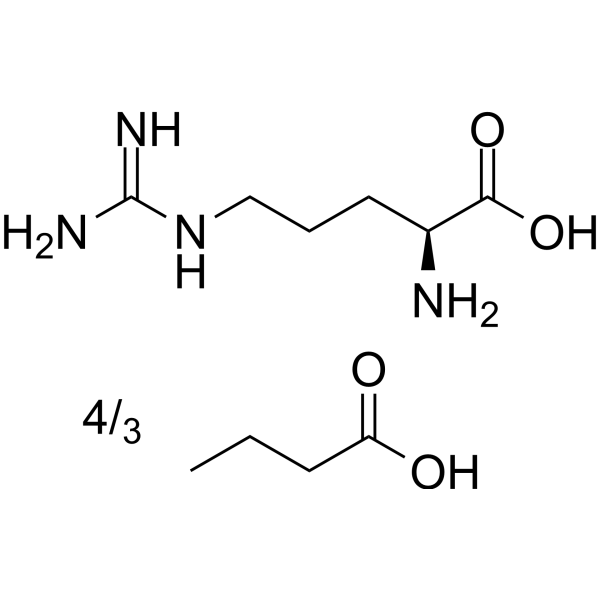
L-Arginine butanoate ((S)-(+)-Arginine butanoate) is a compound consisting of L-Arginine and butanoate. L-Arginine is one of the essential nutrients in the human body and participates in various biochemical processes. Butanoate is a short-chain fatty acid commonly used as a food additive and solvent in pharmaceutical formulations .
|
-
- HY-142981
-
|
DODA
|
Liposome
|
Others
|
|
Dioctadecylamine (DODA) is a secondary amine that has been shown to self-organize in plate-like structures in aqueous solution. Dioctadecylamine exhibits sufficiently hydrophobic properties of nanoparticles and good dispersibility in nonpolar solvent. Dioctadecylamine does not form a monolayer above pH 3.9 .
|
-
- HY-DY1107
-
|
|
Fluorescent Dye
|
Others
|
Halo tag TMR (solution) is a red fluorescent dye composed of Halo tag ligand molecules and TMR (TAMRA). Halo tag can quickly and stably covalently bind to Halo protein with high specificity and affinity (Ex/Em = 550/576 nm) . Solvent and concentration: DMSO: 5 mM
|
-
- HY-DY1048
-
|
|
Fluorescent Dye
|
Cancer
|
DAF-FM DA (Diaminofluorescein-FM diacetate) (solution) is a fluorescent probe for the detection and bioimaging of nitric oxide (NO). DAF-FM DA spontaneously crosses the plasma membrane and is subsequently cleaved by esterases to generate intracellular DAF-FM (Ex/Em=495/515 nm) . Solvent and concentration: DMSO: 2 mM
|
-
- HY-DY1059
-
|
|
Fluorescent Dye
|
Neurological Disease
|
FM1-43 (solution) is a very lipophilic, water-soluble styrene dyes, can specifically bind to cell membranes and inner membrane organelles to produce fluorescence. FM1-43 is widely used in endocytic and exospic membrane structure markers. Solvent and concentration: DMSO: 10 mM
|
-
- HY-W250123
-
|
|
Environmental Pollutants
Biochemical Assay Reagents
|
Others
|
|
Dibutyl sulfide is an oily liquid commonly used as a solvent, extractant and flavoring agent in various industrial processes, especially in the production of petroleum products, polymers and food additives. Dibutyl sulfide has unique chemical properties that make it an active ingredient in many applications requiring high solvency and low volatility.
|
-
- HY-W127330
-
|
|
Biochemical Assay Reagents
|
Others
|
|
Butyl Laurate is an ester compound with a fruity odor commonly used as a flavoring agent in the food and beverage industry. In addition, it is used as a solvent, plasticizer or lubricant in various industrial applications. Its unique chemical properties make it an important ingredient in a variety of commercial products, including cosmetics, personal care products and cleaners.
|
-
- HY-E70920
-
|
|
Endogenous Metabolite
|
Metabolic Disease
|
|
NiFe-type cytoplasmic hydrogenase, Pyrococcus furiosus contains a minimum of two subunits known as the small (S) and large (L) subunits. The small subunit contains three iron-sulfur clusters while the large subunit contains the active site, a nickel-iron center which is connected to the solvent by a molecular tunnel.
|
-
- HY-DY1031
-
|
|
Fluorescent Dye
|
Others
|
FM4-64 (solution) is a very lipophilic, water-soluble styrene dyes, can specifically bind to cell membranes and inner membrane organelles to produce fluorescence. FM4-64 is widely used in endocytic and exospic membrane structure markers. Solvent and concentration: DMSO: 5 mM
|
-
- HY-W131404
-
|
|
Biochemical Assay Reagents
|
Others
|
|
Boc-Aeg-OEt is an aminoethylglycine monomer based on a Boc- and ethyl ester-protected AEG backbone, with substitution by a pyridine ligand. Boc-Aeg-OEt reduces steric hindrance in a series of dipeptide synthesis reactions, and has higher solubility in common solvents than the Fmoc-aeg-OtBu backbone .
|
-
- HY-131007
-
|
|
Adrenergic Receptor
|
Metabolic Disease
|
|
FFN270 hydrochloride, a fluorescent tracer of norepinephrine, is a fluorescent substrate of the norepinephrine and vesicular monoamine transporters. FFN270 hydrochloride exhibits two resolved absorption/excitation maxima depending on solvent pH (FFN270 ex: 320 nm or 365 nm, em: 475 nm) and can function as ratiometric fluorescent pH-sensors .
|
-
- HY-134802
-
|
|
Endogenous Metabolite
|
Others
|
|
2-Hydroxyhexacosanoic acid is a hydroxylated fatty acid. 2-Hydroxyhexacosanoic acid can be obtained from C26 acids by the 2-hydroxylase of Candida utilis .
|
-
- HY-W127338
-
|
|
Biochemical Assay Reagents
|
Others
|
|
Butyl Palmitate is an ester compound commonly used as a conditioning, emollient or fragrance in a variety of cosmetic and personal care products. In addition, it can be used as a solvent or lubricant in various industrial applications. Its unique chemical properties make it an important ingredient in a variety of commercial products, including perfumes, lotions and hair care products.
|
-
- HY-DY1071
-
|
|
Fluorescent Dye
|
Others
|
pH Receptor Probe (solution) is a pH-sensitive cyanine derivative and a environmental sensitive fluorophore. pH Receptor Probe has a pH-sensitive maximal absorption at 644 nm and emission at 664 nm. pH Receptor Probe has been used as a pH sensor of lysosomal compartments . Solvent and concentration: DMSO: 10 mM
|
-
- HY-DY1044
-
|
|
Bacterial
|
Infection
|
HADA hydrochloride (HCC-Amino-D-alanine hydrochloride) is a blue (λem~450 nm) fluorescent D-amino acid (FDAA). FDAAs are efficiently incorporated into the peptidoglycans (PGs) of diverse bacterial species at the sites of PG biosynthesis, allowing specific and covalent probing of bacterial growth with minimal perturbation . Solvent and concentration: DMSO: 50 mM
|
-
- HY-112373
-
|
|
Aurora Kinase
|
Others
|
|
Aurora kinase inhibitor-3 is a strong and selective Aurora A kinase inhibitor with an IC50 of 42 nM, and weakly inhibits EGFR with an IC50 of >10 μM. Aurora kinase inhibitor-3 has a binding mode with the cyclopropanecarboxylic acid moiety directed towards the solvent exposed region of the ATP-binding pocket .
|
-
- HY-79334
-
|
|
Endogenous Metabolite
|
Others
|
|
(S)-(+)-1,2-Propanediol is an endogenous metabolite. (S)-(+)-1,2-Propanediol can be used as an organic solvent and diluent in drug preparations. (S)-(+)-1,2-Propanediol can also be used as a chiral synthetic intermediate and a substrate for enzyme research .
|
-
- HY-128413
-
|
|
Drug Derivative
|
Others
|
|
1-Iodoadamantane is a 1-substituted adamantane derivative. On a silver electrode in aprotic solvents, 1-Iodoadamantane can be reduced to form a mixture of adamantane and 1,1'-biadamantane without insonation, while only adamantane is formed under the action of 10 kHz insonation .
|
-
- HY-Y1275S1
-
|
NMP-d3; N-Methyl-2-pyrrolidone-d3
|
Isotope-Labeled Compounds
|
Others
|
|
N-Methylpyrrolidone-d3 is the deuterium labeled N-Methylpyrrolidone . N-Methylpyrrolidone (1-Methyl-2-pyrrolidinone), a five-membered cyclic amide, is an organic polar solvent. N-Methylpyrrolidone is extensively used in the manufacture of adhesives, paints, fuels, and pharmaceuticals .
|
-
- HY-DY1106
-
|
|
Fluorescent Dye
|
Others
|
Ferrozine (solution) is a spectrophotometric reagent for iron ions, can react with divalent Fe to form a stable magenta complex species. The complex has an absorption peak at 562 nm . Ferrozine-based colorimetric assays can quantify iron in cells Solvent and concentration: ddH2O: 10 mM
|
-
- HY-DY1085
-
|
5(6)-Carboxytetramethylrhodamine (solution)
|
Fluorescent Dye
|
Others
|
5(6)-TAMRA (solution) (5(6)-Carboxytetramethylrhodamine (solution)) is a fluorescent dye molecule widely used as a label for peptides and proteins (Ex/Em = 520/600 nm). Solvent and concentration: DMSO: 10 mM The 1 mL volume is defined as the base specification. All larger sizes correspond to incremental volumes of this base.
|
-
- HY-DY1055
-
|
|
Fluorescent Dye
|
Others
|
TSQ (solution) is a cytosolic zinc ion fluorescence probe that is membrane permeable and can be used for intracellular imaging of zinc proteins (λmax ~470 nm). TSQ can combine with Zn 2+ in the presence of Ca 2+ and Mg 2+ to produce blue fluorescence (Ex/Em = 334/495 nm) . Solvent and concentration: DMSO: 10 mM
|
-
- HY-D1623
-
|
|
Fluorescent Dye
|
Others
|
|
Cyanine3 carboxylic acid chloride is a non-toxic red fluorescent dye with good solubility in organic solvents. Cyanine3 carboxylic acid chloride can be used as a non-reactive fluorophore for experimental control and calibration. Cyanine3 carboxylic acid chloride can also be synthesized with targeted agents as fluorescent probes for rapid detection of agent reactions .
|
-
- HY-P2890E
-
|
|
Biochemical Assay Reagents
|
Metabolic Disease
|
|
Laccase, Coriolus versicolor is a copper-containing oxidase enzyme that are found in many plants, fungi, and microorganisms. The copper is bound in several sites; Type 1, Type 2, and/or Type 3. The ensemble of types 2 and 3 copper is called a trinuclear cluster. Type 1 copper is available to action of solvents, such as water.
|
-
- HY-W127377
-
|
|
Biochemical Assay Reagents
|
Others
|
|
Butyl oleateIt is an organic compound belonging to esters. It is formed from the reaction of butanol and oleic acid and has a mild fruity smell. Butyl oleateIt has a variety of applications in the cosmetic and personal care industries, especially as an emollient and conditioning agent in skin and hair care products. Additionally, it is used as a lubricant and solvent in industrial settings.
|
-
- HY-DY1037
-
|
|
Fluorescent Dye
|
Others
|
Dihydrorhodamine 123 (DHR 123) (solution) is a non-fluorescent reactive oxygen species (ROS) indicator. Dihydrorhodamine 123 is oxidized to fluorescent Rhodamine 123 (HY-D0816) within cells in the presence of reactive oxygen species and it localizes in mitochondria (Ex/Em = 515/536 nm). Solvent and concentration: DMSO: 10 mM
|
-
- HY-DY1046
-
|
|
Fluorescent Dye
|
Others
|
Green CMFDA (solution) is a cell-permeable fluorescent probe with Em of 514 nm and Ex of 485 nm and can be used as a cell tracer. Green CMFDA can be cleaved by non-specific esterases common in living cells, producing a fluorescent compound, fluorescein, visible using a fluorescent microscope . Solvent and concentration: DMSO: 10 mM
|
-
- HY-DY1002
-
|
|
Reactive Oxygen Species (ROS)
Fluorescent Dye
|
Others
|
H2DCFDA (DCFH-DA) (solution) is a cell-permeable probe used to detect intracellular reactive oxygen species (ROS) (Ex/Em=488/525 nm) . Solvent and concentration: DMSO: 10 mM. The 1 mL volume is defined as the base specification. All larger sizes correspond to incremental volumes of this base.
|
-
- HY-W127535
-
|
|
Biochemical Assay Reagents
|
Others
|
|
Propyl n-octanoate is an ester compound with a fruity odor commonly used as a flavoring agent in the food and beverage industry. Furthermore, it can also be used as a solvent or intermediate in various industrial applications. Its unique chemical properties make it an important ingredient in a variety of commercial products, including perfumes, lotions and hair care products.
|
-
- HY-W778631
-
|
|
Isotope-Labeled Compounds
|
Others
|
|
3-Chloro-1,2-propanediol-13C3 is a isotope-labeled 3-Chloro-1,2-propanedio. 3-Chloro-1,2-propanedio is mainly used as a solvent for acetate, and as an intermediate for plasticizers, surfactants, and dyes.
|
-
- HY-Y0075S1
-
|
|
Isotope-Labeled Compounds
Drug Derivative
|
Others
|
|
2-Naphthaldehyde- 13C is the 13C-labeled 2-Naphthaldehyde (HY-Y0075). 2-Naphthaldehyde is an aromatic aldehyde. 2-Naphthaldehyde is soluble in various organic solvents. 2-Naphthaldehyde can participate in chemical reactions to generate functionalized ketone derivatives.
|
-
- HY-W016414R
-
|
|
Endogenous Metabolite
Reference Standards
|
Others
|
|
Triethyl phosphate is a chemical compound with biological activity and uses as a solvent. Triethyl phosphate is widely used in chemical synthesis as a reaction medium to improve reaction efficiency. Triethyl phosphate is also commonly used as a plasticizer to improve the flexibility and durability of materials. The presence of triethyl phosphate can also be used as a biomarker to help detect and monitor the effects of certain pollutants in the environment .
|
-
- HY-W699792
-
|
|
Biochemical Assay Reagents
|
|
|
R-(3)-Benzyloxymyristic acid methyl ester is a nonpolar solvent with activity for studying lipid-related interactions. R-(3)-Benzyloxymyristic acid methyl ester can be used in scientific research to explore the properties and behavior of cell membranes. R-(3)-Benzyloxymyristic acid methyl ester exhibits excellent solubility and compatibility in biochemical experiments.
|
-
- HY-DY1023
-
|
|
Fluorescent Dye
|
Others
|
Rhodamine dyes are membrane-permeable cationic fluorescent probes that specifically recognize mitochondrial membrane potentials, thereby attaching to mitochondria and producing bright fluorescence, and at certain concentrations, rhodamine dyes have low toxicity to cells, so they are commonly used to detect mitochondria in animal cells, plant cells, and microorganisms . Solvent and concentration: DMSO: 10 mM
|
-
- HY-W099580S1
-
|
n-Hexadecane-d34; Cetane-d34
|
Isotope-Labeled Compounds
Bacterial
|
Others
|
|
Hexadecane-d34 (n-Hexadecane-d34) is the deuterium labeled Hexadecane (HY-W099580). Hexadecane (n-Hexadecane) is a saturated hydrocarbon of alkanes or paraffins and can be used as an organic solvent. Hexadecane is a component of petroleum, belongs to hydrophobic substrates, and is a model substance for studying bacterial degradation of hydrophobic compounds .
|
-
- HY-DY2001
-
|
|
Fluorescent Dye
Influenza Virus
Bacterial
|
Infection
|
Crystal Violet (solution) , also known as Gentian violet, methyl violet 10B, is a triphenyl-methane, an alkaline dye that binds to DNA in the nucleus of a cell, staining it a deep purple. It is often used for Gram staining to classify bacteria, or for cell or histological staining . Solvent and Concentration: Sterile water: 5 mg/mL (0.5%)
|
-
- HY-DY1054
-
|
|
Fluorescent Dye
|
Cardiovascular Disease
|
Rhodamine dyes are membrane-permeable cationic fluorescent probes that specifically recognize mitochondrial membrane potentials, thereby attaching to mitochondria and producing bright fluorescence, and at certain concentrations, rhodamine dyes have low toxicity to cells, so they are commonly used to detect mitochondria in animal cells, plant cells, and microorganisms . Solvent and concentration: DMSO: 5 mM
|
-
- HY-Y1004S1
-
|
Decyl alcohol-d2
|
Biochemical Assay Reagents
|
|
|
1-Decanol-d2 is a deuterated 1-Decanol. 1-Decanol is used in the production of lubricants,?surfactants, plasticizers and?solvents. It has also been used to study the thermal properties of polymeric monolithic stationary phases and to enhance homopolyglycine acceptor function. Used in cosmetics, daily flavors, and food flavors.
|
-
- HY-DY1076
-
|
|
Fluorescent Dye
|
Others
|
BODIPY TR Cadaverine (solution) , a cadaverine derivative, is a red fluorescent dye. BODIPY TR Cadaverine can be used in a a highly sensitive and robust fluorescent displacement assay, which binds to native LPS strongly, specifically recognizing lipid A, and is competitively displaced by compounds displaying an affinity for lipid A . Solvent and concentration: DMSO: 2 mM
|
-
- HY-DY1042
-
|
|
Fluorescent Dye
|
Others
|
Rhodamine dyes are membrane-permeable cationic fluorescent probes that specifically recognize mitochondrial membrane potentials, thereby attaching to mitochondria and producing bright fluorescence, and at certain concentrations, rhodamine dyes have low toxicity to cells, so they are commonly used to detect mitochondria in animal cells, plant cells, and microorganisms . Solvent and concentration: DMSO: 10 mM
|
-
- HY-DY1032
-
|
|
Fluorescent Dye
|
Others
|
Mito-Tracker Green (solution) is a green fluorescent dye that selectively accumulates in the mitochondrial matrix. MitoTracker Green FM covalently binds mitochondrial proteins by reacting with free mercaptan of cysteine residues, allowing staining of mitochondrial membrane potential independent of membrane potential. Excitation/emission wavelength 490/523 nm. Solvent and concentration: DMSO: 1 mM
|
-
- HY-W010119
-
|
|
Biochemical Assay Reagents
|
Others
|
|
4-Methyl-2-phenyl-1,3-dioxolane is an organic compound commonly used as a solvent and intermediate. It can be used in some organic synthesis reactions, such as the synthesis of drugs or other organic compounds. In addition, this compound is also widely used in industrial production fields, such as plastics, coatings and glues.
|
-
- HY-Y1004S
-
|
Decyl alcohol-d3
|
Biochemical Assay Reagents
|
|
|
1-Decanol-d3 is a deuterated 1-Decanol. 1-Decanol is used in the production of lubricants,?surfactants, plasticizers and?solvents. It has also been used to study the thermal properties of polymeric monolithic stationary phases and to enhance homopolyglycine acceptor function. Used in cosmetics, daily flavors, and food flavors.
|
-
- HY-DY1098
-
|
2′,7′-Bis(2-carboxyethyl)-5(6)-carboxyfluorescein (solution)
|
Fluorescent Dye
|
Others
|
BCECF (solution) (2′,7′-Bis(2-carboxyethyl)-5(6)-carboxyfluorescein (solution)) is a cell-impermeant pH-sensitive fluorescent dye. BCECF allows measurements in the physiological pH range 6.0-8.0. Excitation ratio: 490/440 nm; Emission intensity: 535 nm. Solvent and concentration: DMSO: 10 mM
|
-
- HY-W015308
-
|
Pelargonic acid methyl ester
|
Biochemical Assay Reagents
Endogenous Metabolite
|
Others
|
|
Methyl nonanoate is an ester compound obtained by the reaction of methanol and nonanoic acid. It has a fruity aroma and is commonly used as a flavoring agent in a variety of foods such as baked goods, confectionary and beverages. Methyl nonanoate is also used as a fragrance ingredient in the manufacture of perfume, cologne and personal care products. Furthermore, it has applications in industrial settings, for example in the production of solvents, resins and plasticizers.
|
-
- HY-DY1011
-
|
|
Fluorescent Dye
|
Others
|
PKH 26 (solution) is a red fluorescent dye, PKH 26 can stably bind to the lipid region of cell membrane and emit red fluorescence (Ex/Em=551/567 nm) , which is mainly used for in vitro cell labeling, in vitro cell proliferation studies and in vivo and in vitro cell tracing studies . Solvent and concentration: DMSO: 5 mM
|
-
- HY-D0352
-
|
Pigment Orange 5
|
Environmental Pollutants
Biochemical Assay Reagents
|
Others
|
|
Permanent Orange is a synthetic pigment commonly used in the manufacture of paints and coatings. It belongs to the class of organic pigments and consists of carbon and other elements. Permanent Orange produces a bright orange color that is fade and weather resistant, making it ideal for outdoor applications. It can be mixed with other pigments to produce a range of colors and is compatible with a wide range of binders and solvents.
|
-
- HY-W127637
-
|
Tetrapentylammonium chloride
|
Biochemical Assay Reagents
|
Others
|
|
Tetraamylammonium chloride is an organic compound containing ammonium and chloride ions. It is commonly used as a phase transfer catalyst in organic synthesis, especially in the production of pharmaceuticals and agrochemicals. Tetraamylammonium Chloride has a strong base that facilitates the transfer of reactants between immiscible solvents, resulting in more efficient chemical reactions. In addition, it can also be used as an intermediate in the synthesis of other quaternary ammonium compounds.
|
-
- HY-D0172
-
|
AP 6G; Actiron 43-65; Aliquat 100
|
Biochemical Assay Reagents
|
Others
|
|
Tetrabutylammonium bromide is an organic ammonium compound, which is often used in catalytic reactions and separation and purification processes. It has a significant catalytic effect in some organic synthesis reactions, and can be used as a surfactant, stabilizer and antibacterial agent, etc. In addition, in some laboratory studies, this compound has also been used as an ion exchanger, solvent extractant, etc.
|
-
- HY-121206R
-
|
|
Antibiotic
Reference Standards
|
Infection
|
|
(-)-Isopulegol (Standard) is the analytical standard of (-)-Isopulegol. This product is intended for research and analytical applications. (-)-Isopulegol is prepared directly from the treatment of essential oil of citronella under solid supported acid catalysis and solvent-free microwave assisted ene-cyclisation. (-)-Isopulegol shows high activity in reacting with carbonyl compounds. (-)-Isopulegol can be used for antiviral activity research .
|
-
- HY-DY1099
-
|
7-AAD (solution)
|
DNA/RNA Synthesis
DNA Stain
Bacterial
Antibiotic
|
Cancer
|
7-Aminoactinomycin D (solution) (7-AAD (solution)) a cell-impermeant fluorescent DNA stain, is a potent RNA polymerase inhibitor. 7-Aminoactinomycin D selectively binds to GC regions of the DNA. 7-Aminoactinomycin D also has antibacterial effects . Solvent and concentration: DMSO: 1 mg/mL
|
-
- HY-W127428
-
|
Pentyl 3-methylbutanoate
|
Biochemical Assay Reagents
|
Others
|
|
Pentyl isovalerateIt is an organic compound belonging to esters. Formed from the reaction of amyl alcohol and isovaleric acid, it has a fruity and slightly floral aroma. Pentyl isovalerateIt has a variety of applications in the flavor and fragrance industry, especially as a fragrance agent in products such as perfume, cologne and air fresheners. In addition, it is used as a food flavoring agent and as a solvent and plasticizer in industrial settings.
|
-
- HY-DY1040
-
|
|
Fluorescent Dye
Biochemical Assay Reagents
|
Others
|
LysoTracker Red (solution) is a Red fluorescently labeled lysosomal probe with a maximum excitation/emission wavelength of 577/590 nm. The structure is composed of a fluorescein group and linked weak bases, which can freely cross the cell membrane and gather on spherical organelles. It is suitable for observing the internal biosynthesis and related pathogenesis of lysosomes . Solvent and concentration: DMSO: 1 mM
|
-
- HY-W099641
-
|
|
Biochemical Assay Reagents
|
Others
|
|
Methyltrioctylammonium hydrogen sulfate is a quaternary ammonium salt that is mainly used as an extraction solvent and a phase transfer catalyst in various chemical reactions. It is also used as an electrolyte in electrochemical devices such as batteries and fuel cells, and as a building block for the synthesis of pharmaceuticals and agrochemicals. MTOAHS are multifunctional compounds with many potential industrial applications due to their reactivity, stability, and ability to selectively extract certain compounds from mixtures.
|
-
- HY-W127654
-
|
|
Biochemical Assay Reagents
|
Others
|
|
(Ferrocenylmethyl)trimethylammonium bromide is an organic compound containing ammonium and bromide ions. It is commonly used as a phase transfer catalyst in organic synthesis, especially in the production of pharmaceuticals and agrochemicals. (Ferrocenylmethyl)trimethylammonium Bromide has a strong base that facilitates the transfer of reactants between immiscible solvents for more efficient chemical reactions. In addition, it can also be used as an intermediate in the synthesis of other organic compounds.
|
-
- HY-W127444
-
|
|
Biochemical Assay Reagents
|
Others
|
|
N,N-Dimethyldodecanamide is an organic compound belonging to amides. It consists of a dodecyl chain attached to a nitrogen atom and two methyl groups, forming a white crystalline solid with a faint waxy odour. N,N-Dimethyldodecanamide has several applications in industrial settings, notably as a solvent, lubricant and surfactant. In addition, it can also be used as an intermediate in the synthesis of various chemicals and drugs.
|
-
- HY-W127681
-
|
Tetra-n-butylammonium dichlorobromide
|
Biochemical Assay Reagents
|
Others
|
|
Tetrabutylammonium dichlorobromide is an organic compound containing ammonium, chloride, and bromide ions. It is commonly used as a phase transfer catalyst in organic synthesis, especially in the production of pharmaceuticals and agrochemicals. Tetrabutylammonium Dichlorobromide has a strong base that facilitates the transfer of reactants between immiscible solvents, resulting in more efficient chemical reactions. In addition, it can also be used as an intermediate in the synthesis of other quaternary ammonium compounds.
|
-
- HY-Y1004R
-
|
Decyl alcohol (Standard)
|
Biochemical Assay Reagents
Reference Standards
|
Others
|
|
1-Decanol (Standard) is the analytical standard of 1-Decanol. This product is intended for research and analytical applications. 1-Decanol is used in the production of lubricants, surfactants, plasticizers and solvents. It has also been used to study the thermal properties of polymeric monolithic stationary phases and to enhance homopolyglycine acceptor function. Used in cosmetics, daily flavors, and food flavors.
|
-
- HY-N18177
-
|
|
Others
|
Others
|
|
Apigenin 6-C-β-boivinopyranosyl-7-O-β-glucopyranoside is a C-glycosylflavone that can be found in the whole plant of Pogonatherum crinitum (Thunb.) Kunth .
|
-
- HY-N18113
-
|
|
Others
|
Others
|
|
Leptodactylone is a compound isolated from the stem bark of Citrus medica L. var. sarcodactylis SWINGLE .
|
-
- HY-DY1057
-
|
|
Fluorescent Dye
|
Others
|
TMA-DPH (solution) is a hydrophobic fluorescent membrane probe (Ex=355 nm; Em=430 nm). TMA-DPH is able to anchor on the cell surface and localize to different regions of the phospholipid bilayer. By analyzing the fluorescence polarization values of TMA-DPH in the plasma membrane and membrane substructures, the fluidity of the cell membrane can be determined . Solvent and concentration: DMSO: 10 mM
|
-
- HY-DY1049
-
|
|
Amyloid-β
|
Others
|
Thioflavin T (solution) is a cationic Benzothiazole dye that shows enhanced fluorescence upon binding to amyloid in tissue sections. Excitation max.: ~385 nm (free) ; ~450 nm (bound) ; Emission max.: ~445 nm (free) ; ~485 nm (bound) . Solvent and Concentration: Sterile water: 10 mM The 1 mL volume is defined as the base specification. All larger sizes correspond to incremental volumes of this base.
|
-
- HY-Y1004S6
-
|
Decyl alcohol-d2-2
|
Isotope-Labeled Compounds
Biochemical Assay Reagents
|
Others
|
|
1-Decanol-d2-2 is deuterated labeled 1-Decanol (HY-Y1004). 1-Decanol is used in the production of lubricants, surfactants, plasticizers and solvents. It has also been used to study the thermal properties of polymeric monolithic stationary phases and to enhance homopolyglycine acceptor function. Used in cosmetics, daily flavors, and food flavors.
|
-
- HY-N16571
-
|
|
Fluorescent Dye
Endogenous Metabolite
|
Others
|
|
Marionol is a type of flavonol compound and belongs to the secondary metabolites of plants. Marionol exhibits significant specificity towards Cu²⁺ and possesses the characteristic of intramolecular proton transfer in excited state (ESIPT), enabling it to generate strong fluorescence upon excitation by ultraviolet light. The maximum excitation/emission wavelengths are 350 nm and 510 nm (depending on the solvent), respectively. Marionol can be used as a fluorescence probe for Cu²⁺ .
|
-
- HY-W015305
-
|
Octanoic acid ethyl ester
|
Environmental Pollutants
Biochemical Assay Reagents
|
Others
|
|
Ethyl octanoate is a class of esters consisting of the medium-chain fatty acid octanoic acid esterified with ethanol. The compound has a fruity smell and is commonly used as a flavoring in foods such as baked goods, candy and beverages. It can also be used as a fragrance ingredient in personal care products, and as a solvent or plasticizer in various industrial applications. In addition, Ethyl octanoate can be used as a starting material for the synthesis of other organic compounds.
|
-
- HY-DY1105
-
|
MTDR FM (solution)
|
Fluorescent Dye
|
Others
|
MitoTracker Deep Red FM (solution) (MTDR FM (solution)) selectively accumulates in the mitochondrial matrix. MitoTracker Deep Red FM covalently binds mitochondrial proteins by reacting with free mercaptan of cysteine residues, allowing staining of mitochondrial membrane potential independent of membrane potential. The Ex/Em of MitoTracker Deep Red (MTDR) FM is 644/665 nm. Solvent and concentration: DMSO: 1 mM
|
-
- HY-141610S
-
|
Methyl enanthate-d13
|
Isotope-Labeled Compounds
Biochemical Assay Reagents
|
Others
|
|
Methyl heptanoate-d13 (Methyl enanthate-d13) is the deuterium labeled Methyl heptanoate (HY-141610). Methyl heptanoate, commonly used as a flavoring and fragrance ingredient in the food and cosmetic industries, Methyl heptanoate is also used as a solvent for various substances, including resins, oils and waxes, in addition, it has been studied for its potential as a biofuel and polymer production application.
|
-
- HY-W724393
-
|
Methyl enanthate-d5
|
Isotope-Labeled Compounds
Biochemical Assay Reagents
|
Others
|
|
Methyl heptanoate-d5 (Methyl enanthate-d5) is the deuterium labeled Methyl heptanoate (HY-141610). Methyl heptanoate, commonly used as a flavoring and fragrance ingredient in the food and cosmetic industries, Methyl heptanoate is also used as a solvent for various substances, including resins, oils and waxes, in addition, it has been studied for its potential as a biofuel and polymer production application.
|
-
- HY-DY1086
-
|
MTT (solution); Thiazolyl Blue Tetrazolium bromide (solution); Methylthiazolyldiphenyl-tetrazolium bromide (solution)
|
Fluorescent Dye
|
Others
|
Thiazolyl Blue (solution) (MTT (solution)) is a cell-permeable and positively charged tetrazolium dye that is used to detect reductive metabolism in cells. Thiazolyl Blue is taken up by cells through the plasma membrane and then reduced to formazan by intracellular NAD (P) H-oxidoreductases. Thiazolyl Blue is frequently used in colorimetric assays to measure cell proliferation, cytotoxicity, and apoptosis . Solvent and concentration: PBS: 5 mg/mL
|
-
- HY-DY1056
-
|
|
Fluorescent Dye
|
Neurological Disease
|
Texas Red (Sulforhodamine 101) (solution) is an amphoteric rhodamine red fluorescent dye (excitation/emission: 586/605 nm). Texas Red is used extensively for investigating neuronal morphology and acts as acell type-selective fluorescent marker of astrocytes bothin vivoand in slice preparations . Solvent and concentration: DMSO: 10 mM The 1 mL volume is defined as the base specification. All larger sizes correspond to incremental volumes of this base.
|
-
- HY-Y0842S3
-
|
Methanamide-15N; Formimidic acid-15N
|
Isotope-Labeled Compounds
Biochemical Assay Reagents
Apoptosis
|
Cardiovascular Disease
Cancer
|
|
Formamide- 15N is the 15N labeled Formamide (HY-Y0842). Formamide is an effective DNA denaturant that significantly reduces the stability of DNA in buffer solutions. Formamide can also be used as a decalcifying agent for rat cardiac cells. Additionally, formamide is widely used as a solvent or chemical raw material for ion compounds, resins, and plasticizers.
|
-
- HY-Y0842S5
-
|
|
Isotope-Labeled Compounds
Biochemical Assay Reagents
Apoptosis
|
Cardiovascular Disease
Cancer
|
|
Formamide-d2 is the deuterium labeled Formamide (HY-Y0842). Formamide is an effective DNA denaturant that significantly reduces the stability of DNA in buffer solutions. Formamide can also be used as a decalcifying agent for rat cardiac cells. Additionally, formamide is widely used as a solvent or chemical raw material for ion compounds, resins, and plasticizers.
|
-
- HY-W017077S
-
|
4-Phenyltoluene-d3
|
Isotope-Labeled Compounds
Drug Intermediate
|
Inflammation/Immunology
|
|
4-Methylbiphenyl (4-Phenyltoluene)-d3 is the deuterium labeled 4-Methylbiphenyl (HY-W017077). 4-Methylbiphenyl is an organic compound. 4-Methylbiphenyl has excellent chemical stability and antioxidant properties, and is widely used in industry. 4-Methylbiphenyl can serve as a solvent, coating additive, plastic additive and dye intermediate .
|
-
- HY-W099580S
-
|
n-Hexadecane-1,2-13C2; Cetane-1,2-13C2
|
Isotope-Labeled Compounds
Bacterial
|
Others
|
|
Hexadecane-1,2- 13C2 (n-Hexadecane-1,2- 13C2) is the 13C labeled Hexadecane (HY-W099580). Hexadecane (n-Hexadecane) is a saturated hydrocarbon of alkanes or paraffins and can be used as an organic solvent. Hexadecane is a component of petroleum, belongs to hydrophobic substrates, and is a model substance for studying bacterial degradation of hydrophobic compounds .
|
-
- HY-112053
-
|
2,2-Diphenyl-1-picrylhydrazyl
|
Reactive Oxygen Species (ROS)
|
Metabolic Disease
|
|
DPPH (2,2-Diphenyl-1-picrylhydrazyl) is a stable free radical that can be used to measure the radical scavenging activity of antioxidants. The odd electron of nitrogen atom in DPPH is reduced by receiving a hydrogen atom from antioxidants to the corresponding hydrazine. DPPH method may be utilized in aqueous and nonpolar organic solvents and can be used to examine both hydrophilic and lipophilic antioxidants .
|
-
- HY-DY1100
-
|
|
Fluorescent Dye
|
Others
|
WST-1 (solution) is a kind of water-soluble tetrazolium salt. WST induces the intracellular mitochondrial dehydrogenase to conduct NADH-dependent enzyme digestion reaction, releasing the water-soluble methyl benzene product. WST-1 can be used for the detection of cell proliferation and cytotoxicity, via the determination of the light absorption value at 450 nm . Solvent and concentration: ddH2O: 10 mg/mL
|
-
- HY-DY1058
-
|
|
Fluorescent Dye
Reactive Oxygen Species (ROS)
|
Others
|
2′,7′-Dichlorofluorescein diacetate (DCFH2-DA) (solution) is a cell-permeable fluorescent probe. 2′,7′-Dichlorofluorescein diacetate can be used to detect the generation of reactive oxygen intermediates and for assessing the overall oxidative stress in toxicological phenomenon . Solvent and concentration: DMSO: 10 mM The 1 mL volume is defined as the base specification. All larger sizes correspond to incremental volumes of this base.
|
-
- HY-Y0842S4
-
|
|
Isotope-Labeled Compounds
Biochemical Assay Reagents
Apoptosis
|
Cardiovascular Disease
Cancer
|
|
Formamide-d1 is the deuterium labeled Formamide (HY-Y0842). Formamide is an effective DNA denaturant that significantly reduces the stability of DNA in buffer solutions. Formamide can also be used as a decalcifying agent for rat cardiac cells. Additionally, formamide is widely used as a solvent or chemical raw material for ion compounds, resins, and plasticizers.
|
-
- HY-W250123R
-
|
|
Biochemical Assay Reagents
Reference Standards
|
Others
|
|
Dibutyl sulfide (Standard) is the analytical standard of Dibutyl sulfide. This product is intended for research and analytical applications. Dibutyl sulfide is an oily liquid commonly used as a solvent, extractant and flavoring agent in various industrial processes, especially in the production of petroleum products, polymers and food additives. Dibutyl sulfide has unique chemical properties that make it an active ingredient in many applications requiring high solvency and low volatility.
|
-
- HY-DY1082
-
|
|
Fluorescent Dye
|
Others
|
Green DND-26 (solution) is a green fluorescently labeled lysosomal probe with a maximum excitation/emission wavelength of 504/511 nm. The structure is composed of a fluorescein group and linked weak bases, which can freely cross the cell membrane and generally gather on spherical organelles. Green DND-26 is suitable for observing the internal biosynthesis and related pathogenesis of lysosomes . Solvent and concentration: DMSO: 2 mM
|
-
- HY-Y0842S1
-
|
Methanamide-d3; Formimidic acid-d3
|
Isotope-Labeled Compounds
Biochemical Assay Reagents
Apoptosis
|
Cardiovascular Disease
Cancer
|
|
Formamide-d3 is the deuterium labeled Formamide (HY-Y0842). Formamide is an effective DNA denaturant that significantly reduces the stability of DNA in buffer solutions. Formamide can also be used as a decalcifying agent for rat cardiac cells. Additionally, formamide is widely used as a solvent or chemical raw material for ion compounds, resins, and plasticizers.
|
-
- HY-32933
-
|
|
Carbonic Anhydrase
|
Metabolic Disease
|
|
4-Acetylphenylboronic acid is a potent inhibitor of carbonic anhydrases II(CA II), with IC50s of 246 μM and 281.40 μM for bovine CA II (bCA II) and human CA II (hCA II). 4-Acetylphenylboronic acid can be obtained via mechanochemistry and solvent evaporation. 4-Acetylphenylboronic acid has a loss of the carbonyl group at 500-550 K .
|
-
- HY-Y0842S
-
|
Methanamide-13C; Formimidic acid-13C
|
Isotope-Labeled Compounds
Biochemical Assay Reagents
Apoptosis
|
Cardiovascular Disease
Cancer
|
|
Formamide- 13C is the 13C-labeled Formamide (HY-Y0842). Formamide is an effective DNA denaturant that significantly reduces the stability of DNA in buffer solutions. Formamide can also be used as a decalcifying agent for rat cardiac cells. Additionally, formamide is widely used as a solvent or chemical raw material for ion compounds, resins, and plasticizers.
|
-
- HY-DY1070
-
|
|
Fluorescent Dye
|
Others
|
AQC (6-Aminoquinolyl-N-hydroxysccinimidyl carbamate) (solution) is a reagent used for amino acid or protein sequence analysis by HPLC with fluorescence detection. AQC reacts with primary and secondary amino acids to yield fluorescent derivates, allowing amino acid detection at under-picomolar levels . Solvent and concentration: DMSO: 10 mM The 1 mL volume is defined as the base specification. All larger sizes correspond to incremental volumes of this base.
|
-
- HY-W017077R
-
|
4-Phenyltoluene (Standard)
|
Reference Standards
Drug Intermediate
|
Inflammation/Immunology
|
|
4-Methylbiphenyl (4-Phenyltoluene) (Standard) is an analytical standard of 4-Methylbiphenyl (HY-W017077). This product is intended for research and analytical applications. 4-Methylbiphenyl is an organic compound. 4-Methylbiphenyl has excellent chemical stability and antioxidant properties, and is widely used in industry. 4-Methylbiphenyl can serve as a solvent, coating additive, plastic additive and dye intermediate .
|
-
- HY-Y1783R
-
|
|
Others
Reference Standards
|
Others
|
|
2-(Methylamino)ethanol (Standard) is the analytical standard of 2-(Methylamino)ethanol (HY-Y1783). This product is intended for research and analytical applications. 2-(Methylamino)ethanol (N-Methylethanolamine) is an alkaloid that can be isolated from lentil seeds. 2-(Methylamino)ethanol is used as an organic building block in chemical synthesis and as a solvent for removing carbon dioxide from gas streams .
|
-
- HY-D1346
-
|
|
Fluorescent Dye
|
Others
|
|
610CP is a new type of actin labeling dye. It dissolves in organic solvents. In DMSO the 610CP excitation/emission wavelength is between 609 and 634 nm. 610CP is a fluorescent dye that penetrates living cells. Upon cell entry, 610CP binds to Bromo-des-methyl-Jasplakinolide Therefore, 610CP dye can be used to stain actin fluorescence images with low background and high resolution.
|
-
- HY-W014206
-
|
|
Biochemical Assay Reagents
|
Others
|
|
Isopentyl octanoate is a class of esters formed by the esterification of branched-chain isoamyl alcohol, also known as isoamyl alcohol, with octanoylate. The compound has a fruity smell and is commonly used as a flavoring in foods such as baked goods, candy and beverages. It can also be used as a fragrance ingredient in personal care products, and as a solvent or plasticizer in various industrial applications. In addition, Isopentyl octanoate can be used as a starting material for the synthesis of other organic compounds.
|
-
- HY-15321A
-
|
MK-0663 hydrochloride; L-791456 hydrochloride
|
COX
|
Inflammation/Immunology
|
|
Etoricoxib hydrochloride (MK-0663 hydrochloride) is a synthetic nonsteroidal anti-inflammatory drug with cyclooxygenase-2 inhibitory activity. Etoricoxib hydrochloride can inhibit the conversion of arachidonic acid to prostaglandins, thereby reducing inflammation and pain. Etoricoxib hydrochloride is used to inhibit osteoarthritis and has anti-inflammatory and bone remodeling effects. The formulation of etoricoxib hydrochloride is prepared by emulsion solvent evaporation technology and exhibits good cell compatibility and enhanced alkaline phosphatase activity .
|
-
- HY-W010947
-
|
|
Fluorescent Dye
|
Inflammation/Immunology
|
|
4-Methylumbelliferyl palmitate is an excellent fluorophore for measuring acid lipase in human leukocytes. Acidity and solvent have important influence on its fluorescence. 4-Methylumbelliferyl palmitate exists mainly as neutral molecular form which can be produced strong fluorescence at 445 nm in near neutral aqueous solutions, and exist mainly as anion form which can be produced stronger fluorescence at 445 nm in weak alkaline solutions .
|
-
- HY-108309
-
|
Methylenediphosphonic acid
|
Biochemical Assay Reagents
|
Others
|
|
Medronic acid (Methylenediphosphonic acid) is a methylene-substituted bisphosphonate. Medronic acid has an affinity for the surface of hydroxyapatite crystals in the bone matrix and adheres to them. Medronic acid can be used in complex with radioisotopes in bone imaging. Due to its strong metal chelating ability, medronic acid is also used as a water treatment chemical. In addition, medronic acid is used as a solvent additive to improve peak shape and signal of metal-sensitive metabolites in LC/MS analysis .
|
-
- HY-W015487
-
|
Ethyl 3-oxohexanoate
|
Biochemical Assay Reagents
|
Others
|
|
Ethyl butyrylacetate is an organic compound belonging to the class of esters. Synthesized by the reaction of ethyl acetate, butyric acid and acetic anhydride. Ethyl butyrylacetate has a fruity aroma and is commonly used as a flavoring agent in various food and beverages such as candies, ice cream and soft drinks. It is also used as a fragrance ingredient in perfumes and personal care products. In addition to its use in the food and fragrance industries, Ethyl butyrylacetate is also used in industrial settings, such as in the production of solvents.
|
-
- HY-Y0971
-
|
TBAF
|
Biochemical Assay Reagents
|
Others
|
|
Tetrabutylammonium fluoride is an organic compound containing both ammonium and fluorine functional groups. It is commonly used as a reagent in various chemical synthesis applications, especially as a source of fluoride ions for nucleophilic reactions. Tetrabutylammonium fluoride has several properties that make it suitable for these applications, including its high solubility in polar solvents and its ability to selectively activate certain chemical bonds. In addition, it can be used as a catalyst for organic reactions and as an electrolyte for batteries.
|
-
- HY-172754
-
|
|
Fluorescent Dye
|
Cancer
|
|
ICAAc is a solvatochromic fluorophore with reduced basicity. ICAAc demonstrates significant solvatochromic behavior across solvents of varying polarity, with a large dipole moment difference and low quantum yield in water, making it a tunable solvatochromic fluorophore. ICAAc enables pH sensing via UV-vis/fluorescence detection and in microenvironments including sodium lauryl sulfate micelle Stern layers. ICAAc acts as a supravital cell stain for epifluorescence imaging of live cancer cells .
|
-
- HY-W008829
-
|
|
NF-κB
NO Synthase
Interleukin Related
TNF Receptor
Cytochrome P450
|
Inflammation/Immunology
|
|
N,N-Diethylacetamide is a polar solvent widely used in film and fiber manufacturing, as well as in laboratories as a carrier for water-insoluble chemicals. N,N-Diethylacetamide exerts potent anti-inflammatory effects by inhibiting the NF-κB pathway, suppressing the expression of NO and iNOS, and downregulating key inflammatory cytokines such as TNF-α and IL-6, without affecting the MAPK pathway. N,N-Diethylacetamide can be used to study inflammatory preterm birth.
|
-
- HY-W015667
-
|
Ethyl 2-methylvalerate
|
Environmental Pollutants
Biochemical Assay Reagents
|
Others
|
|
Ethyl 2-methylpentanoate is a class of esters consisting of branched-chain isovaleric acid esterified with ethanol. The compound has a fruity, pungent smell and is commonly used as a flavoring in foods such as baked goods, dairy products and beverages. It can also be used as a fragrance ingredient in personal care products, and as a solvent or plasticizer in various industrial applications. In addition, Ethyl 2-methylpentanoate can be used as a starting material for the synthesis of other organic compounds.
|
-
- HY-W011103
-
|
|
Biochemical Assay Reagents
Environmental Pollutants
|
Others
|
|
Diheptyl phthalate is a class of phthalates consisting of two heptyl (C7) chains attached to a phthalic acid backbone. This compound is commonly used as a plasticizer in various polymer materials such as PVC to increase flexibility and durability. It can also be used as a lubricant, solvent or additive in various industrial applications such as coatings, adhesives and sealants. However, Diheptyl phthalate has been identified as an environmental pollutant and health hazard due to its potential for endocrine disruption and toxicity.
|
-
- HY-W342261
-
|
Isodurene
|
Drug Isomer
Drug Intermediate
|
Others
|
|
1,2,3,5-Tetramethylbenzene (Isodurene) is an aromatic hydrocarbon isomer of tetramethylbenzene. 1,2,3,5-Tetramethylbenzene serves as an important component of industrial organic solvents. 1,2,3,5-Tetramethylbenzene can be used in the organic synthesis of plastics and resins. 1,2,3,5-Tetramethylbenzene exhibits potential neurotoxicity, acute oral toxicity and mild skin irritation activity .
|
-
- HY-DY1033
-
|
|
Fluorescent Dye
|
Others
|
C12FDG (5-Dodecanoylaminofluorescein di-β-D-Galactopyranoside) (solution) is a lipophilic green fluorescent substrate for β-galactosidase detection. C12-FDG is more sensitive than Fluorescein di (β-D-galactopyranoside) (HY-101895) for beta-galactosidase activity determinations in animal cells (Ex/Em = 488/523 nm) . Solvent and concentration: DMSO: 10 mM
|
-
- HY-W127790
-
|
|
Biochemical Assay Reagents
|
Others
|
|
Bathophenanthrolinedisulfonic acid disodium salt (BPS) is a colorimetric reagent for iron detection, with a wavelength of 535 nm for iron complex. It can be used for iron determination in aqueous solution systems without the need for extraction solvents. BPS can serve as a precursor to prepare Europium(III) tris(dibenzoylmethanate) bis(bathophenanthrolinedisulfonate) complex and ruthenium(II) tris(bathophenanthrolinedisulfonate), or participate in the catalytic oxidation of 2-hexanol by forming water-soluble complexes with palladium .
|
-
- HY-DY1095
-
|
Fluo-3-pentaacetoxymethyl ester (solution)
|
Fluorescent Dye
|
Others
|
Fluo-3AM (solution) is a fluorecent Ca 2+ chelator, with high affinity for calcium. Fluo-3 AM can specifically identify intracellular calcium ions, with high sensitivity, low cytotoxicity, increased AM acetylmethyl ester can enter the cell well, after being sheared by the intracellular esterase stay in the cell to bind to calcium ions, produce strong fluorescence . Solvent and concentration: DMSO: 5 mM
|
-
- HY-DY1017
-
|
|
Antibiotic
Fungal
|
Infection
|
Filipin complex (solution) is a potent polyene macrolide antifungal antibiotic. Filipin complex inserts into membranes and sequester cholesterol into complexes and inhibits PRRSV entry. The Filipin complex consists of about 75.8% Filipin III (HY-N6718) , 10.8% Filipin IV, 9.1% Filipin II, and 1.2% Filipin I (Ex/Em = 380/430 nm) . Solvent and concentration: DMSO: 5 mg/mL
|
-
- HY-N7495
-
|
Anhydrovitamin A
|
Drug Metabolite
|
Metabolic Disease
|
|
all-trans-Anhydro Retinol (Anhydrovitamin A) is an orally active degradation product formed by the dehydration of vitamin A alcohol and its esters under conditions such as acidic catalysis or hydroxylic solvents, with a biological activity only 0.4% of that of Vitamin A (HY-B1342). In rats, all-trans-Anhydro Retinol can be metabolized into hydroxy derivatives and their esters, but it cannot be converted into Vitamin A (HY-B1342) and has a low storage capacity in the body .
|
-
- HY-DY1030
-
|
|
Fluorescent Dye
|
Others
|
RhoNox-1 (solution) is a fluorescent probe for the specific detection of divalent iron ions, and when RhoNox-1 reacts with Fe 2+. RhoNox-1 can generate an irreversible orange (red) fluorescent product (Ex/Em:540/575 nm). FeRhoNox-1 can enter the cell well, suitable for the detection of Fe 2+ in living cells, and tends to be localized in the Golgi apparatus . Solvent and concentration: DMSO: 5 mM
|
-
- HY-DY1008
-
|
|
Fluorescent Dye
|
Others
|
Nile Red (solution) is a lipophilic stain. Nile red has environment-sensitive fluorescence. Nile red is intensely fluorescent in a lipid-rich environment while it has minimal fluorescence in aqueous media. Nile red is an excellent vital stain for the detection of intracellular lipid droplets by fluorescence microscopy and flow cytof uorometry. Nile red stains intracellular lipid droplets red. The fluorescence wavelength is 559/635 nm . Solvent and concentration: DMSO: 1 mM
|
-
- HY-78211
-
|
Ethyl Propionylacetate
|
Biochemical Assay Reagents
|
Others
|
|
Ethyl 3-oxopentanoate is an organic ester compound commonly used as a reactant or solvent in organic synthesis. It can be used as an important raw material for the preparation of pharmaceuticals, food flavors, spices and other products. In addition, because of its stability and reactivity in certain chemical reactions, it is also widely used in some industrial productions. Although Ethyl 3-oxopentanoate has no direct application in the medical field, it still plays an important role in chemical research and industry.
|
-
- HY-DY1103
-
|
|
Biochemical Assay Reagents
|
Others
|
FITC-Dextran (MW 70000) (solution) is a compound belonging to the class of fluorescent dyes. It is commonly used in biomedical research as a tracer molecule to label and track cells or other biological matter. FITC-Dextran consists of fluorescein isothiocyanate (FITC) and dextran, a complex carbohydrate derived from starch. The combination of the two creates a stable fluorescent tracer that can be viewed under a microscope or quantified using specialized detection instruments. Solvent and concentration: ddH2O: 1 mM
|
-
- HY-DY1041
-
|
|
Fluorescent Dye
|
Others
|
CellTracker Blue CMAC (solution) is a non-fluorescent cell membrane permeable dye. The chloromethyl groups of CellTracker Blue CMAC are enzymatically cleaved by intracellular glutathione (GSH) to generate a fluorescent product (blue fluorescence, Ex/Em: 360/460 nm). CellTracker Blue CMAC is suitable for long-term cell tracking (up to 72 hours) and cell proliferation studies, and can also quantify GSH levels . Solvent and concentration: DMSO: 10 mM
|
-
- HY-DY1047
-
|
|
DNA Stain
|
Others
|
DFHBI-1T (solution) is a membrane-permeable RNA aptamers-activated fluorescence probe (ex/em=472 nm/507 nm). DFHBI-1T binds to RNA aptamers (Spinach, Spinach2, iSpinach, and Broccoli) and causes specific fluorescence and lower background fluorescence. DFHBI-1T is used to image RNA in live cells . Solvent and concentration: DMSO: 20 mM
|
-
- HY-DY1038
-
|
|
Fluorescent Dye
|
Others
|
Acridine Orange hydrochloride (solution) is a cell-penetrable nucleic acid-selective fluorescent dye. Acridine Orange hydrochloride produces orange fluorescence when it binds to ssDNA or RNA, and green fluorescence when it binds to dsDNA (Ex: 488 nM; Em: green fluorescence at 530 nm, orange fluorescence at 640 nm) . Solvent and Concentration: Sterile water: 10 mg/mL The 1 mL volume is defined as the base specification. All larger sizes correspond to incremental volumes of this base.
|
-
- HY-D0352R
-
|
Pigment Orange 5 (Standard)
|
Biochemical Assay Reagents
Reference Standards
|
Others
|
|
Permanent Orange (Standard) is the analytical standard of Permanent Orange. This product is intended for research and analytical applications. Permanent Orange is a synthetic pigment commonly used in the manufacture of paints and coatings. It belongs to the class of organic pigments and consists of carbon and other elements. Permanent Orange produces a bright orange color that is fade and weather resistant, making it ideal for outdoor applications. It can be mixed with other pigments to produce a range of colors and is compatible with a wide range of binders and solvents.
|
-
- HY-14795
-
|
ZT-1
|
Cholinesterase (ChE)
|
Neurological Disease
|
|
Mimopezil (ZT-1) is an cholinesterase (ChE) inhibitor that rapidly degrades into the active metabolite Huperzine A (HY-17388) in water or aqueous organic solvents. After oral administration, Mimopezil is rapidly absorbed but has low bioavailability (0.37%) in rats. However, after metabolism, it is converted into Huperzine A, which accumulates in the blood and exhibits strong activity. Following intravenous administration, Mimopezil reaches higher blood concentrations and is also rapidly metabolized into Huperzine A .
|
-
- HY-W015308R
-
|
Pelargonic acid methyl ester (Standard)
|
Biochemical Assay Reagents
Reference Standards
Endogenous Metabolite
|
Others
|
|
Methyl nonanoate (Standard) is the analytical standard of Methyl nonanoate. This product is intended for research and analytical applications. Methyl nonanoate is an ester compound obtained by the reaction of methanol and nonanoic acid. It has a fruity aroma and is commonly used as a flavoring agent in a variety of foods such as baked goods, confectionary and beverages. Methyl nonanoate is also used as a fragrance ingredient in the manufacture of perfume, cologne and personal care products. Furthermore, it has applications in industrial settings, for example in the production of solvents, resins and plasticizers.
|
-
- HY-DY1101
-
|
Fura-2 Acetoxymethyl ester (solution)
|
Fluorescent Dye
|
Others
|
Fura-2 AM (solution) (Fura-2 Acetoxymethyl ester (solution)) is a membrane permeable, intracellular, UV light-excitable and ratiometric fluorescent Ca 2+ (calcium ion) indicator. Fura-2 AM crosses cell membranes and is converted to Fura-2 (HY-D0110A) via cellular esterases. Fura-2 AM can be used to detect calcium in cells. Solvent and concentration: DMSO: 1 mM
|
-
- HY-167289
-
|
|
Endogenous Metabolite
|
Others
|
|
3-Methyldecane is a fatty hydrocarbon volatile component of Ludwigia stolonifera. 3-Methyldecane can be used to study the metabolic differences in different parts of this aquatic plant .
|
-
- HY-DY1051
-
|
|
Bacterial
Fluorescent Dye
|
Infection
|
Resazurin sodium (Diazoresorcinol sodium) (solution) is a non-toxic, stable, membrane-permeable blue non-fluorescent dye (faintly fluorescent). Resazurin sodium is used as a redox indicator, can be reduced to pink, highly fluorescent Resorufin (Ex=530-560 nm, Em=590 nm) in living cells. Resazurin sodium can be used for the detection of cell viability, toxicity, proliferation, migration and invasion in cells (human, plant and animal, bacterial and fungal) . Solvent and Concentration: Sterile water: 10 mM
|
-
- HY-112053R
-
|
2,2-Diphenyl-1-picrylhydrazyl (Standard)
|
Reactive Oxygen Species (ROS)
Reference Standards
|
Metabolic Disease
|
|
DPPH (Standard) is the analytical standard of DPPH. This product is intended for research and analytical applications. DPPH (2,2-Diphenyl-1-picrylhydrazyl) is a stable free radical that can be used to measure the radical scavenging activity of antioxidants. The odd electron of nitrogen atom in DPPH is reduced by receiving a hydrogen atom from antioxidants to the corresponding hydrazine. DPPH method may be utilized in aqueous and nonpolar organic solvents and can be used to examine both hydrophilic and lipophilic antioxidants .
|
-
- HY-DY1087
-
|
|
Fluorescent Dye
|
Cancer
|
Coppersensor 1 (solution) is a membrane-permeable fluorescent dye. Coppersensor-1 has a picomolar affinity for Cu + with high selectivity over competing cellular metalions. Coppersensor-1 as a probe, can selective and sensitive detection of copper(I) ions (Cu +) in biological samples, including live cells. Coppersensor-1 can be used for the research of imaging of severe diseases such as cancer, cardiovascular disorders and neurogenerative diseases . Solvent and concentration: DMSO: 2 mM
|
-
- HY-W127717
-
|
Perfluoro-compound FC-40
|
Biochemical Assay Reagents
|
Others
|
|
Fluorinert FC-40 is a non-conductive liquid containing a mixture of fluorinated compounds. It is commonly used as a cooling and heat transfer fluid in electronics, especially in high-performance computer systems and electronic components that generate a lot of heat. Fluorinert FC-40 has various properties that make it ideal for these applications, including its low viscosity, high thermal stability and excellent dielectric strength. In addition, it can be used as an inert solvent in chemical reactions and a lubricant in mechanical systems.
|
-
- HY-W012663
-
|
|
Environmental Pollutants
Drug Intermediate
|
Others
|
|
1,2,6-Hexanetriol, a polyol, is an intermediate for wetting agents, solvents, and pharmaceuticals with excellent moisturizing property. 1,2,6-Hexanetriol is a humectant and plasticizer for hydrophilic films. 1,2,6-Hexanetriol has no significant toxicity in rats, rabbits, and dogs via oral (16 mL/kg), intraperitoneal (10 g/kg) and intravenous (5.6 mL/kg) routes. 1,2,6-Hexanetriol can be used for the cosmetics and resin industries .
|
-
- HY-79334R
-
|
|
Reference Standards
Endogenous Metabolite
|
Others
|
|
(S)-(+)-1,2-Propanediol (Standard) is the analytical standard of (S)-(+)-1,2-Propanediol. This product is intended for research and analytical applications. (S)-(+)-1,2-Propanediol is an endogenous metabolite. (S)-(+)-1,2-Propanediol can be used as an organic solvent and diluent in drug preparations. (S)-(+)-1,2-Propanediol can also be used as a chiral synthetic intermediate and a substrate for enzyme research.
|
-
- HY-D2962
-
|
|
Fluorescent Dye
|
Neurological Disease
|
CAQ is a near-infrared fluorescent probe based on a curcumin scaffold (Ex/Em = 565/635). CAQ exhibits high affinity for Aβ1-42 aggregates (Kd = 78.89 nM) and excellent selectivity toward common biomolecules. CAQ’s emission wavelength shows significant solvent dependence. CAQ, by incorporating intramolecular rotation donors and quinoline functional groups, can be used for the specific detection and imaging of Aβ aggregates in Alzheimer's disease .
|
-
- HY-DY1036
-
|
|
Fluorescent Dye
|
Cancer
|
Calcein AM (solution) , has cell membrane permeability and can easily enter the cell. Calcein AM has no fluorescence and is hydrolyzed by endogenous esterase in the cell to produce polar molecule Calcein (Calcein) , which has strong negative charge and cannot permeate the cell membrane. Calcein can emit strong green fluorescence, so it is often used with Propidium Iodide for cell viability/virulence detection, excitation/emission wavelength: 494/515 nm . Solvent and concentration: DMSO: 2 mM
|
-
- HY-DY2002
-
|
|
Fluorescent Dye
Glycosidase
|
Others
|
X-GAL (BCIG) (solution) is a widely used chromogenic β-galactosidase substrate. X-GAL is a colorless compound until cleaved by β-galactosidase, at which point X-GAL turns to an insoluble and detectable blue compound, making X-GAL particularly useful in techniques such as blue-white screening for cloning in bacteria. X-GAL can also be used for detection of β-galactosidase activity . Solvent and Concentration: DMF: 20 mg/mL
|
-
- HY-W250166
-
|
|
Environmental Pollutants
Biochemical Assay Reagents
|
Others
|
|
Poly(ethylene glycol) (12) tridecyl ether is a nonionic surfactant belonging to the family of ethoxylated fatty alcohols. It is commonly used as an emulsifier, solubilizer, and wetting agent in a variety of industrial and personal care products. Poly(ethylene glycol)(12) tridecyl ether has various properties that make it suitable for these applications, including its low toxicity, high solubility in water and organic solvents, and ability to stabilize emulsions. In addition, it can be used as a raw material for the production of other surfactants and specialty chemicals.
|
-
- HY-W173361
-
|
|
Epigenetic Reader Domain
|
Others
|
|
CBP/p300-IN-24 (compound 1) is a CBP bromodomain inhibitor with an IC50 of 32 μM and selectivity over BRD4 BD-1 bromodomain.CBP/p300-IN-24 binds to the acetyl lysine binding pocket, forms hydrogen bonds with Asn1168 and a solvent-mediated hydrogen bond with Tyr1125, and forms hydrophobic interactions with Leu1120, Ile1122, and Val1174 .
|
-
- HY-110210
-
|
BODIPY FL,SE
|
Fluorescent Dye
|
Others
|
|
BODIPY FL NHS ester (BODIPY FL, SE) is a cell membranes-penatrable amine-reactive fluorescent probe. The maximum excitation/emission wavelength of the BODIPY-FL NHS ester are 502/511 nm, respectively. BODIPY-FL NHS ester has high stability and is insensitive to the polarity, pH and type of solvent, and can maintain stable fluorescence properties under different environmental conditions. BODIPY-FL NHS ester can be used for the synthesis of protease substrates, live cell imaging, protein labeling and immunoassay .
|
-
- HY-178399S
-
|
Pelargonic acid methyl ester-d17
|
Isotope-Labeled Compounds
Endogenous Metabolite
Biochemical Assay Reagents
|
Others
|
|
Methyl nonanoate-d17 (Pelargonic acid methyl ester-d17) is the deuterium labeled Methyl nonanoate (HY-W015308). Methyl nonanoate is an ester compound obtained by the reaction of methanol and nonanoic acid. It has a fruity aroma and is commonly used as a flavoring agent in a variety of foods such as baked goods, confectionary and beverages. Methyl nonanoate is also used as a fragrance ingredient in the manufacture of perfume, cologne and personal care products. Furthermore, it has applications in industrial settings, for example in the production of solvents, resins and plasticizers.
|
-
- HY-DY1005
-
|
|
Autophagy
|
Others
|
Hoechst 33342 trihydrochloride (solution) is a marker dye in Hoechst series. Hoechst is A live nuclear marker dye. Hoechst binds to the grooves in the DNA double strand, which tends to be A/ T-rich DNA strand. Although it binds to all nucleic acids, the A/ T-rich double strand DNA significantly enhances fluorescence intensity Therefore,Hoechst dye can be used for living cell labeling. The fluorescence intensity of Hoechst dye increases with the increase of pH of solution . Solvent and Concentration: Sterile water: 10 mg/mL
|
-
- HY-DY1035
-
|
|
Reactive Oxygen Species (ROS)
Fluorescent Dye
|
Others
|
Hydroxyphenyl Fluorescein (HPF) (solution) is a stable ROS fluorescent probe dye. Hydroxyphenyl Fluorescein has stronger specificity and stability than H2DCFDA (HY-D0940). Hydroxyphenyl Fluorescein can produce strong green fluorescence through hydroxyl radical reaction with intracellular peroxynitroso. Hydroxyphenyl Fluorescein can be applied for fluorescence microscopy, high-throughput imager, luciferase microplate reader or flow cytometry. Ex/Em=490/515 nm . Solvent and concentration: DMSO: 10 mM
|
-
- HY-W611263
-
|
MBTFP
|
Biochemical Assay Reagents
|
|
|
Methyl 2-bromo-3,3,3-trifluoropropionate (MBTFP) is a surfactant with excellent miscibility and can be used as a solvent in organic reactions. Methyl 2-bromo-3,3,3-trifluoropropionate exhibits good reactivity in chemical synthesis and is suitable for the preparation of a variety of organic compounds. Methyl 2-bromo-3,3,3-trifluoropropionate can also be used to improve the uniformity of the reaction mixture and effectively promote the reaction process.
|
-
- HY-119826
-
|
WIN-40014
|
Parasite
|
Infection
|
|
Quinfamide (WIN-40014) is an orally active class of dichloroacetyl derivative with significant anti-intestinal protozoan, particularly mmoeba histolytica activity. Quinfamide exhibits antiamoebic activity under solvent-free conditions with an IC50 of 28.15 μg/mL in a suspension condition. Quinfamide particles are actively engulfed by the amoebas, then cells are affected, and finally, amoebas are killed and lysed, and this process directly relies on the physical intake of the drug particles. Quinfamide can be used in the research of tropical parasitic infections such as amoebiasis and helminthiasis .
|
-
- HY-DY1092
-
|
Ce6 (solution)
|
Caspase
Apoptosis
Fluorescent Dye
PARP
Bcl-2 Family
|
Cancer
|
Chlorin e6 (solution) (Ce6 (solution)) is a photosensitizer and has strong absorption peaks at wavelength of 402 and 662 nm, as well as exhibiting intense fluorescence at 668 nm. Chlorin e6 has antimicrobial efficacy and anticancer activity. Chlorin e6 induces cell apoptosis via caspase-3 activation and can be used for the research of cancer . Solvent and concentration: DMSO: 10 mM The 1 mL volume is defined as the base specification. All larger sizes correspond to incremental volumes of this base.
|
-
- HY-W010202
-
|
3,7-Dimethyloct-6-en-3-ol
|
Environmental Pollutants
|
Others
|
|
Dihydrolinalool, Dihydrolinalool is commonly used as a flavor ingredient in various products, including food, beverages, and perfumes, and it can also be used as a base material for the synthesis of various organic compounds, including pharmaceuticals and agrochemicals. In addition, due to Dihydrolinalool's low toxicity and Biodegradability, which has been studied for its potential use as a bio-based solvent, has also been studied for its potential antioxidant and anti-inflammatory properties, which may make it useful in the study of various diseases, including cancer and Alzheimer's disease. Alzheimer's disease.
|
-
- HY-DY1024
-
|
|
Huntingtin
Parasite
|
Infection
Neurological Disease
|
TPE-MI (Tetraphenylethene maleimide) (solution) is a thiol probe for measuring unfolded protein load and proteostasis in cells (the excitation wavelength is 350 nm and the emission wavelength is 470 nm). TPE-MI can report imbalances in proteostasis in induced pluripotent stem cell models of Huntington disease, as well as cells transfected with mutant Huntington exon 1 before the formation of visible aggregates. TPE-MI also detects protein damage following dihydroartemisinin research of the malaria parasitesPlasmodium falciparum . Solvent and concentration: DMSO: 10 mM
|
-
- HY-W724290
-
|
AP 6G-d36 bromide; Actiron 43-65-d36 bromide; Aliquat 100-d36 bromide
|
Isotope-Labeled Compounds
Biochemical Assay Reagents
|
Others
|
|
Tetrabutylammonium-d36 bromide (AP 6G-d36 bromide) is the deuterium labeled Tetrabutylammonium bromide (HY-D0172). Tetrabutylammonium bromide is an organic ammonium compound, which is often used in catalytic reactions and separation and purification processes. It has a significant catalytic effect in some organic synthesis reactions, and can be used as a surfactant, stabilizer and antibacterial agent, etc. In addition, in some laboratory studies, this compound has also been used as an ion exchanger, solvent extractant, etc.
|
-
- HY-Y1275S
-
|
NMP-d9; 1-Methyl-2-pyrrolidinone-d9
|
Isotope-Labeled Compounds
Biochemical Assay Reagents
|
Cancer
|
|
N-Methylpyrrolidone-d9 (NMP-d9) is deuterium labeled N-Methylpyrrolidone. N-Methylpyrrolidone (1-Methyl-2-pyrrolidinone), a five-membered cyclic amide, is an orally active organic polar solvent with teratogenicity and toxicity. N-Methylpyrrolidone is low in acute toxicity with a LD50 value of 3914 mg/kg in rats and of 4050 mg/kg in mice. N-Methylpyrrolidone is extensively used in the manufacture of adhesives, paints, fuels, and pharmaceuticals .
|
-
- HY-DY1022
-
|
|
Ferroptosis
Fluorescent Dye
|
Metabolic Disease
Inflammation/Immunology
Cancer
|
BODIPY 581/591 C11 (solution) is a BODIPY borofluoroprene derivative with good light stability and low fluorescence artifacts. BODIPY 581/591 C11 can be used for study lipid peroxidation and antioxidant properties in living cells, or detect ferroptosis by reaction with hydroxyl radicals. BODIPY 581/591 C11 is emitted at 591 nm (reduced prototype) , or redshifted to 510 nm (oxidized type). The excitation wavelengths were 581 nm (reduced prototype) and 500 nm (oxidized type) . Solvent and concentration: DMSO: 2 mM
|
-
- HY-DY1016
-
|
|
Fluorescent Dye
|
Others
|
FITC-Dextran (MW 10000) (solution) is a fluorescent probe for fluorescein isothiocyanate (FITC) dextran (Ex=495 nm; Em=525 nm). FITC-Dextran (MW 10000) can be used as a marker to reveal heat shock-induced cell damage and to study the early and late stages of apoptosis. FITC-Dextran (MW 10000) can also be used for cell permeability studies, such as blood-brain barrier permeability and determination of the extent of blood-brain barrier disruption . Solvent and Concentration: Sterile water: 2 mM
|
-
- HY-DY1045
-
|
|
Amyloid-β
|
Neurological Disease
|
Methoxy-X04 (solution) is a fluorescent dye that crosses the blood-brain barrier and selectively binds to beta-pleated sheets found in dense core amyloid Aβ plaques. Methoxy-X04 retains in vitro binding affinity for amyloid b (Ab) fibrils (Ki= 26.8 nM). Methoxy-X04 is fluorescent and stains plaques, tangles, and cerebrovascular amyloid in postmortem sections of AD brain with good specificity . Solvent and concentration: DMSO: 5 mg/mL
|
-
- HY-DY1018
-
|
|
Fluorescent Dye
|
Others
|
FITC-Dextran (MW 4000) (solution) is a fluorescent probe for fluorescein isothiocyanate (FITC) dextran (Ex=495 nm; Em=525 nm). FITC-Dextran (MW 4000) can be used as a marker to reveal heat shock-induced cell damage and to study the early and late stages of apoptosis. FITC-Dextran (MW 4000) can also be used for cell permeability studies, such as blood-brain barrier permeability and determination of the extent of blood-brain barrier disruption . Solvent and Concentration: Sterile water: 2 mM
|
-
- HY-D1005H
-
-
- HY-Y0873K
-
-
- HY-W008596
-
-
- HY-W738314
-
|
|
Biochemical Assay Reagents
|
|
|
Heptakis(6-O-tert-butyldimethylsilyl)-β-cyclodextrin tetradecaacetate is a chemically modified cyclodextrin with good cosolvent activity. Heptakis(6-O-tert-butyldimethylsilyl)-β-cyclodextrin tetradecaacetate is widely used in compound formulations to improve the solubility and bioavailability of compounds. Heptakis(6-O-tert-butyldimethylsilyl)-β-cyclodextrin tetradecaacetate helps improve the release characteristics of compounds.
|
-
- HY-Y1890H
-
|
|
Biochemical Assay Reagents
|
Others
|
|
Cremophor EL-90, a polyoxyethylene castor oil derivative, is a nonionic surfactant. Cremophor EL-90 has good emulsifying properties .
|
-
- HY-137234
-
|
2,6-Di-O-methyl-β-cyclodextrin
|
Biochemical Assay Reagents
|
Others
|
|
DM-β-CD (2,6-Di-O-methyl-β-cyclodextrin) is a cyclic molecule consisting of seven glucose units modified with two methyl groups at the 2- and 6-positions. It is usually used as a solubilizer and carrier for poorly soluble drugs in pharmaceutical preparations. Furthermore, it has applications in analytical chemistry, food science, and environmental remediation due to its ability to form clathrates with various guest molecules, such as aromatic compounds, pesticides, and heavy metals.
|
-
- HY-W042558
-
-
- HY-W133894
-
|
Oils, cedarwood
|
Environmental Pollutants
Parasite
|
Others
|
|
Cedar oil is an essential oil that can be extracted from numerous types of conifers. Cedar oil possesses some pesticidal properties. As a food additive and preservative, cedarwood oil is a blend of organic chemicals classified as safe compounds by the FDA.
|
-
- HY-108749
-
|
Cropure OL
|
Environmental Pollutants
Xanthine Oxidase
|
Cardiovascular Disease
Metabolic Disease
Inflammation/Immunology
Cancer
|
|
Olive oil (Cropure OL) is an oleaginous compound found in the fruit of the Olea europaea tree . Olive oil contains many phenolic components and exerts antioxidant activity. Olive oil exhibits hydroxyl radical scavenging, platelet aggregation inhibition and xanthine oxidase inhibitory activity. Olive oil can promote wound healing and relieve inflammation. Olive oil can be used for the research of inflammation, cancer, metabolic and cardiovascular disease, such as diabetic foot ulcers and inflammatory bowel disease .
|
-
- HY-W115743
-
-
- HY-W127601
-
|
|
Biochemical Assay Reagents
|
Others
|
|
Lard oil is a biochemical reagent that can be used as a biological material or organic compound for life science related research. Lard oil is a click chemistry reagent, it contains an Azide group and can undergo copper-catalyzed azide-alkyne cycloaddition reaction (CuAAc) with molecules containing Alkyne groups. It can also undergo strain-promoted alkyne-azide cycloaddition (SPAAC) reactions with molecules containing DBCO or BCN groups.
|
-
- HY-D1005
-
|
PEG-PPG-PEG, 12600 (Average Mn)
|
Environmental Pollutants
LPL Receptor
|
Inflammation/Immunology
|
|
Poloxamer 407 (F127) is a nonionic surfactant that is 100% active and relatively non-toxic to cells at low concentrations, and frequently used with dye AM esters such as Indo-1 AM, Fura-2 AM, Calcein AM, Fluo-3 AM, Fluo-4 AM, Quest Fluo-8 AM and Quest Rhod-4 AM, etc. to improve their water solubility. Poloxamer 407 is also a lipoprotein lipase inhibitor .
|
-
- HY-W099580
-
|
n-Hexadecane; Cetane
|
Environmental Pollutants
|
Others
|
|
Hexadecane (n-Hexadecane; Cetane) is a long-chain n-alkane, oil component, and model hydrophobic compound. Hexadecane acts as a substrate for microbial degradation.Hexadecane induces microbial biosurfactant and bioemulsifier synthesis .
|
-
- HY-N1953
-
-
- HY-D1005A9
-
|
PEG-PPG-PEG, 2650 (Average)
|
Biochemical Assay Reagents
Bacterial
P-glycoprotein
|
Infection
|
|
Poloxamer 183 L63 is a block copolymer of polyoxyethylene and polyoxypropylene with an average molecular weight of 2000. Poloxamer has the ability to inhibit P-gp. Poloxamer 183 exhibits antimicrobial activity and can inhibit Mycobacterium avium. Poloxamer 183 can be used as a cosmetic ingredient .
|
-
- HY-D1005A22
-
|
PEG-PPG-PEG, 14600 (Average)
|
Environmental Pollutants
Biochemical Assay Reagents
|
Others
|
|
Poloxamer 338 F108 is block polymer of polyoxyethylene and polyoxypropylene with average molecular mass of 14600. Poloxamer 338 F108 reduces the aggregation of red blood cells, inhibits proliferation of human lymphocyte cell IIBR1. Poloxamer 338 F108 exhibits short-term and subchronic toxicity in rats .
|
-
- HY-B1659
-
-
- HY-D1005K
-
-
- HY-Y1890D
-
|
|
Biochemical Assay Reagents
|
Others
|
|
Cremophor EL-60, a polyoxyethylene castor oil derivative, is a nonionic surfactant. Cremophor EL-60 has good emulsifying properties .
|
-
- HY-W250189
-
|
Polysorbate 65
|
Biochemical Assay Reagents
|
Others
|
|
Tween 65 is a biochemical reagent that can be used as a biological material or organic compound for life science related research.
|
-
- HY-D1005J
-
-
- HY-B1620K
-
|
PVP, average Mw~29000; Polyvidone, average Mw~29000; Povidone, average Mw~29000
|
Environmental Pollutants
Biochemical Assay Reagents
|
Others
|
|
Polyvinylpyrrolidone, average Mw~29000 is a multifunctional synthetic polymer with an average molecular weight of 29,000 Da. Polyvinylpyrrolidone, average Mw~29000 is a versatile excipient for both conventional formulations and novel controlled or targeted delivery systems, serving as a binder, coating agent, suspending agent, pore-former, solubilizer, stabilizer, etc .
|
-
- HY-141415
-
-
- HY-D1005A25
-
-
- HY-18593
-
|
6-O-alpha-D-Maltosyl-beta-cyclodextrin
|
Biochemical Assay Reagents
|
Others
|
|
Mal-β-CD is a cellular cholesterol modifier which can form soluble inclusion complex with cholesterol.
|
-
- HY-Y1890C
-
-
- HY-108750
-
|
VT 18 (oil); Vegetoil; Wesson
|
Environmental Pollutants
|
Cardiovascular Disease
|
|
Soybean oil (VT 18 (oil); Vegetoil; Wesson) is an edible vegetable oil. Soybean oil reduces circulating blood cholesterol levels when it replaces dietary saturated fats. Soybean oil does not affect inflammatory biomarkers or increase oxidative stress. Soybean oil contains γ-tocopherol and δ-tocopherol, which possess antioxidant properties. Soybean oil can be used in research related to coronary heart disease .
|
-
- HY-159104
-
|
Cinnamomum Cassia oil
|
Fungal
|
Infection
|
|
Cinnamon bark oil, from Cinnamonum zeylanicum Blume is a antifungal agent against fungi causing respiratory tract mycoses .
|
-
- HY-D1005I
-
|
|
Biochemical Assay Reagents
|
Others
|
|
Poloxamer L61 is a non-ionic triblock copolymer surfactant. Poloxamer L61 effectively achieves intracellular molecular delivery to cancer cells during photoacoustic molecular delivery, and maintains cell viability by promoting cell membrane resealing, thus avoiding irreversible damage caused by laser-induced membrane permeabilization. Poloxamer L61 is a key component of SP1017, a compound related to gene therapy, which regulates the interaction between DNA and extracellular matrix as well as cellular uptake, and significantly enhances the distribution and bioavailability of plasmid DNA in skeletal muscle. Poloxamer L61 can be used in studies on local or systemic therapeutic protein production .
|
-
- HY-Y0921
-
|
1,2-(RS)-Propanediol; 1,2-Propylene glycol; Propylene glycol
|
Environmental Pollutants
Endogenous Metabolite
|
Neurological Disease
|
|
(±)-1, 2-propanediol (1,2-(RS)-Propanediol) is an aliphatic alcohol that is often used as an excipient in many active molecular preparations to increase the solubility and stability of the active molecule. (±)-1, 2-propanediol can affect the neurobehavior of zebrafish .
|
-
- HY-D1005A
-
-
- HY-17031
-
|
Sulfobutylether-β-Cyclodextrin
|
Biochemical Assay Reagents
|
Others
|
|
SBE-β-CD is a sulfobutylether β-cyclodextrin derivative used as an excipient or a formulating agent to increase the solubility of poorly soluble agents .
|
-
- HY-166519
-
|
α‐HPCD (MW 1180)
|
Biochemical Assay Reagents
|
Others
|
|
(2-Hydroxypropyl)-α-cyclodextrin (MW 1180) is a cyclic oligosaccharide derivative that acts as a solubilizer in various experiments.
|
-
- HY-Y1888
-
-
- HY-101461
-
|
Methyl-beta-cyclodextrin
|
Environmental Pollutants
Biochemical Assay Reagents
|
Cancer
|
|
Methyl-β-cyclodextrin (Methyl-beta-cyclodextrin) is a cyclic heptasaccharide used to deliver hydrophobic agents based on its property of solubilizing non-polar substances. Methyl-β-cyclodextrin is also extensively used as a cholesterol-depleting reagent . Methyl-β-cyclodextrin strongly reduces clathrin-dependent endocytosis . Methyl-β-cyclodextrin blocks cell migrasome formation .
|
-
- HY-B1620B
-
-
- HY-D1005A6
-
|
PEG-PPG-PEG, 2200 (Average)
|
Environmental Pollutants
Biochemical Assay Reagents
|
Others
|
|
Poloxamer 124 L44 is a block polymer of polyoxyethylene and polyoxypropylene and a hydrophobic surfactant. Poloxamer 124 L44 causes eye irritation and exhibits oral toxicity in albino rats with an LD50 of 5 g/kg. Poloxamer 124 L44 has reversible adverse effects on triglyceride and cholesterol transport in the lymphatic system of rats. Poloxamer 124 L44 can form thermoreversible hydrogels and is used as a food additive and as a drug delivery vehicle in cosmetics, pharmaceuticals, and tissue engineering[1][2][3].
|
-
- HY-D1005A4
-
|
PEG-PPG-PEG, 1630 (Average)
|
Biochemical Assay Reagents
Bacterial
|
Infection
|
|
Poloxamer 122 L42 is block polymer of polyoxyethylene and polyoxypropylene with average molecular mass of 1630. Poloxamer 122 L42 exhibits antimicrobial activity, that inihibits 56% Mycobacterium avium complex at concentration of 1 mg/mL. Poloxamer 122 L42 forms thermoreversible hydrogel, that is utilized in food additives, drug delivery carriers in cosmetics, pharmaceutical ingredients and tissue engineering .
|
-
- HY-D1005A7
-
|
PEG-PPG-PEG, 2400 (Average)
|
Biochemical Assay Reagents
|
Others
|
|
Poloxamer 125 L45 is block polymer of polyoxyethylene and polyoxypropylene with average molecular mass of 2400. Poloxamer 125 L45 forms thermoreversible hydrogel, that is utilized in food additives, drug delivery carriers in cosmetics, pharmaceutical ingredients and tissue engineering .
|
-
- HY-A0104
-
-
- HY-Y0873P
-
-
- HY-W127627
-
|
|
Biochemical Assay Reagents
|
Others
|
|
Tween 85 is a nonionic surfactant belonging to the class of ethoxylated sorbitan esters. It is used as an emulsifier and solubilizer in various industries such as pharmaceutical, cosmetic and food. Because of its ability to blend oily and water-based ingredients, Tween 85 is often used in the formulation of creams, lotions and ointments. In addition, it is used as a dispersant for pigments in the production of paints and coatings.
|
-
- HY-D1005B
-
|
PEG-PPG-PEG, 7700 (Average Mn)
|
Environmental Pollutants
|
Others
|
|
Poloxamer 237 (F87) (PEG-PPG-PEG, 7700 (Average Mn)) is an alcohol substance that acts as an oil-in-water emulsifier and solubilizer. Poloxamer 237 (F87) is used in the research of formulations such as contact lens care solutions and eye drops .
|
-
- HY-D1005A8
-
|
PEG-PPG-PEG, 2000 (Average)
|
Environmental Pollutants
Biochemical Assay Reagents
Bacterial
P-glycoprotein
|
Infection
Cancer
|
|
Poloxamer 181 L61 is a block polymer of polyethylene oxide and polypropylene oxide with an average molecular weight of 2000. Poloxamer has the ability to inhibit P-gp. Poloxamer 181 has antimicrobial activity and can inhibit Mycobacterium avium. Poloxamer 181 can form a thermally reversible hydrogel and is used as a food additive, and as an agent delivery carrier in cosmetics, pharmaceuticals and tissue engineering .
|
-
- HY-141634
-
|
|
Biochemical Assay Reagents
|
Others
|
|
Methyl octacosanoate is a biochemical reagent that can be used as a biological material or organic compound for life science related research.
|
-
- HY-Y0921R
-
|
1,2-(RS)-Propanediol (Standard); 1,2-Propylene glycol (Standard); Propylene glycol (Standard)
|
Endogenous Metabolite
Reference Standards
|
Neurological Disease
|
|
(±)-1,2-Propanediol (Standard) is the analytical standard of (±)-1,2-Propanediol. This product is intended for research and analytical applications. (±)-1, 2-propanediol (1,2-(RS)-Propanediol) is an aliphatic alcohol that is often used as an excipient in many active molecular preparations to increase the solubility and stability of the active molecule. (±)-1, 2-propanediol can affect the neurobehavior of zebrafish .
|
-
- HY-D1005A23
-
|
PEG-PPG-PEG, 4400 (Average)
|
Environmental Pollutants
Biochemical Assay Reagents
P-glycoprotein
|
Inflammation/Immunology
|
|
Poloxamer 401 L121 is a block copolymer of polyethylene oxide and polypropylene oxide with an average molecular weight of 4400. Poloxamer has the ability to inhibit P-gp. Poloxamer 401 inhibits multiagent resistance and adjuvant activity. Poloxamer 401 can be used as a cosmetic ingredient. Poloxamer 401 can be used in nanoparticle engineering (lymphatic targeting particles) research .
|
-
- HY-174436
-
-
- HY-126403
-
|
PEG-40 hydrogenated castor oil; Macrogolglycerol hydroxystearate; Castor oil, hydrogenated, polyethoxylated
|
Environmental Pollutants
Biochemical Assay Reagents
|
Others
|
|
Ethoxylated hydrogenated castor oil (PEG-40 hydrogenated castor oil) is a combination of synthetic polyethylene glycol (PEG) with natural castor oil. Ethoxylated hydrogenated castor oil can be used to emulsify and solubilize oil-in-water (o/w) emulsions. Ethoxylated hydrogenated castor oil can be used as a cosolvent in vivo .
|
-
- HY-Y1890E
-
|
|
Biochemical Assay Reagents
|
Others
|
|
Cremophor EL-80, a polyoxyethylene castor oil derivative, is a nonionic surfactant. Cremophor EL-80 has good emulsifying properties .
|
-
- HY-139411
-
|
Paraffin oil
|
Environmental Pollutants
Biochemical Assay Reagents
|
Infection
|
|
White mineral oil is the highly refined mineral oil, and is composed of saturated aliphatic and alicyclic nonpolar hydrocarbons. White mineral oil is biologically and chemically stable, and doesn’t support pathogenic bacterial growth. White mineral oil can resist moisture, extend, soften, smoothen, and lubricate .
|
-
- HY-W763562
-
-
- HY-174434
-
-
- HY-Y1887
-
|
|
Environmental Pollutants
Biochemical Assay Reagents
Insecticide
|
Cardiovascular Disease
Infection
Inflammation/Immunology
|
|
Cottonseed oil is an edible oil extracted from the seeds of cotton (Gossypium hirsutum). Its fatty acid composition includes 26-35% saturated fatty acids, 42-52% polyunsaturated fatty acids, and 18-24% monounsaturated fatty acids. Cottonseed oil is regarded as an Insecticide, as it is used to protect the trunks of apple trees from damage by the apple clearwing moth. Cottonseed oil possesses anti-inflammatory and cardioprotective properties. It also has extensive applications in many fields such as biofuels, animal husbandry, cosmetics, agriculture, and chemical industry .
|
-
- HY-107965
-
|
Safflower seed oil (from Carthamus tinctorius seed)
|
Biochemical Assay Reagents
|
Others
|
|
Safflower seed oil from Carthamus tinctorius seed is a biochemical reagent that can be used as a biological material or organic compound for life science related research.
|
-
- HY-D1005A5
-
|
PEG-PPG-PEG, 1850 (Average)
|
Biochemical Assay Reagents
|
Others
|
|
Poloxamer 123 (L43) (PEG-PPG-PEG, average molecular weight 1850) is a nonionic triblock copolymer of polyoxyethylene-polyoxypropylene-polyoxyethylene with an average molecular weight of 1850. Poloxamer 123 L43 can be used as a surfactant, emulsifier, and solubilizer in cosmetics .
|
-
- HY-D1005F
-
|
PEG-PPG-PEG, 2500(Average Mn)
|
Environmental Pollutants
Biochemical Assay Reagents
|
Others
|
|
Poloxamer 182 (L62) can be used as an excipient, such as Emulsifier, solubilizer, lubricant, etc. Pharmaceutical excipients, or pharmaceutical auxiliaries, refer to other chemical substances used in the pharmaceutical process other than pharmaceutical ingredients. Pharmaceutical excipients generally refer to inactive ingredients in pharmaceutical preparations, which can improve the stability, solubility and processability of pharmaceutical preparations. Pharmaceutical excipients also affect the absorption, distribution, metabolism, and elimination (ADME) processes of co-administered drugs .
|
-
- HY-150132
-
-
- HY-W747631
-
-
- HY-Y0320D
-
|
DMSO, cryoprotectant vitrification agent; Dimethyl sulfoxide vitrification agent
|
Environmental Pollutants
Bacterial
Cholinesterase (ChE)
|
Others
|
|
Dimethyl sulfoxide, cryoprotectant vitrification agent (DMSO, cryoprotectant vitrification agent) is a biochemical reagent that can be used as a biological material or organic compound for life science related research . This product has been sterilized and has no endotoxin. It can be used for long-term cell cryopreservation and will not affect the normal growth of cells.
|
-
- HY-Y0873Q
-
|
Polyethylene glycol 20000
|
Environmental Pollutants
Biochemical Assay Reagents
|
Others
|
|
PEG20000 (Polyethylene glycol 20000) can be used as a solubilizer. PEG20000 is a kind of biological materials or organic compounds that are widely used in life science research, can be degraded by bacteria .
|
-
- HY-Y0873
-
-
- HY-Y1890
-
-
- HY-D1005A10
-
|
PEG-PPG-PEG, 2900 (Average)
|
Environmental Pollutants
Biochemical Assay Reagents
Bacterial
P-glycoprotein
|
Infection
Inflammation/Immunology
|
|
Poloxamer 184 L64 is a block copolymer of polyethylene oxide and polypropylene oxide with an average molecular weight of 2900. Poloxamer has the ability to inhibit P-gp. Poloxamer 184 exhibits short-term skin toxicity, characterized by mild erythema and intradermal inflammatory reactions. Poloxamer 184 has antimicrobial activity, inhibiting 60% of Mycobacterium avium at a concentration of 1 mg/mL. Poloxamer 184 forms a thermoreversible hydrogel and is used as a food additive and as a drug delivery carrier in cosmetics and tissue engineering .
|
-
- HY-D1005A2
-
|
PEG-PPG-PEG, 1900 (Average)
|
Environmental Pollutants
Biochemical Assay Reagents
|
Others
|
|
Poloxamer 105 L35 is block polymer of polyoxyethylene and polyoxypropylene with average molecular mass of 1900 Da. Poloxamer 105 L35 forms thermoreversible hydrogel, that is utilized in food additives, drug delivery carriers in cosmetics, pharmaceutical ingredients and tissue engineering .
|
-
- HY-D1005L
-
-
- HY-Y1893
-
-
- HY-W738987
-
-
- HY-134924
-
|
|
Biochemical Assay Reagents
|
Others
|
|
Succinyl-β-cycloaltrin is a modified cyclodextrin with unique chemical properties that make it an effective solubilizer and stabilizer for various compounds, especially in the pharmaceutical industry. Succinyl-β-cycloaltrin has a hydrophobic interior and a hydrophilic exterior, enabling it to form stable clathrates with hydrophobic molecules such as drugs and nutrients. This increases their solubility and bioavailability, making them more effective for recreational or nutritional purposes.
|
-
- HY-Y1892
-
|
|
Biochemical Assay Reagents
|
Others
|
|
Gelucire 44/14 is a potential and safe absorption enhancer for improving the absorption of poorly absorbable agents including insulin and calcitonin by pulmonary delivery.
|
-
- HY-Y1890B
-
|
|
Biochemical Assay Reagents
|
Others
|
|
Cremophor EL-10 is a nonionic polyoxyethylene castor oil surfactant with multiple functions including organic solubilizer, mixed zinc anode corrosion inhibitor and dendrite growth inhibitor. By forming a physical barrier to block electrolyte contact and constructing oriented hydration channels to reduce the desolvation energy barrier of Zn 2+ , Cremophor EL-10 achieves a corrosion inhibition efficiency of over 99%. Cremophor EL-10 exerts no significant effects on the mitochondrial activity and cell viability of epithelial cells, making it suitable for in vitro drug delivery and biopharmaceutical research at concentrations ≤10% v/v. However, Cremophor EL-10 may induce sustained non-endothelium-dependent contraction in rat aortic rings and exert concentration-dependent inhibitory effects on acetylcholine-induced endothelium-dependent relaxation responses .
|
-
- HY-B1659R
-
-
- HY-B1620O
-
|
PVP, average Mw~1300000; Polyvidone, average Mw~1300000; Povidone, average Mw~1300000
|
Environmental Pollutants
Biochemical Assay Reagents
|
Others
|
|
Polyvinylpyrrolidone, average Mw~1300000 is a multifunctional synthetic polymer with an average molecular weight of 1300000 Da. Polyvinylpyrrolidone, average Mw~1300000 shows the higher viscosity to form the fine polymer network as the molecular sieve .
|
-
- HY-B1620C
-
|
PVP K17; Polyvidone K17; Povidone K17
|
Biochemical Assay Reagents
|
Others
|
|
Polyvinylpyrrolidone K17 is one of the polymers in pharmaceutical preparations. Polyvinylpyrrolidone K17 is a versatile excipient for both conventional formulations and novel controlled or targeted delivery systems, serving as a binder, coating agent, suspending agent, pore-former, solubilizer, stabilizer, etc .
|
-
- HY-W123052
-
|
Linseed oil boiled
|
Biochemical Assay Reagents
|
Others
|
|
Linseed oil is a biochemical reagent that can be used as a biological material or organic compound for life science related research.
|
-
- HY-183022
-
|
|
Biochemical Assay Reagents
|
Others
|
|
1-(3-Azidopropyl)-1H-pyrrole-2,5-dione is a maleimide derivative with a 3-azidopropyl substituent, used to introduce an azide functional group to bovine serum albumin (BSA). 1-(3-Azidopropyl)-1H-pyrrole-2,5-dione reacts with the free, solvent-accessible thiol group of BSA to produce azide-functionalized BSA, which is used in click chemistry to form a TLL-BSA hetero-dimer .
|
-
- HY-DY1020
-
|
|
Fluorescent Dye
|
Others
|
Rhod-2 (solution) is a high-affinity visible light excitation wavelength Ca 2+ fluorescent probe, Rhod-2, AM is an acetyl methyl ester derivative of Rhod-2, which has cell membrane permeability and can easily enter cells with simple culture. Once it enters the cell, it is sheared by its lactesterase to produce Rhod-2 without membrane permeability, which remains in the cell to perform the corresponding physiological functions. Maximum excitation/emission wavelength: 549/578 nm . Solvent and concentration: DMSO: 1 mM
|
-
- HY-D2759
-
|
|
Fluorescent Dye
|
Others
|
|
Cyanine3B azide for click chemistry conjugation with terminal alkynes via a copper-catalyzed click reaction or strained cyclooctynes via a copper-free click reaction.
Cyanine3B is a yellow-emitting cyanine dye that is an improved version of the Cyanine3 fluorophore with significantly higher fluorescence quantum yield and photostability. Due to the fixed conformation, Cyanine3B has the highest emission quantum yield compared to other dyes of this wavelength.
This is a non-sulfonated dye that requires an organic co-solvent (DMF, DMSO, or other) for efficient labeling in water.
|
-
- HY-DY1053
-
|
|
Fluorescent Dye
Reactive Oxygen Species (ROS)
|
Others
|
1,3-Diphenylisobenzofuran (DPBF) (solution) has been developed as a selective probe for the detection and quantitative determination of hydrogen peroxide in samples containing different reactive nitrogen and oxygen species (RNOS). DPBF is a fluorescent probe which, for almost 20 years, was believed to react in a highly specific manner toward some reactive oxygen species such as singlet oxygen and hydroxy, alkyloxy or alkylperoxy radicals . Solvent and concentration: DMSO: 10 mM The 1 mL volume is defined as the base specification. All larger sizes correspond to incremental volumes of this base.
|
-
- HY-W010507
-
|
Methyl (R)-(-)-3-hydroxybutyrate
|
Biochemical Assay Reagents
|
Others
|
|
(R)-Methyl 3-hydroxybutanoate, (R)-Methyl 3-hydroxybutanoate is an enantiomer, from the perspective of the methyl (-CH3) group, the hydroxyl (-OH) group on the third carbon atom The group faces to the right, a colorless transparent liquid, soluble in organic solvents such as ethanol and ether, insoluble in water, (R)-Methyl 3-hydroxybutanoate is usually used to synthesize various organic compounds (including drugs, agricultural chemicals and flavoring agents) It can also be used as a chiral auxiliary in asymmetric synthetic reactions involving the formation of chemical bonds in a stereoselective manner.
|
-
- HY-DY1104
-
|
CF4 (solution)
|
Fluorescent Dye
|
Others
|
Copper Fluor-4 (solution) (CF4 (solution)) is a Cu +-specific fluorescent probe based on a rhodol dye scaffold. Copper Fluor-4 solution has high copper selectivity with a Kd value of 2.9×10 ?13 M, particularly over zinc and iron, as well as abundant cellular alkali and alkaline earth metals. Copper Fluor-4 solution is stable in a physiologically relevant pH regime between 6 and 8 (wavelengths of 415 nm for excitation and 660 nm for emission) . Solvent and concentration: DMSO: 5 mM
|
-
- HY-W010795
-
|
|
Biochemical Assay Reagents
|
Others
|
|
Tetraheptylammonium bromide (>98%,BC) (THAB) is a quaternary ammonium compound commonly used as a phase transfer catalyst in organic synthesis reactions, especially those involving charged species or polar reagents. It can facilitate the transfer of reactants between two immiscible phases, such as water and organic solvents, by forming stable ion pairs. In addition, THAB is used as a surfactant, and as an additive in various products such as cosmetics, pharmaceuticals, and detergents. Due to THAB's ability to form complexes with these ions, its potential use in the removal of heavy metal ions from wastewater was also investigated.
|
-
- HY-W010639
-
|
Pent-4-en-1-ol
|
Biochemical Assay Reagents
|
Others
|
|
4-Penten-1-ol is commonly used as a flavor ingredient in various products, including food, beverages, and perfumes, and can also be used as a starting material for the synthesis of various organic compounds, including pharmaceuticals and agrochemicals. In addition, 4-Penten -1-ol has been investigated for its potential use as a biobased solvent due to its low toxicity and biodegradability, and its antimicrobial properties against certain bacteria and fungi, which may make it useful for developing new Antibacterial agents.
|
-
- HY-141460
-
|
Ile-Ala; L-Isoleucyl-L-alanine
|
Biochemical Assay Reagents
|
Others
|
|
H-Ile-Ala-OH (Ile-Ala; L-Isoleucyl-L-alanine) is a linear aliphatic dipeptide and self-reactive cyclization reagent that self-assembles into amorphous films or spherical structures from specific solvents. H-Ile-Ala-OH also serves as a precursor for the synthesis of the cyclic peptide cyclo (L-isoleucyl-L-alanine) (HY-N9251). H-Ile-Ala-OH undergoes solid-state cyclization when heated above 206 °C, and its initiation temperature is closely related to the size of side-chain substituents .
|
-
- HY-Y1155S
-
|
|
Isotope-Labeled Compounds
Biochemical Assay Reagents
Cytochrome P450
DNA Alkylator/Crosslinker
|
Inflammation/Immunology
Endocrinology
Cancer
|
|
Hexamethylphosphoramide-d18 is the deuterium labeled Hexamethylphosphoramide (HY-Y1155). Hexamethylphosphoramide is an orally active polar aprotic solvent, flame retardant additive, and carcinogen. Hexamethylphosphoramide undergoes cytochrome P-450-mediated N-demethylation to Formaldehyde. Hexamethylphosphoramide induces DNA-protein crosslinks. Hexamethylphosphoramide has been linked to nasal tumors (squamous cell carcinoma, adenoid squamous cell carcinoma), squamous metaplasia, rhinitis, tracheitis, and reversible and irreversible infertility .
|
-
- HY-DY1075
-
|
|
G-quadruplex
|
Neurological Disease
|
N-Methylmesoporphyrin IX (NMM) (solution) , a widely used G-quadruplex DNA specific fluorescent binder, is an efficient probe for monitoring Aβ fibrillation. N-Methylmesoporphyrin IX is an in situ inhibitor and an ex situ monitor for Aβ amyloidogenesis both in vitro and in cells. N-Methylmesoporphyrin IX is sensitive to G-quadruplexes DNA but has no response to duplexes, triplexes and single-stranded forms DNA. N-Methylmesoporphyrin IX is nonfluorescent alone or in monomeric Aβ environments, but emits strong fluorescence through stacking with the Aβ assemblies . Solvent and concentration: DMSO: 2 mM
|
-
- HY-Y0842S2
-
|
|
Isotope-Labeled Compounds
Biochemical Assay Reagents
Apoptosis
|
Cardiovascular Disease
Cancer
|
|
Glycine- 13C, 15N is the 13C and 15N labeled Glycine (HY-Y0842). Formamide is an effective DNA denaturant that significantly reduces the stability of DNA in buffer solutions. It induces apoptosis by promoting the formation of cyclic nucleotides and the phosphorylation and dephosphorylation processes of nucleotides, making it useful in cancer research. Formamide can also be used as a decalcifying agent for rat cardiac cells. Additionally, formamide is widely used as a solvent or chemical raw material for ion compounds, resins, and plasticizers. .
|
-
- HY-W010532
-
|
(E)-Hex-3-enoic acid
|
Biochemical Assay Reagents
|
Others
|
|
(E)-Hex-3-enoic acid is an unsaturated organic compound. It is commonly used as a fragrance ingredient in a variety of products, including food, beverages, and personal care products, and it can also be used as a starting material for the synthesis of various organic compounds, including pharmaceuticals and agrochemicals. In addition, (E)-Hex- 3-enoic acid has been investigated for its potential use as a biobased solvent due to its low toxicity and biodegradability, as well as its potential antibacterial and antifungal properties, which may make it useful for developing new Antibacterial agents.
|
-
- HY-DY1019
-
|
|
Fluorescent Dye
|
Others
|
2-NBDG (solution) is a fluorescently-labeled deoxyglucose analog that is used primarily to directly monitor glucose uptake by living cells and tissues. It is also used as a topical contrast reagent for the detection of neoplasia. 2-NBDG can be used in real-time confocal, high-resolution, or wide-field fluorescence microscopy as well as in flow cytometry. The probe can be excited by the Argon laser at 488 nm to give the environment-sensitive fluorescence. It has lower photostability than the rhodamine-based fluorescent probes. Solvent and Concentration: Sterile PBS: 5 mM
|
-
- HY-182057
-
|
|
HyT
Anaplastic lymphoma kinase (ALK)
|
Cancer
|
|
ALK degrader 4 is a ALK HyT degrader with an IC50 of 0.74 nM. ALK degrader 4 inhibits ALK kinase activity, increases the solvent-accessible surface area of hydrophobic residues near the ALK binding pocket, promotes ALK to form a partially unfolded conformation, and induces proteasomal degradation of ALK. ALK degrader 4 inhibits cancer cell proliferation. ALK degrader 4 can be used in research related to non-small cell lung cancer (ALK ligand: Brigatinib (HY-12857); hydrophobic tag: Norbornene (HY-W013021)) .
|
-
- HY-DY1043
-
|
|
Fluorescent Dye
|
Others
|
ER-Tracker dye is a derivative of BODIPY series dyes coupled with Glibenclamide (HY-15206) , highly selective binding to the endoplasmic reticulum, non-toxic to cells at low concentrations, this type of dye is an environmentally sensitive probe, and formaldehyde treatment can still retain part of the fluorescence, with high fluorescence life, good extinction coefficient and other characteristics. Glibenclamide is an atp-dependent K + channel blocker (Kir6, KATP) and CFTR Cl-channel blocker that binds in the endoplasmic reticulum. ER-Tracker is not suitable for staining cells after fixation . Solvent and concentration: DMSO: 1 mM
|
-
- HY-W010176
-
|
3,7-Dimethyloctan-1-ol
|
Environmental Pollutants
Biochemical Assay Reagents
|
Others
|
|
3,7-Dimethyloctan-1-ol, 3,7-Dimethyloctan-1-ol is commonly used as a flavor and fragrance ingredient due to its pleasant aroma, it can also be used as a solvent, and in the synthesis of various organic compounds (including pharmaceuticals and agrochemicals), in addition, due to its high energy content and low volatility, 3,7-Dimethyloctan-1-ol has been investigated for its potential use as a biofuel, due to its toxicity to some pests, it has also been studied as a potential repellent and insecticide,
|
-
- HY-182087
-
|
|
HyT
Anaplastic lymphoma kinase (ALK)
|
Cancer
|
|
ALK degrader 3 is a ALK HyT degrader with an IC50 of 1.2 nM. ALK degrader 3 inhibits ALK kinase activity, increases the solvent-accessible surface area of hydrophobic residues near the ALK binding pocket, promotes ALK to form a partially unfolded conformation, and drives ALK degradation via the proteasomal pathway. ALK degrader 3 inhibits the proliferation of tumor cells. ALK degrader 3 can be used for the research of non-small cell lung cancer. (ALK ligand: Brigatinib (HY-12857); hydrophobic tag: Tetraasterane (HY-W1139353)) .
|
-
- HY-DY1034
-
|
|
Fluorescent Dye
|
Infection
Neurological Disease
|
4-MUNANA (solution) is a substrate of influenza virus neuraminidase (NA) with high selectivity and irreversible reaction. In the enzymatic reaction, 4-MUNANA is hydrolyzed by NA to generate fluorescent 4-methylumbelliferone (4-MU). By detecting the fluorescence intensity of 4-MU, quantitative analysis of NA activity can be achieved. 4-MUNANA can be used in influenza-related research, such as screening NA inhibitors, developing new anti-influenza drugs, and studying the infection mechanism of influenza viruses . Solvent and Concentration: Sterile water: 10 mM
|
-
- HY-B2119
-
|
Tauroglycocholic acid sodium salt
|
Biochemical Assay Reagents
|
Metabolic Disease
|
|
Sodium tauroglycocholate (Tauroglycocholic acid sodium salt) is a multifunctional surfactant and penetration enhancer that can serve as a cholegraphic contrast agent. In organic solvents, Sodium tauroglycocholate embeds and stabilizes invertase by forming reverse micelles, and prolongs its active lifespan. In terms of transdermal absorption, Sodium tauroglycocholate effectively regulates the flux of aminophylline through snake slough by binding to keratin filaments, disrupting keratinocytes and altering lipid components of the stratum corneum. It exhibits rapid penetration characteristics without lag time at a concentration of 100 μg/mL. Sodium tauroglycocholate does not interfere with the hepatic uptake of Gd-EOB-DTPA by the bile acid transport system in rat hepatocytes .
|
-
- HY-134058
-
|
|
Biochemical Assay Reagents
|
Others
|
|
3-Heptanol is a biotransformation product of n-heptane. 3-Heptanol can act as the building block in the synthesis of 4-(3-adamantan-1-yl-ureido)-butyric acid and cyclohexanecarboxylic acid derivatives as sEH inhibitors. 3-Heptanol can be used as a solvent to form microenvironments around single-walled carbon nanotubes. 3-Heptanol can be used in the preperation of substituted pyrimidine derivatives as C1 domain-targeted isophthalate analogs to study their binding affinities towards PKCα isoform .
|
-
- HY-D3007
-
|
|
Fluorescent Dye
|
Others
|
|
LD-CK is a fluorescent probe based on a coumarin-chromone structure, specifically designed to visualize lipid droplet polarity changes and endowed with multimodal imaging capability. LD-CK contains a high-performance lipophilic coumarin moiety, which enables it to specifically target lipid droplets upon cellular entry while minimizing background fluorescence to the greatest extent. LD-CK has an excitation wavelength (Ex) of 488 nm and an emission wavelength (Em) of 540 nm (in low-polarity environments such as toluene) or 640 nm (in high-polarity environments such as glycerol), with its emission peak undergoing a redshift as solvent polarity increases .
|
-
- HY-DY1091
-
|
Fluorexon (solution)
|
Fluorescent Dye
|
Others
|
Calcein (solution) (Fluorexon (solution)) is a fluorescent dye and self-quenching probe, used as an indicator of lipid vesicle leakage, and also as a complexometric indicator for titration of calcium ions with EDTA, and for fluorometric determination of calcium. Calcein cannot directly cross the intact cell membrane of a living cell, unlike Calcein-AM (HY-D0041) which is cell-permeable. Calcein can also be used as a model drug for evaluating efficiency and bioavailability of drug delivery systems . Solvent and concentration: DMSO: 2 mM The 1 mL volume is defined as the base specification. All larger sizes correspond to incremental volumes of this base.
|
-
- HY-W061674
-
|
(E)-Pent-2-enoic acid
|
Biochemical Assay Reagents
|
Others
|
|
(2E)-Pent-2-enoic acid is an unsaturated carboxylic acid, it is also known as 2-pentenoic acid or crotonic acid, the "2E" designation indicates that the molecule has a trans double bond configuration, where the double bond The two carbon atoms on both sides are located on opposite sides, (2E)-Pent-2-enoic acid has a pungent odor, is miscible with water and most organic solvents, it is commonly used in organic synthesis as a variety of chemical reactions, including esterification, oxidation, and reduction, and in addition, its potential use as a flavoring agent in the food industry was investigated.
|
-
- HY-DY1026
-
|
|
Fluorescent Dye
|
Cancer
|
ER-Tracker dye is a derivative of BODIPY series dyes coupled with Glibenclamide (HY-15206) , highly selective binding to the endoplasmic reticulum, non-toxic to cells at low concentrations, this type of dye is an environmentally sensitive probe, and formaldehyde treatment can still retain part of the fluorescence, with high fluorescence life, good extinction coefficient and other characteristics. Glibenclamide is an atp-dependent K + channel blocker (Kir6, KATP) and CFTR Cl-channel blocker that binds in the endoplasmic reticulum. ER-Tracker is not suitable for staining cells after fixation. Ex/Em=587/615 nm . Solvent and concentration: DMSO: 1 mM
|
-
- HY-DY1009
-
|
|
Fluorescent Dye
|
Others
|
CFDA-SE (solution) is a fluorescent dye that can penetrate the cell membrane. It can react with the free amine group in the cytoskeleton protein inside the cell, and finally form a protein complex with fluorescence. After entering the cell, CFDA-SE locates in the cell membrane, cytoplasm and nucleus, and the fluorescence staining is strongest in the nucleus . CFDA-SE dye can be uniformly inherited by the cells with cell division and proliferation, and its attenuation is proportional to the number of cell divisions. This phenomenon can be detected and analyzed by flow cytometry under the excitation light of 488 nm, and can be used to detect the proliferation of cells . Solvent and concentration: DMSO: 5 mM
|
-
- HY-DY1102
-
|
|
Fluorescent Dye
|
Others
|
BODIPY FL-C16 (solution) is a BODIPY-labeled analog of Palmitic acid (HY-N0830), which serves as a fluorescent lipid tracer. BODIPY FL-C16 (solution) also acts as a ligand for liver fatty acid-binding protein (L-FABP) and intestinal fatty acid-binding protein (I-FABP) , with Kd values of 270 nM and 330 nM, respectively. BODIPY FL-C16 (solution) is rapidly taken up by cells, and after metabolic conversion to phospholipids, it is incorporated into the membrane structures of intracellular organelles and extracellular vesicles . Solvent and concentration: DMSO: 5 mM
|
-
- HY-DY1064
-
|
|
Fluorescent Dye
|
Others
|
CY5 (solution) is a CY dye. CY, short for Cyanine, is a compound consisting of two nitrogen atoms connected by an odd number of methyl units. Cyanine compounds have the characteristics of long wavelength, adjustable absorption and emission, high extinction coefficient, good water solubility and relatively simple synthesis . CY dyes are of en used for the labeling of proteins, antibodies and small molecular compounds. For the labeling of protein antibodies, the combination can be completed through a simple mixing reaction. Below, we introduce the labeling method of protein antibody labeling, which has certain reference significance . Solvent and concentration: DMSO: 10 mM
|
-
- HY-DY1015
-
|
|
Fluorescent Dye
|
Others
|
Dihydroethidium (solution) , also known as DHE, is a peroxide indicator. Dihydroethidium penetrates cell membranes to form a fluorescent protein complex with blue fluoresces. After entering the cells, Dihydroethidium is mainly localized in the cell membrane, cytoplasm and nucleus, and the staining effect is the strongest in the nucleus. Dihydroethidium produces inherent blue fluorescence with a maximum excitation wavelength of 370 nm and a maximum emission wavelength of 420 nm; after dehydrogenation, Dihydroethidium combines with RNA or DNA to produce red fluorescence with a maximum excitation wavelength of 300 nm and a maximum emission wavelength of 610 nm. 535 nm can also be used as the excitation wavelength for actual observation . Solvent and concentration: DMSO: 5 mM
|
-
- HY-DY1021
-
|
|
Fluorescent Dye
|
Others
|
DiSC3 (5) (solution) is a fluorescent probe commonly used as a tracer dye to evaluate mitochondrial membrane potential. The excitation/emission wavelength of DiSC3 (5) is up to 622/670 nm. DiSC3 (5) can inhibit the respiratory system associated with mitochondrial NAD, and the IC50 value is 8 μM. DiSC3 (5) in the presence of Na +/K +-ATPase inhibitor ouabain 2 can induce membrane hyperpolarization of Ehrlich ascites tumor cells . Solvent and concentration: DMSO: 1 mM The 1 mL volume is defined as the base specification. All larger sizes correspond to incremental volumes of this base.
|
-
- HY-W715850
-
|
Ethyl 3-oxohexanoate-d5
|
Isotope-Labeled Compounds
Biochemical Assay Reagents
|
Others
|
|
Ethyl butyrylacetate-d5 (Ethyl 3-oxohexanoate-d5) is the deuterium labeled Ethyl butyrylacetate (HY-W015487). Ethyl butyrylacetate is an organic compound belonging to the class of esters. Synthesized by the reaction of ethyl acetate, butyric acid and acetic anhydride. Ethyl butyrylacetate has a fruity aroma and is commonly used as a flavoring agent in various food and beverages such as candies, ice cream and soft drinks. It is also used as a fragrance ingredient in perfumes and personal care products. In addition to its use in the food and fragrance industries, Ethyl butyrylacetate is also used in industrial settings, such as in the production of solvents.
|
-
- HY-DY1065
-
|
|
Fluorescent Dye
|
Others
|
CY7 (solution) is a CY dye. CY, short for Cyanine, is a compound consisting of two nitrogen atoms connected by an odd number of methyl units. Cyanine compounds have the characteristics of long wavelength, adjustable absorption and emission, high extinction coefficient, good water solubility and relatively simple synthesis . CY dyes are of en used for the labeling of proteins, antibodies and small molecular compounds. For the labeling of protein antibodies, the combination can be completed through a simple mixing reaction. Below, we introduce the labeling method of protein antibody labeling, which has certain reference significance . Solvent and concentration: DMSO: 10 mM
|
-
- HY-P11743
-
|
|
Biochemical Assay Reagents
Reactive Oxygen Species (ROS)
|
Metabolic Disease
|
|
Mitochondrial penetrating peptide is a peptide sequence (FrFKFrFK-CONH2) that selectively transports cargo into mitochondria. Mitochondrial penetrating peptide possesses special physicochemical properties, enabling it to selectively translocate dinuclear Ru (II) polypyridine complexes into mitochondria of living mammalian cells without the aid of solvents or membrane permeabilization treatments, thus achieving precise mitochondrial localization and enrichment of the complexes while excluding their distribution in the nucleus. Mitochondrial penetrating peptide enables dynamic monitoring of mitochondrial oxygen concentration and ROS production in living mammalian cells via changes in the luminescence lifetime of the coupled Ru (II) complex .
|
-
- HY-W013762
-
|
|
Environmental Pollutants
Biochemical Assay Reagents
|
Others
|
|
Tributyl citrate is a low-toxicity and orally active citrate ester with no genotoxicity or skin sensitizing activity. Tributyl citrate also acts as a plasticizer, solvent, FDA-approved indirect food additive, and topical anesthetic, among other uses. Tributyl citrate induces a needle-prick insensitivity response that lasts for more than 2 hours, and a 5% suspension of it temporarily eliminates the corneal reflex in rabbits. Tributyl citrate causes no significant systemic toxicity in rats and cats at most tested doses, and only may cause growth retardation and gastrointestinal reactions such as diarrhea and nausea at high doses or with repeated oral administration .
|
-
- HY-Y1422I
-
|
|
Environmental Pollutants
Biochemical Assay Reagents
Lipase
|
Others
|
Lipase, Pseudomonas fluorescens (Immobilized) is an immobilized biocatalyst derived from Pseudomonas fluorescens. Lipase, Pseudomonas fluorescens (Immobilized) efficiently catalyzes the hydrolysis, esterification and transesterification of triacylglycerols in solvent-free systems, and is particularly suitable for biodiesel production from soybean oil and selective modification of oils rich in EPA and DHA. Lipase, Pseudomonas fluorescens (Immobilized) exhibits optimal activity at pH 8.5 and 45°C, and retains residual activity after repeated cycles of use. Lipase, Pseudomonas fluorescens (Immobilized) is activated by Ca 2+, but inhibited by Co 2+, Ni 2+, Fe 3+, Fe 2+ and EDTA .
|
-
- HY-DY1069
-
|
|
Fluorescent Dye
|
Others
|
Cy3 NHS ester (solution) is a CY dye. CY, short for Cyanine, is a compound consisting of two nitrogen atoms connected by an odd number of methyl units. Cyanine compounds have the characteristics of long wavelength, adjustable absorption and emission, high extinction coefficient, good water solubility and relatively simple synthesis . CY dyes are of en used for the labeling of proteins, antibodies and small molecular compounds. For the labeling of protein antibodies, the combination can be completed through a simple mixing reaction. Below, we introduce the labeling method of protein antibody labeling, which has certain reference significance . Solvent and concentration: DMSO: 10 mM
|
-
- HY-W015936
-
|
trans-Hex-2-en-1-ol
|
Environmental Pollutants
Biochemical Assay Reagents
|
Others
|
|
(E)-Hex-2-en-1-ol belongs to the class of unsaturated alcohols consisting of a six-carbon chain with a double bond between carbon atoms 2 and 3 and a hydroxyl group attached to carbon atom 1. The compound has a grassy or herbaceous smell and is commonly used as a flavoring in foods such as baked goods, candy and beverages. It can also be used as a fragrance ingredient in personal care products and as a starting material for the synthesis of other organic compounds. Furthermore, (E)-hex-2-en-1-ol can be used as a solvent or reagent in various chemical reactions.
|
-
- HY-DY1067
-
|
|
Fluorescent Dye
DNA Stain
|
Others
|
Cy5 maleimide (solution) is a CY dye. CY, short for Cyanine, is a compound consisting of two nitrogen atoms connected by an odd number of methyl units. Cyanine compounds have the characteristics of long wavelength, adjustable absorption and emission, high extinction coefficient, good water solubility and relatively simple synthesis . CY dyes are of en used for the labeling of proteins, antibodies and small molecular compounds. For the labeling of protein antibodies, the combination can be completed through a simple mixing reaction. Below, we introduce the labeling method of protein antibody labeling, which has certain reference significance . Solvent and concentration: DMSO: 10 mM
|
-
- HY-160113E
-
|
|
Biochemical Assay Reagents
|
Others
|
|
Sodium phosphate buffer 0.1M, pH 8.0 is an aqueous sodium phosphate buffer with a concentration of 0.1M and a pH value of 8.0. Sodium phosphate buffer 0.1M, pH 8.0 can be used for the preparation of hydrated micellar membranes, the construction of pH-sensitive nanocarriers, and the maintenance of stable environmental conditions for pH-cleavable PEG-Hz-PE micelles. Sodium phosphate buffer 0.1M, pH 8.0 can also serve as a universal solvent, reaction medium and eluent, and is widely applied in experimental processes such as antibody thiolation, nanoparticle purification and cross-linking reactions .
|
-
- HY-137006
-
|
|
Fluorescent Dye
|
Others
|
|
MTT Formazan is a purple water-insoluble product formed by the reduction of yellow soluble MTT by succinate dehydrogenase in the mitochondria of viable cells. The amount of MTT Formazan produced is proportional to cellular metabolic activity, and it can serve as an indicator for evaluating cell viability and proliferation. MTT Formazan exhibits solvent-dependent solubility properties, and its absorbance value can be measured by spectrophotometry to reflect cellular status. MTT Formazan also supports the assessment of cell viability in bacterial MTT assays. MTT Formazan can be used in photoacoustic microscopy to enhance the imaging effect of viable cells, especially in applications in the fields of three-dimensional cell culture and tissue engineering .
|
-
- HY-DY1068
-
|
|
Fluorescent Dye
|
Others
|
Cyanine5 DBCO (DBCO-Cy5) hexafluorophosphate (solution) is a low-toxicity azide reactive probe (NIR fluorescent dye) , for imaging azide-labeled biomolecules via a copper-free "click-through" reaction. Cyanine5 DBCO hexafluorophosphate has no apparent cytotoxicity or animal toxicity and shows no damage to the physiological functions of cells other than the target cells (azide-labeled cells). Cyanine5 DBCO hexafluorophosphate can be used to label and track cells in vitro and in vivo (Ex=635 nm, Em=650-700 nm) . Solvent and concentration: DMSO: 10 mM
|
-
- HY-DY1062
-
|
|
Fluorescent Dye
|
Cardiovascular Disease
Neurological Disease
Metabolic Disease
Inflammation/Immunology
Cancer
|
Cy5.5 (solution) is a CY dye. CY, short for Cyanine, is a compound consisting of two nitrogen atoms connected by an odd number of methyl units. Cyanine compounds have the characteristics of long wavelength, adjustable absorption and emission, high extinction coefficient, good water solubility and relatively simple synthesis . CY dyes are of en used for the labeling of proteins, antibodies and small molecular compounds. For the labeling of protein antibodies, the combination can be completed through a simple mixing reaction. Below, we introduce the labeling method of protein antibody labeling, which has certain reference significance . Solvent and concentration: DMSO: 10 mM
|
-
- HY-DY1003
-
|
|
Fluorescent Dye
|
Others
|
JC-1 (CBIC2) (solution) is an ideal fluorescent probe widely used to detect mitochondrial membrane potential. JC-1 accumulates in mitochondria in a potential dependent manner and can be used to detect the membrane potential of cells, tissues or purified mitochondria. In normal mitochondria, JC-1 aggregates in the mitochondrial matrix to form a polymer, which emits strong red fluorescence (Ex=585 nm, Em=590 nm) ; When the mitochondrial membrane potential is low, JC-1 cannot aggregate in the matrix of mitochondria and produce green fluorescence (ex=510 nm, em= 527 nm) . Solvent and concentration: DMSO: 1.5 mM
|
-
- HY-N7495R
-
|
Anhydrovitamin A (Standard)
|
Reference Standards
Drug Metabolite
|
Metabolic Disease
|
|
all-trans-Anhydro Retinol (Standard) (Anhydrovitamin A (Standard)) is the analytical standard of all-trans-Anhydro Retinol (HY-N7495). This product is intended for research and analytical applications. all-trans-Anhydro Retinol (Anhydrovitamin A) is an orally active degradation product formed by the dehydration of vitamin A alcohol and its esters under conditions such as acidic catalysis or hydroxylic solvents, with a biological activity only 0.4% of that of Vitamin A (HY-B1342). In rats, all-trans-Anhydro Retinol can be metabolized into hydroxy derivatives and their esters, but it cannot be converted into Vitamin A (HY-B1342) and has a low storage capacity in the body .
|
-
- HY-78211S
-
|
Ethyl Propionylacetate-d3
|
Isotope-Labeled Compounds
Biochemical Assay Reagents
|
Others
|
|
Ethyl 3-oxopentanoate-d3 (Ethyl Propionylacetate-d3) is the deuterium labeled Ethyl 3-oxopentanoate (HY-78211). Ethyl 3-oxopentanoate is an organic ester compound commonly used as a reactant or solvent in organic synthesis. It can be used as an important raw material for the preparation of pharmaceuticals, food flavors, spices and other products. In addition, because of its stability and reactivity in certain chemical reactions, it is also widely used in some industrial productions. Although Ethyl 3-oxopentanoate has no direct application in the medical field, it still plays an important role in chemical research and industry.
|
-
- HY-N18212
-
|
|
Drug Derivative
|
Others
|
|
12-O-Methyl-1-O-tigloyl-1-O-deacetylnimbolinin B (Compound 2) is a limonoid compound present in the fruits of Melia toosendan .
|
-
- HY-W011696
-
|
cis-1-Amino-9-octadecene, 80-90%
|
Environmental Pollutants
Biochemical Assay Reagents
|
Cancer
|
|
Oleylamine, 80-90% (cis-1-Amino-9-octadecene, 80-90%) is a multifunctional reagent used for metal ion coordination and nanoparticle surface modification, and acts as a solvent, surfactant and reducing agent in the synthesis of metal oxide nanoparticles. Oleylamine, 80-90% regulates nanoparticle morphology, magnetization intensity and water proton relaxation rate via thiol-ene "click" reaction, and enhances the colloidal stability of nanoparticles in organic reagents. Oleylamine, 80-90% is mainly used in research and applications in fields such as nanomaterial synthesis, biomedical imaging (MRI contrast agents, fluorescent probes), cancer cell targeting and drug delivery .
|
-
- HY-DY1006
-
|
|
Fluorescent Dye
DNA/RNA Synthesis
|
Others
|
Propidium Iodide (PI) (solution) is a nuclear staining agent that stains DNA. Propidium Iodide is an analogue of ethidine bromide that emits red fluorescence upon embedding in double-stranded DNA. Propidium Iodide cannot pass through living cell membranes, but it can pass through damaged cell membranes to stain the nucleus. Propidium Iodide has a fluorescence wavelength of 493/617 nm and a wavelength of 536/635 nm after Mosaic with DNA. Propidium Iodide is commonly used in the detection of apoptosis (apoptosis) or necrosis (necrosis) , and is often used in flow cytometry analysis. Solvent and Concentration: Sterile water: 1 mg/mL The 1 mL volume is defined as the base specification. All larger sizes correspond to incremental volumes of this base.
|
-
- HY-Y1078
-
|
N-Dimethoxymethyl-N,N-dimethylamine
|
Biochemical Assay Reagents
|
Others
|
|
DMF-DMA (N-Dimethoxymethyl-N,N-dimethylamine) is a reagent with both condensation and alkylation functions. DMF-DMA can undergo condensation reactions with active methylene groups or amino groups to generate enamine and imino derivatives, and can also act as an alkylating agent to methylate nitrogen and oxygen atoms in heterocyclic structures. DMF-DMA is widely used in the synthesis of enaminones and dimethylamino imine intermediates, as well as in the construction of heterocyclic backbones such as pyridine, pyrimidine and pyrazole. DMF-DMA can also serve as a polar aprotic co-solvent; although DMF-DMA cannot dissolve cellulose alone, it can form an efficient cellulose dissolution system with diallylimidazolium methoxyacetate .
|
-
- HY-W010361
-
|
|
Biochemical Assay Reagents
|
Others
|
|
Tetramethylammonium acetate is an organic compound commonly used as a phase transfer catalyst in organic synthesis reactions, especially those involving charged species or polar reagents. It can facilitate the transfer of reactants between two immiscible phases, such as water and organic solvents, by forming stable ion pairs. Additionally, Tetramethylammonium acetate has been used to prepare a variety of organic compounds, including esters, amides, and carboxylic acids. Due to its unique physicochemical properties, it has also been investigated for its potential use in developing new materials such as ionic liquids and liquid crystals. "x" in the formula represents the number of water molecules in the crystal structure, which can vary depending on the preparation method.
|
-
- HY-DY1074
-
|
|
Fluorescent Dye
|
Others
|
ER-Tracker dye is a derivative of BODIPY series dyes coupled with Glibenclamide (HY-15206) , highly selective binding to the endoplasmic reticulum, non-toxic to cells at low concentrations, this type of dye is an environmentally sensitive probe, and formaldehyde treatment can still retain part of the fluorescence, with high fluorescence life, good extinction coefficient and other characteristics. Glibenclamide is an atp-dependent K + channel blocker (Kir6, KATP) and CFTR Cl-channel blocker that binds in the endoplasmic reticulum. ER-Tracker is not suitable for staining fixed cells. Staining followed by fixation is possible, but cells fixed with aldehydes will only retain partial fluorescence . Solvent and concentration: DMSO: 1 mM
|
-
- HY-182927
-
|
|
Others
|
Cancer
|
|
KLHL12 ligand-1 is a KLHL12 Kelch domain ligand with a Ki of 0.33 μM, Ka of 0.33 μM, submicromolar binding affinity, and selective binding over KEAP1/KLHL19. KLHL12 ligand-1 binds in the substrate cleft of KLHL12, with its 4-methyl group forming a CH-π interaction with Tyr334. KLHL12 ligand-1 binds to cellular KLHL12 in permeabilized and intact cells, and has solvent-exposed positions suitable for modification to create PROTACs. KLHL12 ligand-1 can be used for the research of cancer .
|
-
- HY-DY1004
-
|
|
Fluorescent Dye
|
Others
|
BODIPY 493/503 (solution) is a BODIPY dye. BODIPY dye is a small molecule dye with strong ultraviolet absorption ability, its fluorescence peak is relatively sharp, and the quantum yield is high. They are relatively insensitive to the polarity and pH of the environment and are relatively stable under different physiological conditions. Due to its structural asymmetry, BODIPY derives a variety of structural products. BODIPY lipid droplet dyes can well pass through the cell membrane into the cell, and localize the neutral lipids in the cell to specifically stain the lipid droplets, which can be used for labeling of live cells and fixed cells . Maximum excitation/emission wavelength: 493/503 nm. Solvent and concentration: DMSO: 5 mM.
|
-
- HY-DY1090
-
|
|
Fluorescent Dye
|
Others
|
BODIPY 493/503 methyl bromide (solution) is a BODIPY dye. BODIPY dye is a small molecule dye with strong ultraviolet absorption ability, its fluorescence peak is relatively sharp, and the quantum yield is high. They are relatively insensitive to the polarity and pH of the environment and are relatively stable under different physiological conditions. Due to its structural asymmetry, BODIPY derives a variety of structural products. BODIPY lipid droplet dyes can well pass through the cell membrane into the cell, and localize the neutral lipids in the cell to specifically stain the lipid droplets, which can be used for labeling of live cells and fixed cells . Maximum excitation/emission wavelength: 493/503 nm . Solvent and concentration: DMSO: 5 mM
|
-
- HY-134058S
-
|
Butylethylcarbinol-d4
|
Isotope-Labeled Compounds
Biochemical Assay Reagents
|
Others
|
|
3-Heptanol-d4 (Butylethylcarbinol-d4) is the deuterium labeled 3-Heptanol (HY-134058). 3-Heptanol is a biotransformation product of n-heptane. 3-Heptanol can act as the building block in the synthesis of 4-(3-adamantan-1-yl-ureido)-butyric acid and cyclohexanecarboxylic acid derivatives as sEH inhibitors. 3-Heptanol can be used as a solvent to form microenvironments around single-walled carbon nanotubes. 3-Heptanol can be used in the preperation of substituted pyrimidine derivatives as C1 domain-targeted isophthalate analogs to study their binding affinities towards PKCα isoform .
|
-
- HY-DY1108
-
|
ε-NAD (solution)
|
Glutamate Dehydrogenase (GLDH)
Phosphodiesterase (PDE)
Fluorescent Dye
|
Others
|
Nicotinamide 1,N6-ethenoadenine dinucleotide (solution) (ε-NAD (solution)) is a fluorescent analog of NAD. Nicotinamide 1,N6-ethenoadenine dinucleotide can be cleaved by phosphodiesterase I (from C. adamanteus venom) and binds to bovine liver glutamate dehydrogenase. Nicotinamide 1,N6-ethenoadenine dinucleotide can serve as a substrate for G-ADP ribosylation of G proteins catalyzed by bacterial toxins. Nicotinamide 1,N6-ethenoadenine dinucleotide can be used as a fluorescent substrate for the study of ADP ribosylation reactions . Solvent and concentration: ddH2O: 20 mM
|
-
- HY-DY1061
-
|
|
Fluorescent Dye
|
Others
|
BODIPY 558/568 C12 (solution) is a BODIPY dye. BODIPY dye is a small molecule dye with strong ultraviolet absorption ability, its fluorescence peak is relatively sharp, and the quantum yield is high. They are relatively insensitive to the polarity and pH of the environment and are relatively stable under different physiological conditions. Due to its structural asymmetry, BODIPY derives a variety of structural products. BODIPY lipid droplet dyes can well pass through the cell membrane into the cell, and localize the neutral lipids in the cell to specifically stain the lipid droplets, which can be used for labeling of live cells and fixed cells . Maximum excitation/emission wavelength: 558/568 nm . Solvent and concentration: DMSO: 2 mM
|
-
- HY-W013762R
-
|
|
Reference Standards
Biochemical Assay Reagents
|
Others
|
|
Tributyl citrate (Standard) is the analytical standard of Tributyl citrate. This product is intended for research and analytical applications. Tributyl citrate is a low-toxicity and orally active citrate ester with no genotoxicity or skin sensitizing activity. Tributyl citrate also acts as a plasticizer, solvent, FDA-approved indirect food additive, and topical anesthetic, among other uses. Tributyl citrate induces a needle-prick insensitivity response that lasts for more than 2 hours, and a 5% suspension of it temporarily eliminates the corneal reflex in rabbits. Tributyl citrate causes no significant systemic toxicity in rats and cats at most tested doses, and only may cause growth retardation and gastrointestinal reactions such as diarrhea and nausea at high doses or with repeated oral administration .
|
-
- HY-DY1089
-
|
|
Fluorescent Dye
|
Inflammation/Immunology
|
Di-4-ANEPPDHQ (solution) is a polarity-sensitive membrane probe with a doubly positive charge that can be used to visualize membrane microdomains in living Arabidopsis cells. Di-4-ANEPPDHQ produces a fluorescence spectrum shift by changing the polarity of the lipid environment after embedding into the cell membrane, thereby quantifying the degree of lipid accumulation. The excitation wavelength of Di-4-ANEPPDHQ is 488 nm, and the emission wavelengths are 560 nm and 650 nm in the liquid ordered and disordered phases, respectively. Di-4-ANEPPDHQ is often used for fluorescence imaging studies of membrane microstructure, lipid order, and membrane tension response in living cells[1][2][3]. Solvent and concentration: DMSO: 5 mM
|
-
- HY-DY1073
-
|
|
Fluorescent Dye
|
Others
|
MitoPerOx (solution) is a mitochondrial-targeted, lipid peroxidation-indicating fluorescent probe with BODIPY581/591 fluorophores. The triphenylphosphine cation (TPP+) of MitoPerOx can be selectively enriched in mitochondria (depending on membrane potential) and can be used to detect lipid peroxidation in the inner mitochondrial membrane. Under the action of lipid peroxides, the BODIPY581/591 fluorophores of MitoPerOx shift their emission wavelength from 590 nm (reduced state) to 520 nm (oxidized state) , and ratiometric detection can be performed at an excitation wavelength of 488 nm. MitoPerOx can specifically monitor the peroxidation of mitochondrial phospholipids (especially cardiolipin) and is used in the study of oxidative stress-related diseases (such as aging, neurodegenerative diseases, and mitochondrial dysfunction) . Solvent and concentration: DMSO: 2 mM
|
-
- HY-154487
-
|
|
Biochemical Assay Reagents
|
Neurological Disease
|
|
Glycerol dioleate is a lipid capable of forming Lyotropic Liquid Crystal (LLC). When formulated with phosphatidylcholine and exposed to aqueous media, glycerol dioleate constructs an inverted hexagonal (HII) phase structure with sustained-release properties. The in-situ forming gel prepared by optimizing glycerol dioleate with phosphatidylcholine and N-methyl-2-pyrrolidone enables stable release of Risperidone (HY-11018) for up to 60 days in vitro and in vivo. Glycerol dioleate causes minimal side effects in rabbits, making it an ideal carrier component for the development of antischizophrenia agents .Note: Lyotropic liquid crystals (Lyotropic Liquid Crystal, LLC) are ordered fluid phases self-assembled by amphipathic molecules (e.g., lipids, surfactants) in solvents (usually water) at specific concentrations .
|
-
- HY-19873
-
|
|
Photosensitizer
|
Cancer
|
|
SL-052 is a hypocrellin-based photosensitizer that has recently shown promising results in clinical and preclinical testing for cancer photodynamic therapy (PDT). SL-052 is encapsulated in biodegradable polylactic-co-glycolic acid (PLGA) polymer nanoparticles optimized using single emulsion solvent evaporation technology. The SL-052-PLGA nanoparticles were more effective in PDT treatment of subcutaneous SCCVII squamous cell carcinoma compared to polyvinylpyrrolidone (PVP)-based and standard liposomal SL-052 formulations. A longer time interval between drug injection and tumor illumination can improve tumor cure rates, and SL-052-PLGA nanoparticles showed the best therapeutic effect among all SL-052 formulations.
|
-
- HY-175302
-
|
|
Trk Receptor
Apoptosis
|
Cancer
|
|
TRK-IN-32 is a potent TRK inhibitor. TRK-IN-32 potently inhibits TRK WT, TRK G595R and TRK G667C with IC50 values of 0.08 nM, 2.14 nM and 0.68 nM, respectively. TRK-IN-32 also demonstrates antiproliferative activity against a panel of Ba/F3 cell lines transformed with wild type, xDFG, solvent-front as well as gatekeeper mutant TRK fusion proteins. TRK-IN-32 induces apoptosis of Ba/F3-TRKA WT and Ba/F3-TRKA G667C cells.TRK-IN-32 can be used for the study of various cancers (such as thyroid cancer, secretory breast carcinoma) .
|
-
- HY-W011426
-
|
Propan-2-yl hexadecanoate
|
Environmental Pollutants
Biochemical Assay Reagents
Liposome
|
Others
|
|
Isopropyl palmitate is an fatty acid ester. Isopropyl palmitate can be used for design and characterization of bioactive bilayer films. The bilayer membrane not only has the ability to scavenge free radicals and inhibit lipid peroxidation, but also can inhibit the growth of known foodborne pathogens. Isopropyl palmitate can be used as an excipient, such as lubricant, oily carrier, solvent, controlled-release transdermal film. Pharmaceutical excipients, or pharmaceutical auxiliaries, refer to other chemical substances used in the pharmaceutical process other than pharmaceutical ingredients. Pharmaceutical excipients generally refer to inactive ingredients in pharmaceutical preparations, which can improve the stability, solubility and processability of pharmaceutical preparations. Pharmaceutical excipients also affect the absorption, distribution, metabolism, and elimination (ADME) processes of co-administered drugs .
|
-
- HY-181453
-
|
2’-O-Benzyl-3’-MANT-GTP sodium
|
Drug Derivative
Fluorescent Dye
|
Others
|
|
2'-O-Benzyl-3'-O-(N'-methylanthraniloyl) guanosine-5'-O-triphosphate sodium (Mant-GTP R=CH3, B=Gua) (2'-O-Benzyl-3'-MANT-GTP sodium) is a methylanthraniloyl derivative of GTP (HY-113225). Methylanthraniloyl-GTP exhibits fluorescent properties (λmax: 442 nm in water; 432 nm in ethanol) .
|
-
- HY-W012618R
-
|
|
Drug Intermediate
Reference Standards
|
Others
|
|
Isopropyl palmitate (Standard) is the analytical standard of Isopropyl palmitate. This product is intended for research and analytical applications. Isopropyl palmitate is an fatty acid ester. Isopropyl palmitate can be used for design and characterization of bioactive bilayer films. The bilayer membrane not only has the ability to scavenge free radicals and inhibit lipid peroxidation, but also can inhibit the growth of known foodborne pathogens. Isopropyl palmitate can be used as an excipient, such as lubricant, oily carrier, solvent, controlled-release transdermal film. Pharmaceutical excipients, or pharmaceutical auxiliaries, refer to other chemical substances used in the pharmaceutical process other than pharmaceutical ingredients. Pharmaceutical excipients generally refer to inactive ingredients in pharmaceutical preparations, which can improve the stability, solubility and processability of pharmaceutical preparations. Pharmaceutical excipients also affect the absorption, distribution, metabolism, and elimination (ADME) processes of co-administered drugs .
|
-
- HY-DY1088
-
|
N-(5-Fluoresceinyl)maleimide (solution)
|
Fluorescent Dye
|
Others
|
Fluorescein-5-maleimide (solution) (N-(5-Fluoresceinyl)maleimide (solution)) is a fluorescent dye. Fluorescein-5-maleimide can be used to detect the redox state of thiols in eukaryotic cells. Fluorescein-5-maleimide can label peptides and is used to detect negatively charged nanoparticles. Fluorescein-5-maleimide can also label actin to explore its interaction with cardiac myosin-binding protein C (cMyBP-C), which helps in developing small molecule modulators for heart failure. Fluorescein-5-maleimide can screen mutant proteins that contain cysteine residues. The excitation wavelength of Fluorescein-5-maleimide is 494 nm, and the emission wavelength is 519 nm .
Solvent and concentration: DMSO: 10 mM
|
-
- HY-DY1097
-
|
|
Fluorescent Dye
|
Others
|
Thiazole Orange (solution) is an asymmetric anthocyanin dye that can be coupled with oligonucleotides (ONs) to prepare fluorescent hybridization probes. Thiazole Orange has been widely used in biomolecular detection and staining of DNA/ RNA in gels and can be used for reticulocyte analysis. Thiazole orange generates a significant fluorescence enhancement and high quantum yield when it binds with nucleic acids, especially RNA. Thiazole orange can permeate living cell membranes. Thiazole orange can use UV light for detection, but can also be detected with blue light. The excitation and emission of Thiazole orange are λex = 510 nm (488 nm and 470 nm also show strong excitation) and λem = 527 nm, respectively . Solvent and concentration: DMSO: 10 mM The 1 mL volume is defined as the base specification. All larger sizes correspond to incremental volumes of this base.
|
-
- HY-W011426R
-
|
Propan-2-yl hexadecanoate (Standard)
|
Biochemical Assay Reagents
Liposome
Reference Standards
|
Others
|
|
Isopropyl palmitate (Standard) is the analytical standard of Isopropyl palmitate. This product is intended for research and analytical applications. Isopropyl palmitate is an fatty acid ester. Isopropyl palmitate can be used for design and characterization of bioactive bilayer films. The bilayer membrane not only has the ability to scavenge free radicals and inhibit lipid peroxidation, but also can inhibit the growth of known foodborne pathogens. Isopropyl palmitate can be used as an excipient, such as lubricant, oily carrier, solvent, controlled-release transdermal film. Pharmaceutical excipients, or pharmaceutical auxiliaries, refer to other chemical substances used in the pharmaceutical process other than pharmaceutical ingredients. Pharmaceutical excipients generally refer to inactive ingredients in pharmaceutical preparations, which can improve the stability, solubility and processability of pharmaceutical preparations. Pharmaceutical excipients also affect the absorption, distribution, metabolism, and elimination (ADME) processes of co-administered drugs .
|
-
- HY-W010639S
-
|
Pent-4-en-1-ol-d9
|
Isotope-Labeled Compounds
Biochemical Assay Reagents
|
Others
|
|
4-Penten-ol-d9 (Pent-4-en-1-ol-d9) is the deuterium labeled 4-Penten-1-ol (HY-W010639). 4-Penten-1-ol is commonly used as a flavor ingredient in various products, including food, beverages, and perfumes, and can also be used as a starting material for the synthesis of various organic compounds, including pharmaceuticals and agrochemicals. In addition, 4-Penten -1-ol has been investigated for its potential use as a biobased solvent due to its low toxicity and biodegradability, and its antimicrobial properties against certain bacteria and fungi, which may make it useful for developing new Antibacterial agents.
|
-
- HY-P99974
-
|
Nanoparticle albumin-bound Paclitaxel; Nanoparticle albumin-bound ABI-007
|
Microtubule/Tubulin
Apoptosis
Autophagy
|
Cancer
|
|
Nab-Paclitaxel (Nanoparticle albumin-bound Paclitaxel) is an albumin-bound nanoparticle formulation of Paclitaxel (HY-B0015). Nab-Paclitaxel is composed of albumin and the active pharmaceutical ingredient Paclitaxel, in which human albumin is used as an excipient to disperse and stabilize particles and carry the main drug. Nab-Paclitaxel is a solvent-free taxane with higher response rates and improved tolerability. Nab-Paclitaxel displays less toxicity and greater antitumor activity. Nab-Paclitaxel is more readily available for tumor cell uptake in three rhabdomyosarcoma, seven neuroblastoma cell lines, and one ostersarcoma cell line Nab-Paclitaxel can be studied in cancer research for example breast cancer and solid tumors. (The product specifications below only indicate the effective content of Paditaxel, the actual albumin quality depends on the batch; the ratio of each ingredient in this product is Paditaxel: albumin -1:7~1:11) .
|
-
- HY-DY1007
-
|
|
Fluorescent Dye
|
Inflammation/Immunology
|
FITC (Fluorescein Isothiocyanate) (solution) , is one of the green fluorescein derivatives widely used in biology. FITC has the characteristics of high absorptivity and excellent fluorescence quantum yield. The isothiocyanate group of FITC can be combined with amino, sulfhydryl, imidazole, tyrosyl, carbonyl and other groups on the protein, so as to achieve protein labeling including antibodies and lectins. In addition to its use as a protein marker, FITC can also be used as a fluorescent protein tracer to rapidly identify pathogens by labeling antibodies, or for microsequencing of proteins and peptides (HPLC). The maximum excitation wavelength of FITC is 494 nm. Once excited, it fluoresces yellow-green at a maximum emission wavelength of 520 nm. In addition, FITC is also a hapten that can induce contact hypersensitivity (CHS) and induce an atopic dermatitis model . Solvent and concentration: DMSO: 20 mM The 1 mL volume is defined as the base specification. All larger sizes correspond to incremental volumes of this base.
|
-
- HY-P1609
-
|
|
Renin
Enteropeptidase
|
Cardiovascular Disease
|
|
CP-69799 is an azahomostatine-containing oligopeptide transition-state analogue inhibitor with a hog renin IC50 of 6e-9 M, human plasma renin IC50 of 3e-7 M and Ki of 0.310 μM, and endothiapepsin Ki of 0.27 μM. CP-69799 binds endothiapepsin’s active site cleft in extended conformation, fills S4 to S3' pockets, displaces native solvent molecules, induces domain rotation, and reduces thermal mobility of endothiapepsin’s flap and helix regions. CP-69799 acts as a transition-state analogue inhibitor of hog renin and human plasma renin. CP-69799 contains a polar lysine residue at the P2' position, with a nitrogen atom replacing the P1' Cα atom of the hydroxyethylene dipeptide isostere. CP-69799 can be used for the research of hypertension .
|
-
- HY-170926
-
|
|
RET
Apoptosis
|
Cancer
|
CQ1373 is a potent RET inhibitor, demonstrating cellular potency with IC50 values of 13.0, 25.7 and 28.4 nM against BaF3 cells expressing CCDC6-RET, CCDC6-RET-G810C and CCDC6-RET-G810R, respectively. CQ1373 exhibits good selectivity toward wild-type RET and solvent front mutants G810C/R with IC50 values of 4.2, 7.1 and 32.4 nM, respectively. CQ1373 inhibits RET phosphorylation and downstream signaling through SHC. CQ1373 induces Apoptosis and cell cycle arrest in BaF3 cells. CQ1373 exhibits anti-tumor efficacy and can be used for cancer research .
|
-
- HY-DY1081
-
|
4',6-Diamidino-2-phenylindole dihydrochloride (solution)
|
Sodium Channel
DNA Stain
|
Neurological Disease
|
DAPI (4',6-Diamidino-2-phenylindole) dihydrochloride (solution) is a DAPI dye. DAPI is a fluorescent dye that binds strongly to DNA. It binds to the AT base pair of the double-stranded DNA minor groove, and one DAPI molecule can occupy three base pair positions. The fluorescence intensity of DAPI molecules bound to double-stranded DNA is increased by about 20 times, and it is commonly observed with fluorescence microscopy, and the amount of DNA can be determined based on the intensity of fluorescence. In addition, because DAPI can pass through intact cell membranes, it can be used to stain both live and fixed cells . DAPI (Compound 3) is an acid-sensing ion channel 3 (ASIC3) inhibitor. DAPI binds to ASIC3 and blocks the channel function. DAPI can be used in the study of chronic pain treatment (Ex/Em = 356/451 nm). Solvent and concentration: ddH2O: 5 mg/mL
|
-
- HY-W327027
-
|
|
Fluorescent Dye
|
Others
|
|
7-(2,4-Dinitrophenoxy)-4-methyl-2H-chromen-2-one (Compound 1) is a fluorescent probe for the detection of hydrogen sulfide (H2S). 7-(2,4-Dinitrophenoxy)-4-methyl-2H-chromen-2-one has a low detection limit (4×10 -6 mol/L), good selectivity and high sensitivity. 7-(2,4-Dinitrophenoxy)-4-methyl-2H-chromen-2-one shows almost no cytotoxicity at concentrations of 150 µg/mL. 7-(2,4-Dinitrophenoxy)-4-methyl-2H-chromen-2-one has the excitation peak of 331 nm, and the emission peak about 385 nm in DMSO solvent. Upon the addition of increasing amounts of HS -, the fluorescence intensity increases obviously at about 392 nm .
|
-
- HY-130086
-
|
|
ADC Linker
|
Cancer
|
|
Bis-PEG4-NHS ester is a crosslinking reagent and amine-reactive modulator .Bis-PEG4-NHS ester reacts with primary amine groups on liposome surfaces via amide bond formation to covalently attach dibenzylcyclooctyne groups, with a hydrophilic PEG4 spacer reducing steric hindrance for subsequent click chemistry .Bis-PEG4-NHS ester enables site-specific antibody coupling to liposome surfaces via copper-free strain-promoted alkyne-azide cycloaddition click chemistry without disrupting liposome structure in minimal organic solvent volumes .Bis-PEG4-NHS ester undergoes hydrolysis during annealing to form -COOH groups that interact with PbI and FAI to enhance perovskite structural integrity, passivate defects, and modulate nucleation kinetics to regulate crystal growth .Bis-PEG4-NHS ester enhances device efficiency and long-term stability when used as an antisolvent additive for p-i-n perovskite solar cells .
|
-
| Cat. No. |
Product Name |
Type |
-
- HY-D0819
-
|
Cy5 NHS Ester; Sulfo-Cyanine5 Succinimidyl Ester
|
Fluorescent Dye
|
|
Cy5-SE (Cy5 NHS Ester) is a reactive dye for the labeling of amino-groups in peptides, proteins, and oligonucleotides. This dye requires small amount of organic co-solvent (such as DMF or DMSO) to be used in labeling reaction. This reagent is ideal for very cost-efficient labeling of soluble proteins, as well as all kinds of peptides and oligonucleotides. This reagent also works well in organic solvents for small molecule labeling.
Excitation (nm):649, Emission (nm): 670.
|
-
- HY-DY1040
-
|
|
Fluorescent Dye
|
LysoTracker Red (solution) is a Red fluorescently labeled lysosomal probe with a maximum excitation/emission wavelength of 577/590 nm. The structure is composed of a fluorescein group and linked weak bases, which can freely cross the cell membrane and gather on spherical organelles. It is suitable for observing the internal biosynthesis and related pathogenesis of lysosomes . Solvent and concentration: DMSO: 1 mM
|
-
- HY-D0023
-
|
HPTS; solvent Green 7
|
Fluorescent Dye
|
|
Pyranine (HPTS; Solvent Green 7) is a cell-impermeant pH-sensitive fluorescent indicator. Pyranine acts as a class of fluorescent chemosensor for the Cu + ion. Pyranine is used as a coloring agent, biological stain, optical detecting reagent, and pH indicator (Ex/Em = 450/510 nm) .
|
-
- HY-DY1046
-
|
|
Fluorescent Dye
|
Green CMFDA (solution) is a cell-permeable fluorescent probe with Em of 514 nm and Ex of 485 nm and can be used as a cell tracer. Green CMFDA can be cleaved by non-specific esterases common in living cells, producing a fluorescent compound, fluorescein, visible using a fluorescent microscope . Solvent and concentration: DMSO: 10 mM
|
-
- HY-D0516
-
|
Sudan Blue II; Oil Blue 35
|
Fluorescent Dye
|
|
Solvent Blue 35 (Sudan Blue II) is a blue solvent dye that can be used to mark specific diesel fuels, among other things .
|
-
- HY-D0304
-
|
solvent red 49
|
Fluorescent Dye
|
|
Rhodamine B base (Solvent red 49) is a fluorescent dye (Ex=543 nM; Em=565 nM) .
|
-
- HY-D0932
-
|
solvent Red 24; C.I. 26105
|
Fluorescent Dye
|
|
Sudan IV is an agonist of the aryl hydrocarbon receptor (AhR) that activates downstream signaling pathways and induces CYP1A1 expression. Sudan IV promotes CYP1A1 gene transcription by activating AhR-ARNT heterodimers and binding to exogenous response elements (XREs) on DNA, thereby enhancing drug metabolizing enzyme activity. Sudan IV can be used to study the toxicity mechanisms of industrial dyes and the effects of interactions with serum proteins (such as bovine serum albumin (BSA)) on their distribution in vivo. Sudan IV is a fat-soluble diazo dye that can be used to stain lipids, triglycerides, and lipoproteins on frozen sections .
|
-
- HY-DY1012
-
|
|
Fluorescent Dye
|
DiI (solution) is a long-chain carbocyanine dye. Carbocyanine dyes are widely used as Di to label cells, organelles, liposomes, viruses and lipoproteins . Solvent and concentration: DMSO: 5 mM
|
-
- HY-DY1050
-
|
|
Fluorescent Dye
|
Ethidium bromide (solution) is an intercalating agent commonly used as a fluorescent tag (nucleic acid stain) in molecular biology laboratories for techniques such as agarose gel electrophoresis. Solvent and Concentration: Sterile water: 10 mg/Ml
|
-
- HY-DY1011
-
|
|
Fluorescent Dye
|
PKH 26 (solution) is a red fluorescent dye, PKH 26 can stably bind to the lipid region of cell membrane and emit red fluorescence (Ex/Em=551/567 nm) , which is mainly used for in vitro cell labeling, in vitro cell proliferation studies and in vivo and in vitro cell tracing studies . Solvent and concentration: DMSO: 5 mM
|
-
- HY-DY1057
-
|
|
Fluorescent Dye
|
TMA-DPH (solution) is a hydrophobic fluorescent membrane probe (Ex=355 nm; Em=430 nm). TMA-DPH is able to anchor on the cell surface and localize to different regions of the phospholipid bilayer. By analyzing the fluorescence polarization values of TMA-DPH in the plasma membrane and membrane substructures, the fluidity of the cell membrane can be determined . Solvent and concentration: DMSO: 10 mM
|
-
- HY-D0024
-
|
solvent Yellow 14
|
Fluorescent Dye
|
|
Sudan I (Solvent Yellow 14) is a diazo-conjugate red dye and can be used as an additive to products such as oils, solvents or polishes. Sudan I inhibits growth of bacterial strains Clostridium perfringens and L. rhamnosus .
|
-
- HY-DY1028
-
|
|
Fluorescent Dye
|
Fluo-4 AM (solution) is a cell-permeable Ca 2+ (calcium ion) indicator (Ex/Em = 485/526 nm) . Solvent and concentration: DMSO: 1 mM
|
-
- HY-DY1025
-
|
|
Fluorescent Dye
|
Laurdan (solution) is a membrane-permeable fluorescent probe that displays spectral sensitivity to the phospholipid phase of the cell membrane to which it is bound. Quantitation of generalized polarization (GP) of Laurdan can be used to identify phospholipid phase. Solvent and concentration: DMSO: 5 mM
|
-
- HY-DY1031
-
|
|
Fluorescent Dye
|
FM4-64 (solution) is a very lipophilic, water-soluble styrene dyes, can specifically bind to cell membranes and inner membrane organelles to produce fluorescence. FM4-64 is widely used in endocytic and exospic membrane structure markers. Solvent and concentration: DMSO: 5 mM
|
-
- HY-DY1044
-
|
|
Fluorescent Dye
|
HADA hydrochloride (HCC-Amino-D-alanine hydrochloride) is a blue (λem~450 nm) fluorescent D-amino acid (FDAA). FDAAs are efficiently incorporated into the peptidoglycans (PGs) of diverse bacterial species at the sites of PG biosynthesis, allowing specific and covalent probing of bacterial growth with minimal perturbation . Solvent and concentration: DMSO: 50 mM
|
-
- HY-DY2001
-
|
|
Fluorescent Dye
|
Crystal Violet (solution) , also known as Gentian violet, methyl violet 10B, is a triphenyl-methane, an alkaline dye that binds to DNA in the nucleus of a cell, staining it a deep purple. It is often used for Gram staining to classify bacteria, or for cell or histological staining . Solvent and Concentration: Sterile water: 5 mg/mL (0.5%)
|
-
- HY-DY1042
-
|
|
Fluorescent Dye
|
Rhodamine dyes are membrane-permeable cationic fluorescent probes that specifically recognize mitochondrial membrane potentials, thereby attaching to mitochondria and producing bright fluorescence, and at certain concentrations, rhodamine dyes have low toxicity to cells, so they are commonly used to detect mitochondria in animal cells, plant cells, and microorganisms . Solvent and concentration: DMSO: 10 mM
|
-
- HY-DY1032
-
|
|
Fluorescent Dye
|
Mito-Tracker Green (solution) is a green fluorescent dye that selectively accumulates in the mitochondrial matrix. MitoTracker Green FM covalently binds mitochondrial proteins by reacting with free mercaptan of cysteine residues, allowing staining of mitochondrial membrane potential independent of membrane potential. Excitation/emission wavelength 490/523 nm. Solvent and concentration: DMSO: 1 mM
|
-
- HY-D0376
-
|
C.I. 48160
|
Fluorescent Dye
|
|
Solvent Yellow 93 (C.I. 48160) is an azomethine dye. Solvent Yellow 93 is used as a colorant of toner. Solvent Yellow 93 is used for the coloring of polyester fiber pulp and is also used to make polyester masterbatch .
|
-
- HY-114907
-
|
Eosinic acid; solvent Red 72
|
Fluorescent Dye
|
|
4',5'-Dibromofluorescein (Eosinic acid) is a fluorescein derivative that can used as a ligand for studying of protein properties by spectral analysis .
|
-
- HY-D0074
-
|
|
Fluorescent Dye
|
|
Prodan, a solvatochromic fluorophore, has been used as a microenvironment-sensitive membrane reporter. Based on the chemistry of Prodan, fluorescent nucleosides are designed and synthesized.The fluorescent nucleosides sensitively varied the Stokes shift values depending on the orientational polarizability of the solvent .
|
-
- HY-DY1059
-
|
|
Fluorescent Dye
|
FM1-43 (solution) is a very lipophilic, water-soluble styrene dyes, can specifically bind to cell membranes and inner membrane organelles to produce fluorescence. FM1-43 is widely used in endocytic and exospic membrane structure markers. Solvent and concentration: DMSO: 10 mM
|
-
- HY-D0303A
-
|
solvent Orange 3 hydrochloride
|
Fluorescent Dye
|
|
Chrysoidine G (Solvent Orange 3 hydrochloride) is an industrial azoic dye (cationic dye). Chrysoidine G (Solvent Orange 3 hydrochloride) is used for the construction of most textile dyestuffs and also in synthetic industrial compounds. Chrysoidine G (Solvent Orange 3 hydrochloride) concentration can be determined by UV-Vis spectroscopy .
|
-
- HY-D1623
-
|
|
Fluorescent Dye
|
|
Cyanine3 carboxylic acid chloride is a non-toxic red fluorescent dye with good solubility in organic solvents. Cyanine3 carboxylic acid chloride can be used as a non-reactive fluorophore for experimental control and calibration. Cyanine3 carboxylic acid chloride can also be synthesized with targeted agents as fluorescent probes for rapid detection of agent reactions .
|
-
- HY-DY1002
-
|
|
Fluorescent Dye
|
H2DCFDA (DCFH-DA) (solution) is a cell-permeable probe used to detect intracellular reactive oxygen species (ROS) (Ex/Em=488/525 nm) . Solvent and concentration: DMSO: 10 mM. The 1 mL volume is defined as the base specification. All larger sizes correspond to incremental volumes of this base.
|
-
- HY-DY1049
-
|
|
Fluorescent Dye
|
Thioflavin T (solution) is a cationic Benzothiazole dye that shows enhanced fluorescence upon binding to amyloid in tissue sections. Excitation max.: ~385 nm (free) ; ~450 nm (bound) ; Emission max.: ~445 nm (free) ; ~485 nm (bound) . Solvent and Concentration: Sterile water: 10 mM The 1 mL volume is defined as the base specification. All larger sizes correspond to incremental volumes of this base.
|
-
- HY-DY1033
-
|
|
Fluorescent Dye
|
C12FDG (5-Dodecanoylaminofluorescein di-β-D-Galactopyranoside) (solution) is a lipophilic green fluorescent substrate for β-galactosidase detection. C12-FDG is more sensitive than Fluorescein di (β-D-galactopyranoside) (HY-101895) for beta-galactosidase activity determinations in animal cells (Ex/Em = 488/523 nm) . Solvent and concentration: DMSO: 10 mM
|
-
- HY-DY1077
-
|
|
Fluorescent Dye
|
Rhodamine B (solution) is a staining fluorescent dye, commonly used for dyeing textiles, paper, soap, leather, and agents. Solvent and concentration: DMSO: 10 mM
|
-
- HY-DY1013
-
|
|
Fluorescent Dye
|
DiR (solution) is a long-chain carbocyanine dye. Carbocyanine dyes are widely used as Di to label cells, organelles, liposomes, viruses and lipoproteins . Solvent and concentration: DMSO: 5 mM
|
-
- HY-DY1014
-
|
|
Fluorescent Dye
|
ATP-Red 1 (solution) is a multisite-binding switchable fluorescent probe, and can selectively and rapidly responds to intracellular concentrations of ATP in living cells (Ex/Em = 510/590 nm). Solvent and concentration: DMSO: 1 mM
|
-
- HY-DY1048
-
|
|
Fluorescent Dye
|
DAF-FM DA (Diaminofluorescein-FM diacetate) (solution) is a fluorescent probe for the detection and bioimaging of nitric oxide (NO). DAF-FM DA spontaneously crosses the plasma membrane and is subsequently cleaved by esterases to generate intracellular DAF-FM (Ex/Em=495/515 nm) . Solvent and concentration: DMSO: 2 mM
|
-
- HY-DY1023
-
|
|
Fluorescent Dye
|
Rhodamine dyes are membrane-permeable cationic fluorescent probes that specifically recognize mitochondrial membrane potentials, thereby attaching to mitochondria and producing bright fluorescence, and at certain concentrations, rhodamine dyes have low toxicity to cells, so they are commonly used to detect mitochondria in animal cells, plant cells, and microorganisms . Solvent and concentration: DMSO: 10 mM
|
-
- HY-D0370
-
|
|
Fluorescent Dye
|
|
Solvent Yellow 16 is a disperse dye. Dyes are important tools in biological experiments. They can help researchers observe and analyze cell structures, track biomolecules, evaluate cell functions, distinguish cell types, detect biomolecules, study tissue pathology and monitor microorganisms. Their applications range from basic scientific research to clinical A wide range of diagnostics. Dyes are also widely used in traditional fields such as textile dyeing, as well as in emerging fields such as functional textile processing, food pigments and dye-sensitized solar cells .
|
-
- HY-DY1063
-
|
|
Fluorescent Dye
|
Cy5-SE (Cy5 NHS Ester) (solution) is a reactive dye for the labeling of amino-groups in peptides, proteins, and oligonucleotides. This dye requires small amount of organic co-solvent (such as DMF or DMSO) to be used in labeling reaction. This reagent is ideal for very cost-efficient labeling of soluble proteins, as well as all kinds of peptides and oligonucleotides. This reagent also works well in organic solvents for small molecule labeling.
Excitation (nm) :649, Emission (nm) : 670. Solvent and concentration: DMSO: 10 mM
|
-
- HY-DY1078
-
|
|
Fluorescent Dye
|
Acridine Orange 10-Nonyl Bromide (solution) is a fluorescent probe for cardiolipin (λex: 489 nm, λem: 525 nm). Solvent and concentration: DMSO: 10 mM
|
-
- HY-DY1039
-
|
|
Fluorescent Dye
|
DiBAC4 (3) (solution) is a voltage-sensitive fluorescent dye (λex=490 nm, λem=505 nm). DiBAC4 (3) can be used to measure cell membrane potential. Solvent and concentration: DMSO: 10 mM
|
-
- HY-DY1072
-
|
ICG-OSu (solution)
|
Fluorescent Dye
|
ICG NHS ester (ICG-OSu) (solution) is a near-infrared fluorescent agent ICG derivative. ICG NHS ester is amine-reactive and has been widely used to design in vivo imaging probes . Solvent and concentration: DMSO: 10 mM
|
-
- HY-DY1029
-
|
|
Fluorescent Dye
|
BODIPY-cholesterol (solution) is an intrinsically lipophilic, and cell-permeable analog of cholesterol with a fluorescent BODIPY group. BODIPY-cholesterol can be used to monitor sterol uptake and inter-organelle sterol flux in cells. (Excitation/Emission: 505/515 nm) . Solvent and concentration: DMSO: 1 mM
|
-
- HY-DY1071
-
|
|
Fluorescent Dye
|
pH Receptor Probe (solution) is a pH-sensitive cyanine derivative and a environmental sensitive fluorophore. pH Receptor Probe has a pH-sensitive maximal absorption at 644 nm and emission at 664 nm. pH Receptor Probe has been used as a pH sensor of lysosomal compartments . Solvent and concentration: DMSO: 10 mM
|
-
- HY-DY1037
-
|
|
Fluorescent Dye
|
Dihydrorhodamine 123 (DHR 123) (solution) is a non-fluorescent reactive oxygen species (ROS) indicator. Dihydrorhodamine 123 is oxidized to fluorescent Rhodamine 123 (HY-D0816) within cells in the presence of reactive oxygen species and it localizes in mitochondria (Ex/Em = 515/536 nm). Solvent and concentration: DMSO: 10 mM
|
-
- HY-DY1054
-
|
|
Fluorescent Dye
|
Rhodamine dyes are membrane-permeable cationic fluorescent probes that specifically recognize mitochondrial membrane potentials, thereby attaching to mitochondria and producing bright fluorescence, and at certain concentrations, rhodamine dyes have low toxicity to cells, so they are commonly used to detect mitochondria in animal cells, plant cells, and microorganisms . Solvent and concentration: DMSO: 5 mM
|
-
- HY-DY1076
-
|
|
Fluorescent Dye
|
BODIPY TR Cadaverine (solution) , a cadaverine derivative, is a red fluorescent dye. BODIPY TR Cadaverine can be used in a a highly sensitive and robust fluorescent displacement assay, which binds to native LPS strongly, specifically recognizing lipid A, and is competitively displaced by compounds displaying an affinity for lipid A . Solvent and concentration: DMSO: 2 mM
|
-
- HY-DY1070
-
|
|
Fluorescent Dye
|
AQC (6-Aminoquinolyl-N-hydroxysccinimidyl carbamate) (solution) is a reagent used for amino acid or protein sequence analysis by HPLC with fluorescence detection. AQC reacts with primary and secondary amino acids to yield fluorescent derivates, allowing amino acid detection at under-picomolar levels . Solvent and concentration: DMSO: 10 mM The 1 mL volume is defined as the base specification. All larger sizes correspond to incremental volumes of this base.
|
-
- HY-D1216
-
|
|
Fluorescent Dye
|
|
Solvent Yellow 98 is a yellow dye. Its series of products, such as Solvent orange 60 (HY-D1177), has been used in dyeing applications of plastic materials.
|
-
- HY-D0702
-
|
|
Fluorescent Dye
|
|
Solvent red 195 is a red dye. Its series of products, such as Solvent orange 60 (HY-D1177), has been used in dyeing applications of plastic materials.
|
-
- HY-W250148
-
|
Spirit nigrosine
|
Fluorescent Dye
|
|
Solvent black 5 (Spirit nigrosine) is a synthetic dye belonging to the family of azo dyes. Also known as oil black or naphthol black, it is dark blue-black and has excellent solubility in organic solvents. Solvent black 5 is commonly used as a colorant in various industrial applications such as printing inks, coatings and plastics. It can also be used as an indicator dye to detect the presence of metals in solution. Furthermore, due to its high absorption and emission properties in the near-infrared region, it has been used in scientific research as a fluorescent biomarker for tissues and cells. However, Solvent black 5 has been reported to have potentially toxic effects on human health and the environment and its use is therefore regulated in some countries.
|
-
- HY-121986
-
|
solvent yellow 5
|
Fluorescent Dye
|
|
Yellow AB (Solvent yellow 5) is an azo dye that can be used as food dye .
|
-
- HY-W027857
-
|
|
Fluorescent Dye
|
|
Coumarin 314 is a dye which has an intense absorption in the visible and additionally presents a large solvent dependence .
|
-
- HY-D0960
-
|
|
Fluorescent Dye
|
|
C.I. Solvent Blue 43 is the most important colorant used to add color or change the color of something and is chemically essentially unaffected by the carrier or medium into which it is incorporated. It can be widely used in textile, medicine, food, cosmetics, plastics, paint, ink, photography and paper industries.
|
- HY-D0932R
-
|
solvent Red 24 (Standard); C.I. 26105 (Standard)
|
Fluorescent Dye
|
|
Sudan IV (Standard) (Solvent Red 24 (Standard)) is the analytical standard of Sudan IV (HY-D0932). This product is intended for research and analytical applications. Sudan IV is an agonist of the aryl hydrocarbon receptor (AhR) that activates downstream signaling pathways and induces CYP1A1 expression. Sudan IV promotes CYP1A1 gene transcription by activating AhR-ARNT heterodimers and binding to exogenous response elements (XREs) on DNA, thereby enhancing drug metabolizing enzyme activity. Sudan IV can be used to study the toxicity mechanisms of industrial dyes and the effects of interactions with serum proteins (such as bovine serum albumin (BSA)) on their distribution in vivo. Sudan IV is a fat-soluble diazo dye that can be used to stain lipids, triglycerides, and lipoproteins on frozen sections.
|
- HY-DY1056
-
|
|
Fluorescent Dye
|
Texas Red (Sulforhodamine 101) (solution) is an amphoteric rhodamine red fluorescent dye (excitation/emission: 586/605 nm). Texas Red is used extensively for investigating neuronal morphology and acts as acell type-selective fluorescent marker of astrocytes bothin vivoand in slice preparations . Solvent and concentration: DMSO: 10 mM The 1 mL volume is defined as the base specification. All larger sizes correspond to incremental volumes of this base.
|
- HY-W010947
-
|
|
Fluorescent Dye
|
|
4-Methylumbelliferyl palmitate is an excellent fluorophore for measuring acid lipase in human leukocytes. Acidity and solvent have important influence on its fluorescence. 4-Methylumbelliferyl palmitate exists mainly as neutral molecular form which can be produced strong fluorescence at 445 nm in near neutral aqueous solutions, and exist mainly as anion form which can be produced stronger fluorescence at 445 nm in weak alkaline solutions .
|
- HY-D1177
-
|
|
Fluorescent Dye
|
|
Solvent orange 60 is a cyclic ketone dye commonly used in plastic materials such as eyeglass frames and has been shown to cause contact allergies.
|
- HY-D0421
-
|
|
Fluorescent Dye
|
|
C.I. Solvent yellow 18 is a lipid-soluble fluorescent azo dye, which is widely used in industries such as textiles, medicine, food, cosmetics, plastics, paints, inks, photography and papermaking .
|
- HY-D0457
-
|
|
Fluorescent Dye
|
|
C.I. Solvent red 179 is the most important colorant used to add color or change the color of something and is chemically essentially unaffected by the carrier or medium into which it is incorporated. It can be widely used in textile, medicine, food, cosmetics, plastics, paint, ink, photography and paper industries.
|
- HY-DY1052
-
|
|
Fluorescent Dye
|
Monochlorobimane (Chlorobimane) (solution) is a fluorescent dye (λex=380 nm, λem=470 nm) to measure glutathione (GSH) in cellular assays . Solvent and concentration: DMSO: 10 mM
|
- HY-DY1060
-
|
|
Fluorescent Dye
|
Suc-Leu-Leu-Val-Tyr-AMC (solution) is a membrane-permeable calpain-specific fluorogenic substrate (Ex/Em = 390/480 nm) . Solvent and concentration: DMSO: 20 mM
|
- HY-DY1010
-
|
|
Fluorescent Dye
|
DiO (solution) is a long-chain carbocyanine dye. Carbocyanine dyes are widely used as Di to label cells, organelles, liposomes, viruses and lipoproteins . Solvent and concentration: DMSO: 5 mM
|
- HY-DY1066
-
|
|
Fluorescent Dye
|
Cy3 (Sulfo-Cyanine3) (solution) is an orange-fluorescent label for protein and nucleic acid (λex=554, λem=568). Solvent and concentration: DMSO: 10 mM
|
- HY-DY1027
-
|
|
Fluorescent Dye
|
Indocyanine green (Foxgreen) (solution) is a low toxicic fluorescent agent that has been widely used in medical diagnostics, such as determining cardiac output, hepatic function, and liver blood flow, and for ophthalmic angiography (Ex/Em = 785/813 nm) . Solvent and concentration: DMSO: 10 mM
|
- HY-DY1055
-
|
|
Fluorescent Dye
|
TSQ (solution) is a cytosolic zinc ion fluorescence probe that is membrane permeable and can be used for intracellular imaging of zinc proteins (λmax ~470 nm). TSQ can combine with Zn 2+ in the presence of Ca 2+ and Mg 2+ to produce blue fluorescence (Ex/Em = 334/495 nm) . Solvent and concentration: DMSO: 10 mM
|
- HY-DY1058
-
|
|
Fluorescent Dye
|
2′,7′-Dichlorofluorescein diacetate (DCFH2-DA) (solution) is a cell-permeable fluorescent probe. 2′,7′-Dichlorofluorescein diacetate can be used to detect the generation of reactive oxygen intermediates and for assessing the overall oxidative stress in toxicological phenomenon . Solvent and concentration: DMSO: 10 mM The 1 mL volume is defined as the base specification. All larger sizes correspond to incremental volumes of this base.
|
- HY-D1346
-
|
|
Fluorescent Dye
|
|
610CP is a new type of actin labeling dye. It dissolves in organic solvents. In DMSO the 610CP excitation/emission wavelength is between 609 and 634 nm. 610CP is a fluorescent dye that penetrates living cells. Upon cell entry, 610CP binds to Bromo-des-methyl-Jasplakinolide Therefore, 610CP dye can be used to stain actin fluorescence images with low background and high resolution.
|
- HY-D0605
-
|
|
Fluorescent Dye
|
|
Solvent Black 46 is a black dye. Its series of products, such as Solvent orange 60 (HY-D1177), has been used in dyeing applications of plastic materials.
|
- HY-D0212
-
|
|
Fluorescent Dye
|
|
Solvent blue 97 is a blue dye. Its series of products, such as Solvent orange 60 (HY-D1177), has been used in dyeing applications of plastic materials.
|
- HY-D0327
-
|
4-(Diethylamino)azobenzene
|
Fluorescent Dye
|
|
Solvent Yellow 56 is a yellow dye. Its series of products, such as Solvent orange 60 (HY-D1177), has been used in dyeing applications of plastic materials.
|
- HY-D0314
-
|
Sudan R
|
Fluorescent Dye
|
|
Solvent Red 1 (C.I.) is a red dye. Its series of products, such as Solvent orange 60 (HY-D1177), has been used in dyeing applications of plastic materials.
|
- HY-D0287
-
|
Fluorescent red H5B
|
Fluorescent Dye
|
|
Solvent red 52 is a red dye. Its series of products, such as Solvent orange 60 (HY-D1177), has been used in dyeing applications of plastic materials.
|
- HY-D0341
-
|
solvent Violet 26
|
Fluorescent Dye
|
|
Disperse Red 11 is a red dye derived from anthraquinone. It is used in plastics, textiles and cosmetics.
|
- HY-D0303AR
-
|
solvent Orange 3 hydrochloride (Standard)
|
Fluorescent Dye
|
|
Chrysoidine G (Standard) is the analytical standard of Chrysoidine G. This product is intended for research and analytical applications. Chrysoidine G (Solvent Orange 3 hydrochloride) is an industrial azoic dye (cationic dye). Chrysoidine G (Solvent Orange 3 hydrochloride) is used for the construction of most textile dyestuffs and also in synthetic industrial compounds. Chrysoidine G (Solvent Orange 3 hydrochloride) concentration can be determined by UV-Vis spectroscopy .
|
- HY-D0303
-
|
solvent Orange 3; Chrysoidine Y base
|
Fluorescent Dye
|
|
Chrysoidine G (free base) (Solvent Orange 3; Chrysoidine Y base) is a multifunctional dye. Dyes are important tools in biological experiments. They can help researchers observe and analyze cell structures, track biomolecules, evaluate cell functions, distinguish cell types, detect biomolecules, study tissue pathology and monitor microorganisms. Their applications range from basic scientific research to clinical A wide range of diagnostics. Dyes are also widely used in traditional fields such as textile dyeing, as well as in emerging fields such as functional textile processing, food pigments and dye-sensitized solar cells.
|
- HY-D1210
-
|
|
Fluorescent Dye
|
|
Solvent Orange 14 is an orange dye. Its series of products, such as Solvent orange 60 (HY-D1177), has been used in dyeing applications of plastic materials.
|
- HY-D0546
-
|
|
Fluorescent Dye
|
|
Solvent yellow 124 is a yellow dye. Its series of products, such as Solvent orange 60 (HY-D1177), has been used in dyeing applications of plastic materials.
|
- HY-D1179
-
|
|
Fluorescent Dye
|
|
Solvent violet 38 is a violet dye. Its series of products, such as Solvent orange 60 (HY-D1177), has been used in dyeing applications of plastic materials.
|
- HY-D0297
-
|
|
Fluorescent Dye
|
|
Solvent blue 12 is a blue dye. Its series of products, such as Solvent orange 60 (HY-D1177), has been used in dyeing applications of plastic materials.
|
- HY-D0475
-
- HY-D0314R
-
|
Sudan R (Standard)
|
Fluorescent Dye
|
|
Solvent Red 1 (C.I.) (Standard) is the analytical standard of Solvent Red 1 (C.I.). This product is intended for research and analytical applications. Solvent Red 1 (C.I.) is a red dye. Its series of products, such as Solvent orange 60 (HY-D1177), has been used in dyeing applications of plastic materials.
|
- HY-D0024R
-
|
solvent Yellow 14 (Standard)
|
Fluorescent Dye
|
|
Sudan I (Standard) is the analytical standard of Sudan I. This product is intended for research and analytical applications. Sudan I (Solvent Yellow 14) is a diazo-conjugate red dye and can be used as an additive to products such as oils, solvents or polishes. Sudan I inhibits growth of bacterial strains Clostridium perfringens and L. rhamnosus .
|
- HY-D0023A
-
|
HPTS hydrate; solvent Green 7 hydrate
|
Fluorescent Dye
|
|
Pyranine (HPTS; Solvent Green 7) hydrate is a cell-impermeant pH-sensitive fluorescent indicator. Pyranine hydrate acts as a class of fluorescent chemosensor for the Cu + ion. Pyranine hydrate is used as a coloring agent, biological stain, optical detecting reagent, and pH indicator (Ex/Em = 450/510 nm) .
|
- HY-D1162
-
|
|
Fluorescent Dye
|
|
Solvent orange 62 is a multifunctional dye. Dyes are important tools in biological experiments. They can help researchers observe and analyze cell structures, track biomolecules, evaluate cell functions, distinguish cell types, detect biomolecules, study tissue pathology and monitor microorganisms. Their applications range from basic scientific research to clinical A wide range of diagnostics. Dyes are also widely used in traditional fields such as textile dyeing, as well as in emerging fields such as functional textile processing, food pigments and dye-sensitized solar cells.
|
- HY-D0116
-
|
HPTS free acid; solvent Green 7 free acid
|
Fluorescent Dye
|
|
Pyranine (HPTS; Solvent Green 7) free acid is a pH-sensitive fluorescent indicator. Pyranine free acid acts as a class of fluorescent chemosensor for the Cu + ion. Pyranine free acid is used as a coloring agent, biological stain, optical detecting reagent, and pH indicator (Ex/Em = 450/510 nm) .
|
- HY-D2231
-
|
|
Fluorescent Dye
|
|
Cy3.5 maleimide is a relatively water-soluble fluorescent dye. Cy3.5 maleimide is soluble in organic solvents, including DMF, DMSO and acetonitrile and so on .
|
- HY-D2752
-
|
|
Fluorescent Dye
|
|
Cy5.5 dimethyl is a free non-activated dye and can be used as a non-reactive fluorophore for experiment controls and instrument calibration. It is a non-sulfonated reagent with good solubility in organic solvents and limited aquous solubility.
|
- HY-D2770
-
|
|
Fluorescent Dye
|
|
Cyanine3.5 dimethyl is a non-sulfonated cyanine dye with good solubility in organic solvents and bright fluorescence in the yellow-orange spectrum range. The dye can be used as a non-reactive fluorophore for control experiments, calibration, and other technical applications.
|
- HY-D0352
-
|
Pigment Orange 5
|
Fluorescent Dye
|
|
Permanent Orange is a synthetic pigment commonly used in the manufacture of paints and coatings. It belongs to the class of organic pigments and consists of carbon and other elements. Permanent Orange produces a bright orange color that is fade and weather resistant, making it ideal for outdoor applications. It can be mixed with other pigments to produce a range of colors and is compatible with a wide range of binders and solvents.
|
- HY-116234
-
|
|
Fluorescent Dye
|
|
Solvent Green 3 is an anthraquinone-based fluorescent dye. Solvent Green 3 can be used for staining of cell, bacterial and tissue samples .
|
- HY-DY1083
-
|
|
Fluorescent Dye
|
Zinquin (solution) is a cell-impermeant fluorescent sensor and used to observe reactive Zn 2+. λex/λem=368/490 nm. Solvent and concentration: DMSO: 5 mM
|
- HY-DY1084
-
|
|
Fluorescent Dye
|
DiD perchlorate (solution)is a long-chain carbocyanine dye. Carbocyanine dyes are widely used as Di to label cells, organelles, liposomes, viruses and lipoproteins . Solvent and concentration: DMSO: 5 mM
|
- HY-DY1093
-
|
Thioflavin S (solution); Direct Yellow 7 (solution)
|
Fluorescent Dye
|
Thioflavine S (solution) (Thioflavin S (solution)) is a fluorescent histochemical marker of dense core senile plaques. Thioflavine S can be used for Alzheimer's research . Solvent and concentration: ddH2O: 10 mg/mL
|
- HY-DY1080
-
|
Monodansyl cadaverine (solution)
|
Fluorescent Dye
|
Dansylcadaverine (solution) (Monodansyl cadaverine (solution)) is an autofluorescent compound used for the labeling of autophagic vacuoles. Dansylcadaverine, a high affinity substrate of transglutaminases, can block the receptor-mediated endocytosis of many ligands . Solvent and concentration: DMSO: 10 mM
|
- HY-DY1107
-
|
|
Fluorescent Dye
|
Halo tag TMR (solution) is a red fluorescent dye composed of Halo tag ligand molecules and TMR (TAMRA). Halo tag can quickly and stably covalently bind to Halo protein with high specificity and affinity (Ex/Em = 550/576 nm) . Solvent and concentration: DMSO: 5 mM
|
- HY-DY1106
-
|
|
Fluorescent Dye
|
Ferrozine (solution) is a spectrophotometric reagent for iron ions, can react with divalent Fe to form a stable magenta complex species. The complex has an absorption peak at 562 nm . Ferrozine-based colorimetric assays can quantify iron in cells Solvent and concentration: ddH2O: 10 mM
|
- HY-DY1085
-
|
5(6)-Carboxytetramethylrhodamine (solution)
|
Fluorescent Dye
|
5(6)-TAMRA (solution) (5(6)-Carboxytetramethylrhodamine (solution)) is a fluorescent dye molecule widely used as a label for peptides and proteins (Ex/Em = 520/600 nm). Solvent and concentration: DMSO: 10 mM The 1 mL volume is defined as the base specification. All larger sizes correspond to incremental volumes of this base.
|
- HY-DY1099
-
|
7-AAD (solution)
|
Fluorescent Dye
|
7-Aminoactinomycin D (solution) (7-AAD (solution)) a cell-impermeant fluorescent DNA stain, is a potent RNA polymerase inhibitor. 7-Aminoactinomycin D selectively binds to GC regions of the DNA. 7-Aminoactinomycin D also has antibacterial effects . Solvent and concentration: DMSO: 1 mg/mL
|
- HY-DY1098
-
|
2′,7′-Bis(2-carboxyethyl)-5(6)-carboxyfluorescein (solution)
|
Fluorescent Dye
|
BCECF (solution) (2′,7′-Bis(2-carboxyethyl)-5(6)-carboxyfluorescein (solution)) is a cell-impermeant pH-sensitive fluorescent dye. BCECF allows measurements in the physiological pH range 6.0-8.0. Excitation ratio: 490/440 nm; Emission intensity: 535 nm. Solvent and concentration: DMSO: 10 mM
|
- HY-DY1100
-
|
|
Fluorescent Dye
|
WST-1 (solution) is a kind of water-soluble tetrazolium salt. WST induces the intracellular mitochondrial dehydrogenase to conduct NADH-dependent enzyme digestion reaction, releasing the water-soluble methyl benzene product. WST-1 can be used for the detection of cell proliferation and cytotoxicity, via the determination of the light absorption value at 450 nm . Solvent and concentration: ddH2O: 10 mg/mL
|
- HY-DY1086
-
|
MTT (solution); Thiazolyl Blue Tetrazolium bromide (solution); Methylthiazolyldiphenyl-tetrazolium bromide (solution)
|
Fluorescent Dye
|
Thiazolyl Blue (solution) (MTT (solution)) is a cell-permeable and positively charged tetrazolium dye that is used to detect reductive metabolism in cells. Thiazolyl Blue is taken up by cells through the plasma membrane and then reduced to formazan by intracellular NAD (P) H-oxidoreductases. Thiazolyl Blue is frequently used in colorimetric assays to measure cell proliferation, cytotoxicity, and apoptosis . Solvent and concentration: PBS: 5 mg/mL
|
- HY-DY1082
-
|
|
Fluorescent Dye
|
Green DND-26 (solution) is a green fluorescently labeled lysosomal probe with a maximum excitation/emission wavelength of 504/511 nm. The structure is composed of a fluorescein group and linked weak bases, which can freely cross the cell membrane and generally gather on spherical organelles. Green DND-26 is suitable for observing the internal biosynthesis and related pathogenesis of lysosomes . Solvent and concentration: DMSO: 2 mM
|
- HY-172754
-
|
|
Fluorescent Dye
|
|
ICAAc is a solvatochromic fluorophore with reduced basicity. ICAAc demonstrates significant solvatochromic behavior across solvents of varying polarity, with a large dipole moment difference and low quantum yield in water, making it a tunable solvatochromic fluorophore. ICAAc enables pH sensing via UV-vis/fluorescence detection and in microenvironments including sodium lauryl sulfate micelle Stern layers. ICAAc acts as a supravital cell stain for epifluorescence imaging of live cancer cells .
|
- HY-DY1095
-
|
Fluo-3-pentaacetoxymethyl ester (solution)
|
Fluorescent Dye
|
Fluo-3AM (solution) is a fluorecent Ca 2+ chelator, with high affinity for calcium. Fluo-3 AM can specifically identify intracellular calcium ions, with high sensitivity, low cytotoxicity, increased AM acetylmethyl ester can enter the cell well, after being sheared by the intracellular esterase stay in the cell to bind to calcium ions, produce strong fluorescence . Solvent and concentration: DMSO: 5 mM
|
- HY-DY1017
-
|
|
Fluorescent Dye
|
Filipin complex (solution) is a potent polyene macrolide antifungal antibiotic. Filipin complex inserts into membranes and sequester cholesterol into complexes and inhibits PRRSV entry. The Filipin complex consists of about 75.8% Filipin III (HY-N6718) , 10.8% Filipin IV, 9.1% Filipin II, and 1.2% Filipin I (Ex/Em = 380/430 nm) . Solvent and concentration: DMSO: 5 mg/mL
|
- HY-DY1030
-
|
|
Fluorescent Dye
|
RhoNox-1 (solution) is a fluorescent probe for the specific detection of divalent iron ions, and when RhoNox-1 reacts with Fe 2+. RhoNox-1 can generate an irreversible orange (red) fluorescent product (Ex/Em:540/575 nm). FeRhoNox-1 can enter the cell well, suitable for the detection of Fe 2+ in living cells, and tends to be localized in the Golgi apparatus . Solvent and concentration: DMSO: 5 mM
|
- HY-DY1008
-
|
|
Fluorescent Dye
|
Nile Red (solution) is a lipophilic stain. Nile red has environment-sensitive fluorescence. Nile red is intensely fluorescent in a lipid-rich environment while it has minimal fluorescence in aqueous media. Nile red is an excellent vital stain for the detection of intracellular lipid droplets by fluorescence microscopy and flow cytof uorometry. Nile red stains intracellular lipid droplets red. The fluorescence wavelength is 559/635 nm . Solvent and concentration: DMSO: 1 mM
|
- HY-DY1103
-
|
|
Fluorescent Dye
|
FITC-Dextran (MW 70000) (solution) is a compound belonging to the class of fluorescent dyes. It is commonly used in biomedical research as a tracer molecule to label and track cells or other biological matter. FITC-Dextran consists of fluorescein isothiocyanate (FITC) and dextran, a complex carbohydrate derived from starch. The combination of the two creates a stable fluorescent tracer that can be viewed under a microscope or quantified using specialized detection instruments. Solvent and concentration: ddH2O: 1 mM
|
- HY-DY1041
-
|
|
Fluorescent Dye
|
CellTracker Blue CMAC (solution) is a non-fluorescent cell membrane permeable dye. The chloromethyl groups of CellTracker Blue CMAC are enzymatically cleaved by intracellular glutathione (GSH) to generate a fluorescent product (blue fluorescence, Ex/Em: 360/460 nm). CellTracker Blue CMAC is suitable for long-term cell tracking (up to 72 hours) and cell proliferation studies, and can also quantify GSH levels . Solvent and concentration: DMSO: 10 mM
|
- HY-DY1047
-
|
|
Fluorescent Dye
|
DFHBI-1T (solution) is a membrane-permeable RNA aptamers-activated fluorescence probe (ex/em=472 nm/507 nm). DFHBI-1T binds to RNA aptamers (Spinach, Spinach2, iSpinach, and Broccoli) and causes specific fluorescence and lower background fluorescence. DFHBI-1T is used to image RNA in live cells . Solvent and concentration: DMSO: 20 mM
|
- HY-DY1038
-
|
|
Fluorescent Dye
|
Acridine Orange hydrochloride (solution) is a cell-penetrable nucleic acid-selective fluorescent dye. Acridine Orange hydrochloride produces orange fluorescence when it binds to ssDNA or RNA, and green fluorescence when it binds to dsDNA (Ex: 488 nM; Em: green fluorescence at 530 nm, orange fluorescence at 640 nm) . Solvent and Concentration: Sterile water: 10 mg/mL The 1 mL volume is defined as the base specification. All larger sizes correspond to incremental volumes of this base.
|
- HY-D0352R
-
|
Pigment Orange 5 (Standard)
|
Fluorescent Dye
|
|
Permanent Orange (Standard) is the analytical standard of Permanent Orange. This product is intended for research and analytical applications. Permanent Orange is a synthetic pigment commonly used in the manufacture of paints and coatings. It belongs to the class of organic pigments and consists of carbon and other elements. Permanent Orange produces a bright orange color that is fade and weather resistant, making it ideal for outdoor applications. It can be mixed with other pigments to produce a range of colors and is compatible with a wide range of binders and solvents.
|
- HY-DY1101
-
|
Fura-2 Acetoxymethyl ester (solution)
|
Fluorescent Dye
|
Fura-2 AM (solution) (Fura-2 Acetoxymethyl ester (solution)) is a membrane permeable, intracellular, UV light-excitable and ratiometric fluorescent Ca 2+ (calcium ion) indicator. Fura-2 AM crosses cell membranes and is converted to Fura-2 (HY-D0110A) via cellular esterases. Fura-2 AM can be used to detect calcium in cells. Solvent and concentration: DMSO: 1 mM
|
- HY-DY1051
-
|
|
Fluorescent Dye
|
Resazurin sodium (Diazoresorcinol sodium) (solution) is a non-toxic, stable, membrane-permeable blue non-fluorescent dye (faintly fluorescent). Resazurin sodium is used as a redox indicator, can be reduced to pink, highly fluorescent Resorufin (Ex=530-560 nm, Em=590 nm) in living cells. Resazurin sodium can be used for the detection of cell viability, toxicity, proliferation, migration and invasion in cells (human, plant and animal, bacterial and fungal) . Solvent and Concentration: Sterile water: 10 mM
|
- HY-DY1087
-
|
|
Fluorescent Dye
|
Coppersensor 1 (solution) is a membrane-permeable fluorescent dye. Coppersensor-1 has a picomolar affinity for Cu + with high selectivity over competing cellular metalions. Coppersensor-1 as a probe, can selective and sensitive detection of copper(I) ions (Cu +) in biological samples, including live cells. Coppersensor-1 can be used for the research of imaging of severe diseases such as cancer, cardiovascular disorders and neurogenerative diseases . Solvent and concentration: DMSO: 2 mM
|
- HY-D2962
-
|
|
Fluorescent Dye
|
CAQ is a near-infrared fluorescent probe based on a curcumin scaffold (Ex/Em = 565/635). CAQ exhibits high affinity for Aβ1-42 aggregates (Kd = 78.89 nM) and excellent selectivity toward common biomolecules. CAQ’s emission wavelength shows significant solvent dependence. CAQ, by incorporating intramolecular rotation donors and quinoline functional groups, can be used for the specific detection and imaging of Aβ aggregates in Alzheimer's disease .
|
- HY-DY1036
-
|
|
Fluorescent Dye
|
Calcein AM (solution) , has cell membrane permeability and can easily enter the cell. Calcein AM has no fluorescence and is hydrolyzed by endogenous esterase in the cell to produce polar molecule Calcein (Calcein) , which has strong negative charge and cannot permeate the cell membrane. Calcein can emit strong green fluorescence, so it is often used with Propidium Iodide for cell viability/virulence detection, excitation/emission wavelength: 494/515 nm . Solvent and concentration: DMSO: 2 mM
|
- HY-DY2002
-
|
|
Fluorescent Dye
|
X-GAL (BCIG) (solution) is a widely used chromogenic β-galactosidase substrate. X-GAL is a colorless compound until cleaved by β-galactosidase, at which point X-GAL turns to an insoluble and detectable blue compound, making X-GAL particularly useful in techniques such as blue-white screening for cloning in bacteria. X-GAL can also be used for detection of β-galactosidase activity . Solvent and Concentration: DMF: 20 mg/mL
|
- HY-110210
-
|
BODIPY FL,SE
|
Fluorescent Dye
|
|
BODIPY FL NHS ester (BODIPY FL, SE) is a cell membranes-penatrable amine-reactive fluorescent probe. The maximum excitation/emission wavelength of the BODIPY-FL NHS ester are 502/511 nm, respectively. BODIPY-FL NHS ester has high stability and is insensitive to the polarity, pH and type of solvent, and can maintain stable fluorescence properties under different environmental conditions. BODIPY-FL NHS ester can be used for the synthesis of protease substrates, live cell imaging, protein labeling and immunoassay .
|
- HY-DY1005
-
|
|
Fluorescent Dye
|
Hoechst 33342 trihydrochloride (solution) is a marker dye in Hoechst series. Hoechst is A live nuclear marker dye. Hoechst binds to the grooves in the DNA double strand, which tends to be A/ T-rich DNA strand. Although it binds to all nucleic acids, the A/ T-rich double strand DNA significantly enhances fluorescence intensity Therefore,Hoechst dye can be used for living cell labeling. The fluorescence intensity of Hoechst dye increases with the increase of pH of solution . Solvent and Concentration: Sterile water: 10 mg/mL
|
- HY-DY1035
-
|
|
Fluorescent Dye
|
Hydroxyphenyl Fluorescein (HPF) (solution) is a stable ROS fluorescent probe dye. Hydroxyphenyl Fluorescein has stronger specificity and stability than H2DCFDA (HY-D0940). Hydroxyphenyl Fluorescein can produce strong green fluorescence through hydroxyl radical reaction with intracellular peroxynitroso. Hydroxyphenyl Fluorescein can be applied for fluorescence microscopy, high-throughput imager, luciferase microplate reader or flow cytometry. Ex/Em=490/515 nm . Solvent and concentration: DMSO: 10 mM
|
- HY-DY1092
-
|
Ce6 (solution)
|
Fluorescent Dye
|
Chlorin e6 (solution) (Ce6 (solution)) is a photosensitizer and has strong absorption peaks at wavelength of 402 and 662 nm, as well as exhibiting intense fluorescence at 668 nm. Chlorin e6 has antimicrobial efficacy and anticancer activity. Chlorin e6 induces cell apoptosis via caspase-3 activation and can be used for the research of cancer . Solvent and concentration: DMSO: 10 mM The 1 mL volume is defined as the base specification. All larger sizes correspond to incremental volumes of this base.
|
- HY-DY1024
-
|
|
Fluorescent Dye
|
TPE-MI (Tetraphenylethene maleimide) (solution) is a thiol probe for measuring unfolded protein load and proteostasis in cells (the excitation wavelength is 350 nm and the emission wavelength is 470 nm). TPE-MI can report imbalances in proteostasis in induced pluripotent stem cell models of Huntington disease, as well as cells transfected with mutant Huntington exon 1 before the formation of visible aggregates. TPE-MI also detects protein damage following dihydroartemisinin research of the malaria parasitesPlasmodium falciparum . Solvent and concentration: DMSO: 10 mM
|
- HY-DY1022
-
|
|
Fluorescent Dye
|
BODIPY 581/591 C11 (solution) is a BODIPY borofluoroprene derivative with good light stability and low fluorescence artifacts. BODIPY 581/591 C11 can be used for study lipid peroxidation and antioxidant properties in living cells, or detect ferroptosis by reaction with hydroxyl radicals. BODIPY 581/591 C11 is emitted at 591 nm (reduced prototype) , or redshifted to 510 nm (oxidized type). The excitation wavelengths were 581 nm (reduced prototype) and 500 nm (oxidized type) . Solvent and concentration: DMSO: 2 mM
|
- HY-DY1016
-
|
|
Fluorescent Dye
|
FITC-Dextran (MW 10000) (solution) is a fluorescent probe for fluorescein isothiocyanate (FITC) dextran (Ex=495 nm; Em=525 nm). FITC-Dextran (MW 10000) can be used as a marker to reveal heat shock-induced cell damage and to study the early and late stages of apoptosis. FITC-Dextran (MW 10000) can also be used for cell permeability studies, such as blood-brain barrier permeability and determination of the extent of blood-brain barrier disruption . Solvent and Concentration: Sterile water: 2 mM
|
- HY-DY1045
-
|
|
Fluorescent Dye
|
Methoxy-X04 (solution) is a fluorescent dye that crosses the blood-brain barrier and selectively binds to beta-pleated sheets found in dense core amyloid Aβ plaques. Methoxy-X04 retains in vitro binding affinity for amyloid b (Ab) fibrils (Ki= 26.8 nM). Methoxy-X04 is fluorescent and stains plaques, tangles, and cerebrovascular amyloid in postmortem sections of AD brain with good specificity . Solvent and concentration: DMSO: 5 mg/mL
|
- HY-DY1018
-
|
|
Fluorescent Dye
|
FITC-Dextran (MW 4000) (solution) is a fluorescent probe for fluorescein isothiocyanate (FITC) dextran (Ex=495 nm; Em=525 nm). FITC-Dextran (MW 4000) can be used as a marker to reveal heat shock-induced cell damage and to study the early and late stages of apoptosis. FITC-Dextran (MW 4000) can also be used for cell permeability studies, such as blood-brain barrier permeability and determination of the extent of blood-brain barrier disruption . Solvent and Concentration: Sterile water: 2 mM
|
- HY-DY1020
-
|
|
Fluorescent Dye
|
Rhod-2 (solution) is a high-affinity visible light excitation wavelength Ca 2+ fluorescent probe, Rhod-2, AM is an acetyl methyl ester derivative of Rhod-2, which has cell membrane permeability and can easily enter cells with simple culture. Once it enters the cell, it is sheared by its lactesterase to produce Rhod-2 without membrane permeability, which remains in the cell to perform the corresponding physiological functions. Maximum excitation/emission wavelength: 549/578 nm . Solvent and concentration: DMSO: 1 mM
|
- HY-D2759
-
|
|
Fluorescent Dye
|
|
Cyanine3B azide for click chemistry conjugation with terminal alkynes via a copper-catalyzed click reaction or strained cyclooctynes via a copper-free click reaction.
Cyanine3B is a yellow-emitting cyanine dye that is an improved version of the Cyanine3 fluorophore with significantly higher fluorescence quantum yield and photostability. Due to the fixed conformation, Cyanine3B has the highest emission quantum yield compared to other dyes of this wavelength.
This is a non-sulfonated dye that requires an organic co-solvent (DMF, DMSO, or other) for efficient labeling in water.
|
- HY-DY1053
-
|
|
Fluorescent Dye
|
1,3-Diphenylisobenzofuran (DPBF) (solution) has been developed as a selective probe for the detection and quantitative determination of hydrogen peroxide in samples containing different reactive nitrogen and oxygen species (RNOS). DPBF is a fluorescent probe which, for almost 20 years, was believed to react in a highly specific manner toward some reactive oxygen species such as singlet oxygen and hydroxy, alkyloxy or alkylperoxy radicals . Solvent and concentration: DMSO: 10 mM The 1 mL volume is defined as the base specification. All larger sizes correspond to incremental volumes of this base.
|
- HY-DY1104
-
|
CF4 (solution)
|
Fluorescent Dye
|
Copper Fluor-4 (solution) (CF4 (solution)) is a Cu +-specific fluorescent probe based on a rhodol dye scaffold. Copper Fluor-4 solution has high copper selectivity with a Kd value of 2.9×10 ?13 M, particularly over zinc and iron, as well as abundant cellular alkali and alkaline earth metals. Copper Fluor-4 solution is stable in a physiologically relevant pH regime between 6 and 8 (wavelengths of 415 nm for excitation and 660 nm for emission) . Solvent and concentration: DMSO: 5 mM
|
- HY-DY1075
-
|
|
Fluorescent Dye
|
N-Methylmesoporphyrin IX (NMM) (solution) , a widely used G-quadruplex DNA specific fluorescent binder, is an efficient probe for monitoring Aβ fibrillation. N-Methylmesoporphyrin IX is an in situ inhibitor and an ex situ monitor for Aβ amyloidogenesis both in vitro and in cells. N-Methylmesoporphyrin IX is sensitive to G-quadruplexes DNA but has no response to duplexes, triplexes and single-stranded forms DNA. N-Methylmesoporphyrin IX is nonfluorescent alone or in monomeric Aβ environments, but emits strong fluorescence through stacking with the Aβ assemblies . Solvent and concentration: DMSO: 2 mM
|
- HY-DY1019
-
|
|
Fluorescent Dye
|
2-NBDG (solution) is a fluorescently-labeled deoxyglucose analog that is used primarily to directly monitor glucose uptake by living cells and tissues. It is also used as a topical contrast reagent for the detection of neoplasia. 2-NBDG can be used in real-time confocal, high-resolution, or wide-field fluorescence microscopy as well as in flow cytometry. The probe can be excited by the Argon laser at 488 nm to give the environment-sensitive fluorescence. It has lower photostability than the rhodamine-based fluorescent probes. Solvent and Concentration: Sterile PBS: 5 mM
|
- HY-DY1043
-
|
|
Fluorescent Dye
|
ER-Tracker dye is a derivative of BODIPY series dyes coupled with Glibenclamide (HY-15206) , highly selective binding to the endoplasmic reticulum, non-toxic to cells at low concentrations, this type of dye is an environmentally sensitive probe, and formaldehyde treatment can still retain part of the fluorescence, with high fluorescence life, good extinction coefficient and other characteristics. Glibenclamide is an atp-dependent K + channel blocker (Kir6, KATP) and CFTR Cl-channel blocker that binds in the endoplasmic reticulum. ER-Tracker is not suitable for staining cells after fixation . Solvent and concentration: DMSO: 1 mM
|
- HY-DY1034
-
|
|
Fluorescent Dye
|
4-MUNANA (solution) is a substrate of influenza virus neuraminidase (NA) with high selectivity and irreversible reaction. In the enzymatic reaction, 4-MUNANA is hydrolyzed by NA to generate fluorescent 4-methylumbelliferone (4-MU). By detecting the fluorescence intensity of 4-MU, quantitative analysis of NA activity can be achieved. 4-MUNANA can be used in influenza-related research, such as screening NA inhibitors, developing new anti-influenza drugs, and studying the infection mechanism of influenza viruses . Solvent and Concentration: Sterile water: 10 mM
|
- HY-D3007
-
|
|
Fluorescent Dye
|
|
LD-CK is a fluorescent probe based on a coumarin-chromone structure, specifically designed to visualize lipid droplet polarity changes and endowed with multimodal imaging capability. LD-CK contains a high-performance lipophilic coumarin moiety, which enables it to specifically target lipid droplets upon cellular entry while minimizing background fluorescence to the greatest extent. LD-CK has an excitation wavelength (Ex) of 488 nm and an emission wavelength (Em) of 540 nm (in low-polarity environments such as toluene) or 640 nm (in high-polarity environments such as glycerol), with its emission peak undergoing a redshift as solvent polarity increases .
|
- HY-DY1091
-
|
Fluorexon (solution)
|
Fluorescent Dye
|
Calcein (solution) (Fluorexon (solution)) is a fluorescent dye and self-quenching probe, used as an indicator of lipid vesicle leakage, and also as a complexometric indicator for titration of calcium ions with EDTA, and for fluorometric determination of calcium. Calcein cannot directly cross the intact cell membrane of a living cell, unlike Calcein-AM (HY-D0041) which is cell-permeable. Calcein can also be used as a model drug for evaluating efficiency and bioavailability of drug delivery systems . Solvent and concentration: DMSO: 2 mM The 1 mL volume is defined as the base specification. All larger sizes correspond to incremental volumes of this base.
|
- HY-DY1026
-
|
|
Fluorescent Dye
|
ER-Tracker dye is a derivative of BODIPY series dyes coupled with Glibenclamide (HY-15206) , highly selective binding to the endoplasmic reticulum, non-toxic to cells at low concentrations, this type of dye is an environmentally sensitive probe, and formaldehyde treatment can still retain part of the fluorescence, with high fluorescence life, good extinction coefficient and other characteristics. Glibenclamide is an atp-dependent K + channel blocker (Kir6, KATP) and CFTR Cl-channel blocker that binds in the endoplasmic reticulum. ER-Tracker is not suitable for staining cells after fixation. Ex/Em=587/615 nm . Solvent and concentration: DMSO: 1 mM
|
- HY-DY1009
-
|
|
Fluorescent Dye
|
CFDA-SE (solution) is a fluorescent dye that can penetrate the cell membrane. It can react with the free amine group in the cytoskeleton protein inside the cell, and finally form a protein complex with fluorescence. After entering the cell, CFDA-SE locates in the cell membrane, cytoplasm and nucleus, and the fluorescence staining is strongest in the nucleus . CFDA-SE dye can be uniformly inherited by the cells with cell division and proliferation, and its attenuation is proportional to the number of cell divisions. This phenomenon can be detected and analyzed by flow cytometry under the excitation light of 488 nm, and can be used to detect the proliferation of cells . Solvent and concentration: DMSO: 5 mM
|
- HY-DY1102
-
|
|
Fluorescent Dye
|
BODIPY FL-C16 (solution) is a BODIPY-labeled analog of Palmitic acid (HY-N0830), which serves as a fluorescent lipid tracer. BODIPY FL-C16 (solution) also acts as a ligand for liver fatty acid-binding protein (L-FABP) and intestinal fatty acid-binding protein (I-FABP) , with Kd values of 270 nM and 330 nM, respectively. BODIPY FL-C16 (solution) is rapidly taken up by cells, and after metabolic conversion to phospholipids, it is incorporated into the membrane structures of intracellular organelles and extracellular vesicles . Solvent and concentration: DMSO: 5 mM
|
- HY-DY1064
-
|
|
Fluorescent Dye
|
CY5 (solution) is a CY dye. CY, short for Cyanine, is a compound consisting of two nitrogen atoms connected by an odd number of methyl units. Cyanine compounds have the characteristics of long wavelength, adjustable absorption and emission, high extinction coefficient, good water solubility and relatively simple synthesis . CY dyes are of en used for the labeling of proteins, antibodies and small molecular compounds. For the labeling of protein antibodies, the combination can be completed through a simple mixing reaction. Below, we introduce the labeling method of protein antibody labeling, which has certain reference significance . Solvent and concentration: DMSO: 10 mM
|
- HY-DY1015
-
|
|
Fluorescent Dye
|
Dihydroethidium (solution) , also known as DHE, is a peroxide indicator. Dihydroethidium penetrates cell membranes to form a fluorescent protein complex with blue fluoresces. After entering the cells, Dihydroethidium is mainly localized in the cell membrane, cytoplasm and nucleus, and the staining effect is the strongest in the nucleus. Dihydroethidium produces inherent blue fluorescence with a maximum excitation wavelength of 370 nm and a maximum emission wavelength of 420 nm; after dehydrogenation, Dihydroethidium combines with RNA or DNA to produce red fluorescence with a maximum excitation wavelength of 300 nm and a maximum emission wavelength of 610 nm. 535 nm can also be used as the excitation wavelength for actual observation . Solvent and concentration: DMSO: 5 mM
|
- HY-DY1021
-
|
|
Fluorescent Dye
|
DiSC3 (5) (solution) is a fluorescent probe commonly used as a tracer dye to evaluate mitochondrial membrane potential. The excitation/emission wavelength of DiSC3 (5) is up to 622/670 nm. DiSC3 (5) can inhibit the respiratory system associated with mitochondrial NAD, and the IC50 value is 8 μM. DiSC3 (5) in the presence of Na +/K +-ATPase inhibitor ouabain 2 can induce membrane hyperpolarization of Ehrlich ascites tumor cells . Solvent and concentration: DMSO: 1 mM The 1 mL volume is defined as the base specification. All larger sizes correspond to incremental volumes of this base.
|
- HY-DY1065
-
|
|
Fluorescent Dye
|
CY7 (solution) is a CY dye. CY, short for Cyanine, is a compound consisting of two nitrogen atoms connected by an odd number of methyl units. Cyanine compounds have the characteristics of long wavelength, adjustable absorption and emission, high extinction coefficient, good water solubility and relatively simple synthesis . CY dyes are of en used for the labeling of proteins, antibodies and small molecular compounds. For the labeling of protein antibodies, the combination can be completed through a simple mixing reaction. Below, we introduce the labeling method of protein antibody labeling, which has certain reference significance . Solvent and concentration: DMSO: 10 mM
|
- HY-DY1069
-
|
|
Fluorescent Dye
|
Cy3 NHS ester (solution) is a CY dye. CY, short for Cyanine, is a compound consisting of two nitrogen atoms connected by an odd number of methyl units. Cyanine compounds have the characteristics of long wavelength, adjustable absorption and emission, high extinction coefficient, good water solubility and relatively simple synthesis . CY dyes are of en used for the labeling of proteins, antibodies and small molecular compounds. For the labeling of protein antibodies, the combination can be completed through a simple mixing reaction. Below, we introduce the labeling method of protein antibody labeling, which has certain reference significance . Solvent and concentration: DMSO: 10 mM
|
- HY-DY1067
-
|
|
Fluorescent Dye
|
Cy5 maleimide (solution) is a CY dye. CY, short for Cyanine, is a compound consisting of two nitrogen atoms connected by an odd number of methyl units. Cyanine compounds have the characteristics of long wavelength, adjustable absorption and emission, high extinction coefficient, good water solubility and relatively simple synthesis . CY dyes are of en used for the labeling of proteins, antibodies and small molecular compounds. For the labeling of protein antibodies, the combination can be completed through a simple mixing reaction. Below, we introduce the labeling method of protein antibody labeling, which has certain reference significance . Solvent and concentration: DMSO: 10 mM
|
- HY-DY1068
-
|
|
Fluorescent Dye
|
Cyanine5 DBCO (DBCO-Cy5) hexafluorophosphate (solution) is a low-toxicity azide reactive probe (NIR fluorescent dye) , for imaging azide-labeled biomolecules via a copper-free "click-through" reaction. Cyanine5 DBCO hexafluorophosphate has no apparent cytotoxicity or animal toxicity and shows no damage to the physiological functions of cells other than the target cells (azide-labeled cells). Cyanine5 DBCO hexafluorophosphate can be used to label and track cells in vitro and in vivo (Ex=635 nm, Em=650-700 nm) . Solvent and concentration: DMSO: 10 mM
|
- HY-DY1062
-
|
|
Fluorescent Dye
|
Cy5.5 (solution) is a CY dye. CY, short for Cyanine, is a compound consisting of two nitrogen atoms connected by an odd number of methyl units. Cyanine compounds have the characteristics of long wavelength, adjustable absorption and emission, high extinction coefficient, good water solubility and relatively simple synthesis . CY dyes are of en used for the labeling of proteins, antibodies and small molecular compounds. For the labeling of protein antibodies, the combination can be completed through a simple mixing reaction. Below, we introduce the labeling method of protein antibody labeling, which has certain reference significance . Solvent and concentration: DMSO: 10 mM
|
- HY-DY1003
-
|
|
Fluorescent Dye
|
JC-1 (CBIC2) (solution) is an ideal fluorescent probe widely used to detect mitochondrial membrane potential. JC-1 accumulates in mitochondria in a potential dependent manner and can be used to detect the membrane potential of cells, tissues or purified mitochondria. In normal mitochondria, JC-1 aggregates in the mitochondrial matrix to form a polymer, which emits strong red fluorescence (Ex=585 nm, Em=590 nm) ; When the mitochondrial membrane potential is low, JC-1 cannot aggregate in the matrix of mitochondria and produce green fluorescence (ex=510 nm, em= 527 nm) . Solvent and concentration: DMSO: 1.5 mM
|
- HY-DY1006
-
|
|
Fluorescent Dye
|
Propidium Iodide (PI) (solution) is a nuclear staining agent that stains DNA. Propidium Iodide is an analogue of ethidine bromide that emits red fluorescence upon embedding in double-stranded DNA. Propidium Iodide cannot pass through living cell membranes, but it can pass through damaged cell membranes to stain the nucleus. Propidium Iodide has a fluorescence wavelength of 493/617 nm and a wavelength of 536/635 nm after Mosaic with DNA. Propidium Iodide is commonly used in the detection of apoptosis (apoptosis) or necrosis (necrosis) , and is often used in flow cytometry analysis. Solvent and Concentration: Sterile water: 1 mg/mL The 1 mL volume is defined as the base specification. All larger sizes correspond to incremental volumes of this base.
|
- HY-DY1074
-
|
|
Fluorescent Dye
|
ER-Tracker dye is a derivative of BODIPY series dyes coupled with Glibenclamide (HY-15206) , highly selective binding to the endoplasmic reticulum, non-toxic to cells at low concentrations, this type of dye is an environmentally sensitive probe, and formaldehyde treatment can still retain part of the fluorescence, with high fluorescence life, good extinction coefficient and other characteristics. Glibenclamide is an atp-dependent K + channel blocker (Kir6, KATP) and CFTR Cl-channel blocker that binds in the endoplasmic reticulum. ER-Tracker is not suitable for staining fixed cells. Staining followed by fixation is possible, but cells fixed with aldehydes will only retain partial fluorescence . Solvent and concentration: DMSO: 1 mM
|
- HY-DY1004
-
|
|
Fluorescent Dye
|
BODIPY 493/503 (solution) is a BODIPY dye. BODIPY dye is a small molecule dye with strong ultraviolet absorption ability, its fluorescence peak is relatively sharp, and the quantum yield is high. They are relatively insensitive to the polarity and pH of the environment and are relatively stable under different physiological conditions. Due to its structural asymmetry, BODIPY derives a variety of structural products. BODIPY lipid droplet dyes can well pass through the cell membrane into the cell, and localize the neutral lipids in the cell to specifically stain the lipid droplets, which can be used for labeling of live cells and fixed cells . Maximum excitation/emission wavelength: 493/503 nm. Solvent and concentration: DMSO: 5 mM.
|
- HY-DY1090
-
|
|
Fluorescent Dye
|
BODIPY 493/503 methyl bromide (solution) is a BODIPY dye. BODIPY dye is a small molecule dye with strong ultraviolet absorption ability, its fluorescence peak is relatively sharp, and the quantum yield is high. They are relatively insensitive to the polarity and pH of the environment and are relatively stable under different physiological conditions. Due to its structural asymmetry, BODIPY derives a variety of structural products. BODIPY lipid droplet dyes can well pass through the cell membrane into the cell, and localize the neutral lipids in the cell to specifically stain the lipid droplets, which can be used for labeling of live cells and fixed cells . Maximum excitation/emission wavelength: 493/503 nm . Solvent and concentration: DMSO: 5 mM
|
- HY-DY1061
-
|
|
Fluorescent Dye
|
BODIPY 558/568 C12 (solution) is a BODIPY dye. BODIPY dye is a small molecule dye with strong ultraviolet absorption ability, its fluorescence peak is relatively sharp, and the quantum yield is high. They are relatively insensitive to the polarity and pH of the environment and are relatively stable under different physiological conditions. Due to its structural asymmetry, BODIPY derives a variety of structural products. BODIPY lipid droplet dyes can well pass through the cell membrane into the cell, and localize the neutral lipids in the cell to specifically stain the lipid droplets, which can be used for labeling of live cells and fixed cells . Maximum excitation/emission wavelength: 558/568 nm . Solvent and concentration: DMSO: 2 mM
|
- HY-DY1089
-
|
|
Fluorescent Dye
|
Di-4-ANEPPDHQ (solution) is a polarity-sensitive membrane probe with a doubly positive charge that can be used to visualize membrane microdomains in living Arabidopsis cells. Di-4-ANEPPDHQ produces a fluorescence spectrum shift by changing the polarity of the lipid environment after embedding into the cell membrane, thereby quantifying the degree of lipid accumulation. The excitation wavelength of Di-4-ANEPPDHQ is 488 nm, and the emission wavelengths are 560 nm and 650 nm in the liquid ordered and disordered phases, respectively. Di-4-ANEPPDHQ is often used for fluorescence imaging studies of membrane microstructure, lipid order, and membrane tension response in living cells[1][2][3]. Solvent and concentration: DMSO: 5 mM
|
- HY-DY1073
-
|
|
Fluorescent Dye
|
MitoPerOx (solution) is a mitochondrial-targeted, lipid peroxidation-indicating fluorescent probe with BODIPY581/591 fluorophores. The triphenylphosphine cation (TPP+) of MitoPerOx can be selectively enriched in mitochondria (depending on membrane potential) and can be used to detect lipid peroxidation in the inner mitochondrial membrane. Under the action of lipid peroxides, the BODIPY581/591 fluorophores of MitoPerOx shift their emission wavelength from 590 nm (reduced state) to 520 nm (oxidized state) , and ratiometric detection can be performed at an excitation wavelength of 488 nm. MitoPerOx can specifically monitor the peroxidation of mitochondrial phospholipids (especially cardiolipin) and is used in the study of oxidative stress-related diseases (such as aging, neurodegenerative diseases, and mitochondrial dysfunction) . Solvent and concentration: DMSO: 2 mM
|
- HY-DY1088
-
|
N-(5-Fluoresceinyl)maleimide (solution)
|
Fluorescent Dye
|
Fluorescein-5-maleimide (solution) (N-(5-Fluoresceinyl)maleimide (solution)) is a fluorescent dye. Fluorescein-5-maleimide can be used to detect the redox state of thiols in eukaryotic cells. Fluorescein-5-maleimide can label peptides and is used to detect negatively charged nanoparticles. Fluorescein-5-maleimide can also label actin to explore its interaction with cardiac myosin-binding protein C (cMyBP-C), which helps in developing small molecule modulators for heart failure. Fluorescein-5-maleimide can screen mutant proteins that contain cysteine residues. The excitation wavelength of Fluorescein-5-maleimide is 494 nm, and the emission wavelength is 519 nm .
Solvent and concentration: DMSO: 10 mM
|
- HY-DY1097
-
|
|
Fluorescent Dye
|
Thiazole Orange (solution) is an asymmetric anthocyanin dye that can be coupled with oligonucleotides (ONs) to prepare fluorescent hybridization probes. Thiazole Orange has been widely used in biomolecular detection and staining of DNA/ RNA in gels and can be used for reticulocyte analysis. Thiazole orange generates a significant fluorescence enhancement and high quantum yield when it binds with nucleic acids, especially RNA. Thiazole orange can permeate living cell membranes. Thiazole orange can use UV light for detection, but can also be detected with blue light. The excitation and emission of Thiazole orange are λex = 510 nm (488 nm and 470 nm also show strong excitation) and λem = 527 nm, respectively . Solvent and concentration: DMSO: 10 mM The 1 mL volume is defined as the base specification. All larger sizes correspond to incremental volumes of this base.
|
- HY-DY1007
-
|
|
Fluorescent Dye
|
FITC (Fluorescein Isothiocyanate) (solution) , is one of the green fluorescein derivatives widely used in biology. FITC has the characteristics of high absorptivity and excellent fluorescence quantum yield. The isothiocyanate group of FITC can be combined with amino, sulfhydryl, imidazole, tyrosyl, carbonyl and other groups on the protein, so as to achieve protein labeling including antibodies and lectins. In addition to its use as a protein marker, FITC can also be used as a fluorescent protein tracer to rapidly identify pathogens by labeling antibodies, or for microsequencing of proteins and peptides (HPLC). The maximum excitation wavelength of FITC is 494 nm. Once excited, it fluoresces yellow-green at a maximum emission wavelength of 520 nm. In addition, FITC is also a hapten that can induce contact hypersensitivity (CHS) and induce an atopic dermatitis model . Solvent and concentration: DMSO: 20 mM The 1 mL volume is defined as the base specification. All larger sizes correspond to incremental volumes of this base.
|
- HY-DY1081
-
|
4',6-Diamidino-2-phenylindole dihydrochloride (solution)
|
Fluorescent Dye
|
DAPI (4',6-Diamidino-2-phenylindole) dihydrochloride (solution) is a DAPI dye. DAPI is a fluorescent dye that binds strongly to DNA. It binds to the AT base pair of the double-stranded DNA minor groove, and one DAPI molecule can occupy three base pair positions. The fluorescence intensity of DAPI molecules bound to double-stranded DNA is increased by about 20 times, and it is commonly observed with fluorescence microscopy, and the amount of DNA can be determined based on the intensity of fluorescence. In addition, because DAPI can pass through intact cell membranes, it can be used to stain both live and fixed cells . DAPI (Compound 3) is an acid-sensing ion channel 3 (ASIC3) inhibitor. DAPI binds to ASIC3 and blocks the channel function. DAPI can be used in the study of chronic pain treatment (Ex/Em = 356/451 nm). Solvent and concentration: ddH2O: 5 mg/mL
|
| Cat. No. |
Product Name |
Type |
-
- HY-Y0320
-
|
DMSO, meets analytical specification of Ch.P.
|
Biochemical Assay Reagents
|
Dimethyl sulfoxide (DMSO), meets analytical specification of Ch.P. is an aprotic solvent that dissolves polar and non-polar compounds, including water-insoluble therapeutic and toxic agents. Dimethyl sulfoxide (DMSO) has a strong affinity for water and can rapidly penetrate or enhance the penetration of other substances into biological membranes. Dimethyl sulfoxide also has potential free radical scavenging and anticholinesterase effects and may affect coagulation activity. Dimethyl sulfoxide also induces histamine release from mast cells but is thought to have low systemic toxicity. Dimethyl sulfoxide also exhibits antifreeze and antibacterial properties . MCE provides Dimethyl sulfoxide that complies with the inspection standards (Ch.P) of Part 4 of the Chinese Pharmacopoeia (2020 Edition). Amicrobic, low endotoxin, can be used in various biochemical experiments such as drug dissolution.
|
-
- HY-Y0320C
-
|
DMSO
|
Biochemical Assay Reagents
|
Dimethyl sulfoxide (DMSO) is an aprotic solvent that can dissolve water-insoluble therapeutic and toxic agents. Dimethyl sulfoxide (DMSO) has a strong affinity for water and has the ability to rapidly penetrate or enhance the penetration of other substances through biological membranes. Dimethyl sulfoxide also has potential free radical scavenging and anticholinesterase effects and may affect coagulation activity. Dimethyl sulfoxide also induces histamine release from mast cells but is thought to have low systemic toxicity . Low endotoxin, can be used in various biochemical experiments such as drug dissolution.
|
-
- HY-Y1891
-
|
Polysorbate 80
|
Biochemical Assay Reagents
|
|
Tween 80 (Polysorbate 80), a surfactant, has been widely used as a solvent for pharmacological experiments. Tween 80 can also reduce bacterial attachment and inhibit biofilm formation.
|
-
- HY-Y0873A
-
|
Polyethylene glycol 400
|
Biochemical Assay Reagents
|
|
PEG400 is a strongly hydrophilic polyethylene glycol used as an excellent solvent for a large number of substances. PEG400 is widely used in a variety of pharmaceutical formulations.
|
-
- HY-D1005
-
|
PEG-PPG-PEG, 12600 (Average Mn)
|
Biochemical Assay Reagents
|
|
Poloxamer 407 (F127) is a nonionic surfactant that is 100% active and relatively non-toxic to cells at low concentrations, and frequently used with dye AM esters such as Indo-1 AM, Fura-2 AM, Calcein AM, Fluo-3 AM, Fluo-4 AM, Quest Fluo-8 AM and Quest Rhod-4 AM, etc. to improve their water solubility. Poloxamer 407 is also a lipoprotein lipase inhibitor .
|
-
- HY-Y0842
-
|
Methanamide; Formimidic acid
|
Biochemical Assay Reagents
|
|
Formamide is an effective DNA denaturant that significantly reduces the stability of DNA in buffer solutions. Formamide can also be used as a decalcifying agent for rat cardiac cells. Additionally, formamide is widely used as a solvent or chemical raw material for ion compounds, resins, and plasticizers.
|
-
- HY-108749
-
|
Cropure OL
|
Biochemical Assay Reagents
|
|
Olive oil (Cropure OL) is an oleaginous compound found in the fruit of the Olea europaea tree . Olive oil contains many phenolic components and exerts antioxidant activity. Olive oil exhibits hydroxyl radical scavenging, platelet aggregation inhibition and xanthine oxidase inhibitory activity. Olive oil can promote wound healing and relieve inflammation. Olive oil can be used for the research of inflammation, cancer, metabolic and cardiovascular disease, such as diabetic foot ulcers and inflammatory bowel disease .
|
-
- HY-141415
-
-
- HY-B1659
-
|
Trihydroxypropane
|
Biochemical Assay Reagents
|
|
Glycerol is used in sample preparation and gel formation for polyacrylamide gel electrophoresis.
|
-
- HY-Y0873C
-
|
Polyethylene glycol 3350
|
Biochemical Assay Reagents
|
|
PEG3350 (Polyethylene glycol 3350) a neutral polymer of molecular weight 3350. PEG3350 used as an excellent solvent for a large number of substances.
|
-
- HY-W042416
-
|
DMAc
|
Biochemical Assay Reagents
|
|
N,N-Dimethylacetamide (DMAc) is an organic solvent with blood-brain transmissibility and an FDA-approved drug excipient. N, N-dimethylacetamide exerts anti-inflammatory activity by inhibiting the NF-κB signaling pathway. N, N-dimethylacetamide can be used in studies of weight gain caused by a high-fat diet and neuroinflammation in Alzheimer's disease .
|
-
- HY-Y1275
-
|
NMP; 1-Methyl-2-pyrrolidinone
|
Biochemical Assay Reagents
|
|
N-Methylpyrrolidone (1-Methyl-2-pyrrolidinone), a five-membered cyclic amide, is an orally active organic polar solvent with teratogenicity and toxicity. N-Methylpyrrolidone is low in acute toxicity with a LD50 value of 3914 mg/kg in rats and of 4050 mg/kg in mice. N-Methylpyrrolidone is extensively used in the manufacture of adhesives, paints, fuels, and pharmaceuticals .
|
-
- HY-Y0873L
-
|
Polyethylene glycol 800
|
Biochemical Assay Reagents
|
|
PEG800 (Polyethylene glycol 800) is a nonionic surfactant that is soluble in water and many polar solvents .
|
-
- HY-Y0873K
-
|
Polyethylene glycol 200
|
Biochemical Assay Reagents
|
|
PEG200 (Polyethylene glycol 200), a neutral polymer of molecular weight 200, is a water-soluble, low immunogenic and biocompatible polymer formed by repeating units of ethylene glycol .
|
-
- HY-D1005A22
-
|
PEG-PPG-PEG, 14600 (Average)
|
Biochemical Assay Reagents
|
|
Poloxamer 338 F108 is block polymer of polyoxyethylene and polyoxypropylene with average molecular mass of 14600. Poloxamer 338 F108 reduces the aggregation of red blood cells, inhibits proliferation of human lymphocyte cell IIBR1. Poloxamer 338 F108 exhibits short-term and subchronic toxicity in rats .
|
-
- HY-107799
-
|
|
Biochemical Assay Reagents
|
|
Castor oil is a natural triglyceride and a solvent. Castor oil has a laxative effect and induces labor in pregnant females. Castor oil can be used as a solvent, co-solvent, stabilizing agent and polyol for the formation of polymer-nanoparticle composites .
|
-
- HY-Y0842B
-
|
Methanamide (deionized); Formimidic acid (deionized)
|
Biochemical Assay Reagents
|
|
Formamide deionized (Methanamide deionizde) is an effective DNA denaturant that significantly reduces the stability of DNA in buffer solutions. Formamide deionized can also be used as a decalcifying agent for rat cardiac cells. Additionally, Formamide deionized is widely used as a solvent or chemical raw material for ion compounds, resins, and plasticizers .
|
-
- HY-137234
-
|
2,6-Di-O-methyl-β-cyclodextrin
|
Biochemical Assay Reagents
|
|
DM-β-CD (2,6-Di-O-methyl-β-cyclodextrin) is a cyclic molecule consisting of seven glucose units modified with two methyl groups at the 2- and 6-positions. It is usually used as a solubilizer and carrier for poorly soluble drugs in pharmaceutical preparations. Furthermore, it has applications in analytical chemistry, food science, and environmental remediation due to its ability to form clathrates with various guest molecules, such as aromatic compounds, pesticides, and heavy metals.
|
-
- HY-Y0873N
-
PEG3000
2 Publications Verification
Polyethylene glycol 3000
|
Biochemical Assay Reagents
|
|
PEG3000 (Polyethylene glycol 3000) is a solvent for a large number of substances. PEG3000 can be used as a carrier material and modifying agent. PEG3000 is widely used in a variety of pharmaceutical formulations .
|
-
- HY-D1005H
-
|
PEG-PPG-PEG, 8400(Average Mn)
|
Biochemical Assay Reagents
|
|
Poloxamer 188 is a nonionic linear copolymer with surfactant properties. Poloxamer 188 exhibits anti-thrombotic, anti-inflammatory, and cytoprotective activities in various tissue injury models .
|
-
- HY-Y0873M
-
|
Polyethylene glycol 500
|
Biochemical Assay Reagents
|
|
PEG500 (Polyethylene glycol 500) is a versatile polymer that's used as a solvent, dispersant, lubricant, and more in industries like pharmaceuticals and biotechnology, and it can also modify liposomes. PEG500 is commonly used as a solvent or carrier for drugs, helping with capsule endoscopy to improve image quality and cecum completion rates .
|
-
- HY-Y0320GL
-
|
DMSO (GMP Like)
|
Biochemical Assay Reagents
|
|
Dimethyl sulfoxide (DMSO) (GMP Like) is the GMP Like class Dimethyl sulfoxide (HY-Y0320C). Dimethyl sulfoxide is an aprotic solvent that can dissolve water-insoluble therapeutic and toxic agents. Dimethyl sulfoxide has a strong affinity for water and has the ability to rapidly penetrate or enhance the penetration of other substances through biological membranes. Dimethyl sulfoxide also has potential free radical scavenging and anticholinesterase effects and may affect coagulation activity. Dimethyl sulfoxide also induces histamine release from mast cells but is thought to have low systemic toxicity .
|
-
- HY-Y0971
-
|
TBAF
|
Biochemical Assay Reagents
|
|
Tetrabutylammonium fluoride is an organic compound containing both ammonium and fluorine functional groups. It is commonly used as a reagent in various chemical synthesis applications, especially as a source of fluoride ions for nucleophilic reactions. Tetrabutylammonium fluoride has several properties that make it suitable for these applications, including its high solubility in polar solvents and its ability to selectively activate certain chemical bonds. In addition, it can be used as a catalyst for organic reactions and as an electrolyte for batteries.
|
-
- HY-W127717
-
|
Perfluoro-compound FC-40
|
Biochemical Assay Reagents
|
|
Fluorinert FC-40 is a non-conductive liquid containing a mixture of fluorinated compounds. It is commonly used as a cooling and heat transfer fluid in electronics, especially in high-performance computer systems and electronic components that generate a lot of heat. Fluorinert FC-40 has various properties that make it ideal for these applications, including its low viscosity, high thermal stability and excellent dielectric strength. In addition, it can be used as an inert solvent in chemical reactions and a lubricant in mechanical systems.
|
-
- HY-108750
-
|
VT 18 (oil); Vegetoil; Wesson
|
Biochemical Assay Reagents
|
|
Soybean oil (VT 18 (oil); Vegetoil; Wesson) is an edible vegetable oil. Soybean oil reduces circulating blood cholesterol levels when it replaces dietary saturated fats. Soybean oil does not affect inflammatory biomarkers or increase oxidative stress. Soybean oil contains γ-tocopherol and δ-tocopherol, which possess antioxidant properties. Soybean oil can be used in research related to coronary heart disease .
|
-
- HY-D0304
-
-
- HY-W099580
-
|
n-Hexadecane; Cetane
|
Biochemical Assay Reagents
|
|
Hexadecane (n-Hexadecane; Cetane) is a long-chain n-alkane, oil component, and model hydrophobic compound. Hexadecane acts as a substrate for microbial degradation.Hexadecane induces microbial biosurfactant and bioemulsifier synthesis .
|
-
- HY-Y0320R
-
|
DMSO, meets analytical specification of Ch.P. (Standard)
|
Biochemical Assay Reagents
|
|
Dimethyl sulfoxide (Standard) is the analytical standard of Dimethyl sulfoxide. This product is intended for research and analytical applications. Dimethyl sulfoxide (DMSO) is an aprotic solvent that dissolves both polar and nonpolar compounds. Dimethyl sulfoxide has anti-freezing and bacteriostatic properties .
|
-
- HY-21226
-
|
|
Biochemical Assay Reagents
|
|
Levoglucosenone Levoglucosenone has unique chemical properties that make it an important intermediate in the production of a wide variety of chemicals, including pharmaceuticals, fragrances and flavorings. Due to its ability to dissolve polar and non-polar compounds, it can also be used as a solvent or fuel additive.
|
-
- HY-W250166
-
|
|
Biochemical Assay Reagents
|
|
Poly(ethylene glycol) (12) tridecyl ether is a nonionic surfactant belonging to the family of ethoxylated fatty alcohols. It is commonly used as an emulsifier, solubilizer, and wetting agent in a variety of industrial and personal care products. Poly(ethylene glycol)(12) tridecyl ether has various properties that make it suitable for these applications, including its low toxicity, high solubility in water and organic solvents, and ability to stabilize emulsions. In addition, it can be used as a raw material for the production of other surfactants and specialty chemicals.
|
-
- HY-D1005A25
-
|
PEG-PPG-PEG, 5750 (Average)
|
Biochemical Assay Reagents
|
|
Poloxamer 403 P123 is a block copolymer of polyoxyethylene and polyoxypropylene with an average molecular weight of 5750. Poloxamer has the ability to inhibit P-gp. Poloxamer 403 increases creatine kinase levels. Poloxamer 403 is myotoxic .
|
-
- HY-W093282
-
|
Soybean oil epoxide
|
Biochemical Assay Reagents
|
|
Epoxidized soya bean oil (ESBO) is a vegetable oil-derived organic compound used as a plasticizer and stabilizer in various applications. It is produced by epoxidation of soybean oil, which introduces epoxy groups into the fatty acid chains of the oil. ESBO is a viscous, pale yellow liquid that is soluble in many organic solvents, such as chloroform and ethanol, but insoluble in water. It is commonly used as a plasticizer in polyvinyl chloride (PVC) products, including toys, food packaging materials and medical devices. In addition to its plasticizing properties, ESBO acts as an antioxidant and UV stabilizer, helping to prevent degradation and discoloration of PVC products over time. ESBOs have been investigated for their potential use in biodegradable plastics and as bio-based alternatives to traditional petroleum-derived plasticizers.
|
-
- HY-D0172
-
|
AP 6G; Actiron 43-65; Aliquat 100
|
Biochemical Assay Reagents
|
|
Tetrabutylammonium bromide is an organic ammonium compound, which is often used in catalytic reactions and separation and purification processes. It has a significant catalytic effect in some organic synthesis reactions, and can be used as a surfactant, stabilizer and antibacterial agent, etc. In addition, in some laboratory studies, this compound has also been used as an ion exchanger, solvent extractant, etc.
|
-
- HY-18593
-
|
6-O-alpha-D-Maltosyl-beta-cyclodextrin
|
Biochemical Assay Reagents
|
|
Mal-β-CD is a cellular cholesterol modifier which can form soluble inclusion complex with cholesterol.
|
-
- HY-B1620K
-
|
PVP, average Mw~29000; Polyvidone, average Mw~29000; Povidone, average Mw~29000
|
Biochemical Assay Reagents
|
|
Polyvinylpyrrolidone, average Mw~29000 is a multifunctional synthetic polymer with an average molecular weight of 29,000 Da. Polyvinylpyrrolidone, average Mw~29000 is a versatile excipient for both conventional formulations and novel controlled or targeted delivery systems, serving as a binder, coating agent, suspending agent, pore-former, solubilizer, stabilizer, etc .
|
-
- HY-Y1155
-
|
HMPA
|
Biochemical Assay Reagents
|
|
Hexamethylphosphoramide is an orally active polar aprotic solvent, flame retardant additive, and carcinogen. Hexamethylphosphoramide undergoes cytochrome P-450-mediated N-demethylation to Formaldehyde. Hexamethylphosphoramide induces DNA-protein crosslinks. Hexamethylphosphoramide has been linked to nasal tumors (squamous cell carcinoma, adenoid squamous cell carcinoma), squamous metaplasia, rhinitis, tracheitis, and reversible and irreversible infertility .
|
-
- HY-W133953
-
|
Propylene glycol monomethyl ether acetate
|
Biochemical Assay Reagents
|
|
1-Methoxy-2-propyl acetate (Propylene glycol monomethyl ether acetate) is utilized as solvent, especially in the electronic-grade semiconductor industry .
|
-
- HY-Y1699
-
|
|
Biochemical Assay Reagents
|
|
Tetrabutylammonium hexafluorophosphate is an organic-inorganic compound commonly used as an ionic solvent and catalyst. It can be used to catalyze or promote reactions in certain chemical reactions, and is widely used in batteries, solar cells and pigments. In addition, this compound is also widely used in organic synthesis and chemical analysis.
|
-
- HY-W127790
-
|
|
Biochemical Assay Reagents
|
|
Bathophenanthrolinedisulfonic acid disodium salt (BPS) is a colorimetric reagent for iron detection, with a wavelength of 535 nm for iron complex. It can be used for iron determination in aqueous solution systems without the need for extraction solvents. BPS can serve as a precursor to prepare Europium(III) tris(dibenzoylmethanate) bis(bathophenanthrolinedisulfonate) complex and ruthenium(II) tris(bathophenanthrolinedisulfonate), or participate in the catalytic oxidation of 2-hexanol by forming water-soluble complexes with palladium .
|
-
- HY-W133894
-
|
Oils, cedarwood
|
Biochemical Assay Reagents
|
|
Cedar oil is an essential oil that can be extracted from numerous types of conifers. Cedar oil possesses some pesticidal properties. As a food additive and preservative, cedarwood oil is a blend of organic chemicals classified as safe compounds by the FDA.
|
-
- HY-Y0320E
-
|
|
Biochemical Assay Reagents
|
|
Dimethyl sulfoxide (suitable for HPLC) is an aprotic solvent that can dissolve water-insoluble therapeutic and toxic agents. Dimethyl sulfoxide (DMSO) has a strong affinity for water and has the ability to rapidly penetrate or enhance the penetration of other substances through biological membranes. Dimethyl sulfoxide also has potential free radical scavenging and anticholinesterase effects and may affect coagulation activity. Dimethyl sulfoxide also induces histamine release from mast cells but is thought to have low systemic toxicity. Dimethyl sulfoxide (suitable for HPLC) is suitable for HPLC .
|
-
- HY-Y0075
-
|
|
Biochemical Assay Reagents
|
|
2-Naphthaldehyde is an aromatic aldehyde. 2-Naphthaldehyde is soluble in various organic solvents. 2-Naphthaldehyde can participate in chemical reactions to generate functionalized ketone derivatives .
|
-
- HY-W008039
-
|
Tetra-n-butylammonium acetate
|
Biochemical Assay Reagents
|
|
Tetrabutylammonium acetate is an organic compound commonly used as a catalyst and solvent. It can be used to catalyze or promote reactions in certain organic reactions, and is widely used in batteries, solar cells and pigments. In addition, this compound is widely used in the oil and gas industry, for example as a carbonate dissolver.
|
-
- HY-W127330
-
|
|
Biochemical Assay Reagents
|
|
Butyl Laurate is an ester compound with a fruity odor commonly used as a flavoring agent in the food and beverage industry. In addition, it is used as a solvent, plasticizer or lubricant in various industrial applications. Its unique chemical properties make it an important ingredient in a variety of commercial products, including cosmetics, personal care products and cleaners.
|
-
- HY-W127338
-
|
|
Biochemical Assay Reagents
|
|
Butyl Palmitate is an ester compound commonly used as a conditioning, emollient or fragrance in a variety of cosmetic and personal care products. In addition, it can be used as a solvent or lubricant in various industrial applications. Its unique chemical properties make it an important ingredient in a variety of commercial products, including perfumes, lotions and hair care products.
|
-
- HY-W015667
-
|
Ethyl 2-methylvalerate
|
Biochemical Assay Reagents
|
|
Ethyl 2-methylpentanoate is a class of esters consisting of branched-chain isovaleric acid esterified with ethanol. The compound has a fruity, pungent smell and is commonly used as a flavoring in foods such as baked goods, dairy products and beverages. It can also be used as a fragrance ingredient in personal care products, and as a solvent or plasticizer in various industrial applications. In addition, Ethyl 2-methylpentanoate can be used as a starting material for the synthesis of other organic compounds.
|
-
- HY-78211
-
|
Ethyl Propionylacetate
|
Biochemical Assay Reagents
|
|
Ethyl 3-oxopentanoate is an organic ester compound commonly used as a reactant or solvent in organic synthesis. It can be used as an important raw material for the preparation of pharmaceuticals, food flavors, spices and other products. In addition, because of its stability and reactivity in certain chemical reactions, it is also widely used in some industrial productions. Although Ethyl 3-oxopentanoate has no direct application in the medical field, it still plays an important role in chemical research and industry.
|
-
- HY-W042558
-
-
- HY-N1953
-
|
Clove leaf oil,rectified
|
Biochemical Assay Reagents
|
|
Clove oil is a biochemical reagent that can be used as a biological material or organic compound for life science related research.
|
-
- HY-Y1890C
-
- HY-D1005I
-
|
|
Biochemical Assay Reagents
|
|
Poloxamer L61 is a non-ionic triblock copolymer surfactant. Poloxamer L61 effectively achieves intracellular molecular delivery to cancer cells during photoacoustic molecular delivery, and maintains cell viability by promoting cell membrane resealing, thus avoiding irreversible damage caused by laser-induced membrane permeabilization. Poloxamer L61 is a key component of SP1017, a compound related to gene therapy, which regulates the interaction between DNA and extracellular matrix as well as cellular uptake, and significantly enhances the distribution and bioavailability of plasmid DNA in skeletal muscle. Poloxamer L61 can be used in studies on local or systemic therapeutic protein production .
|
- HY-141610
-
|
Methyl enanthate
|
Biochemical Assay Reagents
|
|
Methyl heptanoate, commonly used as a flavoring and fragrance ingredient in the food and cosmetic industries, Methyl heptanoate is also used as a solvent for various substances, including resins, oils and waxes, in addition, it has been studied for its potential as a biofuel and polymer production application.
|
- HY-W005507
-
|
2-imidazolidinone, 1-methyl-
|
Biochemical Assay Reagents
|
|
1-Methylimidazolidin-2-one is an organic compound commonly used as a solvent and intermediate. It can play a buffering and stabilizing role in some organic synthesis reactions, and can be used as a solvent in some chemical reactions and industrial production processes. In addition, the compound also has good toxicity and biocompatibility, and is widely used in some medical fields.
|
- HY-W016638
-
|
1-Butyl-1-methylpyrrolidin-1-ium chloride
|
Biochemical Assay Reagents
|
|
1-Butyl-1-methylpyrrolidin-1-ium chloride, also known as BMIM chloride, belongs to the class of ionic liquids and consists of a positively charged pyrrolidine cation and a negatively charged chloride anion. This compound is commonly used as a solvent for various chemical reactions, especially those involving organic compounds and metals. Its unique physical and chemical properties, such as low volatility, high thermal stability, and tunable solubility, make it useful in a range of applications in catalysis, electrochemistry, and separation science. Furthermore, 1-butyl-1-methylpyrrolidin-1-ium chloride may have potential applications as a green solvent in energy storage devices and various industrial processes.
|
- HY-W250123
-
|
|
Biochemical Assay Reagents
|
|
Dibutyl sulfide is an oily liquid commonly used as a solvent, extractant and flavoring agent in various industrial processes, especially in the production of petroleum products, polymers and food additives. Dibutyl sulfide has unique chemical properties that make it an active ingredient in many applications requiring high solvency and low volatility.
|
- HY-W127637
-
|
Tetrapentylammonium chloride
|
Biochemical Assay Reagents
|
|
Tetraamylammonium chloride is an organic compound containing ammonium and chloride ions. It is commonly used as a phase transfer catalyst in organic synthesis, especially in the production of pharmaceuticals and agrochemicals. Tetraamylammonium Chloride has a strong base that facilitates the transfer of reactants between immiscible solvents, resulting in more efficient chemical reactions. In addition, it can also be used as an intermediate in the synthesis of other quaternary ammonium compounds.
|
- HY-W015308
-
|
Pelargonic acid methyl ester
|
Biochemical Assay Reagents
|
|
Methyl nonanoate is an ester compound obtained by the reaction of methanol and nonanoic acid. It has a fruity aroma and is commonly used as a flavoring agent in a variety of foods such as baked goods, confectionary and beverages. Methyl nonanoate is also used as a fragrance ingredient in the manufacture of perfume, cologne and personal care products. Furthermore, it has applications in industrial settings, for example in the production of solvents, resins and plasticizers.
|
- HY-W099641
-
|
|
Biochemical Assay Reagents
|
|
Methyltrioctylammonium hydrogen sulfate is a quaternary ammonium salt that is mainly used as an extraction solvent and a phase transfer catalyst in various chemical reactions. It is also used as an electrolyte in electrochemical devices such as batteries and fuel cells, and as a building block for the synthesis of pharmaceuticals and agrochemicals. MTOAHS are multifunctional compounds with many potential industrial applications due to their reactivity, stability, and ability to selectively extract certain compounds from mixtures.
|
- HY-W015305
-
|
Octanoic acid ethyl ester
|
Biochemical Assay Reagents
|
|
Ethyl octanoate is a class of esters consisting of the medium-chain fatty acid octanoic acid esterified with ethanol. The compound has a fruity smell and is commonly used as a flavoring in foods such as baked goods, candy and beverages. It can also be used as a fragrance ingredient in personal care products, and as a solvent or plasticizer in various industrial applications. In addition, Ethyl octanoate can be used as a starting material for the synthesis of other organic compounds.
|
- HY-W010202
-
|
3,7-Dimethyloct-6-en-3-ol
|
Biochemical Assay Reagents
|
|
Dihydrolinalool, Dihydrolinalool is commonly used as a flavor ingredient in various products, including food, beverages, and perfumes, and it can also be used as a base material for the synthesis of various organic compounds, including pharmaceuticals and agrochemicals. In addition, due to Dihydrolinalool's low toxicity and Biodegradability, which has been studied for its potential use as a bio-based solvent, has also been studied for its potential antioxidant and anti-inflammatory properties, which may make it useful in the study of various diseases, including cancer and Alzheimer's disease. Alzheimer's disease.
|
- HY-D1005K
-
|
|
Biochemical Assay Reagents
|
|
Poloxamer L64 is used to formulate low-foaming, high-detergent detergents and can also be used as a pesticide emulsifier .
|
- HY-W127601
-
|
|
Biochemical Assay Reagents
|
|
Lard oil is a biochemical reagent that can be used as a biological material or organic compound for life science related research. Lard oil is a click chemistry reagent, it contains an Azide group and can undergo copper-catalyzed azide-alkyne cycloaddition reaction (CuAAc) with molecules containing Alkyne groups. It can also undergo strain-promoted alkyne-azide cycloaddition (SPAAC) reactions with molecules containing DBCO or BCN groups.
|
- HY-Y1890H
-
|
|
Biochemical Assay Reagents
|
|
Cremophor EL-90, a polyoxyethylene castor oil derivative, is a nonionic surfactant. Cremophor EL-90 has good emulsifying properties .
|
- HY-D1005A9
-
|
PEG-PPG-PEG, 2650 (Average)
|
Biochemical Assay Reagents
|
|
Poloxamer 183 L63 is a block copolymer of polyoxyethylene and polyoxypropylene with an average molecular weight of 2000. Poloxamer has the ability to inhibit P-gp. Poloxamer 183 exhibits antimicrobial activity and can inhibit Mycobacterium avium. Poloxamer 183 can be used as a cosmetic ingredient .
|
- HY-Y1890D
-
|
|
Biochemical Assay Reagents
|
|
Cremophor EL-60, a polyoxyethylene castor oil derivative, is a nonionic surfactant. Cremophor EL-60 has good emulsifying properties .
|
- HY-Y1911
-
- HY-Y1810
-
|
|
Biochemical Assay Reagents
|
|
Diethylene glycol diethyl ether is an electrolyte solvent for a non-aqueous lithium-air cell. Diethylene glycol diethyl ether can facilitate the reversible reduction and oxidation processes at the porous carbon electrode without a catalyst .
|
- HY-142981
-
|
DODA
|
Biochemical Assay Reagents
|
|
Dioctadecylamine (DODA) is a secondary amine that has been shown to self-organize in plate-like structures in aqueous solution. Dioctadecylamine exhibits sufficiently hydrophobic properties of nanoparticles and good dispersibility in nonpolar solvent. Dioctadecylamine does not form a monolayer above pH 3.9 .
|
- HY-W127654
-
|
|
Biochemical Assay Reagents
|
|
(Ferrocenylmethyl)trimethylammonium bromide is an organic compound containing ammonium and bromide ions. It is commonly used as a phase transfer catalyst in organic synthesis, especially in the production of pharmaceuticals and agrochemicals. (Ferrocenylmethyl)trimethylammonium Bromide has a strong base that facilitates the transfer of reactants between immiscible solvents for more efficient chemical reactions. In addition, it can also be used as an intermediate in the synthesis of other organic compounds.
|
- HY-W014206
-
|
|
Biochemical Assay Reagents
|
|
Isopentyl octanoate is a class of esters formed by the esterification of branched-chain isoamyl alcohol, also known as isoamyl alcohol, with octanoylate. The compound has a fruity smell and is commonly used as a flavoring in foods such as baked goods, candy and beverages. It can also be used as a fragrance ingredient in personal care products, and as a solvent or plasticizer in various industrial applications. In addition, Isopentyl octanoate can be used as a starting material for the synthesis of other organic compounds.
|
- HY-W250189
-
|
Polysorbate 65
|
Biochemical Assay Reagents
|
|
Tween 65 is a biochemical reagent that can be used as a biological material or organic compound for life science related research.
|
- HY-D1005J
-
|
|
Biochemical Assay Reagents
|
|
Poloxamer L62 is used to formulate low-foaming, high-detergent detergents and can also be used as a pesticide emulsifier .
|
- HY-W130500A
-
- HY-W127740
-
|
Isomethyl-α-ionone; α-Isomethylionone
|
Biochemical Assay Reagents
|
|
Isonaline 70 is an industrial solvent that belongs to the family of high flash point aromatic naphtha solvents. It is commonly used in a variety of industries including paints and coatings, adhesives and rubber manufacturing, as a thinner and thinner for resins and polymers. Isonaline 70 has various properties that make it suitable for these applications, including its low viscosity, high solvency and good compatibility with other materials. In addition, it can also be used as a cleaning agent for mechanical equipment.
|
- HY-W010177
-
|
|
Biochemical Assay Reagents
|
|
Ethyl heptanoate, Ethyl heptanoate is commonly used as a fragrance ingredient in a variety of products, including food, beverages, and personal care products, it can also be used as a solvent, and a building block for the synthesis of various organic compounds, including pharmaceuticals and agrochemicals, in addition , due to its low toxicity and biodegradability, Ethyl heptanoate has been investigated for its potential use as a bio-based solvent, as well as for its potential antimicrobial properties against certain bacteria and fungi.
|
- HY-W009202
-
|
TAPI
|
Biochemical Assay Reagents
|
|
Tetrapropylammonium iodide is an organic compound commonly used as ionic liquids and catalysts. It can be used as a solvent in some chemical reactions, and can also be used as a catalyst to promote some organic synthesis reactions. In addition, the compound is also widely used in batteries, solar cells and pigments.
|
- HY-W127535
-
|
|
Biochemical Assay Reagents
|
|
Propyl n-octanoate is an ester compound with a fruity odor commonly used as a flavoring agent in the food and beverage industry. Furthermore, it can also be used as a solvent or intermediate in various industrial applications. Its unique chemical properties make it an important ingredient in a variety of commercial products, including perfumes, lotions and hair care products.
|
- HY-W127377
-
|
|
Biochemical Assay Reagents
|
|
Butyl oleateIt is an organic compound belonging to esters. It is formed from the reaction of butanol and oleic acid and has a mild fruity smell. Butyl oleateIt has a variety of applications in the cosmetic and personal care industries, especially as an emollient and conditioning agent in skin and hair care products. Additionally, it is used as a lubricant and solvent in industrial settings.
|
- HY-W010119
-
|
|
Biochemical Assay Reagents
|
|
4-Methyl-2-phenyl-1,3-dioxolane is an organic compound commonly used as a solvent and intermediate. It can be used in some organic synthesis reactions, such as the synthesis of drugs or other organic compounds. In addition, this compound is also widely used in industrial production fields, such as plastics, coatings and glues.
|
- HY-W127681
-
|
Tetra-n-butylammonium dichlorobromide
|
Biochemical Assay Reagents
|
|
Tetrabutylammonium dichlorobromide is an organic compound containing ammonium, chloride, and bromide ions. It is commonly used as a phase transfer catalyst in organic synthesis, especially in the production of pharmaceuticals and agrochemicals. Tetrabutylammonium Dichlorobromide has a strong base that facilitates the transfer of reactants between immiscible solvents, resulting in more efficient chemical reactions. In addition, it can also be used as an intermediate in the synthesis of other quaternary ammonium compounds.
|
- HY-W015487
-
|
Ethyl 3-oxohexanoate
|
Biochemical Assay Reagents
|
|
Ethyl butyrylacetate is an organic compound belonging to the class of esters. Synthesized by the reaction of ethyl acetate, butyric acid and acetic anhydride. Ethyl butyrylacetate has a fruity aroma and is commonly used as a flavoring agent in various food and beverages such as candies, ice cream and soft drinks. It is also used as a fragrance ingredient in perfumes and personal care products. In addition to its use in the food and fragrance industries, Ethyl butyrylacetate is also used in industrial settings, such as in the production of solvents.
|
- HY-W011103
-
|
|
Biochemical Assay Reagents
|
|
Diheptyl phthalate is a class of phthalates consisting of two heptyl (C7) chains attached to a phthalic acid backbone. This compound is commonly used as a plasticizer in various polymer materials such as PVC to increase flexibility and durability. It can also be used as a lubricant, solvent or additive in various industrial applications such as coatings, adhesives and sealants. However, Diheptyl phthalate has been identified as an environmental pollutant and health hazard due to its potential for endocrine disruption and toxicity.
|
- HY-W341497
-
- HY-Y0842R
-
|
Methanamide (Standard); Formimidic acid (Standard)
|
Biochemical Assay Reagents
|
|
Formamide (Standard) is the analytical standard of Formamide. This product is intended for research and analytical applications. Formamide is an effective DNA denaturant that significantly reduces the stability of DNA in buffer solutions. It induces apoptosis by promoting the formation of cyclic nucleotides and the phosphorylation and dephosphorylation processes of nucleotides, making it useful in cancer research. Formamide can also be used as a decalcifying agent for rat cardiac cells. Additionally, formamide is widely used as a solvent or chemical raw material for ion compounds, resins, and plasticizers. [4]
|
- HY-W874904
-
|
|
Biochemical Assay Reagents
|
|
C.I. Solvent Yellow 33 is a nontoxic yellow dye that can be used in industrial and several Navy signaling devices .
|
- HY-W719653
-
|
solvent Blue 14
|
Biochemical Assay Reagents
|
|
Oil Blue N (Solvent Blue 14) is a kind of biological materials or organic compounds that are widely used in life science research .
|
- HY-W099580R
-
|
n-Hexadecane (Standard); Cetane (Standard)
|
Biochemical Assay Reagents
|
|
Hexadecane (Standard) (n-Hexadecane (Standard)) is the analytical standard of Hexadecane (HY-W099580). This product is intended for research and analytical applications. Hexadecane (n-Hexadecane) is a saturated hydrocarbon of alkanes or paraffins and can be used as an organic solvent. Hexadecane is a component of petroleum, belongs to hydrophobic substrates, and is a model substance for studying bacterial degradation of hydrophobic compounds .
|
- HY-W042416R
-
|
DMAc (Standard)
|
Biochemical Assay Reagents
|
|
N,N-Dimethylacetamide (Standard) is the analytical standard of N,N-Dimethylacetamide. This product is intended for research and analytical applications. N,N-Dimethylacetamide (DMAc) is an organic solvent with blood-brain transmissibility and an FDA-approved drug excipient. N, N-dimethylacetamide exerts anti-inflammatory activity by inhibiting the NF-κB signaling pathway. N, N-dimethylacetamide can be used in studies of weight gain caused by a high-fat diet and neuroinflammation in Alzheimer's disease .
|
- HY-W016613
-
|
|
Biochemical Assay Reagents
|
|
Tri(ethylene glycol) monoethyl ether is a physical solvent with a strong affinity for CO2. Tri(ethylene glycol) monoethyl ether can be used for the removal of acid gases from mixtures of gases .
|
- HY-W699792
-
|
|
Biochemical Assay Reagents
|
|
R-(3)-Benzyloxymyristic acid methyl ester is a nonpolar solvent with activity for studying lipid-related interactions. R-(3)-Benzyloxymyristic acid methyl ester can be used in scientific research to explore the properties and behavior of cell membranes. R-(3)-Benzyloxymyristic acid methyl ester exhibits excellent solubility and compatibility in biochemical experiments.
|
- HY-W127428
-
|
Pentyl 3-methylbutanoate
|
Biochemical Assay Reagents
|
|
Pentyl isovalerateIt is an organic compound belonging to esters. Formed from the reaction of amyl alcohol and isovaleric acid, it has a fruity and slightly floral aroma. Pentyl isovalerateIt has a variety of applications in the flavor and fragrance industry, especially as a fragrance agent in products such as perfume, cologne and air fresheners. In addition, it is used as a food flavoring agent and as a solvent and plasticizer in industrial settings.
|
- HY-W127444
-
|
|
Biochemical Assay Reagents
|
|
N,N-Dimethyldodecanamide is an organic compound belonging to amides. It consists of a dodecyl chain attached to a nitrogen atom and two methyl groups, forming a white crystalline solid with a faint waxy odour. N,N-Dimethyldodecanamide has several applications in industrial settings, notably as a solvent, lubricant and surfactant. In addition, it can also be used as an intermediate in the synthesis of various chemicals and drugs.
|
- HY-W250123R
-
|
|
Biochemical Assay Reagents
|
|
Dibutyl sulfide (Standard) is the analytical standard of Dibutyl sulfide. This product is intended for research and analytical applications. Dibutyl sulfide is an oily liquid commonly used as a solvent, extractant and flavoring agent in various industrial processes, especially in the production of petroleum products, polymers and food additives. Dibutyl sulfide has unique chemical properties that make it an active ingredient in many applications requiring high solvency and low volatility.
|
- HY-W015308R
-
|
Pelargonic acid methyl ester (Standard)
|
Biochemical Assay Reagents
|
|
Methyl nonanoate (Standard) is the analytical standard of Methyl nonanoate. This product is intended for research and analytical applications. Methyl nonanoate is an ester compound obtained by the reaction of methanol and nonanoic acid. It has a fruity aroma and is commonly used as a flavoring agent in a variety of foods such as baked goods, confectionary and beverages. Methyl nonanoate is also used as a fragrance ingredient in the manufacture of perfume, cologne and personal care products. Furthermore, it has applications in industrial settings, for example in the production of solvents, resins and plasticizers.
|
- HY-W611263
-
|
MBTFP
|
Biochemical Assay Reagents
|
|
Methyl 2-bromo-3,3,3-trifluoropropionate (MBTFP) is a surfactant with excellent miscibility and can be used as a solvent in organic reactions. Methyl 2-bromo-3,3,3-trifluoropropionate exhibits good reactivity in chemical synthesis and is suitable for the preparation of a variety of organic compounds. Methyl 2-bromo-3,3,3-trifluoropropionate can also be used to improve the uniformity of the reaction mixture and effectively promote the reaction process.
|
- HY-W115743
-
|
|
Biochemical Assay Reagents
|
|
Sulfonated castor oil is a biochemical reagent that can be used as a biological material or organic compound for life science related research.
|
- HY-W008596
-
- HY-W738314
-
|
|
Biochemical Assay Reagents
|
|
Heptakis(6-O-tert-butyldimethylsilyl)-β-cyclodextrin tetradecaacetate is a chemically modified cyclodextrin with good cosolvent activity. Heptakis(6-O-tert-butyldimethylsilyl)-β-cyclodextrin tetradecaacetate is widely used in compound formulations to improve the solubility and bioavailability of compounds. Heptakis(6-O-tert-butyldimethylsilyl)-β-cyclodextrin tetradecaacetate helps improve the release characteristics of compounds.
|
- HY-159104
-
|
Cinnamomum Cassia oil
|
Biochemical Assay Reagents
|
|
Cinnamon bark oil, from Cinnamonum zeylanicum Blume is a antifungal agent against fungi causing respiratory tract mycoses .
|
- HY-Y0075R
-
|
|
Biochemical Assay Reagents
|
|
2-Naphthaldehyde is an aromatic aldehyde. 2-Naphthaldehyde is soluble in various organic solvents. 2-Naphthaldehyde can participate in chemical reactions to generate functionalized ketone derivatives .
|
- HY-Y0921
-
|
1,2-(RS)-Propanediol; 1,2-Propylene glycol; Propylene glycol
|
Biochemical Assay Reagents
|
|
(±)-1, 2-propanediol (1,2-(RS)-Propanediol) is an aliphatic alcohol that is often used as an excipient in many active molecular preparations to increase the solubility and stability of the active molecule. (±)-1, 2-propanediol can affect the neurobehavior of zebrafish .
|
- HY-D1005A
-
|
PEG-PPG-PEG, 8800 (Average Mn)
|
Biochemical Assay Reagents
|
|
Poloxamer 188 is a nonionic linear copolymer with surfactant properties. Poloxamer 188 exhibits anti-thrombotic, anti-inflammatory, and cytoprotective activities in various tissue injury models. Poloxamer 188 can be used for drug delivery .
|
- HY-17031
-
|
Sulfobutylether-β-Cyclodextrin
|
Biochemical Assay Reagents
|
|
SBE-β-CD is a sulfobutylether β-cyclodextrin derivative used as an excipient or a formulating agent to increase the solubility of poorly soluble agents .
|
- HY-166519
-
|
α‐HPCD (MW 1180)
|
Biochemical Assay Reagents
|
|
(2-Hydroxypropyl)-α-cyclodextrin (MW 1180) is a cyclic oligosaccharide derivative that acts as a solubilizer in various experiments.
|
- HY-Y1888
-
- HY-101461
-
|
Methyl-beta-cyclodextrin
|
Biochemical Assay Reagents
|
|
Methyl-β-cyclodextrin (Methyl-beta-cyclodextrin) is a cyclic heptasaccharide used to deliver hydrophobic agents based on its property of solubilizing non-polar substances. Methyl-β-cyclodextrin is also extensively used as a cholesterol-depleting reagent . Methyl-β-cyclodextrin strongly reduces clathrin-dependent endocytosis . Methyl-β-cyclodextrin blocks cell migrasome formation .
|
- HY-B1620B
-
|
PVP K15; Polyvidone K15; Povidone K15
|
Biochemical Assay Reagents
|
|
Polyvinylpyrrolidone K15 is a linear non-ionic polymer devises vigorous bright crystalline layers and has adhesive, cohesive and dispersive properties .
|
- HY-D1005A6
-
|
PEG-PPG-PEG, 2200 (Average)
|
Biochemical Assay Reagents
|
|
Poloxamer 124 L44 is a block polymer of polyoxyethylene and polyoxypropylene and a hydrophobic surfactant. Poloxamer 124 L44 causes eye irritation and exhibits oral toxicity in albino rats with an LD50 of 5 g/kg. Poloxamer 124 L44 has reversible adverse effects on triglyceride and cholesterol transport in the lymphatic system of rats. Poloxamer 124 L44 can form thermoreversible hydrogels and is used as a food additive and as a drug delivery vehicle in cosmetics, pharmaceuticals, and tissue engineering[1][2][3].
|
- HY-D1005A4
-
|
PEG-PPG-PEG, 1630 (Average)
|
Biochemical Assay Reagents
|
|
Poloxamer 122 L42 is block polymer of polyoxyethylene and polyoxypropylene with average molecular mass of 1630. Poloxamer 122 L42 exhibits antimicrobial activity, that inihibits 56% Mycobacterium avium complex at concentration of 1 mg/mL. Poloxamer 122 L42 forms thermoreversible hydrogel, that is utilized in food additives, drug delivery carriers in cosmetics, pharmaceutical ingredients and tissue engineering .
|
- HY-D1005A7
-
|
PEG-PPG-PEG, 2400 (Average)
|
Biochemical Assay Reagents
|
|
Poloxamer 125 L45 is block polymer of polyoxyethylene and polyoxypropylene with average molecular mass of 2400. Poloxamer 125 L45 forms thermoreversible hydrogel, that is utilized in food additives, drug delivery carriers in cosmetics, pharmaceutical ingredients and tissue engineering .
|
- HY-A0104
-
|
Hypromellose (Viscosity:11250-21000mPa.s); (Hydroxypropyl)methyl cellulose (Viscosity:11250-21000mPa.s); Celacol HPM 5000 (Viscosity:11250-21000mPa.s)
|
Biochemical Assay Reagents
|
|
HPMC (Viscosity:11250-21000mPa.s) is a hydrophilic, non-ionic cellulose ether used to form swellable-soluble matrices.
|
- HY-Y0873P
-
|
Polyethylene glycol 10000
|
Biochemical Assay Reagents
|
|
PEG10000 (Polyethylene glycol 10000) can be used as a solubilizer. PEG10000 is a kind of biological materials or organic compounds that are widely used in life science research .
|
- HY-W127627
-
|
|
Biochemical Assay Reagents
|
|
Tween 85 is a nonionic surfactant belonging to the class of ethoxylated sorbitan esters. It is used as an emulsifier and solubilizer in various industries such as pharmaceutical, cosmetic and food. Because of its ability to blend oily and water-based ingredients, Tween 85 is often used in the formulation of creams, lotions and ointments. In addition, it is used as a dispersant for pigments in the production of paints and coatings.
|
- HY-D1005B
-
|
PEG-PPG-PEG, 7700 (Average Mn)
|
Biochemical Assay Reagents
|
|
Poloxamer 237 (F87) (PEG-PPG-PEG, 7700 (Average Mn)) is an alcohol substance that acts as an oil-in-water emulsifier and solubilizer. Poloxamer 237 (F87) is used in the research of formulations such as contact lens care solutions and eye drops .
|
- HY-D1005A8
-
|
PEG-PPG-PEG, 2000 (Average)
|
Biochemical Assay Reagents
|
|
Poloxamer 181 L61 is a block polymer of polyethylene oxide and polypropylene oxide with an average molecular weight of 2000. Poloxamer has the ability to inhibit P-gp. Poloxamer 181 has antimicrobial activity and can inhibit Mycobacterium avium. Poloxamer 181 can form a thermally reversible hydrogel and is used as a food additive, and as an agent delivery carrier in cosmetics, pharmaceuticals and tissue engineering .
|
- HY-141634
-
|
|
Biochemical Assay Reagents
|
|
Methyl octacosanoate is a biochemical reagent that can be used as a biological material or organic compound for life science related research.
|
- HY-Y0921R
-
|
1,2-(RS)-Propanediol (Standard); 1,2-Propylene glycol (Standard); Propylene glycol (Standard)
|
Biochemical Assay Reagents
|
|
(±)-1,2-Propanediol (Standard) is the analytical standard of (±)-1,2-Propanediol. This product is intended for research and analytical applications. (±)-1, 2-propanediol (1,2-(RS)-Propanediol) is an aliphatic alcohol that is often used as an excipient in many active molecular preparations to increase the solubility and stability of the active molecule. (±)-1, 2-propanediol can affect the neurobehavior of zebrafish .
|
- HY-D1005A23
-
|
PEG-PPG-PEG, 4400 (Average)
|
Biochemical Assay Reagents
|
|
Poloxamer 401 L121 is a block copolymer of polyethylene oxide and polypropylene oxide with an average molecular weight of 4400. Poloxamer has the ability to inhibit P-gp. Poloxamer 401 inhibits multiagent resistance and adjuvant activity. Poloxamer 401 can be used as a cosmetic ingredient. Poloxamer 401 can be used in nanoparticle engineering (lymphatic targeting particles) research .
|
- HY-174436
-
- HY-126403
-
|
PEG-40 hydrogenated castor oil; Macrogolglycerol hydroxystearate; Castor oil, hydrogenated, polyethoxylated
|
Biochemical Assay Reagents
|
|
Ethoxylated hydrogenated castor oil (PEG-40 hydrogenated castor oil) is a combination of synthetic polyethylene glycol (PEG) with natural castor oil. Ethoxylated hydrogenated castor oil can be used to emulsify and solubilize oil-in-water (o/w) emulsions. Ethoxylated hydrogenated castor oil can be used as a cosolvent in vivo .
|
- HY-Y1890E
-
|
|
Biochemical Assay Reagents
|
|
Cremophor EL-80, a polyoxyethylene castor oil derivative, is a nonionic surfactant. Cremophor EL-80 has good emulsifying properties .
|
- HY-139411
-
|
Paraffin oil
|
Biochemical Assay Reagents
|
|
White mineral oil is the highly refined mineral oil, and is composed of saturated aliphatic and alicyclic nonpolar hydrocarbons. White mineral oil is biologically and chemically stable, and doesn’t support pathogenic bacterial growth. White mineral oil can resist moisture, extend, soften, smoothen, and lubricate .
|
- HY-W763562
-
- HY-174434
-
- HY-Y1887
-
|
|
Biochemical Assay Reagents
|
|
Cottonseed oil is an edible oil extracted from the seeds of cotton (Gossypium hirsutum). Its fatty acid composition includes 26-35% saturated fatty acids, 42-52% polyunsaturated fatty acids, and 18-24% monounsaturated fatty acids. Cottonseed oil is regarded as an Insecticide, as it is used to protect the trunks of apple trees from damage by the apple clearwing moth. Cottonseed oil possesses anti-inflammatory and cardioprotective properties. It also has extensive applications in many fields such as biofuels, animal husbandry, cosmetics, agriculture, and chemical industry .
|
- HY-107965
-
|
Safflower seed oil (from Carthamus tinctorius seed)
|
Biochemical Assay Reagents
|
|
Safflower seed oil from Carthamus tinctorius seed is a biochemical reagent that can be used as a biological material or organic compound for life science related research.
|
- HY-D1005A5
-
|
PEG-PPG-PEG, 1850 (Average)
|
Biochemical Assay Reagents
|
|
Poloxamer 123 (L43) (PEG-PPG-PEG, average molecular weight 1850) is a nonionic triblock copolymer of polyoxyethylene-polyoxypropylene-polyoxyethylene with an average molecular weight of 1850. Poloxamer 123 L43 can be used as a surfactant, emulsifier, and solubilizer in cosmetics .
|
- HY-D1005F
-
|
PEG-PPG-PEG, 2500(Average Mn)
|
Biochemical Assay Reagents
|
|
Poloxamer 182 (L62) can be used as an excipient, such as Emulsifier, solubilizer, lubricant, etc. Pharmaceutical excipients, or pharmaceutical auxiliaries, refer to other chemical substances used in the pharmaceutical process other than pharmaceutical ingredients. Pharmaceutical excipients generally refer to inactive ingredients in pharmaceutical preparations, which can improve the stability, solubility and processability of pharmaceutical preparations. Pharmaceutical excipients also affect the absorption, distribution, metabolism, and elimination (ADME) processes of co-administered drugs .
|
- HY-150132
-
- HY-W747631
-
- HY-Y0320D
-
|
DMSO, cryoprotectant vitrification agent; Dimethyl sulfoxide vitrification agent
|
Biochemical Assay Reagents
|
|
Dimethyl sulfoxide, cryoprotectant vitrification agent (DMSO, cryoprotectant vitrification agent) is a biochemical reagent that can be used as a biological material or organic compound for life science related research . This product has been sterilized and has no endotoxin. It can be used for long-term cell cryopreservation and will not affect the normal growth of cells.
|
- HY-Y0873Q
-
|
Polyethylene glycol 20000
|
Biochemical Assay Reagents
|
|
PEG20000 (Polyethylene glycol 20000) can be used as a solubilizer. PEG20000 is a kind of biological materials or organic compounds that are widely used in life science research, can be degraded by bacteria .
|
- HY-Y0873
-
|
Polyethylene glycol 300
|
Biochemical Assay Reagents
|
|
PEG300 (Polyethylene glycol 300), a neutral polymer of molecular weight 300, is a water-soluble, low immunogenic and biocompatible polymer formed by repeating units of ethylene glycol .
|
- HY-Y1890
-
|
Polyoxyethylene(40) Castor Oil; PEG-40 Castor Oil
|
Biochemical Assay Reagents
|
|
Cremophor EL-40, a polyoxyethylene castor oil derivative, is a nonionic surfactant. Cremophor EL-40 is widely employed to improve dissolution and delivery of agents .
|
- HY-D1005A10
-
|
PEG-PPG-PEG, 2900 (Average)
|
Biochemical Assay Reagents
|
|
Poloxamer 184 L64 is a block copolymer of polyethylene oxide and polypropylene oxide with an average molecular weight of 2900. Poloxamer has the ability to inhibit P-gp. Poloxamer 184 exhibits short-term skin toxicity, characterized by mild erythema and intradermal inflammatory reactions. Poloxamer 184 has antimicrobial activity, inhibiting 60% of Mycobacterium avium at a concentration of 1 mg/mL. Poloxamer 184 forms a thermoreversible hydrogel and is used as a food additive and as a drug delivery carrier in cosmetics and tissue engineering .
|
- HY-D1005A2
-
|
PEG-PPG-PEG, 1900 (Average)
|
Biochemical Assay Reagents
|
|
Poloxamer 105 L35 is block polymer of polyoxyethylene and polyoxypropylene with average molecular mass of 1900 Da. Poloxamer 105 L35 forms thermoreversible hydrogel, that is utilized in food additives, drug delivery carriers in cosmetics, pharmaceutical ingredients and tissue engineering .
|
- HY-D1005L
-
- HY-Y1893
-
|
Polyethylene glycol 12-hydroxystearate
|
Biochemical Assay Reagents
|
|
Solutol HS-15, a Macrogol 15 hydroxy stearate, is a permeability enhancer .
|
- HY-W738987
-
- HY-134924
-
|
|
Biochemical Assay Reagents
|
|
Succinyl-β-cycloaltrin is a modified cyclodextrin with unique chemical properties that make it an effective solubilizer and stabilizer for various compounds, especially in the pharmaceutical industry. Succinyl-β-cycloaltrin has a hydrophobic interior and a hydrophilic exterior, enabling it to form stable clathrates with hydrophobic molecules such as drugs and nutrients. This increases their solubility and bioavailability, making them more effective for recreational or nutritional purposes.
|
- HY-Y1892
-
|
|
Biochemical Assay Reagents
|
|
Gelucire 44/14 is a potential and safe absorption enhancer for improving the absorption of poorly absorbable agents including insulin and calcitonin by pulmonary delivery.
|
- HY-Y1890B
-
|
|
Biochemical Assay Reagents
|
|
Cremophor EL-10 is a nonionic polyoxyethylene castor oil surfactant with multiple functions including organic solubilizer, mixed zinc anode corrosion inhibitor and dendrite growth inhibitor. By forming a physical barrier to block electrolyte contact and constructing oriented hydration channels to reduce the desolvation energy barrier of Zn 2+ , Cremophor EL-10 achieves a corrosion inhibition efficiency of over 99%. Cremophor EL-10 exerts no significant effects on the mitochondrial activity and cell viability of epithelial cells, making it suitable for in vitro drug delivery and biopharmaceutical research at concentrations ≤10% v/v. However, Cremophor EL-10 may induce sustained non-endothelium-dependent contraction in rat aortic rings and exert concentration-dependent inhibitory effects on acetylcholine-induced endothelium-dependent relaxation responses .
|
- HY-B1659R
-
|
Trihydroxypropane (Standard)
|
Biochemical Assay Reagents
|
|
Glycerol (Standard) is the analytical standard of Glycerol. This product is intended for research and analytical applications. Glycerol is used in sample preparation and gel formation for polyacrylamide gel electrophoresis.
|
- HY-B1620O
-
|
PVP, average Mw~1300000; Polyvidone, average Mw~1300000; Povidone, average Mw~1300000
|
Biochemical Assay Reagents
|
|
Polyvinylpyrrolidone, average Mw~1300000 is a multifunctional synthetic polymer with an average molecular weight of 1300000 Da. Polyvinylpyrrolidone, average Mw~1300000 shows the higher viscosity to form the fine polymer network as the molecular sieve .
|
- HY-B1620C
-
|
PVP K17; Polyvidone K17; Povidone K17
|
Biochemical Assay Reagents
|
|
Polyvinylpyrrolidone K17 is one of the polymers in pharmaceutical preparations. Polyvinylpyrrolidone K17 is a versatile excipient for both conventional formulations and novel controlled or targeted delivery systems, serving as a binder, coating agent, suspending agent, pore-former, solubilizer, stabilizer, etc .
|
- HY-W123052
-
|
Linseed oil boiled
|
Biochemical Assay Reagents
|
|
Linseed oil is a biochemical reagent that can be used as a biological material or organic compound for life science related research.
|
- HY-W010507
-
|
Methyl (R)-(-)-3-hydroxybutyrate
|
Biochemical Assay Reagents
|
|
(R)-Methyl 3-hydroxybutanoate, (R)-Methyl 3-hydroxybutanoate is an enantiomer, from the perspective of the methyl (-CH3) group, the hydroxyl (-OH) group on the third carbon atom The group faces to the right, a colorless transparent liquid, soluble in organic solvents such as ethanol and ether, insoluble in water, (R)-Methyl 3-hydroxybutanoate is usually used to synthesize various organic compounds (including drugs, agricultural chemicals and flavoring agents) It can also be used as a chiral auxiliary in asymmetric synthetic reactions involving the formation of chemical bonds in a stereoselective manner.
|
- HY-W010795
-
|
|
Biochemical Assay Reagents
|
|
Tetraheptylammonium bromide (>98%,BC) (THAB) is a quaternary ammonium compound commonly used as a phase transfer catalyst in organic synthesis reactions, especially those involving charged species or polar reagents. It can facilitate the transfer of reactants between two immiscible phases, such as water and organic solvents, by forming stable ion pairs. In addition, THAB is used as a surfactant, and as an additive in various products such as cosmetics, pharmaceuticals, and detergents. Due to THAB's ability to form complexes with these ions, its potential use in the removal of heavy metal ions from wastewater was also investigated.
|
- HY-W010639
-
|
Pent-4-en-1-ol
|
Biochemical Assay Reagents
|
|
4-Penten-1-ol is commonly used as a flavor ingredient in various products, including food, beverages, and perfumes, and can also be used as a starting material for the synthesis of various organic compounds, including pharmaceuticals and agrochemicals. In addition, 4-Penten -1-ol has been investigated for its potential use as a biobased solvent due to its low toxicity and biodegradability, and its antimicrobial properties against certain bacteria and fungi, which may make it useful for developing new Antibacterial agents.
|
- HY-W010532
-
|
(E)-Hex-3-enoic acid
|
Biochemical Assay Reagents
|
|
(E)-Hex-3-enoic acid is an unsaturated organic compound. It is commonly used as a fragrance ingredient in a variety of products, including food, beverages, and personal care products, and it can also be used as a starting material for the synthesis of various organic compounds, including pharmaceuticals and agrochemicals. In addition, (E)-Hex- 3-enoic acid has been investigated for its potential use as a biobased solvent due to its low toxicity and biodegradability, as well as its potential antibacterial and antifungal properties, which may make it useful for developing new Antibacterial agents.
|
- HY-W010176
-
|
3,7-Dimethyloctan-1-ol
|
Biochemical Assay Reagents
|
|
3,7-Dimethyloctan-1-ol, 3,7-Dimethyloctan-1-ol is commonly used as a flavor and fragrance ingredient due to its pleasant aroma, it can also be used as a solvent, and in the synthesis of various organic compounds (including pharmaceuticals and agrochemicals), in addition, due to its high energy content and low volatility, 3,7-Dimethyloctan-1-ol has been investigated for its potential use as a biofuel, due to its toxicity to some pests, it has also been studied as a potential repellent and insecticide,
|
- HY-W061674
-
|
(E)-Pent-2-enoic acid
|
Biochemical Assay Reagents
|
|
(2E)-Pent-2-enoic acid is an unsaturated carboxylic acid, it is also known as 2-pentenoic acid or crotonic acid, the "2E" designation indicates that the molecule has a trans double bond configuration, where the double bond The two carbon atoms on both sides are located on opposite sides, (2E)-Pent-2-enoic acid has a pungent odor, is miscible with water and most organic solvents, it is commonly used in organic synthesis as a variety of chemical reactions, including esterification, oxidation, and reduction, and in addition, its potential use as a flavoring agent in the food industry was investigated.
|
- HY-W015936
-
|
trans-Hex-2-en-1-ol
|
Biochemical Assay Reagents
|
|
(E)-Hex-2-en-1-ol belongs to the class of unsaturated alcohols consisting of a six-carbon chain with a double bond between carbon atoms 2 and 3 and a hydroxyl group attached to carbon atom 1. The compound has a grassy or herbaceous smell and is commonly used as a flavoring in foods such as baked goods, candy and beverages. It can also be used as a fragrance ingredient in personal care products and as a starting material for the synthesis of other organic compounds. Furthermore, (E)-hex-2-en-1-ol can be used as a solvent or reagent in various chemical reactions.
|
- HY-160113E
-
|
|
Biochemical Assay Reagents
|
|
Sodium phosphate buffer 0.1M, pH 8.0 is an aqueous sodium phosphate buffer with a concentration of 0.1M and a pH value of 8.0. Sodium phosphate buffer 0.1M, pH 8.0 can be used for the preparation of hydrated micellar membranes, the construction of pH-sensitive nanocarriers, and the maintenance of stable environmental conditions for pH-cleavable PEG-Hz-PE micelles. Sodium phosphate buffer 0.1M, pH 8.0 can also serve as a universal solvent, reaction medium and eluent, and is widely applied in experimental processes such as antibody thiolation, nanoparticle purification and cross-linking reactions .
|
- HY-W011696
-
|
cis-1-Amino-9-octadecene, 80-90%
|
Biochemical Assay Reagents
|
|
Oleylamine, 80-90% (cis-1-Amino-9-octadecene, 80-90%) is a multifunctional reagent used for metal ion coordination and nanoparticle surface modification, and acts as a solvent, surfactant and reducing agent in the synthesis of metal oxide nanoparticles. Oleylamine, 80-90% regulates nanoparticle morphology, magnetization intensity and water proton relaxation rate via thiol-ene "click" reaction, and enhances the colloidal stability of nanoparticles in organic reagents. Oleylamine, 80-90% is mainly used in research and applications in fields such as nanomaterial synthesis, biomedical imaging (MRI contrast agents, fluorescent probes), cancer cell targeting and drug delivery .
|
- HY-W010361
-
|
|
Biochemical Assay Reagents
|
|
Tetramethylammonium acetate is an organic compound commonly used as a phase transfer catalyst in organic synthesis reactions, especially those involving charged species or polar reagents. It can facilitate the transfer of reactants between two immiscible phases, such as water and organic solvents, by forming stable ion pairs. Additionally, Tetramethylammonium acetate has been used to prepare a variety of organic compounds, including esters, amides, and carboxylic acids. Due to its unique physicochemical properties, it has also been investigated for its potential use in developing new materials such as ionic liquids and liquid crystals. "x" in the formula represents the number of water molecules in the crystal structure, which can vary depending on the preparation method.
|
- HY-W011426
-
|
Propan-2-yl hexadecanoate
|
Biochemical Assay Reagents
|
|
Isopropyl palmitate is an fatty acid ester. Isopropyl palmitate can be used for design and characterization of bioactive bilayer films. The bilayer membrane not only has the ability to scavenge free radicals and inhibit lipid peroxidation, but also can inhibit the growth of known foodborne pathogens. Isopropyl palmitate can be used as an excipient, such as lubricant, oily carrier, solvent, controlled-release transdermal film. Pharmaceutical excipients, or pharmaceutical auxiliaries, refer to other chemical substances used in the pharmaceutical process other than pharmaceutical ingredients. Pharmaceutical excipients generally refer to inactive ingredients in pharmaceutical preparations, which can improve the stability, solubility and processability of pharmaceutical preparations. Pharmaceutical excipients also affect the absorption, distribution, metabolism, and elimination (ADME) processes of co-administered drugs .
|
- HY-W011426R
-
|
Propan-2-yl hexadecanoate (Standard)
|
Biochemical Assay Reagents
|
|
Isopropyl palmitate (Standard) is the analytical standard of Isopropyl palmitate. This product is intended for research and analytical applications. Isopropyl palmitate is an fatty acid ester. Isopropyl palmitate can be used for design and characterization of bioactive bilayer films. The bilayer membrane not only has the ability to scavenge free radicals and inhibit lipid peroxidation, but also can inhibit the growth of known foodborne pathogens. Isopropyl palmitate can be used as an excipient, such as lubricant, oily carrier, solvent, controlled-release transdermal film. Pharmaceutical excipients, or pharmaceutical auxiliaries, refer to other chemical substances used in the pharmaceutical process other than pharmaceutical ingredients. Pharmaceutical excipients generally refer to inactive ingredients in pharmaceutical preparations, which can improve the stability, solubility and processability of pharmaceutical preparations. Pharmaceutical excipients also affect the absorption, distribution, metabolism, and elimination (ADME) processes of co-administered drugs .
|
| Cat. No. |
Product Name |
Target |
Research Area |
-
- HY-W250166
-
|
|
Environmental Pollutants
Biochemical Assay Reagents
|
Others
|
|
Poly(ethylene glycol) (12) tridecyl ether is a nonionic surfactant belonging to the family of ethoxylated fatty alcohols. It is commonly used as an emulsifier, solubilizer, and wetting agent in a variety of industrial and personal care products. Poly(ethylene glycol)(12) tridecyl ether has various properties that make it suitable for these applications, including its low toxicity, high solubility in water and organic solvents, and ability to stabilize emulsions. In addition, it can be used as a raw material for the production of other surfactants and specialty chemicals.
|
-
- HY-W131404
-
|
|
Biochemical Assay Reagents
|
Others
|
|
Boc-Aeg-OEt is an aminoethylglycine monomer based on a Boc- and ethyl ester-protected AEG backbone, with substitution by a pyridine ligand. Boc-Aeg-OEt reduces steric hindrance in a series of dipeptide synthesis reactions, and has higher solubility in common solvents than the Fmoc-aeg-OtBu backbone .
|
-
- HY-P11743
-
|
|
Biochemical Assay Reagents
Reactive Oxygen Species (ROS)
|
Metabolic Disease
|
|
Mitochondrial penetrating peptide is a peptide sequence (FrFKFrFK-CONH2) that selectively transports cargo into mitochondria. Mitochondrial penetrating peptide possesses special physicochemical properties, enabling it to selectively translocate dinuclear Ru (II) polypyridine complexes into mitochondria of living mammalian cells without the aid of solvents or membrane permeabilization treatments, thus achieving precise mitochondrial localization and enrichment of the complexes while excluding their distribution in the nucleus. Mitochondrial penetrating peptide enables dynamic monitoring of mitochondrial oxygen concentration and ROS production in living mammalian cells via changes in the luminescence lifetime of the coupled Ru (II) complex .
|
-
- HY-P1609
-
|
|
Renin
Enteropeptidase
|
Cardiovascular Disease
|
|
CP-69799 is an azahomostatine-containing oligopeptide transition-state analogue inhibitor with a hog renin IC50 of 6e-9 M, human plasma renin IC50 of 3e-7 M and Ki of 0.310 μM, and endothiapepsin Ki of 0.27 μM. CP-69799 binds endothiapepsin’s active site cleft in extended conformation, fills S4 to S3' pockets, displaces native solvent molecules, induces domain rotation, and reduces thermal mobility of endothiapepsin’s flap and helix regions. CP-69799 acts as a transition-state analogue inhibitor of hog renin and human plasma renin. CP-69799 contains a polar lysine residue at the P2' position, with a nitrogen atom replacing the P1' Cα atom of the hydroxyethylene dipeptide isostere. CP-69799 can be used for the research of hypertension .
|
-
- HY-K0614
-
|
|
|
MCE Oil Red O Staining Kit for Cell Smears effectively stains lipid droplets of various sizes, including smaller lipid droplets, and preferentially adsorbs dye from the solvent. It is suitable for staining oil red O in cell smears, bone marrow smears, fluid smears, blood smears, and other samples. When using the kit, specimens should not be fixed with fixatives containing ethanol. If fixation is required, 10% formalin can be used. The positive staining result for fat typically appears orange-yellow to red, with the exact color varying depending on the lipid concentration.
|
| Cat. No. |
Product Name |
Target |
Research Area |
Image |
-
- HY-P99974
-
|
Nanoparticle albumin-bound Paclitaxel; Nanoparticle albumin-bound ABI-007
|
Microtubule/Tubulin
Apoptosis
Autophagy
|
Cancer
|
|
Nab-Paclitaxel (Nanoparticle albumin-bound Paclitaxel) is an albumin-bound nanoparticle formulation of Paclitaxel (HY-B0015). Nab-Paclitaxel is composed of albumin and the active pharmaceutical ingredient Paclitaxel, in which human albumin is used as an excipient to disperse and stabilize particles and carry the main drug. Nab-Paclitaxel is a solvent-free taxane with higher response rates and improved tolerability. Nab-Paclitaxel displays less toxicity and greater antitumor activity. Nab-Paclitaxel is more readily available for tumor cell uptake in three rhabdomyosarcoma, seven neuroblastoma cell lines, and one ostersarcoma cell line Nab-Paclitaxel can be studied in cancer research for example breast cancer and solid tumors. (The product specifications below only indicate the effective content of Paditaxel, the actual albumin quality depends on the batch; the ratio of each ingredient in this product is Paditaxel: albumin -1:7~1:11) .
|
-
(5)
| Cat. No. |
Product Name |
Category |
Target |
Chemical Structure |
-
- HY-Y0842
-
-
-
- HY-N7495
-
-
-
- HY-Y0320R
-
|
DMSO, meets analytical specification of Ch.P. (Standard)
|
Microorganisms
Source Classification
|
Reference Standards
Cholinesterase (ChE)
Bacterial
|
|
Dimethyl sulfoxide (Standard) is the analytical standard of Dimethyl sulfoxide. This product is intended for research and analytical applications. Dimethyl sulfoxide (DMSO) is an aprotic solvent that dissolves both polar and nonpolar compounds. Dimethyl sulfoxide has anti-freezing and bacteriostatic properties .
|
-
-
- HY-W015936
-
|
trans-Hex-2-en-1-ol
|
Source Classification
|
Environmental Pollutants
Biochemical Assay Reagents
|
|
(E)-Hex-2-en-1-ol belongs to the class of unsaturated alcohols consisting of a six-carbon chain with a double bond between carbon atoms 2 and 3 and a hydroxyl group attached to carbon atom 1. The compound has a grassy or herbaceous smell and is commonly used as a flavoring in foods such as baked goods, candy and beverages. It can also be used as a fragrance ingredient in personal care products and as a starting material for the synthesis of other organic compounds. Furthermore, (E)-hex-2-en-1-ol can be used as a solvent or reagent in various chemical reactions.
|
-
-
- HY-W067358
-
-
-
- HY-79334
-
-
-
- HY-N9542
-
-
-
- HY-W017077
-
-
-
- HY-W015308
-
-
-
- HY-W010202
-
|
3,7-Dimethyloct-6-en-3-ol
|
Amomum subulatum Roxb.
Structural Classification
Natural Products
Plants
Source Classification
Zingiberaceae
|
Environmental Pollutants
|
|
Dihydrolinalool, Dihydrolinalool is commonly used as a flavor ingredient in various products, including food, beverages, and perfumes, and it can also be used as a base material for the synthesis of various organic compounds, including pharmaceuticals and agrochemicals. In addition, due to Dihydrolinalool's low toxicity and Biodegradability, which has been studied for its potential use as a bio-based solvent, has also been studied for its potential antioxidant and anti-inflammatory properties, which may make it useful in the study of various diseases, including cancer and Alzheimer's disease. Alzheimer's disease.
|
-
-
- HY-113016R
-
-
-
- HY-N16571
-
|
|
Structural Classification
Flavonols
Flavonoids
Amaranthaceae
Plants
Source Classification
|
Fluorescent Dye
Endogenous Metabolite
|
|
Marionol is a type of flavonol compound and belongs to the secondary metabolites of plants. Marionol exhibits significant specificity towards Cu²⁺ and possesses the characteristic of intramolecular proton transfer in excited state (ESIPT), enabling it to generate strong fluorescence upon excitation by ultraviolet light. The maximum excitation/emission wavelengths are 350 nm and 510 nm (depending on the solvent), respectively. Marionol can be used as a fluorescence probe for Cu²⁺ .
|
-
-
- HY-79334R
-
-
-
- HY-W127740
-
|
Isomethyl-α-ionone; α-Isomethylionone
|
Source Classification
|
Environmental Pollutants
Biochemical Assay Reagents
|
|
Isonaline 70 is an industrial solvent that belongs to the family of high flash point aromatic naphtha solvents. It is commonly used in a variety of industries including paints and coatings, adhesives and rubber manufacturing, as a thinner and thinner for resins and polymers. Isonaline 70 has various properties that make it suitable for these applications, including its low viscosity, high solvency and good compatibility with other materials. In addition, it can also be used as a cleaning agent for mechanical equipment.
|
-
-
- HY-W010177
-
|
|
Source Classification
|
Environmental Pollutants
Biochemical Assay Reagents
|
|
Ethyl heptanoate, Ethyl heptanoate is commonly used as a fragrance ingredient in a variety of products, including food, beverages, and personal care products, it can also be used as a solvent, and a building block for the synthesis of various organic compounds, including pharmaceuticals and agrochemicals, in addition , due to its low toxicity and biodegradability, Ethyl heptanoate has been investigated for its potential use as a bio-based solvent, as well as for its potential antimicrobial properties against certain bacteria and fungi.
|
-
-
- HY-Y1783
-
-
-
- HY-Y0842R
-
-
-
- HY-Y1004R
-
|
Decyl alcohol (Standard)
|
Microorganisms
Source Classification
|
Biochemical Assay Reagents
Reference Standards
|
|
1-Decanol (Standard) is the analytical standard of 1-Decanol. This product is intended for research and analytical applications. 1-Decanol is used in the production of lubricants, surfactants, plasticizers and solvents. It has also been used to study the thermal properties of polymeric monolithic stationary phases and to enhance homopolyglycine acceptor function. Used in cosmetics, daily flavors, and food flavors.
|
-
-
- HY-W015308R
-
|
Pelargonic acid methyl ester (Standard)
|
Natural Products
Endogenous metabolite
Source Classification
|
Biochemical Assay Reagents
Reference Standards
Endogenous Metabolite
|
|
Methyl nonanoate (Standard) is the analytical standard of Methyl nonanoate. This product is intended for research and analytical applications. Methyl nonanoate is an ester compound obtained by the reaction of methanol and nonanoic acid. It has a fruity aroma and is commonly used as a flavoring agent in a variety of foods such as baked goods, confectionary and beverages. Methyl nonanoate is also used as a fragrance ingredient in the manufacture of perfume, cologne and personal care products. Furthermore, it has applications in industrial settings, for example in the production of solvents, resins and plasticizers.
|
-
-
- HY-N7495R
-
|
Anhydrovitamin A (Standard)
|
Structural Classification
Terpenoids
Diterpenoids
Endogenous metabolite
Source Classification
|
Reference Standards
Drug Metabolite
|
|
all-trans-Anhydro Retinol (Standard) (Anhydrovitamin A (Standard)) is the analytical standard of all-trans-Anhydro Retinol (HY-N7495). This product is intended for research and analytical applications. all-trans-Anhydro Retinol (Anhydrovitamin A) is an orally active degradation product formed by the dehydration of vitamin A alcohol and its esters under conditions such as acidic catalysis or hydroxylic solvents, with a biological activity only 0.4% of that of Vitamin A (HY-B1342). In rats, all-trans-Anhydro Retinol can be metabolized into hydroxy derivatives and their esters, but it cannot be converted into Vitamin A (HY-B1342) and has a low storage capacity in the body .
|
-
-
- HY-165058
-
-
-
- HY-N18213
-
-
-
- HY-134802
-
-
-
- HY-N18177
-
-
-
- HY-N18113
-
-
-
- HY-W017077R
-
-
-
- HY-Y1783R
-
-
-
- HY-167289
-
-
-
- HY-N18212
-
-
| Cat. No. |
Product Name |
Chemical Structure |
-
- HY-W099580S1
-
|
|
|
Hexadecane-d34 (n-Hexadecane-d34) is the deuterium labeled Hexadecane (HY-W099580). Hexadecane (n-Hexadecane) is a saturated hydrocarbon of alkanes or paraffins and can be used as an organic solvent. Hexadecane is a component of petroleum, belongs to hydrophobic substrates, and is a model substance for studying bacterial degradation of hydrophobic compounds .
|
-
-
- HY-113016S
-
|
|
|
Elaidic acid-d9 is deuterium labeled Elaidic acid. Elaidic acid is the major trans fat found in hydrogenated vegetable oils and can be used as a pharmaceutical solvent .
|
-
-
- HY-Y0842S1
-
|
|
|
Formamide-d3 is the deuterium labeled Formamide (HY-Y0842). Formamide is an effective DNA denaturant that significantly reduces the stability of DNA in buffer solutions. Formamide can also be used as a decalcifying agent for rat cardiac cells. Additionally, formamide is widely used as a solvent or chemical raw material for ion compounds, resins, and plasticizers.
|
-
-
- HY-W042416S
-
|
|
|
N,N-Dimethylacetamide-d9 is the deuterium labeled N,N-Dimethylacetamide . N,N-Dimethylacetamide (DMAc) is an inexpensive, common aprotic organic solvent .
|
-
-
- HY-Y0842S3
-
|
|
|
Formamide- 15N is the 15N labeled Formamide (HY-Y0842). Formamide is an effective DNA denaturant that significantly reduces the stability of DNA in buffer solutions. Formamide can also be used as a decalcifying agent for rat cardiac cells. Additionally, formamide is widely used as a solvent or chemical raw material for ion compounds, resins, and plasticizers.
|
-
-
- HY-Y1275S
-
|
|
|
N-Methylpyrrolidone-d9 (NMP-d9) is deuterium labeled N-Methylpyrrolidone. N-Methylpyrrolidone (1-Methyl-2-pyrrolidinone), a five-membered cyclic amide, is an orally active organic polar solvent with teratogenicity and toxicity. N-Methylpyrrolidone is low in acute toxicity with a LD50 value of 3914 mg/kg in rats and of 4050 mg/kg in mice. N-Methylpyrrolidone is extensively used in the manufacture of adhesives, paints, fuels, and pharmaceuticals .
|
-
-
- HY-W025785S
-
|
|
|
Methyl yellow-d5 is the deuterium labeled Methyl yellow .
|
-
-
- HY-Y1275S1
-
|
|
|
N-Methylpyrrolidone-d3 is the deuterium labeled N-Methylpyrrolidone . N-Methylpyrrolidone (1-Methyl-2-pyrrolidinone), a five-membered cyclic amide, is an organic polar solvent. N-Methylpyrrolidone is extensively used in the manufacture of adhesives, paints, fuels, and pharmaceuticals .
|
-
-
- HY-W019776
-
|
|
|
Sudan I-d5 is a the deuterated Sudan I. Sudan I is a diazo-conjugate red dye and can be used as an additive to products such as oils, solvents or polishes. Sudan I inhibits growth of bacterial strains Clostridium perfringens and L. rhamnosus .
|
-
-
- HY-Y1805S
-
|
|
|
1,2,3,4-Tetrahydronaphthalene-d4 (Tetralin solvent-d4) is the deuterium labeled 1,2,3,4-Tetrahydronaphthalene (HY-Y1805) .
|
-
-
- HY-D0932S
-
|
|
|
Sudan IV-d6 (Solvent Red 24-d6) is the deuterium labeled Sudan IV(HY-D0932). Sudan IV is an agonist of the aryl hydrocarbon receptor (AhR) that activates downstream signaling pathways and induces CYP1A1 expression. Sudan IV promotes CYP1A1 gene transcription by activating AhR-ARNT heterodimers and binding to exogenous response elements (XREs) on DNA, thereby enhancing drug metabolizing enzyme activity. Sudan IV can be used to study the toxicity mechanisms of industrial dyes and the effects of interactions with serum proteins (such as bovine serum albumin (BSA)) on their distribution in vivo. Sudan IV is a fat-soluble diazo dye that can be used to stain lipids, triglycerides, and lipoproteins on frozen sections .
|
-
-
- HY-113016S1
-
|
|
|
Elaidic acid-d17 is deuterium labeled Elaidic acid. Elaidic acid is the major trans fat found in hydrogenated vegetable oils and can be used as a pharmaceutical solvent .
|
-
-
- HY-W042416S2
-
|
|
|
N,N-Dimethylacetamide-d3 is the deuterium labeled N,N-Dimethylacetamide . N,N-Dimethylacetamide (DMAc) is an inexpensive, common aprotic organic solvent .
|
-
-
- HY-W042416S1
-
|
|
|
N,N-Dimethylacetamide-d6 is the deuterium labeled N,N-Dimethylacetamide . N,N-Dimethylacetamide (DMAc) is an inexpensive, common aprotic organic solvent .
|
-
-
- HY-Y1004S6
-
|
|
|
1-Decanol-d2-2 is deuterated labeled 1-Decanol (HY-Y1004). 1-Decanol is used in the production of lubricants, surfactants, plasticizers and solvents. It has also been used to study the thermal properties of polymeric monolithic stationary phases and to enhance homopolyglycine acceptor function. Used in cosmetics, daily flavors, and food flavors.
|
-
-
- HY-Y0842S5
-
|
|
|
Formamide-d2 is the deuterium labeled Formamide (HY-Y0842). Formamide is an effective DNA denaturant that significantly reduces the stability of DNA in buffer solutions. Formamide can also be used as a decalcifying agent for rat cardiac cells. Additionally, formamide is widely used as a solvent or chemical raw material for ion compounds, resins, and plasticizers.
|
-
-
- HY-W099580S
-
|
|
|
Hexadecane-1,2- 13C2 (n-Hexadecane-1,2- 13C2) is the 13C labeled Hexadecane (HY-W099580). Hexadecane (n-Hexadecane) is a saturated hydrocarbon of alkanes or paraffins and can be used as an organic solvent. Hexadecane is a component of petroleum, belongs to hydrophobic substrates, and is a model substance for studying bacterial degradation of hydrophobic compounds .
|
-
-
- HY-Y0842S4
-
|
|
|
Formamide-d1 is the deuterium labeled Formamide (HY-Y0842). Formamide is an effective DNA denaturant that significantly reduces the stability of DNA in buffer solutions. Formamide can also be used as a decalcifying agent for rat cardiac cells. Additionally, formamide is widely used as a solvent or chemical raw material for ion compounds, resins, and plasticizers.
|
-
-
- HY-Y0842S
-
|
|
|
Formamide- 13C is the 13C-labeled Formamide (HY-Y0842). Formamide is an effective DNA denaturant that significantly reduces the stability of DNA in buffer solutions. Formamide can also be used as a decalcifying agent for rat cardiac cells. Additionally, formamide is widely used as a solvent or chemical raw material for ion compounds, resins, and plasticizers.
|
-
-
- HY-Y1155S
-
|
|
|
Hexamethylphosphoramide-d18 is the deuterium labeled Hexamethylphosphoramide (HY-Y1155). Hexamethylphosphoramide is an orally active polar aprotic solvent, flame retardant additive, and carcinogen. Hexamethylphosphoramide undergoes cytochrome P-450-mediated N-demethylation to Formaldehyde. Hexamethylphosphoramide induces DNA-protein crosslinks. Hexamethylphosphoramide has been linked to nasal tumors (squamous cell carcinoma, adenoid squamous cell carcinoma), squamous metaplasia, rhinitis, tracheitis, and reversible and irreversible infertility .
|
-
-
- HY-Y0842S2
-
|
|
|
Glycine- 13C, 15N is the 13C and 15N labeled Glycine (HY-Y0842). Formamide is an effective DNA denaturant that significantly reduces the stability of DNA in buffer solutions. It induces apoptosis by promoting the formation of cyclic nucleotides and the phosphorylation and dephosphorylation processes of nucleotides, making it useful in cancer research. Formamide can also be used as a decalcifying agent for rat cardiac cells. Additionally, formamide is widely used as a solvent or chemical raw material for ion compounds, resins, and plasticizers. .
|
-
-
- HY-W715850
-
|
|
|
Ethyl butyrylacetate-d5 (Ethyl 3-oxohexanoate-d5) is the deuterium labeled Ethyl butyrylacetate (HY-W015487). Ethyl butyrylacetate is an organic compound belonging to the class of esters. Synthesized by the reaction of ethyl acetate, butyric acid and acetic anhydride. Ethyl butyrylacetate has a fruity aroma and is commonly used as a flavoring agent in various food and beverages such as candies, ice cream and soft drinks. It is also used as a fragrance ingredient in perfumes and personal care products. In addition to its use in the food and fragrance industries, Ethyl butyrylacetate is also used in industrial settings, such as in the production of solvents.
|
-
-
- HY-D0303AS
-
|
|
|
Chrysoidine G-d5 hydrochloride (Solvent Orange 3-d5 hydrochloride) is the deuterium labeled Chrysoidine G (HY-D0303A). Chrysoidine G (Solvent Orange 3 hydrochloride) is an industrial azoic dye (cationic dye). Chrysoidine G (Solvent Orange 3 hydrochloride) is used for the construction of most textile dyestuffs and also in synthetic industrial compounds. Chrysoidine G (Solvent Orange 3 hydrochloride) concentration can be determined by UV-Vis spectroscopy .
|
-
-
- HY-D0516S
-
|
|
|
Solvent Blue 35-d17 (Sudan Blue II-d17) is the deuterium labeled Solvent Blue 35 (HY-D0516). Solvent Blue 35 (Sudan Blue II; Oil Blue 35) is a blue solvent dye that can be used to mark specific diesel fuels, among other things .
|
-
-
- HY-W025785S1
-
|
|
|
Methyl yellow-d6 (Solvent Yellow 2-d6) is the deuterium labeled Methyl yellow (HY-W025785). Methyl yellow (Solvent Yellow 2) is a pH indicator. Methyl yellow appears red at low pH, and becomes yellow above pH 4.0 .
|
-
-
- HY-D0024S1
-
|
|
|
Sudan I-d6 is the deuterium labeled Sudan I (HY-D0024). Sudan I (Solvent Yellow 14) is a diazo-conjugate red dye and can be used as an additive to products such as oils, solvents or polishes. Sudan I inhibits growth of bacterial strains Clostridium perfringens and L. rhamnosus.
|
-
-
- HY-124891S
-
|
|
|
1-Phenylpyrrole-d9 (N-Phenylpyrrole-d9) is the deuterium labeled 1-Phenylpyrrole (HY-124891). 1-Phenylpyrrole (N-Phenylpyrrole) has dual fluorescent properties. 1-Phenylpyrrole displays a single band in nonpolar solvents and a second red-shifted fluorescent band in polar solvents .
|
-
-
- HY-178400S
-
|
|
|
Ethyl heptanoate-d13 is the deuterium labeled Ethyl heptanoate (HY-W010177). Ethyl heptanoate, Ethyl heptanoate is commonly used as a fragrance ingredient in a variety of products, including food, beverages, and personal care products, it can also be used as a solvent, and a building block for the synthesis of various organic compounds, including pharmaceuticals and agrochemicals, in addition , due to its low toxicity and biodegradability, Ethyl heptanoate has been investigated for its potential use as a bio-based solvent, as well as for its potential antimicrobial properties against certain bacteria and fungi.
|
-
-
- HY-W778631
-
|
|
|
3-Chloro-1,2-propanediol-13C3 is a isotope-labeled 3-Chloro-1,2-propanedio. 3-Chloro-1,2-propanedio is mainly used as a solvent for acetate, and as an intermediate for plasticizers, surfactants, and dyes.
|
-
-
- HY-Y0075S1
-
|
|
|
2-Naphthaldehyde- 13C is the 13C-labeled 2-Naphthaldehyde (HY-Y0075). 2-Naphthaldehyde is an aromatic aldehyde. 2-Naphthaldehyde is soluble in various organic solvents. 2-Naphthaldehyde can participate in chemical reactions to generate functionalized ketone derivatives.
|
-
-
- HY-Y1004S1
-
|
|
|
1-Decanol-d2 is a deuterated 1-Decanol. 1-Decanol is used in the production of lubricants,?surfactants, plasticizers and?solvents. It has also been used to study the thermal properties of polymeric monolithic stationary phases and to enhance homopolyglycine acceptor function. Used in cosmetics, daily flavors, and food flavors.
|
-
-
- HY-Y1004S
-
|
|
|
1-Decanol-d3 is a deuterated 1-Decanol. 1-Decanol is used in the production of lubricants,?surfactants, plasticizers and?solvents. It has also been used to study the thermal properties of polymeric monolithic stationary phases and to enhance homopolyglycine acceptor function. Used in cosmetics, daily flavors, and food flavors.
|
-
-
- HY-141610S
-
|
|
|
Methyl heptanoate-d13 (Methyl enanthate-d13) is the deuterium labeled Methyl heptanoate (HY-141610). Methyl heptanoate, commonly used as a flavoring and fragrance ingredient in the food and cosmetic industries, Methyl heptanoate is also used as a solvent for various substances, including resins, oils and waxes, in addition, it has been studied for its potential as a biofuel and polymer production application.
|
-
-
- HY-W724393
-
|
|
|
Methyl heptanoate-d5 (Methyl enanthate-d5) is the deuterium labeled Methyl heptanoate (HY-141610). Methyl heptanoate, commonly used as a flavoring and fragrance ingredient in the food and cosmetic industries, Methyl heptanoate is also used as a solvent for various substances, including resins, oils and waxes, in addition, it has been studied for its potential as a biofuel and polymer production application.
|
-
-
- HY-W017077S
-
|
|
|
4-Methylbiphenyl (4-Phenyltoluene)-d3 is the deuterium labeled 4-Methylbiphenyl (HY-W017077). 4-Methylbiphenyl is an organic compound. 4-Methylbiphenyl has excellent chemical stability and antioxidant properties, and is widely used in industry. 4-Methylbiphenyl can serve as a solvent, coating additive, plastic additive and dye intermediate .
|
-
-
- HY-178399S
-
|
|
|
Methyl nonanoate-d17 (Pelargonic acid methyl ester-d17) is the deuterium labeled Methyl nonanoate (HY-W015308). Methyl nonanoate is an ester compound obtained by the reaction of methanol and nonanoic acid. It has a fruity aroma and is commonly used as a flavoring agent in a variety of foods such as baked goods, confectionary and beverages. Methyl nonanoate is also used as a fragrance ingredient in the manufacture of perfume, cologne and personal care products. Furthermore, it has applications in industrial settings, for example in the production of solvents, resins and plasticizers.
|
-
-
- HY-W724290
-
|
|
|
Tetrabutylammonium-d36 bromide (AP 6G-d36 bromide) is the deuterium labeled Tetrabutylammonium bromide (HY-D0172). Tetrabutylammonium bromide is an organic ammonium compound, which is often used in catalytic reactions and separation and purification processes. It has a significant catalytic effect in some organic synthesis reactions, and can be used as a surfactant, stabilizer and antibacterial agent, etc. In addition, in some laboratory studies, this compound has also been used as an ion exchanger, solvent extractant, etc.
|
-
-
- HY-78211S
-
|
|
|
Ethyl 3-oxopentanoate-d3 (Ethyl Propionylacetate-d3) is the deuterium labeled Ethyl 3-oxopentanoate (HY-78211). Ethyl 3-oxopentanoate is an organic ester compound commonly used as a reactant or solvent in organic synthesis. It can be used as an important raw material for the preparation of pharmaceuticals, food flavors, spices and other products. In addition, because of its stability and reactivity in certain chemical reactions, it is also widely used in some industrial productions. Although Ethyl 3-oxopentanoate has no direct application in the medical field, it still plays an important role in chemical research and industry.
|
-
-
- HY-134058S
-
|
|
|
3-Heptanol-d4 (Butylethylcarbinol-d4) is the deuterium labeled 3-Heptanol (HY-134058). 3-Heptanol is a biotransformation product of n-heptane. 3-Heptanol can act as the building block in the synthesis of 4-(3-adamantan-1-yl-ureido)-butyric acid and cyclohexanecarboxylic acid derivatives as sEH inhibitors. 3-Heptanol can be used as a solvent to form microenvironments around single-walled carbon nanotubes. 3-Heptanol can be used in the preperation of substituted pyrimidine derivatives as C1 domain-targeted isophthalate analogs to study their binding affinities towards PKCα isoform .
|
-
-
- HY-W010639S
-
|
|
|
4-Penten-ol-d9 (Pent-4-en-1-ol-d9) is the deuterium labeled 4-Penten-1-ol (HY-W010639). 4-Penten-1-ol is commonly used as a flavor ingredient in various products, including food, beverages, and perfumes, and can also be used as a starting material for the synthesis of various organic compounds, including pharmaceuticals and agrochemicals. In addition, 4-Penten -1-ol has been investigated for its potential use as a biobased solvent due to its low toxicity and biodegradability, and its antimicrobial properties against certain bacteria and fungi, which may make it useful for developing new Antibacterial agents.
|
-
| Cat. No. |
Product Name |
|
Classification |
-
- HY-D2759
-
|
|
|
Azide
|
|
Cyanine3B azide for click chemistry conjugation with terminal alkynes via a copper-catalyzed click reaction or strained cyclooctynes via a copper-free click reaction.
Cyanine3B is a yellow-emitting cyanine dye that is an improved version of the Cyanine3 fluorophore with significantly higher fluorescence quantum yield and photostability. Due to the fixed conformation, Cyanine3B has the highest emission quantum yield compared to other dyes of this wavelength.
This is a non-sulfonated dye that requires an organic co-solvent (DMF, DMSO, or other) for efficient labeling in water.
|
-
- HY-183022
-
|
|
|
Azide
|
|
1-(3-Azidopropyl)-1H-pyrrole-2,5-dione is a maleimide derivative with a 3-azidopropyl substituent, used to introduce an azide functional group to bovine serum albumin (BSA). 1-(3-Azidopropyl)-1H-pyrrole-2,5-dione reacts with the free, solvent-accessible thiol group of BSA to produce azide-functionalized BSA, which is used in click chemistry to form a TLL-BSA hetero-dimer .
|
| Cat. No. |
Product Name |
|
Classification |
-
- HY-Y0320
-
|
DMSO, meets analytical specification of Ch.P.
|
|
Solvents
|
Dimethyl sulfoxide (DMSO), meets analytical specification of Ch.P. is an aprotic solvent that dissolves polar and non-polar compounds, including water-insoluble therapeutic and toxic agents. Dimethyl sulfoxide (DMSO) has a strong affinity for water and can rapidly penetrate or enhance the penetration of other substances into biological membranes. Dimethyl sulfoxide also has potential free radical scavenging and anticholinesterase effects and may affect coagulation activity. Dimethyl sulfoxide also induces histamine release from mast cells but is thought to have low systemic toxicity. Dimethyl sulfoxide also exhibits antifreeze and antibacterial properties . MCE provides Dimethyl sulfoxide that complies with the inspection standards (Ch.P) of Part 4 of the Chinese Pharmacopoeia (2020 Edition). Amicrobic, low endotoxin, can be used in various biochemical experiments such as drug dissolution.
|
-
- HY-Y1891
-
|
Polysorbate 80
|
|
Emulsifiers
Solubilizing Agents
Surfactants
|
|
Tween 80 (Polysorbate 80), a surfactant, has been widely used as a solvent for pharmacological experiments. Tween 80 can also reduce bacterial attachment and inhibit biofilm formation.
|
-
- HY-Y0873
-
|
Polyethylene glycol 300
|
|
Cosolvents
Emulsifiers
Bases
|
|
PEG300 (Polyethylene glycol 300), a neutral polymer of molecular weight 300, is a water-soluble, low immunogenic and biocompatible polymer formed by repeating units of ethylene glycol .
|
-
- HY-Y1888
-
|
|
|
Solvents
|
|
Corn oil, extracted from the germ of corn, can be used as a carrier for agent molecules.
|
-
- HY-Y0873A
-
|
Polyethylene glycol 400
|
|
Emulsifiers
Surfactants
|
|
PEG400 is a strongly hydrophilic polyethylene glycol used as an excellent solvent for a large number of substances. PEG400 is widely used in a variety of pharmaceutical formulations.
|
-
- HY-Y1890
-
|
Polyoxyethylene(40) Castor Oil; PEG-40 Castor Oil
|
|
Emulsifiers
Solubilizing Agents
Surfactants
|
|
Cremophor EL-40, a polyoxyethylene castor oil derivative, is a nonionic surfactant. Cremophor EL-40 is widely employed to improve dissolution and delivery of agents .
|
-
- HY-D1005
-
|
PEG-PPG-PEG, 12600 (Average Mn)
|
|
Emulsifiers
Solubilizing Agents
|
|
Poloxamer 407 (F127) is a nonionic surfactant that is 100% active and relatively non-toxic to cells at low concentrations, and frequently used with dye AM esters such as Indo-1 AM, Fura-2 AM, Calcein AM, Fluo-3 AM, Fluo-4 AM, Quest Fluo-8 AM and Quest Rhod-4 AM, etc. to improve their water solubility. Poloxamer 407 is also a lipoprotein lipase inhibitor .
|
-
- HY-108749
-
|
Cropure OL
|
|
Solvents
|
|
Olive oil (Cropure OL) is an oleaginous compound found in the fruit of the Olea europaea tree . Olive oil contains many phenolic components and exerts antioxidant activity. Olive oil exhibits hydroxyl radical scavenging, platelet aggregation inhibition and xanthine oxidase inhibitory activity. Olive oil can promote wound healing and relieve inflammation. Olive oil can be used for the research of inflammation, cancer, metabolic and cardiovascular disease, such as diabetic foot ulcers and inflammatory bowel disease .
|
-
- HY-141415
-
-
- HY-B1659
-
-
- HY-Y0921
-
|
1,2-(RS)-Propanediol; 1,2-Propylene glycol; Propylene glycol
|
|
Emulsifiers
Preservatives
|
|
(±)-1, 2-propanediol (1,2-(RS)-Propanediol) is an aliphatic alcohol that is often used as an excipient in many active molecular preparations to increase the solubility and stability of the active molecule. (±)-1, 2-propanediol can affect the neurobehavior of zebrafish .
|
-
- HY-D1005A
-
|
PEG-PPG-PEG, 8800 (Average Mn)
|
|
Emulsifiers
Solubilizing Agents
|
|
Poloxamer 188 is a nonionic linear copolymer with surfactant properties. Poloxamer 188 exhibits anti-thrombotic, anti-inflammatory, and cytoprotective activities in various tissue injury models. Poloxamer 188 can be used for drug delivery .
|
-
- HY-154629
-
|
|
|
Solvents
|
|
Sesame Oil is a vegetable oil. Sesame Oil can be extracted from the seeds of Sesamum indicum L. Sesame Oil decreases NF-κB, aspartate aminotransferase, alanine aminotransferase, IL-1β, IL-4 and nitric oxide. Sesame Oil has antitumor activity against malignant melanoma. Sesame Oil has protective effects against liver damage caused by various agents such as Cisplatin (HY-17394) and Acetaminophen (HY-66005). Sesame Oil shows antinociceptive and anti-inflammatory activities .
|
-
- HY-A0104
-
|
Hypromellose (Viscosity:11250-21000mPa.s); (Hydroxypropyl)methyl cellulose (Viscosity:11250-21000mPa.s); Celacol HPM 5000 (Viscosity:11250-21000mPa.s)
|
|
Thickeners
Suspending Agents
|
|
HPMC (Viscosity:11250-21000mPa.s) is a hydrophilic, non-ionic cellulose ether used to form swellable-soluble matrices.
|
-
- HY-126403
-
|
PEG-40 hydrogenated castor oil; Macrogolglycerol hydroxystearate; Castor oil, hydrogenated, polyethoxylated
|
|
Thickeners
|
|
Ethoxylated hydrogenated castor oil (PEG-40 hydrogenated castor oil) is a combination of synthetic polyethylene glycol (PEG) with natural castor oil. Ethoxylated hydrogenated castor oil can be used to emulsify and solubilize oil-in-water (o/w) emulsions. Ethoxylated hydrogenated castor oil can be used as a cosolvent in vivo .
|
-
- HY-107799
-
|
|
|
Solvents
|
|
Castor oil is a natural triglyceride and a solvent. Castor oil has a laxative effect and induces labor in pregnant females. Castor oil can be used as a solvent, co-solvent, stabilizing agent and polyol for the formation of polymer-nanoparticle composites .
|
-
- HY-D1005H
-
|
PEG-PPG-PEG, 8400(Average Mn)
|
|
Polymers
|
|
Poloxamer 188 is a nonionic linear copolymer with surfactant properties. Poloxamer 188 exhibits anti-thrombotic, anti-inflammatory, and cytoprotective activities in various tissue injury models .
|
-
- HY-108750
-
|
VT 18 (oil); Vegetoil; Wesson
|
|
Solvents
|
|
Soybean oil (VT 18 (oil); Vegetoil; Wesson) is an edible vegetable oil. Soybean oil reduces circulating blood cholesterol levels when it replaces dietary saturated fats. Soybean oil does not affect inflammatory biomarkers or increase oxidative stress. Soybean oil contains γ-tocopherol and δ-tocopherol, which possess antioxidant properties. Soybean oil can be used in research related to coronary heart disease .
|
-
- HY-154487
-
|
|
|
Solvents
|
|
Glycerol dioleate is a lipid capable of forming Lyotropic Liquid Crystal (LLC). When formulated with phosphatidylcholine and exposed to aqueous media, glycerol dioleate constructs an inverted hexagonal (HII) phase structure with sustained-release properties. The in-situ forming gel prepared by optimizing glycerol dioleate with phosphatidylcholine and N-methyl-2-pyrrolidone enables stable release of Risperidone (HY-11018) for up to 60 days in vitro and in vivo. Glycerol dioleate causes minimal side effects in rabbits, making it an ideal carrier component for the development of antischizophrenia agents .Note: Lyotropic liquid crystals (Lyotropic Liquid Crystal, LLC) are ordered fluid phases self-assembled by amphipathic molecules (e.g., lipids, surfactants) in solvents (usually water) at specific concentrations .
|
-
- HY-Y1887
-
|
|
|
Solvents
|
|
Cottonseed oil is an edible oil extracted from the seeds of cotton (Gossypium hirsutum). Its fatty acid composition includes 26-35% saturated fatty acids, 42-52% polyunsaturated fatty acids, and 18-24% monounsaturated fatty acids. Cottonseed oil is regarded as an Insecticide, as it is used to protect the trunks of apple trees from damage by the apple clearwing moth. Cottonseed oil possesses anti-inflammatory and cardioprotective properties. It also has extensive applications in many fields such as biofuels, animal husbandry, cosmetics, agriculture, and chemical industry .
|
-
- HY-W011426
-
|
Propan-2-yl hexadecanoate
|
|
Solvents
|
|
Isopropyl palmitate is an fatty acid ester. Isopropyl palmitate can be used for design and characterization of bioactive bilayer films. The bilayer membrane not only has the ability to scavenge free radicals and inhibit lipid peroxidation, but also can inhibit the growth of known foodborne pathogens. Isopropyl palmitate can be used as an excipient, such as lubricant, oily carrier, solvent, controlled-release transdermal film. Pharmaceutical excipients, or pharmaceutical auxiliaries, refer to other chemical substances used in the pharmaceutical process other than pharmaceutical ingredients. Pharmaceutical excipients generally refer to inactive ingredients in pharmaceutical preparations, which can improve the stability, solubility and processability of pharmaceutical preparations. Pharmaceutical excipients also affect the absorption, distribution, metabolism, and elimination (ADME) processes of co-administered drugs .
|
-
- HY-134524
-
|
Dimethyl isosorbide; O,O-Dimethylisosorbide
|
|
Solvents
|
|
Isosorbide dimethyl ether is a green solvent. Isosorbide dimethyl ether can be used to prepare sustainable ultrafiltration and microfiltration membranes .
|
-
- HY-D1005F
-
|
PEG-PPG-PEG, 2500(Average Mn)
|
|
Emulsifiers
Surfactants
|
|
Poloxamer 182 (L62) can be used as an excipient, such as Emulsifier, solubilizer, lubricant, etc. Pharmaceutical excipients, or pharmaceutical auxiliaries, refer to other chemical substances used in the pharmaceutical process other than pharmaceutical ingredients. Pharmaceutical excipients generally refer to inactive ingredients in pharmaceutical preparations, which can improve the stability, solubility and processability of pharmaceutical preparations. Pharmaceutical excipients also affect the absorption, distribution, metabolism, and elimination (ADME) processes of co-administered drugs .
|
-
- HY-DY1029
-
|
|
|
Cholesterol
|
BODIPY-cholesterol (solution) is an intrinsically lipophilic, and cell-permeable analog of cholesterol with a fluorescent BODIPY group. BODIPY-cholesterol can be used to monitor sterol uptake and inter-organelle sterol flux in cells. (Excitation/Emission: 505/515 nm) . Solvent and concentration: DMSO: 1 mM
|
-
- HY-N1953
-
|
Clove leaf oil,rectified
|
|
Flavoring Agents
|
|
Clove oil is a biochemical reagent that can be used as a biological material or organic compound for life science related research.
|
-
- HY-W010947
-
|
|
|
Fluorescent Lipids
|
|
4-Methylumbelliferyl palmitate is an excellent fluorophore for measuring acid lipase in human leukocytes. Acidity and solvent have important influence on its fluorescence. 4-Methylumbelliferyl palmitate exists mainly as neutral molecular form which can be produced strong fluorescence at 445 nm in near neutral aqueous solutions, and exist mainly as anion form which can be produced stronger fluorescence at 445 nm in weak alkaline solutions .
|
-
- HY-142981
-
|
DODA
|
|
Cationic Lipids
|
|
Dioctadecylamine (DODA) is a secondary amine that has been shown to self-organize in plate-like structures in aqueous solution. Dioctadecylamine exhibits sufficiently hydrophobic properties of nanoparticles and good dispersibility in nonpolar solvent. Dioctadecylamine does not form a monolayer above pH 3.9 .
|
-
- HY-107965
-
|
Safflower seed oil (from Carthamus tinctorius seed)
|
|
Solvents
|
|
Safflower seed oil from Carthamus tinctorius seed is a biochemical reagent that can be used as a biological material or organic compound for life science related research.
|
Your information is safe with us. * Required Fields.
Inquiry Information
- Product Name:
- Cat. No.:
- Quantity:
- MCE Japan Authorized Agent:

