
Search Result
Results for "
temporary
" in MedChemExpress (MCE) Product Catalog:
1
Biochemical Assay Reagents
5
Isotope-Labeled Compounds
| Cat. No. |
Product Name |
Target |
Research Areas |
Chemical Structure |
-
- HY-N2024
-
Maltose
1 Publications Verification
|
Endogenous Metabolite
Glycosidase
|
Metabolic Disease
|
|
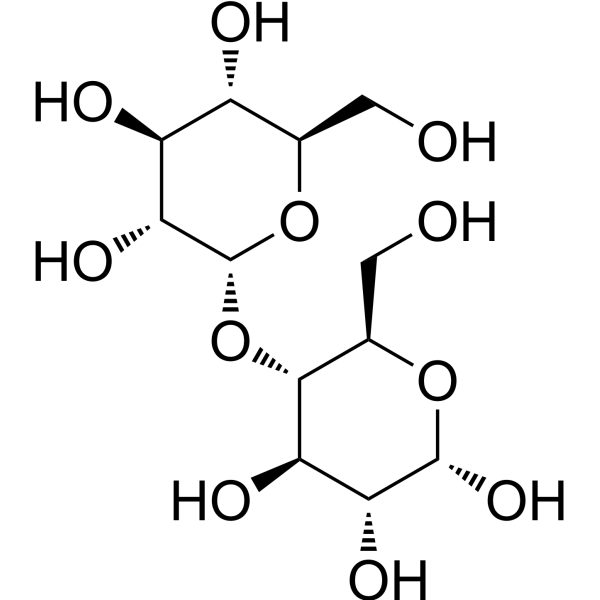
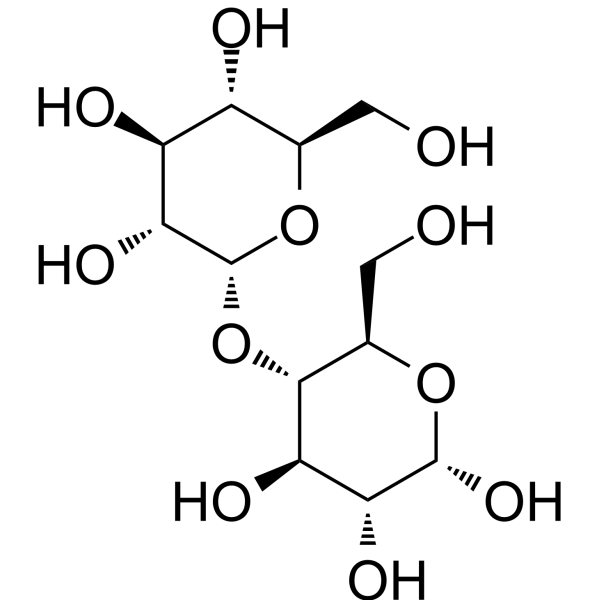
Maltose is a disaccharide composed of two glucose molecules linked together. Maltose is an endogenous metabolic product in plants, yeast, or bacteria, and it participates in carbon source storage and metabolism. Maltose is a key core metabolite and main transport form in the temporary starch degradation, carbon output, and subsequent sucrose synthesis metabolism of the night chloroplast. In X. dendrorhous, maltose can act as a sugar donor and is converted into isomaltulose by α-glucosidase). Maltose can act as a osmotic agent, supporting continuous capillary ultrafiltration and preventing severe metabolic disorders .
|
-
-
- HY-103210
-
|
Neurotoxin DSP 4 hydrochloride
|
Adrenergic Receptor
|
Neurological Disease
|
|
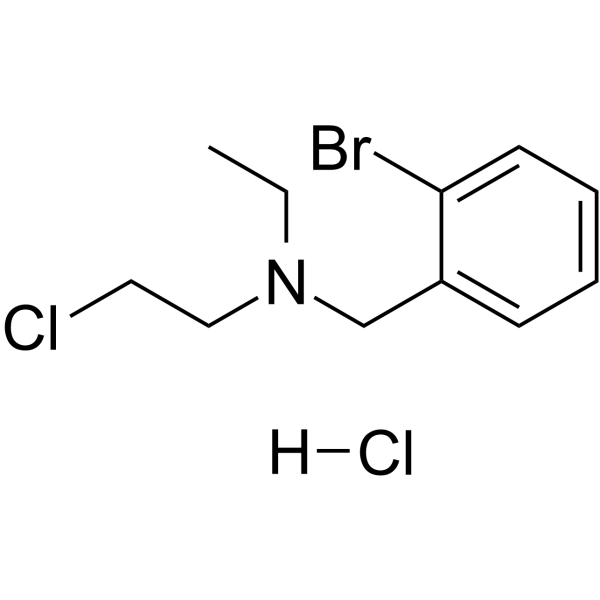
DSP-4 hydrochloride is a highly and selective adrenergic neurotoxin. DSP-4 hydrochloride can cross the blood brain barrier. DSP-4 hydrochloride can be used for the temporary selective degradation of the central and peripheral noradrenergic neurons .
|
-
-
- HY-N2024A
-
|
|
Endogenous Metabolite
Glycosidase
|
Metabolic Disease
|
|
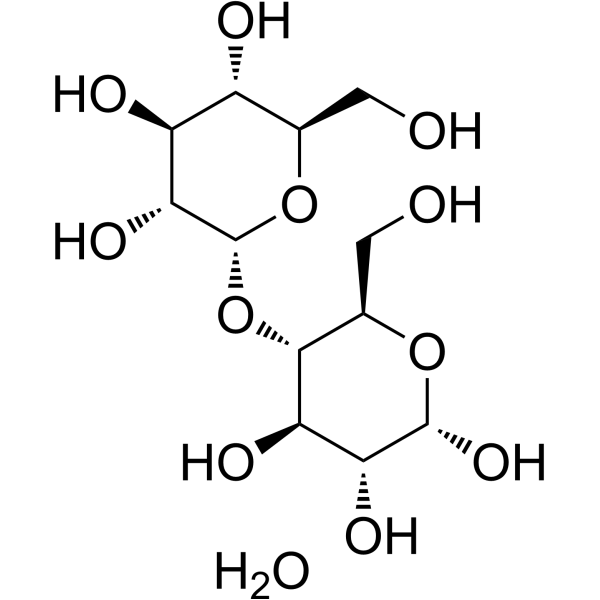
Maltose monohydrate is a disaccharide composed of two glucose molecules linked together. Maltose monohydrate is an endogenous metabolic product in plants, yeast, or bacteria, and it participates in carbon source storage and metabolism. Maltose monohydrate is a key core metabolite and main transport form in the temporary starch degradation, carbon output, and subsequent sucrose synthesis metabolism of the night chloroplast. In X. dendrorhous, maltose can act as a sugar donor and is converted into isomaltulose by α-glucosidase. Maltose monohydrate can act as a osmotic agent, supporting continuous capillary ultrafiltration and preventing severe metabolic disorders .
|
-
-
- HY-N2024AS1
-
|
|
Isotope-Labeled Compounds
Endogenous Metabolite
Glycosidase
|
Metabolic Disease
|
|
Maltose monohydrate- 13C12 is the 13C labeled isotope of Maltose monohydrate. Maltose monohydrate is a disaccharide composed of two glucose molecules linked together. Maltose monohydrate is an endogenous metabolic product in plants, yeast, or bacteria, and it participates in carbon source storage and metabolism. Maltose monohydrate is a key core metabolite and main transport form in the temporary starch degradation, carbon output, and subsequent sucrose synthesis metabolism of the night chloroplast. In X. dendrorhous, maltose can act as a sugar donor and is converted into isomaltulose by α-glucosidase. Maltose monohydrate can act as a osmotic agent, supporting continuous capillary ultrafiltration and preventing severe metabolic disorders.
|
-
-
- HY-P3448
-
|
CEND-1; iRGD; LSTA1
|
Integrin
Complement System
|
Cancer
|
|
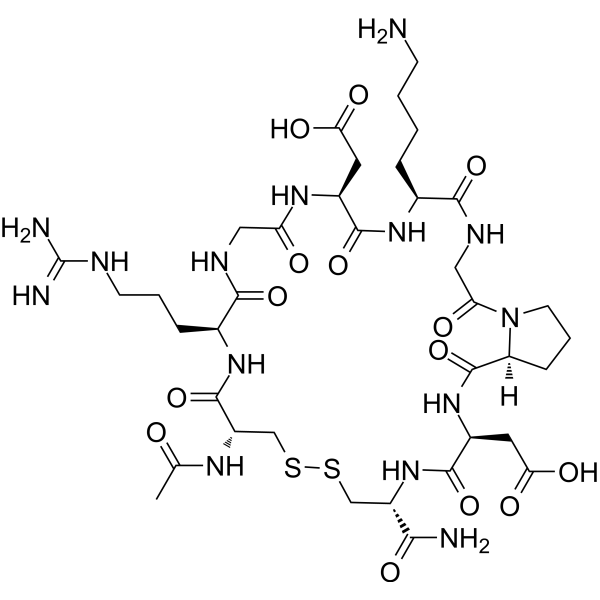
Certepetide (CEND-1) is a bifunctional cyclic peptide (a.k.a. iRGD). Certepetide is a tumor-penetrating enhancer via RGD motif interaction with alphav-integrins and via activating NRP-1, and transforms the solid tumor microenvironment into a temporary agent conduit. Certepetide accumulates in tumors, and is used in the research of pancreatic cancer and other solid tumors .
|
-
-
- HY-W042301
-
|
|
Anion Exchangers
Carbonic Anhydrase
Endothelin Receptor
|
Cardiovascular Disease
|
|
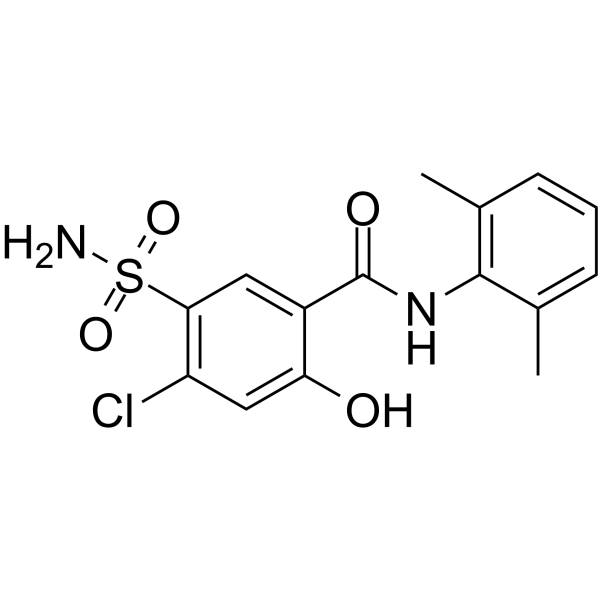
Xipamide is an orally active carbonic anhydrase (CA) inhibitor and Na +/Cl --potassium transporter inhibitor with diuretic and antihypertensive effects. Xipamide reduces NaCl reabsorption by inhibiting the Cl -/NaCO3 - anion exchanger, and increases calcium reabsorption while promoting potassium and magnesium excretion. Xipamide is mainly cleared via the renal pathway and causes a temporary decrease in glomerular filtration rate under specific conditions. Xipamide does not affect Ca 2+ signaling induced by endothelin-1 and other factors, nor does it inhibit various ion cotransport or pump activities in red blood cells. Xipamide can be used in researches related to cardiovascular diseases, hypertension (especially with left ventricular hypertrophy), advanced renal failure, and liver cirrhosis with ascites .
|
-
-
- HY-120423
-
|
|
Cannabinoid Receptor
|
Neurological Disease
|
|
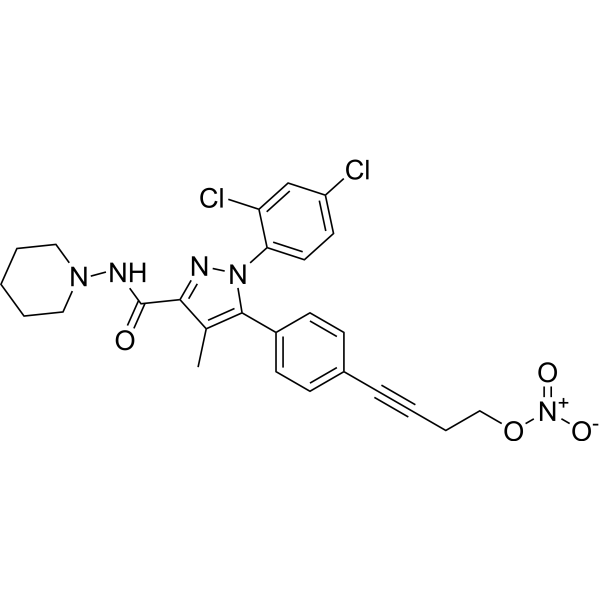
AM6538 is a long-acting, high affinity and pseudo-irreversible cannabinoid (CB) antagonist. AM6538 is a structural analog of rimonabant. AM6538 can be effectively used to evaluate the apparent efficacy of cannabinoid full and partial agonists. AM6538 may be useful in future studies that require temporary reductions in cannabinoid receptor availability . AM-6538 is a click chemistry reagent, it contains an Alkyne group and can undergo copper-catalyzed azide-alkyne cycloaddition (CuAAc) with molecules containing Azide groups.
|
-
-
- HY-P11111
-
|
|
Drug Derivative
|
Others
|
|
QP5 is an Amelogenin (HY-P71627)-derived peptide. QP5 binds to hydroxyapatite and demineralized enamel surfaces, temporarily stabilizes amorphous calcium phosphate (ACP), and regulates the crystallization of hydroxyapatite. QP5 promotes remineralization of artificial enamel caries in vitro, and acts synergistically with fluoride to enhance enamel caries remineralization. QP5 can be used in studies related to enamel caries and early enamel caries .
|
-
-
- HY-W013762
-
|
|
Environmental Pollutants
Biochemical Assay Reagents
|
Others
|
|
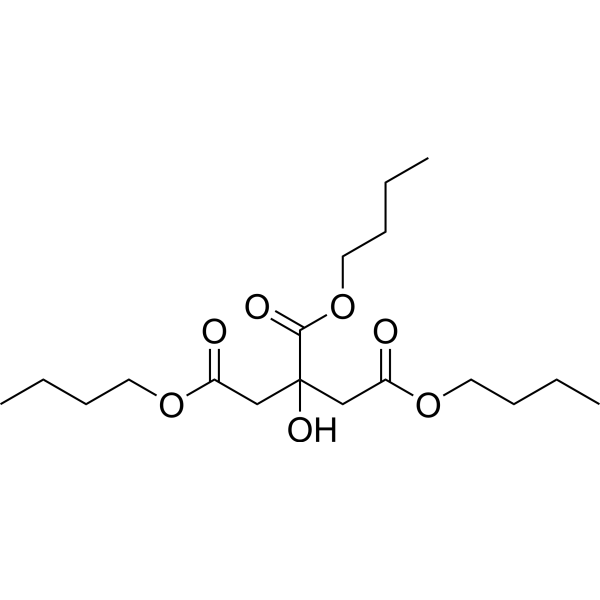
Tributyl citrate is a low-toxicity and orally active citrate ester with no genotoxicity or skin sensitizing activity. Tributyl citrate also acts as a plasticizer, solvent, FDA-approved indirect food additive, and topical anesthetic, among other uses. Tributyl citrate induces a needle-prick insensitivity response that lasts for more than 2 hours, and a 5% suspension of it temporarily eliminates the corneal reflex in rabbits. Tributyl citrate causes no significant systemic toxicity in rats and cats at most tested doses, and only may cause growth retardation and gastrointestinal reactions such as diarrhea and nausea at high doses or with repeated oral administration .
|
-
-
- HY-N2024R
-
|
|
Reference Standards
Endogenous Metabolite
Glycosidase
|
Metabolic Disease
|
|
Maltose (Standard) is the analytical standard of Maltose. This product is intended for research and analytical applications. Maltose is a disaccharide composed of two glucose molecules linked together. Maltose is an endogenous metabolic product in plants, yeast, or bacteria, and it participates in carbon source storage and metabolism. Maltose is a key core metabolite and main transport form in the temporary starch degradation, carbon output, and subsequent sucrose synthesis metabolism of the night chloroplast. In X. dendrorhous, maltose can act as a sugar donor and is converted into isomaltulose by α-glucosidase (α-Glucosidase). Maltose can act as a osmotic agent, supporting continuous capillary ultrafiltration and preventing severe metabolic disorders.
|
-
-
- HY-132595A
-
|
QPI-1002 sodium
|
MDM-2/p53
|
Cancer
|
|
Teprasiran sodium is a small interfering RNA that temporarily inhibits p53-mediated cell death that underlies acute kidney injury (AKI) .
|
-
-
- HY-132595
-
-
-
- HY-119961
-
|
Dexivacaine; (S)-Mepivacaine
|
Sodium Channel
|
Cardiovascular Disease
|
|
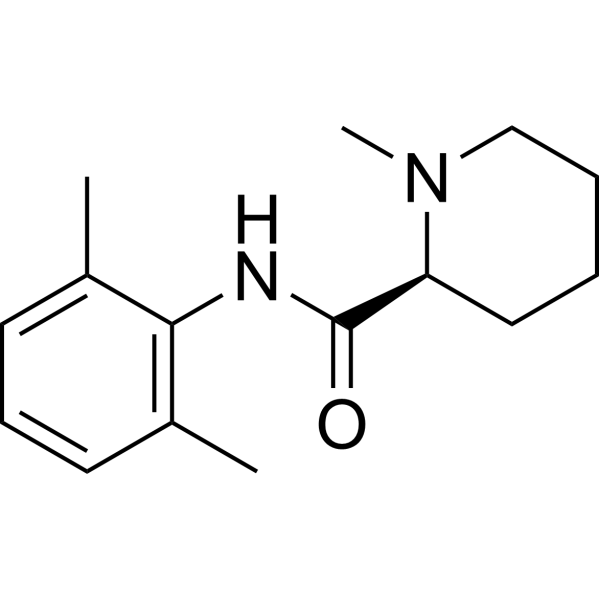
(+)-Mepivacaine is a racemic isomer of Mepivacaine (HY-B0517), which has analgesic and vasoconstrictive activity. Mepivacaine is an amide type agent that temporarily causes local loss of consciousness. Mepivacaine binds to specific voltage-gated sodium channels on neuronal cell membranes, inhibiting sodium influx and membrane depolarization .
|
-
-
- HY-N2024AS
-
|
|
Isotope-Labeled Compounds
Endogenous Metabolite
Glycosidase
|
Metabolic Disease
|
|
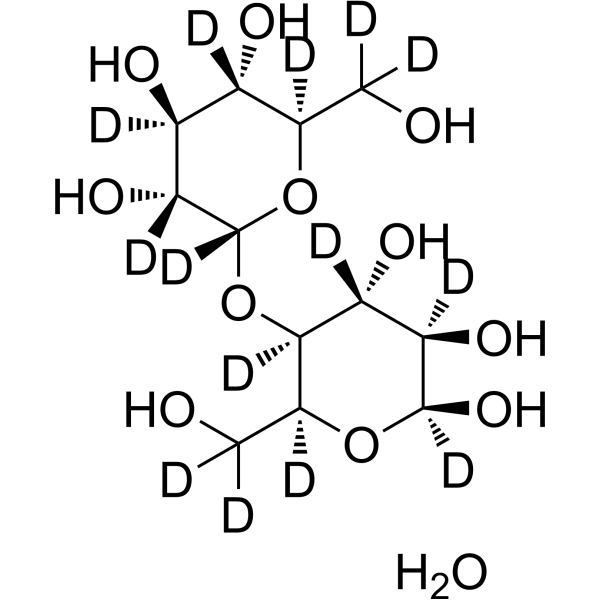
Maltose monohydrate-d14 is the deuterium labeled Maltose monohydrate. Maltose monohydrate is a disaccharide composed of two glucose molecules linked together. Maltose monohydrate is an endogenous metabolic product in plants, yeast, or bacteria, and it participates in carbon source storage and metabolism. Maltose monohydrate is a key core metabolite and main transport form in the temporary starch degradation, carbon output, and subsequent sucrose synthesis metabolism of the night chloroplast. In X. dendrorhous, maltose can act as a sugar donor and is converted into isomaltulose by α-glucosidase. Maltose monohydrate can act as a osmotic agent, supporting continuous capillary ultrafiltration and preventing severe metabolic disorders.
|
-
-
- HY-N2024B
-
|
|
Endogenous Metabolite
Glycosidase
|
Metabolic Disease
|
|
Maltose solution, 20% in H2O is a 20% aqueous maltose solution. Maltose is a disaccharide composed of two glucose molecules linked together. Maltose is an endogenous metabolic product in plants, yeast, or bacteria, and it participates in carbon source storage and metabolism. Maltose is a key core metabolite and main transport form in the temporary starch degradation, carbon output, and subsequent sucrose synthesis metabolism of the night chloroplast. In X. dendrorhous, maltose can act as a sugar donor and is converted into isomaltulose by α-glucosidase. Maltose can act as a osmotic agent, supporting continuous capillary ultrafiltration and preventing severe metabolic disorders .
|
-
-
- HY-158820
-
|
QPI-1007
|
Small Interfering RNA (siRNA)
Caspase
|
Cardiovascular Disease
|
|
Cosdosiran is a chemically modified siRNA designed to temporarily inhibit expression of the caspase 2 protein and can be used for the study of nonarteritic anterior ischemic optic neuropathy and other optic neuropathies such as glaucoma that result in the death of retinal ganglion cells.
|
-
-
- HY-17478A
-
-
-
- HY-N2024AR
-
|
|
Reference Standards
Endogenous Metabolite
Glycosidase
|
Metabolic Disease
|
|
Maltose monohydrate (Standard) is the analytical standard of Maltose monohydrate. This product is intended for research and analytical applications. Maltose monohydrate is a disaccharide composed of two glucose molecules linked together. Maltose monohydrate is an endogenous metabolic product in plants, yeast, or bacteria, and it participates in carbon source storage and metabolism. Maltose monohydrate is a key core metabolite and main transport form in the temporary starch degradation, carbon output, and subsequent sucrose synthesis metabolism of the night chloroplast. In X. dendrorhous, maltose can act as a sugar donor and is converted into isomaltulose by α-glucosidase. Maltose monohydrate can act as a osmotic agent, supporting continuous capillary ultrafiltration and preventing severe metabolic disorders.
|
-
-
- HY-P3448S
-
|
CEND-1-13C6,15N2; iRGD-13C6,15N2; LSTA1-13C6,15N2
|
Isotope-Labeled Compounds
Complement System
Integrin
|
Cancer
|
|
Certepetide- 13C6, 15N2 (CEND-1- 13C6, 15N2) is the 13C- and 15N-labeled Certepetide (HY-P3448). Certepetide (CEND-1) is a bifunctional cyclic peptide (a.k.a. iRGD). Certepetide is a tumor-penetrating enhancer via RGD motif interaction with alphav-integrins and via activating NRP-1, and transforms the solid tumor microenvironment into a temporary agent conduit. Certepetide accumulates in tumors, and is used in the research of pancreatic cancer and other solid tumors .
|
-
-
- HY-113643
-
|
|
Calcium Channel
5-HT Receptor
|
Neurological Disease
|
|
Levemopamil hydrochloride is a blood-brain barrier penetrable calcium channel blocker and a 5-HT2 antagonist. Levemopamil hydrochloride can be used for temporary occlusion and neurological disease research .
|
-
-
- HY-118751
-
|
Bancol
|
nAChR
|
Others
Neurological Disease
|
|
Bensultap (Bancol) is an insecticide, which can control Colorado beetle and some other insect pests. Bensultap is a modulator for nicotinic acetylcholine receptor (nAChR), and exhibits mild and temporary neuromodulatory efficacy on rat nervous system .
|
-
-
- HY-158820A
-
|
QPI-1007 sodium
|
Small Interfering RNA (siRNA)
Caspase
|
Cardiovascular Disease
|
|
Cosdosiran sodium is a chemically modified siRNA designed to temporarily inhibit expression of the caspase 2 protein and can be used for the study of nonarteritic anterior ischemic optic neuropathy and other optic neuropathies such as glaucoma that result in the death of retinal ganglion cells.
|
-
-
- HY-106972
-
|
|
Monoamine Oxidase
|
Neurological Disease
|
|
SL-251131 is a reversible non-specific MAO inhibitor. SL-251131 temporarily blocks both MAO-A and MAO-B enzymes, which are responsible for breaking down neurotransmitters like dopamine. SL-251131 can be used for the study of Parkinson's disease .
|
-
-
- HY-101390B
-
|
|
Calcium Channel
|
Cardiovascular Disease
|
|
Niguldipine is a calcium channel blocker with activity in regulating cardiovascular function. Niguldipine can reduce systolic and diastolic blood pressure, thereby increasing heart rate and cardiac output. Niguldipine exhibits dose-dependent and sustained increases in coronary blood flow. Niguldipine also increases perfusion in the kidneys and femoral arteries, but the effect is temporary and to a lesser extent. The effect of Niguldipine on myocardial metabolism is not significant .
|
-
-
- HY-P3448S1
-
|
CEND-1-13C2,15N; iRGD-13C2,15N; LSTA1-13C2,15N
|
Isotope-Labeled Compounds
Complement System
Integrin
|
Cancer
|
|
Certepetide- 13C2, 15N (CEND-1- 13C2, 15N) is the 13C- and 15N-labeled Certepetide (HY-P3448). Certepetide (CEND-1) is a bifunctional cyclic peptide (a.k.a. iRGD). Certepetide is a tumor-penetrating enhancer via RGD motif interaction with alphav-integrins and via activating NRP-1, and transforms the solid tumor microenvironment into a temporary agent conduit. Certepetide accumulates in tumors, and is used in the research of pancreatic cancer and other solid tumors .
|
-
-
- HY-N2024AS2
-
|
|
Isotope-Labeled Compounds
Endogenous Metabolite
Glycosidase
|
Metabolic Disease
|
|
Maltose monohydrate- 13C is the 13C labeled isotope of Maltose monohydrate. Maltose monohydrate is a disaccharide composed of two glucose molecules linked together. Maltose monohydrate is an endogenous metabolic product in plants, yeast, or bacteria, and it participates in carbon source storage and metabolism. Maltose monohydrate is a key core metabolite and main transport form in the temporary starch degradation, carbon output, and subsequent sucrose synthesis metabolism of the night chloroplast. In X. dendrorhous, maltose can act as a sugar donor and is converted into isomaltulose by α-glucosidase. Maltose monohydrate can act as a osmotic agent, supporting continuous capillary ultrafiltration and preventing severe metabolic disorders.
|
-
-
- HY-W013762R
-
|
|
Reference Standards
Biochemical Assay Reagents
|
Others
|
|
Tributyl citrate (Standard) is the analytical standard of Tributyl citrate. This product is intended for research and analytical applications. Tributyl citrate is a low-toxicity and orally active citrate ester with no genotoxicity or skin sensitizing activity. Tributyl citrate also acts as a plasticizer, solvent, FDA-approved indirect food additive, and topical anesthetic, among other uses. Tributyl citrate induces a needle-prick insensitivity response that lasts for more than 2 hours, and a 5% suspension of it temporarily eliminates the corneal reflex in rabbits. Tributyl citrate causes no significant systemic toxicity in rats and cats at most tested doses, and only may cause growth retardation and gastrointestinal reactions such as diarrhea and nausea at high doses or with repeated oral administration .
|
-
-
- HY-117947
-
|
|
Histone Methyltransferase
|
Cancer
|
|
(R)-OR-S1 is an isomer of OR-S1. The dual ZH1/2 inhibitors OR-S1 and OR-S2 exhibit strong inhibitory activity against both EZH1 and EZH2. OR-S1 and OR-S2 are highly selective methyltransferase inhibitors against EZH1 and EZH2, and they have very similar molecular features. Therefore, we investigated the effect of OR-S1 on acute myeloid leukemia (AML). We found that OR-S1 was able to induce cell differentiation and apoptosis in AML cells. These findings encouraged us to investigate whether functional LT-HSCs could survive PRC2-targeted therapy with OR-S1 or OR-S1 combined with cytarabine. The results showed that OR-S1 did not cause significant myelosuppression, and BM cells treated with the combination therapy were able to undergo normal hematopoiesis even 4 months after treatment. Therefore, temporary inhibition of EZH1 and EZH2 is clinically tolerable, making this combination therapy suitable for AML patients. AML is generally believed to originate from myeloid progenitor cells that inherit a large number of biological properties.
|
-
-
- HY-185272
-
|
|
DNA/RNA Synthesis
|
Others
|
|
3'-O-(2-Nitrobenzyl)-dCTP is a reversible terminator. 3'-O-(2-Nitrobenzyl)-dCTP can be recognized and incorporated by polymerases, thereby temporarily terminating primer extension during DNA synthesis. After incorporation into the extending DNA strand, 3'-O-(2-Nitrobenzyl)-dCTP temporarily halts the DNA polymerase extension reaction, and its 3'-O-(2-nitrobenzyl) blocking group can be removed by laser irradiation to regenerate a free 3'-OH for subsequent primer extension cycles. 3'-O-(2-Nitrobenzyl)-dCTP is applicable for resolving homopolymeric regions in DNA templates .
|
-
-
- HY-103210R
-
|
Neurotoxin DSP 4 hydrochloride (Standard)
|
Adrenergic Receptor
Reference Standards
|
Neurological Disease
|
|
DSP-4 hydrochloride (Standard) is the analytical standard of DSP-4 hydrochloride (HY-103210). This product is intended for research and analytical applications. DSP-4 hydrochloride is a highly and selective adrenergic neurotoxin. DSP-4 hydrochloride can cross the blood brain barrier. DSP-4 hydrochloride can be used for the temporary selective degradation of the central and peripheral noradrenergic neurons .
|
-
-
- HY-185273
-
|
|
DNA/RNA Synthesis
|
Others
|
|
3'-O-(2-Nitrobenzyl)-dGTP is a reversible terminator. 3'-O-(2-Nitrobenzyl)-dGTP can be recognized and incorporated by DNA polymerases, thereby temporarily terminating DNA primer extension; after the 2-nitrobenzyl blocking group is removed via laser irradiation, a free 3'-OH can be regenerated to allow subsequent polymerase-mediated extension. 3'-O-(2-Nitrobenzyl)-dGTP can be used in DNA sequencing studies .
|
-
-
- HY-185274
-
|
|
DNA/RNA Synthesis
|
Others
|
|
3'-O-(2-Nitrobenzyl)-dTTP acts as a reversible terminator for DNA chain elongation. 3'-O-(2-Nitrobenzyl)-dTTP interacts with 9°N polymerase (exo-) A485L/Y409V, gets recognized and incorporated into the elongating DNA chain, thereby temporarily terminating the polymerase reaction. 3'-O-(2-Nitrobenzyl)-dTTP carries a 3'-O-(2-nitrobenzyl) blocking group, which can be removed by laser irradiation to regenerate the free 3'-OH − group and restore polymerase activity. 3'-O-(2-Nitrobenzyl)-dTTP is applicable in DNA sequencing studies .
|
-
| Cat. No. |
Product Name |
Type |
-
- HY-N2024B
-
|
|
Biochemical Assay Reagents
|
|
Maltose solution, 20% in H2O is a 20% aqueous maltose solution. Maltose is a disaccharide composed of two glucose molecules linked together. Maltose is an endogenous metabolic product in plants, yeast, or bacteria, and it participates in carbon source storage and metabolism. Maltose is a key core metabolite and main transport form in the temporary starch degradation, carbon output, and subsequent sucrose synthesis metabolism of the night chloroplast. In X. dendrorhous, maltose can act as a sugar donor and is converted into isomaltulose by α-glucosidase. Maltose can act as a osmotic agent, supporting continuous capillary ultrafiltration and preventing severe metabolic disorders .
|
| Cat. No. |
Product Name |
Target |
Research Area |
-
- HY-P3448
-
|
CEND-1; iRGD; LSTA1
|
Integrin
Complement System
|
Cancer
|
|
Certepetide (CEND-1) is a bifunctional cyclic peptide (a.k.a. iRGD). Certepetide is a tumor-penetrating enhancer via RGD motif interaction with alphav-integrins and via activating NRP-1, and transforms the solid tumor microenvironment into a temporary agent conduit. Certepetide accumulates in tumors, and is used in the research of pancreatic cancer and other solid tumors .
|
-
- HY-P11111
-
|
|
Drug Derivative
|
Others
|
|
QP5 is an Amelogenin (HY-P71627)-derived peptide. QP5 binds to hydroxyapatite and demineralized enamel surfaces, temporarily stabilizes amorphous calcium phosphate (ACP), and regulates the crystallization of hydroxyapatite. QP5 promotes remineralization of artificial enamel caries in vitro, and acts synergistically with fluoride to enhance enamel caries remineralization. QP5 can be used in studies related to enamel caries and early enamel caries .
|
-
- HY-P3448S
-
|
CEND-1-13C6,15N2; iRGD-13C6,15N2; LSTA1-13C6,15N2
|
Isotope-Labeled Compounds
Complement System
Integrin
|
Cancer
|
|
Certepetide- 13C6, 15N2 (CEND-1- 13C6, 15N2) is the 13C- and 15N-labeled Certepetide (HY-P3448). Certepetide (CEND-1) is a bifunctional cyclic peptide (a.k.a. iRGD). Certepetide is a tumor-penetrating enhancer via RGD motif interaction with alphav-integrins and via activating NRP-1, and transforms the solid tumor microenvironment into a temporary agent conduit. Certepetide accumulates in tumors, and is used in the research of pancreatic cancer and other solid tumors .
|
-
- HY-P3448S1
-
|
CEND-1-13C2,15N; iRGD-13C2,15N; LSTA1-13C2,15N
|
Isotope-Labeled Compounds
Complement System
Integrin
|
Cancer
|
|
Certepetide- 13C2, 15N (CEND-1- 13C2, 15N) is the 13C- and 15N-labeled Certepetide (HY-P3448). Certepetide (CEND-1) is a bifunctional cyclic peptide (a.k.a. iRGD). Certepetide is a tumor-penetrating enhancer via RGD motif interaction with alphav-integrins and via activating NRP-1, and transforms the solid tumor microenvironment into a temporary agent conduit. Certepetide accumulates in tumors, and is used in the research of pancreatic cancer and other solid tumors .
|
| Cat. No. |
Product Name |
Category |
Target |
Chemical Structure |
-
- HY-N2024
-
-
-
- HY-N2024A
-
-
-
- HY-N2024R
-
|
|
Structural Classification
Polysaccharides
Endogenous metabolite
Saccharides
Source Classification
|
Reference Standards
Endogenous Metabolite
Glycosidase
|
|
Maltose (Standard) is the analytical standard of Maltose. This product is intended for research and analytical applications. Maltose is a disaccharide composed of two glucose molecules linked together. Maltose is an endogenous metabolic product in plants, yeast, or bacteria, and it participates in carbon source storage and metabolism. Maltose is a key core metabolite and main transport form in the temporary starch degradation, carbon output, and subsequent sucrose synthesis metabolism of the night chloroplast. In X. dendrorhous, maltose can act as a sugar donor and is converted into isomaltulose by α-glucosidase (α-Glucosidase). Maltose can act as a osmotic agent, supporting continuous capillary ultrafiltration and preventing severe metabolic disorders.
|
-
-
- HY-N2024AR
-
|
|
Structural Classification
Polysaccharides
other families
Plants
Endogenous metabolite
Saccharides
Source Classification
|
Reference Standards
Endogenous Metabolite
Glycosidase
|
|
Maltose monohydrate (Standard) is the analytical standard of Maltose monohydrate. This product is intended for research and analytical applications. Maltose monohydrate is a disaccharide composed of two glucose molecules linked together. Maltose monohydrate is an endogenous metabolic product in plants, yeast, or bacteria, and it participates in carbon source storage and metabolism. Maltose monohydrate is a key core metabolite and main transport form in the temporary starch degradation, carbon output, and subsequent sucrose synthesis metabolism of the night chloroplast. In X. dendrorhous, maltose can act as a sugar donor and is converted into isomaltulose by α-glucosidase. Maltose monohydrate can act as a osmotic agent, supporting continuous capillary ultrafiltration and preventing severe metabolic disorders.
|
-
| Cat. No. |
Product Name |
Chemical Structure |
-
- HY-N2024AS1
-
|
|
|
Maltose monohydrate- 13C12 is the 13C labeled isotope of Maltose monohydrate. Maltose monohydrate is a disaccharide composed of two glucose molecules linked together. Maltose monohydrate is an endogenous metabolic product in plants, yeast, or bacteria, and it participates in carbon source storage and metabolism. Maltose monohydrate is a key core metabolite and main transport form in the temporary starch degradation, carbon output, and subsequent sucrose synthesis metabolism of the night chloroplast. In X. dendrorhous, maltose can act as a sugar donor and is converted into isomaltulose by α-glucosidase. Maltose monohydrate can act as a osmotic agent, supporting continuous capillary ultrafiltration and preventing severe metabolic disorders.
|
-
-
- HY-N2024AS
-
|
|
|
Maltose monohydrate-d14 is the deuterium labeled Maltose monohydrate. Maltose monohydrate is a disaccharide composed of two glucose molecules linked together. Maltose monohydrate is an endogenous metabolic product in plants, yeast, or bacteria, and it participates in carbon source storage and metabolism. Maltose monohydrate is a key core metabolite and main transport form in the temporary starch degradation, carbon output, and subsequent sucrose synthesis metabolism of the night chloroplast. In X. dendrorhous, maltose can act as a sugar donor and is converted into isomaltulose by α-glucosidase. Maltose monohydrate can act as a osmotic agent, supporting continuous capillary ultrafiltration and preventing severe metabolic disorders.
|
-
-
- HY-P3448S
-
|
|
|
Certepetide- 13C6, 15N2 (CEND-1- 13C6, 15N2) is the 13C- and 15N-labeled Certepetide (HY-P3448). Certepetide (CEND-1) is a bifunctional cyclic peptide (a.k.a. iRGD). Certepetide is a tumor-penetrating enhancer via RGD motif interaction with alphav-integrins and via activating NRP-1, and transforms the solid tumor microenvironment into a temporary agent conduit. Certepetide accumulates in tumors, and is used in the research of pancreatic cancer and other solid tumors .
|
-
-
- HY-P3448S1
-
|
|
|
Certepetide- 13C2, 15N (CEND-1- 13C2, 15N) is the 13C- and 15N-labeled Certepetide (HY-P3448). Certepetide (CEND-1) is a bifunctional cyclic peptide (a.k.a. iRGD). Certepetide is a tumor-penetrating enhancer via RGD motif interaction with alphav-integrins and via activating NRP-1, and transforms the solid tumor microenvironment into a temporary agent conduit. Certepetide accumulates in tumors, and is used in the research of pancreatic cancer and other solid tumors .
|
-
-
- HY-N2024AS2
-
|
|
|
Maltose monohydrate- 13C is the 13C labeled isotope of Maltose monohydrate. Maltose monohydrate is a disaccharide composed of two glucose molecules linked together. Maltose monohydrate is an endogenous metabolic product in plants, yeast, or bacteria, and it participates in carbon source storage and metabolism. Maltose monohydrate is a key core metabolite and main transport form in the temporary starch degradation, carbon output, and subsequent sucrose synthesis metabolism of the night chloroplast. In X. dendrorhous, maltose can act as a sugar donor and is converted into isomaltulose by α-glucosidase. Maltose monohydrate can act as a osmotic agent, supporting continuous capillary ultrafiltration and preventing severe metabolic disorders.
|
-
| Cat. No. |
Product Name |
|
Classification |
-
- HY-N2024
-
Maltose
1 Publications Verification
|
|
Sweetening Agents
|
|
Maltose is a disaccharide composed of two glucose molecules linked together. Maltose is an endogenous metabolic product in plants, yeast, or bacteria, and it participates in carbon source storage and metabolism. Maltose is a key core metabolite and main transport form in the temporary starch degradation, carbon output, and subsequent sucrose synthesis metabolism of the night chloroplast. In X. dendrorhous, maltose can act as a sugar donor and is converted into isomaltulose by α-glucosidase). Maltose can act as a osmotic agent, supporting continuous capillary ultrafiltration and preventing severe metabolic disorders .
|
-
- HY-132595A
-
|
QPI-1002 sodium
|
|
siRNAs
siRNA drugs
|
|
Teprasiran sodium is a small interfering RNA that temporarily inhibits p53-mediated cell death that underlies acute kidney injury (AKI) .
|
-
- HY-132595
-
|
QPI-1002
|
|
siRNAs
siRNA drugs
|
|
Teprasiran (QPI-1002) is a small interfering RNA that temporarily inhibits p53-mediated cell death that underlies acute kidney injury (AKI) .
|
-
- HY-158820
-
|
QPI-1007
|
|
siRNAs
siRNA drugs
|
|
Cosdosiran is a chemically modified siRNA designed to temporarily inhibit expression of the caspase 2 protein and can be used for the study of nonarteritic anterior ischemic optic neuropathy and other optic neuropathies such as glaucoma that result in the death of retinal ganglion cells.
|
-
- HY-158820A
-
|
QPI-1007 sodium
|
|
siRNAs
siRNA drugs
|
|
Cosdosiran sodium is a chemically modified siRNA designed to temporarily inhibit expression of the caspase 2 protein and can be used for the study of nonarteritic anterior ischemic optic neuropathy and other optic neuropathies such as glaucoma that result in the death of retinal ganglion cells.
|
-
- HY-185272
-
|
|
|
Nucleotide Analogs
Cytidine Nucleotide
|
|
3'-O-(2-Nitrobenzyl)-dCTP is a reversible terminator. 3'-O-(2-Nitrobenzyl)-dCTP can be recognized and incorporated by polymerases, thereby temporarily terminating primer extension during DNA synthesis. After incorporation into the extending DNA strand, 3'-O-(2-Nitrobenzyl)-dCTP temporarily halts the DNA polymerase extension reaction, and its 3'-O-(2-nitrobenzyl) blocking group can be removed by laser irradiation to regenerate a free 3'-OH for subsequent primer extension cycles. 3'-O-(2-Nitrobenzyl)-dCTP is applicable for resolving homopolymeric regions in DNA templates .
|
-
- HY-185273
-
|
|
|
Nucleotide Analogs
Guanine Nucleotide
|
|
3'-O-(2-Nitrobenzyl)-dGTP is a reversible terminator. 3'-O-(2-Nitrobenzyl)-dGTP can be recognized and incorporated by DNA polymerases, thereby temporarily terminating DNA primer extension; after the 2-nitrobenzyl blocking group is removed via laser irradiation, a free 3'-OH can be regenerated to allow subsequent polymerase-mediated extension. 3'-O-(2-Nitrobenzyl)-dGTP can be used in DNA sequencing studies .
|
-
- HY-185274
-
|
|
|
Nucleotide Analogs
Thymine Nucleotide
|
|
3'-O-(2-Nitrobenzyl)-dTTP acts as a reversible terminator for DNA chain elongation. 3'-O-(2-Nitrobenzyl)-dTTP interacts with 9°N polymerase (exo-) A485L/Y409V, gets recognized and incorporated into the elongating DNA chain, thereby temporarily terminating the polymerase reaction. 3'-O-(2-Nitrobenzyl)-dTTP carries a 3'-O-(2-nitrobenzyl) blocking group, which can be removed by laser irradiation to regenerate the free 3'-OH − group and restore polymerase activity. 3'-O-(2-Nitrobenzyl)-dTTP is applicable in DNA sequencing studies .
|
Your information is safe with us. * Required Fields.
Inquiry Information
- Product Name:
- Cat. No.:
- Quantity:
- MCE Japan Authorized Agent:

