
1. Search Result
Search Result
Pathways Recommended: Stem Cell/Wnt Cell Cycle/DNA Damage
Results for "

tissue mast cells

" in MedChemExpress (MCE) Product Catalog:

11

Inhibitors & Agonists

2

Fluorescent Dyes

Cat. No. Nombre del producto Target Áreas de investigación Chemical Structure
  • HY-115768
    Compound 48/80
    5 Publications Verification

    Poly-p-methoxyphenethylmethylamine

    Phospholipase Neurological Disease Cancer
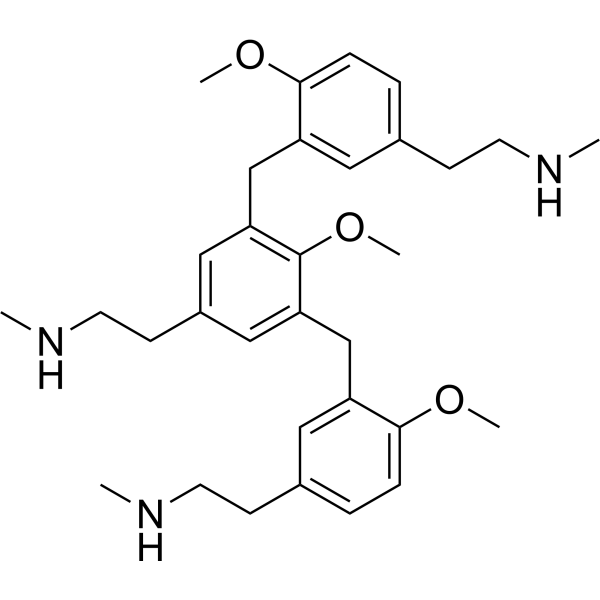
    Compound 48/80 (Poly-p-methoxyphenethylmethylamine) is widely used in animal and tissue models as a "selective" mast cell activator. Compound 48/80 acts at the mast cell membrane to stimulate trimeric G-proteins and induces degranulation via phospholipase C and D pathways .
    Compound 48/80
  • HY-131166
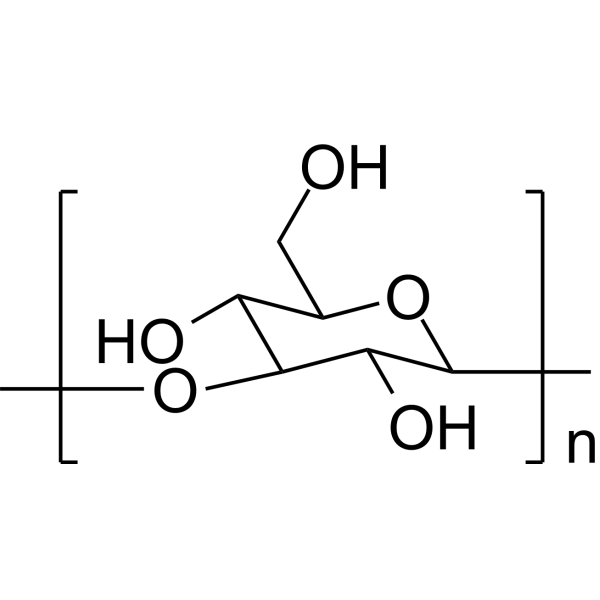
    Curdlan
    2 Publications Verification

    Bacterial Toll-like Receptor (TLR) NO Synthase C-type Lectin-like Receptors (CTLRs) Reactive Oxygen Species (ROS) Inflammation/Immunology
    Curdlan is a polysaccharide found in bacteria, consisting of a glucose homopolymer with β-1,3-glycosidic linkages . Curdlan can be recognized by Dectin-1 (a C-type lectin receptor), inducing immune responses in tissue mast cells and enhancing dendritic cell effects in tumor immunity. Curdlan holds potential for research in cancer and immune-inflammatory diseases .
    Curdlan
  • HY-D0220
    Toluidine Blue
    3 Publications Verification

    Toluidine Blue O

    Fluorescent Dye Cancer
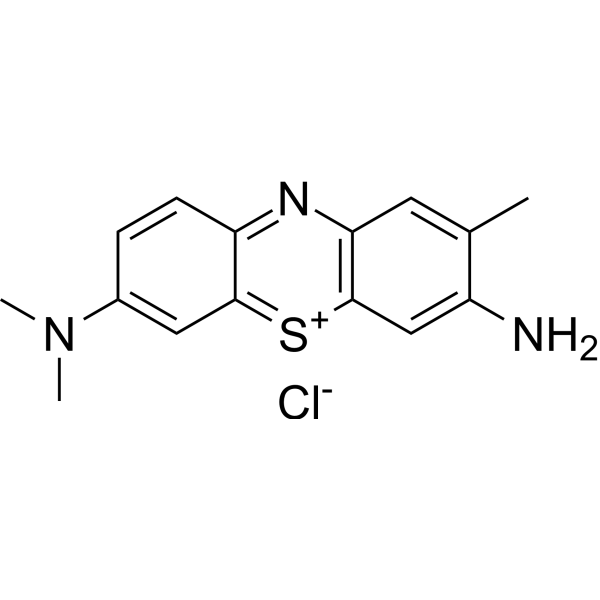
    Toluidine Blue (Toluidine Blue O) is an alkaline quinonimine dye (vivo dye) with high affinity for acidic tissue components, staining nuclei blue and polysaccharides purple. Toluidine Blue shows heterostaining properties for mast cells, mucins and chondrocytes. Toluidine Blue can stain different components of plant tissues and cells in different colours. Toluidine Blue is also used as a diagnostic aid to identify malignant lesions, such as cancer .
    Toluidine Blue
  • HY-13508
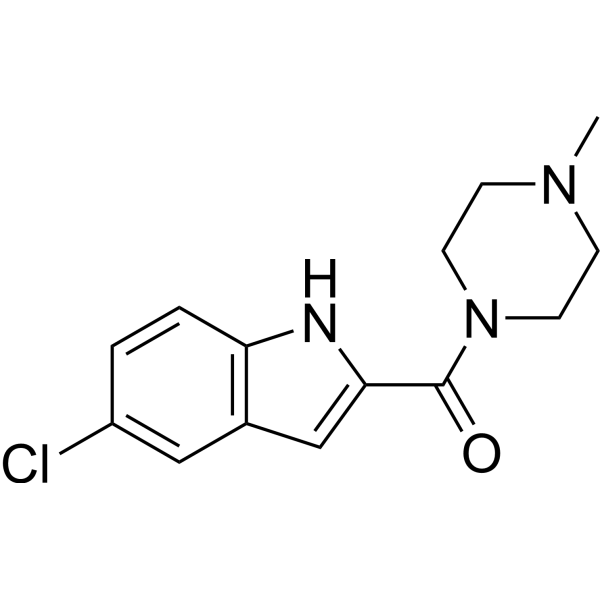
    JNJ-7777120
    1 Publications Verification

    Histamine Receptor Inflammation/Immunology
    JNJ-7777120 is a potent and selective histamine H4 receptor antagonist (Ki=4.5 nM). JNJ-7777120 effectively blocks histamine-induced migration of mouse tracheal mast cells from connective tissue to epithelial cells. JNJ-7777120 also significantly blocks neutrophil infiltration in a mouse Zymosan-induced peritonitis model. JNJ-7777120 has a good potential to study antipruritic and anti-inflammatory .
    JNJ-7777120
  • HY-D0220A
    Toluidine Blue (purity 36%)
    3 Publications Verification

    Toluidine Blue O (purity 36%)

    Fluorescent Dye Others Cancer
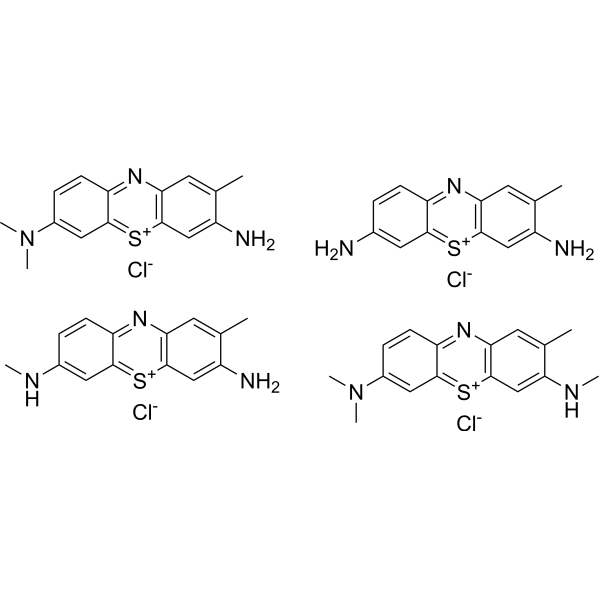
    Toluidine Blue (Toluidine Blue O) purity 36% is an alkaline quinonimine dye (vivo dye) with high affinity for acidic tissue components, staining nuclei blue and polysaccharides purple. Toluidine Blue purity 36% shows heterostaining properties for mast cells, mucins and chondrocytes. Toluidine Blue purity 36% can stain different components of plant tissues and cells in different colours. Toluidine Blue purity 36% is also used as a diagnostic aid to identify malignant lesions, such as cancer .
    Toluidine Blue (purity 36%)
  • HY-W250143

    Biochemical Assay Reagents Others
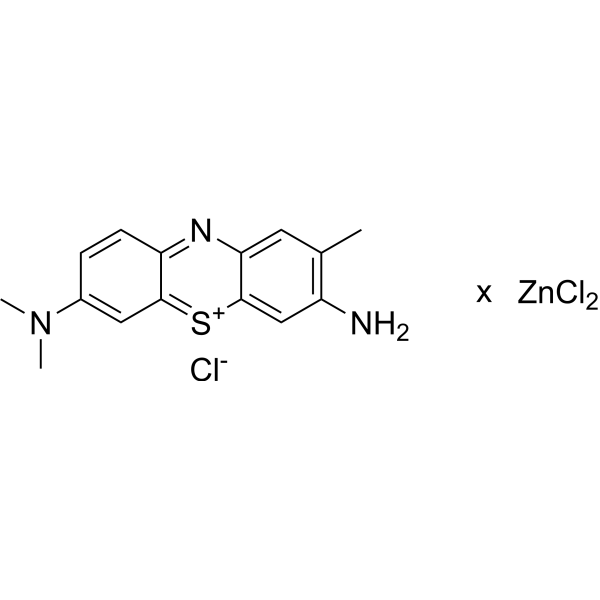
    Toluidine blue (ZnCl2) is a basic thiazine dye commonly used as a biological stain for microscopy. It has a deep bluish-purple color and is commonly used to stain nucleic acids such as DNA and RNA, as well as to stain mast cells, cartilage, and other connective tissues. Toluidine blue (ZnCl2) stains the acidic components of these tissues, such as sulfated or carboxylated mucopolysaccharides. It is frequently used in histology, cytology, and pathology applications to aid in the diagnosis of various diseases and conditions. The dye is usually applied to tissue sections prior to microscopic examination and can be differentiated using an acidic alcohol solution. Toluidine blue (ZnCl2) is a relatively simple and inexpensive stain with good reproducibility, making it a popular choice for many laboratories.
    Toluidine blue (ZnCl2)
  • HY-131162

    Angiotensin Receptor Cardiovascular Disease
    Chymase is a protein-digester enzyme found primarily in mast cells (MC), fibroblasts, and vascular endothelial cells. Chymase is released into the extracellular stroma in the context of inflammatory signals, tissue injury and cellular stress. Chymase is also involved in angiotensin II (Ang II) production, which is used in cardiovascular disease studies .
    Chymase
  • HY-W585843

    Interleukin Related Inflammation/Immunology
    1,1′-Ethylidenebis[L-tryptophan] is an impurity in the synthesis of L-tryptophan. 1,1′-Ethylidenebis[L-tryptophan] promotes the proliferation of eosinophilic leukemia cells, induces the release of eosinophil cationic protein from eosinophils, and stimulates T cells to produce IL-5. 1,1′-Ethylidenebis[L-tryptophan] (40 µg/kg) can induce fascia thickening, mast cell infiltration, and fibrosis in adipose and subcutaneous muscle tissues in mice. 1,1′-Ethylidenebis[L-tryptophan] can be used in immunology and inflammation research .
    1,1′-Ethylidenebis[L-tryptophan]
  • HY-115768A

    Poly-p-methoxyphenethylmethylamine (trimer)

    Phospholipase Others
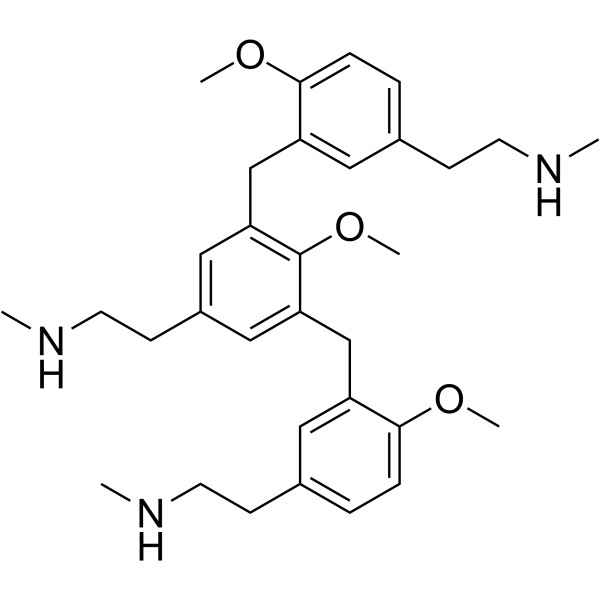
    Compound 48/80 (trimer) is a trimer of Compound 48/80 (HY-115768). Compound 48/80 is widely used in animal and tissue models as a "selective" mast cell activator .
    Compound 48/80 (trimer)
  • HY-13508R

    Histamine Receptor Inflammation/Immunology
    JNJ-7777120 (Standard) is the analytical standard of JNJ-7777120. This product is intended for research and analytical applications. JNJ-7777120 is a potent and selective histamine H4 receptor antagonist (Ki=4.5 nM). JNJ-7777120 effectively blocks histamine-induced migration of mouse tracheal mast cells from connective tissue to epithelial cells. JNJ-7777120 also significantly blocks neutrophil infiltration in a mouse Zymosan-induced peritonitis model. JNJ-7777120 has a good potential to study antipruritic and anti-inflammatory .
    JNJ-7777120 (Standard)
  • HY-19108

    Reactive Oxygen Species (ROS) Histamine Receptor Inflammation/Immunology Endocrinology
    CI-959 is an inhibitor of inflammatory cell activation. CI-959 exhibits anti-inflammatory and anti-allergic activities. CI-959 can inhibit the production of reactive oxygen species by neutrophils, as well as neutrophil adhesion, respiratory burst, and histamine release from mast cells. CI-959 can also inhibit the release of inflammatory mediators such as histamine, leukotrienes, and thromboxane from guinea-pig and human lung tissues, and effectively suppress anti-IgE-induced contractions of human bronchial smooth muscle. CI-959 can be used in the research of inflammatory and allergic diseases, such as asthma .
    CI-959

Consulta en línea

Your information is safe with us. * Required Fields.

Saludo


Country or Region *

Nombre del solicitante *


Nombre de la Organizaciòn *

Department *


Direcciòn del E-mail *


Nombre del producto *

Cat. No.


Requested quantity *

Número de teléfono *


Observaciones

Consulta en línea

Inquiry Information

Nombre del producto:
Cat. No.:
Cantidad:
MCE Japan Authorized Agent: