



7-Ketocholesterol
Based on 7 publication(s) in Google Scholar
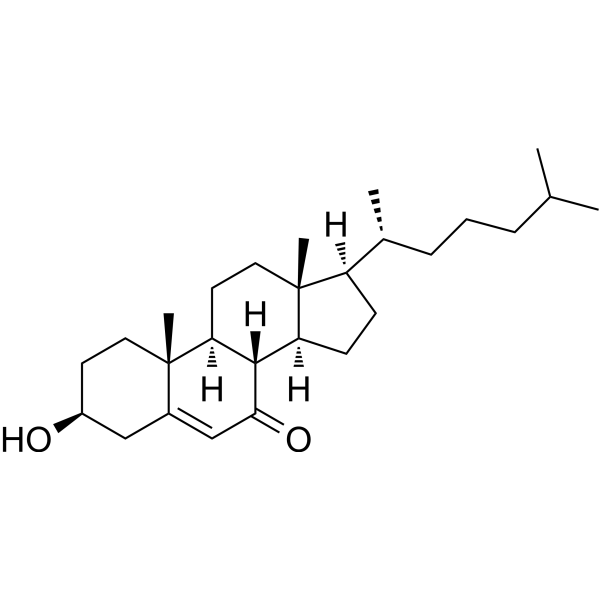
7-Ketocholesterol is an oxidation product of cholesterol, widely present in atherosclerotic plaques, and has a stronger atherogenic effect than cholesterol. 7-Ketocholesterol can inhibit the rate-limiting enzymes involved in bile acid and cholesterol synthesis, such as cholesterol 7α-hydroxylase and HMG-CoA reductase. 7-Ketocholesterol exhibits pro-inflammatory effects both in vivo and in vitro and can induce cell apoptosis (apoptosis).
For research use only. We do not sell to patients.
- Purity : 99.87%
- CAS No.: 566-28-9
- Formula: C27H44O2
- Molecular Weight:400.64
-
Storage:
-20°C, protect from light
* In solvent : -80°C, 6 months; -20°C, 1 month (protect from light)

To place orders, for customer services and technical support, please contact: MedChemExpress USA
Tel: 609-228-6898 E-mail: [email protected] [email protected]


-
 Biological Activity
-
Chemical Information
-
Solvent & Solubility
- Protocols
- Purity & Documentation
- References
-
 Help & FAQs


-
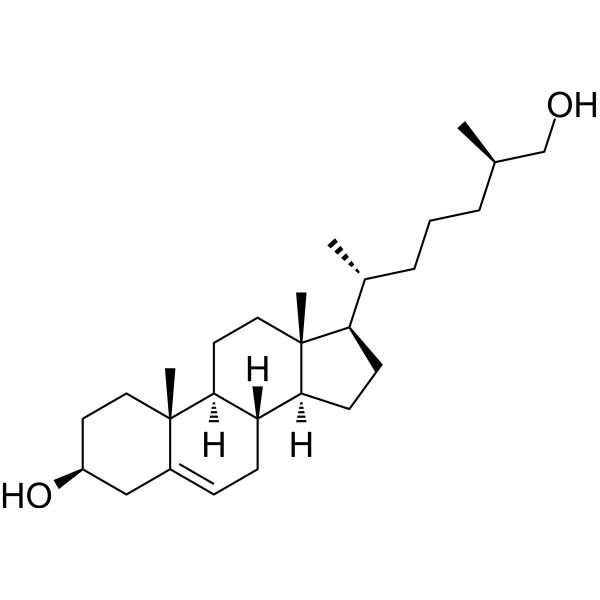
HY-N2371
27-HydroxycholesterolLXR Agonist -
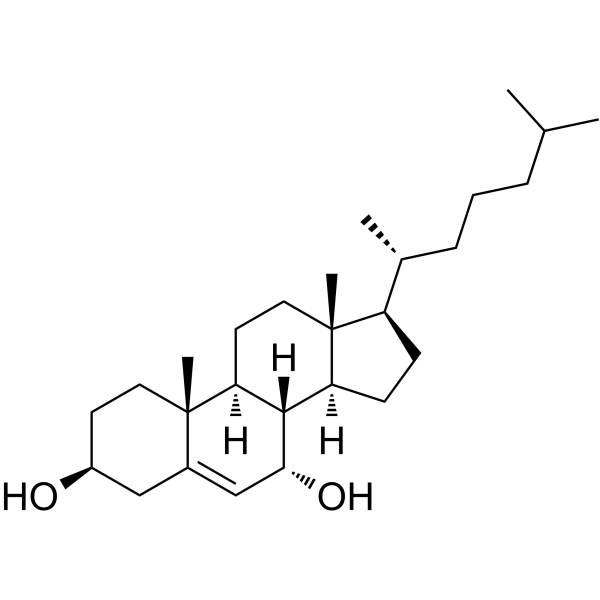
HY-N7264
7α-HydroxycholesterolCholesterol Oxide -
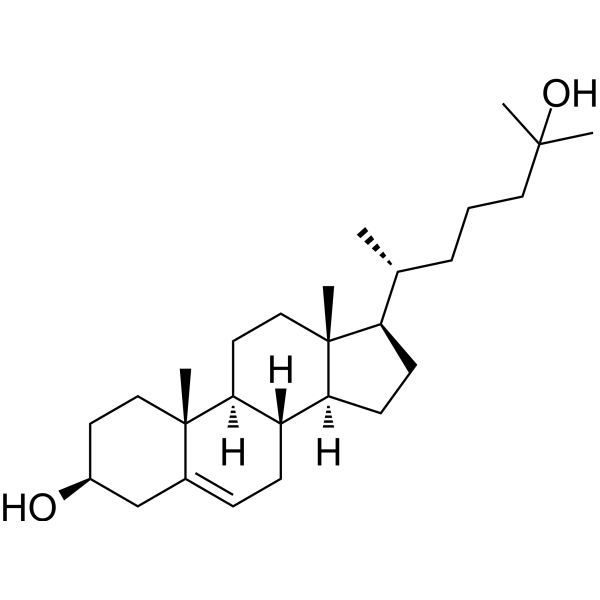
HY-113134
25-HydroxycholesterolCholesterol Metabolite -
HY-113341
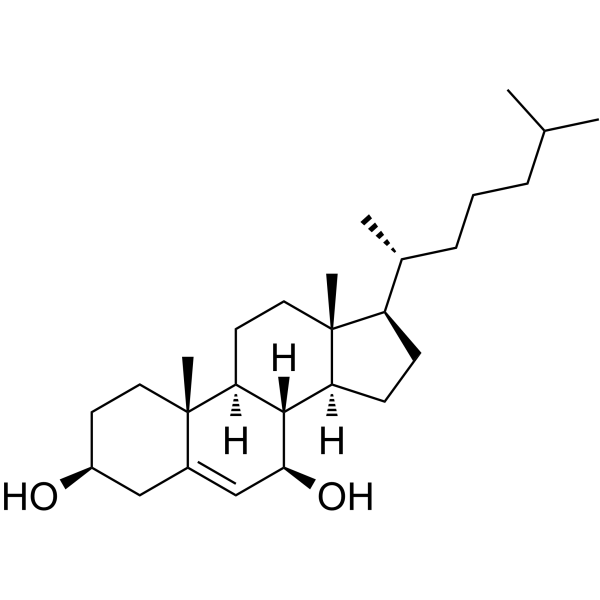
7β-HydroxycholesterolOxidative Stress Inducer -
HY-101840
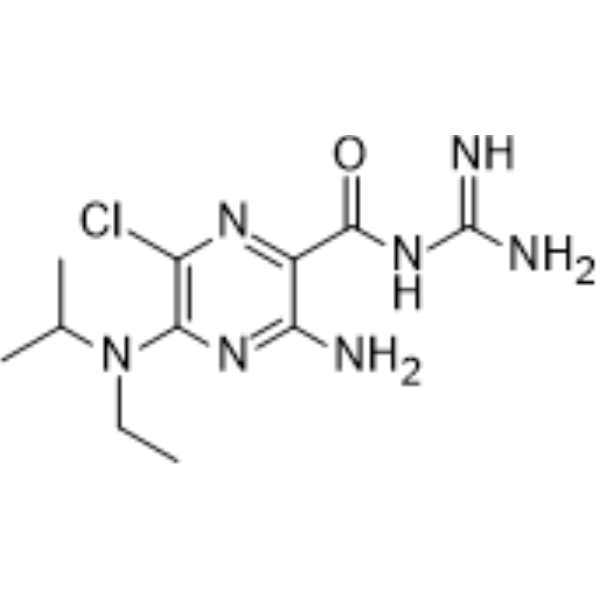
EIPATRPP3 Channel Inhibitor -
HY-113224
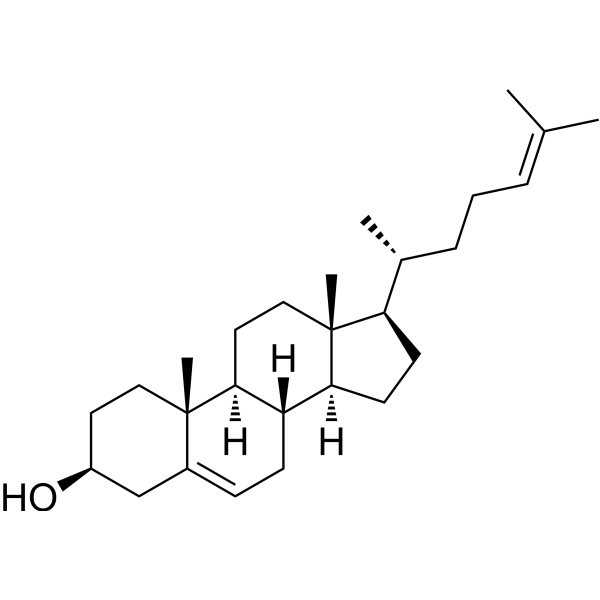
DesmosterolEndogenous Metabolite -
HY-101461
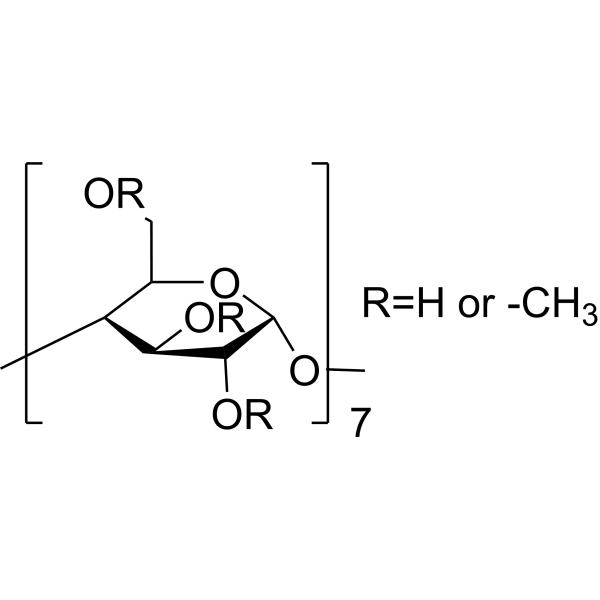
Methyl-β-cyclodextrinCholesterol-removing Agent -
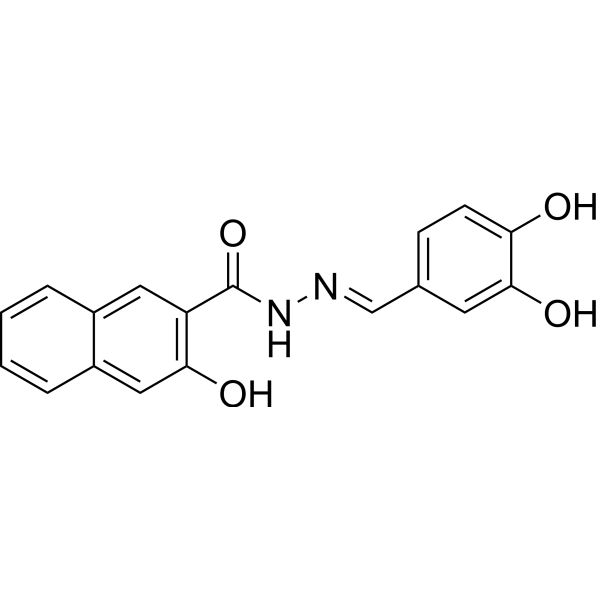
HY-15304
DynasoreAutophagy Inducer -
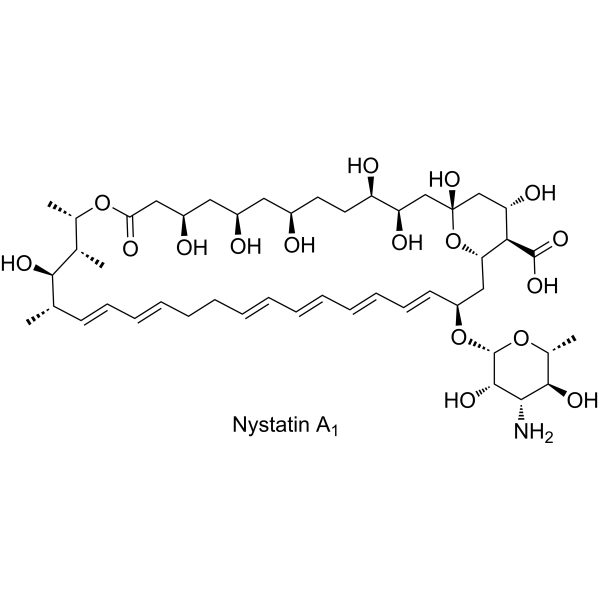
HY-17409
NystatinAntifungal Antibiotic -
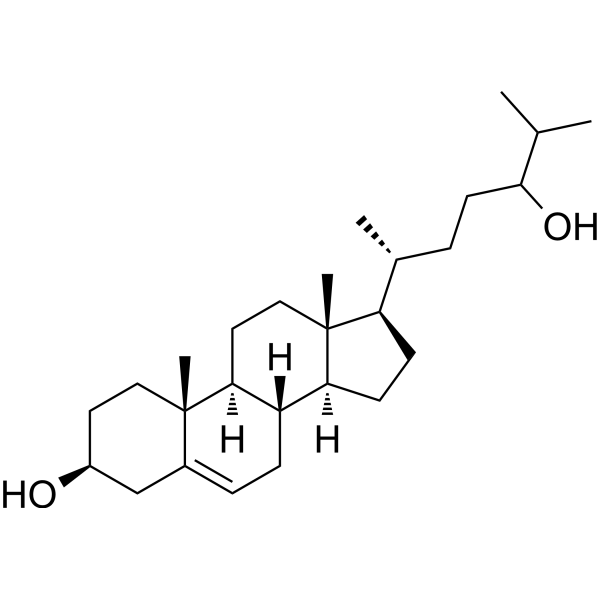
HY-N2370
24-HydroxycholesterolLXR Activator -
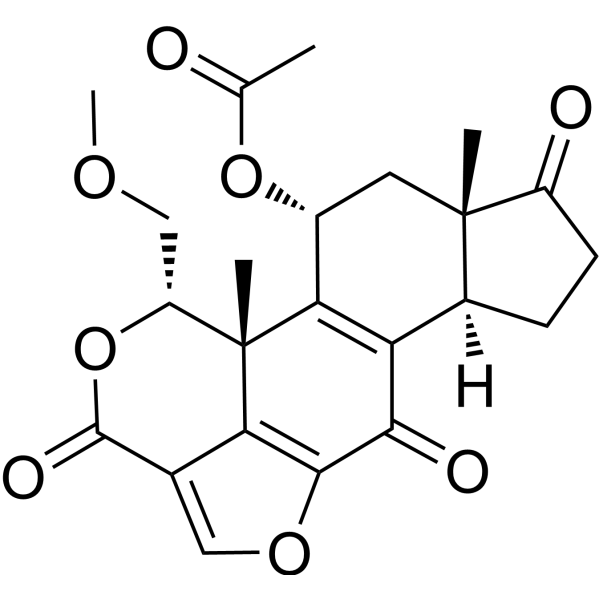
HY-10197
WortmanninPI3K Inhibitor -
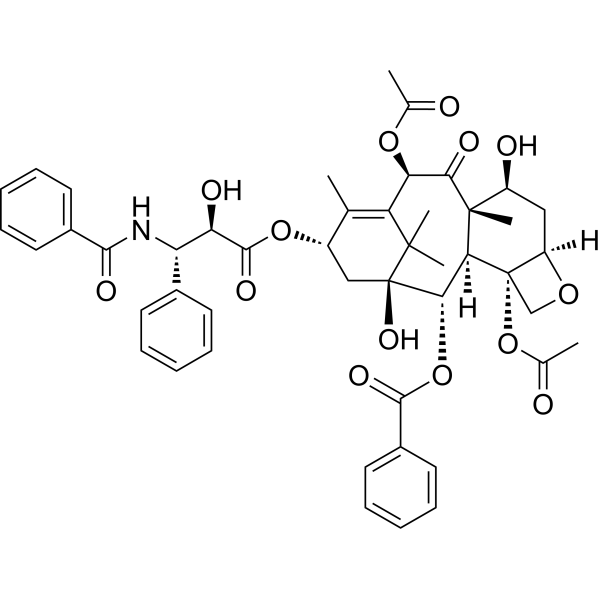
HY-B0015
PaclitaxelAntitumor Agent
Publications Citing Use of MedChemExpress (MCE) 7-Ketocholesterol
More Customer Validation & Images

-
Cell Imaging/Staining
-
Flow Cytometry

-
In Vivo Efficacy Study
All Endogenous Metabolite Isoforms
More

Biological Activity
Description
IC50 & Target
|
Human Endogenous Metabolite |
Cellular Effect
|
Cell Line

|
Type | Value | Description | References |
|---|---|---|---|---|
| ARPE-19 | IC50 |
32.3 μM
Compound: 4
|
Cytotoxicity against human ARPE19 cells assessed as cell viability after 48 hrs by alamar blue assay
Cytotoxicity against human ARPE19 cells assessed as cell viability after 48 hrs by alamar blue assay
|
[PMID: 21797280] |
| C6 | IC50 |
20 μM
Compound: 7KC
|
Growth inhibition of rat C6 cells after 24 hrs by trypan blue-based cell counting method
Growth inhibition of rat C6 cells after 24 hrs by trypan blue-based cell counting method
|
[PMID: 24211631] |
| HEK293 | EC50 |
8.7 μM
Compound: 9
|
Binding affinity to FLAG/tGFP-tagged NPC1 I1061T mutant (unknown origin) expressed in HEK293 cells assessed as localization after 24 hrs by fluorescence microscopy
Binding affinity to FLAG/tGFP-tagged NPC1 I1061T mutant (unknown origin) expressed in HEK293 cells assessed as localization after 24 hrs by fluorescence microscopy
|
[PMID: 24928400] |
| HEK293 | EC50 |
9.7 μM
Compound: 6
|
Binding affinity to human GFP-tagged NPC1L1 L1072T/L1168I mutant expressed in HEK293 cells assessed as localization to endoplasmic reticulum and plasma membrane after 24 hrs by fluorescence microscopic analysis
Binding affinity to human GFP-tagged NPC1L1 L1072T/L1168I mutant expressed in HEK293 cells assessed as localization to endoplasmic reticulum and plasma membrane after 24 hrs by fluorescence microscopic analysis
|
[PMID: 23830695] |
| HT-29 | IC50 |
25.7 μM
Compound: 4
|
Cytotoxicity against human HT-29 cells assessed as cell viability after 48 hrs by alamar blue assay
Cytotoxicity against human HT-29 cells assessed as cell viability after 48 hrs by alamar blue assay
|
[PMID: 21797280] |
| HT-29 | IC50 |
25.7 μM
Compound: 6
|
Cytotoxicity against human HT-29 cells after 48 hrs by Alamar blue assay
Cytotoxicity against human HT-29 cells after 48 hrs by Alamar blue assay
|
[PMID: 20931970] |
| Vero | IC50 |
75 μM
Compound: 1
|
Cytotoxicity against african green monkey Vero cells by tetrazolium dye reduction assay
Cytotoxicity against african green monkey Vero cells by tetrazolium dye reduction assay
|
[PMID: 24084159] |
In Vitro
7-Ketocholesterol (50 μM, 2.5-2 hours) can enhance leukocyte-endothelial cell adhesion via the p38 MAPK pathway[4]. 7-Ketocholesterol (2.5-40 μg/mL, 24 hours) induces apoptosis in a dose-dependent manner by activating caspase-3/7, -8, and -12 in human microvascular endothelial cells[5].
MedChemExpress (MCE) has not independently confirmed the accuracy of these methods. They are for reference only.
-
Cell Line:Human umbilical vein endothelial cells (HUVECs)
-
Concentration:50 μM
-
Incubation Time:0.5-2 h
-
Result:Stimulated the phosphorylation of p38 MAPK, reaching a peak within 30-120 minutes, with no significant effect on JNK. Enhanced the adhesion of THP-1 cells to HUVECs and upregulated the expression of E-selectin. Promoted the expression of E-selectin by activating the transcription factor ATF-2.
-
Cell Line:Human umbilical vein endothelial cells (HUVECs)
-
Concentration:2.5, 5, 10, 15, 20, 40 μg/mL
-
Incubation Time:24 h
-
Result:The average cell viability of HMVEC cells treated with 7-Ketocholesterol at concentrations of 40, 20, 10, 5, and 2.5 μg/ml for 24 hours was 45.33%, 72.83% (p < 0.001), 82.7% (p < 0.05), 88.47%, and 88.5% (p > 0.05), respectively, while the untreated control was 88.83%.
In Vivo
MedChemExpress (MCE) has not independently confirmed the accuracy of these methods. They are for reference only.
-
Animal Model:Brown Norway rats (150-200 g)[3]
-
Dosage:5, 10, 15, 20 mg/mL
-
Administration:Implanting biodegradable wafers containing 7-Ketocholesterol into the anterior chamber of rats' eyes, single dose
-
Result:Significantly increased angiogenesis, with a large infiltration of macrophages detected by immunohistochemistry. Promoted the growth of new blood vessels originating from the limbus and extending through the cornea, peaking between days 7 and 10 after implantation. Led to a marked increase in vascular endothelial growth factor (VEGF), IL-1b, and GRO/KC in the aqueous humor.


Chemical Information
-
CAS No. 566-28-9
-
Appearance Solid
-
Molecular Weight 400.64
-
Formula C27H44O2
-
Color Off-white to light yellow
-
SMILES
C[C@]1(CC2)[C@](CC[C@]1([H])[C@H](C)CCCC(C)C)([H])[C@@](C(C=C3C[C@H]4O)=O)([H])[C@@]2([H])[C@]3(CC4)C
-
Structure Classification
-
Initial Source
human
-
Shipping
Room temperature in continental US; may vary elsewhere.
-
Storage
-20°C, protect from light
* In solvent : -80°C, 6 months; -20°C, 1 month (protect from light)


Publications (7)
-
Journal Impact Factor
-
Most Recent
-
ACS Nano
Immune Modulatory Oxysterols Produced from Cholesterol-Containing Lipid Nanoparticles Regulate Tumor Growth. [Abstract]2026 Mar 13. PMID: 41825961 -
Biomaterials
Cardiac and skeletal muscle delivery of biotherapeutics with a blood vessel epicardial substance-targeting peptide. [Abstract]2026 Jun:329:123986. PMID: 41506143 -
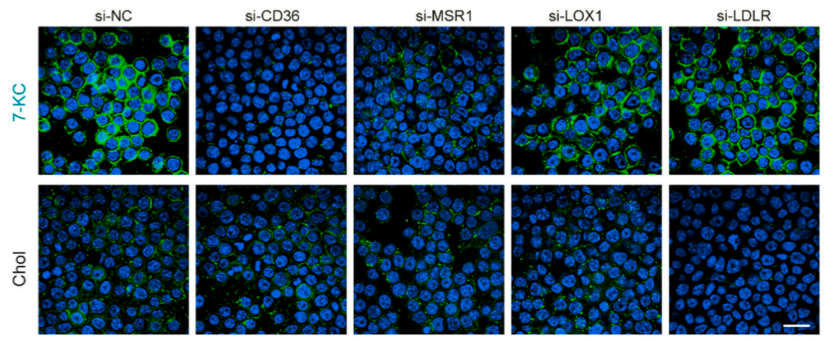
7-Ketocholesterol purchased from MedChemExpress. Usage Cited in: Nano Today. 2025 Oct.
Confocal fluorescence images and quantitative fluorescence analysis of the RAW264.7 cells incubated with fluorescently labeled 7-Ketocholesterol /Chol-doped BPSNs after siRNA knockdown of receptors (CD36, LOX-1, MSR1, and LDLR). Scale bar: 20 μm.
-
Cell Death Discov
RBM17 promotes hepatocellular carcinoma progression by regulating lipid metabolism and immune microenvironment: implications for therapeutic targeting. [Abstract]2025 Jul 23;11(1):338. PMID: 40702000
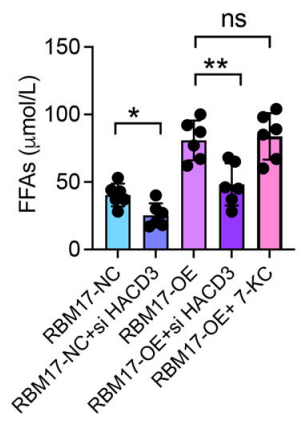
7-Ketocholesterol purchased from MedChemExpress. Usage Cited in: Cell Death Discov. 2025 Jul 23;11(1):338. [Abstract]
We also confirmed that the infiltration of M2 macrophages induced by RBM17-OE can be inhibited by T-CA inhibitors (7-Ketocholesterol, 10 μM, 24 h) in vivo experiment.
7-Ketocholesterol purchased from MedChemExpress. Usage Cited in: Cell Death Discov. 2025 Jul 23;11(1):338. [Abstract]
Comparing the effects of siHACD3 and 7-Ketocholesterol on serum FFA concentration in mice through in vivo experiments. Data was analyzed using t-tests. ns represents no significant difference.
-
Cell Chem Biol
Transient hydroxycholesterol treatment restrains TCR signaling to promote long-term immunity. [Abstract]2024 May 16;31(5):920-931.e6. PMID: 38759618 -
-


Solvent & Solubility
In Vitro:
Ethanol : 25 mg/mL (62.40 mM; Need ultrasonic)
DMSO : 6.06 mg/mL (15.13 mM; Need ultrasonic; Hygroscopic DMSO has a significant impact on the solubility of product, please use newly opened DMSO)
Please refer to the solubility information to select the appropriate solvent. Once prepared, please aliquot and store the solution to prevent product inactivation from repeated freeze-thaw cycles.
Storage method and period of stock solution: -80°C, 6 months; -20°C, 1 month (protect from light). When stored at -80°C, please use it within 6 months. When stored at -20°C, please use it within 1 month.
Please refer to the solubility information to select the appropriate solvent. Once prepared, please aliquot and store the solution to prevent product inactivation from repeated freeze-thaw cycles.
Storage method and period of stock solution: -80°C, 6 months; -20°C, 1 month (protect from light). When stored at -80°C, please use it within 6 months. When stored at -20°C, please use it within 1 month.
Concentration (start) × Volume (start) = Concentration (final) × Volume (final)
In Vivo:
Select the appropriate dissolution method based on your experimental animal and administration route.
- For the following dissolution methods, please ensure to first prepare a clear stock solution using an In Vitro approach and then sequentially add co-solvents:
- To ensure reliable experimental results, the clarified stock solution can be appropriately stored based on storage conditions. As for the working solution for In Vivo experiments, it is recommended to prepare freshly and use it on the same day.
- The percentages shown for the solvents indicate their volumetric ratio in the final prepared solution. If precipitation or phase separation occurs during preparation, heat and/or sonication can be used to aid dissolution.
Add each solvent one by one: 10% DMSO 40% PEG300 5% Tween-80 45% Saline
Solubility: ≥ 0.62 mg/mL (1.55 mM); Clear solution
This protocol yields a clear solution of ≥ 0.62 mg/mL (saturation unknown).
Taking 1 mL working solution as an example, add 100 μL DMSO stock solution (6.2 mg/mL) to 400 μL PEG300, and mix evenly; then add 50 μL Tween-80 and mix evenly; then add 450 μL Saline to adjust the volume to 1 mL.
Preparation of Saline: Dissolve 0.9 g sodium chloride in ddH₂O and dilute to 100 mL to obtain a clear Saline solution.
Add each solvent one by one: 10% DMSO 90% (20% SBE-β-CD in Saline)
Solubility: ≥ 0.61 mg/mL (1.52 mM); Clear solution
This protocol yields a clear solution of ≥ 0.61 mg/mL (saturation unknown).
Taking 1 mL working solution as an example, add 100 μL DMSO stock solution (6.1 mg/mL) to 900 μL 20% SBE-β-CD in Saline, and mix evenly.
Preparation of 20% SBE-β-CD in Saline (4°C, storage for one week): 2 g SBE-β-CD powder is dissolved in 10 mL Saline, completely dissolve until clear.
In Vivo Dissolution Calculator
Please enter the basic information of animal experiments:
-
-
-
-
Recommended: Prepare an additional quantity of animals to account for potential losses during experiments.
Please enter your animal formula composition:
-
%DMSO +
Recommended: Keep the proportion of DMSO in working solution below 2% if your animal is weak.
-
%+
-
+%Tween-80 + +
-
%Saline +
The co-solvents required include: DMSO, . All of co-solvents are available by MedChemExpress (MCE). , Tween 80. All of co-solvents are available by MedChemExpress (MCE).
Working solution concentration: 0.22 mg/mL
Method for preparing stock solution: mg drug dissolved in μL DMSO. Stock solution concentration: mg/mL. * In solvent : -80°C, 6 months; -20°C, 1 month (protect from light)
1. Take μL DMSO stock solution;
2. Add μL .
μL , mix evenly;
3. Then add μL Tween 80, mix evenly;
4. Then add μL
Please ensure that the stock solution in the first step is dissolved to a clear state, and add co-solvents in sequence. You can use ultrasonic heating (ultrasonic cleaner, recommended frequency 20-40 kHz), vortexing, etc. to assist dissolution.


Purity & Documentation
-
Data Sheet (288 KB)
-
SDS (393 KB)
- English - EN (393 KB)
- Français - FR (393 KB)
- Deutsch - DE (393 KB)
- Norwegian - NO (393 KB)
- Español - ES (393 KB)
- Swedish - SV (393 KB)
- Italian - IT (393 KB)
- Korean - KR (393 KB)
- Portuguese - PT (393 KB)
-
Handling Instructions (2659 KB)
References
[1]. M A Lyons, et al. 7-Ketocholesterol. Int J Biochem Cell Biol. Mar-Apr 1999;31(3-4):369-75. [Content Brief]
[2]. Amelia Anderson, et al. 7-Ketocholesterol in disease and aging. Redox Biol. 2020 Jan;29:101380. [Content Brief]
[3]. Amaral J, et al. 7-Ketocholesterol induces inflammation and angiogenesis in vivo: a novel rat model. PLoS One. 2013;8(2):e56099. [Content Brief]
[4]. Tani M, et al. 7-Ketocholesterol enhances leukocyte adhesion to endothelial cells via p38MAPK pathway. PLoS One. 2018 Jul 31;13(7):e0200499. [Content Brief]
[5]. Luthra S, et al. 7-Ketocholesterol activates caspases-3/7,-8, and-12 in human microvascular endothelial cells in vitro[J]. Microvascular research, 2008, 75(3): 343-350. [Content Brief]


Complete Stock Solution Preparation Table
Please refer to the solubility information to select the appropriate solvent. Once prepared, please aliquot and store the solution to prevent product inactivation from repeated freeze-thaw cycles.
Storage method and period of stock solution: -80°C, 6 months; -20°C, 1 month (protect from light). When stored at -80°C, please use it within 6 months. When stored at -20°C, please use it within 1 month.
| Optional Solvent | Concentration Solvent Mass | 1 mg | 5 mg | 10 mg | 25 mg |
|---|---|---|---|---|---|
| DMSO / Ethanol | 1 mM | 2.4960 mL | 12.4800 mL | 24.9601 mL | 62.4002 mL |
| 5 mM | 0.4992 mL | 2.4960 mL | 4.9920 mL | 12.4800 mL | |
| 10 mM | 0.2496 mL | 1.2480 mL | 2.4960 mL | 6.2400 mL | |
| 15 mM | 0.1664 mL | 0.8320 mL | 1.6640 mL | 4.1600 mL | |
| Ethanol | 20 mM | 0.1248 mL | 0.6240 mL | 1.2480 mL | 3.1200 mL |
| 25 mM | 0.0998 mL | 0.4992 mL | 0.9984 mL | 2.4960 mL | |
| 30 mM | 0.0832 mL | 0.4160 mL | 0.8320 mL | 2.0800 mL | |
| 40 mM | 0.0624 mL | 0.3120 mL | 0.6240 mL | 1.5600 mL | |
| 50 mM | 0.0499 mL | 0.2496 mL | 0.4992 mL | 1.2480 mL | |
| 60 mM | 0.0416 mL | 0.2080 mL | 0.4160 mL | 1.0400 mL |


7-Ketocholesterol Related Classifications
HY-113342 Related Classifications
 Powered by Bioz