



CEP-33779
Based on 6 publication(s) in Google Scholar
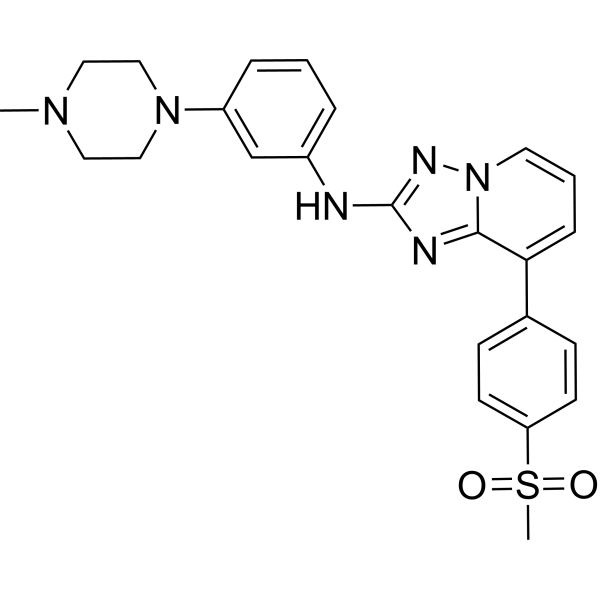
CEP-33779 is a novel, selective, and orally bioavailable inhibitor of JAK2 with an IC50 of 1.8±0.6 nM.
For research use only. We do not sell to patients.
- Purity : 99.12%
- CAS No.: 1257704-57-6
- Formula: C24H26N6O2S
- Molecular Weight:462.57
-
Storage:Powder -20°C, 3 years , 4°C, 2 years ; In solvent -80°C, 2 years , -20°C, 1 year

To place orders, for customer services and technical support, please contact: MedChemExpress USA
Tel: 609-228-6898 E-mail: [email protected] [email protected]


-
 Biological Activity
-
Chemical Information
-
Solvent & Solubility
- Purity & Documentation
- References
-
 Help & FAQs


-
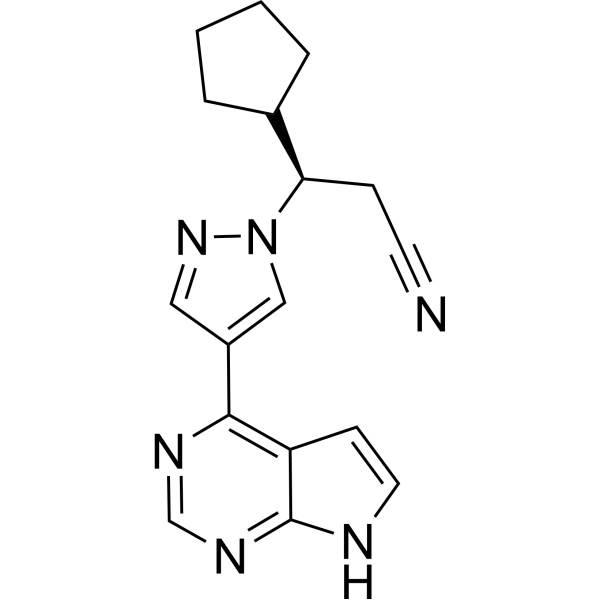
HY-50856
RuxolitinibJAK1/2 Inhibitor -
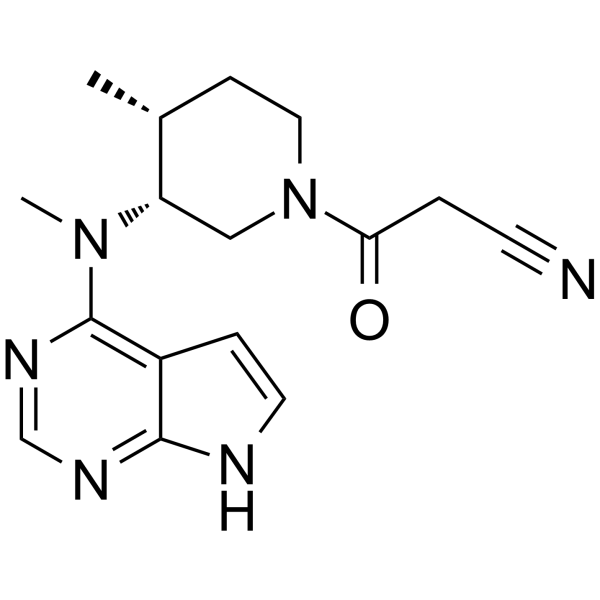
HY-40354
TofacitinibJAK1/JAK3 Inhibitor -
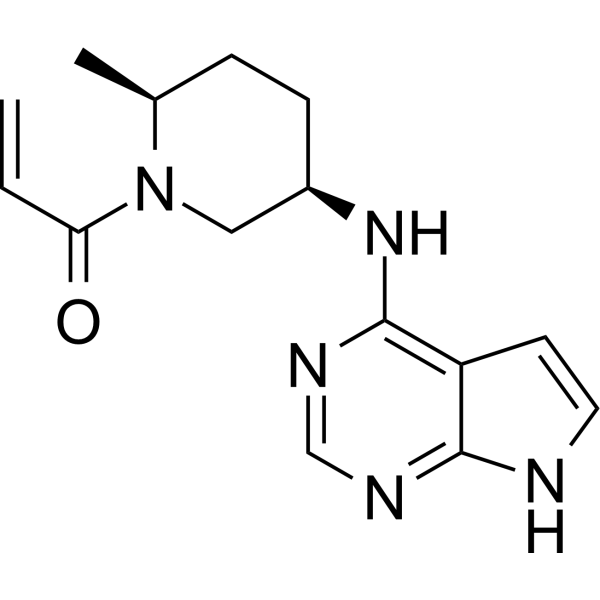
HY-100754
RitlecitinibJAK3 Inhibitor -
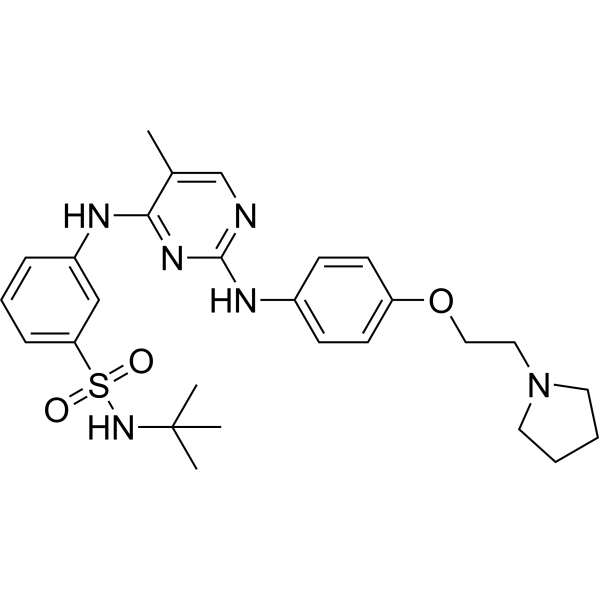
HY-10409
FedratinibJAK2 Inhibitor -
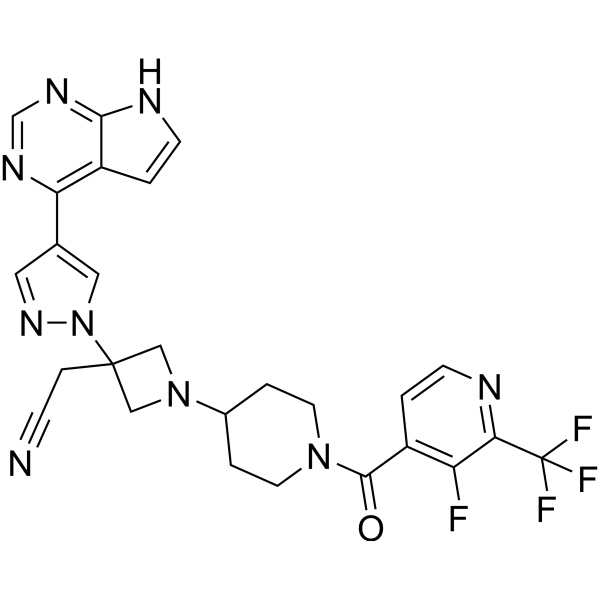
HY-16997
ItacitinibJAK1 Inhibitor -
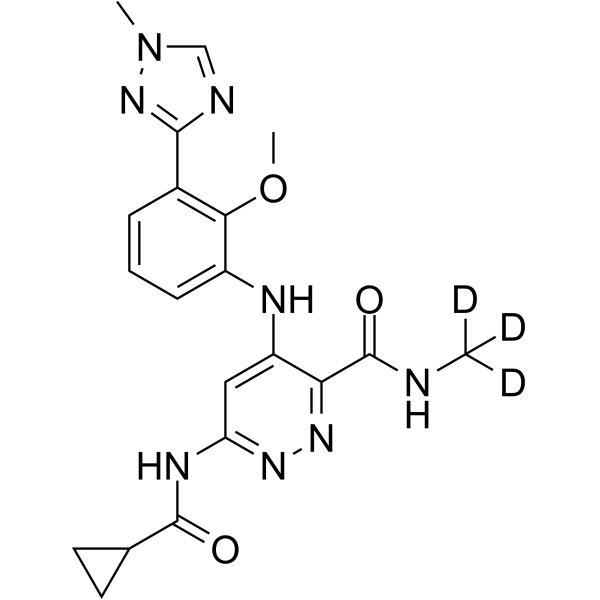
HY-117287
DeucravacitinibTYK2 Inhibitor -
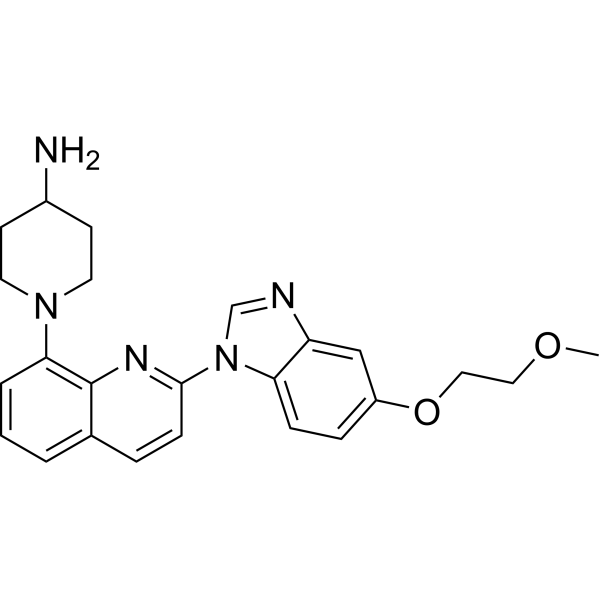
HY-12050
CP-673451PDGFR Inhibitor -
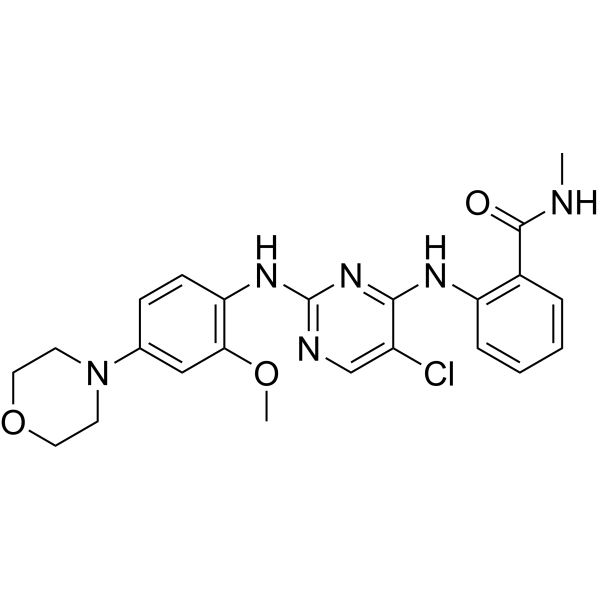
HY-13203
NVP-TAE 226Apoptosis Inducer -
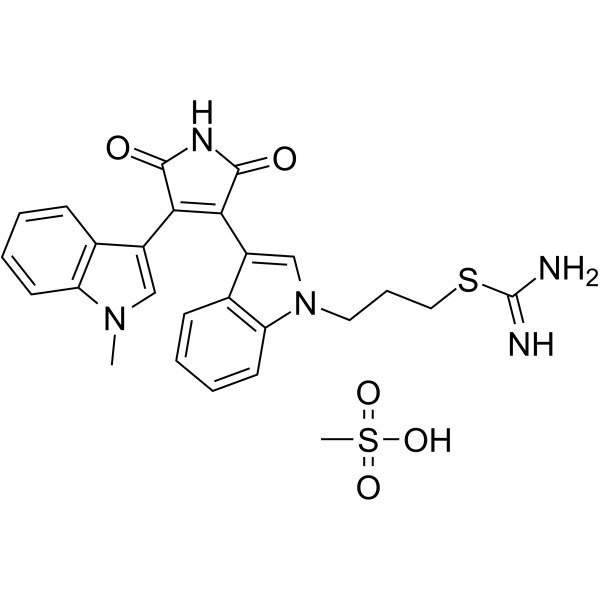
HY-13866
Ro 31-8220 mesylatePCK Inhibitor -
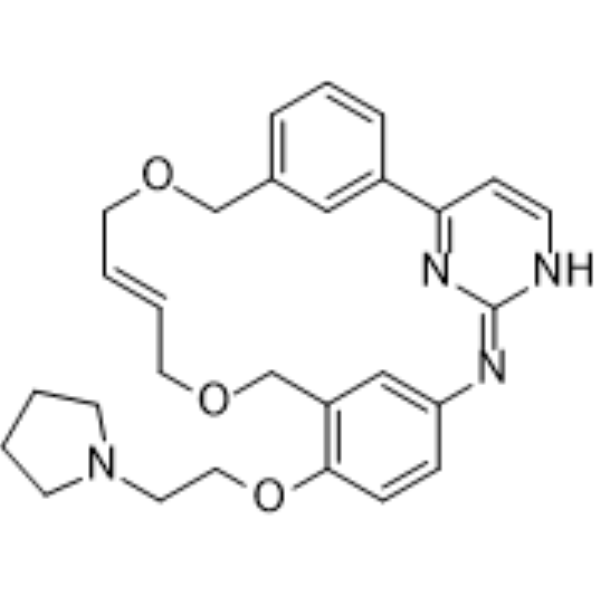
HY-16379
PacritinibJAK2/FLT3 Inhibitor -
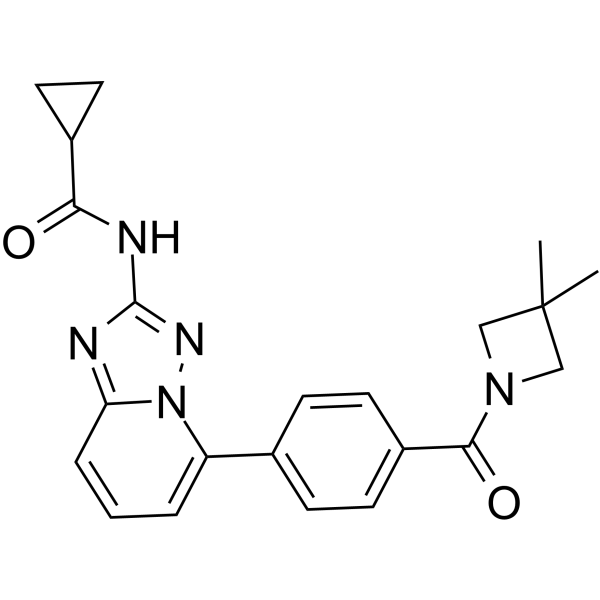
HY-16755
SolcitinibJAK1 Inhibitor -
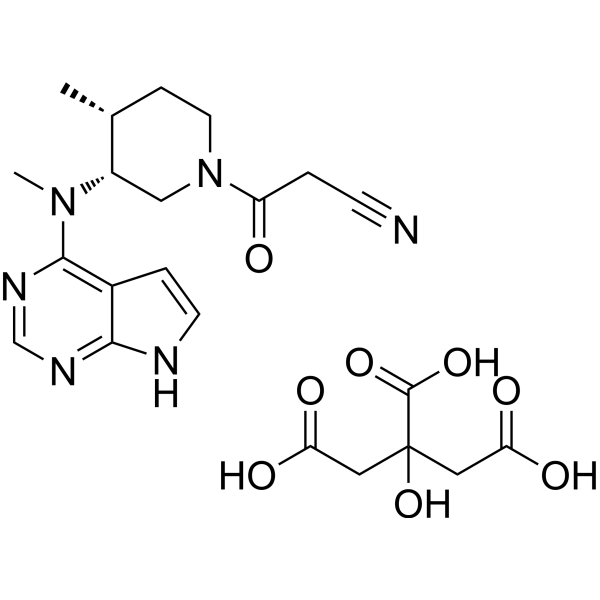
HY-40354A
Tofacitinib citrateJAK1/JAK3 Inhibitor
Publications Citing Use of MedChemExpress (MCE) CEP-33779
More

Biological Activity
Description
IC50 & Target
[1]|
JAK2 1.8 nM (IC50) |
JAK3 150 nM (IC50) |
Cellular Effect
|
Cell Line

|
Type | Value | Description | References |
|---|---|---|---|---|
| A2780 | IC50 |
0.289 μM
Compound: 4
|
Antiproliferative activity against human A2780 cells assessed as cell growth inhibition incubated for 48 hrs by MTT assay
Antiproliferative activity against human A2780 cells assessed as cell growth inhibition incubated for 48 hrs by MTT assay
|
[PMID: 37856840] |
| A2780/Taxol | IC50 |
0.394 μM
Compound: 4
|
Antiproliferative activity against human A2780T cells assessed as cell growth inhibition incubated for 48 hrs by MTT assay
Antiproliferative activity against human A2780T cells assessed as cell growth inhibition incubated for 48 hrs by MTT assay
|
[PMID: 37856840] |
| A549 | IC50 |
0.358 μM
Compound: 4
|
Antiproliferative activity against human A549 cells assessed as cell growth inhibition incubated for 48 hrs by MTT assay
Antiproliferative activity against human A549 cells assessed as cell growth inhibition incubated for 48 hrs by MTT assay
|
[PMID: 37856840] |
| ARPE-19 | IC50 |
4930.5 nM
Compound: 4
|
Cytotoxicity against human ARPE-19 cells assessed as cell growth inhibition incubated for 48 hrs by MTT assay
Cytotoxicity against human ARPE-19 cells assessed as cell growth inhibition incubated for 48 hrs by MTT assay
|
[PMID: 37856840] |
| BXPC-3 | IC50 |
0.73 μM
Compound: 4
|
Antiproliferative activity against human BXPC-3 cells assessed as cell growth inhibition incubated for 48 hrs by MTT assay
Antiproliferative activity against human BXPC-3 cells assessed as cell growth inhibition incubated for 48 hrs by MTT assay
|
[PMID: 37856840] |
| CHO | IC50 |
0.172 μM
Compound: 4
|
Antiproliferative activity against Chinese hamster CHO cells assessed as cell growth inhibition incubated for 48 hrs by MTT assay
Antiproliferative activity against Chinese hamster CHO cells assessed as cell growth inhibition incubated for 48 hrs by MTT assay
|
[PMID: 37856840] |
| CHO-K1 | IC50 |
0.216 μM
Compound: 4
|
Antiproliferative activity against Chinese hamster CHO-K1 cells assessed as cell growth inhibition incubated for 48 hrs by MTT assay
Antiproliferative activity against Chinese hamster CHO-K1 cells assessed as cell growth inhibition incubated for 48 hrs by MTT assay
|
[PMID: 37856840] |
| COLO 205 | IC50 |
1548 nM
Compound: 4
|
Cytotoxicity against human COLO 205 cells assessed as cell growth inhibition incubated for 48 hrs by MTT assay
Cytotoxicity against human COLO 205 cells assessed as cell growth inhibition incubated for 48 hrs by MTT assay
|
[PMID: 37856840] |
| CWR22R | IC50 |
5786.5 nM
Compound: 4
|
Cytotoxicity against human 22Rv1 cells assessed as cell growth inhibition incubated for 48 hrs by MTT assay
Cytotoxicity against human 22Rv1 cells assessed as cell growth inhibition incubated for 48 hrs by MTT assay
|
[PMID: 37856840] |
| HaCaT | IC50 |
2825.5 nM
Compound: 4
|
Cytotoxicity against human HaCaT cells assessed as cell growth inhibition incubated for 48 hrs by MTT assay
Cytotoxicity against human HaCaT cells assessed as cell growth inhibition incubated for 48 hrs by MTT assay
|
[PMID: 37856840] |
| HCT-8 | IC50 |
1.136 μM
Compound: 4
|
Antiproliferative activity against human HCT-8 cells assessed as cell growth inhibition incubated for 48 hrs by MTT assay
Antiproliferative activity against human HCT-8 cells assessed as cell growth inhibition incubated for 48 hrs by MTT assay
|
[PMID: 37856840] |
| HeLa | IC50 |
1.26 μM
Compound: 4
|
Antiproliferative activity against human HeLa cells assessed as cell growth inhibition incubated for 48 hrs by MTT assay
Antiproliferative activity against human HeLa cells assessed as cell growth inhibition incubated for 48 hrs by MTT assay
|
[PMID: 37856840] |
| HepG2 | IC50 |
2042 nM
Compound: 4
|
Cytotoxicity against human HepG2 cells assessed as cell growth inhibition incubated for 48 hrs by MTT assay
Cytotoxicity against human HepG2 cells assessed as cell growth inhibition incubated for 48 hrs by MTT assay
|
[PMID: 37856840] |
| HT-29 | IC50 |
0.961 μM
Compound: 4
|
Antiproliferative activity against human HT-29 cells assessed as cell growth inhibition incubated for 48 hrs by MTT assay
Antiproliferative activity against human HT-29 cells assessed as cell growth inhibition incubated for 48 hrs by MTT assay
|
[PMID: 37856840] |
| KP-4 | IC50 |
0.372 μM
Compound: 4
|
Antiproliferative activity against human KP-4 cells assessed as cell growth inhibition incubated for 48 hrs by MTT assay
Antiproliferative activity against human KP-4 cells assessed as cell growth inhibition incubated for 48 hrs by MTT assay
|
[PMID: 37856840] |
| L02 | IC50 |
388.5 nM
Compound: 4
|
Cytotoxicity against human L02 cells assessed as cell growth inhibition incubated for 48 hrs by MTT assay
Cytotoxicity against human L02 cells assessed as cell growth inhibition incubated for 48 hrs by MTT assay
|
[PMID: 37856840] |
| MCF7 | IC50 |
1.23 μM
Compound: 4
|
Antiproliferative activity against human MCF7 cells assessed as cell growth inhibition incubated for 48 hrs by MTT assay
Antiproliferative activity against human MCF7 cells assessed as cell growth inhibition incubated for 48 hrs by MTT assay
|
[PMID: 37856840] |
| NCI/ADR-RES | IC50 |
3.532 μM
Compound: 4
|
Antiproliferative activity against human MCF7ADR cells assessed as cell growth inhibition incubated for 48 hrs by MTT assay
Antiproliferative activity against human MCF7ADR cells assessed as cell growth inhibition incubated for 48 hrs by MTT assay
|
[PMID: 37856840] |
| PC-3 | IC50 |
15.11 μM
Compound: 4
|
Antiproliferative activity against human PC-3 cells assessed as cell growth inhibition incubated for 48 hrs by MTT assay
Antiproliferative activity against human PC-3 cells assessed as cell growth inhibition incubated for 48 hrs by MTT assay
|
[PMID: 37856840] |
| TF-1 | IC50 |
61 nM
Compound: 29, CEP-33779
|
Inhibition of JAK2 in human TF-1 cells using GM-CSF pretreated for 1 hr prior to GM-CSF addition measured after 5 hrs by FRET based GeneBLAzer assay
Inhibition of JAK2 in human TF-1 cells using GM-CSF pretreated for 1 hr prior to GM-CSF addition measured after 5 hrs by FRET based GeneBLAzer assay
|
[PMID: 22594690] |
In Vitro
CEP-33779, at nontoxic concentrations, significantly sensitizes overexpression of P-glycoprotein overexpressing multidrug resistance cells to its anticancer substrates. CEP-33779 significantly increases intracellular accumulation and decreases the efflux of doxorubicin by inhibiting the overexpression of P-glycoprotein transport function[3].
MedChemExpress (MCE) has not independently confirmed the accuracy of these methods. They are for reference only.
In Vivo
MedChemExpress (MCE) has not independently confirmed the accuracy of these methods. They are for reference only.


Chemical Information
-
CAS No. 1257704-57-6
-
Appearance Solid
-
Molecular Weight 462.57
-
Formula C24H26N6O2S
-
Color Light yellow to yellow
-
SMILES
O=S(C1=CC=C(C2=CC=CN3C2=NC(NC4=CC=CC(N5CCN(C)CC5)=C4)=N3)C=C1)(C)=O
-
Shipping
Room temperature in continental US; may vary elsewhere.
-
Storage
Powder -20°C 3 years 4°C 2 years In solvent -80°C 2 years -20°C 1 year


Publications (6)
-
Journal Impact Factor
-
Most Recent
-
Mol Cell
Cyclin E-CDK2 regulates cancer cell transcriptional program and response to immunotherapy through BRD4. [Abstract]2026 Sep 2:S1097-2765(26)00554-X. PMID: 42685699 -
Cell Rep
Macrophage glycine transporter supports IL-1β production by modulating the AKT1/mTOR/NLRP3 pathway. [Abstract]2026 Jan 3;45(1):116683. PMID: 41485223 -
Sci Rep
A phenotypic high-content, high-throughput screen identifies inhibitors of NLRP3 inflammasome activation. [Abstract]2021 Jul 28;11(1):15319. PMID: 34321581 -
Iran J Immunol
2024 Sep 25;21(3). PMID: 39319693 -
-


Solvent & Solubility
In Vitro:
DMSO : 8.33 mg/mL (18.01 mM; ultrasonic and warming and heat to 60°C; Hygroscopic DMSO has a significant impact on the solubility of product, please use newly opened DMSO)
Please refer to the solubility information to select the appropriate solvent. Once prepared, please aliquot and store the solution to prevent product inactivation from repeated freeze-thaw cycles.
Storage method and period of stock solution: -80°C, 2 years; -20°C, 1 year. When stored at -80°C, please use it within 2 years. When stored at -20°C, please use it within 1 year.
Please refer to the solubility information to select the appropriate solvent. Once prepared, please aliquot and store the solution to prevent product inactivation from repeated freeze-thaw cycles.
Storage method and period of stock solution: -80°C, 2 years; -20°C, 1 year. When stored at -80°C, please use it within 2 years. When stored at -20°C, please use it within 1 year.
Concentration (start) × Volume (start) = Concentration (final) × Volume (final)
In Vivo:
Select the appropriate dissolution method based on your experimental animal and administration route.
- For the following dissolution methods, please ensure to first prepare a clear stock solution using an In Vitro approach and then sequentially add co-solvents:
- To ensure reliable experimental results, the clarified stock solution can be appropriately stored based on storage conditions. As for the working solution for In Vivo experiments, it is recommended to prepare freshly and use it on the same day.
- The percentages shown for the solvents indicate their volumetric ratio in the final prepared solution. If precipitation or phase separation occurs during preparation, heat and/or sonication can be used to aid dissolution.
Add each solvent one by one: 10% DMSO 40% PEG300 5% Tween-80 45% Saline
Solubility: ≥ 2.5 mg/mL (5.40 mM); Clear solution
This protocol yields a clear solution of ≥ 2.5 mg/mL (saturation unknown).
Taking 1 mL working solution as an example, add 100 μL DMSO stock solution (25.0 mg/mL) to 400 μL PEG300, and mix evenly; then add 50 μL Tween-80 and mix evenly; then add 450 μL Saline to adjust the volume to 1 mL.
Preparation of Saline: Dissolve 0.9 g sodium chloride in ddH₂O and dilute to 100 mL to obtain a clear Saline solution.
Add each solvent one by one: 10% DMSO 90% (20% SBE-β-CD in Saline)
Solubility: ≥ 2.5 mg/mL (5.40 mM); Clear solution
This protocol yields a clear solution of ≥ 2.5 mg/mL (saturation unknown).
Taking 1 mL working solution as an example, add 100 μL DMSO stock solution (25.0 mg/mL) to 900 μL 20% SBE-β-CD in Saline, and mix evenly.
Preparation of 20% SBE-β-CD in Saline (4°C, storage for one week): 2 g SBE-β-CD powder is dissolved in 10 mL Saline, completely dissolve until clear.
For the following dissolution methods, please prepare the working solution directly:
It is recommended to prepare fresh solutions and use them promptly within a short period of time.
The percentages shown for the solvents indicate their volumetric ratio in the final prepared solution. If precipitation or phase separation occurs during preparation, heat and/or sonication can be used to aid dissolution.
Add each solvent one by one: 50% PEG300 50% Saline
Solubility: 10 mg/mL (21.62 mM); Suspended solution; Need ultrasonic
In Vivo Dissolution Calculator
Please enter the basic information of animal experiments:
-
-
-
-
Recommended: Prepare an additional quantity of animals to account for potential losses during experiments.
Please enter your animal formula composition:
-
%DMSO +
Recommended: Keep the proportion of DMSO in working solution below 2% if your animal is weak.
-
%+
-
+%Tween-80 + +
-
%Saline +
The co-solvents required include: DMSO, . All of co-solvents are available by MedChemExpress (MCE). , Tween 80. All of co-solvents are available by MedChemExpress (MCE).
Working solution concentration: 0.22 mg/mL
Method for preparing stock solution: mg drug dissolved in μL DMSO. Stock solution concentration: mg/mL.
1. Take μL DMSO stock solution;
2. Add μL .
μL , mix evenly;
3. Then add μL Tween 80, mix evenly;
4. Then add μL
Please ensure that the stock solution in the first step is dissolved to a clear state, and add co-solvents in sequence. You can use ultrasonic heating (ultrasonic cleaner, recommended frequency 20-40 kHz), vortexing, etc. to assist dissolution.


Purity & Documentation
-
Data Sheet (281 KB)
-
SDS (396 KB)
- English - EN (396 KB)
- Français - FR (396 KB)
- Deutsch - DE (396 KB)
- Norwegian - NO (396 KB)
- Español - ES (396 KB)
- Swedish - SV (396 KB)
- Italian - IT (396 KB)
- Korean - KR (396 KB)
- Portuguese - PT (396 KB)
-
Handling Instructions (2659 KB)
References
[1]. Dugan BJ, et al. A selective, orally bioavailable 1,2,4-triazolo[1,5-a]pyridine-based inhibitor of Janus kinase 2 for use in anticancer therapy: discovery of CEP-33779. J Med Chem. 2012 Jun 14;55(11):5243-54. [Content Brief]
[2]. Seavey MM, et al. Therapeutic efficacy of CEP-33779, a novel selective JAK2 inhibitor, in a mouse model of colitis-induced colorectal cancer. Mol Cancer Ther. 2012 Apr;11(4):984-93. [Content Brief]
[3]. Tang SJ, et al. CEP-33779 antagonizes ATP-binding cassette subfamily B member 1 mediated multidrug resistance by inhibiting its transport function. Biochem Pharmacol. 2014 Sep 15;91(2):144-56. [Content Brief]


Complete Stock Solution Preparation Table
Please refer to the solubility information to select the appropriate solvent. Once prepared, please aliquot and store the solution to prevent product inactivation from repeated freeze-thaw cycles.
Storage method and period of stock solution: -80°C, 2 years; -20°C, 1 year. When stored at -80°C, please use it within 2 years. When stored at -20°C, please use it within 1 year.
| Optional Solvent | Concentration Solvent Mass | 1 mg | 5 mg | 10 mg | 25 mg |
|---|---|---|---|---|---|
| DMSO | 1 mM | 2.1618 mL | 10.8092 mL | 21.6183 mL | 54.0459 mL |
| 5 mM | 0.4324 mL | 2.1618 mL | 4.3237 mL | 10.8092 mL | |
| 10 mM | 0.2162 mL | 1.0809 mL | 2.1618 mL | 5.4046 mL | |
| 15 mM | 0.1441 mL | 0.7206 mL | 1.4412 mL | 3.6031 mL |


CEP-33779 Related Classifications
HY-15343 Related Classifications
 Powered by Bioz