



LDC1267
Based on 10 publication(s) in Google Scholar
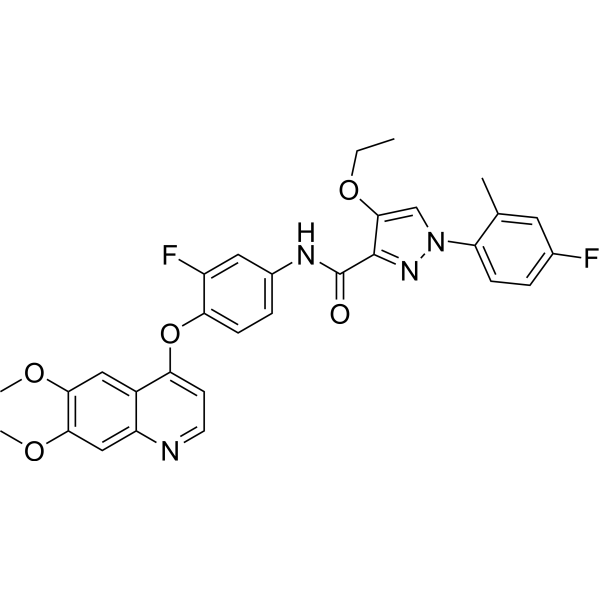
LDC1267 is a AXL/TAM/FLT3 inhibitor with IC50 values of 42 nM, 130 nM, and 63 nM against AXL, MERTK, and TYRO3, respectively. LDC1267 blocks GAS6-induced AXL phosphorylation and the downstream AKT/ERK1/2 signaling pathway. LDC1267 inhibits cancer cell proliferation, colony formation, and glioblastoma cell invasion, without causing obvious impairment of cytotoxic autophagic flux. LDC1267 exerts a synergistic effect when used in combination with Imatinib (HY-15463) in chronic myeloid leukemia models. LDC1267 can be widely applied in studies related to glioblastoma and chronic myeloid leukemia.
Nos produits utilisent uniquement pour la recherche. Nous ne vendons pas aux patients.
- Pureté : 99.64%
- CAS No.: 1361030-48-9
- Formule: C30H26F2N4O5
- Masse moléculaire:560.55
-
Stockage:Powder -20°C, 3 years , 4°C, 2 years ; In solvent -80°C, 2 years , -20°C, 1 year

To place orders, for customer services and technical support, please contact: MedChemExpress USA
Tel: 609-228-6898 E-mail: [email protected] [email protected]


-
 Activité biologique
-
Chemical Information
-
Solvant et solubilité
- Protocole
- Pureté et documentation
- Références
-
 Help & FAQs


-
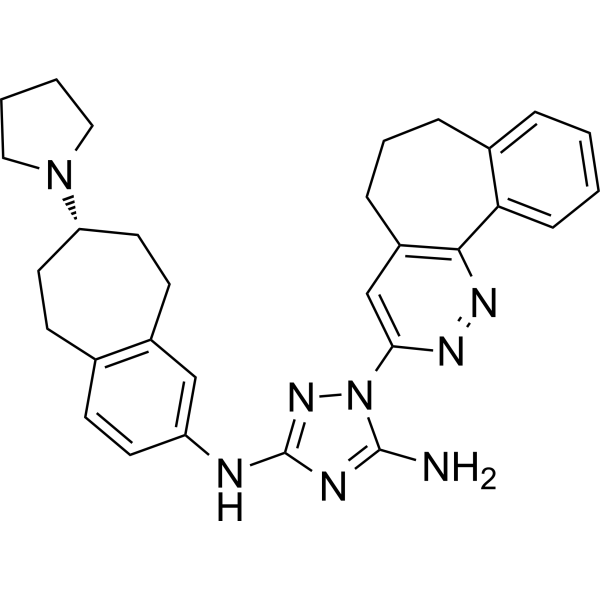
HY-15150
BemcentinibAXL Inhibitor -
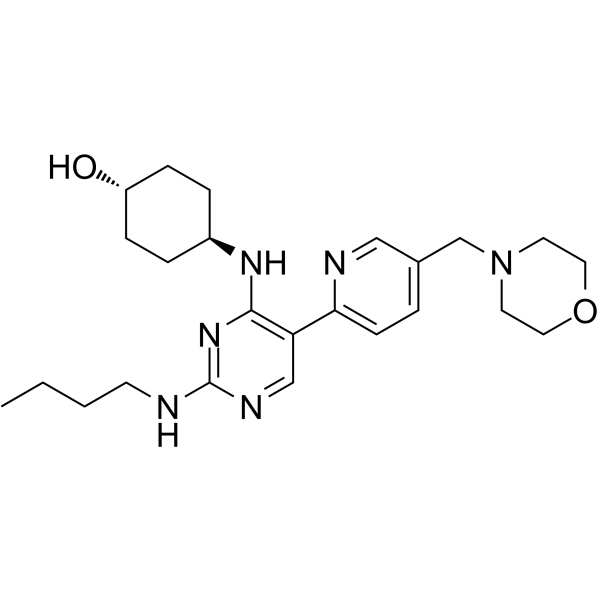
HY-15797
UNC2250Mer Inhibitor -
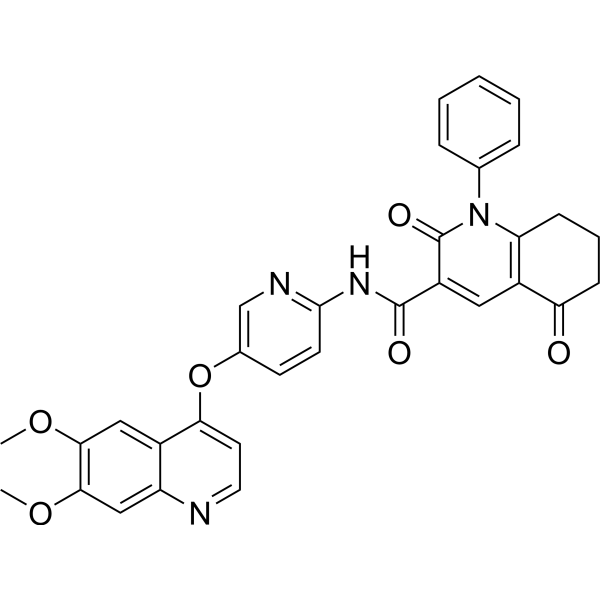
HY-114358
TamnorzatinibAxl/Mer Inhibitor -
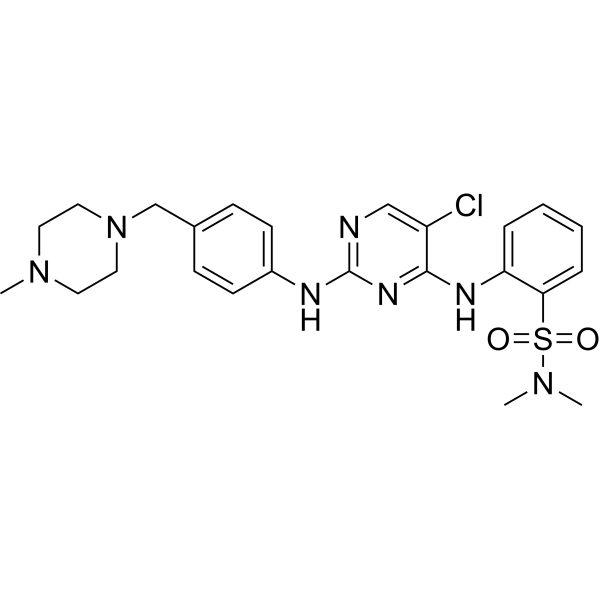
HY-12963
DubermatinibAxl Inhibitor -
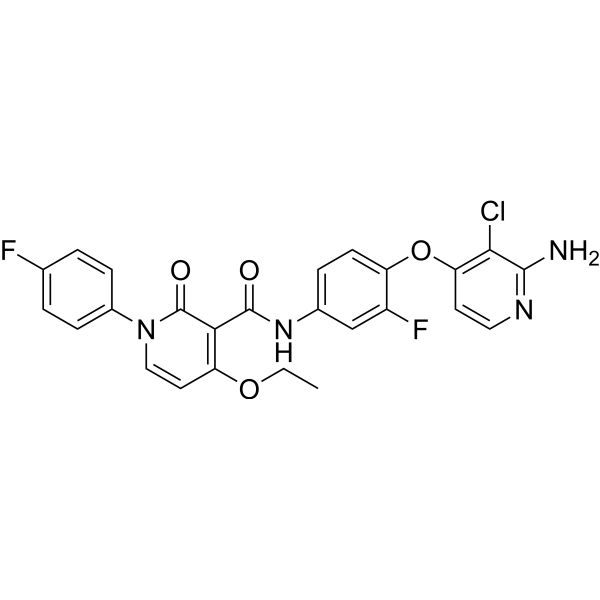
HY-12076
BMS 777607c-Met/Axl Inhibitor -
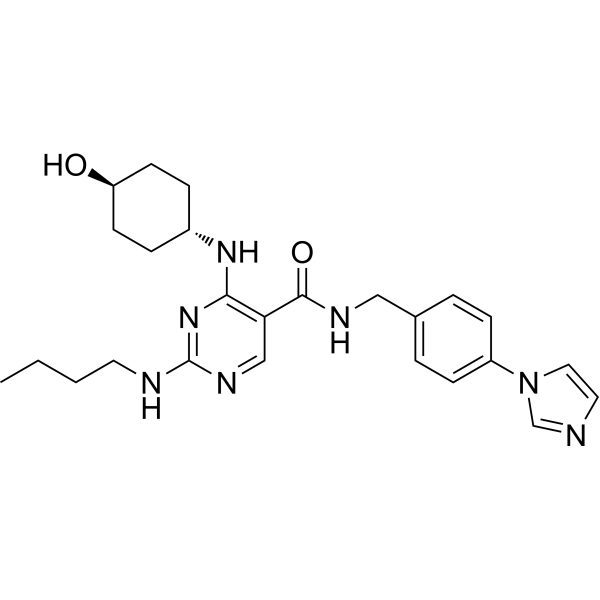
HY-15798
UNC2881Mer Kinase Inhibitor -
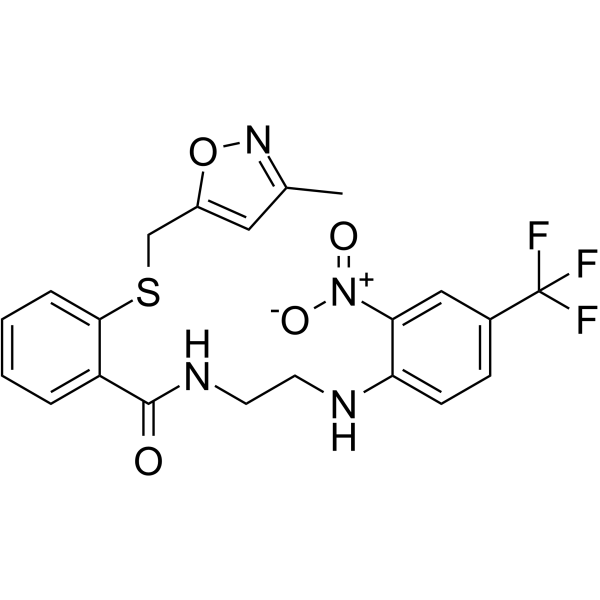
HY-119039
RU-301TAM Inhibitor -
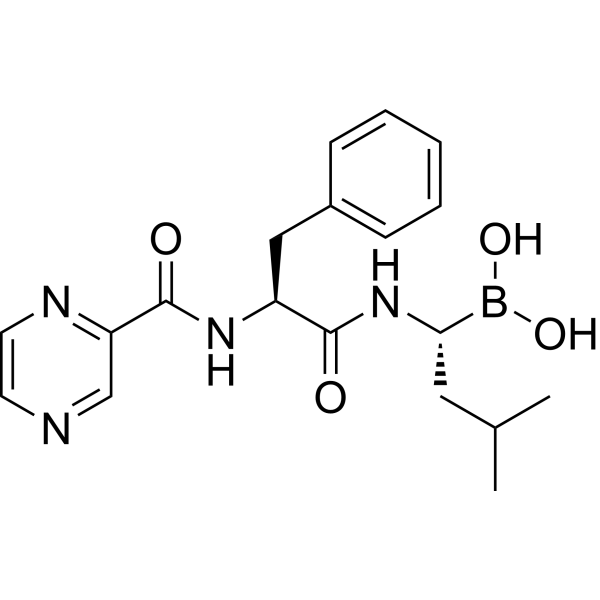
HY-10227
BortezomibProteasome Inhibitor -

HY-15150R
Bemcentinib (Standard)AXL Inhibitor -
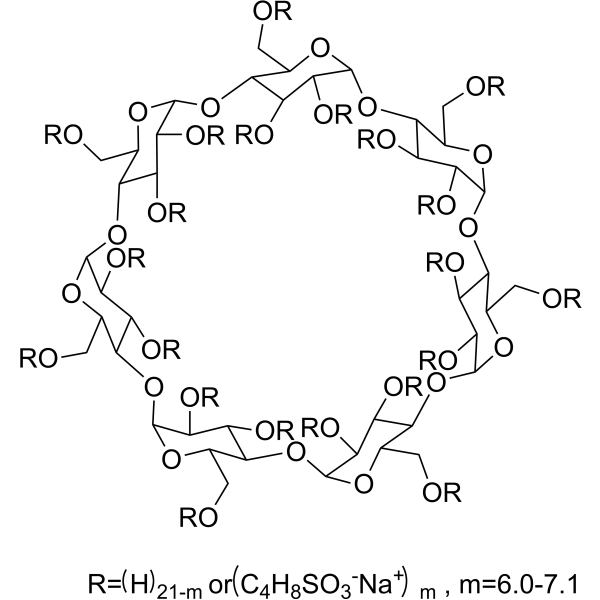
HY-17031
SBE-β-CDExcipient -
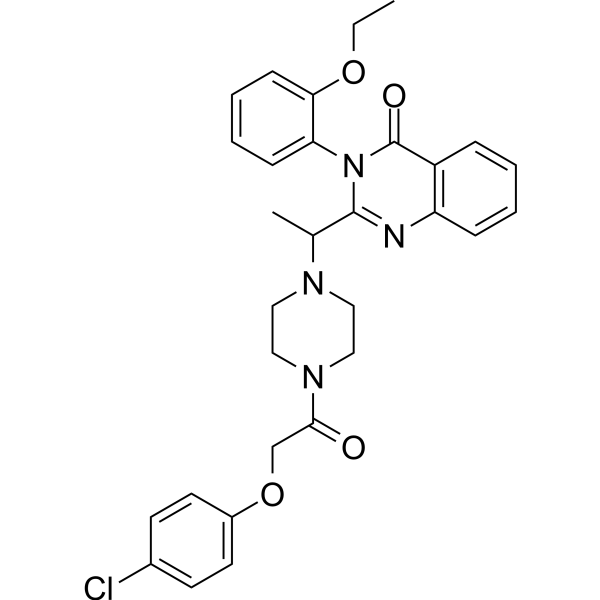
HY-15763
ErastinFerroptosis Inducer -
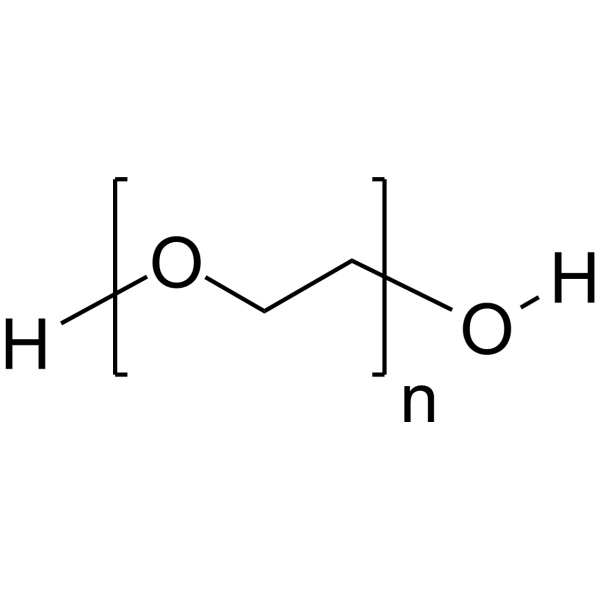
HY-Y0873
PEG300Neutral Polymer
Publications Citing Use of MedChemExpress (MCE) LDC1267
More- Cancer Cell. 2025 Feb 10;43(2):269-291.e19. [Abstract]
- Theranostics. 2018 Jul 30;8(15):4262-4278. [Abstract]
- Cell Commun Signal. 2025 Jan 22;23(1):39. [Abstract]
- Cell Mol Life Sci. 2022 May 27;79(6):316. [Abstract]
- J Mol Med (Berl). 2025 Sep;103(9):1043-1053. [Abstract]
- Biology (Basel). 2022 Jul 14;11(7):1059. [Abstract]
- FEBS J. 2022 May;289(10):2809-2827. [Abstract]
- Nencki Institute of Experimental Biology. 2022 Oct.
- Universität Würzburg . 2022 Feb.
- bioRxiv. 2020 Mar.
 Customer Validation & Images

-
WB
-
WB


Activité biologique
Description
IC50 & Target
[1]|
Axl 42 nM (IC50) |
MERTK 130 nM (IC50) |
Tyro3 63 nM (IC50) |
Cellular Effect
|
Cell Line

|
Type | Value | Description | References |
|---|---|---|---|---|
| Hs-578T | IC50 |
19 nM
Compound: 7; LDC1267
|
Inhibition of AXL in human Hs578t cells by homogeneous time-resolved fluorescence assay
Inhibition of AXL in human Hs578t cells by homogeneous time-resolved fluorescence assay
|
[PMID: 26555154] |
In Vitro
LDC1267 inhibits purified AXL, MERTK, and TYRO3 kinases with IC50 values of 42 nM, 130 nM, and 63 nM, respectively, and weakly inhibits purified FLT3 kinase with an IC50 of 2500 nM[1].
LDC1267 (0.005-1 μmol/L; 30 min pre-incubation) potently and specifically inhibits GAS6-mediated AXL, AKT, and ERK1/2 phosphorylation in glioblastoma LN229 cells with IC50 values of 26, 25, and 48 nmol/L, respectively[2].
LDC1267 (up to 10 μmol/L; 72 h) does not impair the viability of glioblastoma LN229 cells at concentrations up to 10 μmol/L[2].
LDC1267 (1-2.5 μmol/L; 4 days) specifically inhibits GAS6-induced invasion of glioblastoma LN229 spheroids at 1 and 2.5 μmol/L without reducing 2D cell viability[2].
LDC1267 (2.5 μmol/L; 24 h) does not disrupt the endo-lysosomal compartment in wild-type or AXL KO glioblastoma LN229 cells at 2.5 μmol/L[2].
LDC1267 (2.5 μmol/L; 24 h) does not impair autophagic flux in wild-type or AXL KO glioblastoma LN229 cells at 2.5 μmol/L[2].
LDC1267 (1-5 μM; 72 h) potently inhibits proliferation of K562-S and K562-R cells with IC50 values of 5 μM and 3 μM, respectively, in a dose-dependent manner[3].
LDC1267 (4 μM for K562-S, 3 μM for K562-R, 4 μM combined with 0.25 μM Imatinib for K562-S; 72 h) interferes with the Wnt/β-catenin pathway in K562-S and K562-R cells by downregulating pathway regulators AXL-RTK and EYA3, and downstream targets c-Myc and Axin2, with enhanced effects when combined with Imatinib in K562-S cells[3].
LDC1267 (4 μM; 72 h) does not induce apoptosis in K562-S or K562-R cells[3].
MedChemExpress (MCE) has not independently confirmed the accuracy of these methods. They are for reference only.
-
Cell Line:glioblastoma LN229 cells
-
Concentration:0.005-1 μmol/L (30-minute pre-incubation); 400 ng/mL GAS6 (10-minute stimulation)
-
Incubation Time:30 min (pre-incubation with LDC1267); 10 min (stimulation with GAS6)
-
Result:Potently blocked GAS6-induced phosphorylation of AXL, AKT, and ERK1/2.
Displayed IC50 values of 26 nmol/L for inhibition of AXL phosphorylation, 25 nmol/L for inhibition of AKT phosphorylation, and 48 nmol/L for inhibition of ERK1/2 phosphorylation.
Inhibited phosphorylation of AXL, AKT, and ERK1/2 at closely matched concentrations, indicating specificity for AXL-mediated signaling.
-
Cell Line:glioblastoma LN229 cells grown as spheroids
-
Concentration:1-2.5 μmol/L
-
Incubation Time:4 days (with GAS6)
-
Result:Blocked GAS6-induced invasion of LN229 spheroids at both tested concentrations.
Did not affect the viability of 2D monolayer cultures of LN229 cells at these concentrations.
-
Cell Line:wild-type and AXL KO glioblastoma LN229 cells
-
Concentration:2.5 μmol/L
-
Incubation Time:24 h
-
Result:Did not trigger changes in the distribution, number, or area of EEA1-positive early endosomes or LAMP1-positive late endosomes/lysosomes in either wild-type or AXL KO LN229 cells.
-
Cell Line:Imatinib-sensitive K562 (K562-S), Imatinib-resistant K562 (K562-R)
-
Concentration:1-5 μM
-
Incubation Time:72 h
-
Result:Exhibited a significant dose-dependent antiproliferative effect in both K562-S and K562-R cells.
Reached an IC50 of 5 μM in K562-S cells and 3 μM in K562-R cells.
-
Cell Line:Imatinib-sensitive K562 (K562-S), Imatinib-resistant K562 (K562-R)
-
Concentration:4 μM (K562-S cells); 3 μM (K562-R cells); 4 μM LDC1267 combined with 0.25 μM Imatinib (K562-S cells)
-
Incubation Time:72 h
-
Result:Significantly downregulated AXL-RTK (p-value 0.0005), EYA3 (p-value <0.0001), c-Myc (p-value <0.0001), and Axin2 (p-value <0.0001) in K562-S cells when used alone.
Caused further significant downregulation of AXL-RTK, EYA3, c-Myc, and Axin2 (p-values <0.0001) in K562-S cells when combined with Imatinib.
Significantly downregulated AXL-RTK (p-value <0.0001), EYA3 (p-value 0.0001), c-Myc (p-value <0.05), and Axin2 (p-value <0.0001) in K562-R cells.
In Vivo
-
Animal Model:C57BL/6J wild type mice (8-12 weeks old syngeneic bearing B16F10 cells)[1]
-
Dosage:20mg/kg
-
Administration:Intraperitoneal injection; every 12 hours for 14 days
-
Result:Markedly reduced metastatic spreading of melanomas.
- Somatic Cell Culture
- Autophagy
- Organotypic 3D Invasion Assay
- Cell invasion
- Matrigel/ECM Transwell Invasion Assay
- Soft Agar Colony Formation Assay
- MTT Cell Proliferation Assay
- Macroautophagy Solutions
- 3D Collagen/Hydrogel Matrix Invasion Assay
- Spheroid/Tumor Organoid Invasion Assay
- Western Blot
- Ex Vivo Tissue Slice/Explant Invasion Assay
- Patient-Derived Organoid Invasion Assay
- BrdU Incorporation Assay
- CFSE Dye Dilution Proliferation Assay
- Dye-dilution cell tracking and proliferation staining
- CCK-8/WST-8 Cell Proliferation Assay
- Protocol for Cell Cycle
- Cell Counting-Based Growth Curve Assay
- Colony Formation (Clonogenic) Assay
- 3D Tumor Spheroid Invasion Assay
- Cell Viability Determination by MTT Colorimetric Assay
- Matrigel Transwell/Boyden Chamber Invasion Assay
- Kinase activity and phosphorylation assays
- Invadopodia/Fluorescent Gelatin Degradation Assay
- EdU Incorporation Assay (Click Chemistry-Based DNA Synthesis Measurement)
- Ki-67 Immunostaining Proliferation Assay
- PCNA Immunodetection Proliferation Assay
- Protocol for Cell Counting and Cell Density Analysis
- Protocol for Kinase activity and phosphorylation assays


Chemical Information
-
CAS No. 1361030-48-9
-
Appearance Solid
-
Masse moléculaire 560.55
-
Formule C30H26F2N4O5
-
Color White to off-white
-
SMILES
FC1=CC(NC(C2=NN(C3=CC=C(F)C=C3C)C=C2OCC)=O)=CC=C1OC4=CC=NC5=CC(OC)=C(OC)C=C54
-
Livraison
Room temperature in continental US; may vary elsewhere.
-
Stockage
Powder -20°C 3 years 4°C 2 years In solvent -80°C 2 years -20°C 1 year


Publications (10)
-
Journal Impact Factor
-
Most Recent
-
Cancer Cell
Adiponectin reduces immune checkpoint inhibitor-induced inflammation without blocking anti-tumor immunity. [Abstract]2025 Feb 10;43(2):269-291.e19. PMID: 39933899 -
Theranostics
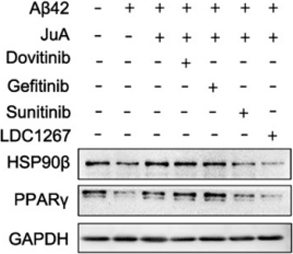
Jujuboside A promotes Aβ clearance and ameliorates cognitive deficiency in Alzheimer's disease through activating Axl/HSP90/PPARγ pathway. [Abstract]2018 Jul 30;8(15):4262-4278. PMID: 30128052
LDC1267 purchased from MedChemExpress. Usage Cited in: Theranostics. 2018 Jul 30;8(15):4262-4278. [Abstract]
BV2 cells are pretreated with 0.1% DMSO (Ctrl), JuA (25 µM) or JuA (25 µM) with the indicated antagonist of RTKs (Dovitinib at 1 µM, Gefinitib at 2.5 µM, Sunitinib at 2.5 µM and LDC1267 at 1 µM) for 30 min, followed by administration of Aβ42 (5 μM) for 12 h.
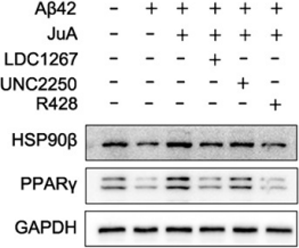
LDC1267 purchased from MedChemExpress. Usage Cited in: Theranostics. 2018 Jul 30;8(15):4262-4278. [Abstract]
BV2 cells are pretreated with 0.1% DMSO (Ctrl), JuA (25 µM) or JuA (25 µM) with the indicated antagonist of TAM receptor (LDC1267 at 1 µM, UNC2250 at 5 µM, R428 at 5 µM) for 30 min, followed by administration of Aβ42 (5 μM) for 12 h.
-
Cell Commun Signal
Bisecting GlcNAc modification of vesicular GAS6 regulates CAFs activation and breast cancer metastasis. [Abstract]2025 Jan 22;23(1):39. PMID: 39844194 -
Cell Mol Life Sci
2022 May 27;79(6):316. PMID: 35622156 -
J Mol Med (Berl)
Sex hormone-binding globulin restrains hepatic fibrosis via inhibition of Tgfβ expression. [Abstract]2025 Sep;103(9):1043-1053. PMID: 40616670 -
Biology (Basel)
Alcohol and HIV-Derived Hepatocyte Apoptotic Bodies Induce Hepatic Stellate Cell Activation. [Abstract]2022 Jul 14;11(7):1059. PMID: 36101437 -
FEBS J
TNF-α/ENO1 signaling facilitates testicular phagocytosis by directly activating Elmo1 gene expression in mouse Sertoli cells. [Abstract]2022 May;289(10):2809-2827. PMID: 34919331 -
-
-


Solvant et solubilité
In Vitro:
DMSO : 50 mg/mL (89.20 mM; Need ultrasonic; Hygroscopic DMSO has a significant impact on the solubility of product, please use newly opened DMSO)
Please refer to the solubility information to select the appropriate solvent. Once prepared, please aliquot and store the solution to prevent product inactivation from repeated freeze-thaw cycles.
Storage method and period of stock solution: -80°C, 2 years; -20°C, 1 year. When stored at -80°C, please use it within 2 years. When stored at -20°C, please use it within 1 year.
Please refer to the solubility information to select the appropriate solvent. Once prepared, please aliquot and store the solution to prevent product inactivation from repeated freeze-thaw cycles.
Storage method and period of stock solution: -80°C, 2 years; -20°C, 1 year. When stored at -80°C, please use it within 2 years. When stored at -20°C, please use it within 1 year.
Concentration (start) × Volume (start) = Concentration (final) × Volume (final)
In Vivo:
Select the appropriate dissolution method based on your experimental animal and administration route.
- For the following dissolution methods, please ensure to first prepare a clear stock solution using an In Vitro approach and then sequentially add co-solvents:
- To ensure reliable experimental results, the clarified stock solution can be appropriately stored based on storage conditions. As for the working solution for In Vivo experiments, it is recommended to prepare freshly and use it on the same day.
- The percentages shown for the solvents indicate their volumetric ratio in the final prepared solution. If precipitation or phase separation occurs during preparation, heat and/or sonication can be used to aid dissolution.
Add each solvent one by one: 10% DMSO 40% PEG300 5% Tween-80 45% Saline
Solubility: ≥ 2.5 mg/mL (4.46 mM); Clear solution
This protocol yields a clear solution of ≥ 2.5 mg/mL (saturation unknown).
Taking 1 mL working solution as an example, add 100 μL DMSO stock solution (25.0 mg/mL) to 400 μL PEG300, and mix evenly; then add 50 μL Tween-80 and mix evenly; then add 450 μL Saline to adjust the volume to 1 mL.
Preparation of Saline: Dissolve 0.9 g sodium chloride in ddH₂O and dilute to 100 mL to obtain a clear Saline solution.
Add each solvent one by one: 10% DMSO 90% (20% SBE-β-CD in Saline)
Solubility: 2.5 mg/mL (4.46 mM); Suspended solution; Need ultrasonic
This protocol yields a suspended solution of 2.5 mg/mL. Suspended solution can be used for oral and intraperitoneal injection.
Taking 1 mL working solution as an example, add 100 μL DMSO stock solution (25.0 mg/mL) to 900 μL 20% SBE-β-CD in Saline, and mix evenly.
Preparation of 20% SBE-β-CD in Saline (4°C, storage for one week): 2 g SBE-β-CD powder is dissolved in 10 mL Saline, completely dissolve until clear.
For the following dissolution methods, please prepare the working solution directly:
It is recommended to prepare fresh solutions and use them promptly within a short period of time.
The percentages shown for the solvents indicate their volumetric ratio in the final prepared solution. If precipitation or phase separation occurs during preparation, heat and/or sonication can be used to aid dissolution.
Add each solvent one by one: 50% PEG300 50% Saline
Solubility: 10 mg/mL (17.84 mM); Suspended solution; Need ultrasonic
In Vivo Dissolution Calculator
Please enter the basic information of animal experiments:
-
-
-
-
Recommended: Prepare an additional quantity of animals to account for potential losses during experiments.
Please enter your animal formula composition:
-
%DMSO +
Recommended: Keep the proportion of DMSO in working solution below 2% if your animal is weak.
-
%+
-
+%Tween-80 + +
-
%Saline +
The co-solvents required include: DMSO, . All of co-solvents are available by MedChemExpress (MCE). , Tween 80. All of co-solvents are available by MedChemExpress (MCE).
Working solution concentration: 0.22 mg/mL
Method for preparing stock solution: mg drug dissolved in μL DMSO. Stock solution concentration: mg/mL.
1. Take μL DMSO stock solution;
2. Add μL .
μL , mix evenly;
3. Then add μL Tween 80, mix evenly;
4. Then add μL
Please ensure that the stock solution in the first step is dissolved to a clear state, and add co-solvents in sequence. You can use ultrasonic heating (ultrasonic cleaner, recommended frequency 20-40 kHz), vortexing, etc. to assist dissolution.


Pureté et documentation
-
Fiche technique (284 KB)
-
SDS (393 KB)
- English - EN (393 KB)
- Français - FR (393 KB)
- Deutsch - DE (393 KB)
- Norwegian - NO (393 KB)
- Español - ES (393 KB)
- Swedish - SV (393 KB)
- Italian - IT (393 KB)
- Korean - KR (393 KB)
- Portuguese - PT (393 KB)
-
Instruction de manipulation (2659 KB)
Références
[2]. Zdżalik-Bielecka D, et al. Bemcentinib and Gilteritinib Inhibit Cell Growth and Impair the Endo-Lysosomal and Autophagy Systems in an AXL-Independent Manner. Mol Cancer Res. 2022;20(3):446-455. [Content Brief]
[3]. Yousaf M, et al. TAM family kinases are potential candidate targets for therapeutic intervention in chronic myeloid leukemia. Discov Oncol. 2025;16(1):1944. Published 2025 Oct 21. [Content Brief]


Complete Stock Solution Preparation Table
Please refer to the solubility information to select the appropriate solvent. Once prepared, please aliquot and store the solution to prevent product inactivation from repeated freeze-thaw cycles.
Storage method and period of stock solution: -80°C, 2 years; -20°C, 1 year. When stored at -80°C, please use it within 2 years. When stored at -20°C, please use it within 1 year.
| Optional Solvent | Concentration Solvent Mass | 1 mg | 5 mg | 10 mg | 25 mg |
|---|---|---|---|---|---|
| DMSO | 1 mM | 1.7840 mL | 8.9198 mL | 17.8396 mL | 44.5991 mL |
| 5 mM | 0.3568 mL | 1.7840 mL | 3.5679 mL | 8.9198 mL | |
| 10 mM | 0.1784 mL | 0.8920 mL | 1.7840 mL | 4.4599 mL | |
| 15 mM | 0.1189 mL | 0.5947 mL | 1.1893 mL | 2.9733 mL | |
| 20 mM | 0.0892 mL | 0.4460 mL | 0.8920 mL | 2.2300 mL | |
| 25 mM | 0.0714 mL | 0.3568 mL | 0.7136 mL | 1.7840 mL | |
| 30 mM | 0.0595 mL | 0.2973 mL | 0.5947 mL | 1.4866 mL | |
| 40 mM | 0.0446 mL | 0.2230 mL | 0.4460 mL | 1.1150 mL | |
| 50 mM | 0.0357 mL | 0.1784 mL | 0.3568 mL | 0.8920 mL | |
| 60 mM | 0.0297 mL | 0.1487 mL | 0.2973 mL | 0.7433 mL | |
| 80 mM | 0.0223 mL | 0.1115 mL | 0.2230 mL | 0.5575 mL |


LDC1267 Related Classifications
HY-12494 Related Classifications
 Powered by Bioz