



Macelignan
Based on 6 publication(s) in Google Scholar
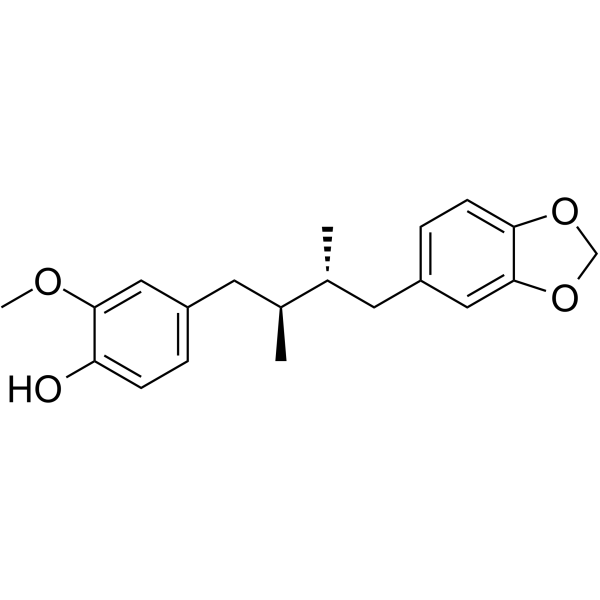
Macelignan ((+)-Anwulignan; Anwuligan)?is an orally active lignan isolated from Myristica fragrans. Macelignan possesses many pharmacological activities, including anti-inflammatory, anti-cancer, anti-diabetes, and neuroprotective activities.
For research use only. We do not sell to patients.
- Purity : 99.78%
- CAS No.: 107534-93-0
- Formula: C20H24O4
- Molecular Weight:328.40
-
Storage:Powder -20°C, 3 years , 4°C, 2 years ; In solvent -80°C, 2 years , -20°C, 1 year

To place orders, for customer services and technical support, please contact: MedChemExpress USA
Tel: 609-228-6898 E-mail: [email protected] [email protected]


-
 Biological Activity
-
Chemical Information
-
Solvent & Solubility
- Protocols
- Purity & Documentation
- References
-
 Help & FAQs


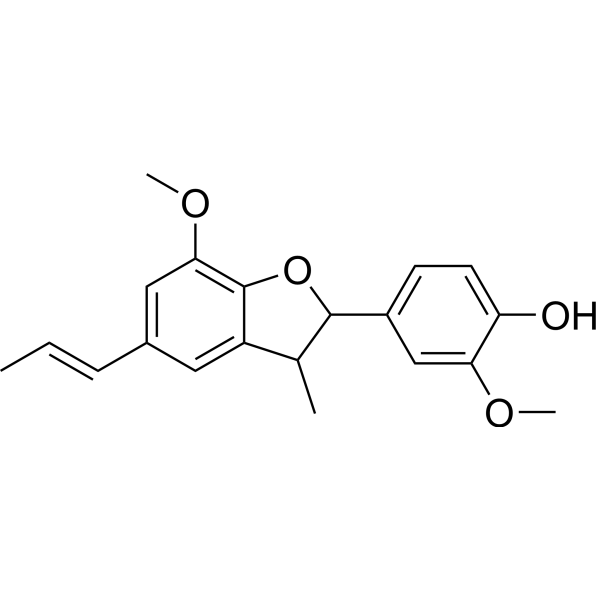

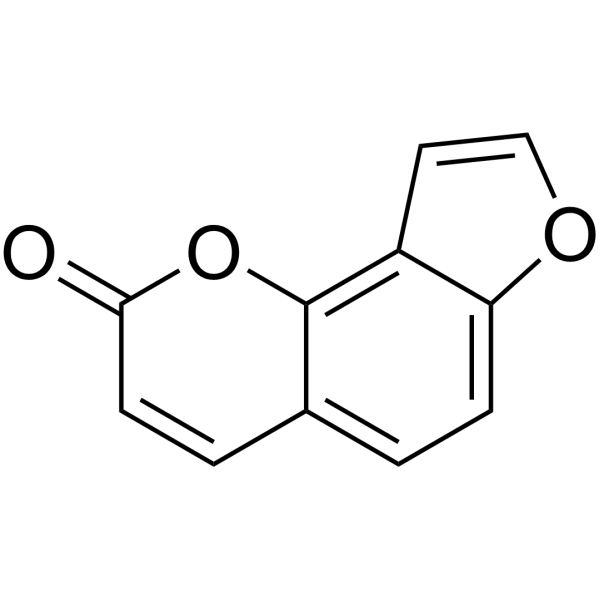
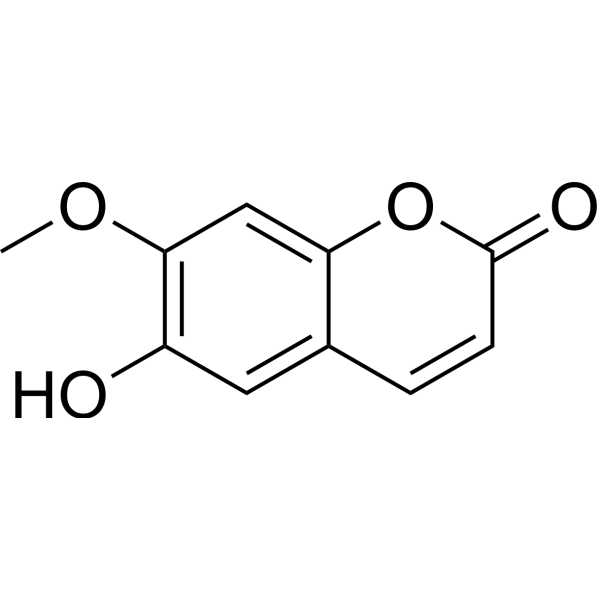


Publications Citing Use of MedChemExpress (MCE) Macelignan
More Customer Validation & Images

-
Cell Proliferation/Viability Assay
-
WB
-
Flow Cytometry
-
Cell Migration/Invasion Assay
-
In Vivo Efficacy Study


Biological Activity
Description
IC50 & Target
[1]|
COX-2 |
In Vitro
Macelignan (1-50 μM; 72 hours) does not reduce cell viability alone, however, UVB treatment, even at the lowest dose of 30 mJ/cm2, reduces HaCaT cell viability in a dose-dependent mannner,it reduces approximately 80% of control values at 100 μM in hacat cells[1].Macelignan (0.1-1 μM; 24 hours) decreases COX-2 expression in a concentration-dependent manner,and at the highest concentration of macelignan (1 μM) , COX-2 expression is inhibited by almost 50% in hacat cells[1].
MedChemExpress (MCE) has not independently confirmed the accuracy of these methods. They are for reference only.
-
Cell Line:Hacat cells
-
Concentration:1 μM; 2.5 μM; 5 μM; 10 μM; 15 μM; 50 μM
-
Incubation Time:72 hours
-
Result:Induced cell death by UVB irradiation at 30 mJ/cm2 from 10 μM.
-
Cell Line:Hacat cells
-
Concentration:0.1 μM; 0.5 μM;1 μM
-
Incubation Time:24 hours
-
Result:Reduced UVB-induced COX-2 expression in cells.
In Vivo
MedChemExpress (MCE) has not independently confirmed the accuracy of these methods. They are for reference only.
-
Animal Model:Male C57BL/KsJ-db/db mice[2]
-
Dosage:15 mg/kg
-
Administration:Oral administration; 15 mg/kg; every day for three weeks
-
Result:Significantly reduced the blood glucose levels in mice.


Chemical Information
-
CAS No. 107534-93-0
-
Appearance Solid
-
Molecular Weight 328.40
-
Formula C20H24O4
-
Color White to off-white
-
SMILES
OC1=CC=C(C[C@H](C)[C@H](C)CC2=CC=C(OCO3)C3=C2)C=C1OC
-
Synonyms
(+)-Anwulignan; Anwuligan
-
Structure Classification
-
Shipping
Room temperature in continental US; may vary elsewhere.
-
Storage
Powder -20°C 3 years 4°C 2 years In solvent -80°C 2 years -20°C 1 year


Publications (6)
-
Journal Impact Factor
-
Most Recent
-
Phytomedicine
Macelignan prevents colorectal cancer metastasis by inhibiting M2 macrophage polarization. [Abstract]2024 Jan:122:155144. PMID: 37925889
Macelignan purchased from MedChemExpress. Usage Cited in: Phytomedicine. 2024 Jan:122:155144. [Abstract]
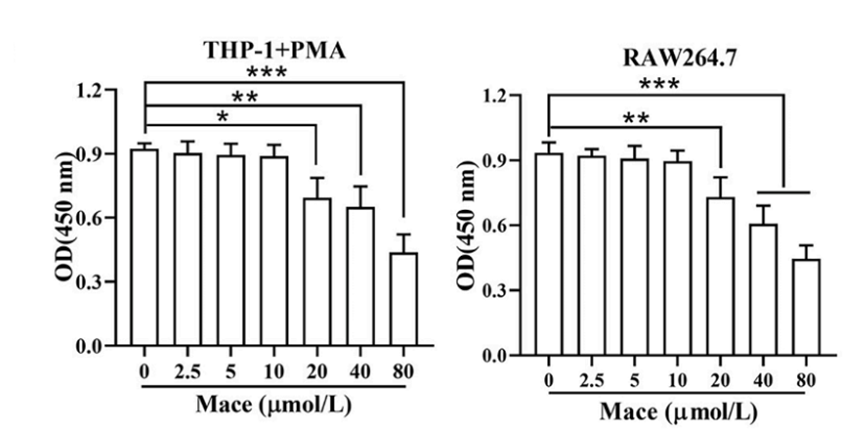
RAW264.7 cells and THP-1-derived macrophages were treated with Macelignan (0 - 80 μM) for 24 h, then CCK8 assay was performed to observed cell viability.
Macelignan purchased from MedChemExpress. Usage Cited in: Phytomedicine. 2024 Jan:122:155144. [Abstract]
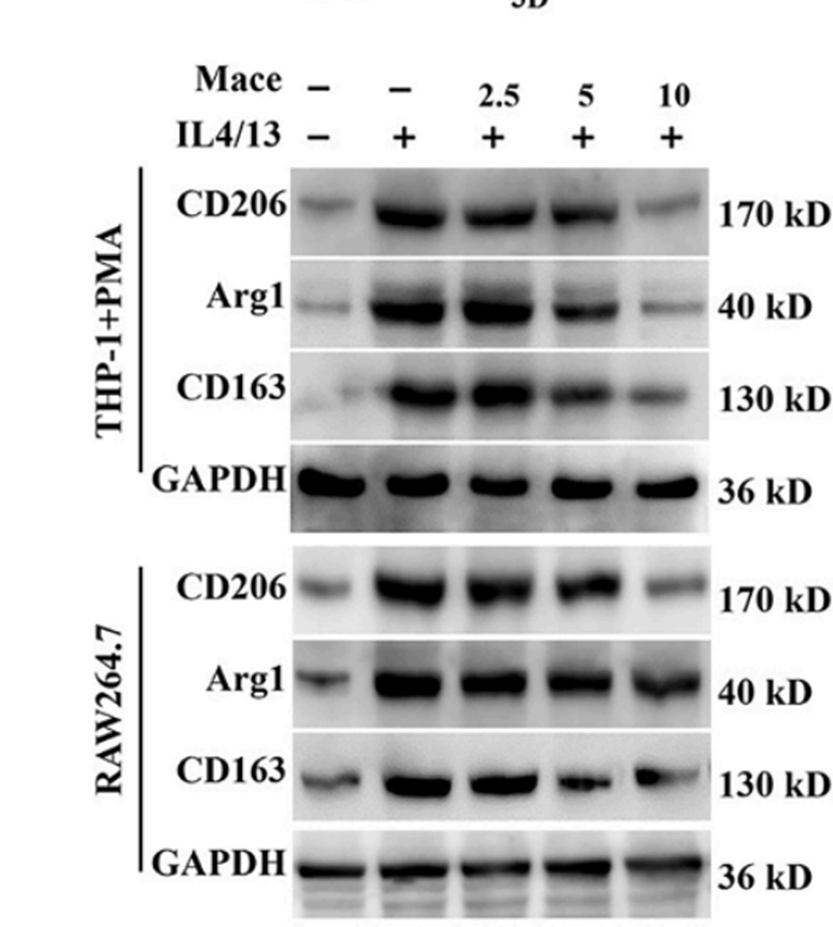
Levels of CD206, Arg1, and CD163 were measured by WB treated with Macelignan (Mace) (2.5, 5, 10 μM).
Macelignan purchased from MedChemExpress. Usage Cited in: Phytomedicine. 2024 Jan:122:155144. [Abstract]
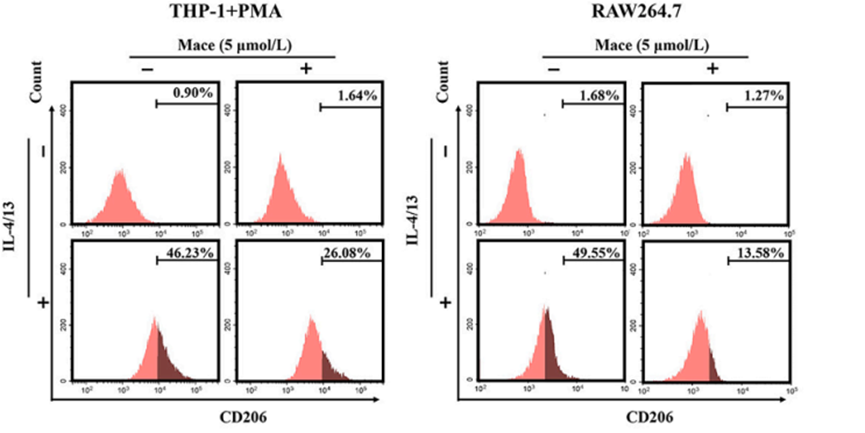
The proportion of CD206-positive cells was determined by flow cytometer. RAW264.7 cells and THP-1-derived macrophages were exposed to LPS with or without Macelignan (5 μM, 10 μM) for 24 h.
Macelignan purchased from MedChemExpress. Usage Cited in: Phytomedicine. 2024 Jan:122:155144. [Abstract]
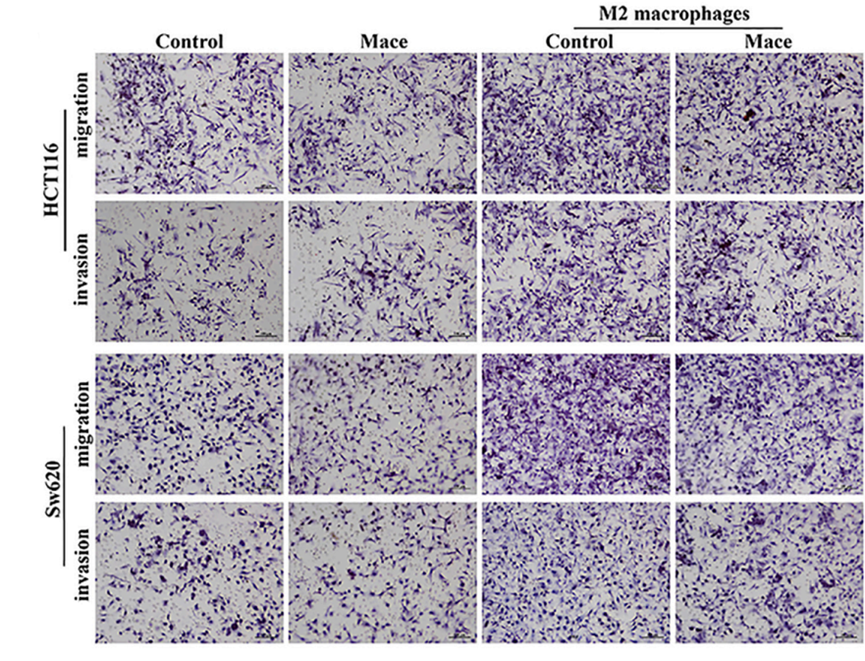
Transwell assays were used to measure the migration and invasion of CRC cells treated with Macelignan (Mace) (5, 10 μM).
Macelignan purchased from MedChemExpress. Usage Cited in: Phytomedicine. 2024 Jan:122:155144. [Abstract]
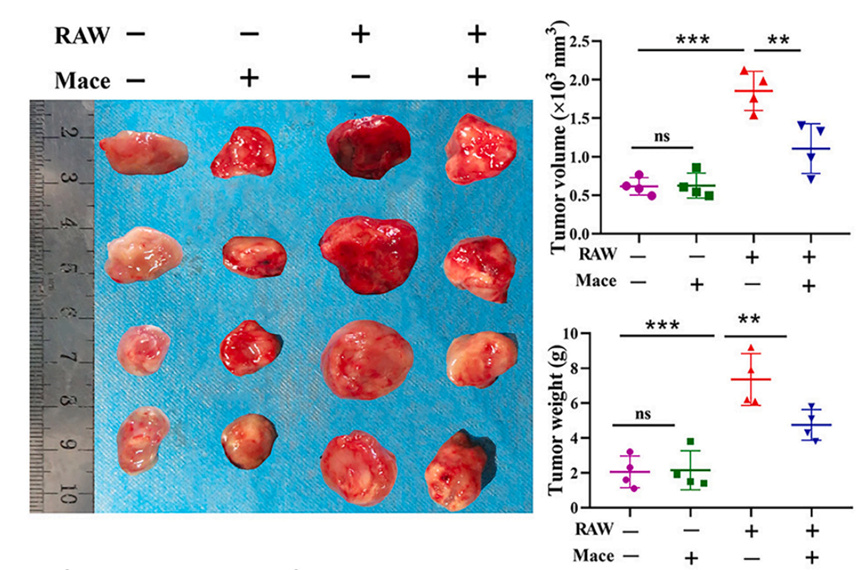
Tumor weight and volume treated with Macelignan (Mace) (5 mg/kg, p.o.).
-
Phytother Res
Macelignan Improves Functional Recovery After Spinal Cord Injury by Augmenting Autophagy via the AKT-mTOR-TFEB Signaling Pathway. [Abstract]2025 May;39(5):2091-2109. PMID: 40062822 -
J Ethnopharmacol
Macelignan, a lignan from Myristica fragrans Houtt., rescues mitochondrial homeostasis and prevents cognitive decline in vascular dementia by modulating the mTOR-Mitophagy axis. [Abstract]2025 Sep 12:120603. PMID: 40946820 -
Eur J Pharmacol
Macelignan mitigates oxidative and inflammatory damage in hypoxic neurons through PPARγ-dependent pathways: implications for Alzheimer's disease. [Abstract]2026 Jan 20:1012:178483. PMID: 41419088 -
Bioorg Chem
Macelignan targets SLC7A11 to induce ferroptosis and modulate macrophage polarization via STAT6/PPAR-γ/KLF4 signaling. [Abstract]2026 Feb:169:109422. PMID: 41456429 -
J Neuroimmunol
Macelignan inhibits the inflammatory response of microglia and regulates neuronal survival. [Abstract]2020 Feb 15:339:577123. PMID: 31838278


Solvent & Solubility
In Vitro:
DMSO : 100 mg/mL (304.51 mM; Need ultrasonic; Hygroscopic DMSO has a significant impact on the solubility of product, please use newly opened DMSO)
Please refer to the solubility information to select the appropriate solvent. Once prepared, please aliquot and store the solution to prevent product inactivation from repeated freeze-thaw cycles.
Storage method and period of stock solution: -80°C, 2 years; -20°C, 1 year. When stored at -80°C, please use it within 2 years. When stored at -20°C, please use it within 1 year.
Please refer to the solubility information to select the appropriate solvent. Once prepared, please aliquot and store the solution to prevent product inactivation from repeated freeze-thaw cycles.
Storage method and period of stock solution: -80°C, 2 years; -20°C, 1 year. When stored at -80°C, please use it within 2 years. When stored at -20°C, please use it within 1 year.
Concentration (start) × Volume (start) = Concentration (final) × Volume (final)
In Vivo:
Select the appropriate dissolution method based on your experimental animal and administration route.
- For the following dissolution methods, please ensure to first prepare a clear stock solution using an In Vitro approach and then sequentially add co-solvents:
- To ensure reliable experimental results, the clarified stock solution can be appropriately stored based on storage conditions. As for the working solution for In Vivo experiments, it is recommended to prepare freshly and use it on the same day.
- The percentages shown for the solvents indicate their volumetric ratio in the final prepared solution. If precipitation or phase separation occurs during preparation, heat and/or sonication can be used to aid dissolution.
Add each solvent one by one: 10% DMSO 40% PEG300 5% Tween-80 45% Saline
Solubility: ≥ 2.5 mg/mL (7.61 mM); Clear solution
This protocol yields a clear solution of ≥ 2.5 mg/mL (saturation unknown).
Taking 1 mL working solution as an example, add 100 μL DMSO stock solution (25.0 mg/mL) to 400 μL PEG300, and mix evenly; then add 50 μL Tween-80 and mix evenly; then add 450 μL Saline to adjust the volume to 1 mL.
Preparation of Saline: Dissolve 0.9 g sodium chloride in ddH₂O and dilute to 100 mL to obtain a clear Saline solution.
Add each solvent one by one: 10% DMSO 90% (20% SBE-β-CD in Saline)
Solubility: ≥ 2.5 mg/mL (7.61 mM); Clear solution
This protocol yields a clear solution of ≥ 2.5 mg/mL (saturation unknown).
Taking 1 mL working solution as an example, add 100 μL DMSO stock solution (25.0 mg/mL) to 900 μL 20% SBE-β-CD in Saline, and mix evenly.
Preparation of 20% SBE-β-CD in Saline (4°C, storage for one week): 2 g SBE-β-CD powder is dissolved in 10 mL Saline, completely dissolve until clear.
In Vivo Dissolution Calculator
Please enter the basic information of animal experiments:
-
-
-
-
Recommended: Prepare an additional quantity of animals to account for potential losses during experiments.
Please enter your animal formula composition:
-
%DMSO +
Recommended: Keep the proportion of DMSO in working solution below 2% if your animal is weak.
-
%+
-
+%Tween-80 + +
-
%Saline +
The co-solvents required include: DMSO, . All of co-solvents are available by MedChemExpress (MCE). , Tween 80. All of co-solvents are available by MedChemExpress (MCE).
Working solution concentration: 0.22 mg/mL
Method for preparing stock solution: mg drug dissolved in μL DMSO. Stock solution concentration: mg/mL.
1. Take μL DMSO stock solution;
2. Add μL .
μL , mix evenly;
3. Then add μL Tween 80, mix evenly;
4. Then add μL
Please ensure that the stock solution in the first step is dissolved to a clear state, and add co-solvents in sequence. You can use ultrasonic heating (ultrasonic cleaner, recommended frequency 20-40 kHz), vortexing, etc. to assist dissolution.


Purity & Documentation
-
Data Sheet (277 KB)
-
SDS (393 KB)
- English - EN (393 KB)
- Français - FR (393 KB)
- Deutsch - DE (393 KB)
- Norwegian - NO (393 KB)
- Español - ES (393 KB)
- Swedish - SV (393 KB)
- Italian - IT (393 KB)
- Korean - KR (393 KB)
- Portuguese - PT (393 KB)
-
Handling Instructions (2659 KB)
References
[1]. Anggakusuma, et al. Effects of macelignan isolated from Myristica fragrans Houtt. on UVB-induced matrix metalloproteinase-9 and cyclooxygenase-2 in HaCaT cells. J Dermatol Sci [Content Brief]
[2]. Jiyoung Yeo, et al. Effects of a multi-herbal extract on type 2 diabetes. Chin Med. 2011 Mar 4;6:10. [Content Brief]
[3]. Chun-Ai Cui, et al. Macelignan attenuates LPS-induced inflammation and reduces LPS-induced spatial learning impairments in rats. Neurosci Lett. 2008 Dec 19;448(1):110-4. [Content Brief]


Complete Stock Solution Preparation Table
Please refer to the solubility information to select the appropriate solvent. Once prepared, please aliquot and store the solution to prevent product inactivation from repeated freeze-thaw cycles.
Storage method and period of stock solution: -80°C, 2 years; -20°C, 1 year. When stored at -80°C, please use it within 2 years. When stored at -20°C, please use it within 1 year.
| Optional Solvent | Concentration Solvent Mass | 1 mg | 5 mg | 10 mg | 25 mg |
|---|---|---|---|---|---|
| DMSO | 1 mM | 3.0451 mL | 15.2253 mL | 30.4507 mL | 76.1267 mL |
| 5 mM | 0.6090 mL | 3.0451 mL | 6.0901 mL | 15.2253 mL | |
| 10 mM | 0.3045 mL | 1.5225 mL | 3.0451 mL | 7.6127 mL | |
| 15 mM | 0.2030 mL | 1.0150 mL | 2.0300 mL | 5.0751 mL | |
| 20 mM | 0.1523 mL | 0.7613 mL | 1.5225 mL | 3.8063 mL | |
| 25 mM | 0.1218 mL | 0.6090 mL | 1.2180 mL | 3.0451 mL | |
| 30 mM | 0.1015 mL | 0.5075 mL | 1.0150 mL | 2.5376 mL | |
| 40 mM | 0.0761 mL | 0.3806 mL | 0.7613 mL | 1.9032 mL | |
| 50 mM | 0.0609 mL | 0.3045 mL | 0.6090 mL | 1.5225 mL | |
| 60 mM | 0.0508 mL | 0.2538 mL | 0.5075 mL | 1.2688 mL | |
| 80 mM | 0.0381 mL | 0.1903 mL | 0.3806 mL | 0.9516 mL | |
| 100 mM | 0.0305 mL | 0.1523 mL | 0.3045 mL | 0.7613 mL |


Macelignan Related Classifications
HY-N0064 Related Classifications
 Powered by Bioz