



Rupatadine
Based on 2 publication(s) in Google Scholar
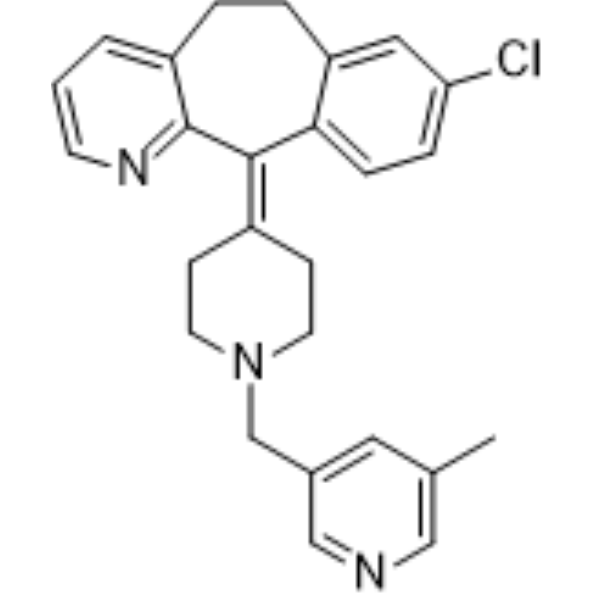
Rupatadine (UR-12592) is a potent, orally active and long-lasting dual PAF/H1 antagonist, with Kis of 0.55 μM and 0.1 μM, respectively. Rupatadine can be used for the research of allergic rhinitis and urticaria.
For research use only. We do not sell to patients.
- Purity : 99.96%
- CAS No.: 158876-82-5
- Formula: C26H26ClN3
- Molecular Weight:415.96
-
Storage:
-20°C, sealed storage, away from moisture
* In solvent : -80°C, 6 months; -20°C, 1 month (sealed storage, away from moisture)

To place orders, for customer services and technical support, please contact: MedChemExpress USA
Tel: 609-228-6898 E-mail: [email protected] [email protected]


-
 Biological Activity
-
Chemical Information
-
Solvent & Solubility
- Purity & Documentation
- References
-
 Help & FAQs


-
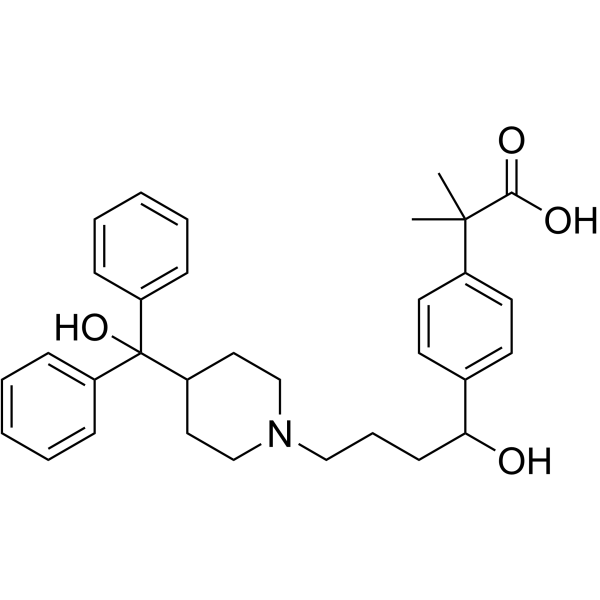
HY-B0801
FexofenadineH1R Antagonist -
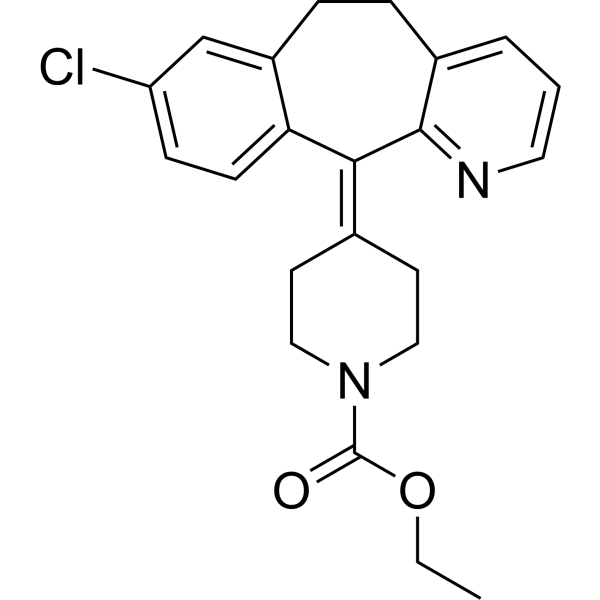
HY-17043
LoratadineInfluenza Virus Inhibitor -
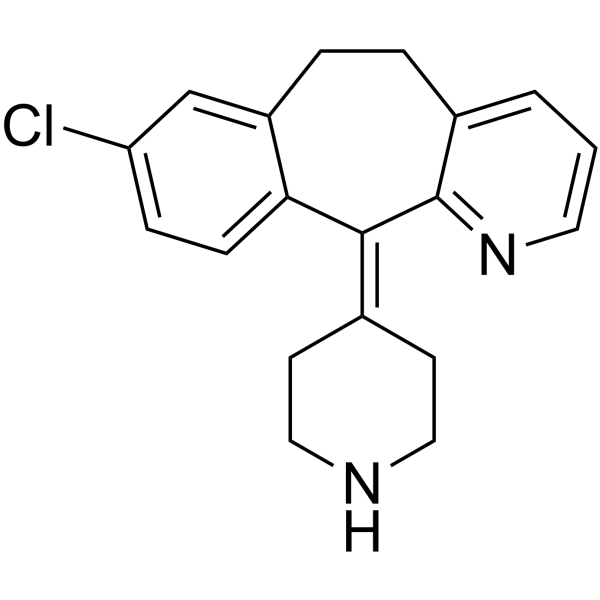
HY-B0539
DesloratadineH1-Receptor Antagonist -

HY-13511R
Rupatadine (Standard)Dual PAF/H1 Antagonist -
HY-12532
AstemizoleH1 Receptor Antagonist -
HY-B0303
DiphenhydramineAntihistamine -
HY-12199
PitolisantH3 Receptor Antagonist -

HY-B0303R
Diphenhydramine (Standard)Antihistamine -
HY-B0640
EpinastineHistamine H1 Receptor Antagonist -
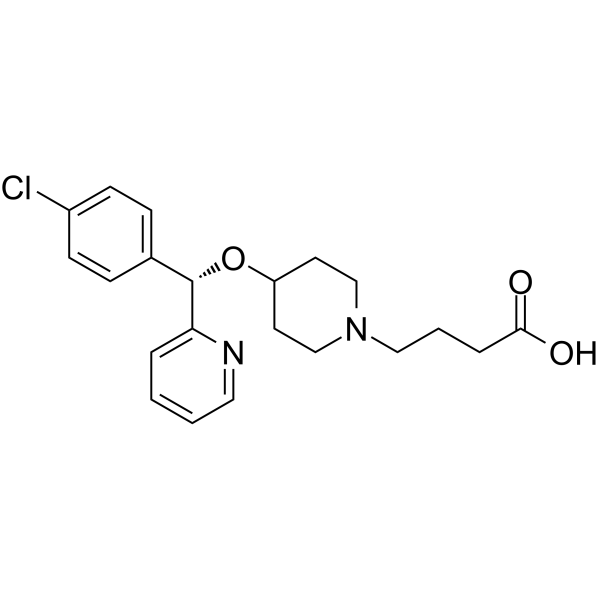
HY-I0021
BepotastineHistamine H1 Receptor Antagonist -
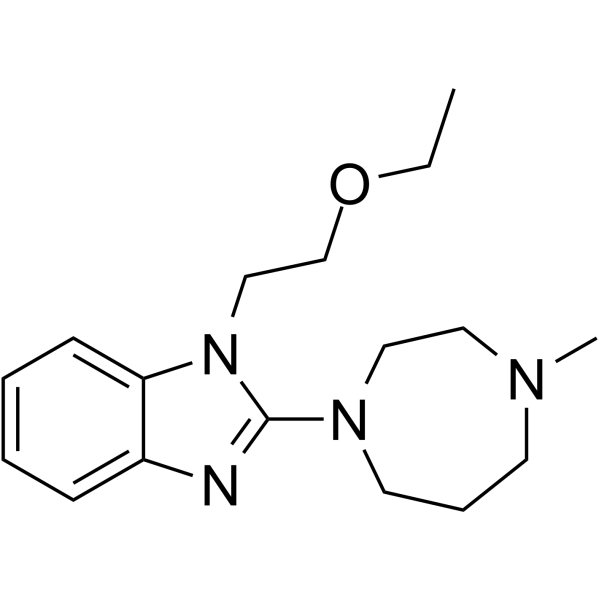
HY-108411
EmedastineHistamine H1 Receptor Antagonist -
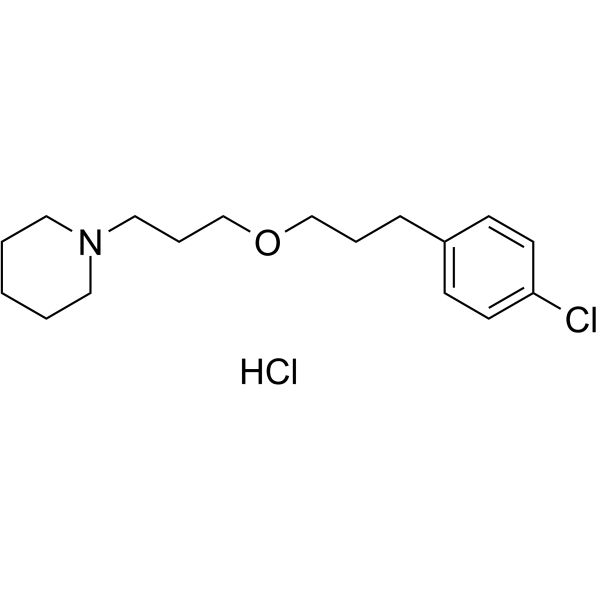
HY-12199B
Pitolisant hydrochlorideH3 Receptor Antagonist
Publications Citing Use of MedChemExpress (MCE) Rupatadine
MoreAll Histamine Receptor Isoforms
More

Biological Activity
Description
IC50 & Target
[1]|
H1 Receptor 0.1 μM (Ki) |
PAF 0.55 μM (Ki) |
Cellular Effect
|
Cell Line

|
Type | Value | Description | References |
|---|---|---|---|---|
| HEK293 | IC50 |
>40 μM
Compound: Rupatadine
|
Inhibition of eGFP-tagged human B0AT2 expressed in HEK293 cells measured within 10 mins by [3H]proline uptake assay
Inhibition of eGFP-tagged human B0AT2 expressed in HEK293 cells measured within 10 mins by [3H]proline uptake assay
|
[PMID: 25318072] |
In Vitro
Rupatadine competitively inhibits histamine-induced guinea pig ileum contraction (pA2=9.29) without affecting contraction induced by ACh, serotonin or leukotriene D4 (LTD4)[1].
Rupatadine competitively inhibits PAF-induced platelet aggregation in washed rabbit platelets (WRP) (pA2=6.68) and in human platelet-rich plasma (HPRP) (IC50=0.68 μM), while not affecting ADP- or arachidonic acid-induced platelet aggregation[1].
Rupatadine (0.1-30 μM) inhibits TNF-α secretion in a concentration-dependent manner, with maximum values of 92.5%[2].
MedChemExpress (MCE) has not independently confirmed the accuracy of these methods. They are for reference only.
In Vivo
Rupatadine potently inhibits PAF-induced mortality in mice (ID50=0.31 and 3.0 mg/kg i.v. and p.o., respectively) and endotoxin-induced mortality in mice and rats (ID50=1.6 and 0.66 mg/kg i.v.)[1].
Rupatadine (6 mg/kg) promotes the absorption of the lesions and decreased the density of lungs[3].
MedChemExpress (MCE) has not independently confirmed the accuracy of these methods. They are for reference only.
-
Animal Model:Male C57BL/6J mice (18 g, 6-8 wk)[3]
-
Dosage:1.5, 3, 6 mg/kg
-
Administration:Oral gavage once a day
-
Result:Markedly decreased the BLM-enhanced inflammatory scores and lung index.
Clinical Trial
| NCT Number | Sponsor | Condition | Start Date |
Phase
|
|---|---|---|---|---|
| NCT01329991 | 2011-05 | PHASE1 |


Chemical Information
-
CAS No. 158876-82-5
-
Appearance Solid
-
Molecular Weight 415.96
-
Formula C26H26ClN3
-
Color Off-white to light yellow
-
SMILES
CC1=CN=CC(CN2CC/C(CC2)=C3C4=CC=C(Cl)C=C4CCC5=CC=CN=C5\3)=C1
-
Synonyms
UR-12592
-
Shipping
Room temperature in continental US; may vary elsewhere.
-
Storage
-20°C, sealed storage, away from moisture
* In solvent : -80°C, 6 months; -20°C, 1 month (sealed storage, away from moisture)


Publications (2)
-
Journal Impact Factor
-
Most Recent
-
Pharmaceutics
2020 Jun 8;12(6):525. PMID: 32521742 -
Biomed Pharmacother
Rupatadine inhibits colorectal cancer cell proliferation through the PIP5K1A/Akt/CDK2 pathway. [Abstract]2024 Jul:176:116826. PMID: 38838507


Solvent & Solubility
In Vitro:
DMSO : 100 mg/mL (240.41 mM; Need ultrasonic; Hygroscopic DMSO has a significant impact on the solubility of product, please use newly opened DMSO)
Please refer to the solubility information to select the appropriate solvent. Once prepared, please aliquot and store the solution to prevent product inactivation from repeated freeze-thaw cycles.
Storage method and period of stock solution: -80°C, 6 months; -20°C, 1 month (sealed storage, away from moisture). When stored at -80°C, please use it within 6 months. When stored at -20°C, please use it within 1 month.
Please refer to the solubility information to select the appropriate solvent. Once prepared, please aliquot and store the solution to prevent product inactivation from repeated freeze-thaw cycles.
Storage method and period of stock solution: -80°C, 6 months; -20°C, 1 month (sealed storage, away from moisture). When stored at -80°C, please use it within 6 months. When stored at -20°C, please use it within 1 month.
Concentration (start) × Volume (start) = Concentration (final) × Volume (final)
In Vivo:
Select the appropriate dissolution method based on your experimental animal and administration route.
- For the following dissolution methods, please ensure to first prepare a clear stock solution using an In Vitro approach and then sequentially add co-solvents:
- To ensure reliable experimental results, the clarified stock solution can be appropriately stored based on storage conditions. As for the working solution for In Vivo experiments, it is recommended to prepare freshly and use it on the same day.
- The percentages shown for the solvents indicate their volumetric ratio in the final prepared solution. If precipitation or phase separation occurs during preparation, heat and/or sonication can be used to aid dissolution.
Add each solvent one by one: 10% DMSO 40% PEG300 5% Tween-80 45% Saline
Solubility: ≥ 2.5 mg/mL (6.01 mM); Clear solution
This protocol yields a clear solution of ≥ 2.5 mg/mL (saturation unknown).
Taking 1 mL working solution as an example, add 100 μL DMSO stock solution (25.0 mg/mL) to 400 μL PEG300, and mix evenly; then add 50 μL Tween-80 and mix evenly; then add 450 μL Saline to adjust the volume to 1 mL.
Preparation of Saline: Dissolve 0.9 g sodium chloride in ddH₂O and dilute to 100 mL to obtain a clear Saline solution.
Add each solvent one by one: 10% DMSO 90% (20% SBE-β-CD in Saline)
Solubility: ≥ 2.5 mg/mL (6.01 mM); Clear solution
This protocol yields a clear solution of ≥ 2.5 mg/mL (saturation unknown).
Taking 1 mL working solution as an example, add 100 μL DMSO stock solution (25.0 mg/mL) to 900 μL 20% SBE-β-CD in Saline, and mix evenly.
Preparation of 20% SBE-β-CD in Saline (4°C, storage for one week): 2 g SBE-β-CD powder is dissolved in 10 mL Saline, completely dissolve until clear.
In Vivo Dissolution Calculator
Please enter the basic information of animal experiments:
-
-
-
-
Recommended: Prepare an additional quantity of animals to account for potential losses during experiments.
Please enter your animal formula composition:
-
%DMSO +
Recommended: Keep the proportion of DMSO in working solution below 2% if your animal is weak.
-
%+
-
+%Tween-80 + +
-
%Saline +
The co-solvents required include: DMSO, . All of co-solvents are available by MedChemExpress (MCE). , Tween 80. All of co-solvents are available by MedChemExpress (MCE).
Working solution concentration: 0.22 mg/mL
Method for preparing stock solution: mg drug dissolved in μL DMSO. Stock solution concentration: mg/mL. * In solvent : -80°C, 6 months; -20°C, 1 month (sealed storage, away from moisture)
1. Take μL DMSO stock solution;
2. Add μL .
μL , mix evenly;
3. Then add μL Tween 80, mix evenly;
4. Then add μL
Please ensure that the stock solution in the first step is dissolved to a clear state, and add co-solvents in sequence. You can use ultrasonic heating (ultrasonic cleaner, recommended frequency 20-40 kHz), vortexing, etc. to assist dissolution.


Purity & Documentation
-
Data Sheet (280 KB)
-
SDS (393 KB)
- English - EN (393 KB)
- Français - FR (393 KB)
- Deutsch - DE (393 KB)
- Norwegian - NO (393 KB)
- Español - ES (393 KB)
- Swedish - SV (393 KB)
- Italian - IT (393 KB)
- Korean - KR (393 KB)
- Portuguese - PT (393 KB)
-
Handling Instructions (2659 KB)
References
[1]. Merlos M, et al. Rupatadine, a new potent, orally active dual antagonist of histamine and platelet-activating factor (PAF). J Pharmacol Exp Ther. 1997 Jan;280(1):114-21. [Content Brief]
[2]. Queralt M, et al. In vitro inhibitory effect of rupatadine on histamine and TNF-alpha release from dispersed canine skin mast cells and the human mast cell line HMC-1. Inflamm Res. 2000 Jul;49(7):355-60. [Content Brief]
[3]. Lv XX, et al. Rupatadine protects against pulmonary fibrosis by attenuating PAF-mediated senescence in rodents. PLoS One. 2013 Jul 15;8(7):e68631. [Content Brief]


Complete Stock Solution Preparation Table
Please refer to the solubility information to select the appropriate solvent. Once prepared, please aliquot and store the solution to prevent product inactivation from repeated freeze-thaw cycles.
Storage method and period of stock solution: -80°C, 6 months; -20°C, 1 month (sealed storage, away from moisture). When stored at -80°C, please use it within 6 months. When stored at -20°C, please use it within 1 month.
| Optional Solvent | Concentration Solvent Mass | 1 mg | 5 mg | 10 mg | 25 mg |
|---|---|---|---|---|---|
| DMSO | 1 mM | 2.4041 mL | 12.0204 mL | 24.0408 mL | 60.1019 mL |
| 5 mM | 0.4808 mL | 2.4041 mL | 4.8082 mL | 12.0204 mL | |
| 10 mM | 0.2404 mL | 1.2020 mL | 2.4041 mL | 6.0102 mL | |
| 15 mM | 0.1603 mL | 0.8014 mL | 1.6027 mL | 4.0068 mL | |
| 20 mM | 0.1202 mL | 0.6010 mL | 1.2020 mL | 3.0051 mL | |
| 25 mM | 0.0962 mL | 0.4808 mL | 0.9616 mL | 2.4041 mL | |
| 30 mM | 0.0801 mL | 0.4007 mL | 0.8014 mL | 2.0034 mL | |
| 40 mM | 0.0601 mL | 0.3005 mL | 0.6010 mL | 1.5025 mL | |
| 50 mM | 0.0481 mL | 0.2404 mL | 0.4808 mL | 1.2020 mL | |
| 60 mM | 0.0401 mL | 0.2003 mL | 0.4007 mL | 1.0017 mL | |
| 80 mM | 0.0301 mL | 0.1503 mL | 0.3005 mL | 0.7513 mL | |
| 100 mM | 0.0240 mL | 0.1202 mL | 0.2404 mL | 0.6010 mL |


Rupatadine Related Classifications
HY-13511 Related Classifications
 Powered by Bioz