Autophagy
Autophagy is a conserved cellular degradation and recycling process in the lysosome. In mammalian cells, there are three primary types of autophagy: microautophagy, macroautophagy, and chaperone-mediated autophagy (CMA). Microphagy captures cargoes by means of invaginations or protrusions of the lysosomal membrane directly, CMA uses chaperones to identify cargo proteins and then unfolds and transfers them into the lysosomal, while macroautophagy sequesters cargo by autophagosomes-de novo synthesized of double-membrane vesicles-and subsequently transport it to the lysosome.
Macroautophagy is the best studied and it occurs at a low level constitutively and can also be further induced under stress conditions, such as nutrient or energy starvation with a salient feature of autophagy protein degradation. Stress-induced macrophagy plays an important role in protein catabolism with another key protein degradation pathway, the ubiquitin–proteasome system (UPS).
As the study progressed, autophagy gains its importance under basal, nutrient-rich conditions, and is now recognized as a critical housekeeping pathway in catabolism of diverse cellular constituents, such as protein aggregates (aggrephagy), lipid droplets (lipophagy), iron complex (Ferritinophagy) and carbohydrate. Except for macromolecules, autophagy can also target several organelles and structures, such as mitochondria (mitophagy), peroxisome (pexophagy), endoplasmic reticulum (reticulophagy or ER-phagy), ribosome (ribophagy), spermatozoon-inherited organelles following fertilization (allophagy), secretory granules within pancreatic cells (zymophagy) and intracellular pathogens (xenophagy).
Autophagy and its dysfunction are associated with a variety of human pathologies, including ageing, cancer, neurodegenerative disease, heart disease and metabolic diseases, such as diabetes. Plenty of drugs and natural products are involved in autophagy modulation through multiple signaling pathways. Small molecules that can regulate autophagy seem to have great potential to intervene such diseases in animal models or clinical courses.
All Product Categories
-
Autophagy Inhibitors
(470)
View all products
-
Autophagy Agonists
(6)
View all products
-
Autophagy Activators
(119)
View all products
-
Autophagy Modulators
(59)
View all products
-
Autophagy Chemicals
(2)
View all products
-
Autophagy Inducers
(2163)
View all products
-
Autophagy Controls
(5)
View all products
-
Autophagy Ligand
(1)
View all products
-
Autophagy Related Products (3358)
Related Products (3358)

-
Antibodies (31)
-
Autophagy Signaling Pathway
-
Vemurafenib-d5
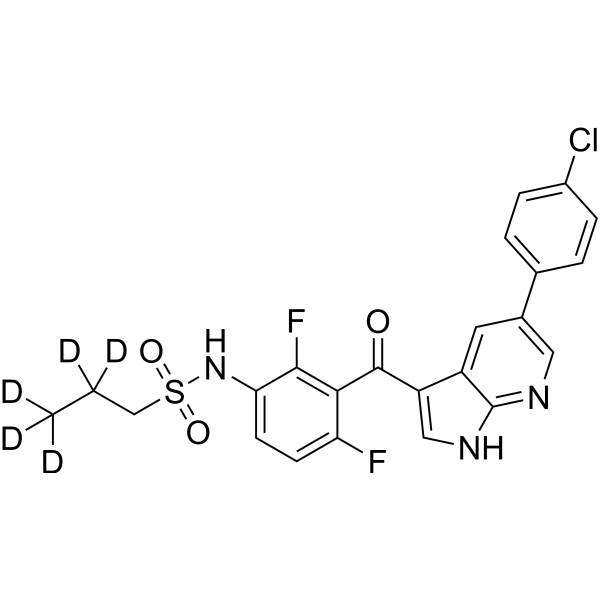 0 ImagesCat. No.: HY-12057SCAS No.: 1365986-90-8
-
Anticancer agent 194
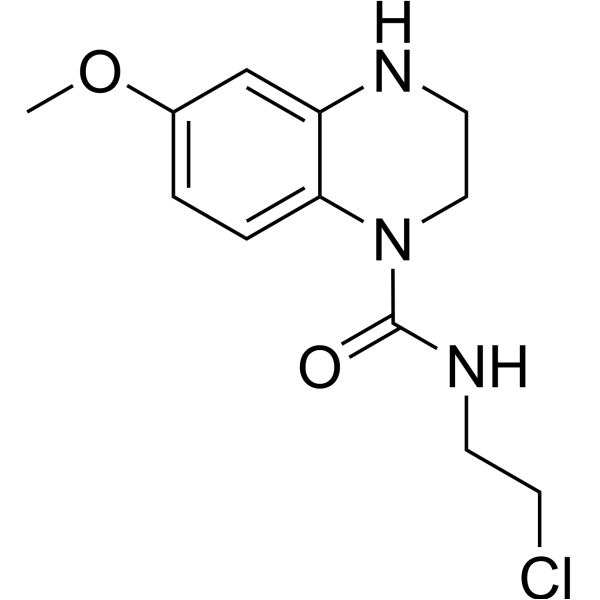 0 ImagesCat. No.: HY-162311CAS No.: 2767204-90-8Anticancer agent 194 (compound 10p) is a ferroptosis and autophagy inducer. Anticancer agent 194 arrests colon cancer cell cycle at G2/M phase, but can't induce cell apoptosis. Anticancer agent 194 independently triggeres cell ferroptosis and autophagy through the massive accumulation of ROS.
-
Pemetrexed disodium heptahydrate (Standard)
 0 ImagesSynonyms: LY231514 disodium heptahydrate (Standard)Pemetrexed (disodium heptahydrate) (Standard) is the analytical standard of Pemetrexed (disodium heptahydrate). This product is intended for research and analytical applications. Pemetrexed disodium heptahydrate is a novel antifolate, the Ki values of the pentaglutamate of LY231514 are 1.3, 7.2, and 65 nM for inhibits thymidylate synthase (TS), dihydrofolate reductase (DHFR), and glycinamide ribonucleotide formyltransferase (GARFT), respectively.
-
Thalidomide-2,6-diazaspiro[3.4]octane-C-Pip-boc
![Thalidomide-2,6-diazaspiro[3.4]octane-C-Pip-boc](https://file.medchemexpress.com/product_pic/hy-161209.gif "Click to View Thalidomide-2,6-diazaspiro[3.4]octane-C-Pip-boc Product Detail") 0 ImagesCat. No.: HY-161209Thalidomide-2,6-diazaspiro[3.4]octane-C-Pip-boc is a conjugate of E3 ligase ligand and linker, consisting of Thalidomide (HY-14658) and the corresponding Linker. Thalidomide-2,6-diazaspiro[3.4]octane-C-Pip-boc can serve as a Cereblon ligand to recruit CRBN protein and serve as a key intermediate for the synthesis of complete PROTAC molecules.
0 ImagesCat. No.: HY-161209Thalidomide-2,6-diazaspiro[3.4]octane-C-Pip-boc is a conjugate of E3 ligase ligand and linker, consisting of Thalidomide (HY-14658) and the corresponding Linker. Thalidomide-2,6-diazaspiro[3.4]octane-C-Pip-boc can serve as a Cereblon ligand to recruit CRBN protein and serve as a key intermediate for the synthesis of complete PROTAC molecules.
-
Trametinib-13C6
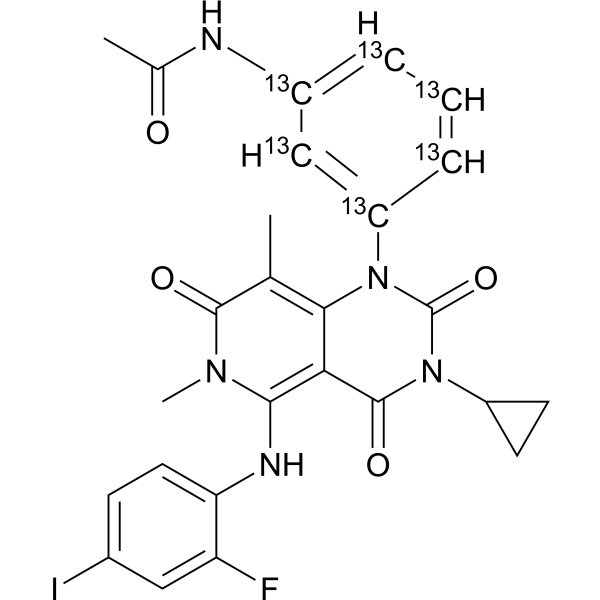 0 ImagesCat. No.: HY-10999S1Trametinib-13C6 is the 13C-labeled Trametinib. Trametinib (GSK1120212; JTP-74057) is an orally active MEK inhibitor that inhibits MEK1 and MEK2 with IC50s of about 2 nM. Trametinib activates autophagy and induces apoptosis.
-
(1R,5S)-Thalidomide-3,8-diazabicyclo[3.2.1]octane-Boc
![(1R,5S)-Thalidomide-3,8-diazabicyclo[3.2.1]octane-Boc](https://file.medchemexpress.com/product_pic/hy-163230.gif "Click to View (1R,5S)-Thalidomide-3,8-diazabicyclo[3.2.1]octane-Boc Product Detail") 0 ImagesCat. No.: HY-163230(1R,5S)-Thalidomide-3,8-diazabicyclo[3.2.1]octane-Boc is a conjugate of E3 ligase ligand and linker, consisting of Thalidomide (HY-14658) and the corresponding Linker. (1R,5S)-Thalidomide-3,8-diazabicyclo[3.2.1]octane-Boc can serve as a Cereblon ligand to recruit CRBN protein and serve as a key intermediate for the synthesis of complete PROTAC molecules.
0 ImagesCat. No.: HY-163230(1R,5S)-Thalidomide-3,8-diazabicyclo[3.2.1]octane-Boc is a conjugate of E3 ligase ligand and linker, consisting of Thalidomide (HY-14658) and the corresponding Linker. (1R,5S)-Thalidomide-3,8-diazabicyclo[3.2.1]octane-Boc can serve as a Cereblon ligand to recruit CRBN protein and serve as a key intermediate for the synthesis of complete PROTAC molecules.
-
Lovastatin-d3
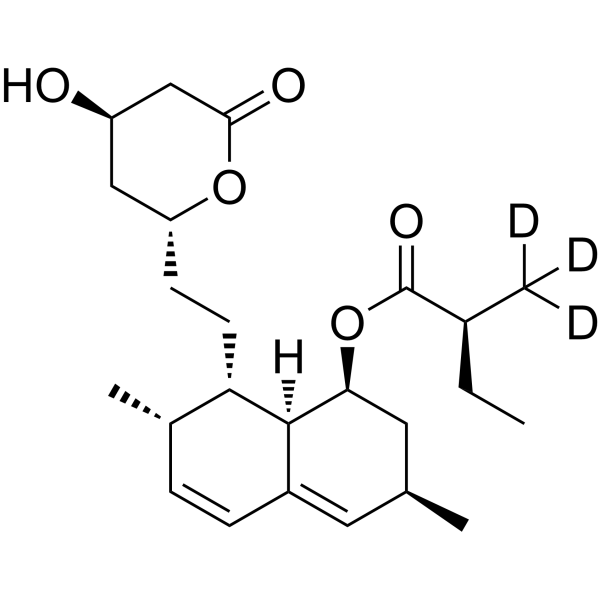 0 ImagesCat. No.: HY-N0504S2CAS No.: 1002345-93-8Synonyms: Mevinolin-d3Lovastatin-d3 is deuterium labeled Lovastatin. Lovastatin is a cell-permeable HMG-CoA reductase inhibitor used to lower cholesterol.
-
(S)-Thalidomide-O-(1S,3r)-C4H4-N(Me)-Pip-C2-O-C-boc
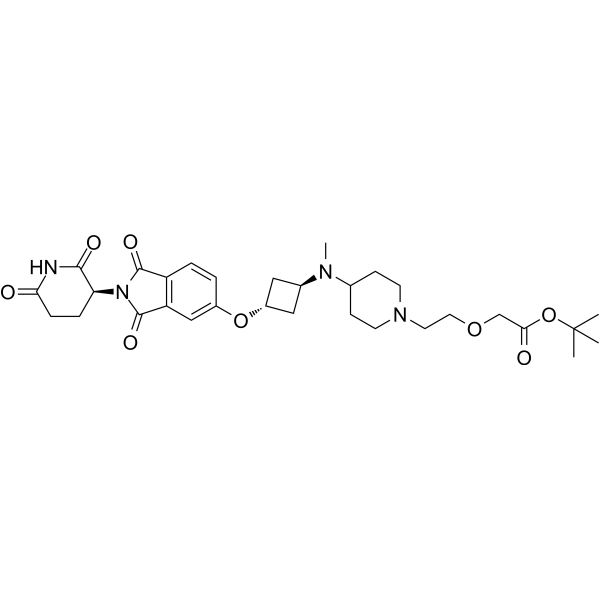 0 ImagesCat. No.: HY-161183(S)-Thalidomide-O-(1S,3r)-C4H4-N(Me)-Pip-C2-O-C-boc is a conjugate of E3 ligase ligand and linker, consisting of Thalidomide (HY-14658) and the corresponding Linker. (S)-Thalidomide-O-(1S,3r)-C4H4-N(Me)-Pip-C2-O-C-boc can serve as a Cereblon ligand to recruit CRBN protein and serve as a key intermediate for the synthesis of complete PROTAC molecules.
-
Pyrazinamide-13C,15N
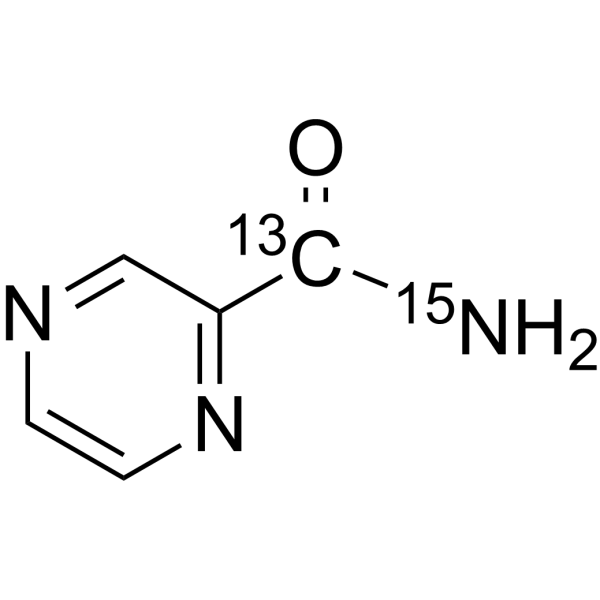 0 ImagesCat. No.: HY-B0271S1Synonyms: Pyrazinecarboxamide-13C,15N; Pyrazinoic acid amide-13C,15NPyrazinamide-13C,15N is 15N and 13C labeled Pyrazinamide (HY-B0271). Pyrazinamide (Pyrazinecarboxamide; Pyrazinoic acid amide) is a potent and orally active antitubercular antibiotic. Pyrazinamide is a proagent that is converted to the active form pyrazinoic acid (POA) by PZase/nicotinamidase encoded by the pncA gene in M. tuberculosis.
-
Tubulin-IN-64
 0 ImagesCat. No.: HY-181491Tubulin-IN-64 is a sulfonated styrylquinazoline derivative with high selectivity antitumor activity. Tubulin-IN-64 targets tubulin, inhibits the EGFR/Akt/mTOR and EGFR/Ras signaling pathways, induces cell cycle arrest, apoptosis and autophagy. Tubulin-IN-64 exhibits significant antitumor efficacy in the zebrafish GBM xenograft model. Tubulin-IN-64 can be used for the research on glioblastoma and leukemia.
-
Thalidomide-5-O-C7-NH2 hydrochloride
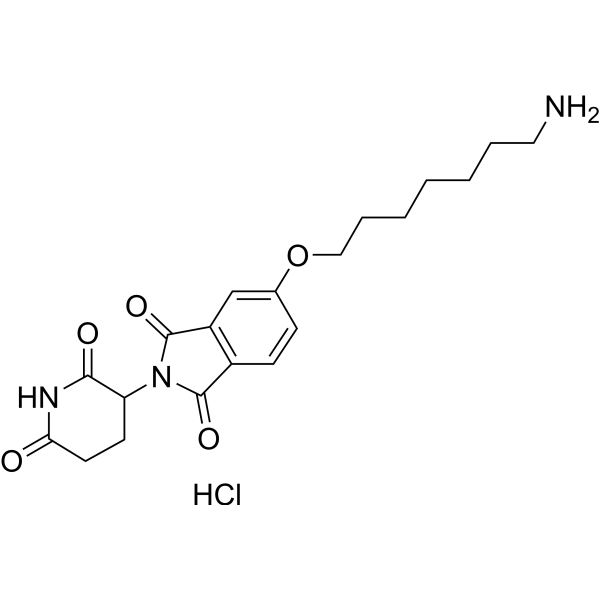 0 ImagesCat. No.: HY-149564Purity: 98.13%Thalidomide-5-O-C7-NH2 hydrochloride is the Thalidomide (HY-10984)-based cereblon ligand used in the recruitment of CRBN protein.Thalidomide-5-O-C7-NH2 hydrochloride can be connected to the ligand for protein by a linker to form PROTACs.
-
Fmoc-Pro-OH-1-13C
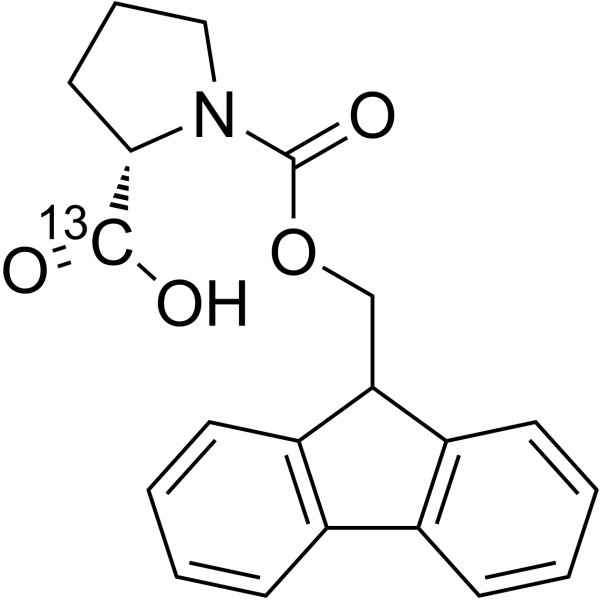 0 ImagesCat. No.: HY-W013780SCAS No.: 2306051-40-9
-
Thalidomide-4-O-C12-NH2 hydrochloride
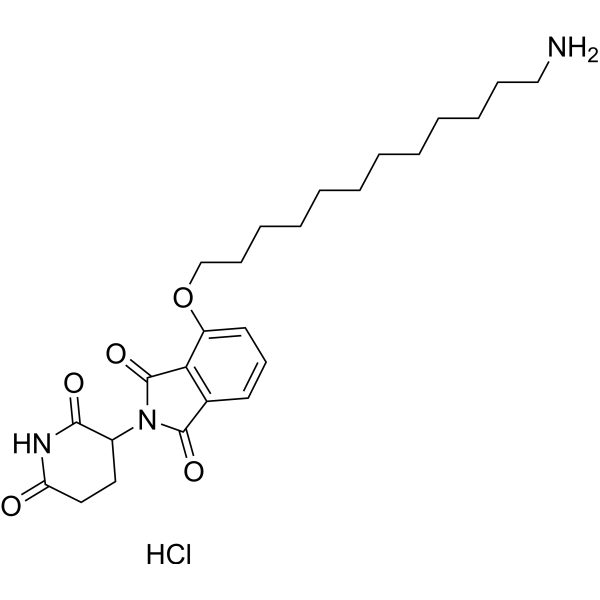 0 ImagesCat. No.: HY-149574Purity: 98.90%Thalidomide-4-O-C12-NH2 hydrochloride is the Thalidomide (HY-10984)-based cereblon ligand used in the recruitment of CRBN protein.Thalidomide-4-O-C12-NH2 hydrochloride can be connected to the ligand for protein by a linker to form PROTACs.
-
Thalidomide-5-O-C5-NH2 hydrochloride
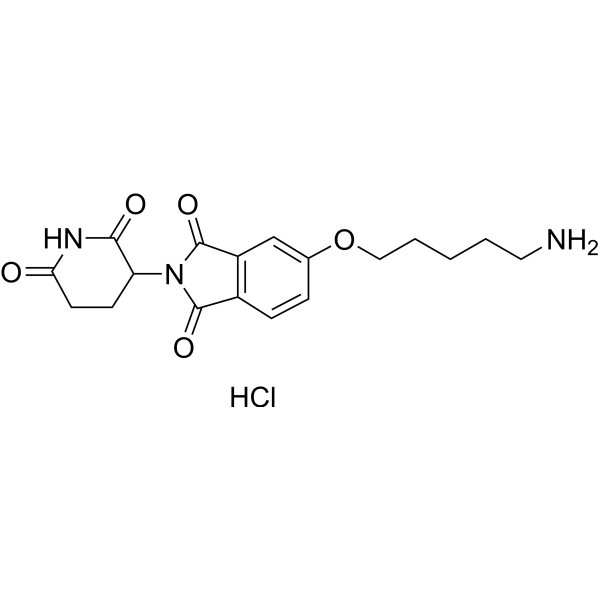 0 ImagesCat. No.: HY-149562CAS No.: 2761385-94-6Thalidomide-5-O-C5-NH2 hydrochloride is the Thalidomide (HY-10984)-based cereblon ligand used in the recruitment of CRBN protein.Thalidomide-5-O-C5-NH2 hydrochloride can be connected to the ligand for protein by a linker to form PROTACs.
-
Dinoprost (methoxyamine)
 0 ImagesCat. No.: HY-113909CAS No.: 101913-98-8Synonyms: Prostaglandin F2α (methoxyamine); PGF2α (methoxyamine)Dinoprost methoxyamine is an orally active, potent prostaglandin F (PGF) receptor (FP receptor) agonist. Dinoprost methoxyamine is a luteolytic hormone produced locally in the endometrial luminal epithelium and corpus luteum (CL). Dinoprost methoxyamine plays a key role in the onset and progression of labour.
-
Autophagonizer
 0 ImagesCat. No.: HY-111287CAS No.: 853136-76-2Synonyms: DK-1-49Autophagonizer (DK-1-49) is a small molecule autophagy inducer that results in an accumulation of autophagy-associated LC3-II and enhances levels of autophagosomes and acidic vacuoles. Autophagonizer inhibits cell viability and induces cell death in not only cancer cells but also Bax/Bak double-knockout cells with EC50 values of 3-4 μM.
-
Ir-CA
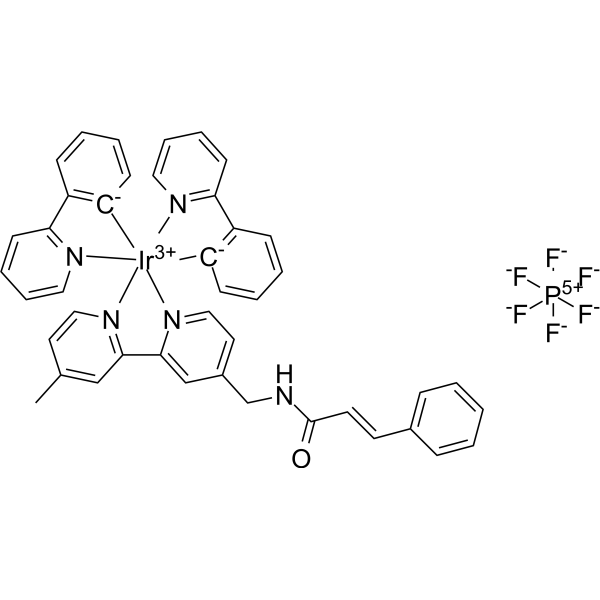 0 ImagesCat. No.: HY-162344CAS No.: 2870682-93-0Ir-CA is an antitumor agent. Ir-CA can accumulate in mitochondria and induces mitochondria dysfunction. Ir-CA induces apoptosis and autophagy. Ir-CA initiates mitophagy and cell cycle arrest to kill Cisplatin (HY-17394)-resistant A549R cells. Ir-CA can effectively inhibit metastasis by inhibiting MMP-2/MMP-9.
-
Autophagy/REV-ERB-IN-1 hydrochloride
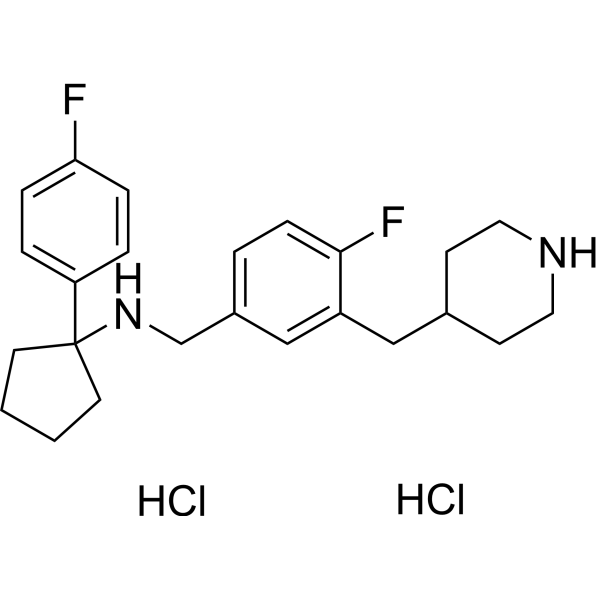 0 ImagesCat. No.: HY-163136AAutophagy/REV-ERB-IN-1 hydrochloride (Compound 24) is a dual autophagy and REV-ERB inhibitor with anticancer activity. Autophagy/REV-ERB-IN-1 (hydrochloride) has improved potency in blocking autophagy, enhanced toxicity against cancer cells. Autophagy/REV-ERB-IN-1 (hydrochloride) can be used for the research for melanoma.
-
Thalidomide-4-O-C13-NH2 hydrochloride
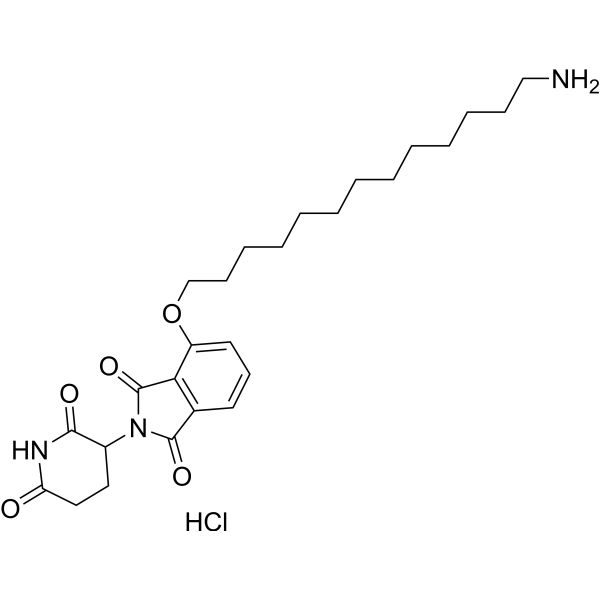 0 ImagesCat. No.: HY-149575Thalidomide-4-O-C13-NH2 hydrochloride is the Thalidomide (HY-10984)-based cereblon ligand used in the recruitment of CRBN protein.Thalidomide-4-O-C13-NH2 hydrochloride can be connected to the ligand for protein by a linker to form PROTACs.