



CFTR
Cystic fibrosis transmembrane conductance regulator
CFTR (Cystic fibrosis transmembrane conductance regulator), mutations of which cause cystic fibrosis, belongs to the ATP-binding cassette (ABC) transporter family and works as a channel for small anions, such as chloride and bicarbonate. CFTR is composed of two homologous halves, each comprising a transmembrane (TMD) and a nucleotide binding domain (NBD). CFTR activity is regulated by phosphorylation of its cytosolic regulatory (R) domain, and ATP binding and hydrolysis at two NBDs.
CFTR is expressed in many cell types throughout the body, but in the airways it is found mainly in secretory serous cells of the submucosal glands. Transitions between open and closed states of CFTR are regulated by ATP binding and hydrolysis on the cytosolic nucleotide binding domains, which are coupled with the transmembrane (TM) domains forming the pathway for anion permeation. CFTR function is normally tightly controlled as dysregulation can lead to life-threatening diseases such as secretory diarrhoea and cystic fibrosis.
All Product Categories
-
CFTR Related Products (129)
Related Products (129)

-
Antibodies (1)
-
I1421
 0 ImagesI1421 is an activator of the cystic fibrosis transmembrane conductance regulator (CFTR) with an EC50 of 64 nM for WT CFTR currents. I1421 also allosterically activates multiple mutants causing cystic fibrosis (CF) with good in vivo potency, with an oral bioavailability of 60% in mice corresponding to a half-life of 75 min. I1421 synergizes with Elexacaftor (HY-111772) to enhance CFTR currents.
-
VRT-325
 0 ImagesVRT-325 is a CFTR modulator. VRT-325 inhibits disulfide cross-linking between cysteines in transmembrane segments 6 and 7 of CFTR and P-gp. VRT-325 promotes maturation of CFTR and P-gp processing mutants, rescues ΔF508-CFTR folding at the endoplasmic reticulum. VRT-325 binds ΔF508-CFTR nucleotide-binding domain 1, and increases mature ΔF508-CFTR cell surface expression and chloride conductance. VRT-325 can be used for the research of cystic fibrosis[1][3].
-
Tezacaftor-d4
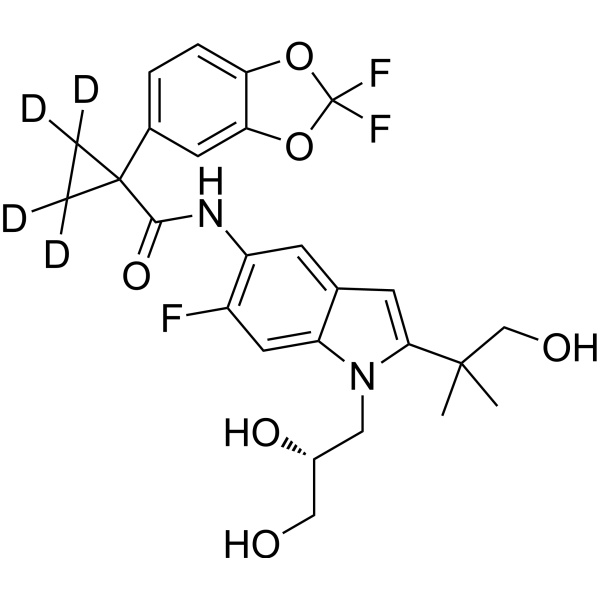 0 ImagesSynonyms: VX-661-d4Tezacaftor-d4 (VX-661-d4) is the deuterium-labeled Tezacaftor (HY-15448), a F508del CFTR corrector. Tezacaftor helps CFTR protein reach the cell surface.
-
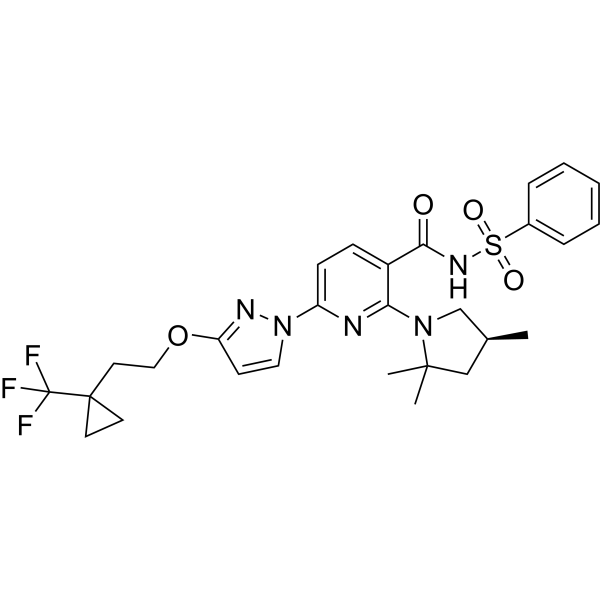
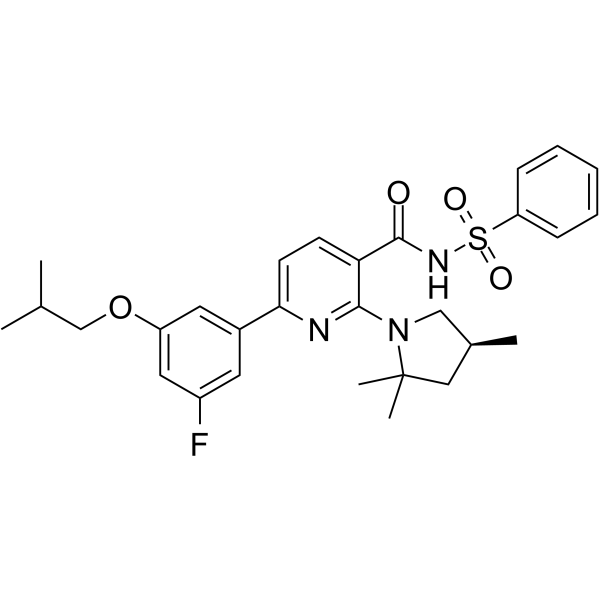
(R)-Elexacaftor
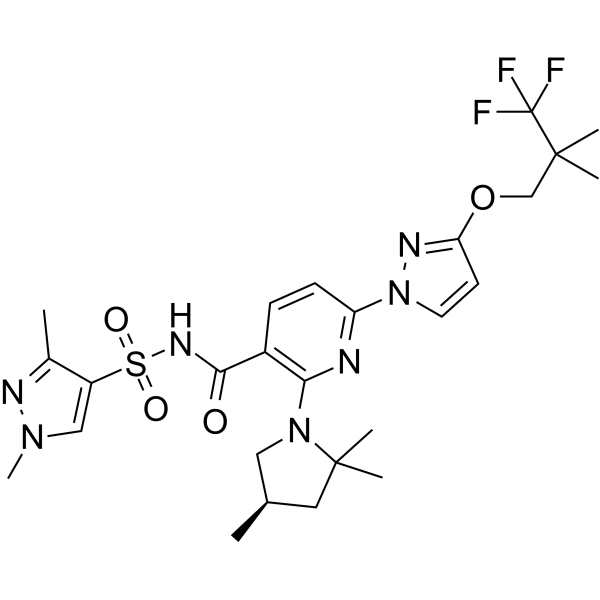 0 ImagesSynonyms: (R)-VX-445(R)-Elexacaftor ((R)-VX-445) is the enantiomer of Elexacaftor (HY-111772). Elexacaftor is an orally active CFTR modulator that targets nucleotide-binding domain 1. Elexacaftor stabilizes misfolded F508del-CFTR protein, enhances its trafficking to the plasma membrane, and significantly improves metabolic stability, thermal stability and ion conductivity. Elexacaftor not only restores chloride transport function in nasal epithelial cells and rescues multiple CFTR mutation subtypes, but also exerts multiplicative synergistic effects with Ivacaftor (HY-13017), and is often used in a triple combination therapy with Tezacaftor (HY-15448). Elexacaftor is widely used in basic and clinical translational research on cystic fibrosis.
-
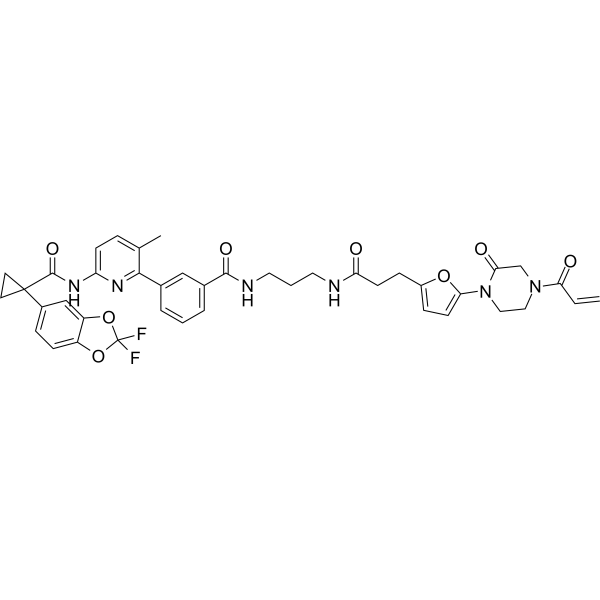
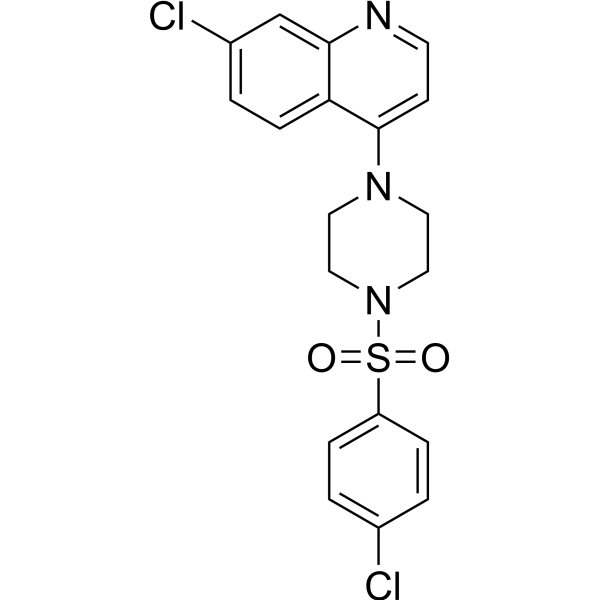
Cavosonstat
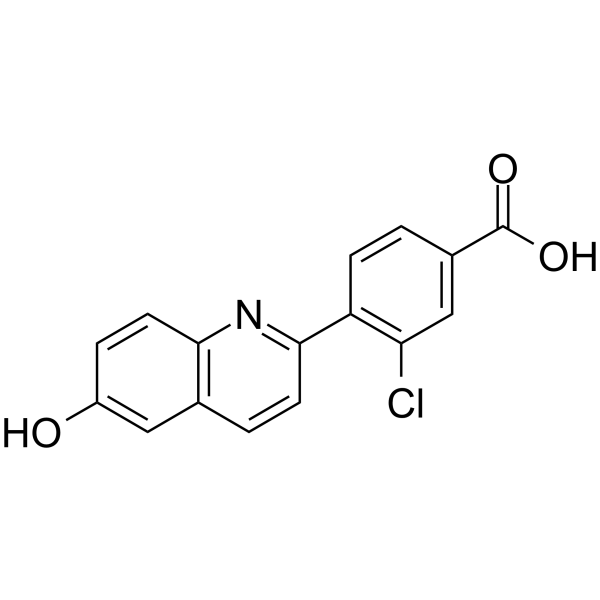 0 ImagesSynonyms: N91115
-
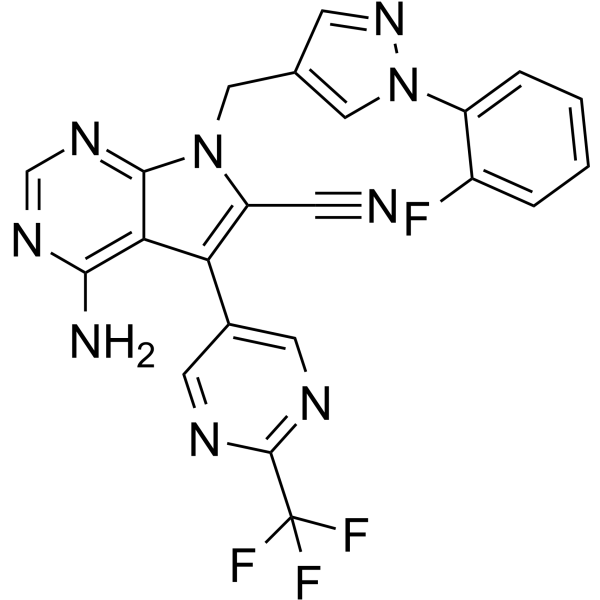
Ivacaftor-d18
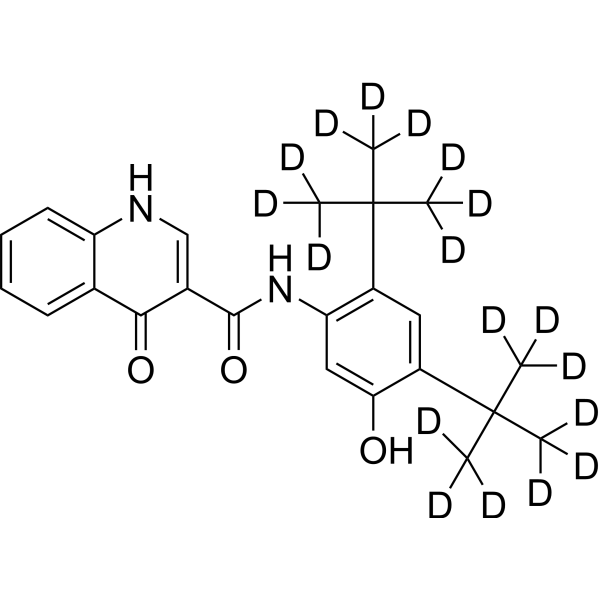 0 ImagesCat. No.: HY-13017S2CAS No.: 1413431-05-6Synonyms: VX-770-d18Ivacaftor-d18 is the deuterium labeled Ivacaftor. Ivacaftor (VX-770) is a potent and orally bioavailable CFTR potentiator, targeting G551D-CFTR and F508del-CFTR with EC50s of 100 nM and 25 nM, respectively.
-
Glyburide-d11
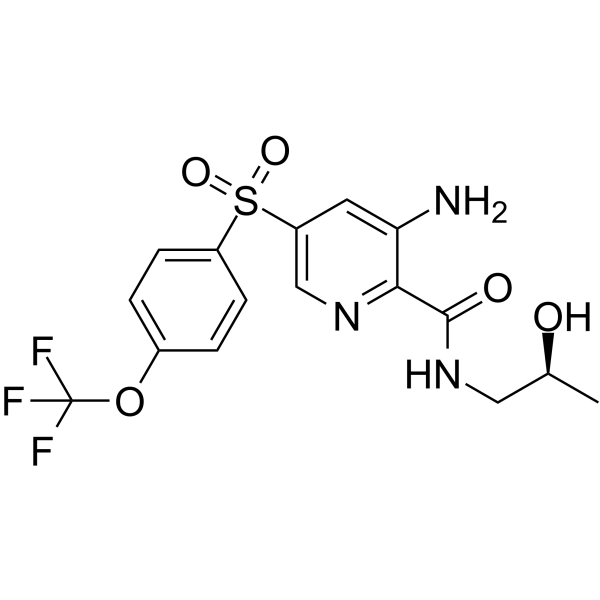
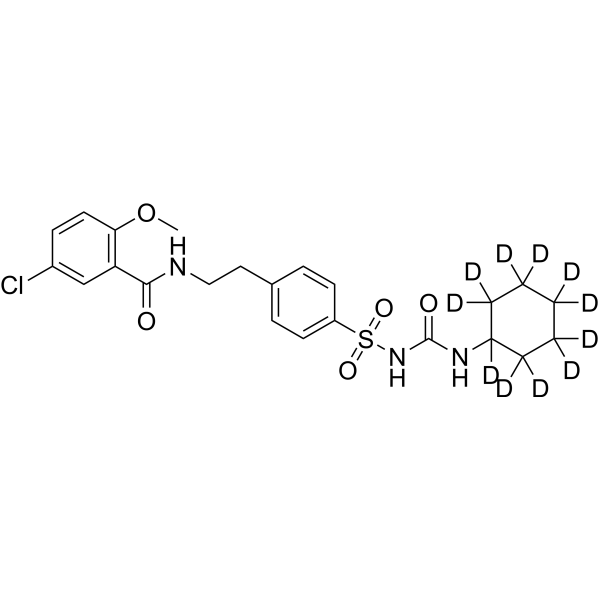 0 ImagesGlyburide-d11 is the deuterium labeled Glibenclamide. Glibenclamide (Glyburide) is an orally active ATP-sensitive K+ channel (KATP) inhibitor and can be used for the research of diabetes and obesity. Glibenclamide inhibits P-glycoprotein. Glibenclamide directly binds and blocks the SUR1 subunits of KATP and inhibits the cystic fibrosis transmembrane conductance regulator protein (CFTR). Glibenclamide interferes with mitochondrial bioenergetics by inducing changes on membrane ion permeability. Glibenclamide can induce autophagy.
-
CFTR corrector 12
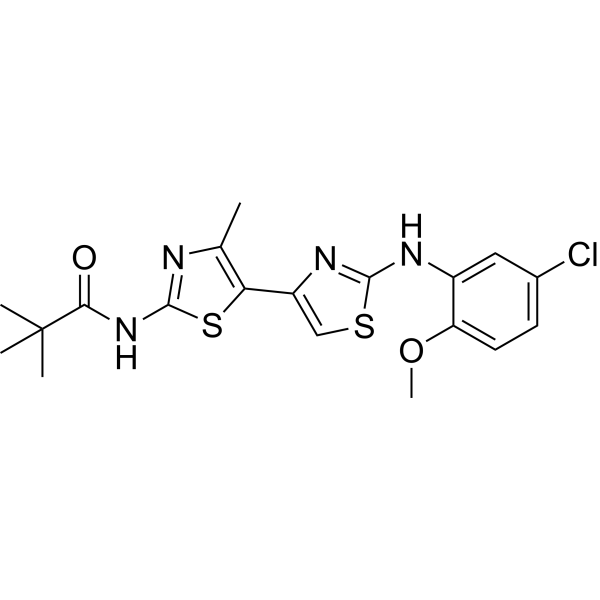 0 ImagesCFTR corrector 12 (compound 17C) is a bithiazole derivative, serving as CFTR corrector. CFTR corrector 12 has the ability to correct some folding defective mutants of the channel responsible for the control of chloride transport across the plasma membrane. CFTR corrector 12 recovers the α-sarcoglycan (α-SG) content in mutant cells.
-
(Rac)-Tezacaftor
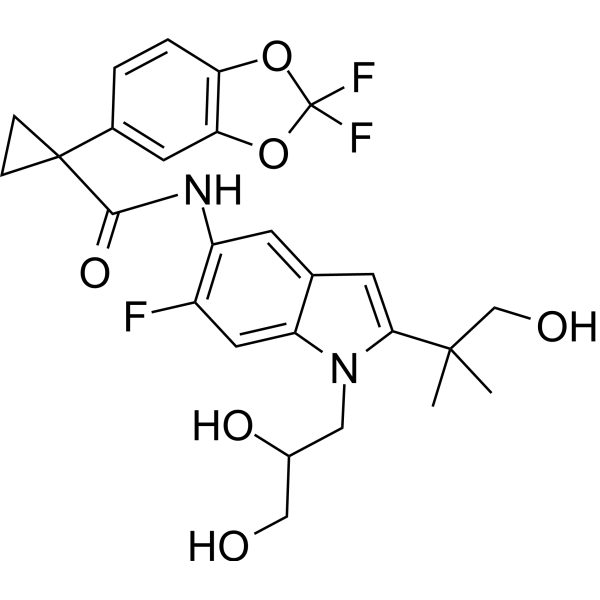 0 ImagesCat. No.: HY-15448ACAS No.: 1226709-85-8Synonyms: (Rac)-VX-661(Rac)-Tezacaftor ((Rac)-VX-661) is a racemate of Tezacaftor (HY-15448). Tezacaftor is a F508del CFTR corrector. (Rac)-Tezacaftor can be used for the research of cystic fibrosis.

-
Ivacaftor-d19
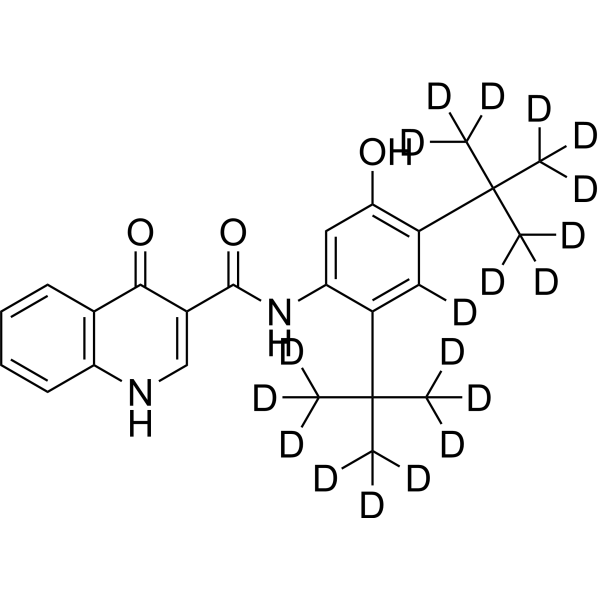 0 ImagesCat. No.: HY-13017S1CAS No.: 1413431-22-7Synonyms: VX-770-d19
-
Glafenine (Standard)
 0 ImagesGlafenine (Standard) is the analytical standard of Glafenine. This product is intended for research and analytical applications. Glafenine (Glafenin) is a non-selective, non-steroidal anti-inflammatory drug-based COX-1/COX-2 inhibitor. Glafenine exerts anti-inflammatory, anti-proliferative and anti-cell migration effects by inhibiting the arachidonic acid metabolic pathway and reducing prostaglandin synthesis. Glafenine can induce cell cycle arrest in vascular smooth muscle cells and endothelial cells and reduce the synthesis of the extracellular matrix protein Tenascin. Glafenine can be used in the research of inflammatory-related diseases, vascular restenosis and cystic fibrosis (CF).




