



LXR
Liver X receptor
LXRs (Liver X Receptor α and β) are members of the nuclear hormone receptor superfamily of ligand-activated transcription factors. LXRs are oxysterol-activated transcription factors that upregulate a suite of genes that together promote coordinated mobilization of excess cholesterol from cells and from the body. The LXRs, like other nuclear receptors, are anti-inflammatory, inhibiting signal-dependent induction of pro-inflammatory genes by nuclear factor-κB, activating protein-1, and other transcription factors.
LXRα is expressed predominately in some tissues, including the liver, kidney, macrophages, and adipose tissue. However, LXRβ is ubiquitously expressed. Activating LXRα (mainly expressed in liver) results in high triglyceride production, and growing evidence suggests that selective LXRβ agonists can reduce this side effect.
All Product Categories
-
LXR 関連製品 (92)
関連製品 (92)

-
抗体 (1)

-
Cholest-5-ene-3ß,22(S)-diol
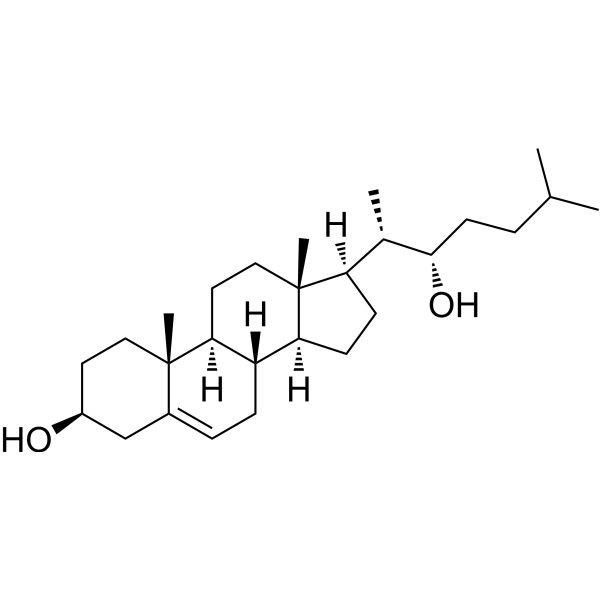 0 Images別名: (22S)-HydroxycholesterolCholest-5-ene-3ß,22(S)-diol ((22S)-Hydroxycholesterol) is an orally active oxysterol with no significant cytotoxic, oxidative, or inflammatory effects on human prokaryotic leukemia cells. Cholest-5-ene-3ß,22(S)-diol inhibits weight gain and increased serum triacylglycerol (TAG) levels in rat models.
-
24,25-Epoxycholesterol
 0 Images24,25-Epoxycholesterol is an oxysterol agonist of the liver X receptor that can inhibit the activity of 3-hydroxy-3-methylglutaryl-CoA reductase (HMG-CoA reductase) in liver cells. 24,25-Epoxycholesterol regulates cholesterol metabolism in the liver.
-
Saringosterol
 0 ImagesSaringosterol is an orally active steroid found in Sargassum muticum. Saringosterol is a LXR agonist. Saringosterol can lower cholesterol levels and inhibit the mRNA and protein expression of peroxisome proliferator-activated receptor γ (PPARγ) and CCAAT enhancer-binding protein α (C/EBPα). Saringosterol has anti-obesity, anti-atherosclerosis, anti-Mycobacterium tuberculosis and anti-depressant activities.
-
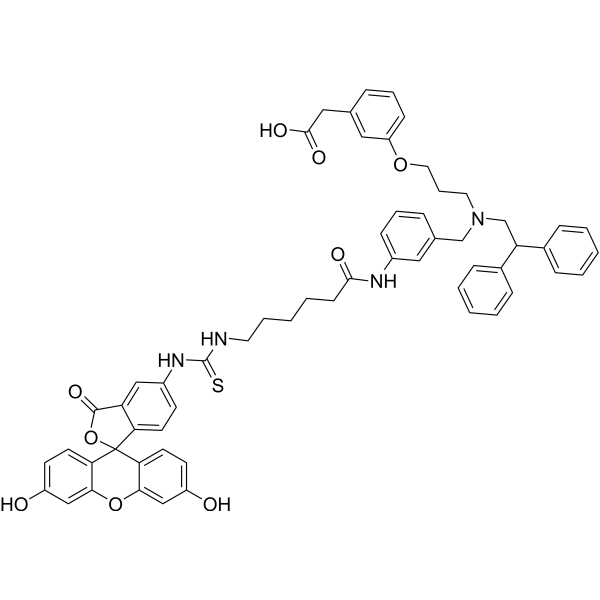
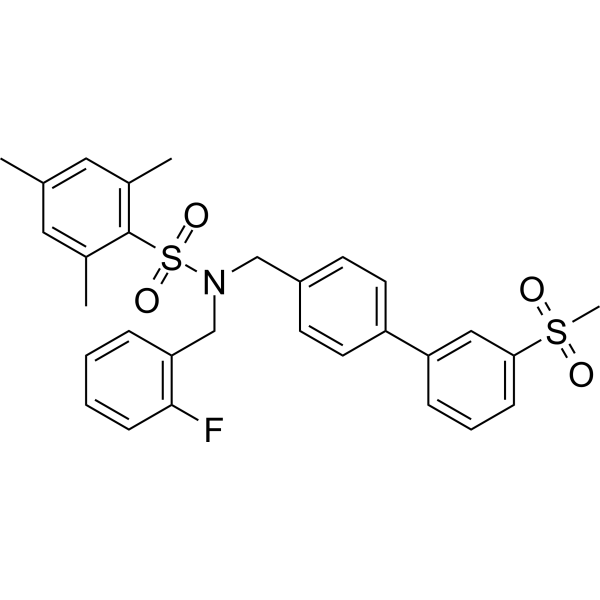
BLT-4
 0 ImagesBLT-4 is a specific, reversible inhibitor of scavenger receptor, class B, type I (SR-BI). BLT-4 inhibits the transfer of lipids between high-density lipoproteins (HDL) and cells mediated by SR-BI. .
-
Ginsenoside C-K hexapropionate ester
 0 ImagesGinsenoside C-K hexapropionate ester (Structure 2) is a selective agonist of LXRα, with no significant activation effect on LXRβ. Ginsenoside C-K hexapropionate ester upregulates the expression of downstream genes such as ABCA1 by activating LXRα, promoting reverse cholesterol transport, and reducing lipid deposition in macrophage-derived foam cells. It can be used in the research of atherosclerosis. Ginsenoside C-K hexapropionate ester is a derivative synthesized from ginsenoside Compound K, an active metabolite of Panax notoginseng saponins, by modification with propionic anhydride.
-
Larsucosterol
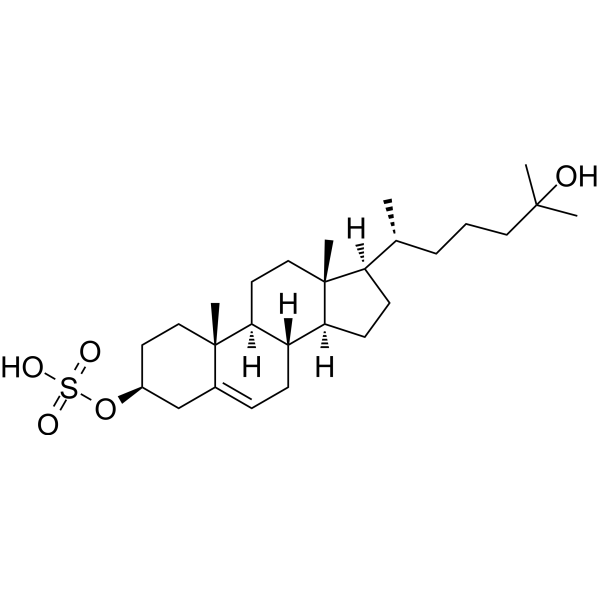 0 Images製品番号: HY-139576CAS 番号: 884905-07-1別名: DUR-928Larsucosterol (DUR-928), a cholesterol metabolite, is a potent liver X receptor (LXR) antagonist. Larsucosterol as a potent endogenous regulator decreases lipogenesis. Larsucosterol inhibits the cholesterol biosynthesis via decreasing mRNA levels and inhibiting the activation of SREBP-1.
-
Desmosterol (Standard)
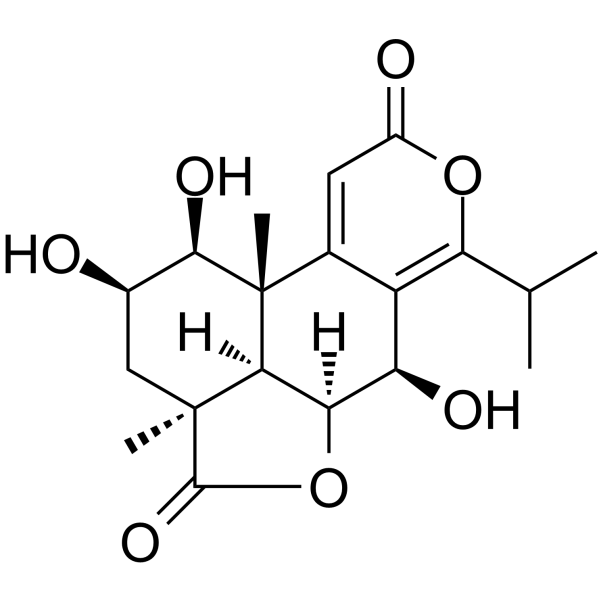
 0 ImagesDesmosterol (Standard) is the analytical standard of Desmosterol. This product is intended for research and analytical applications. Desmosterol is a cholesterol-like molecule. In the Bloch pathway of cholesterol biosynthesis, Desmosterol is a direct precursor of cholesterol. As an endogenous metabolite, Desmosterol is used to study cholesterol metabolism [1]. Desmosterol is an LXR activator and SREBP inhibitor, which can suppress macrophage inflammasome activation and prevent vascular inflammation and atherosclerosis. A reduction in Desmosterol promotes the production of mitochondrial reactive oxygen species (ROS) in macrophages and pyrin domain-dependent inflammasome activation of NLRP3. Desmosterol holds potential for research in inflammation, metabolism, and cardiovascular diseases [1][2][3].
-
GW6340
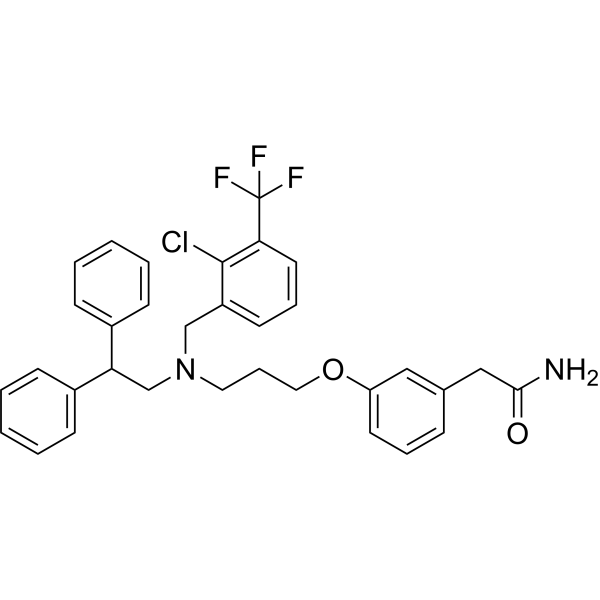 0 ImagesGW6340 is an intestinal-specific LXR agonist. GW6340 promotes macrophage reverse cholesterol transport (mRCT).
-
Gymnestrogenin
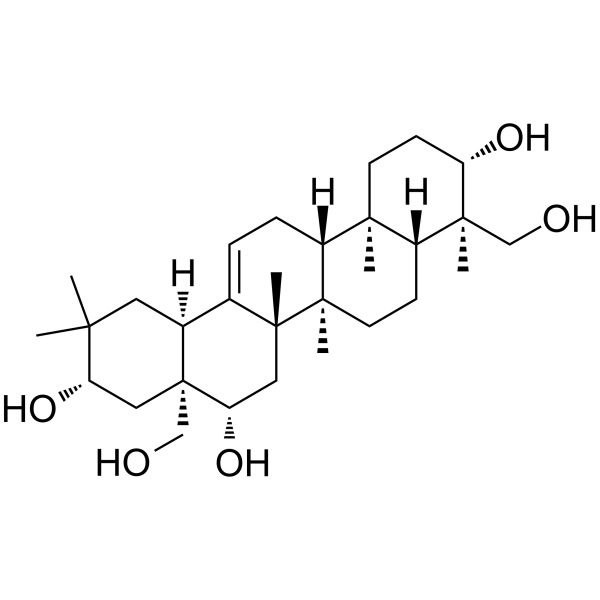 0 ImagesGymnestrogenin is a pentahydroxytriterpene from the leaves of Gymnema sylvestre R.Br. Gymnestrogenin is a LXR antagonist with IC50s of 2.5 and 1.4 μM for LXRα and LXRβ transactivation, respectively. Gymnestrogenin reduces the transcriptional activity of LXR even on its own promoter, thus reducing the mRNA expression.
-
Dendrogenin A
 0 Images製品番号: HY-149132CAS 番号: 1191043-85-2別名: DDADendrogenin A (DDA) is a ligand for liver X receptor (LXR), that induces the expression of sodium/iodine symporter, and increases iodine uptake. Dendrogenin A induces cell differentiation of MCF-7, and reactivates the function of lactating cells. Dendrogenin A induces the expressions of the TSH receptor, thyroid peroxidase, and thyroglobulin, and affects thyroid hormone generation. Dendrogenin A exhibits cytotoxicity in cancer cell B-CPAP and 8505c with IC50 of 4.1 and 6.2 µM. Dendrogenin A arrests the cell cycle at G0/G1 phase.
-
Larsucosterol sodium
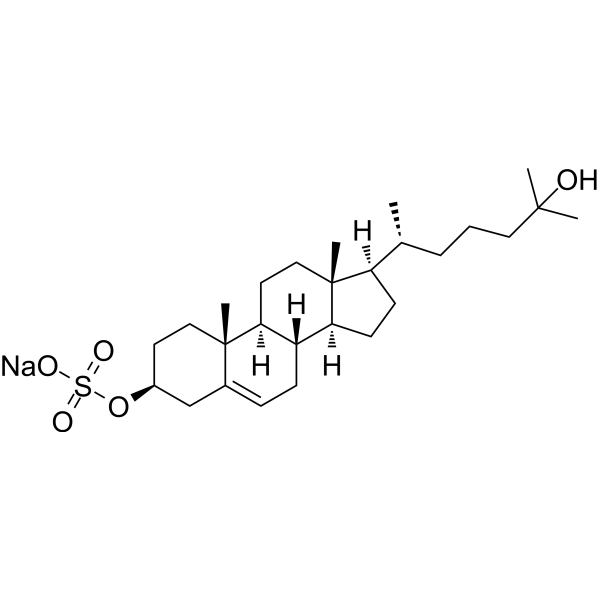 0 Images製品番号: HY-139576ACAS 番号: 1174047-40-5別名: DUR-928 sodiumLarsucosterol (DUR-928) sodium, a cholesterol metabolite, is a potent liver X receptor (LXR) antagonist. Larsucosterol sodium as a potent endogenous regulator decreases lipogenesis. Larsucosterol sodium inhibits the cholesterol biosynthesis via decreasing mRNA levels and inhibiting the activation of SREBP-1.
-
Rohitukine
 0 Images製品番号: HY-119831CAS 番号: 71294-60-5Rohitukine is an orally active CDK9/T1 inhibitor with an IC50 of 0.3 μM. Rohitukine blocks ATP binding sites of CDK2/A and CDK9/T1, suppresses PPARγ, AKT, mTOR, C/EBPα, SREBP-2, and NF-κB signaling, and increases hepatic LXRα expression. Rohitukine induces S-phase cell cycle arrest, ROS generation, apoptosis, and exhibits anti-inflammatory activity. Rohitukine can be used for the research of leukemia, pancreatic cancer, prostate cancer, breast cancer, CNS cancer, ovarian cancer, lung cancer, dyslipidemia, inflammatory diseases, inflammatory bowel disease, and arthritis.
-
Taraxasterol (Standard)
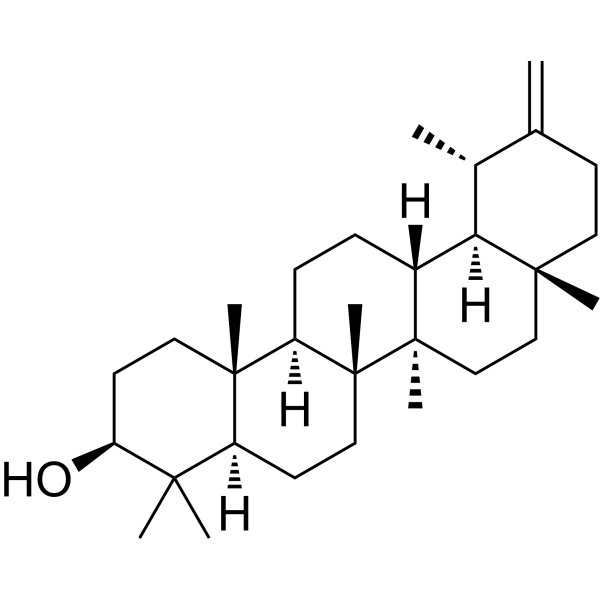 0 ImagesTaraxasterol (Standard) is the analytical standard of Taraxasterol. This product is intended for research and analytical applications. Taraxasterol is a pentacyclic triterpenoid compound isolated from Taraxacum mongolicum. Taraxasterol is an LXRα activator, with metabolic and anti-inflammatory effects. Taraxasterol may be used in research on immune-inflammatory diseases.
-
PFM046
 0 Images製品番号: HY-170570CAS 番号: 3053859-57-4PFM046 is the antagonist for liver X receptor (LXR), that inhibits the activation of LXRα and LXRβ with IC50 of 2.04 μM and 1.58 μM. PFM046 inhibits the expression of SCD1 and FASN, upregulates the expression of ABCA1, and exhibits antitumor efficacy in mouse models.
-
LXR agonist 2
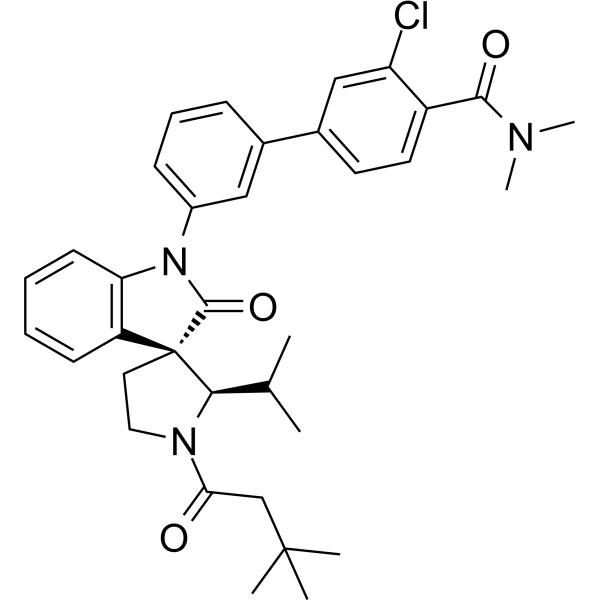 0 Images製品番号: HY-146288CAS 番号: 2978788-07-5LXR agonist 2 (compound 18rr) is a potent LXR (liver X receptor) agonist. LXR agonist 2 can stabilize NCOA1 (co-activator), leading to LXR agonism.
-
Ouabagenin
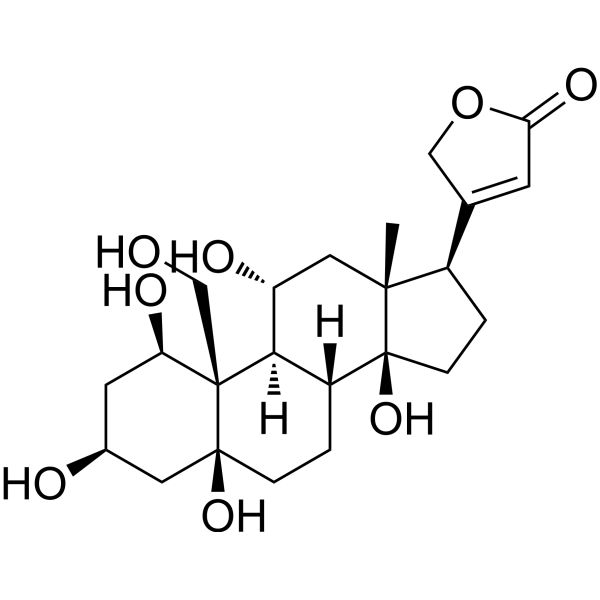 0 Images製品番号: HY-W754708CAS 番号: 508-52-1




