



Fluorescent Dye
Fluorescence is a phenomenon of photoluminescence in luminescence. When an atom is irradiated by light, some electrons around the nucleus jump from their original orbitals to higher energy orbitals under the influence of light energy, i.e., from the ground state to the first or second excited single-line state, etc. Due to the instability of the first or second excited singlet state, the electron returns from the excited singlet state to the ground state accompanied by released energy, resulting in fluorescence.
Fluorescent dyes can be covalently bound or physically adsorbed in the structure of the substance. The fluorescence properties allow for the characterization, localization and quantitative analysis of the labeled object. Fluorescent dyes have shown great potential for the detection of proteins, nucleic acids, cells, and immunoassays, attributed to the advantages in non-radioactive contamination, simple experimental operation and easy observation.
Fluorescent dyes have penetrated many fields such as pharmacology, physiology, environmental science, and information science, as well as functional studies of proteins and drug screening.
All Product Categories
-
Fluorescent Dye Related Products (4831)
Related Products (4831)

-
Antibodies (4)

-
FAM labled Rovanersen sodium
 0 ImagesCat. No.: HY-132593DFAM labled Rovanersen sodiumis a FAM labled Rovanersen sodium.
-
1,4-Bis(mesitylamino)anthraquinone
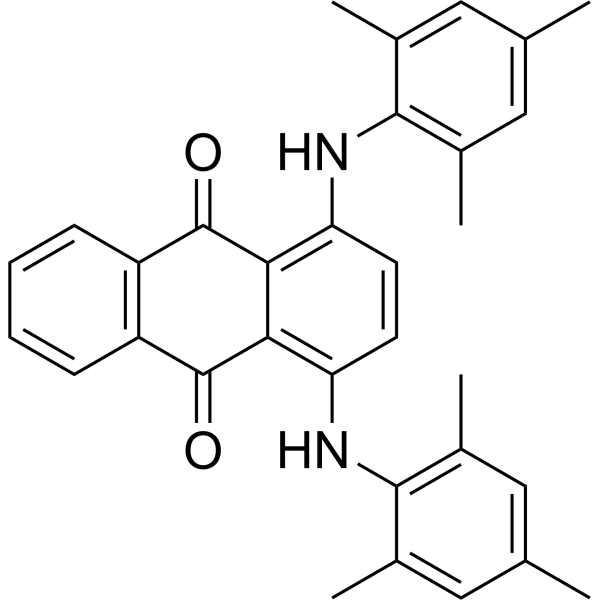 0 Images1,4-Bis(mesitylamino)anthraquinone is a multifunctional dye. Dyes are important tools in biological experiments. They can help researchers observe and analyze cell structures, track biomolecules, evaluate cell functions, distinguish cell types, detect biomolecules, study tissue pathology and monitor microorganisms. Their applications range from basic scientific research to clinical A wide range of diagnostics. Dyes are also widely used in traditional fields such as textile dyeing, as well as in emerging fields such as functional textile processing, food pigments and dye-sensitized solar cells.
-
ATTO 647 NHS ester
 0 ImagesCat. No.: HY-D1993ATTO 647 NHS ester is a fluorescent label targeting free amino groups. ATTO 647 NHS ester can undergo a nucleophilic reaction with the free amino groups of EF-C peptide via its activated carboxylic acid group to form a stable covalent conjugate. ATTO 647 NHS ester-labeled nanofibers not only retain retroviral transduction-enhancing activity but also maintain stable fluorescent signals in both buffer and cell culture systems. ATTO 647 NHS ester is suitable for detection applications including fluorescence spectroscopy, microscopy and flow cytometry. ATTO 647 NHS ester has been used in studies related to HIV-1 infection.
-
Ratio-Coppersensor-1
 0 ImagesCat. No.: HY-D3231Ratio-Coppersensor-1 is a selective ratiometric copper ion Fluorescent reporter (excitation wavelength: 480 nm; emission peak central wavelengths at 505 nm and 570 nm, respectively). Ratio-Coppersensor-1 exhibits extremely high selectivity for Cu+ at cellular concentrations, outperforming other competing metal ions, and shows an approximately 20-fold change in fluorescence ratio upon Cu+ binding. Ratio-Coppersensor-1 is capable of reflecting changes in Cu levels.
-
C6 NBD L-threo-ceramide
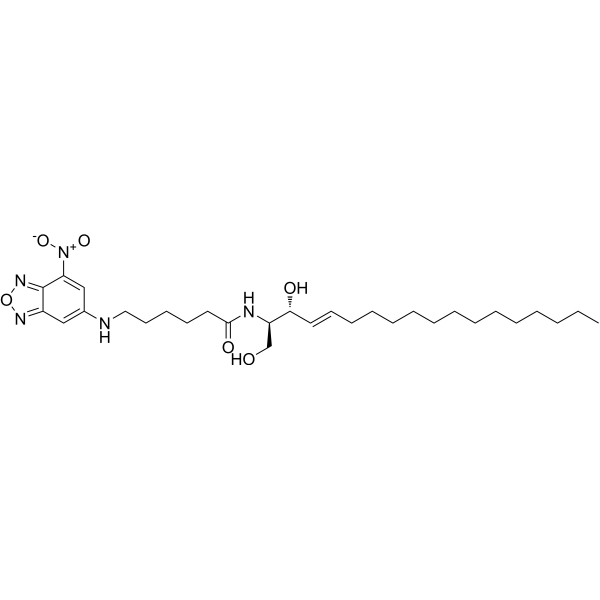 0 ImagesCat. No.: HY-D1749CAS No.: 114301-96-1C6 NBD L-threo-ceramide is a cell-permeable analog of ceramides that is tagged with a fluorescent group C6 nitrobenzoxadiazole (C6 NBD). It is rapidly transferred between liposomes, labels the Golgi apparatus, and is metabolized to C6 NBD sphingomyelin in BHK cells and V79 fibroblasts.
-
NpCy-4
 0 ImagesCat. No.: HY-D3005NpCy-4 is a reliable reporter for monitoring lysosomal pH and viscosity changes in real time during Autophagy (λex = 650 nm; λem = 660-740 nm). NpCy-4 demonstrates a superior signal-to-background ratio (SBR) for cellular imaging. NpCy-4 facilitates real-time, noninvasive diagnostic imaging of acute gastritis model with high contrast.
-
Alkyne MegaStokes dye 735
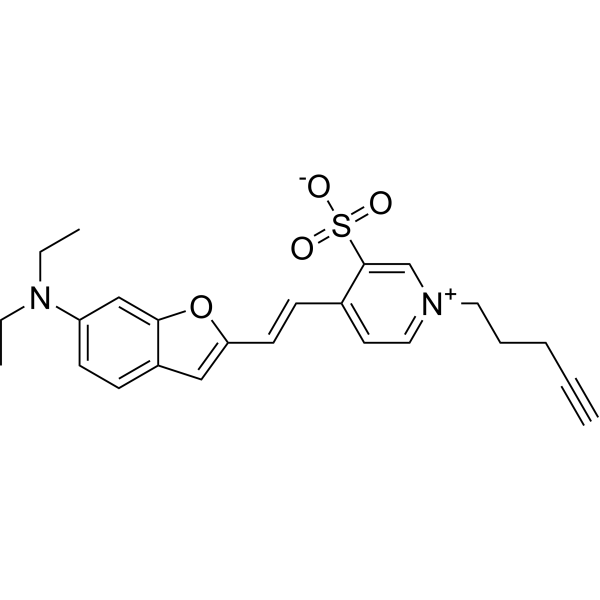 0 ImagesCat. No.: HY-D1357CAS No.: 1246853-79-1Alkyne MegaStokes dye 735 is a multifunctional dye. Dyes are important tools in biological experiments. They can help researchers observe and analyze cell structures, track biomolecules, evaluate cell functions, distinguish cell types, detect biomolecules, study tissue pathology and monitor microorganisms. Their applications range from basic scientific research to clinical A wide range of diagnostics. Dyes are also widely used in traditional fields such as textile dyeing, as well as in emerging fields such as functional textile processing, food pigments and dye-sensitized solar cells.

-
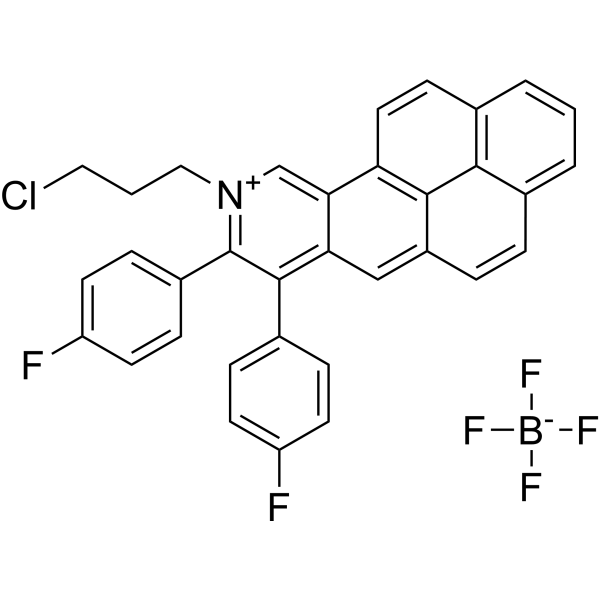
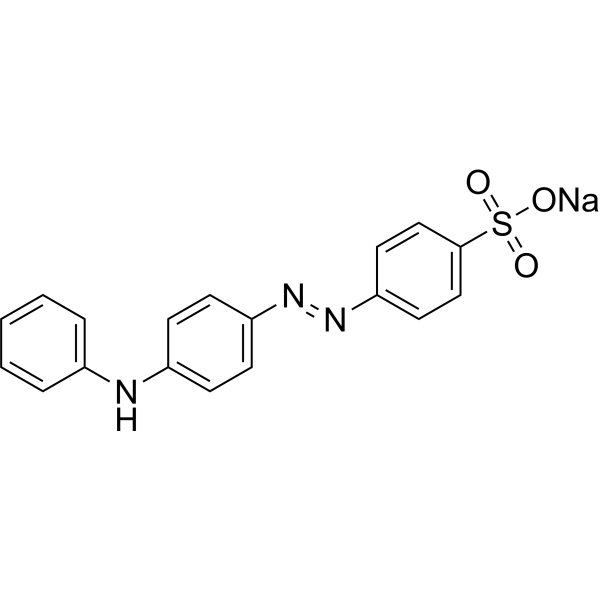
BIN-3
 0 ImagesCat. No.: HY-D2988CAS No.: 3086791-47-8
-
Rhodamine B-Chitosan (MW 40000)
 0 ImagesCat. No.: HY-D3048DRhodamine B-Chitosan (MW 40000) is a Rhodamine B (HY-Y0016)-labeled chitosan with a molecular weight of 40,000. Rhodamine B-Chitosan (MW 40000) combines the polysaccharide properties of chitosan with the fluorescence properties of Rhodamine B, playing an important role in fields such as fluorescent labeling, cell imaging, and drug delivery research (Ex/Em = 546/610 nm).
-
IETDC
 0 ImagesCat. No.: HY-D3169CAS No.: 1476735-95-1IETDC is a caspase 8-responsive fluorescent probe. IETDC is cleaved by activated caspase 8 to release D-cysteine, which then reacts with 6-hydroxy-2-cyanobenzothiazole (HCBT) to form firefly luciferin in situ. IETDC must be used in conjunction with PCL-2 (HY-D3168) to detect the co-existence of hydrogen peroxide and caspase 8. IETDC is applicable to studies related to acute inflammation.
-
18:1-6:0 DNP-C11 BODIPY 505/515 TG
 0 ImagesCat. No.: HY-N15876CAS No.: 2260795-52-418:1-6:0 DNP-C11 BODIPY 505/515 TG is a fluorescently-labeled triglyceride that can be used to study the effects of phosphoinositides (Ex/Em = 495/503 nm).
-
Bacterial Sortase Substrate III, Abz/DNP
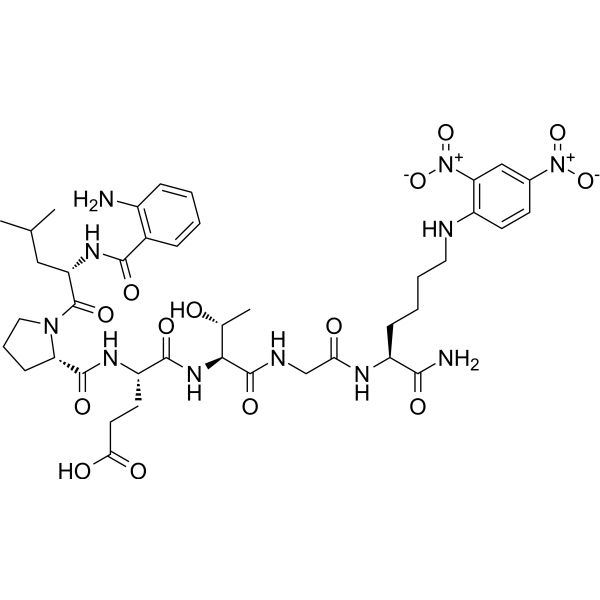 0 ImagesCat. No.: HY-P1883CAS No.: 2857862-12-3Bacterial Sortase Substrate III, Abz/DNP is a fluorescent peptide substrate. Bacterial Sortase Substrate III, Abz/DNP undergoes cleavage catalyzed by Staphylococcus aureus sortase A (SrtAΔN24) and Streptococcus pyogenes sortase A (SrtAΔN81), and catalyzes the formation of an amide bond between the carboxyl group of threonine and the amino group of the cell wall cross-bridge. Cleavage of this substrate can be detected at Ex/Em=320 nm/420 nm.
-
Ethyl benzo[6,7]-4-oxo-4H-quinolizine-3-carboxlate
![Ethyl benzo[6,7]-4-oxo-4H-quinolizine-3-carboxlate](https://file.medchemexpress.com/product_pic/hy-d1488.gif "Click to View Ethyl benzo[6,7]-4-oxo-4H-quinolizine-3-carboxlate Product Detail") 0 ImagesCat. No.: HY-D1488CAS No.: 101192-30-7Ethyl benzo[6,7]-4-oxo-4H-quinolizine-3-carboxlate (Compound 3) is a Mg2+ selective fluorescent indicator.
0 ImagesCat. No.: HY-D1488CAS No.: 101192-30-7Ethyl benzo[6,7]-4-oxo-4H-quinolizine-3-carboxlate (Compound 3) is a Mg2+ selective fluorescent indicator.
-
BMV109
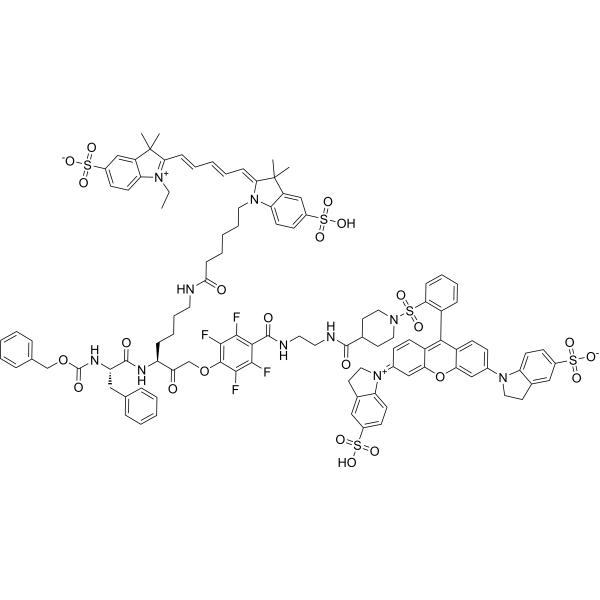 0 ImagesCat. No.: HY-149931CAS No.: 1458731-58-2BMV109 is a quenched probe that becomes fluorescent when cleaved and covalently bound by active cathepsin proteases. BMV109 can be exploited for tumor imaging.
-
Sulfo-Cy7 carboxylic acid
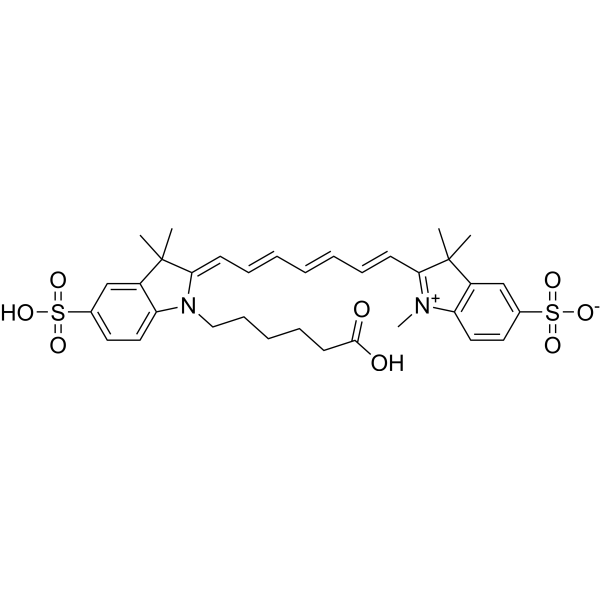 0 ImagesCat. No.: HY-D1881CAS No.: 1251915-04-4Sulfo-Cy7 carboxylic acid (compound 6m) is a cyanine dye.
-
FAM labled Obeversen sodium
 0 ImagesCat. No.: HY-145624CFAM labled Obeversen sodiumis a FAM labled Obeversen sodium.




