



nAChR
Nicotinic acetylcholine receptors
nAChRs (nicotinic acetylcholine receptors) are neuron receptor proteins that signal for muscular contraction upon a chemical stimulus. They are cholinergic receptors that form ligand-gated ion channels in the plasma membranes of certain neurons and on the presynaptic and postsynaptic sides of theneuromuscular junction. Nicotinic acetylcholine receptors are the best-studied of the ionotropic receptors. Like the other type of acetylcholine receptor-the muscarinic acetylcholine receptor (mAChR)-the nAChR is triggered by the binding of the neurotransmitter acetylcholine (ACh). Just as muscarinic receptors are named such because they are also activated by muscarine, nicotinic receptors can be opened not only by acetylcholine but also by nicotine —hence the name "nicotinic".
All Product Categories
-
nAChR Related Products (475)
Related Products (475)

-
Antibodies (5)
-
NS-6740 hydrochloride
 0 ImagesCat. No.: HY-118646ACAS No.: 753499-14-8NS-6740 hydrochloride is a silent agonist of α7 nicotinic acetylcholine receptor (α7 nAChR) with an IC50 of 3 nM. NS-6740 hydrochloride reduces LPS-induced TNF-α release and regulates the cholinergic anti-inflammatory pathway. NS-6740 hydrochloride exerts anti-inflammatory effects. NS-6740 hydrochloride reduces long-term potentiation in hippocampal brain slices. NS-6740 hydrochloride can be used in research related to neuroinflammation and schizophrenia.
-
(+)-Vesamicol
 0 ImagesSynonyms: (+)-AH5183(+)-Vesamicol ((+)-AH5183) is an acetylcholine vesicular transport system inhibitor. (+)-Vesamicol blocks acetylcholine storage and uptake by synaptic vesicles, reducing transmitter availability for neuromuscular junction release. (+)-Vesamicol acts as a neuromuscular blocking agent, producing frequency-dependent neuromuscular block in rat hemidiaphragm preparations.
-
Dihydro-β-erythroidine
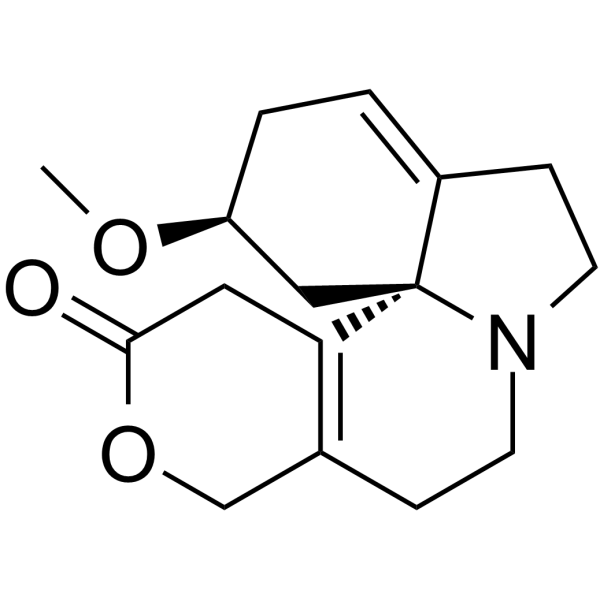 0 ImagesCat. No.: HY-N10497CAS No.: 23255-54-1Dihydro-β-erythroidine is a a competitive nicotinic receptor antagonist. Dihydro-β-erythroidine blocks the discriminative stimulus properties of nicotine. Dihydro-β-erythroidine inhibits the anxiolytic effect of nicotine induced.
-
Rabies Virus Matrix Protein Fragment(RV-MAT)
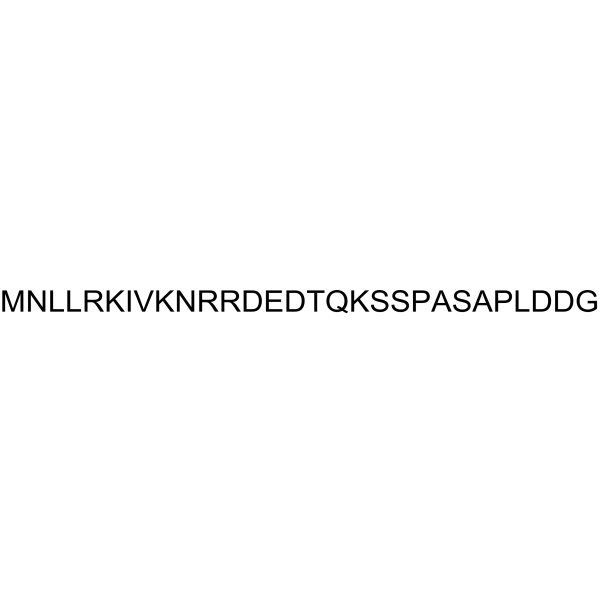 0 ImagesCat. No.: HY-P4129CAS No.: 1023648-37-4Rabies Virus Matrix Protein Fragment (RV-MAT) is a polypeptide. Rabies Virus Matrix Protein Fragment targets the acetylcholine receptor (AChR) that exists on the cell surface.
-
Flupyrimin (Standard)
 0 ImagesCat. No.: HY-145297RCAS No.: 1689566-03-7Flupyrimin (Standard) is the analytical standard of Flupyrimin. This product is intended for research and analytical applications. Flupyrimin is the antagonist for insect nicotinic acetylcholine receptor (nAChR) that exhibits insecticidal effect by targeting insect nervous system.
-
Pyrantel
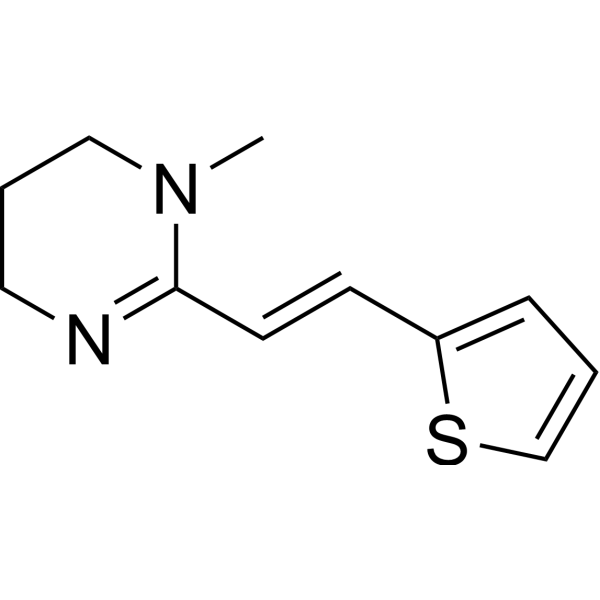 0 ImagesCat. No.: HY-12641ACAS No.: 15686-83-6Pyrantel is an orally active antiparasitic agent. Pyrantel induces spastic paralysis in parasites via actions on neural and muscular cholinergic receptors as a nicotinic acetylcholine receptor (nAChR) agonist. Pyrantel eliminates both immature and mature endoparasites in horses. Pyrantel can be used in research related to parasitic infections.
-
Galanthamine hydrobromide (Standard)
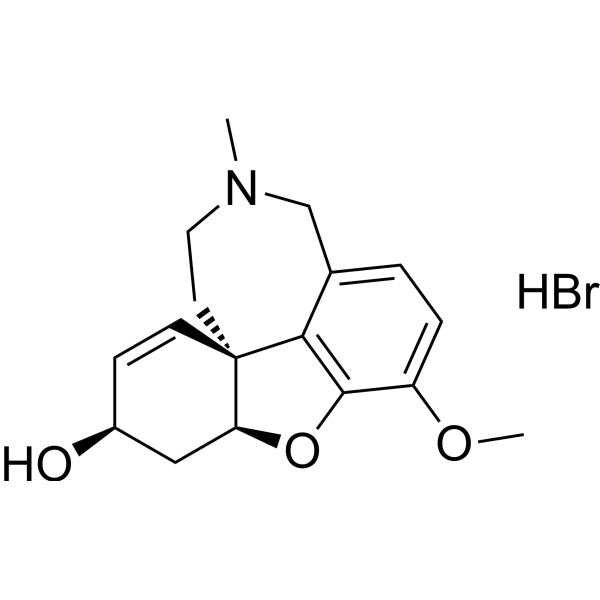 0 ImagesGalanthamine (hydrobromide) (Standard) is the analytical standard of Galanthamine (hydrobromide). This product is intended for research and analytical applications. Galanthamine hydrobromide (Galantamine hydrobromide) is a selective, reversible, competitive, alkaloid AChE inhibitor, with an IC50 of 0.35 µM. Galanthamine hydrobromide is a potent allosteric potentiating ligand (APL) of human α3β4, α4β2, α6β4 nicotinic receptors ( nAChRs). Galanthamine hydrobromide is developed for the research of Alzheimer's disease (AD).


-
GAT107
 0 ImagesCat. No.: HY-117611CAS No.: 1476807-74-5GAT107 (compound 1b) is a potent α7 nAChR ago-PAMs (positive allosteric modulators).
-
Aniracetam (Standard)
 0 ImagesSynonyms: Ro 13-5057 (Standard)Aniracetam (Standard) is the analytical standard of Aniracetam. This product is intended for research and analytical applications. Aniracetam (Ro 13-5057) is an orally active neuroprotective agent, possessing nootropics effects. Aniracetam potentiates the ionotropic quisqualate (iQA) responses in the CA1 region of rat hippocampal slices. Aniracetam also potentiates the excitatory post synaptic potentials (EPSPs) in Schaffer collateral-commissural synapses. Aniracetam can prevents the CO2-induced impairment of acquisition in hypercapnia model rats. Aniracetam can be used to research cerebral dysfunctional disorders.
-
PHA-543613 (Standard)
 0 ImagesPHA-543613 (Standard) is the analytical standard of PHA-543613 (HY-105670). This product is intended for research and analytical applications. PHA-543613 is a potent, orally active, brain-penetrant and selective α7 nAChR agonist with a Ki of 8.8 nM. PHA-543613 displays selectivity for α7-nAChR over α3β4, α1β1γδ, α4β2 and 5-HT3 receptors. PHA-543613 can be used for the cognitive deficits of Alzheimer's disease and schizophrenia research.
-
Levamisole (Standard)
 0 ImagesSynonyms: (-)-Tetramisole (Standard)Levamisole (Standard) is the analytical standard of Levamisole. This product is intended for research and analytical applications. Levamisole ((-)-Levamisole), an anthelmintic agent with immunomodulatory properties. Levamisole acts as a positive allosteric modulator (PAM) for the α3β2 (EC50=300 μM) and α3β4 (EC50=100 μM) subtype of nAChRs. Orally active.
-
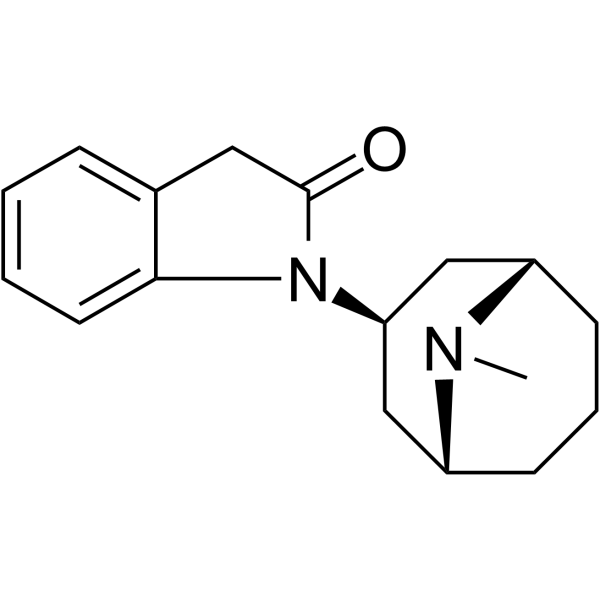
SIB-1553A free base
 0 ImagesCat. No.: HY-107676ACAS No.: 191611-76-4SIB-1553A free base is an orally bioavailable nicotinic acetylcholine receptors (nAChRs) agonist, with selectivity for β4 subunit-containing nAChRs. SIB-1553A free base is also a selective neuronal nAChR ligand. SIB-1553A free base is a cognitive enhancer, and has therapeutic potential for the symptomatic treatment of Alzheimer’s disease and other cognitive disorders.
-
AZD0328
 0 ImagesCat. No.: HY-116507CAS No.: 220099-91-2AZD0328 is a selective α7 nAChR partial agonist. AZD0328 selectively enhances midbrain dopaminergic neuronal activity and enhances cortical dopamine levels in rats. AZD0328 improves cognitive performance.
-
Lobeline hydrochloride (Standard)
 0 ImagesSynonyms: α-Lobeline hydrochloride (Standard); L-Lobeline hydrochloride (Standard)Lobeline (hydrochloride) (Standard) is the analytical standard of Lobeline (hydrochloride). This product is intended for research and analytical applications. Lobeline (α-Lobeline) hydrochloride is a brain-penetrant nicotinic receptor agonist. Lobeline hydrochloride increases dopamine (DA) release by inhibiting DA uptake into synaptic vesicles, and altering presynaptic DA storage. Lobeline hydrochloride is effective in smoking cessation.
-
BMS-933043
 0 ImagesCat. No.: HY-W062702CAS No.: 1221973-93-8BMS-933043 is a potent and selective α7 nACh receptor partial agonist. BMS-933043 attenuates the cognitive impairment in mice and can be utilized in research related to cognitive dysfunction in schizophrenia.
-
CP-810123
 0 ImagesCat. No.: HY-10814CAS No.: 439608-12-5CP-810123 is a brain-permeable agonist of α7 nAChR for the research of cognitive impairment associated with psychiatric or neurological disorders such as schizophrenia and Alzheimer's disease.
-
Varenicline Tartrate (Standard)
 0 ImagesSynonyms: CP 526555-18 (Standard)Varenicline (Tartrate) (Standard) is the analytical standard of Varenicline (Tartrate). This product is intended for research and analytical applications. Varenicline (CP 526555) is an orally active partial agonist of α4β2 nicotinic acetylcholine receptor (α4β2 nAChR, IC50 = 250 nM), which is the principal mediator of nicotine dependence. Varenicline is also a partial agonist of α6β2 nAChR and a full agonist of α6β2 nAChR. Varenicline blocks the direct agonist effects of nicotine on nAChR while stimulates nAChR in a more moderate way, being widely used as an aid of smoking cessation.




