



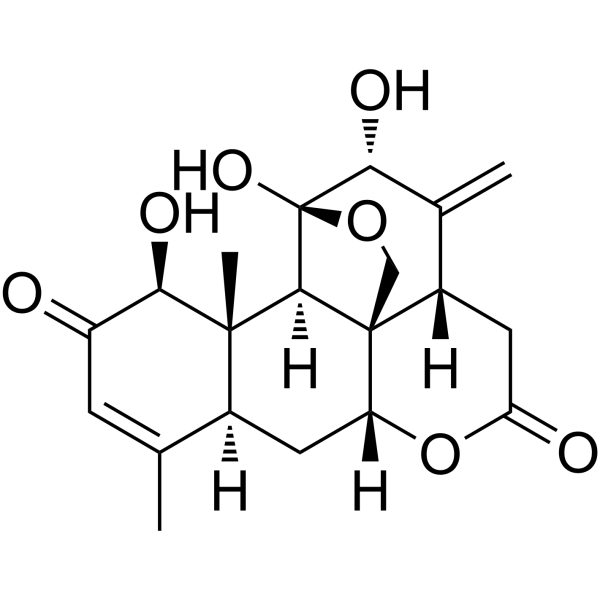
Ailanthone
Based on 4 publication(s) in Google Scholar
Ailanthone (Δ13-Dehydrochaparrinone) is a potent inhibitor of both full-length androgen receptor (AR) (IC50=69 nM) and constitutively active truncated AR splice variants (AR1-651 IC50=309 nM).
For research use only. We do not sell to patients.
- Purity: 99.93%
- CAS No.: 981-15-7
- Formula: C20H24O7
- Molecular Weight:376.40
-
Storage:Powder -20°C, 3 years , 4°C, 2 years ; In solvent -80°C, 6 months , -20°C, 1 month

To place orders, for customer services and technical support, please contact: MedChemExpress USA
Tel: 609-228-6898 E-mail: [email protected] [email protected]


-
 Biological Activity
-
Chemical Information
-
Solvent & Solubility
- Protocol
- Purity & Documentation
- References
-
 Help & FAQs


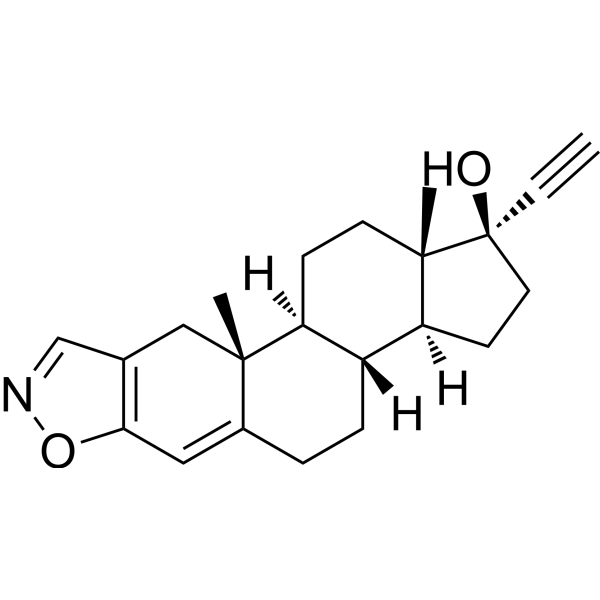

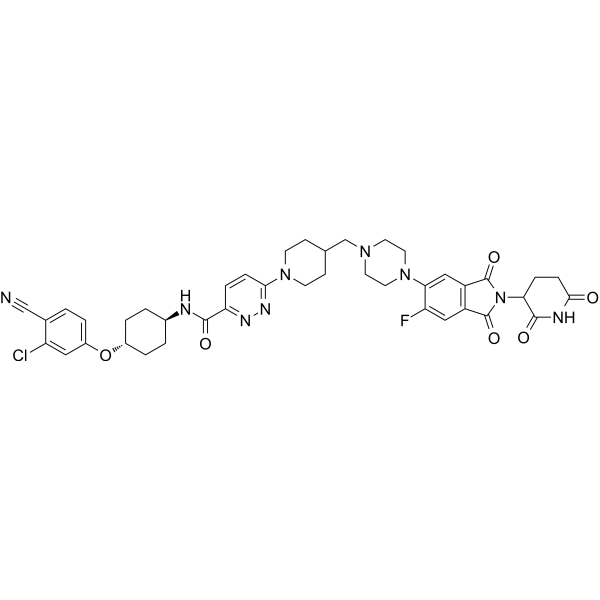
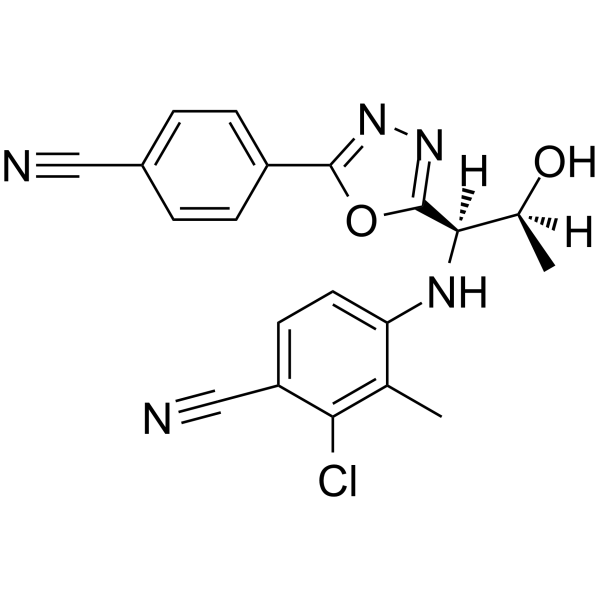
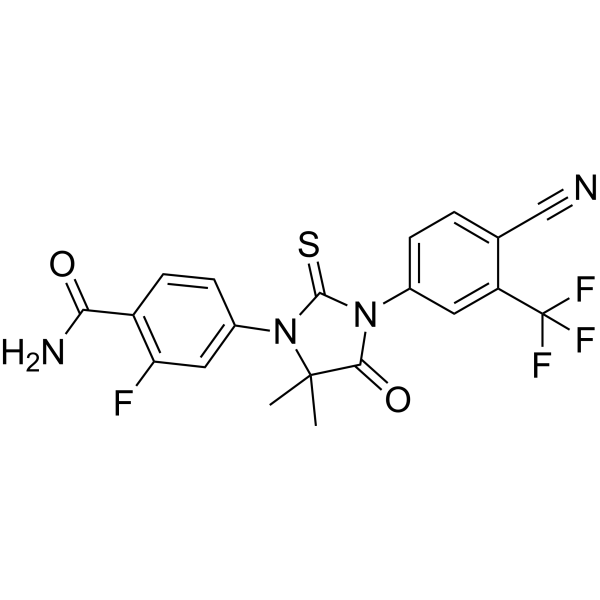
Publications Citing Use of MedChemExpress (MCE) Ailanthone
More

Biological Activity
IC50: 69 nM (Full-length androgen receptor), 309 nM (AR1-651)[1]
|
Cell Line

|
Type | Value | Description | References |
|---|---|---|---|---|
| Hep 3B2 | IC50 |
0.48 μM
Compound: 2
|
Cytotoxicity against human Hep3B cells measured after 48 hrs by MTT assay
Cytotoxicity against human Hep3B cells measured after 48 hrs by MTT assay
|
[PMID: 23290052] |
| HepG2 | IC50 |
0.24 μM
Compound: 2
|
Cytotoxicity against human HepG2 cells measured after 48 hrs by MTT assay
Cytotoxicity against human HepG2 cells measured after 48 hrs by MTT assay
|
[PMID: 23290052] |
| HepG2 | IC50 |
10.65 μM
Compound: 2
|
Cytotoxicity against human adriamycin-resistant HepG2 cells measured after 48 hrs by MTT assay
Cytotoxicity against human adriamycin-resistant HepG2 cells measured after 48 hrs by MTT assay
|
[PMID: 23290052] |
| RAW264.7 | IC50 |
5.18 μM
Compound: 5
|
Antiinflammatory activity in mouse RAW264.7 cells assessed as decrease in LPS-induced NO production after 24 hrs by Griess assay
Antiinflammatory activity in mouse RAW264.7 cells assessed as decrease in LPS-induced NO production after 24 hrs by Griess assay
|
[PMID: 25666824] |
Ailanthone is a potent inhibitor of both full-length AR (AR-FL) and constitutively active truncated AR splice variants (AR-Vs). Ailanthone binds to the co-chaperone protein p23 and prevents AR's interaction with HSP90, thus resulting in the disruption of the AR-chaperone complex followed by ubiquitin/proteasome-mediated degradation of AR as well as other p23 clients including AKT and Cdk4, and downregulates AR and its target genes in PCa cell lines and orthotopic animal tumours. In addition, Ailanthone blocks tumour growth and metastasis of CRPC[1].
Ailanthone has been shown to possess an growth-inhibitory effect against several cancer cell lines including HepG2, Hep3B, R-HepG2, Jurkat, HeLa, MCF-7, MDA-MB-231 and A549 cells. Ailanthone inhibits Huh7 cell growth through the induction of mitochondrion-mediated cell apoptosis and G0/G1 cell cycle arrest. Ailanthone-induced apoptosis is mitochondrion-mediated and involved the PI3K/AKT signaling pathway in Huh7 cells[2].
MedChemExpress (MCE) has not independently confirmed the accuracy of these methods. They are for reference only.
MedChemExpress (MCE) has not independently confirmed the accuracy of these methods. They are for reference only.


Chemical Information
-
CAS No. 981-15-7
-
Appearance Solid
-
Molecular Weight 376.40
-
Formula C20H24O7
-
Color White to off-white
-
SMILES
C[C@@]1([C@@H]2O)[C@]([C@@]3([C@@H]4O)O)([H])[C@@]([C@](C5)([H])C4=C)(CO3)[C@@](OC5=O)([H])C[C@@]1([H])C(C)=CC2=O
-
Synonyms
Δ13-Dehydrochaparrinone
-
Structure Classification
-
Initial Source
-
Shipping
Room temperature in continental US; may vary elsewhere.
-
Storage
Powder -20°C 3 years 4°C 2 years In solvent -80°C 6 months -20°C 1 month


Publications (4)
-
Journal Impact Factor
-
Most Recent
-
Phytomedicine
2026 Mar:152:157870. PMID: 41638059 -
Phytomedicine
Chemoproteomics reveals Ailanthone directly binds to PKM2 to inhibit the progression of Hepatocellular carcinoma. [Abstract]2025 Jul 25:143:156886. PMID: 40466508 -
Br J Pharmacol
Ailanthone alleviates septic cardiomyopathy by attenuating MYST histone acetyltransferase 1 (MOF)-mediated H4K16 lactylation-driven inflammation. [Abstract]2026 Aug;183(15):4364-4380. PMID: 42053209 -
Int Immunopharmacol
Ailanthone ameliorates CCl4-induced liver fibrosis by targeting PKM2-mediated macrophage M1 polarization and glycolytic reprogramming. [Abstract]2026 Jun 15:179:116640. PMID: 41980396


Solvent & Solubility
DMSO : 50 mg/mL (132.84 mM; Need ultrasonic; Hygroscopic DMSO has a significant impact on the solubility of product, please use newly opened DMSO)
Please refer to the solubility information to select the appropriate solvent. Once prepared, please aliquot and store the solution to prevent product inactivation from repeated freeze-thaw cycles.
Storage method and period of stock solution: -80°C, 6 months; -20°C, 1 month. When stored at -80°C, please use it within 6 months. When stored at -20°C, please use it within 1 month.
Please refer to the solubility information to select the appropriate solvent. Once prepared, please aliquot and store the solution to prevent product inactivation from repeated freeze-thaw cycles.
Storage method and period of stock solution: -80°C, 6 months; -20°C, 1 month. When stored at -80°C, please use it within 6 months. When stored at -20°C, please use it within 1 month.
Concentration (start) × Volume (start) = Concentration (final) × Volume (final)
Select the appropriate dissolution method based on your experimental animal and administration route.
- For the following dissolution methods, please ensure to first prepare a clear stock solution using an In Vitro approach and then sequentially add co-solvents:
- To ensure reliable experimental results, the clarified stock solution can be appropriately stored based on storage conditions. As for the working solution for In Vivo experiments, it is recommended to prepare freshly and use it on the same day.
- The percentages shown for the solvents indicate their volumetric ratio in the final prepared solution. If precipitation or phase separation occurs during preparation, heat and/or sonication can be used to aid dissolution.
Add each solvent one by one: 10% DMSO 40% PEG300 5% Tween-80 45% Saline
Solubility: ≥ 2.08 mg/mL (5.53 mM); Clear solution
This protocol yields a clear solution of ≥ 2.08 mg/mL (saturation unknown).
Taking 1 mL working solution as an example, add 100 μL DMSO stock solution (20.8 mg/mL) to 400 μL PEG300, and mix evenly; then add 50 μL Tween-80 and mix evenly; then add 450 μL Saline to adjust the volume to 1 mL.
Preparation of Saline: Dissolve 0.9 g sodium chloride in ddH₂O and dilute to 100 mL to obtain a clear Saline solution.
Add each solvent one by one: 10% DMSO 90% (20% SBE-β-CD in Saline)
Solubility: ≥ 2.08 mg/mL (5.53 mM); Clear solution
This protocol yields a clear solution of ≥ 2.08 mg/mL (saturation unknown).
Taking 1 mL working solution as an example, add 100 μL DMSO stock solution (20.8 mg/mL) to 900 μL 20% SBE-β-CD in Saline, and mix evenly.
Preparation of 20% SBE-β-CD in Saline (4°C, storage for one week): 2 g SBE-β-CD powder is dissolved in 10 mL Saline, completely dissolve until clear.
Please enter the basic information of animal experiments:
-
-
-
-
Recommended: Prepare an additional quantity of animals to account for potential losses during experiments.
Please enter your animal formula composition:
-
%DMSO +
Recommended: Keep the proportion of DMSO in working solution below 2% if your animal is weak.
-
%+
-
+%Tween-80 + +
-
%Saline +
The co-solvents required include: DMSO, . All of co-solvents are available by MedChemExpress (MCE). , Tween 80. All of co-solvents are available by MedChemExpress (MCE).
Working solution concentration: 0.22 mg/mL
Method for preparing stock solution: mg drug dissolved in μL DMSO. Stock solution concentration: mg/mL.
1. Take μL DMSO stock solution;
2. Add μL .
μL , mix evenly;
3. Then add μL Tween 80, mix evenly;
4. Then add μL
Please ensure that the stock solution in the first step is dissolved to a clear state, and add co-solvents in sequence. You can use ultrasonic heating (ultrasonic cleaner, recommended frequency 20-40 kHz), vortexing, etc. to assist dissolution.

Protocol
For SRB assay, cells are cultured in complete RPMI 1640 and incubated with indicated concentrations of Ailanthone or cells are maintained in fresh phenol red-free RPMI 1640 medium with 5% charcoal-stripped FBS, 1 nM DHT and indicated compounds. After 48 or 72 h, the cells are then fixed and the cell growth is detected with the SRB assay. For colony formation assay, prostate cancer cells are incubated with indicated concentrations of Ailanthone in complete RPMI 1640 for 2 weeks and then cells are fixed with 4% paraformaldehyde and stained with crystal violet. Colonies are visualized under a microscope, and all of the fields are imaged and counted. Colony formation as a percentage of vehicle control for each cell line is presented[1].
MedChemExpress (MCE) has not independently confirmed the accuracy of these methods. They are for reference only.
Mice[1]
In orthotopic castration-resistant prostate cancer xenografts model, mice are intraperitoneally injected with Ailanthone (2 mg/kg), MDV (10 mg/kg) or DMSO (as controls). Prostate tumour growth and local metastasis are monitored weekly using the IVIS Imaging System. Images and measurements of bioluminescent signals are acquired and analysed using Living Image and Xenogen software[1].
MedChemExpress (MCE) has not independently confirmed the accuracy of these methods. They are for reference only.


Purity & Documentation
-
Data Sheet (286 KB)
-
SDS (480 KB)
- English - EN (480 KB)
- Français - FR (480 KB)
- Deutsch - DE (480 KB)
- Norwegian - NO (480 KB)
- Español - ES (480 KB)
- Swedish - SV (480 KB)
- Italian - IT (480 KB)
- Korean - KR (480 KB)
- Portuguese - PT (480 KB)
-
Handling Instructions (2659 KB)
References
[1]. He Y, et al. Ailanthone targets p23 to overcome MDV3100 resistance in castration-resistant prostate cancer. Nat Commun. 2016 Dec 13;7:13122. [Content Brief]
[2]. Zhuo Z, et al. Ailanthone Inhibits Huh7 Cancer Cell Growth via Cell Cycle Arrest and Apoptosis In Vitro and In Vivo. Sci Rep. 2015 Nov 3;5:16185. [Content Brief]


Complete Stock Solution Preparation Table
Please refer to the solubility information to select the appropriate solvent. Once prepared, please aliquot and store the solution to prevent product inactivation from repeated freeze-thaw cycles.
Storage method and period of stock solution: -80°C, 6 months; -20°C, 1 month. When stored at -80°C, please use it within 6 months. When stored at -20°C, please use it within 1 month.
| Optional Solvent | Concentration Solvent Mass | 1 mg | 5 mg | 10 mg | 25 mg |
|---|---|---|---|---|---|
| DMSO | 1 mM | 2.6567 mL | 13.2837 mL | 26.5675 mL | 66.4187 mL |
| 5 mM | 0.5313 mL | 2.6567 mL | 5.3135 mL | 13.2837 mL | |
| 10 mM | 0.2657 mL | 1.3284 mL | 2.6567 mL | 6.6419 mL | |
| 15 mM | 0.1771 mL | 0.8856 mL | 1.7712 mL | 4.4279 mL | |
| 20 mM | 0.1328 mL | 0.6642 mL | 1.3284 mL | 3.3209 mL | |
| 25 mM | 0.1063 mL | 0.5313 mL | 1.0627 mL | 2.6567 mL | |
| 30 mM | 0.0886 mL | 0.4428 mL | 0.8856 mL | 2.2140 mL | |
| 40 mM | 0.0664 mL | 0.3321 mL | 0.6642 mL | 1.6605 mL | |
| 50 mM | 0.0531 mL | 0.2657 mL | 0.5313 mL | 1.3284 mL | |
| 60 mM | 0.0443 mL | 0.2214 mL | 0.4428 mL | 1.1070 mL | |
| 80 mM | 0.0332 mL | 0.1660 mL | 0.3321 mL | 0.8302 mL | |
| 100 mM | 0.0266 mL | 0.1328 mL | 0.2657 mL | 0.6642 mL |


Ailanthone Related Classifications
HY-N1943 Related Classifications
 Powered by Bioz