



Aurora kinase-IN-3
Based on 1 publication(s) in Google Scholar
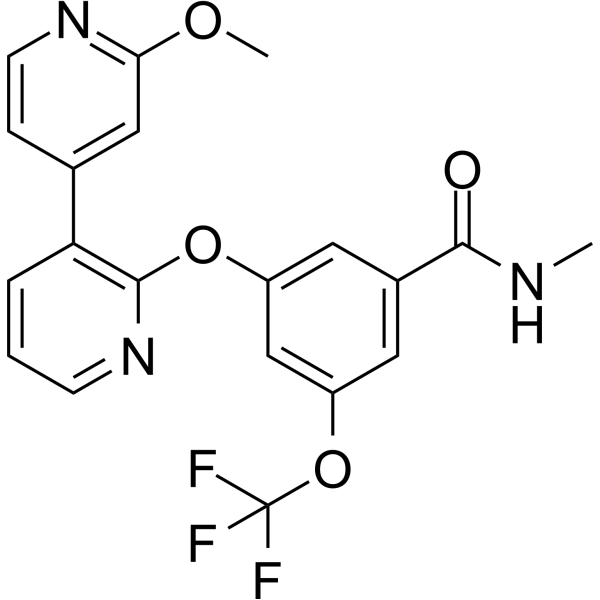
Aurora kinase-IN-3 (Compound 15a) is an orally active AURKB inhibitor that elicits an AURKB-suppressive activity by disrupting the mitotic localization of AURKB, rather than inhibiting its phosphorylation of H3 at Ser10.
Nur für Forschungszwecke. Wir verkaufen nicht an Patienten.
- Reinheit : 99.02%
- CAS. Nr.: 2840558-83-8
- Formel: C20H16F3N3O4
- Molecular Weight:419.35
-
Speicherung:Powder -20°C, 3 years , 4°C, 2 years ; In solvent -80°C, 6 months , -20°C, 1 month

To place orders, for customer services and technical support, please contact: MedChemExpress USA
Tel: 609-228-6898 E-mail: [email protected] [email protected]


-
 Biologische Aktivität
-
Chemical Information
-
Lösungsmittel & Löslichkeit
- Protokoll
- Reinheit & Dokumentation
- Verweise
-
 Help & FAQs


-
HY-102069
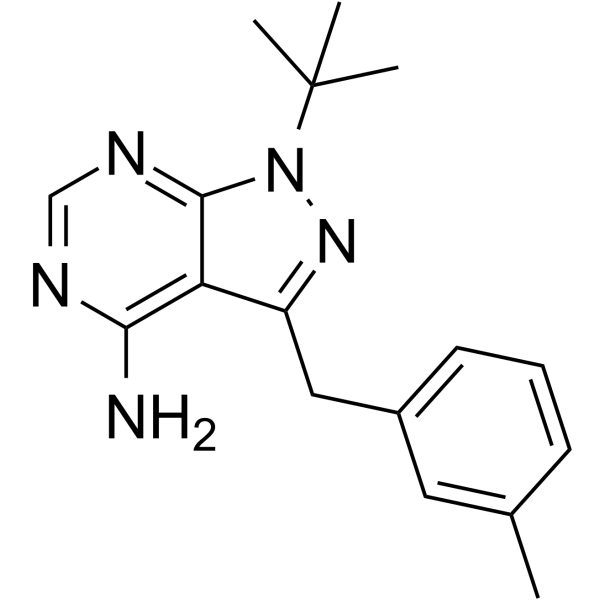
3MB-PP1Purine Analog -
HY-12300
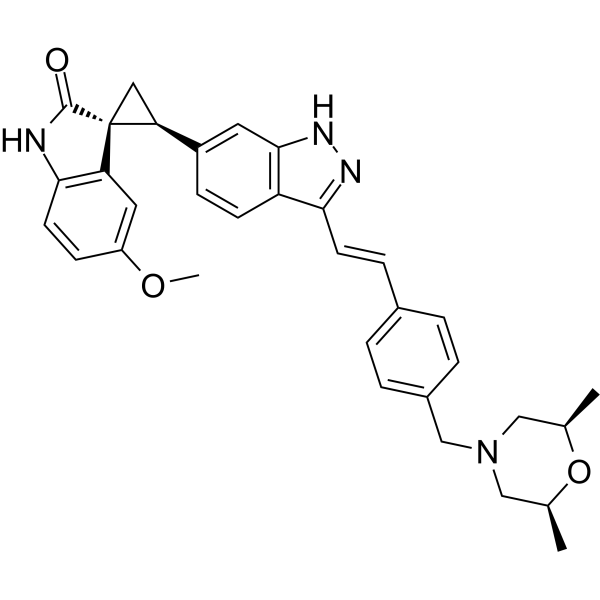
OcifisertibPLK4 Inhibitor -
HY-18682
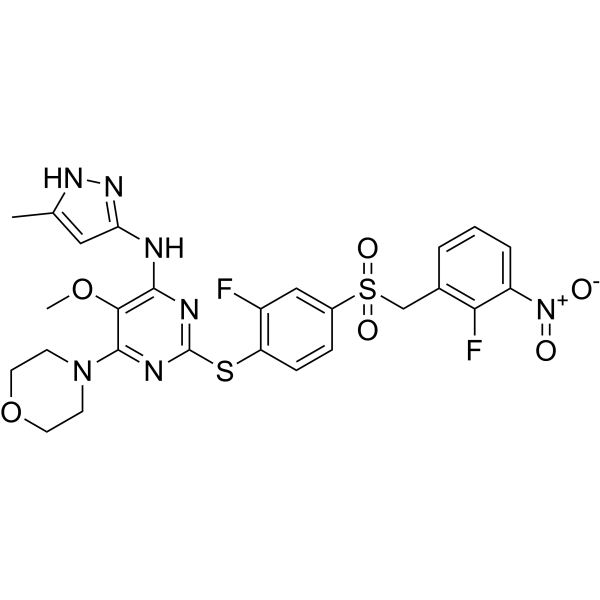
CentrinonePLK4 Inhibitor -
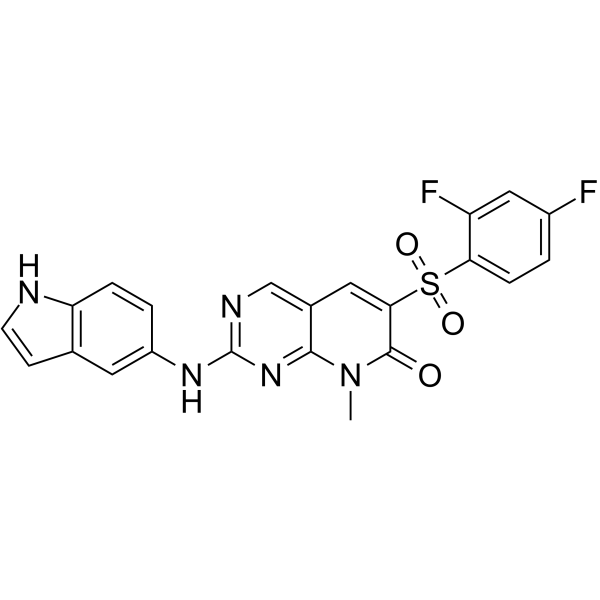
HY-100789
ON1231320PLK2 Inhibitor -
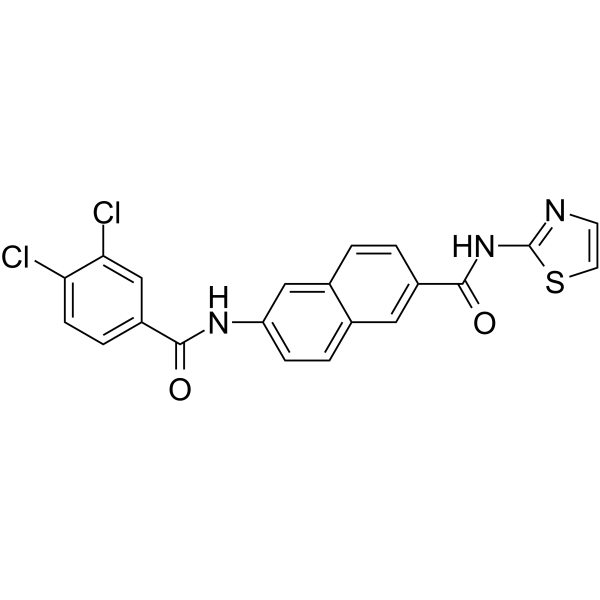
HY-126249
AAPK-25Aurora/PLK Inhibitor -
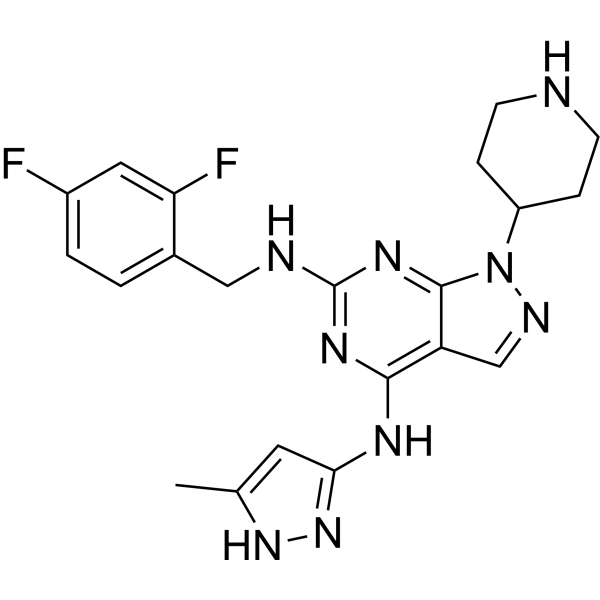
HY-128493
PLK4-IN-4PLK4 Inhibitor -
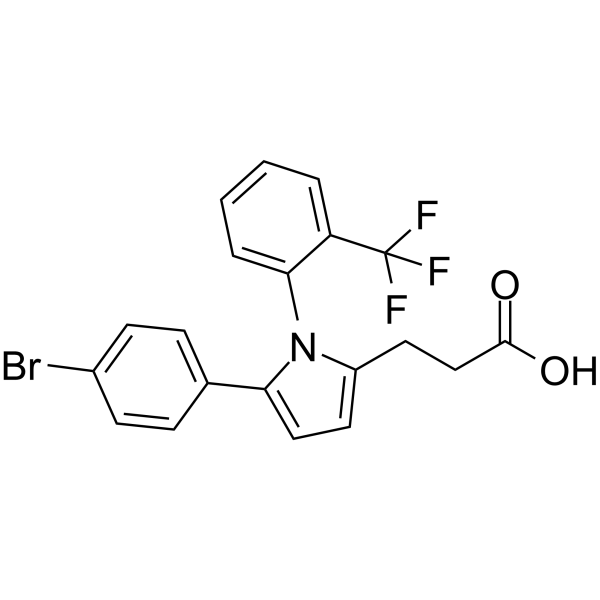
HY-124761
PoloppinPolo-Like Kinase Inhibitor -
HY-13994
Mps1-IN-2Mps1/Plk1 Inhibitor -

HY-102069R
3MB-PP1 (Standard)Reference Standard -

HY-160558
PLK1/BRD4-IN-3PLK1/BRD4 Inhibitor -

HY-100789R
ON1231320 (Standard)PLK2 Inhibitor -
HY-15160A
TAK-960 hydrochloridePLK1 Inhibitor
Publications Citing Use of MedChemExpress (MCE) Aurora kinase-IN-3
MoreAlle Aurora Kinase Isoform-spezifische Produkte anzeigen
More

Biologische Aktivität
Beschreibung
IC50 & Target
AURKB[1]
In Vitro
Aurora kinase-IN-3 (Compound 15a) (40 nM; 6 h) disrupts localization of AURKB, MKLP1, and PLK at the spindle midzone to prevent spindle midzone microtubule assembly in RPE-MYCBCL2 cells. Aurora Kinases-IN-3 disrupts the localization of AURKB as early as anaphase, producing downstream consequences that blocked cytokinesis[1].
Aurora kinase-IN-3 (1-10 μM; 3 days) shows wide spectrum of growth suppression in human cancer cell lines[1].
MedChemExpress (MCE) has not independently confirmed the accuracy of these methods. They are for reference only.
-
Cell Line:NCI–H23, A549, HCT116, SW480, MDA-MB-231, HeLa and NCI-87 cells
-
Concentration:1, 2.5, 5, or 10 μM
-
Incubation Time:3 days
-
Result:Exhibited the EC50 values of about 10 nM in most cell lines.
In Vivo
MedChemExpress (MCE) has not independently confirmed the accuracy of these methods. They are for reference only.
-
Animal Model:Female BALB/c nude mice bearing a xenograft of the human lung cancer cell line NCI–H23[1]
-
Dosage:50 mg/kg
-
Administration:Oral gavage, twice a day for 7 days
-
Result:Elicited a mitotic arrest and induced cell death by apoptosis. Effectively suppressed the growth of the tumor and reduced the cellularity of tumor tissue.
-
Animal Model:Female BAL B/c nude mice[1]
-
Dosage:50 mg/kg
-
Administration:Oral administration (Pharmacokinetic Analysis)
-
Result:After oral delivery in PEG300, achieved adequate plasma exposure, the mean value of dose-normalized area under the dose-response curve (AUC) was 0.35 x h/(mg/kg), Cmax was 6.9 μM. Was barely absorbed after oral gavage in the hydrophilic hydroxypropyl methylcellulose (HPMC) formulation.


Chemical Information
-
CAS. Nr. 2840558-83-8
-
Appearance Solid
-
Molecular Weight 419.35
-
Formel C20H16F3N3O4
-
Color White to off-white
-
SMILES
CNC(C1=CC(OC(F)(F)F)=CC(OC2=C(C=CC=N2)C3=CC(OC)=NC=C3)=C1)=O
-
Versand
Room temperature in continental US; may vary elsewhere.
-
Speicherung
Powder -20°C 3 years 4°C 2 years In solvent -80°C 6 months -20°C 1 month


Publications (1)
-
Journal Impact Factor
-
Most Recent
-
Exp Cell Res
The aberrantly activated AURKB supports and complements the function of AURKA in CALR mutated cells through regulating the cell growth and differentiation. [Abstract]2025 Jan 15;444(2):114377. PMID: 39706286


Lösungsmittel & Löslichkeit
In Vitro:
DMSO : 100 mg/mL (238.46 mM; Need ultrasonic; Hygroscopic DMSO has a significant impact on the solubility of product, please use newly opened DMSO)
Please refer to the solubility information to select the appropriate solvent. Once prepared, please aliquot and store the solution to prevent product inactivation from repeated freeze-thaw cycles.
Storage method and period of stock solution: -80°C, 6 months; -20°C, 1 month. When stored at -80°C, please use it within 6 months. When stored at -20°C, please use it within 1 month.
Please refer to the solubility information to select the appropriate solvent. Once prepared, please aliquot and store the solution to prevent product inactivation from repeated freeze-thaw cycles.
Storage method and period of stock solution: -80°C, 6 months; -20°C, 1 month. When stored at -80°C, please use it within 6 months. When stored at -20°C, please use it within 1 month.
Konzentration (Stammlösung) × Volumen (Stammlösung) = Konzentration (Ziellösung) × Volumen (Ziellösung)
In Vivo:
Select the appropriate dissolution method based on your experimental animal and administration route.
- For the following dissolution methods, please ensure to first prepare a clear stock solution using an In Vitro approach and then sequentially add co-solvents:
- To ensure reliable experimental results, the clarified stock solution can be appropriately stored based on storage conditions. As for the working solution for In Vivo experiments, it is recommended to prepare freshly and use it on the same day.
- The percentages shown for the solvents indicate their volumetric ratio in the final prepared solution. If precipitation or phase separation occurs during preparation, heat and/or sonication can be used to aid dissolution.
Add each solvent one by one: 10% DMSO 40% PEG300 5% Tween-80 45% Saline
Solubility: 2.5 mg/mL (5.96 mM); Clear solution; Need ultrasonic
This protocol yields a clear solution of 2.5 mg/mL.
Taking 1 mL working solution as an example, add 100 μL DMSO stock solution (25.0 mg/mL) to 400 μL PEG300, and mix evenly; then add 50 μL Tween-80 and mix evenly; then add 450 μL Saline to adjust the volume to 1 mL.
Preparation of Saline: Dissolve 0.9 g sodium chloride in ddH₂O and dilute to 100 mL to obtain a clear Saline solution.
Add each solvent one by one: 10% DMSO 90% (20% SBE-β-CD in Saline)
Solubility: 2.5 mg/mL (5.96 mM); Clear solution; Need ultrasonic
This protocol yields a clear solution of 2.5 mg/mL.
Taking 1 mL working solution as an example, add 100 μL DMSO stock solution (25.0 mg/mL) to 900 μL 20% SBE-β-CD in Saline, and mix evenly.
Preparation of 20% SBE-β-CD in Saline (4°C, storage for one week): 2 g SBE-β-CD powder is dissolved in 10 mL Saline, completely dissolve until clear.
In Vivo Dissolution Calculator
Please enter the basic information of animal experiments:
-
-
-
-
Recommended: Prepare an additional quantity of animals to account for potential losses during experiments.
Please enter your animal formula composition:
-
%DMSO +
Recommended: Keep the proportion of DMSO in working solution below 2% if your animal is weak.
-
%+
-
+%Tween-80 + +
-
%Saline +
The co-solvents required include: DMSO, . All of co-solvents are available by MedChemExpress (MCE). , Tween 80. All of co-solvents are available by MedChemExpress (MCE).
Working solution concentration: 0.22 mg/mL
Method for preparing stock solution: mg drug dissolved in μL DMSO. Stock solution concentration: mg/mL.
1. Take μL DMSO stock solution;
2. Add μL .
μL , mix evenly;
3. Then add μL Tween 80, mix evenly;
4. Then add μL
Please ensure that the stock solution in the first step is dissolved to a clear state, and add co-solvents in sequence. You can use ultrasonic heating (ultrasonic cleaner, recommended frequency 20-40 kHz), vortexing, etc. to assist dissolution.


Reinheit & Dokumentation
-
Data Sheet (282 KB)
-
SDS (251 KB)
- English - EN (251 KB)
- Français - FR (251 KB)
- Deutsch - DE (251 KB)
- Norwegian - NO (251 KB)
- Español - ES (251 KB)
- Swedish - SV (251 KB)
- Italian - IT (251 KB)
- Korean - KR (251 KB)
- Portuguese - PT (251 KB)
-
Handling Instructions (2659 KB)
Verweise


Complete Stock Solution Preparation Table
Please refer to the solubility information to select the appropriate solvent. Once prepared, please aliquot and store the solution to prevent product inactivation from repeated freeze-thaw cycles.
Storage method and period of stock solution: -80°C, 6 months; -20°C, 1 month. When stored at -80°C, please use it within 6 months. When stored at -20°C, please use it within 1 month.
| Optional Solvent | Concentration Solvent Mass | 1 mg | 5 mg | 10 mg | 25 mg |
|---|---|---|---|---|---|
| DMSO | 1 mM | 2.3846 mL | 11.9232 mL | 23.8464 mL | 59.6161 mL |
| 5 mM | 0.4769 mL | 2.3846 mL | 4.7693 mL | 11.9232 mL | |
| 10 mM | 0.2385 mL | 1.1923 mL | 2.3846 mL | 5.9616 mL | |
| 15 mM | 0.1590 mL | 0.7949 mL | 1.5898 mL | 3.9744 mL | |
| 20 mM | 0.1192 mL | 0.5962 mL | 1.1923 mL | 2.9808 mL | |
| 25 mM | 0.0954 mL | 0.4769 mL | 0.9539 mL | 2.3846 mL | |
| 30 mM | 0.0795 mL | 0.3974 mL | 0.7949 mL | 1.9872 mL | |
| 40 mM | 0.0596 mL | 0.2981 mL | 0.5962 mL | 1.4904 mL | |
| 50 mM | 0.0477 mL | 0.2385 mL | 0.4769 mL | 1.1923 mL | |
| 60 mM | 0.0397 mL | 0.1987 mL | 0.3974 mL | 0.9936 mL | |
| 80 mM | 0.0298 mL | 0.1490 mL | 0.2981 mL | 0.7452 mL | |
| 100 mM | 0.0238 mL | 0.1192 mL | 0.2385 mL | 0.5962 mL |


Aurora kinase-IN-3 Related Classifications
HY-151971 Related Classifications
 Powered by Bioz