



Artesunate
Based on 43 publication(s) in Google Scholar
Artesunate is an inhibitor of both STAT-3 and exported protein 1 (EXP1).
Nos produits utilisent uniquement pour la recherche. Nous ne vendons pas aux patients.
- Pureté : 99.89%
- CAS No.: 88495-63-0
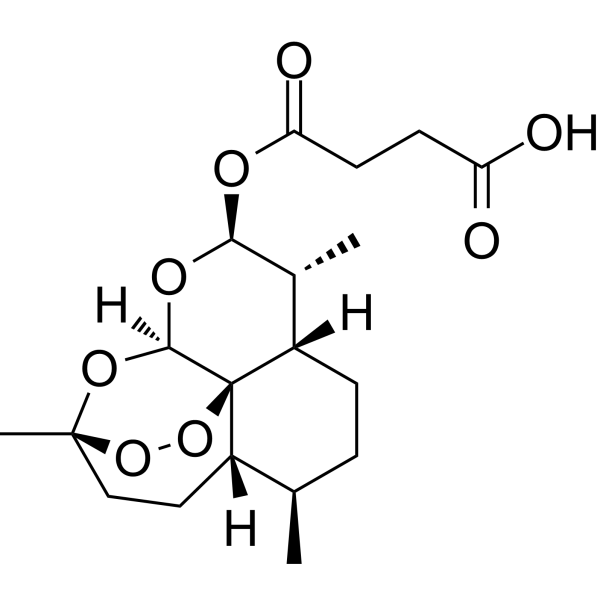
- Formule: C19H28O8
- Masse moléculaire:384.42
-
Stockage:Powder -20°C, 3 years , 4°C, 2 years ; In solvent -80°C, 6 months , -20°C, 1 month

To place orders, for customer services and technical support, please contact: MedChemExpress USA
Tel: 609-228-6898 E-mail: [email protected] [email protected]


-
 Activité biologique
-
Chemical Information
-
Solvant et solubilité
- Pureté et documentation
- Références
-
 Help & FAQs


-
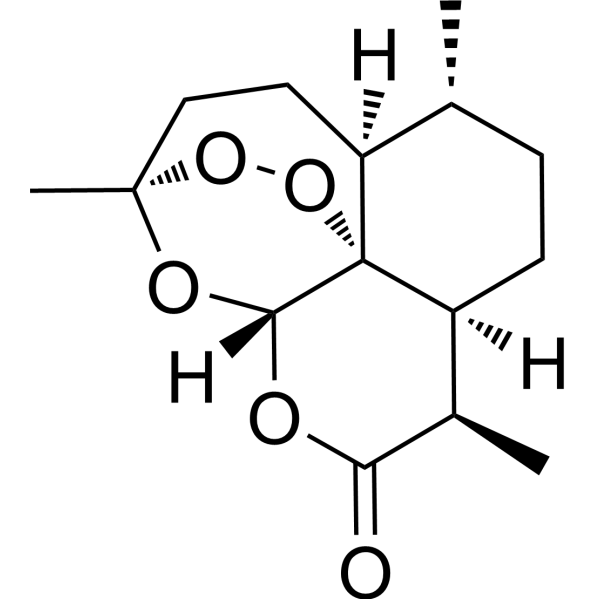
HY-B0094
ArtemisininParasite Inhibitor -
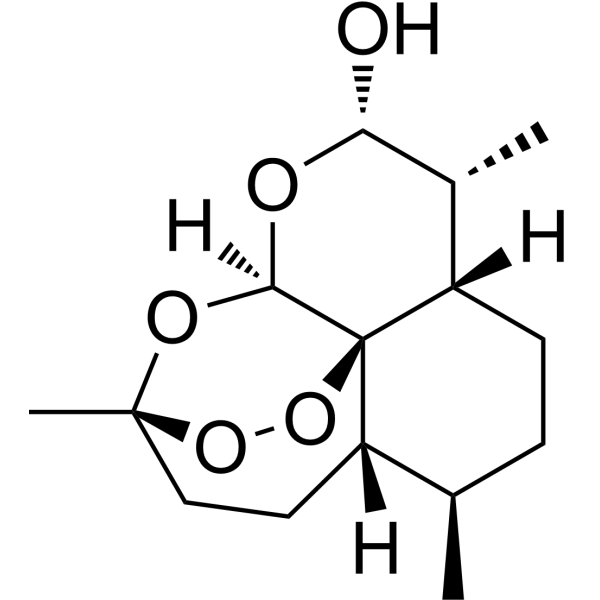
HY-N0176
DihydroartemisininAntimalarial Agent -
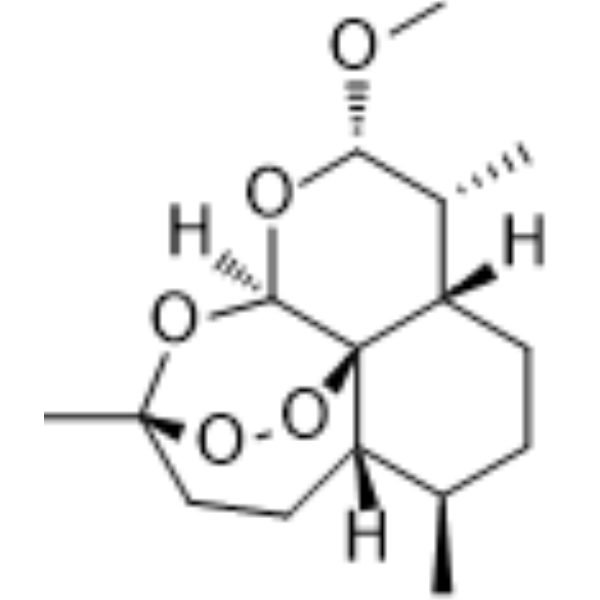
HY-N0402
ArtemetherParasite Inhibitor -

HY-10219
RapamycinmTOR Inhibitor -
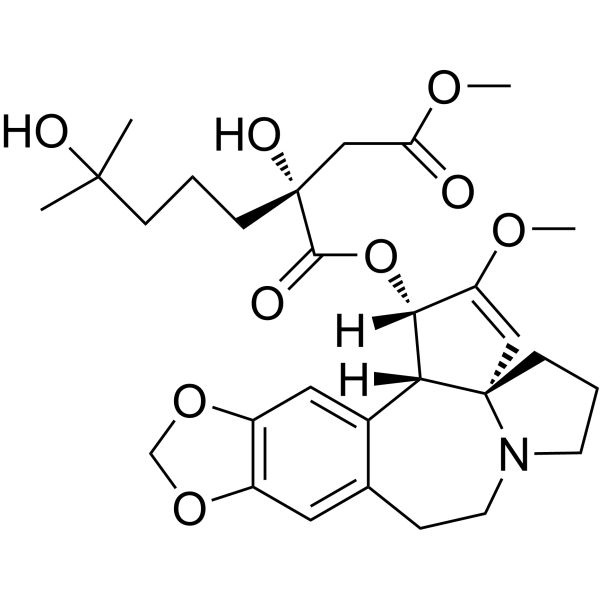
HY-14944
HomoharringtonineSTAT Inhibitor -
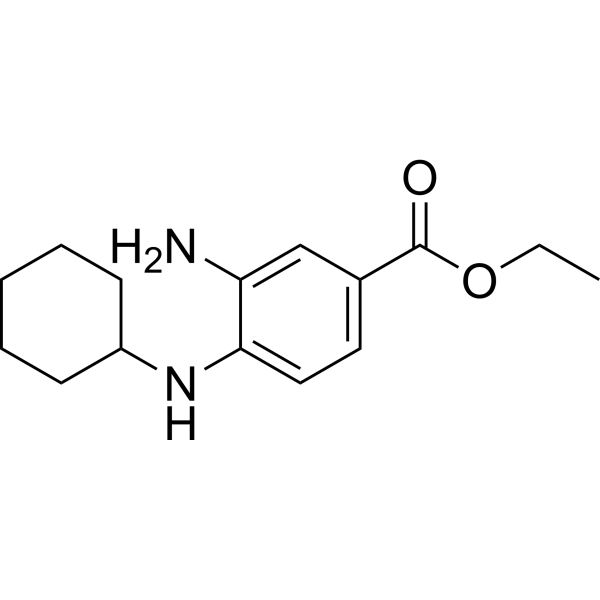
HY-100579
Ferrostatin-1Ferroptosis Inhibitor -

HY-N0193R
Artesunate (Standard)Virus Protease Inhibitor -
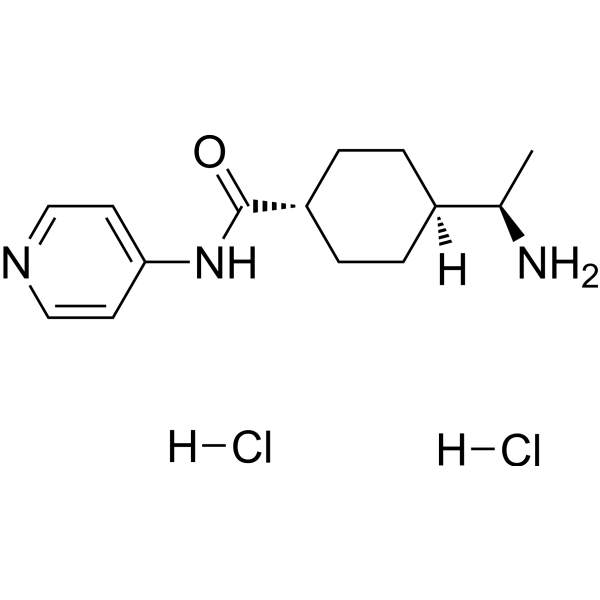
HY-10583
Y-27632 dihydrochlorideROCK Inhibitor -
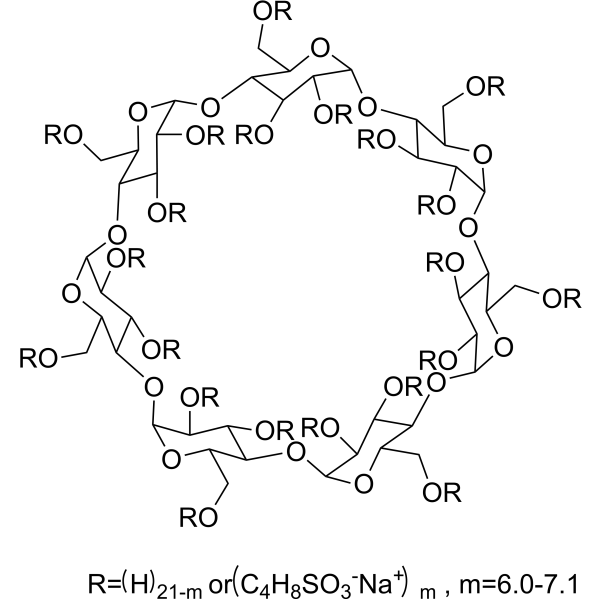
HY-17031
SBE-β-CDExcipient -
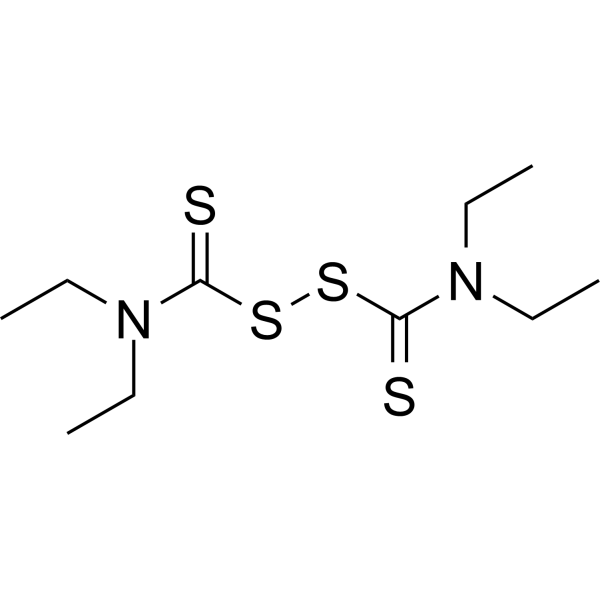
HY-B0240
DisulfiramALDH1 Inhibitor -
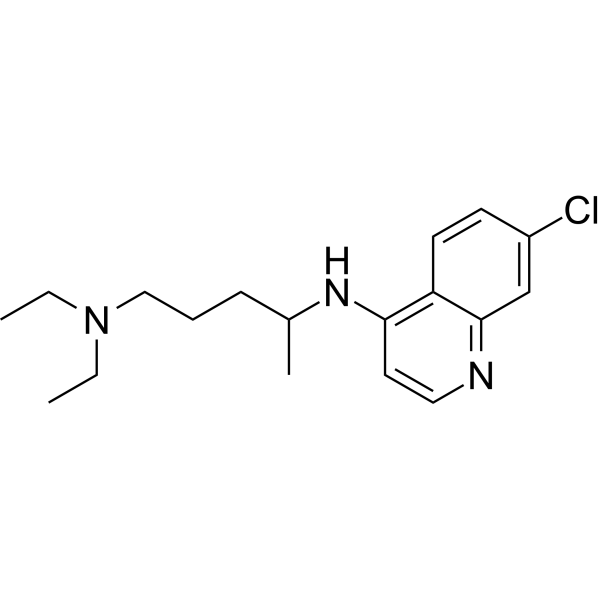
HY-17589A
ChloroquineAntimalarial Agent -
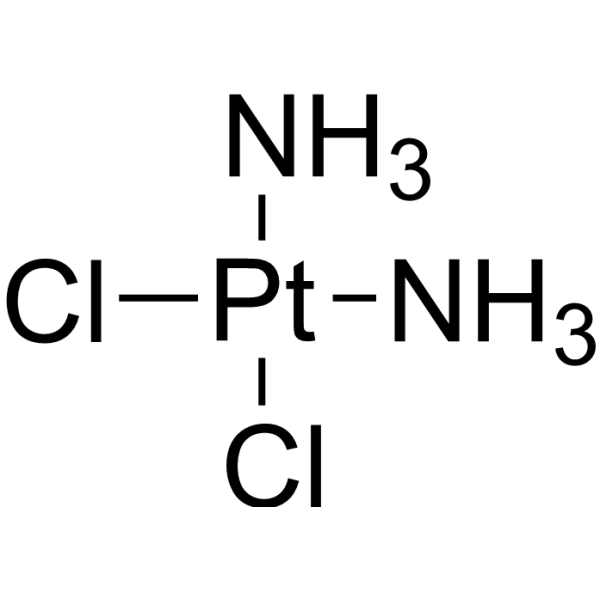
HY-17394
CisplatinDNA Alkylator
Publications Citing Use of MedChemExpress (MCE) Artesunate
More- ACS Nano. 2025 Jun 10;19(22):21105-21117. [Abstract]
- Cell Commun Signal. 2024 Jul 26;22(1):378. [Abstract]
- Phytomedicine. 2026 Jun 11.
- Free Radic Biol Med. 2024 Sep:222:229-243. [Abstract]
- Chin Med. 2026 Mar 19;21(1):97. [Abstract]
- Redox Rep. 2026 Dec;31(1):2627096. [Abstract]
- Biochem Pharmacol. 2026 Mar:245:117643. [Abstract]
- Biomater Sci. 2025 Feb 11;13(4):1045-1058. [Abstract]
- Drug Des Devel Ther. 2019 Jul 2:13:2135-2144. [Abstract]
- Eur J Pharmacol. 2026 Apr 28:1022:178856. [Abstract]
- Int Immunopharmacol. 2026 Jun 1:178:116562. [Abstract]
- Int Immunopharmacol. 2025 Sep 18:166:115562. [Abstract]
- Int Immunopharmacol. 2021 Aug:97:107705. [Abstract]
- J Nutr Biochem. 2024 Sep:131:109687. [Abstract]
- ACS Omega. 2024 Feb 28;9(10):11870-11882. [Abstract]
- Chem Biol Interact. 2020 Nov 1:331:109273. [Abstract]
- Sci Rep. 2026 Feb 11;16(1):8354. [Abstract]
- Cancers (Basel). 2024 Mar 28;16(7):1321. [Abstract]
- Cell Signal. 2025 Mar:127:111583. [Abstract]
- J Inflamm Res. 2025 Apr 18:18:5329-5342. [Abstract]
- J Neurochem. 2022 Aug;162(3):290-304. [Abstract]
- Front Mol Neurosci. 2022 May 27;15:902572. [Abstract]
- FASEB J. 2025 Apr 15;39(7):e70488. [Abstract]
- Appl Biol Chem. 2026 Mar 13;69(1):19.
- Pathogens. 2026 Feb;15(2):169.
- Diagnostics (Basel). 2021 Feb 26;11(3):395. [Abstract]
- Toxicol Appl Pharmacol. 2026 Jan:506:117646. [Abstract]
- Toxicol Appl Pharmacol. 2024 Oct:491:117075. [Abstract]
- Basic Clin Pharmacol Toxicol. 2023 Feb;132(2):144-153. [Abstract]
- Neuroscience. 2022 Apr 1:487:88-98. [Abstract]
- Front Vet Sci. 2024 May 9:11:1383291. [Abstract]
- Vet Microbiol. 2026 May:316:110992. [Abstract]
- World J Surg Oncol. 2024 Oct 8;22(1):268. [Abstract]
- Biochem Biophys Res Commun. 2024 Nov 12:733:150436. [Abstract]
- Oncologie. 2025 Aug 12.
- J Gastrointest Oncol. 2025 Apr 30;16(2):599-614. [Abstract]
- SSRN. 2026 Mar 20.
- Res Sq. 2025 Sep 25.
- SSRN. 2025 Aug 27.
- Loughborough University. 2025.
- Biomed Pharmacother. 2024 Aug:177:116885. [Abstract]
- Heliyon. 2024 Mar 22;10(7):e28584. [Abstract]
- Research Square Print. November 28th, 2022.
 Customer Validation & Images

-
Cell Proliferation/Viability Assay
-
Cell Imaging/Staining
-
Flow Cytometry
-
RT-PCR
-
WB
Voir tous les produits spécifiques à Isoform Parasite
More

Activité biologique
Description
|
Stat-3 |
EXP1 |
Cellular Effect
|
Cell Line

|
Type | Value | Description | References |
|---|---|---|---|---|
| A549 | IC50 |
15.921 μM
Compound: 1; ART
|
Antiproliferative activity against human A549 cells assessed as growth inhibition after 72 hrs by CCK-8 assay
Antiproliferative activity against human A549 cells assessed as growth inhibition after 72 hrs by CCK-8 assay
|
[PMID: 26615886] |
| A549 | IC50 |
50.68 μM
Compound: ATS
|
Antiproliferative activity against human A549 cells measured after 48 hrs by MTT assay
Antiproliferative activity against human A549 cells measured after 48 hrs by MTT assay
|
[PMID: 30837097] |
| A549 | IC50 |
5.4 μM
Compound: 3; ARS
|
Cytotoxicity against human A549 cells assessed as reduction in cell viability by MTT assay
Cytotoxicity against human A549 cells assessed as reduction in cell viability by MTT assay
|
[PMID: 33691167] |
| ADR5000 cell line | IC50 |
1.2 μM
Compound: 1
|
Cytotoxicity against human CEM/ADR5000 by XTT assay
Cytotoxicity against human CEM/ADR5000 by XTT assay
|
[PMID: 20527917] |
| ADR5000 cell line | IC50 |
1.2 μM
Compound: 1
|
Cytotoxicity against human CEM/ADR5000 by CCK-8 assay
Cytotoxicity against human CEM/ADR5000 by CCK-8 assay
|
[PMID: 22884578] |
| ADR5000 cell line | IC50 |
1.2 μM
Compound: 2
|
Cytotoxicity against human multidrug-resistant CEM/ADR5000 cells expressing p-glycoprotein by resazurin assay
Cytotoxicity against human multidrug-resistant CEM/ADR5000 cells expressing p-glycoprotein by resazurin assay
|
[PMID: 24561670] |
| ADR5000 cell line | IC50 |
0.19 μM
Compound: 3
|
Cytotoxicity against human CEM/ADR5000 cells assessed as cell viability after 72 hrs by resazurin assay
Cytotoxicity against human CEM/ADR5000 cells assessed as cell viability after 72 hrs by resazurin assay
|
[PMID: 26260339] |
| ADR5000 cell line | EC50 |
0.5 μM
Compound: Artesunic acid
|
Cytotoxicity against human CEM/ADR5000 cells assessed as reduction in cell growth
Cytotoxicity against human CEM/ADR5000 cells assessed as reduction in cell growth
|
[PMID: 29656203] |
| ADR5000 cell line | EC50 |
0.189 μM
Compound: 3
|
Cytotoxicity against human CEM/ADR5000 cells over-expressing P-gp assessed as reduction in cell viability after 72 hrs by resazurin dye based assay
Cytotoxicity against human CEM/ADR5000 cells over-expressing P-gp assessed as reduction in cell viability after 72 hrs by resazurin dye based assay
|
[PMID: 29887512] |
| ADR5000 cell line | EC50 |
0.1 μM
Compound: 2
|
Cytotoxicity against human CEM/ADR5000 cells overexpressing P-gp assessed as reduction in cell viability after 72 hrs by resazurin dye based assay
Cytotoxicity against human CEM/ADR5000 cells overexpressing P-gp assessed as reduction in cell viability after 72 hrs by resazurin dye based assay
|
[PMID: 29937978] |
| BT-474 | IC50 |
7.8 μM
Compound: Artesunate
|
Cytotoxicity against human BT474 cells after 48 hrs by MTT assay
Cytotoxicity against human BT474 cells after 48 hrs by MTT assay
|
[PMID: 23790541] |
| C-33-A | EC50 |
1.83 μM
Compound: 7
|
Antiproliferative activity against human C33A cells after 72 hrs by MTT assay
Antiproliferative activity against human C33A cells after 72 hrs by MTT assay
|
[PMID: 30429957] |
| CCRF-CEM | IC50 |
1.8 μM
Compound: 1
|
Cytotoxicity against human CCRF-CEM by XTT assay
Cytotoxicity against human CCRF-CEM by XTT assay
|
[PMID: 20527917] |
| CCRF-CEM | IC50 |
1.8 μM
Compound: 1
|
Cytotoxicity against human CCRF-CEM cells by CCK-8 assay
Cytotoxicity against human CCRF-CEM cells by CCK-8 assay
|
[PMID: 22884578] |
| CCRF-CEM | IC50 |
1.8 μM
Compound: 2
|
Cytotoxicity against human CCRF-CEM cells by resazurin assay
Cytotoxicity against human CCRF-CEM cells by resazurin assay
|
[PMID: 24561670] |
| CCRF-CEM | IC50 |
0.07 μM
Compound: 3
|
Cytotoxicity against human CCRF-CEM cells assessed as cell viability after 72 hrs by resazurin assay
Cytotoxicity against human CCRF-CEM cells assessed as cell viability after 72 hrs by resazurin assay
|
[PMID: 26260339] |
| CCRF-CEM | EC50 |
0.069 μM
Compound: 3
|
Cytotoxicity against human CCRF-CEM cells assessed as reduction in cell viability after 72 hrs by resazurin dye based assay
Cytotoxicity against human CCRF-CEM cells assessed as reduction in cell viability after 72 hrs by resazurin dye based assay
|
[PMID: 29887512] |
| CCRF-CEM | EC50 |
0.4 μM
Compound: 2
|
Cytotoxicity against human CCRF-CEM cells assessed as reduction in cell viability after 72 hrs by resazurin dye based assay
Cytotoxicity against human CCRF-CEM cells assessed as reduction in cell viability after 72 hrs by resazurin dye based assay
|
[PMID: 29937978] |
| CHO | IC50 |
>100 μM
Compound: ARS
|
Cytotoxicity against CHO cells assessed as reduction in cell viability measured after 48 hrs by MTT assay
Cytotoxicity against CHO cells assessed as reduction in cell viability measured after 48 hrs by MTT assay
|
[PMID: 27448920] |
| Erythrocyte | CC50 |
>100 μg/mL
Compound: Artesunate
|
Cytotoxicity against human erythrocytes
Cytotoxicity against human erythrocytes
|
[PMID: 37556947] |
| HCT-116 | IC50 |
7.1 μM
Compound: Artesunate
|
Antiproliferative activity against human HCT-116 cells assessed as growth after 48 hrs by MTT assay
Antiproliferative activity against human HCT-116 cells assessed as growth after 48 hrs by MTT assay
|
[PMID: 27010926] |
| HCT-116 | IC50 |
0.89 μM
Compound: AS
|
Antiproliferative activity against human HCT116 cells assessed as inhibition of cell viability after 48 hrs by MTS assay
Antiproliferative activity against human HCT116 cells assessed as inhibition of cell viability after 48 hrs by MTS assay
|
[PMID: 31494469] |
| HCT-116 | IC50 |
7.1 μM
Compound: Artesunate
|
Antiproliferative activity against human HCT-116 cells
Antiproliferative activity against human HCT-116 cells
|
[PMID: 31945642] |
| HCT-116 | IC50 |
7.1 μM
Compound: Artesunate
|
Antiproliferative activity against human HCT-116 cells assessed as reduction in cell viability
Antiproliferative activity against human HCT-116 cells assessed as reduction in cell viability
|
[PMID: 31945642] |
| HCT-116 | IC50 |
0.46 μM
Compound: ASU
|
Antiproliferative activity against human HCT-116 cells assessed as inhibition of cell growth by Cell-titer Glo luminescent assay
Antiproliferative activity against human HCT-116 cells assessed as inhibition of cell growth by Cell-titer Glo luminescent assay
|
[PMID: 38287228] |
| HEK293 | IC50 |
150 μM
Compound: artesunate
|
Selectivity index, ratio of IC50 for human HEK293 cells to IC50 for chloroquine, pyrimethamine, and mefloquine-resistant Plasmodium falciparum Dd2
Selectivity index, ratio of IC50 for human HEK293 cells to IC50 for chloroquine, pyrimethamine, and mefloquine-resistant Plasmodium falciparum Dd2
|
[PMID: 21155593] |
| HEK293 | IC50 |
2.9 μM
Compound: artesunate
|
Cytotoxicity against human HEK293 cells after 72 hrs by alamar blue assay
Cytotoxicity against human HEK293 cells after 72 hrs by alamar blue assay
|
[PMID: 21155593] |
| HEK293 | IC50 |
10 μM
Compound: Artesunate
|
Cytotoxicity against HEK293 cells assessed as cell growth inhibition after 72 hrs by Alamar blue assay
Cytotoxicity against HEK293 cells assessed as cell growth inhibition after 72 hrs by Alamar blue assay
|
[PMID: 28774427] |
| HEK293 | IC50 |
7 μM
Compound: Artesunate
|
Cytotoxicity against HEK293 cells after 72 hrs by resazurin dye based assay
Cytotoxicity against HEK293 cells after 72 hrs by resazurin dye based assay
|
[PMID: 29236492] |
| HeLa | IC50 |
3.2 μM
Compound: Artesunate
|
Cytotoxicity against human HeLa cells incubated for 48 hrs by resazurin dye reduction assay
Cytotoxicity against human HeLa cells incubated for 48 hrs by resazurin dye reduction assay
|
[PMID: 23013253] |
| HeLa | IC50 |
19.014 μM
Compound: 1; ART
|
Antiproliferative activity against human HeLa cells assessed as growth inhibition after 72 hrs by CCK-8 assay
Antiproliferative activity against human HeLa cells assessed as growth inhibition after 72 hrs by CCK-8 assay
|
[PMID: 26615886] |
| HeLa | IC50 |
7.1 μM
Compound: Artesunate
|
Antiproliferative activity against human Hela cells assessed as cell growth inhibition measured after 48 hrs by MTT assay
Antiproliferative activity against human Hela cells assessed as cell growth inhibition measured after 48 hrs by MTT assay
|
[PMID: 27010926] |
| HeLa | EC50 |
12.03 μM
Compound: 7
|
Antiproliferative activity against human HeLa cells after 72 hrs by MTT assay
Antiproliferative activity against human HeLa cells after 72 hrs by MTT assay
|
[PMID: 30429957] |
| HeLa | IC50 |
0.5 μM
Compound: Artesunate
|
Cytotoxicity against human HeLa cells assessed as cell viability incubated for 48 hrs by MTT assay
Cytotoxicity against human HeLa cells assessed as cell viability incubated for 48 hrs by MTT assay
|
[PMID: 31945642] |
| HeLa | IC50 |
11.3 μM
Compound: Artesunate
|
Antiproliferative activity against human HeLa cells assessed as reduction in cell viability
Antiproliferative activity against human HeLa cells assessed as reduction in cell viability
|
[PMID: 31945642] |
| HeLa | IC50 |
7.1 μM
Compound: Artesunate
|
Antiproliferative activity against human HeLa cells
Antiproliferative activity against human HeLa cells
|
[PMID: 31945642] |
| HepG2 | IC50 |
12.7 μM
Compound: artesunate
|
Cytotoxicity against human HepG2 cells after 72 hrs by alamar blue assay
Cytotoxicity against human HepG2 cells after 72 hrs by alamar blue assay
|
[PMID: 21155593] |
| HepG2 | IC50 |
374 μM
Compound: artesunate
|
Selectivity index, ratio of IC50 for human HepG2 cells to IC50 for chloroquine, pyrimethamine, and mefloquine-resistant Plasmodium falciparum Dd2
Selectivity index, ratio of IC50 for human HepG2 cells to IC50 for chloroquine, pyrimethamine, and mefloquine-resistant Plasmodium falciparum Dd2
|
[PMID: 21155593] |
| HepG2 | IC50 |
20 μM
Compound: ARS
|
Cytotoxicity against human HepG2 cells after 72 hrs by formazan test
Cytotoxicity against human HepG2 cells after 72 hrs by formazan test
|
[PMID: 23685181] |
| HepG2 | IC50 |
<1 μM
Compound: Artesunate
|
Antimalarial activity against sporozoite stage of Plasmodium yoelii assessed as invasion of human HepG2 cells expressing CD81 incubated for 2 hrs prior to inoculation measured after 1 hr by immunofluorescence assay in presence of penicillin/streptomycin
Antimalarial activity against sporozoite stage of Plasmodium yoelii assessed as invasion of human HepG2 cells expressing CD81 incubated for 2 hrs prior to inoculation measured after 1 hr by immunofluorescence assay in presence of penicillin/streptomycin
|
[PMID: 23927658] |
| HepG2 | IC50 |
22.24 μM
Compound: 1; ART
|
Antiproliferative activity against human HepG2 cells assessed as growth inhibition after 72 hrs by CCK-8 assay
Antiproliferative activity against human HepG2 cells assessed as growth inhibition after 72 hrs by CCK-8 assay
|
[PMID: 26615886] |
| HepG2 | IC50 |
6.5 μM
Compound: ART
|
Dark toxicity against human HepG2 cells assessed as reduction in cell viability incubated overnight by MTT assay
Dark toxicity against human HepG2 cells assessed as reduction in cell viability incubated overnight by MTT assay
|
[PMID: 28882481] |
| HepG2 | IC50 |
7.7 μM
Compound: ART
|
Phototoxicity against human HepG2 cells assessed as reduction in cell viability preincubated overnight followed by irradiation with LED light at 1.7 J/cm'2 for 10 mins measured post overnight incubation by MTT assay
Phototoxicity against human HepG2 cells assessed as reduction in cell viability preincubated overnight followed by irradiation with LED light at 1.7 J/cm'2 for 10 mins measured post overnight incubation by MTT assay
|
[PMID: 28882481] |
| HepG2 | IC50 |
39.93 μM
Compound: ATS
|
Antiproliferative activity against human HepG2 cells measured after 48 hrs by MTT assay
Antiproliferative activity against human HepG2 cells measured after 48 hrs by MTT assay
|
[PMID: 30837097] |
| HepG2 | IC50 |
59.4 μM
Compound: Artesunate
|
Antiproliferative activity against human HepG2 cells by MTT assay
Antiproliferative activity against human HepG2 cells by MTT assay
|
[PMID: 31546197] |
| HepG2 | IC50 |
59.4 μM
Compound: Artesunate
|
Antiproliferative activity against human HepG2 cells
Antiproliferative activity against human HepG2 cells
|
[PMID: 31945642] |
| HepG2 | IC50 |
267 μM
Compound: Artesunate
|
Cytotoxicity against human HepG2 cells assessed as cell viability after 72 hrs by MTT assay
Cytotoxicity against human HepG2 cells assessed as cell viability after 72 hrs by MTT assay
|
[PMID: 33158577] |
| HepG2 | IC50 |
47 μM
Compound: 3; ARS
|
Cytotoxicity against human HepG2 cells assessed as reduction in cell viability by MTT assay
Cytotoxicity against human HepG2 cells assessed as reduction in cell viability by MTT assay
|
[PMID: 33691167] |
| HepG2 2.2.15 | IC50 |
2.3 μM
Compound: 21
|
Antiviral activity against Hepatitis B virus infected in human HepG2.2.15 cells assessed as decrease in HBV surface antigen secretion after 21 days
Antiviral activity against Hepatitis B virus infected in human HepG2.2.15 cells assessed as decrease in HBV surface antigen secretion after 21 days
|
[PMID: 24549242] |
| HL-60 | IC50 |
2 μM
Compound: ASN
|
Cytotoxicity against human HL60 cells assessed as cell viability after 24 hrs by MTT assay
Cytotoxicity against human HL60 cells assessed as cell viability after 24 hrs by MTT assay
|
[PMID: 24148834] |
| Huh-7 | CC50 |
>100 μg/mL
Compound: AS
|
Cytotoxicity against human Huh-7 cells assessed as reduction in cell viability incubated for 72 hrs by MTT assay
Cytotoxicity against human Huh-7 cells assessed as reduction in cell viability incubated for 72 hrs by MTT assay
|
[PMID: 36306538] |
| HUVEC | IC50 |
1.092 μM
Compound: 1; ART
|
Antiproliferative activity against HUVEC assessed as growth inhibition after 72 hrs by CCK-8 assay
Antiproliferative activity against HUVEC assessed as growth inhibition after 72 hrs by CCK-8 assay
|
[PMID: 26615886] |
| HUVEC | IC50 |
86.1 μM
Compound: 3; ARS
|
Cytotoxicity against HUVEC assessed as reduction in cell viability by MTT assay
Cytotoxicity against HUVEC assessed as reduction in cell viability by MTT assay
|
[PMID: 33691167] |
| J82 | IC50 |
75.7 μM
Compound: 3; ARS
|
Cytotoxicity in human J82 cells assessed as reduction in cell viability by MTT assay
Cytotoxicity in human J82 cells assessed as reduction in cell viability by MTT assay
|
[PMID: 33691167] |
| K562 | IC50 |
5.999 μM
Compound: 1; ART
|
Antiproliferative activity against human K562 cells assessed as growth inhibition after 72 hrs by CCK-8 assay
Antiproliferative activity against human K562 cells assessed as growth inhibition after 72 hrs by CCK-8 assay
|
[PMID: 26615886] |
| K562/Adr | IC50 |
6.256 μM
Compound: 1; ART
|
Antiproliferative activity against human K562/ADR cells assessed as growth inhibition after 72 hrs by CCK-8 assay
Antiproliferative activity against human K562/ADR cells assessed as growth inhibition after 72 hrs by CCK-8 assay
|
[PMID: 26615886] |
| KB | IC50 |
78.5 μM
Compound: Artesunate
|
Antiproliferative activity against human KB cells by MTT assay
Antiproliferative activity against human KB cells by MTT assay
|
[PMID: 31546197] |
| KB | IC50 |
78.5 μM
Compound: Artesunate
|
Antiproliferative activity against human KB cells
Antiproliferative activity against human KB cells
|
[PMID: 31945642] |
| L02 | IC50 |
72.17 μM
Compound: ATS
|
Cytotoxicity against human L02 cells measured after 48 hrs by MTT assay
Cytotoxicity against human L02 cells measured after 48 hrs by MTT assay
|
[PMID: 30837097] |
| L6 | IC50 |
1.5 μM
Compound: Artesunate
|
Cytotoxicity against rat L6 cells incubated for 690 hrs by Alamar blue assay
Cytotoxicity against rat L6 cells incubated for 690 hrs by Alamar blue assay
|
[PMID: 23013253] |
| L6 | IC50 |
24 μM
Compound: AS
|
Cytotoxicity against rat L6 cells after 72 hrs by alamar blue assay
Cytotoxicity against rat L6 cells after 72 hrs by alamar blue assay
|
[PMID: 25195945] |
| L6 | IC50 |
6.63 μM
Compound: 2
|
Cytotoxicity in rat L6 cells assessed as reduction in cell viability incubated for 72 hrs by alamar blue dye based assay
Cytotoxicity in rat L6 cells assessed as reduction in cell viability incubated for 72 hrs by alamar blue dye based assay
|
[PMID: 28988153] |
| Leukemia cell | IC50 |
6.887 μM
Compound: Artesunate
|
Antiproliferative activity against human Leukemia cell assessed as reduction in cell viability
Antiproliferative activity against human Leukemia cell assessed as reduction in cell viability
|
[PMID: 31945642] |
| LS174T | IC50 |
10 μM
Compound: ARS
|
Cytotoxicity against human LS 174T cells after 72 hrs by formazan test
Cytotoxicity against human LS 174T cells after 72 hrs by formazan test
|
[PMID: 23685181] |
| Lymphocyte | IC50 |
80 μM
Compound: Artesunate
|
Cytotoxicity against human lymphocytes
Cytotoxicity against human lymphocytes
|
[PMID: 31784199] |
| MCF-10A | IC50 |
21 μM
Compound: Artesunate
|
Cytotoxicity against human MCF10A cells after 48 hrs by MTT assay
Cytotoxicity against human MCF10A cells after 48 hrs by MTT assay
|
[PMID: 23790541] |
| MCF7 | EC50 |
4.21 μM
Compound: 7
|
Antiproliferative activity against human MCF7 cells after 72 hrs by MTT assay
Antiproliferative activity against human MCF7 cells after 72 hrs by MTT assay
|
[PMID: 30429957] |
| MCF7 | IC50 |
38.71 μM
Compound: ATS
|
Antiproliferative activity against human MCF7 cells measured after 48 hrs by MTT assay
Antiproliferative activity against human MCF7 cells measured after 48 hrs by MTT assay
|
[PMID: 30837097] |
| MDA-MB-231 | IC50 |
46 μM
Compound: Artesunate
|
Cytotoxicity against human MDA-MB-231 cells after 48 hrs by MTT assay
Cytotoxicity against human MDA-MB-231 cells after 48 hrs by MTT assay
|
[PMID: 23790541] |
| MDA-MB-231 | EC50 |
10.04 μM
Compound: 7
|
Antiproliferative activity against human MDA-MB-231 cells after 72 hrs by MTT assay
Antiproliferative activity against human MDA-MB-231 cells after 72 hrs by MTT assay
|
[PMID: 30429957] |
| MDA-MB-231 | IC50 |
75.69 μM
Compound: ATS
|
Antiproliferative activity against human MDA-MB-231 cells measured after 48 hrs by MTT assay
Antiproliferative activity against human MDA-MB-231 cells measured after 48 hrs by MTT assay
|
[PMID: 30837097] |
| MDA-MB-361 | EC50 |
2.27 μM
Compound: 7
|
Antiproliferative activity against human MDA-MB-361 cells after 72 hrs by MTT assay
Antiproliferative activity against human MDA-MB-361 cells after 72 hrs by MTT assay
|
[PMID: 30429957] |
| MRC5 | IC50 |
6.8 μM
Compound: Artesunate
|
Cytotoxicity against human MRC5 cells incubated for 48 hrs by resazurin dye reduction assay
Cytotoxicity against human MRC5 cells incubated for 48 hrs by resazurin dye reduction assay
|
[PMID: 23013253] |
| MRC5 | IC50 |
36 μM
Compound: Artesunate
|
Cytotoxicity against human MRC5 cells
Cytotoxicity against human MRC5 cells
|
[PMID: 25089179] |
| OVCAR-3 | IC50 |
67.3 μM
Compound: 3; ARS
|
Cytotoxicity against human OVCAR3 cells assessed as reduction in cell viability by MTT assay
Cytotoxicity against human OVCAR3 cells assessed as reduction in cell viability by MTT assay
|
[PMID: 33691167] |
| SiHa | EC50 |
>30 μM
Compound: 7
|
Antiproliferative activity against human SiHa cells after 72 hrs by MTT assay
Antiproliferative activity against human SiHa cells after 72 hrs by MTT assay
|
[PMID: 30429957] |
| SK-HEP1 | IC50 |
10 μM
Compound: ARS
|
Cytotoxicity against human SKHEP1 cells after 72 hrs by formazan test
Cytotoxicity against human SKHEP1 cells after 72 hrs by formazan test
|
[PMID: 23685181] |
| SMMC-7721 | IC50 |
72.3 μM
Compound: 3; ARS
|
Cytotoxicity against human SMMC-7721 cells assessed as reduction in cell viability by MTT assay
Cytotoxicity against human SMMC-7721 cells assessed as reduction in cell viability by MTT assay
|
[PMID: 33691167] |
| T47D | EC50 |
2.22 μM
Compound: 7
|
Antiproliferative activity against human T47D cells after 72 hrs by MTT assay
Antiproliferative activity against human T47D cells after 72 hrs by MTT assay
|
[PMID: 30429957] |
| WI-38 | IC50 |
>100 μM
Compound: Artesunate
|
Cytotoxicity against human WI38 cells assessed as growth inhibition after 48 hrs by sulforhodamine B assay
Cytotoxicity against human WI38 cells assessed as growth inhibition after 48 hrs by sulforhodamine B assay
|
[PMID: 27210430] |
| WI-38 | IC50 |
>100 μM
Compound: ARS
|
Cytotoxicity against human WI38 cells assessed as reduction in cell viability measured after 48 hrs by SRB assay
Cytotoxicity against human WI38 cells assessed as reduction in cell viability measured after 48 hrs by SRB assay
|
[PMID: 27448920] |
| WM 266-4 | IC50 |
8.46 μM
Compound: AS
|
Antiproliferative activity against human WM266.4 cells assessed as inhibition of cell viability after 48 hrs by MTS assay
Antiproliferative activity against human WM266.4 cells assessed as inhibition of cell viability after 48 hrs by MTS assay
|
[PMID: 31494469] |
In Vitro
Artesunate is an inhibitor of both STAT-3[1] and exported protein 1 (EXP1)[2]. Artesunate treatment for 24 h causes a significant increase in the levels of reactive oxygen species (ROS) in a dose-dependent manner in both cell lines. Moreover, Western blotting shows that the levels ofγ-H2AX are significantly elevated when cancer cells are treated with Artesunate in the higher dose range for 24 h. Artesunate also shows a time-dependent effect on the level of RAD51 in A2780 and HO8910 cells. In two types of non-malignant cells, normal human fibroblasts and immortalized epithelial cells, FTE-187, the level of RAD51 is not altered by Artesunate. In A2780 cells, the level of RAD51 mRNA is indeed decreased by the addition of Artesunate, in a dose-dependent manner. Correspondingly, the promoter activity of RAD51 is significantly inhibited by Artesunate. In contrast, the RAD51 mRNA level in H8910 cells is not affected by Artesunate[3].
MedChemExpress (MCE) has not independently confirmed the accuracy of these methods. They are for reference only.
In Vivo
MedChemExpress (MCE) has not independently confirmed the accuracy of these methods. They are for reference only.
Essai clinique
| NCT Number | Sponsor | Condition | Start Date |
Phase
|
|---|---|---|---|---|
| NCT01329991 | 2011-05 | PHASE1 |


Chemical Information
-
CAS No. 88495-63-0
-
Appearance Solid
-
Masse moléculaire 384.42
-
Formule C19H28O8
-
Color White to off-white
-
SMILES
O=C(O[C@H]1[C@H](C)[C@]2([H])CC[C@@H](C)[C@]3([H])CC[C@@](O4)(C)OO[C@]32[C@]4([H])O1)CCC(O)=O
-
Structure Classification
-
Livraison
Room temperature in continental US; may vary elsewhere.
-
Stockage
Powder -20°C 3 years 4°C 2 years In solvent -80°C 6 months -20°C 1 month


Publications (43)
-
Journal Impact Factor
-
Most Recent
-
ACS Nano
Targeted Knockdown of Epithelial Estrogen Receptor α to Mitigate Ferroptosis and Epithelial-Mesenchymal Transition in Eosinophilic Asthma. [Abstract]2025 Jun 10;19(22):21105-21117. PMID: 40424612
Artesunate purchased from MedChemExpress. Usage Cited in: ACS Nano. 2025 Jun 10;19(22):21105-21117. [Abstract]
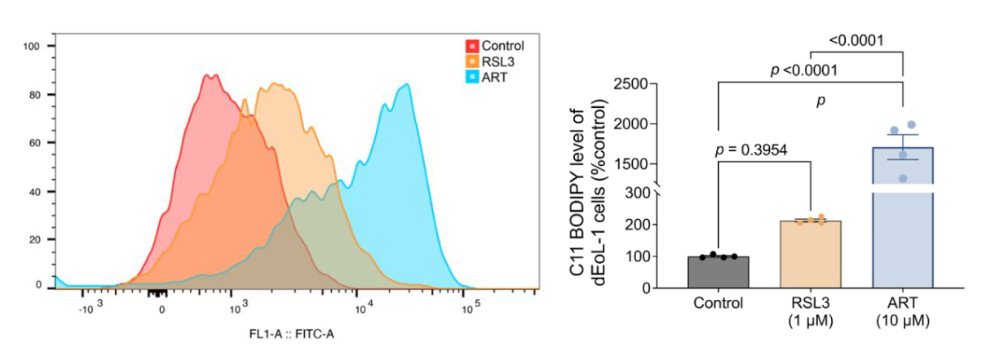
Ferroptosis inducers (Artesunate, 10 μM) increased lipid peroxide levels in dEoL-1 cells.
-
Cell Commun Signal
Artesunate induces melanoma cell ferroptosis and augments antitumor immunity through targeting Ido1. [Abstract]2024 Jul 26;22(1):378. PMID: 39061097
Artesunate purchased from MedChemExpress. Usage Cited in: Cell Commun Signal. 2024 Jul 26;22(1):378. [Abstract]
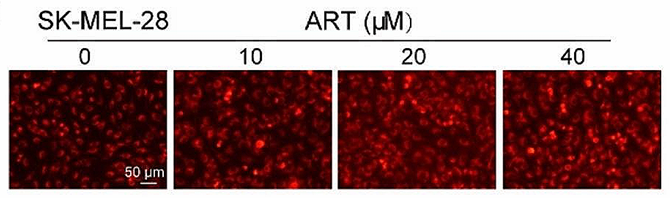
SK-MEL-28 cells were treated with indicated concentrations of ART (0, 10, 20, 40 µM) for 24 h, cells were stained with FerroOrange and photographed by fluorescence microscopy.
Artesunate purchased from MedChemExpress. Usage Cited in: Cell Commun Signal. 2024 Jul 26;22(1):378. [Abstract]
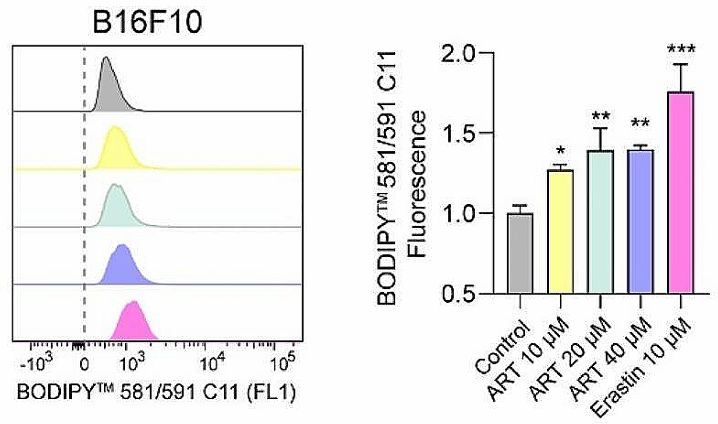
Cells were treated with indicated concentrations of ART (0, 10, 20, 40 µM) or Erastin for 24 h, flow cytometry detected the lipid peroxidation level by staining with C11-BODIPY.
Artesunate purchased from MedChemExpress. Usage Cited in: Cell Commun Signal. 2024 Jul 26;22(1):378. [Abstract]
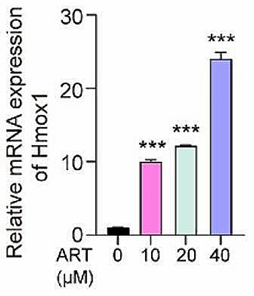
Artesunate (0-40 μM, 24 h). qPCR detected the mRNA expression of Hmox1 in ART-treated B16F10 cells.
Artesunate purchased from MedChemExpress. Usage Cited in: Cell Commun Signal. 2024 Jul 26;22(1):378. [Abstract]
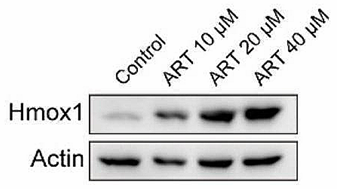
Artesunate (0-40 μM, 24 h). Western blot was employed to detect the expression of Hmox1 in ART-treated B16F10 cells.
-
-
Free Radic Biol Med
Mifepristone protects acetaminophen induced liver injury through NRF2/GSH/GST mediated ferroptosis suppression. [Abstract]2024 Sep:222:229-243. PMID: 38906233 -
Chin Med
Targeting the ferritinophagy axis: multi-target regulation of TFRC/FTH1/NCOA4 by artesunate ameliorates salivary gland dysfunction in Sjögren's Disease. [Abstract]2026 Mar 19;21(1):97. PMID: 41851758 -
Redox Rep
Artesunate ameliorates experimental autoimmune uveitis by inhibiting the LCN2-STAT3 axis and suppressing microglial activation. [Abstract]2026 Dec;31(1):2627096. PMID: 41674301 -
Biochem Pharmacol
Artesunate reduces oxidative stress and inflammation in NAFLD by activating the Nrf2 pathway. [Abstract]2026 Mar:245:117643. PMID: 41412549 -
Biomater Sci
A cRGD-modified liposome for targeted delivery of artesunate to inhibit angiogenesis in endometriosis. [Abstract]2025 Feb 11;13(4):1045-1058. PMID: 39829388 -
Drug Des Devel Ther
Role of GRP78 inhibiting artesunate-induced ferroptosis in KRAS mutant pancreatic cancer cells. [Abstract]2019 Jul 2:13:2135-2144. PMID: 31456633 -
Eur J Pharmacol
Artesunate reverses gefitinib resistance in lung adenocarcinoma by inducing ferroptosis and suppressing the Wnt/β-catenin pathway. [Abstract]2026 Apr 28:1022:178856. PMID: 41967624 -
Int Immunopharmacol
2026 Jun 1:178:116562. PMID: 41903303 -
Int Immunopharmacol
Artesunate alleviates chronic allergic rhinitis and asthma syndrome via the CCR3/NF-κB pathway: a comprehensive analysis. [Abstract]2025 Sep 18:166:115562. PMID: 40972333 -
Int Immunopharmacol
Artesunate-induced ATG5-related autophagy enhances the cytotoxicity of NK92 cells on endometrial cancer cells via interactions between CD155 and CD226/TIGIT. [Abstract]2021 Aug:97:107705. PMID: 33933849 -
J Nutr Biochem
Artemisinin and its derivatives modulate glucose homeostasis and gut microbiota remodeling in a nutritional context. [Abstract]2024 Sep:131:109687. PMID: 38866191 -
ACS Omega
Identification of New Modulators and Inhibitors of Palmitoyl-Protein Thioesterase 1 for CLN1 Batten Disease and Cancer. [Abstract]2024 Feb 28;9(10):11870-11882. PMID: 38496939 -
Chem Biol Interact
Artesunate induces autophagy dependent apoptosis through upregulating ROS and activating AMPK-mTOR-ULK1 axis in human bladder cancer cells. [Abstract]2020 Nov 1:331:109273. PMID: 33002460 -
Sci Rep
Combination of artesunate and ruxolitinib suppresses T cell leukemia/lymphoma proliferation via the JAK STAT pathway. [Abstract]2026 Feb 11;16(1):8354. PMID: 41673103 -
Cancers (Basel)
Antineoplastic Drug Synergy of Artesunate with Navitoclax in Models of High-Grade Serous Ovarian Cancer. [Abstract]2024 Mar 28;16(7):1321. PMID: 38610999 -
Cell Signal
HDAC inhibitor enhances ferroptosis susceptibility of AML cells by stimulating iron metabolism. [Abstract]2025 Mar:127:111583. PMID: 39756501 -
J Inflamm Res
Study on the Mechanism of Artesunate in Modulating AR Epithelial Injury and Th2-Type Inflammatory Status. [Abstract]2025 Apr 18:18:5329-5342. PMID: 40270560 -
J Neurochem
Artesunate restores mitochondrial fusion-fission dynamics and alleviates neuronal injury in Alzheimer's disease models. [Abstract]2022 Aug;162(3):290-304. PMID: 35598091 -
Front Mol Neurosci
Artesunate Alleviates Paclitaxel-Induced Neuropathic Pain in Mice by Decreasing Metabotropic Glutamate Receptor 5 Activity and Neuroinflammation in Primary Sensory Neurons. [Abstract]2022 May 27;15:902572. PMID: 35694442 -
FASEB J
2025 Apr 15;39(7):e70488. PMID: 40168090 -
-
-
Diagnostics (Basel)
Preclinical Evaluation of Artesunate as an Antineoplastic Agent in Ovarian Cancer Treatment. [Abstract]2021 Feb 26;11(3):395. PMID: 33652561 -
Toxicol Appl Pharmacol
Artesunate attenuates pulmonary fibrosis by suppressing fibroblast senescence through inhibition of the STAT3/p53 signaling pathway. [Abstract]2026 Jan:506:117646. PMID: 41271031 -
Toxicol Appl Pharmacol
Artesunate attenuates osteoarthritis in mice by promoting MTA1 transcription through a USP7/FoxO1 axis. [Abstract]2024 Oct:491:117075. PMID: 39173720 -
Basic Clin Pharmacol Toxicol
Artesunate inhibits osteoclast differentiation by inducing ferroptosis and prevents iron overload induced bone loss. [Abstract]2023 Feb;132(2):144-153. PMID: 36433916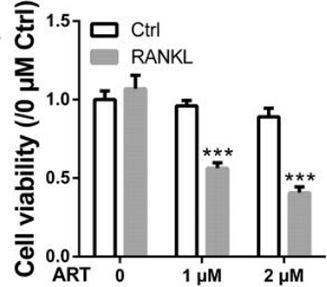
Artesunate purchased from MedChemExpress. Usage Cited in: Basic Clin Pharmacol Toxicol. 2023 Feb;132(2):144-153. [Abstract]
Artesunate (ART; 1, 2 μM) significantly reduces cell viability in RAW264.7 cells in the presence of RANKL but does not influence undifferentiating cells.
-
Neuroscience
Artesunate Reduces Remifentanil-induced Hyperalgesia and Peroxiredoxin-3 Hyperacetylation via Modulating Spinal Metabotropic Glutamate Receptor 5 in Rats. [Abstract]2022 Apr 1:487:88-98. PMID: 35026318 -
Front Vet Sci
Unrevealing the therapeutic potential of artesunate against emerging zoonotic Babesia microti infection in the murine model. [Abstract]2024 May 9:11:1383291. PMID: 38784653 -
Vet Microbiol
The Chinese medicine monomer Schisandrin C inhibits PRRSV infection by regulating the OGT-PI3K/AKT/mTOR signaling pathway. [Abstract]2026 May:316:110992. PMID: 41865607 -
World J Surg Oncol
Inhibition of HOXC11 by artesunate induces ferroptosis and suppresses ovarian cancer progression through transcriptional regulation of the PROM2/PI3K/AKT pathway. [Abstract]2024 Oct 8;22(1):268. PMID: 39380001 -
Biochem Biophys Res Commun
2024 Nov 12:733:150436. PMID: 39053102 -
-
J Gastrointest Oncol
Inhibition of hepatocellular carcinoma progression by artesunate via modulation of the TLR4/MyD88/NF-κB signaling pathway. [Abstract]2025 Apr 30;16(2):599-614. PMID: 40386608 -
-
-
-
-
Biomed Pharmacother
Artesunate alleviates Sjögren's Syndrome by inhibiting the interferon-α signaling in plasmacytoid dendritic cells via TLR-MyD88-IRF7. [Abstract]2024 Aug:177:116885. PMID: 38878633 -
Heliyon
Artesunate induces ferroptosis by regulating MT1G and has an additive effect with doxorubicin in diffuse large B-cell lymphoma cells. [Abstract]2024 Mar 22;10(7):e28584. PMID: 38560249 -


Solvant et solubilité
In Vitro:
DMSO : 83.33 mg/mL (216.77 mM; Need ultrasonic; Hygroscopic DMSO has a significant impact on the solubility of product, please use newly opened DMSO)
7.5% Sodium bicarbonate : 2 mg/mL (5.20 mM; ultrasonic and warming and heat to 60°C)
H2O : < 0.1 mg/mL (insoluble)
Please refer to the solubility information to select the appropriate solvent. Once prepared, please aliquot and store the solution to prevent product inactivation from repeated freeze-thaw cycles.
Storage method and period of stock solution: -80°C, 6 months; -20°C, 1 month. When stored at -80°C, please use it within 6 months. When stored at -20°C, please use it within 1 month.
Please refer to the solubility information to select the appropriate solvent. Once prepared, please aliquot and store the solution to prevent product inactivation from repeated freeze-thaw cycles.
Storage method and period of stock solution: -80°C, 6 months; -20°C, 1 month. When stored at -80°C, please use it within 6 months. When stored at -20°C, please use it within 1 month.
Concentration (start) × Volume (start) = Concentration (final) × Volume (final)
In Vivo:
Select the appropriate dissolution method based on your experimental animal and administration route.
- For the following dissolution methods, please ensure to first prepare a clear stock solution using an In Vitro approach and then sequentially add co-solvents:
- To ensure reliable experimental results, the clarified stock solution can be appropriately stored based on storage conditions. As for the working solution for In Vivo experiments, it is recommended to prepare freshly and use it on the same day.
- The percentages shown for the solvents indicate their volumetric ratio in the final prepared solution. If precipitation or phase separation occurs during preparation, heat and/or sonication can be used to aid dissolution.
Add each solvent one by one: 10% DMSO 40% PEG300 5% Tween-80 45% Saline
Solubility: ≥ 2.08 mg/mL (5.41 mM); Clear solution
This protocol yields a clear solution of ≥ 2.08 mg/mL (saturation unknown).
Taking 1 mL working solution as an example, add 100 μL DMSO stock solution (20.8 mg/mL) to 400 μL PEG300, and mix evenly; then add 50 μL Tween-80 and mix evenly; then add 450 μL Saline to adjust the volume to 1 mL.
Preparation of Saline: Dissolve 0.9 g sodium chloride in ddH₂O and dilute to 100 mL to obtain a clear Saline solution.
Add each solvent one by one: 10% DMSO 90% (20% SBE-β-CD in Saline)
Solubility: ≥ 2.08 mg/mL (5.41 mM); Clear solution
This protocol yields a clear solution of ≥ 2.08 mg/mL (saturation unknown).
Taking 1 mL working solution as an example, add 100 μL DMSO stock solution (20.8 mg/mL) to 900 μL 20% SBE-β-CD in Saline, and mix evenly.
Preparation of 20% SBE-β-CD in Saline (4°C, storage for one week): 2 g SBE-β-CD powder is dissolved in 10 mL Saline, completely dissolve until clear.
In Vivo Dissolution Calculator
Please enter the basic information of animal experiments:
-
-
-
-
Recommended: Prepare an additional quantity of animals to account for potential losses during experiments.
Please enter your animal formula composition:
-
%DMSO +
Recommended: Keep the proportion of DMSO in working solution below 2% if your animal is weak.
-
%+
-
+%Tween-80 + +
-
%Saline +
The co-solvents required include: DMSO, . All of co-solvents are available by MedChemExpress (MCE). , Tween 80. All of co-solvents are available by MedChemExpress (MCE).
Working solution concentration: 0.22 mg/mL
Method for preparing stock solution: mg drug dissolved in μL DMSO. Stock solution concentration: mg/mL.
1. Take μL DMSO stock solution;
2. Add μL .
μL , mix evenly;
3. Then add μL Tween 80, mix evenly;
4. Then add μL
Please ensure that the stock solution in the first step is dissolved to a clear state, and add co-solvents in sequence. You can use ultrasonic heating (ultrasonic cleaner, recommended frequency 20-40 kHz), vortexing, etc. to assist dissolution.


Pureté et documentation
-
Fiche technique (285 KB)
-
SDS (393 KB)
- English - EN (393 KB)
- Français - FR (393 KB)
- Deutsch - DE (393 KB)
- Norwegian - NO (393 KB)
- Español - ES (393 KB)
- Swedish - SV (393 KB)
- Italian - IT (393 KB)
- Korean - KR (393 KB)
- Portuguese - PT (393 KB)
-
Instruction de manipulation (2659 KB)
Références
[1]. Ilamathi M, et al. Artesunate as an Anti-Cancer Agent Targets Stat-3 and Favorably Suppresses Hepatocellular Carcinoma. Curr Top Med Chem. 2016;16(22):2453-63. [Content Brief]
[2]. Lisewski AM, et al. Supergenomic network compression and the discovery of EXP1 as a glutathione transferase inhibited by artesunate. Cell. 2014 Aug 14;158(4):916-928. [Content Brief]
[3]. Wang B, et al. Artesunate sensitizes ovarian cancer cells to cisplatin by downregulating RAD51. Cancer Biol Ther. 2015;16(10):1548-56. [Content Brief]


Complete Stock Solution Preparation Table
Please refer to the solubility information to select the appropriate solvent. Once prepared, please aliquot and store the solution to prevent product inactivation from repeated freeze-thaw cycles.
Storage method and period of stock solution: -80°C, 6 months; -20°C, 1 month. When stored at -80°C, please use it within 6 months. When stored at -20°C, please use it within 1 month.
| Optional Solvent | Concentration Solvent Mass | 1 mg | 5 mg | 10 mg | 25 mg |
|---|---|---|---|---|---|
| 7.5% Sodium bicarbonate / DMSO | 1 mM | 2.6013 mL | 13.0066 mL | 26.0132 mL | 65.0330 mL |
| 5 mM | 0.5203 mL | 2.6013 mL | 5.2026 mL | 13.0066 mL | |
| DMSO | 10 mM | 0.2601 mL | 1.3007 mL | 2.6013 mL | 6.5033 mL |
| 15 mM | 0.1734 mL | 0.8671 mL | 1.7342 mL | 4.3355 mL | |
| 20 mM | 0.1301 mL | 0.6503 mL | 1.3007 mL | 3.2517 mL | |
| 25 mM | 0.1041 mL | 0.5203 mL | 1.0405 mL | 2.6013 mL | |
| 30 mM | 0.0867 mL | 0.4336 mL | 0.8671 mL | 2.1678 mL | |
| 40 mM | 0.0650 mL | 0.3252 mL | 0.6503 mL | 1.6258 mL | |
| 50 mM | 0.0520 mL | 0.2601 mL | 0.5203 mL | 1.3007 mL | |
| 60 mM | 0.0434 mL | 0.2168 mL | 0.4336 mL | 1.0839 mL | |
| 80 mM | 0.0325 mL | 0.1626 mL | 0.3252 mL | 0.8129 mL | |
| 100 mM | 0.0260 mL | 0.1301 mL | 0.2601 mL | 0.6503 mL |


Artesunate Related Classifications
HY-N0193 Related Classifications
 Powered by Bioz