



Zevontabart

Based on 1 Customer Validation
Zevontabart (MYTX-011 Antibody; Q-397) is a pH-dependent anti-c-MET antibody. Zevontabart regulates the trafficking process of c-MET to reduce receptor recycling, and enhances its own endocytosis and accumulation in c-MET-expressing cells. Zevontabart induces cytotoxicity in solid tumor cells and exerts anti-tumor activity in a non-small cell lung cancer xenograft mouse model. Zevontabart can be used to synthesize ADC, such as: MYTX-011. Zevontabart can be used in studies related to non-small cell lung cancer, with its corresponding isotype control being Human IgG1 kappa, Isotype Control (HY-P99001).
Nos produits utilisent uniquement pour la recherche. Nous ne vendons pas aux patients.
- Pureté: 99.46%
- CAS No.: 3060218-90-5
- Masse moléculaire:143.999 kDa
-
Stockage:
Please store the product under the recommended conditions in the Certificate of Analysis.


To place orders, for customer services and technical support, please contact: MedChemExpress USA
Tel: 609-228-6898 E-mail: [email protected] [email protected]


-
 Activité biologique
-
Chemical Information
- Pureté et documentation
- Références
-
 Help & FAQs




Activité biologique
Description
Isotype
Human IgG1 kappa
Recommend Isotype Controls
Species Reactivity
Human
In Vitro
Zevontabart (50 nM; 120 s association, 300 s dissociation) binds to recombinant human c-MET in a pH-dependent manner, with a faster dissociation rate at the endolysosomal pH of 5.4 compared to the neutral pH of 7.4[1].
Zevontabart (10 nM; 0.5-3 h) accumulates highly in lysosomes of NCI-H1975 c-MET+ non-small cell lung cancer (NSCLC) cells[1].
Zevontabart (25 nM; 30 min) shows low colocalization with Rab4+ rapidly recycling endosomes in EBC-1 c-MET+ cancer cells[1].
MedChemExpress (MCE) has not independently confirmed the accuracy of these methods. They are for reference only.
-
Cell Line:NCI-H1975 (c-MET+ NSCLC) cells transfected with LAMP1-RFP (lysosomal marker)
-
Concentration:10 nmol/L
-
Incubation Time:30 min, 1 h, 3 h
-
Result:Showed equivalent colocalization with LAMP1-RFP+ lysosomes to the parent mAb at all time points, but exhibited significantly higher fluorescence intensity within lysosomes relative to the parent mAb.
-
Cell Line:EBC-1 (c-MET+ cancer) cells transfected with Rab4-mRuby (fast-recycling endosome marker)
-
Concentration:25 nmol/L
-
Incubation Time:30 min
-
Result:Showed significantly lower colocalization with Rab4-mRuby+ fast-recycling endosomes relative to the parent mAb.
Parmacokinetics
| Species | Dose | Route | T1/2 |
|---|---|---|---|
| Cynomolgus Monkey[1] | 2.7 mg/kg | i.v. | 158 |
In Vivo
MedChemExpress (MCE) has not independently confirmed the accuracy of these methods. They are for reference only.
-
Animal Model:SCID mice (6-8-week-old female; non-small cell lung cancer xenograft model)[1]
-
Dosage:0.5 mg/kg; 1 mg/kg; 2 mg/kg; 4 mg/kg; 6 mg/kg
-
Administration:i.v.; single dose
-
Result:Significantly reduced tumor size and more effectively slowed tumor growth.
Gene ID
Accession
Target
HGFR/c-Met
Conjugated
Unconjugated
Reconsititution
The product can be reconstituted/diluted with sterile PBS or saline.
Format
-
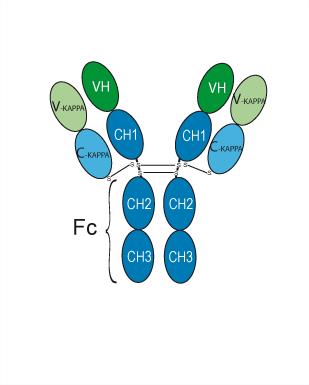
IgG1-kappa
Application
ELISA, FACS, Functional assay
Verified Bioactivity
-
 Immobilized HGFR Protein, Human (HEK293, HY-P78490) can bind Zevontabart. The ED50 for this effect is 88.01 ng/mL.


Chemical Information
-
CAS No. 3060218-90-5
-
Appearance Liquid
-
Masse moléculaire 143.999 kDa
-
Color Colorless to light yellow
-
SMILES
[Zevontabart]
-
Synonyms
MYTX-011 Antibody; Q-397
-
Livraison
Shipping with dry ice.
-
Formulation
Please refer to the lot-specific COA for specific buffer information.
-
Stockage
Please store the product under the recommended conditions in the Certificate of Analysis.


Pureté et documentation
-
Fiche technique (261 KB)
-
SDS (252 KB)
- English - EN (252 KB)
- Français - FR (252 KB)
- Deutsch - DE (252 KB)
- Norwegian - NO (252 KB)
- Español - ES (252 KB)
- Swedish - SV (252 KB)
- Italian - IT (252 KB)
- Korean - KR (252 KB)
- Portuguese - PT (252 KB)
-
Inhibitory Antibodies User Guide (603 KB)
Références

Calculators
Concentration (start) × Volume (start) = Concentration (final) × Volume (final)


Zevontabart Related Classifications
HY-P992146 Related Classifications
 Powered by Bioz