



BAY-549
Based on 4 publication(s) in Google Scholar
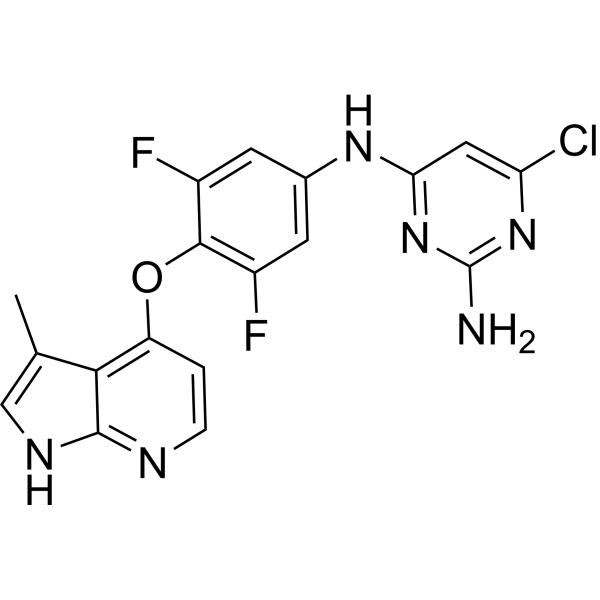
BAY-549 (Azaindole 1), a chemical probe, is an orally active and ATP-competitive ROCK inhibitor with IC50s of 0.6 and 1.1 nM for human ROCK-1 and ROCK-2, respectively.
Nur für Forschungszwecke. Wir verkaufen nicht an Patienten.
- Reinheit : 98.16%
- CAS. Nr.: 867017-68-3
- Formel: C18H13ClF2N6O
- Molecular Weight:402.79
-
Speicherung:Powder -20°C, 3 years , 4°C, 2 years ; In solvent -80°C, 2 years , -20°C, 1 year

To place orders, for customer services and technical support, please contact: MedChemExpress USA
Tel: 609-228-6898 E-mail: [email protected] [email protected]


-
 Biologische Aktivität
-
Chemical Information
-
Lösungsmittel & Löslichkeit
- Reinheit & Dokumentation
- Verweise
-
 Help & FAQs


-
HY-15556
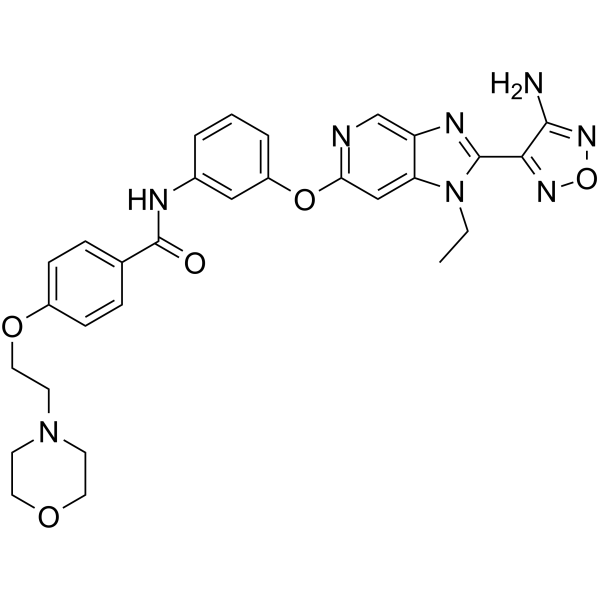
GSK269962AROCK Inhibitor -
HY-10071
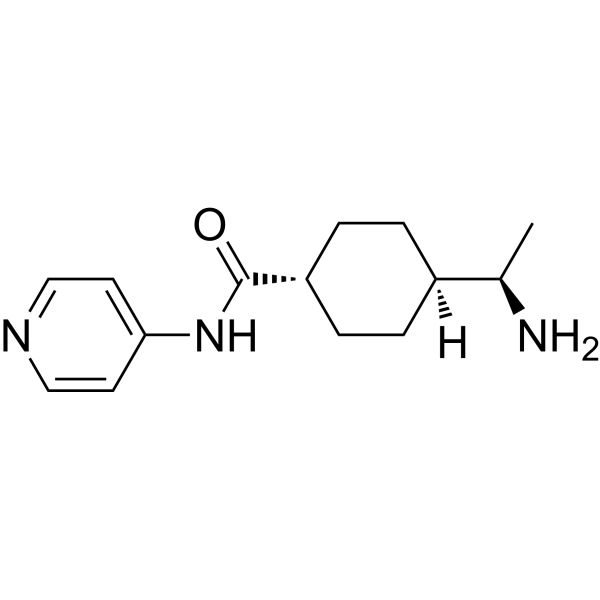
Y-27632ROCK Inhibitor -
HY-15307
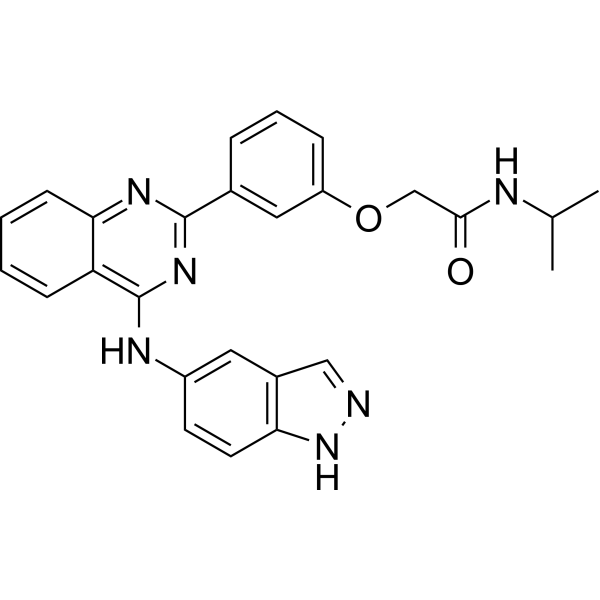
BelumosudilROCK2 Inhibitor -
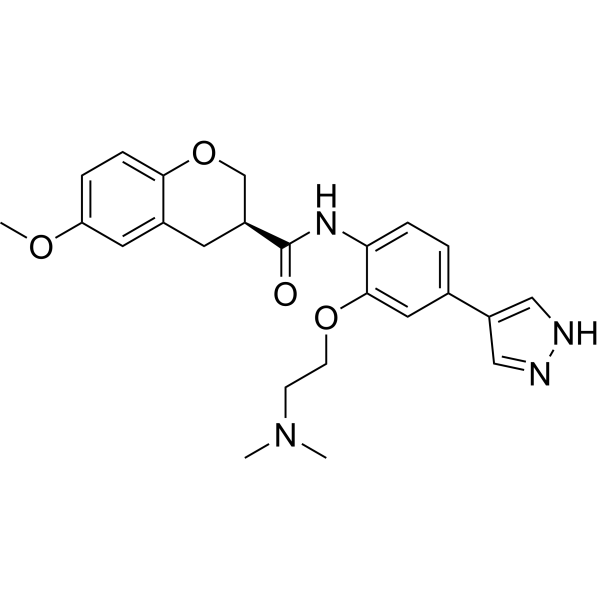
HY-15392
Chroman 1ROCK2 Inhibitor -
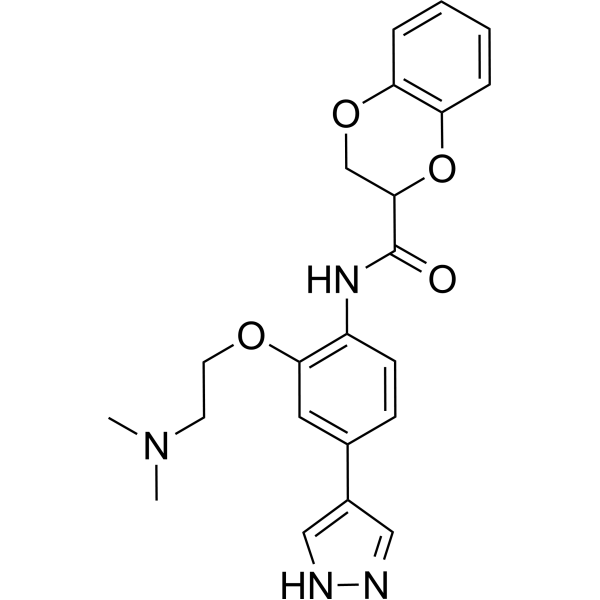
HY-13300
SR-3677Autophagy Inducer -
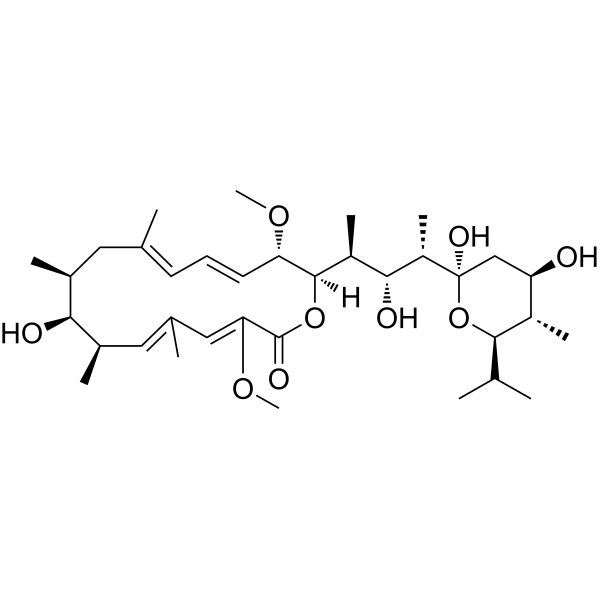
HY-100558
Bafilomycin A1V-ATPase Inhibitor -
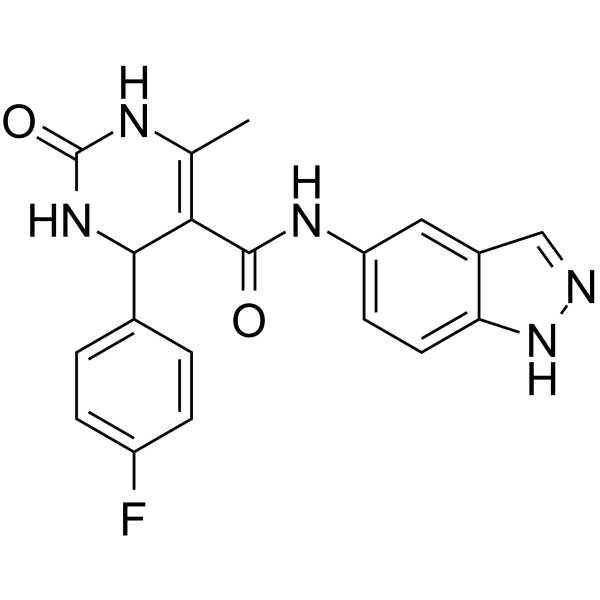
HY-18990
GSK180736AROCK Inhibitor -
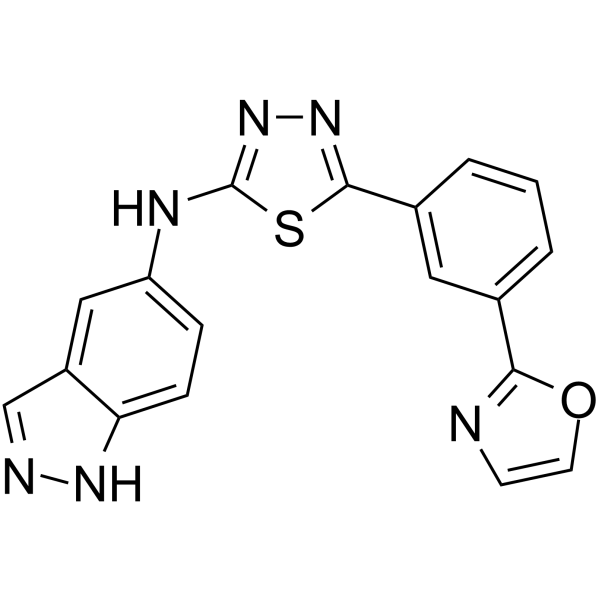
HY-103620
ROCK2-IN-2ROCK2 Inhibitor -
HY-126388
Trypsin Inhibitor, soybeanTrypsin Inhibitor -
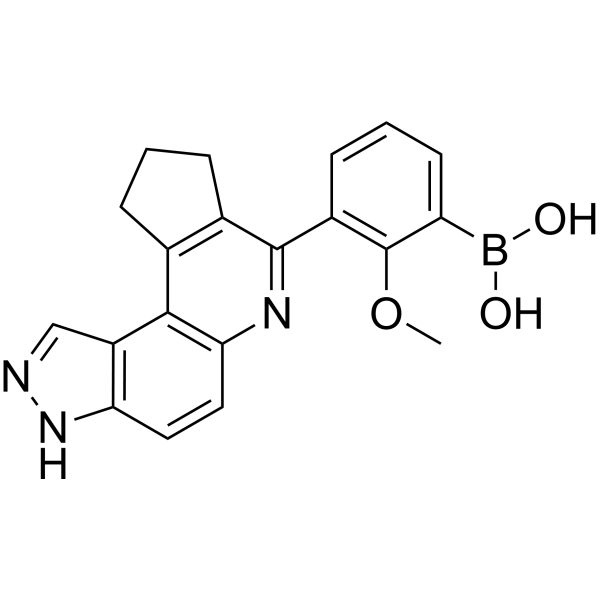
HY-126275
HSD1590ROCK1/2 Inhibitor -
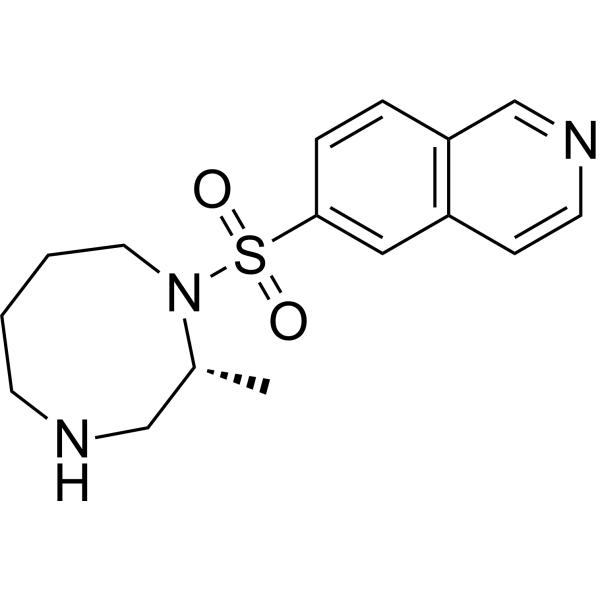
HY-137436
CotosudilROCK Inhibitor -
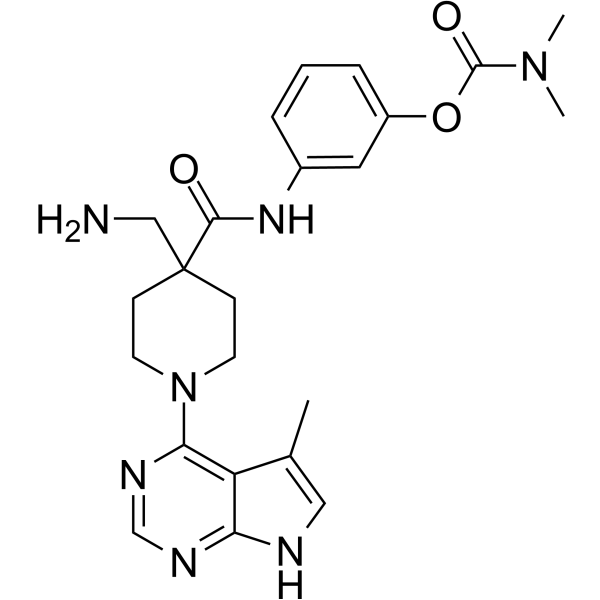
HY-12659
LX7101LIM/ROCK/PKA Inhibitor
Publications Citing Use of MedChemExpress (MCE) BAY-549
More

Biologische Aktivität
Beschreibung
IC50 & Target
[1]|
ROCK-1 0.6 nM (IC50) |
ROCK-2 1.1 nM (IC50) |
TRK 252 nM (IC50) |
FLT3 303 nM (IC50) |
In Vitro
BAY-549 (Azaindole 1) is a highly potent inhibitor of human ROCK-1 and ROCK-2, with IC50s of 0.6 and 1.1 nM, respectively, and also inhibits murine ROCK-2 or rat ROCK-2 with IC50s of 2.4 and 0.8 nM, respectively. BAY-549 also inhibits receptor tyrosine kinases TRK and FLT3, with IC50s of 252 and 303 nM, respectively, but shows slight inhibition of MLCK and ZIP-kinase with IC50s of 7.4 μM and 4.1 μM, respectively. BAY-549 induces vasorelaxation in vitro, and suppresses the phenylephrine-induced contraction of rabbit saphenous artery in a concentration dependent manner with an IC50 value of 65 nM[1].
MedChemExpress (MCE) has not independently confirmed the accuracy of these methods. They are for reference only. .
In Vivo
MedChemExpress (MCE) has not independently confirmed the accuracy of these methods. They are for reference only.


Chemical Information
-
CAS. Nr. 867017-68-3
-
Appearance Solid
-
Molecular Weight 402.79
-
Formel C18H13ClF2N6O
-
Color Light yellow to yellow
-
SMILES
NC1=NC(Cl)=CC(NC2=CC(F)=C(OC3=C4C(NC=C4C)=NC=C3)C(F)=C2)=N1
-
Synonyms
ROCK-IN-2; Azaindole 1; TC-S 7001
-
Versand
Room temperature in continental US; may vary elsewhere.
-
Speicherung
Powder -20°C 3 years 4°C 2 years In solvent -80°C 2 years -20°C 1 year


Publications (4)
-
Journal Impact Factor
-
Most Recent
-
Cell Stem Cell
Mechano-oncogenic cytoskeletal remodeling drives leukemic transformation with mitochondrial vesicle-mediated STING activation. [Abstract]2025 Apr 3;32(4):581-597.e11. PMID: 39986274 -
Nat Commun
Human iPSC-based Modeling of Pulmonary Fibrosis Reveals p300/CBP Inhibition Suppresses Alveolar Transitional Cell State. [Abstract]2026 Feb 12;17(1):1214. PMID: 41680175 -
JCI Insight
Repurposing sertraline sensitizes non-small cell lung cancer cells to erlotinib by inducing autophagy. [Abstract]2018 Jun 7;3(11):e98921. PMID: 29875309 -
Mol Ther Nucleic Acids
ALKBH5-mediated m6A mRNA methylation governs human embryonic stem cell cardiac commitment. [Abstract]2021 May 29:26:22-33. PMID: 34513291


Lösungsmittel & Löslichkeit
In Vitro:
DMSO : 33.33 mg/mL (82.75 mM; Need ultrasonic; Hygroscopic DMSO has a significant impact on the solubility of product, please use newly opened DMSO)
Please refer to the solubility information to select the appropriate solvent. Once prepared, please aliquot and store the solution to prevent product inactivation from repeated freeze-thaw cycles.
Storage method and period of stock solution: -80°C, 2 years; -20°C, 1 year. When stored at -80°C, please use it within 2 years. When stored at -20°C, please use it within 1 year.
Please refer to the solubility information to select the appropriate solvent. Once prepared, please aliquot and store the solution to prevent product inactivation from repeated freeze-thaw cycles.
Storage method and period of stock solution: -80°C, 2 years; -20°C, 1 year. When stored at -80°C, please use it within 2 years. When stored at -20°C, please use it within 1 year.
Konzentration (Stammlösung) × Volumen (Stammlösung) = Konzentration (Ziellösung) × Volumen (Ziellösung)
In Vivo:
Select the appropriate dissolution method based on your experimental animal and administration route.
- For the following dissolution methods, please ensure to first prepare a clear stock solution using an In Vitro approach and then sequentially add co-solvents:
- To ensure reliable experimental results, the clarified stock solution can be appropriately stored based on storage conditions. As for the working solution for In Vivo experiments, it is recommended to prepare freshly and use it on the same day.
- The percentages shown for the solvents indicate their volumetric ratio in the final prepared solution. If precipitation or phase separation occurs during preparation, heat and/or sonication can be used to aid dissolution.
Add each solvent one by one: 10% DMSO 40% PEG300 5% Tween-80 45% Saline
Solubility: ≥ 2.5 mg/mL (6.21 mM); Clear solution
This protocol yields a clear solution of ≥ 2.5 mg/mL (saturation unknown).
Taking 1 mL working solution as an example, add 100 μL DMSO stock solution (25.0 mg/mL) to 400 μL PEG300, and mix evenly; then add 50 μL Tween-80 and mix evenly; then add 450 μL Saline to adjust the volume to 1 mL.
Preparation of Saline: Dissolve 0.9 g sodium chloride in ddH₂O and dilute to 100 mL to obtain a clear Saline solution.
In Vivo Dissolution Calculator
Please enter the basic information of animal experiments:
-
-
-
-
Recommended: Prepare an additional quantity of animals to account for potential losses during experiments.
Please enter your animal formula composition:
-
%DMSO +
Recommended: Keep the proportion of DMSO in working solution below 2% if your animal is weak.
-
%+
-
+%Tween-80 + +
-
%Saline +
The co-solvents required include: DMSO, . All of co-solvents are available by MedChemExpress (MCE). , Tween 80. All of co-solvents are available by MedChemExpress (MCE).
Working solution concentration: 0.22 mg/mL
Method for preparing stock solution: mg drug dissolved in μL DMSO. Stock solution concentration: mg/mL.
1. Take μL DMSO stock solution;
2. Add μL .
μL , mix evenly;
3. Then add μL Tween 80, mix evenly;
4. Then add μL
Please ensure that the stock solution in the first step is dissolved to a clear state, and add co-solvents in sequence. You can use ultrasonic heating (ultrasonic cleaner, recommended frequency 20-40 kHz), vortexing, etc. to assist dissolution.


Reinheit & Dokumentation
-
Data Sheet (293 KB)
-
SDS (393 KB)
- English - EN (393 KB)
- Français - FR (393 KB)
- Deutsch - DE (393 KB)
- Norwegian - NO (393 KB)
- Español - ES (393 KB)
- Swedish - SV (393 KB)
- Italian - IT (393 KB)
- Korean - KR (393 KB)
- Portuguese - PT (393 KB)
-
Handling Instructions (2659 KB)
Verweise


Complete Stock Solution Preparation Table
Please refer to the solubility information to select the appropriate solvent. Once prepared, please aliquot and store the solution to prevent product inactivation from repeated freeze-thaw cycles.
Storage method and period of stock solution: -80°C, 2 years; -20°C, 1 year. When stored at -80°C, please use it within 2 years. When stored at -20°C, please use it within 1 year.
| Optional Solvent | Concentration Solvent Mass | 1 mg | 5 mg | 10 mg | 25 mg |
|---|---|---|---|---|---|
| DMSO | 1 mM | 2.4827 mL | 12.4134 mL | 24.8268 mL | 62.0671 mL |
| 5 mM | 0.4965 mL | 2.4827 mL | 4.9654 mL | 12.4134 mL | |
| 10 mM | 0.2483 mL | 1.2413 mL | 2.4827 mL | 6.2067 mL | |
| 15 mM | 0.1655 mL | 0.8276 mL | 1.6551 mL | 4.1378 mL | |
| 20 mM | 0.1241 mL | 0.6207 mL | 1.2413 mL | 3.1034 mL | |
| 25 mM | 0.0993 mL | 0.4965 mL | 0.9931 mL | 2.4827 mL | |
| 30 mM | 0.0828 mL | 0.4138 mL | 0.8276 mL | 2.0689 mL | |
| 40 mM | 0.0621 mL | 0.3103 mL | 0.6207 mL | 1.5517 mL | |
| 50 mM | 0.0497 mL | 0.2483 mL | 0.4965 mL | 1.2413 mL | |
| 60 mM | 0.0414 mL | 0.2069 mL | 0.4138 mL | 1.0345 mL | |
| 80 mM | 0.0310 mL | 0.1552 mL | 0.3103 mL | 0.7758 mL |


BAY-549 Related Classifications
HY-10319 Related Classifications
 Powered by Bioz